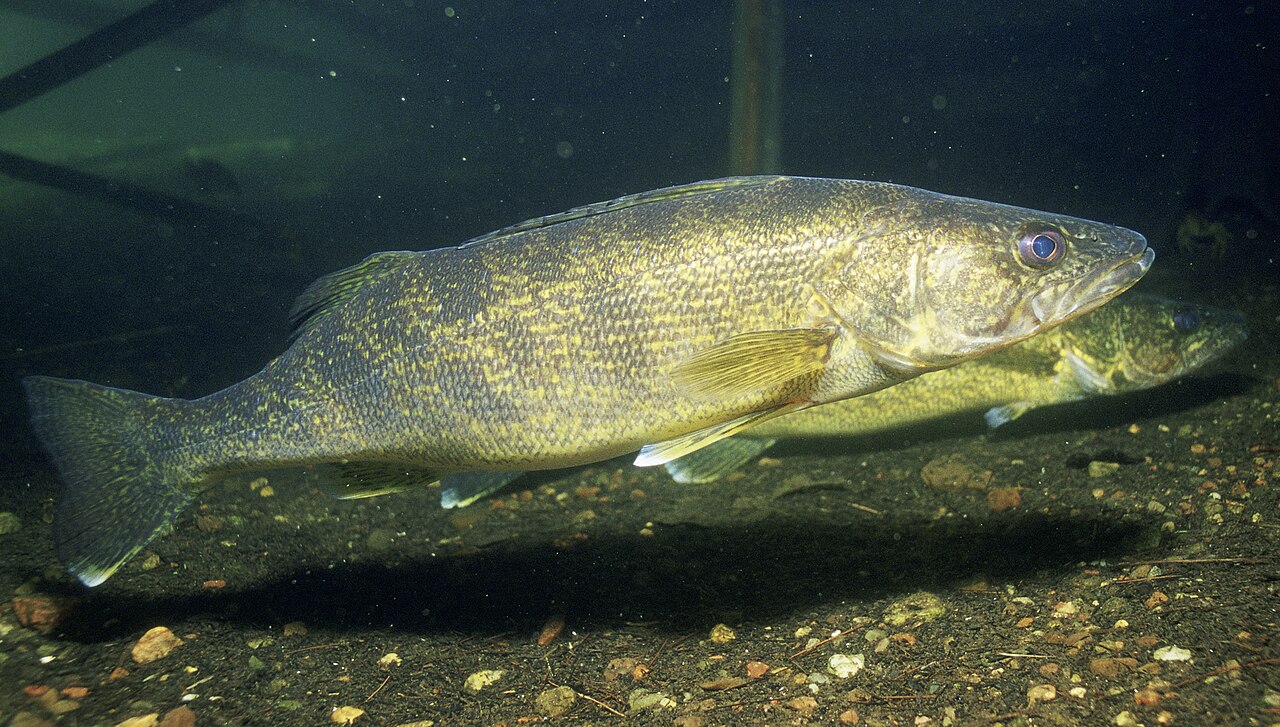
Walleye Teeth: How Sharp They Are and How to Handle the Fish
Walleye teeth are the first thing anglers notice when they lift one into the boat, and yes, a walleye has a full set of them: long canines at the front of both jaws, backed by bands of smaller, backward pointing teeth across the roof of the mouth. On a big fish the largest canines reach roughly half an inch (13 mm), long enough to open a knuckle if you slide your hand the wrong way.
What those teeth are not is a weapon aimed at you. Walleye (Sander vitreus) use them to pin soft bodied prey like shiners and young yellow perch, then swallow the fish whole and headfirst. Understanding the layout of the mouth tells you how to hold the fish, why a pike feels so different in the hand, and what the teeth say about how walleye hunt.
Walleye have teeth: four to six long canines in the front of each jaw plus rows of short, backward angled teeth on the palate. The largest reach about half an inch (13 mm). They grip rather than slice, so walleye rarely cut deeply, but careless handling across the jaw or gill plate draws blood.
| Species | Tooth layout | Largest teeth | Risk when handling |
|---|---|---|---|
| Walleye (Sander vitreus) | Canines plus backward palatal bands | About 0.5 in (13 mm) | Moderate, mostly scrapes |
| Sauger (Sander canadensis) | Same pattern, smaller fish | About 0.25 in (6 mm) | Low |
| Northern pike (Esox lucius) | Hundreds of teeth, bristled palate | About 1 in (25 mm) | High, deep punctures |
| Muskellunge (Esox masquinongy) | Long canines, dense rows | Over 1 in (25 mm) | Very high |
| Yellow perch (Perca flavescens) | Fine sandpaper bands, no canines | Under 0.04 in (1 mm) | Very low |
| Largemouth bass (Micropterus nigricans) | Rough pads, no canines | Under 0.04 in (1 mm) | Very low, thumb rash only |
Does a Walleye Fish Have Teeth?
A walleye fish does have teeth, and more of them than most anglers realize. The obvious ones are the canines, four to six per jaw, set at the front where they can drive into a baitfish on the strike. Behind them sit dense patches of much shorter teeth on the vomer and palatine bones, the two ridges that make up the roof of the mouth.
Those palatal patches are what make a walleye hard to shake off a jig. Every small tooth angles toward the throat, so anything that enters the mouth slides one direction only. Biologists call this arrangement a holding dentition, and it is standard equipment for fish that eat other fish whole rather than chewing them.
How Sharp Are Walleye Teeth?
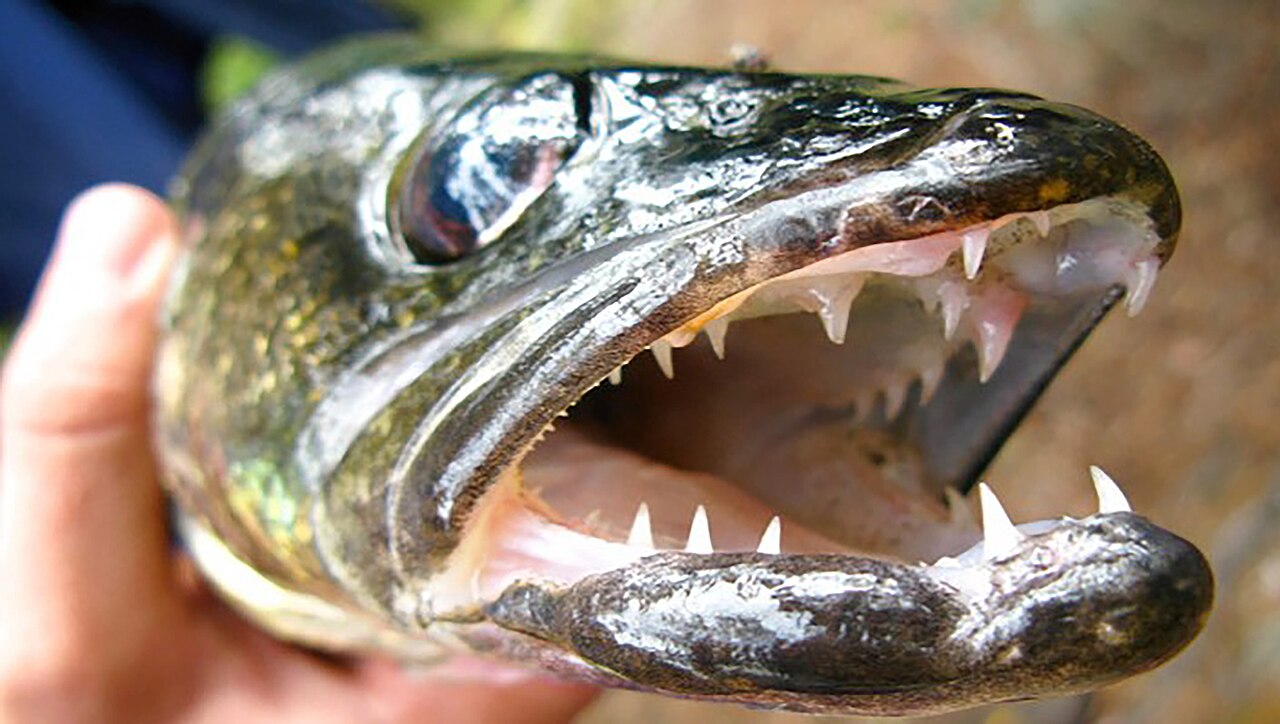
Walleye teeth are sharp in the way a needle is sharp, not the way a knife is. Each canine tapers to a fine point with no cutting edge along the side, so pressure concentrates on one spot instead of slicing along a line. Press a thumb onto one and it will break the skin; drag your hand across a mouthful and you get parallel scratches rather than a clean cut.
That is a meaningful difference on the water. Pike and muskie teeth leave punctures that bleed hard and take weeks to close, while walleye scrapes usually need nothing more than a rinse and a bandage. Anglers who handle dozens of fish a day still end the season with pale marks across the fingers.
Walleye Teeth Size and How They Grow
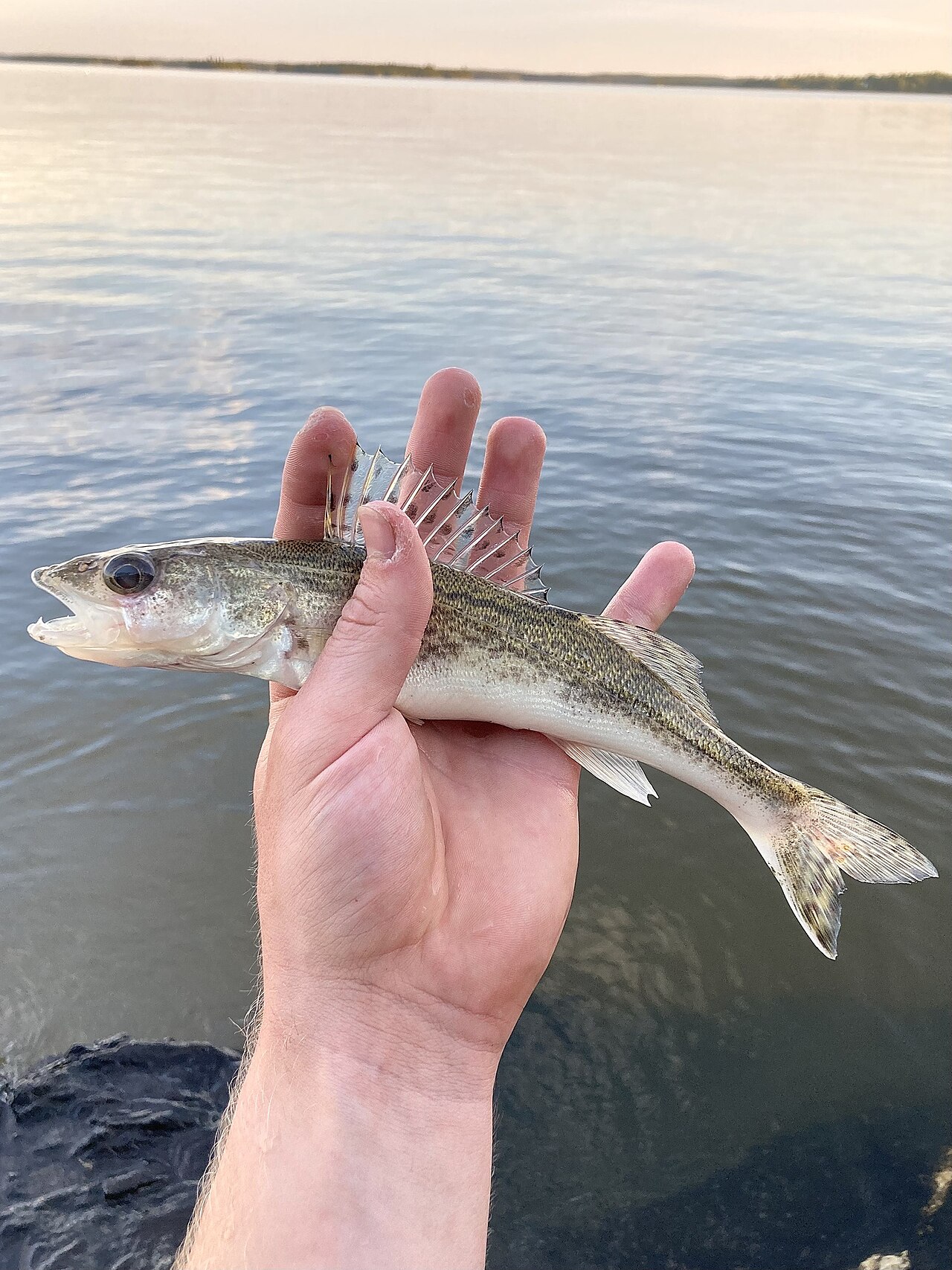
Walleye teeth size scales with the fish. A 14 in (36 cm) eater has canines around an eighth of an inch (3 mm), barely more than a rough edge. A 28 in (71 cm) female pushes the front canines to roughly half an inch (13 mm), and those are the teeth that show in photos of a hand under the jaw.
Tooth length is not a reliable age marker, though. Two walleye of the same length from different lakes can carry noticeably different dentition depending on diet and growth rate. Fish that feed heavily on soft bodied shiners keep cleaner, sharper points than fish grinding through crayfish and spiny young perch.
Walleye Teeth vs Pike Teeth
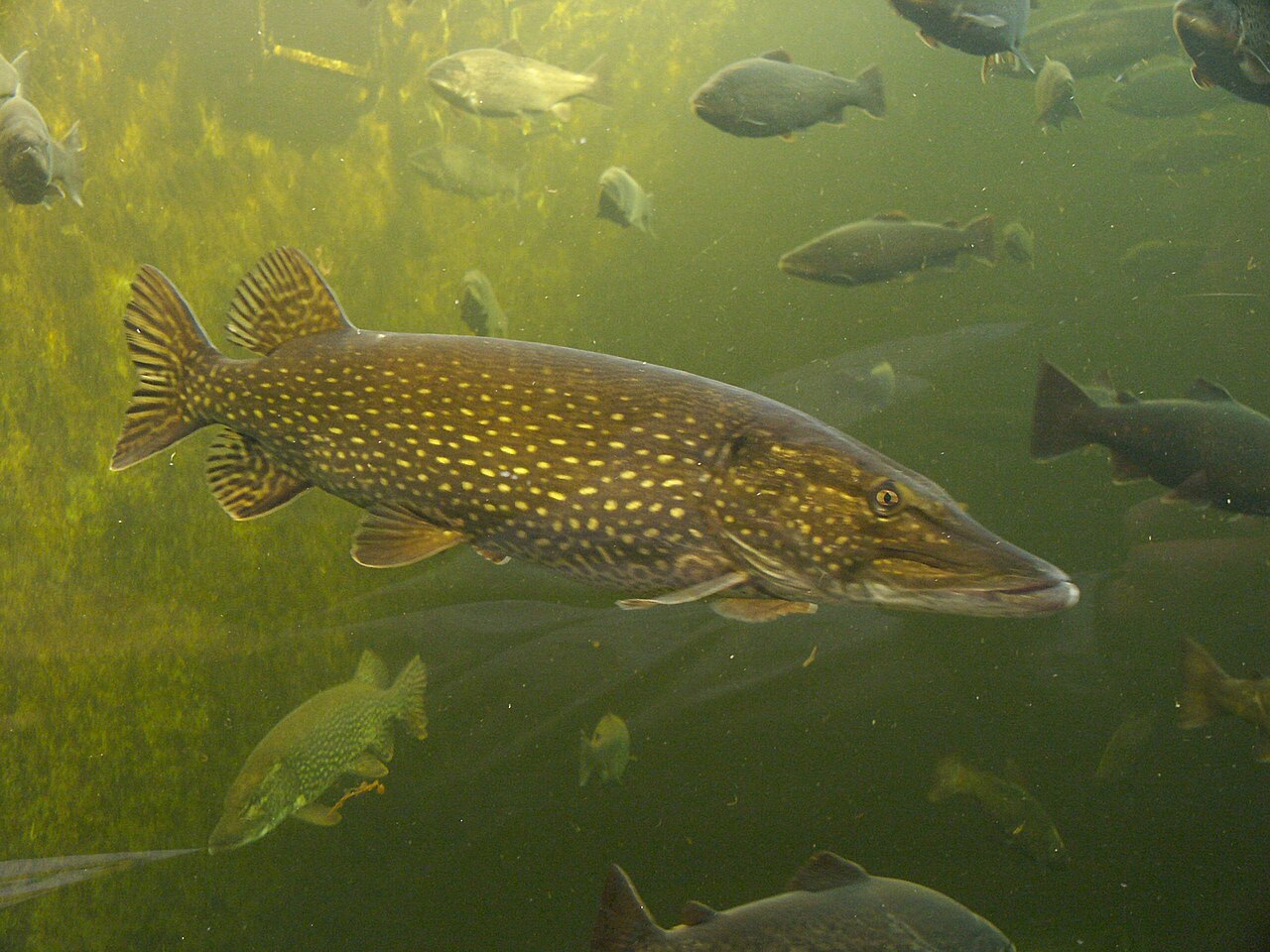
The walleye teeth vs pike teeth comparison is the one most often argued at the cleaning table, and it is not close. A northern pike carries several hundred teeth, with the palate covered in short backward bristles and the lower jaw lined with canines that top an inch (25 mm) on a large fish. A walleye has perhaps a few dozen teeth worth counting.
Shape differs as much as number. Pike teeth are flattened and edged, built to hold prey that thrashes hard, and they can slice tendon if a hand slips into the gill arch. Walleye teeth are round in cross section and set in a much shorter, deeper jaw. If you have handled both, the pike feels like reaching into a bear trap and the walleye feels like reaching into a hairbrush.
Sauger Teeth and Muskie Teeth Compared
Sauger teeth follow the walleye pattern exactly, which is expected since Sander canadensis is the walleye’s closest North American relative. The fish simply runs smaller, so the canines rarely pass a quarter inch (6 mm). Where the two species overlap in big rivers, teeth are useless for telling them apart; the dark saddles on the body and the spotted dorsal fin do that job.
Muskie teeth belong in another category. A muskellunge combines pike style canines with an even larger mouth, and the released fish thrashing at the net is the single most common source of serious angling injuries in the upper Midwest. Long nose pliers and a jaw spreader are standard gear for muskie and optional for walleye.
Do Walleye Bite Humans?
Walleye do not bite humans in any meaningful sense. There is no record of a walleye pursuing a swimmer or striking at a wading foot, and the species shows the opposite behavior, sliding into deeper water at the first sign of disturbance. Their eyes carry a reflective layer called the tapetum lucidum that favors low light, which is why they feed at dusk and in stained water rather than in the bright shallows where people swim.
Every walleye injury on record comes from handling a hooked fish. The bite reflex when you reach into the mouth for a jig is quick and automatic, and the fish has no way to know the difference between your thumb and a minnow. Treat it as a mechanical hazard, not aggression.
How to Hold a Walleye Without Getting Cut
The safest grip goes across the back, hand over the shoulders with the thumb behind the dorsal spines and fingers wrapped under the far side. The fish is controlled, the teeth are pointed away, and you never open the mouth by hand. A rubber net and long pliers remove the second risk point, which is digging a treble hook out of a live fish.
The gill plate deserves as much respect as the teeth. The rear edge of a walleye operculum is thin and stiff enough to slice cleanly, and many cuts blamed on the mouth actually come from the gill cover. Never slide a finger under the gill flap on a fish you plan to release, both for your hand and for the fish.
What Walleye Teeth Reveal About Their Diet
Dentition is a menu written in bone. Because walleye teeth grip and never grind, the diet runs to whole prey that fits down the throat: emerald shiners, young yellow perch, gizzard shad, and in some systems juvenile sunfish and crayfish. A walleye that cannot swallow a food item generally will not eat it at all.
Prey length usually tops out near a third of the predator’s own length, which is why a 25 in (64 cm) fish will happily take an 8 in (20 cm) sucker. If you want the wider picture of how freshwater species divide up the food supply, the overview of what fish eat across habitats covers the same logic for other groups, including the shell cracking redear sunfish and its crushing plates.
Do Walleye Lose Their Teeth in Summer?
Walleye replace teeth continuously through life, the same as most bony fish, shedding worn ones a few at a time and growing replacements from the tissue beneath. What they do not do is drop the whole set at once. The old lake wisdom that a midsummer walleye is toothless and therefore off the bite has no support in fish biology, and a hand in the mouth of a July fish makes the point quickly.
Slow summer fishing has simpler explanations. Warm surface water pushes fish deeper, forage fish spawn and flood the lake with easy meals, and the low light feeding window narrows to the edges of the day. The teeth are exactly where they were in May.
What Do Americans Call Walleye?
Americans call walleye walleye, and older regional names such as walleyed pike, yellow pike, and jack salmon are fading out. None of those names is accurate, since the fish is a member of the perch family, Percidae, and shares no close ancestry with pike or salmon. State agencies standardized on walleye decades ago and the market followed.
The confusion comes across the border. In Ontario and Manitoba, walleye is commonly sold and spoken of as pickerel, which in American usage means an entirely different fish, a small member of the pike family. A menu listing pickerel in Winnipeg and a menu listing pickerel in Ohio describe two unrelated species.
Why Is Walleye So Expensive?
Supply, not demand, sets the price. Walleye is a game fish in nearly every US state, meaning it cannot be caught and sold commercially there at all, so restaurant and counter supply comes almost entirely from quota managed Canadian waters and the Lake Erie commercial fishery. Retail fillets commonly run north of twenty dollars a pound, and true wild walleye is rarely on sale.
Processing adds to the bill. The fillets are boneless but require careful trimming, there is no large scale farmed walleye industry to smooth out supply, and substitution is common enough that zander imported from Europe sometimes appears under the walleye name. Buying from a counter that names the water body is the simplest guard against that.
Frequently Asked Questions
How sharp are walleye teeth?
Sharp enough to break skin with light pressure but not sharp enough to slice. Each canine is a smooth cone with a fine point and no cutting edge, so contact produces punctures and scrapes rather than open cuts. Compared with a pike of the same length, a walleye does perhaps a tenth of the damage to a careless hand.
Does a walleye fish have teeth on the roof of its mouth?
Yes. Beyond the visible front canines, walleye carry dense bands of very short teeth on the vomer and palatine bones across the palate. Every one of them angles backward toward the throat, which is why a hooked minnow or a soft plastic body slides in easily and comes back out only with effort.
What tastes better, pike or walleye?
Most anglers pick walleye, and the reason is bones rather than flavor. Both are mild, white, and flaky, but northern pike carries a row of Y bones through the upper fillet that takes practice to remove. A properly cleaned pike is excellent; a walleye gets there with far less work.
What is healthier, cod or walleye?
The two are close. Both are lean whitefish at roughly 90 to 110 calories per 3.5 oz (100 g) serving with high quality protein and little fat. The real variable is mercury in inland lake walleye, so check your state’s fish consumption advisory before eating large fish frequently, especially during pregnancy.
Do walleye bite humans?
Not as an attack. Walleye avoid people, feed in low light, and have never been recorded biting a swimmer. Injuries happen when a hand enters the mouth of a hooked fish, which triggers a reflexive clamp. Use pliers for hook removal and the risk drops to nearly zero.
Are walleye teeth sharper than bass teeth?
Far sharper. Largemouth and smallmouth bass have no canines at all, only rough pads that feel like coarse sandpaper and leave the familiar bass thumb rash. Walleye canines are true piercing teeth. For a broader look at how teeth differ across the animal world, see our piece on whether birds have teeth and what replaced them.
Walleye share their forage base with fish eating birds across the same lakes, and the overlap is worth knowing if you fish near heron flats or an active nest. Our guides to birds that eat fish and to the osprey cover the competition. For state by state regulations, consumption advisories, and management data, the US Fish and Wildlife Service is the best starting point.