Gray Fox: Identification, Range, and Why It Climbs Trees
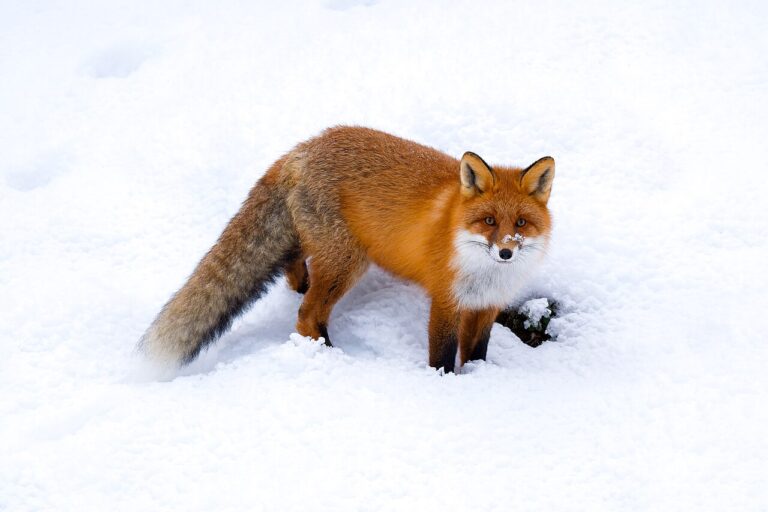
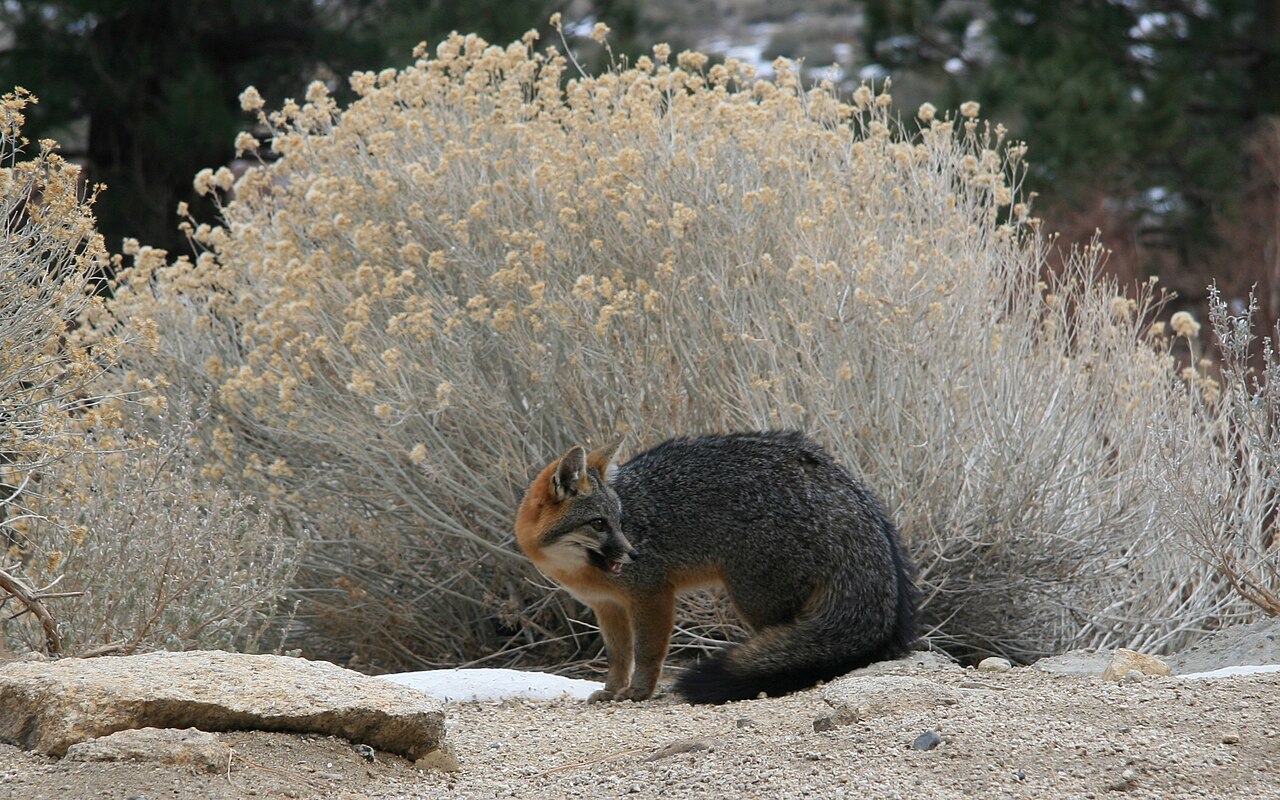
The gray fox (Urocyon cinereoargenteus) is the only wild canid in North America that routinely climbs trees. A salt and pepper coat, a black stripe down the tail ending in a black tip, and rusty patches on the neck and legs separate it from the red fox, which has black stockings and a white tail tip instead.
It is also the fox most people overlook. Gray foxes are common in much of the United States, yet they are shy, largely nocturnal, and tied to brush and woodland rather than open fields.
A gray fox is a small tree climbing wild dog weighing 7 to 13 lb (3 to 6 kg), with grizzled gray fur, a black tipped tail carrying a black dorsal stripe, and reddish patches on the neck, chest, and legs. It lives in woodland and brush across most of the United States and hunts mainly at night.
| Feature | Gray fox | Red fox |
|---|---|---|
| Tail tip | Black | White |
| Tail top | Black stripe along the length | No stripe |
| Legs | Rusty tan | Black stockings |
| Weight | 7 to 13 lb (3 to 6 kg) | 8 to 15 lb (3.6 to 6.8 kg) |
| Climbs trees | Yes, routinely | No |
| Habitat | Woodland, brush, chaparral | Open fields, edges, suburbs |
How to Identify a Gray Fox
Start with the tail. A gray fox carries a coarse black mane of guard hairs along the top of the tail and a solid black tip, a combination no other North American canid shows. The body fur is grizzled gray from a mix of banded hairs, and the throat, chest, and inner legs are cream to rust.
The head is short muzzled with a black bar from eye to nose, and the ears are smaller than a red fox’s. At 32 to 45 in (81 to 114 cm) including the tail, a gray fox looks stocky and low slung next to the leggy red fox. If the animal you saw was much larger, compare it against the differences between a fox and a coyote.
Why Is a Gray Fox Not a True Fox?
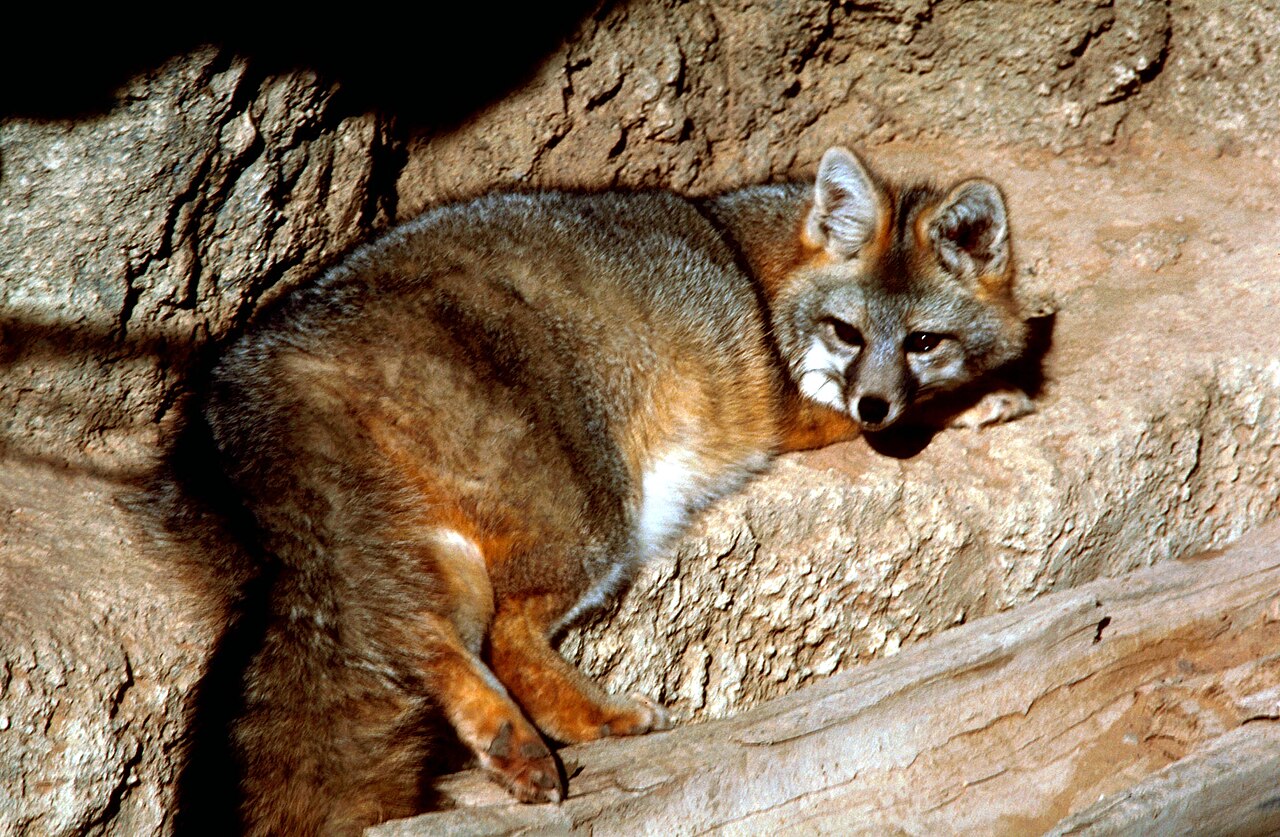
Gray foxes sit in the genus Urocyon, the oldest surviving branch of the dog family, which split from every other living canid roughly 9 to 12 million years ago. True foxes belong to Vulpes, the group holding the red fox, the arctic fox, and the fennec fox. Being called a fox is a matter of shape and habit, not ancestry.
That ancient split shows in the skeleton. Urocyon skulls carry widely separated temporal ridges in a U shape, while Vulpes skulls form a V. Rotating wrists and hooked claws, which no Vulpes has, are what make tree climbing possible. Only the island fox (Urocyon littoralis) of the California Channel Islands shares the genus.
What States Have Gray Foxes?
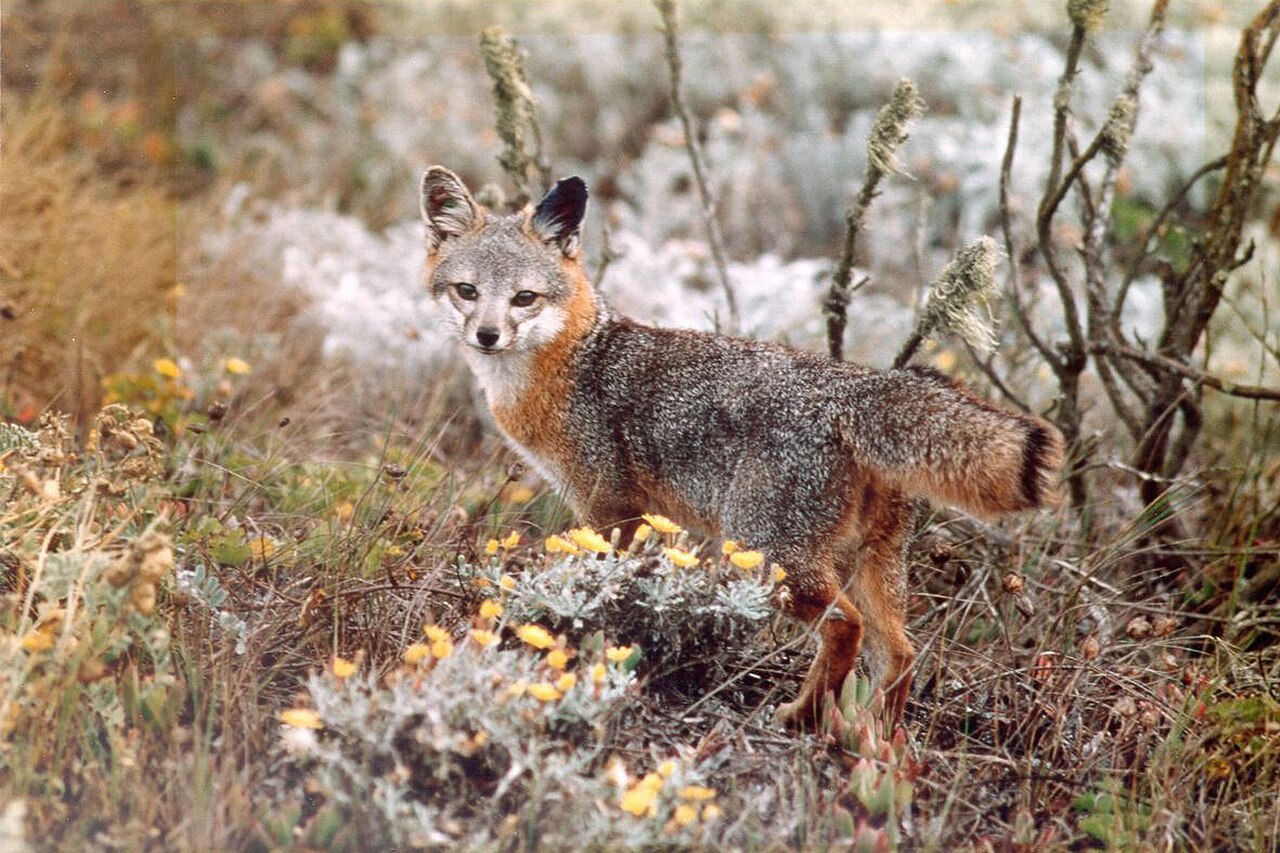
Gray foxes live in all of the lower 48 except parts of the northern prairies, with strongholds in the Southeast, Texas, the Southwest, California, and the lower Midwest. They thin out in the northern Great Plains and northern Rockies, where deep snow favors other predators.
Populations are declining in the upper Midwest and Northeast, and researchers point to coyote expansion, canine distemper, and the loss of brushy young forest. Several states now list the gray fox as a species of conservation concern. Agencies such as the Missouri Department of Conservation publish current range maps and season data.
How Rare Is It to See a Grey Fox?
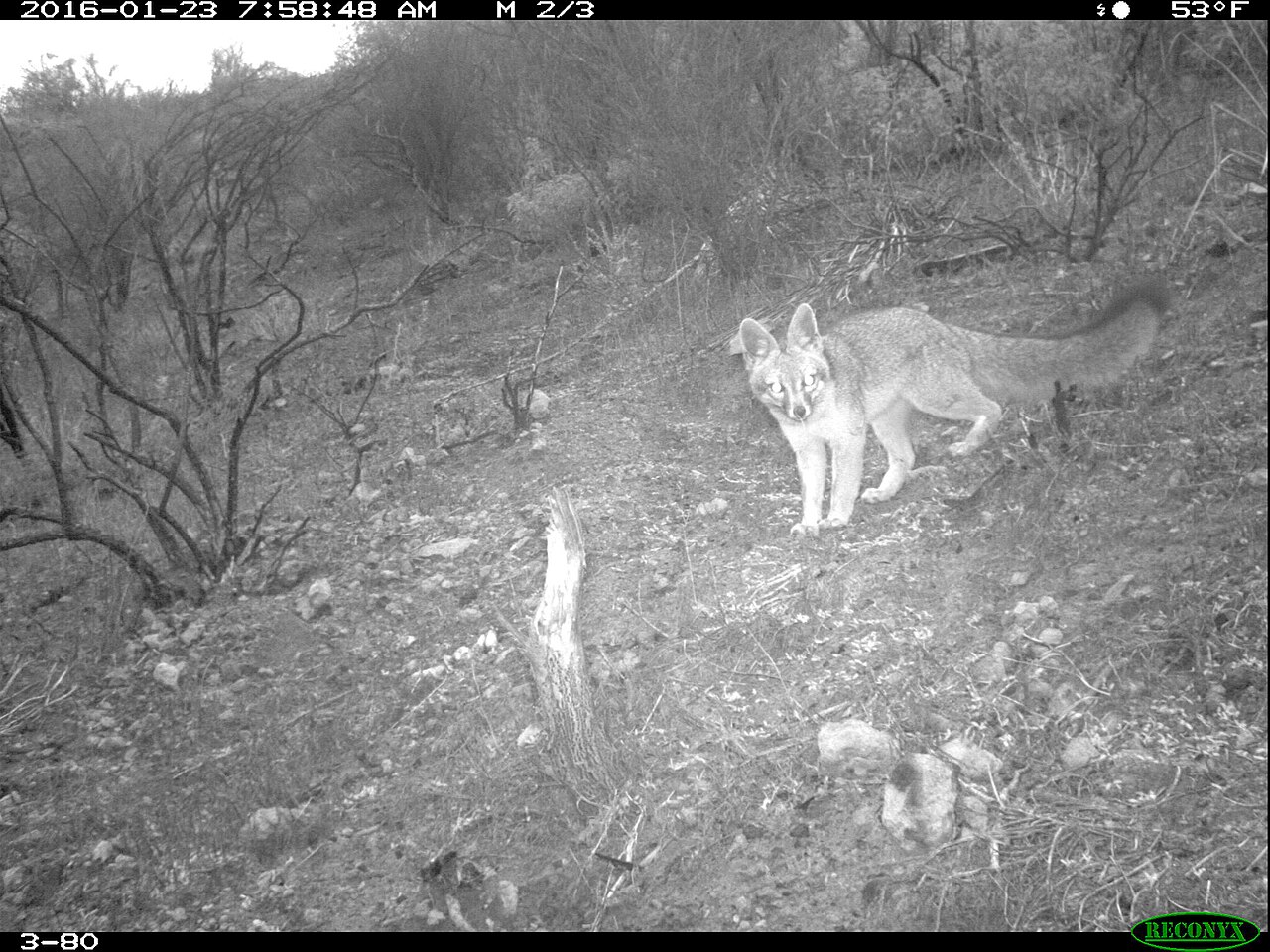
Sightings are uncommon, but the animal usually is not. In brushy and wooded country a grey fox may be the more numerous of the two fox species while the red fox is the one people actually see, because red foxes hunt open ground in daylight and gray foxes stay in cover after dark.
Look for indirect signs instead. Gray fox scat is small, twisted, and often full of fur, seeds, and insect parts, the pattern described in our guide to identifying fox droppings. Claw marks on the bark of leaning trees are a strong clue, and the barks and screams of late winter are distinctive enough to appear in most rundowns of fox vocalizations.
Are Gray Foxes Aggressive to Humans?
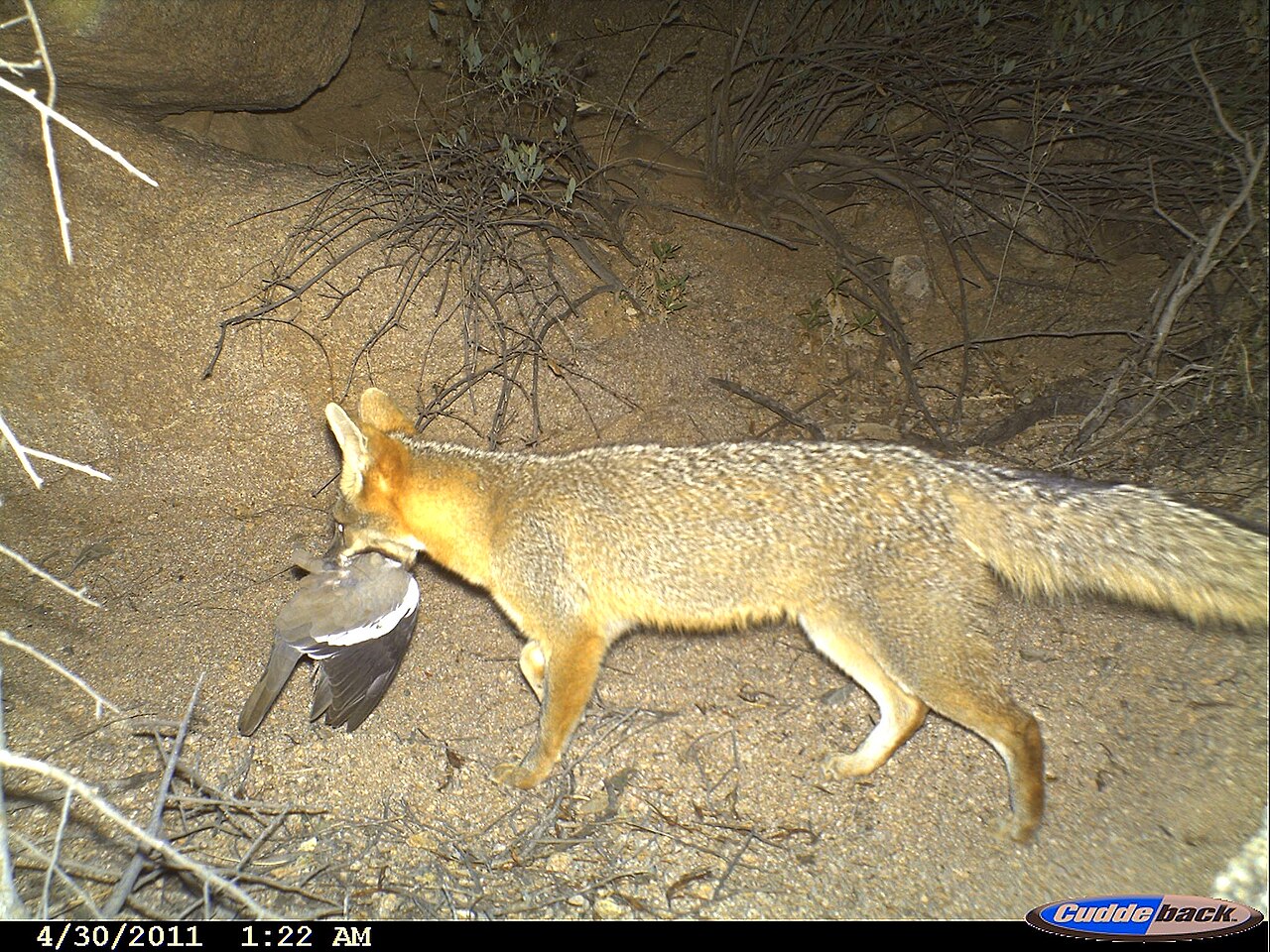
No. Gray foxes avoid people and retreat or climb rather than confront anything larger than themselves. Attacks are extremely rare and almost always involve rabies or an animal cornered while being handled. No documented case involves a healthy fox approaching a person unprovoked.
A fox out in daylight is not automatically sick. Parents feeding kits hunt around the clock in spring, and a fox kit may play in the open at midday. The signs worth reporting are staggering, circling, no fear at close range, or aggression toward objects. Rabies is confirmed in gray foxes, especially in Texas and Arizona, so never touch one alive or dead. Females, called vixens, are the ones most often seen near a den, covered in what to call a female fox.
Frequently Asked Questions
Can a gray fox breed with a dog?
No. Gray foxes have 66 chromosomes and dogs have 78, and the two lineages split millions of years ago, so no hybrid is possible. Reports of fox dog crosses come from misidentified dogs or coyote hybrids. Even red foxes, closer to dogs than gray foxes are, cannot interbreed with them.
Will a fox eat a dog or a cat?
A gray fox is too small to threaten an adult cat or any dog and eats mostly rodents, rabbits, insects, and fruit. Kittens and very small pets left out overnight are at some risk, as they are with owls and coyotes. Feeding pets indoors and securing trash removes most conflict.
Should I be concerned if I see a fox in my yard?
Generally no. A fox passing through is hunting rodents and provides free pest control. Take action only if it is denning under a structure, showing no fear, or appears sick. Remove food sources such as pet bowls, fallen fruit, and open compost, and the fox usually moves on.
What is a fox’s worst enemy?
Coyotes. They kill gray foxes on sight and displace them from open habitat, which is one reason gray fox numbers fall where coyotes increase. Bobcats, great horned owls, and golden eagles take kits and occasionally adults. Vehicles and canine distemper account for many deaths near people.