Bullfrog Sound: The 6 Noises a Bullfrog Actually Makes
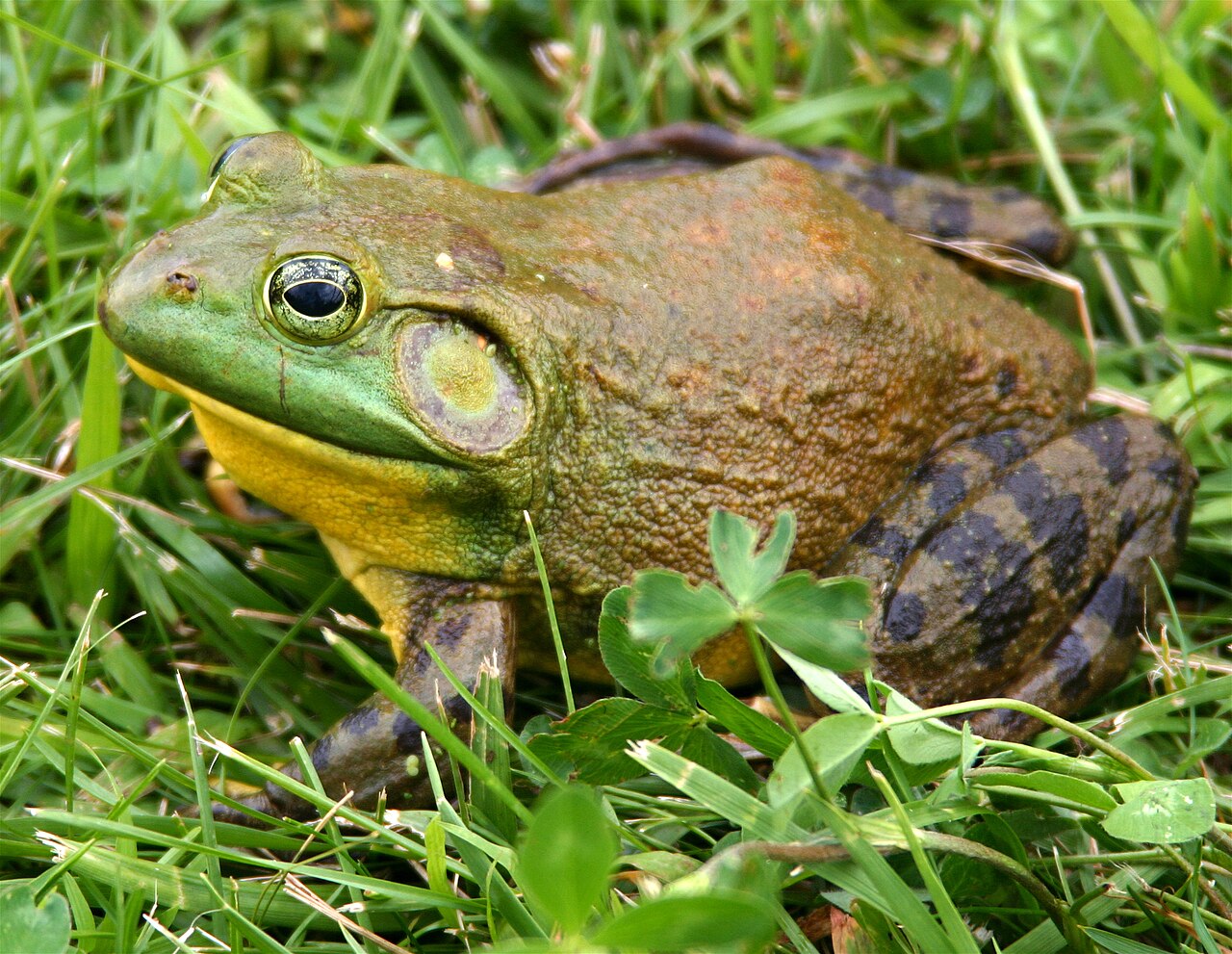
The bullfrog sound is a deep, two part bellow usually written as jug o rum, pitched so low that it feels more like a vibration in the chest than a note in the ear. It belongs to the American bullfrog (Lithobates catesbeianus), the largest frog in North America, and on a warm July night a single male can be heard from half a mile across still water.
That low pitch is why people misidentify it so consistently. Visitors to a pond at dusk guess at a cow, a distant engine or someone blowing across a bottle, and they are listening to a frog the size of a grapefruit sitting six feet away in the reeds. Bullfrogs also make four or five other noises, one of which sounds alarmingly like a person screaming.
A bullfrog sounds like a deep, resonant jug o rum or brrrwum, with a fundamental pitch near 200 Hz, the lowest of any common North American frog. Males call from shoreline territories on warm nights from late May through August, and the call carries up to half a mile over open water.
What Does a Bullfrog Sound Like?
The advertisement call is a slow, throaty bellow with two or three pulses, often described as jug o rum, rum rum, or simply a foghorn. It is unhurried, spaced several seconds apart, and it does not trill, buzz or peep. Nothing else in an American pond is that low.
Male bullfrogs produce it with an internal vocal sac rather than the balloon under the chin that smaller treefrogs inflate. Air moves back and forth between lungs and mouth while the throat swells sideways, so the frog can call with its mouth and nostrils shut, even partly underwater.
| Sound | What it is | When you hear it |
|---|---|---|
| Jug o rum bellow | Advertisement and territory call | Warm nights, late May to August |
| Chuckle or hiccup | Aggressive warning to a nearby male | Crowded shoreline, males within a few feet |
| Release call | Short grunt meaning wrong sex, let go | When a male grabs another male |
| Squeak and splash | Alarm as the frog dives | When you walk the bank in daylight |
| Open mouth scream | Distress, when a predator has hold of it | Rare, sudden, shockingly loud |
| Rain call | Short daytime croak in humid weather | Overcast, muggy afternoons |
What Noises Do Bullfrogs Make?
Six, in practice, and only one of them is the famous one. Beyond the bellow, males give a rapid chuckle when a rival crosses a territory boundary, and a short grunt called the release call when another male mistakenly clasps them. Both sounds are quiet and easy to miss unless you are close.
The other three are not breeding sounds at all. A startled bullfrog squeaks once as it launches into the water, a sound most anglers know well. On humid overcast days both sexes may give a few isolated croaks. And a frog in the grip of a heron or a snake screams with its mouth wide open.
Why Does a Bullfrog Croak?
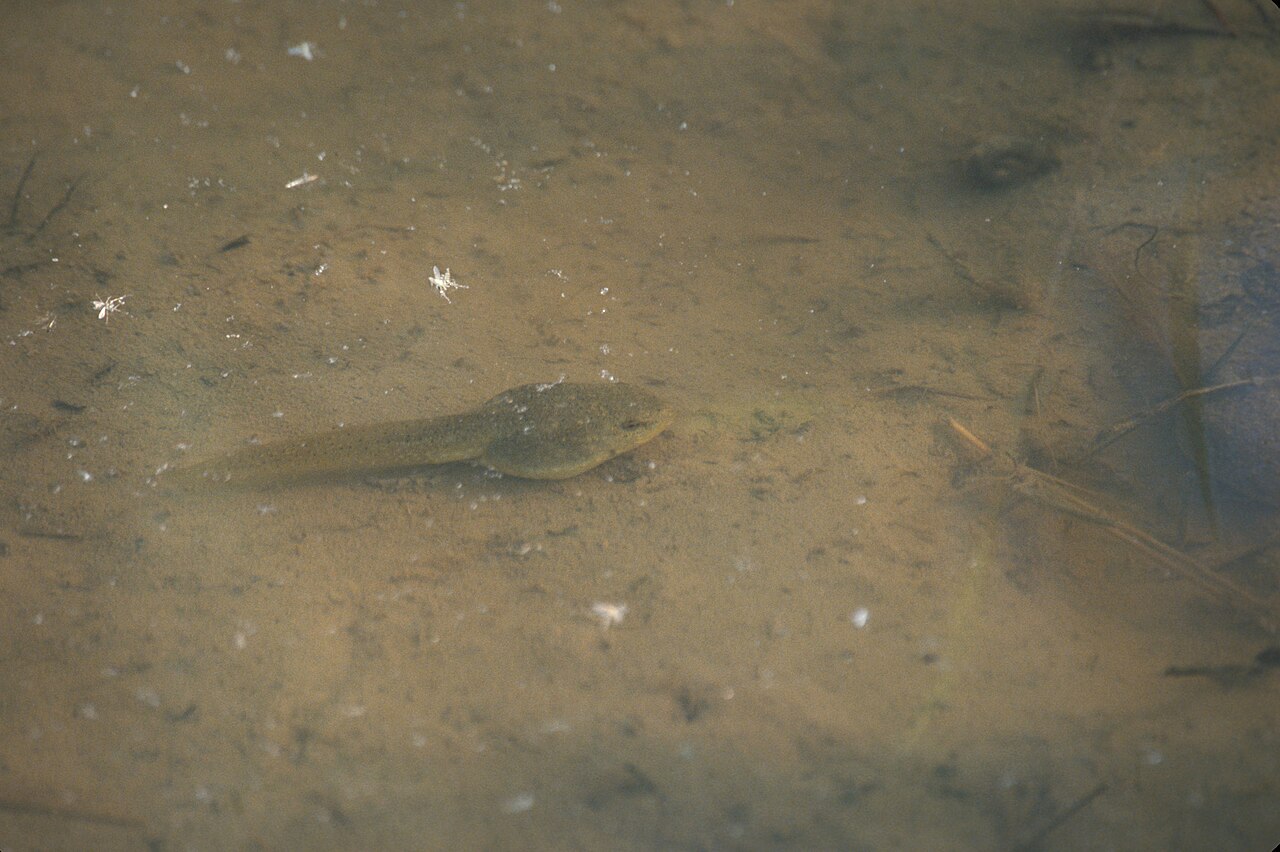
Two reasons, and they run at the same time. The call advertises the male to females, who judge size and stamina from the pitch and persistence of the bellow, with lower calls signaling larger bodies. It also stakes out a patch of shoreline, because bullfrog males defend territories and will wrestle intruders.
Calling is expensive. A male may bellow for hours across a season while feeding less, so the frogs doing the most calling are the ones that can afford it. That honest cost is exactly what makes the call useful information to a listening female.
What Is a Frog’s Noise Called?
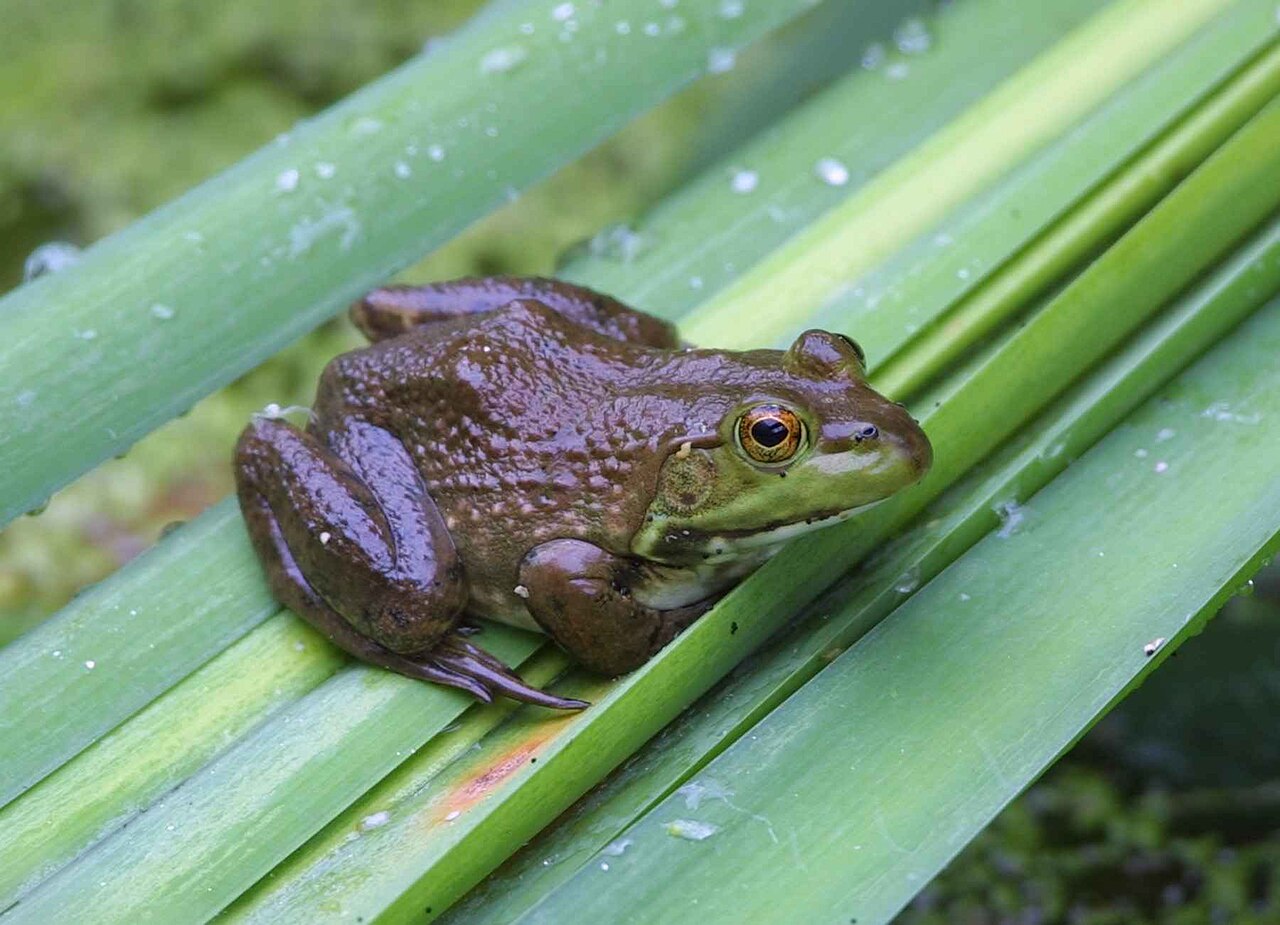
The general word is a croak, and biologists use call for any single vocalization and chorus for many animals calling together. The cry of a frog, in older usage, is also a croak; there is no separate technical term for a frog crying the way there is for a bird singing versus calling.
Where the vocabulary gets specific is in call type. Researchers distinguish advertisement calls, aggressive calls, release calls, distress calls and rain calls, and bullfrogs have all five. Saying a bullfrog croaks is accurate but hides most of what is going on at the pond.
Do Bullfrogs Make Noise at Night?
Yes, and night is their main shift. Calling picks up around sunset, peaks in the first few hours of full dark, and continues at a lower rate until dawn. Warm, humid, windless nights produce the heaviest chorusing, and a cold front will shut a pond down completely within a night.
Daytime calling happens but is sporadic, usually a few croaks in muggy weather. If you want the full effect, arrive at a pond around an hour after sunset in late June. By then the high peeping of spring peepers has finished for the year and the low bellows own the water.
How Far Does a Bullfrog Call Carry?
Roughly half a mile (800 m) across open water in still air, and a good deal less through woods or brush. Low frequencies travel well because they bend around obstacles instead of being absorbed by them, which is the same physics that lets you hear a bass line through a wall but not the vocals.
Water helps twice over. A flat surface reflects sound rather than soaking it up, and on calm nights a temperature inversion above the pond traps sound near the surface. That is why a bullfrog that seems to be right at your feet is often on the far bank.
The Bullfrog Scream: The Sound Nobody Expects
A distressed bullfrog opens its mouth and screams, and the sound is high, harsh and loud enough to carry through a house with the windows shut. People who hear it at night routinely report a child or a cat in trouble. It happens when a predator has already made contact, so it is brief.
The function is probably to startle the predator into loosening its grip, and possibly to attract a larger predator that might interrupt the attack. Frog screams join a short list of night noises that sound human, alongside the yips and screams of coyotes and fox calls in winter.
Bullfrog vs Green Frog: Telling the Calls Apart
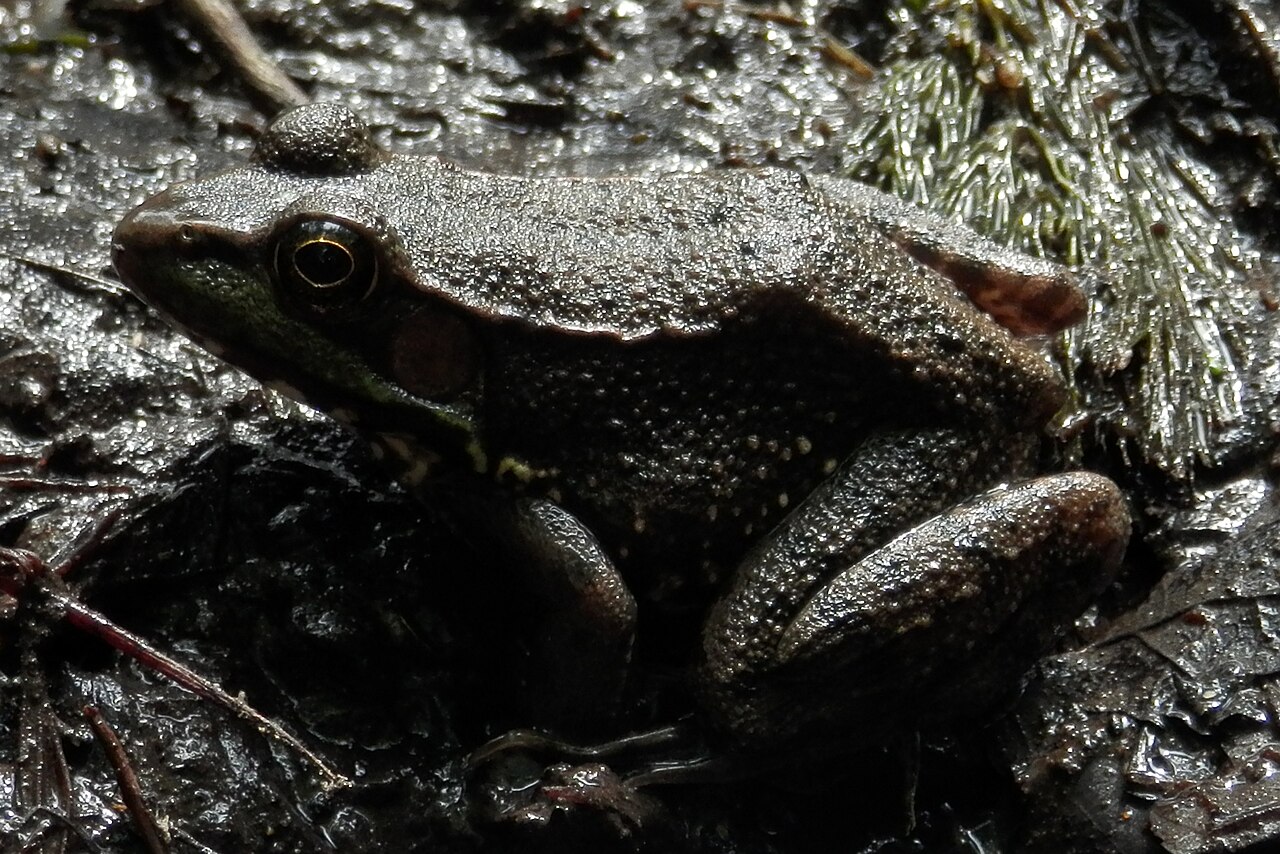
The green frog (Lithobates clamitans) shares most bullfrog ponds and gets blamed for the bullfrog’s reputation constantly. Its call is a single plucked note, usually compared to a loose banjo string, sometimes repeated three or four times with each note quieter than the last. It is short, bright and slightly comic.
The bullfrog is longer, lower and never plucky. A second tell works when you can see the frog: green frogs have two ridges of raised skin running down the back from behind the eyes, and bullfrogs have none. Between the call and the ridges, the two separate reliably.
What Month Do Frogs Stop Croaking?
For bullfrogs, calling fades through August and is essentially finished by early September in the northern states, later in the Gulf South where it can run into October. Bullfrogs start late and end late; they need water temperatures near 70 F (21 C), so they are the last frog chorus of the season in most places.
By then the soundscape has handed over to insects. Once the bellows stop, the ponds belong to the trilling of crickets and katydids until frost. Any frog calling after the first hard freeze is worth a second listen, because it is probably not a frog.
What Does It Mean When Frogs Croak at Night?
It means males are breeding, and little else. The common belief that frog noise predicts rain has a kernel of truth behind it, since humidity and falling pressure do increase calling activity, but frogs are responding to conditions that already exist rather than forecasting anything.
A loud chorus is a reasonable sign of a healthy pond, because amphibians are sensitive to pollution and drying. Silence at a pond that used to be loud is worth noticing. Bullfrogs are the exception to that comfort, since west of the Rockies they are an introduced species tracked by the U.S. Geological Survey, and a loud bullfrog chorus there signals a problem rather than good health.
How to Quiet Bullfrogs in a Backyard Pond
No smell reliably drives frogs away. Vinegar, salt, citric acid and coffee grounds all circulate as home remedies; the ones that work are the ones that injure or kill amphibians through their permeable skin, and most are illegal to apply to native species. Repellent granules sold for the purpose have no controlled evidence behind them.
What works is habitat. Bullfrog tadpoles take one to two years to transform, so they need water that never dries; draining a decorative pond for a few weeks in late summer ends the cycle. Steep sided edges, removal of shoreline vegetation, and a night light moved away from the water all reduce the number of calling males the following year.
Related reading: American Bullfrog Identification.
Frequently Asked Questions
What is a bullfrog’s worst enemy?
Great blue herons and other wading birds take the most adults, hunting the shallows where males sit and call. Water snakes, snapping turtles, raccoons, otters and large bass account for most of the rest, and larger bullfrogs eat smaller ones readily. Tadpoles are eaten mainly by aquatic insects and fish.
Can bullfrogs call underwater?
Partly. Because the air recirculates internally between lungs and mouth, a bullfrog can produce sound with its head just below the surface, and calls do transmit into the water. Full submerged calling is not typical. Most males call with the head and shoulders above water, anchored against vegetation.
Do female bullfrogs make any sound?
Rarely, and never the bellow. Females can squeak in alarm and give a release call, but the advertisement call is a male sound produced with a vocal sac males have and females lack. Anything resembling jug o rum at a pond is a male.
Why does the sound seem to move around the pond?
Because several males are calling in turn and your ears struggle with low frequencies. Humans localize high sounds by comparing arrival times between the two ears, a method that works poorly below about 500 Hz. The frogs stay put; the apparent motion is a limit of your hearing, the same effect that makes a rattlesnake rattle seem to shift position.
Are bullfrogs the frogs in sound effects libraries?
Usually, yes. The jug o rum bellow is the stock pond ambience in film and television, often laid over footage from places where bullfrogs do not occur. If a nature documentary set in Europe or Asia has a deep croaking soundtrack, it is very likely an American bullfrog recording.
Is a loud bullfrog dangerous to have nearby?
Not to people. Bullfrogs have no venom and no meaningful bite, though a large one can startle you by lunging at a finger. The real concern is ecological: where they have been introduced they eat native frogs, snakes, even small bats taken at the water surface, and hatchling birds, and they spread amphibian disease.