Rattlesnake Sound: What It Means and 5 Noises That Fool You
A rattlesnake sound is a dry, buzzing rattle that starts and stops abruptly, closer to a sprinkler head or a shaken pill bottle than to anything a snake could produce with its mouth. The noise comes from loose keratin segments at the tip of the tail knocking against each other, and it carries a clear message: something large is too close.
Knowing that buzz is worth more than knowing what a rattlesnake looks like, because you will almost always hear one before you see one. Grass, leaf litter and rock shade hide a coiled snake completely, and the rattle is the only warning most hikers ever get. The problem is that several harmless things make a similar noise, so a lot of people either panic at a cicada or walk straight past a real snake.
A rattlesnake sounds like a fast, dry buzz or hiss, produced by hollow keratin segments at the tail tip vibrating 50 to 90 times per second. It has no pitch, no rhythm and no echo of a voice. Most people can hear it from about 25 to 30 ft (8 to 9 m) in quiet conditions, less near wind, water or traffic.
What Is the Sound of a Rattlesnake?
The sound of a rattlesnake is broadband noise, meaning it has no single musical pitch the way a bird call does. Listeners describe it as bacon frying, a sprinkler starting up, or a can of dry rice being shaken hard. Recordings show most of the energy spread between roughly 3 and 13 kHz, which is exactly the range human hearing is most sensitive to.
Two features separate it from almost everything else in the field. It begins and ends instantly, with no fade in or out, and it holds a steady machine-like rate for as long as the snake feels threatened. A rattlesnake can sustain that buzz for hours because the tail muscles driving it are among the fastest in any vertebrate.
How a Rattlesnake Makes the Noise
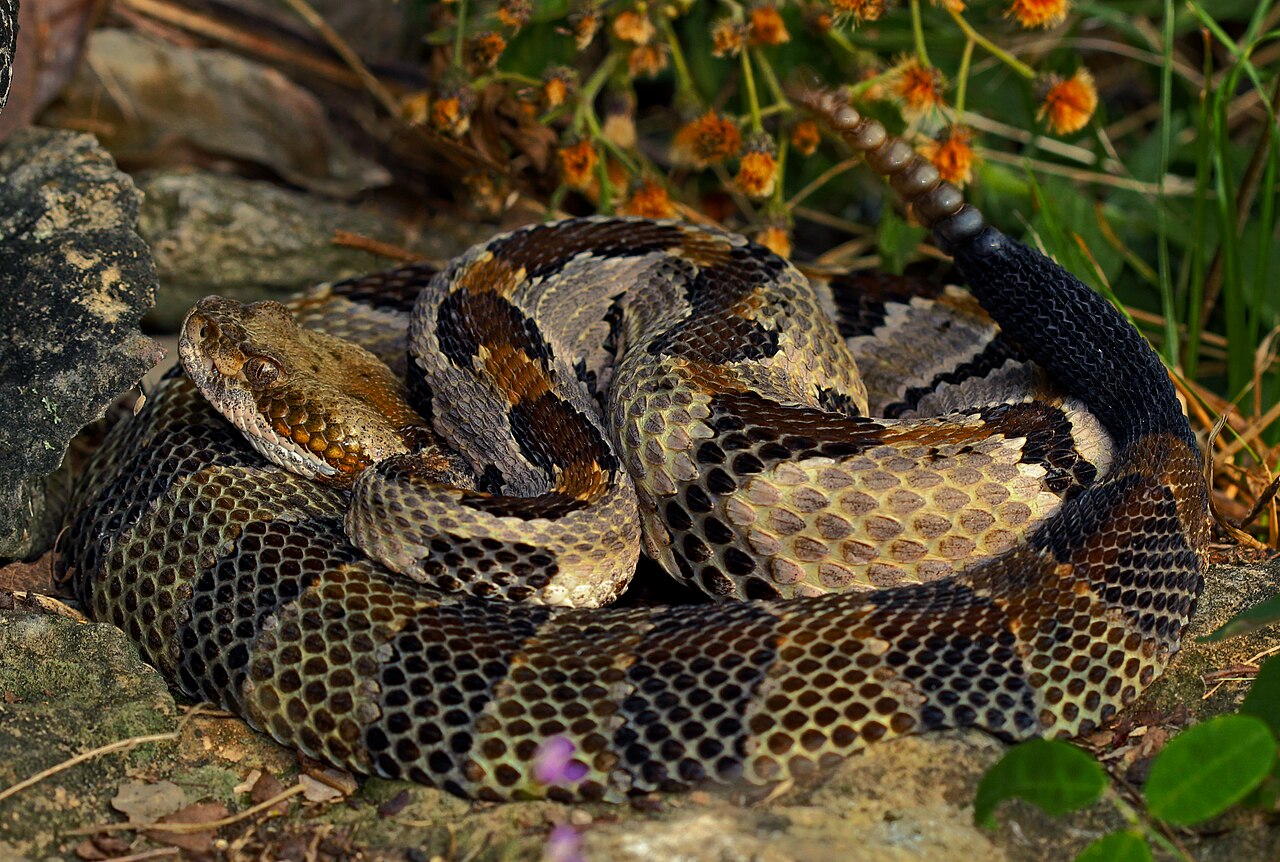
The rattle is not a voice box and not an instrument the snake blows through. Each segment is a hollow shell of keratin, the same protein as your fingernails, and the segments interlock loosely like nested cups. When the tail shakes, the shells clatter against one another, and the hollow chambers amplify the result.
A new segment is added every time the snake sheds, which happens two to four times a year depending on food and climate. That is why counting segments does not give you the snake’s age, a myth that refuses to die. Old segments break off routinely, and a long rattle usually just means a well fed snake that has not scraped its tail recently.
| Feature | Rattlesnake rattle |
|---|---|
| Source | Loose keratin segments at the tail tip, no vocal organ |
| Shake rate | 50 to 90 times per second, sustained for minutes or hours |
| Character | Dry buzz, no pitch, abrupt start and stop |
| Audible range | About 25 to 30 ft (8 to 9 m) in quiet air |
| Meaning | Warning to back off, not a signal of an incoming strike |
| Newborns | Silent, one button only, cannot rattle until the first shed |
How Far Away Can You Hear a Rattlesnake Rattle?
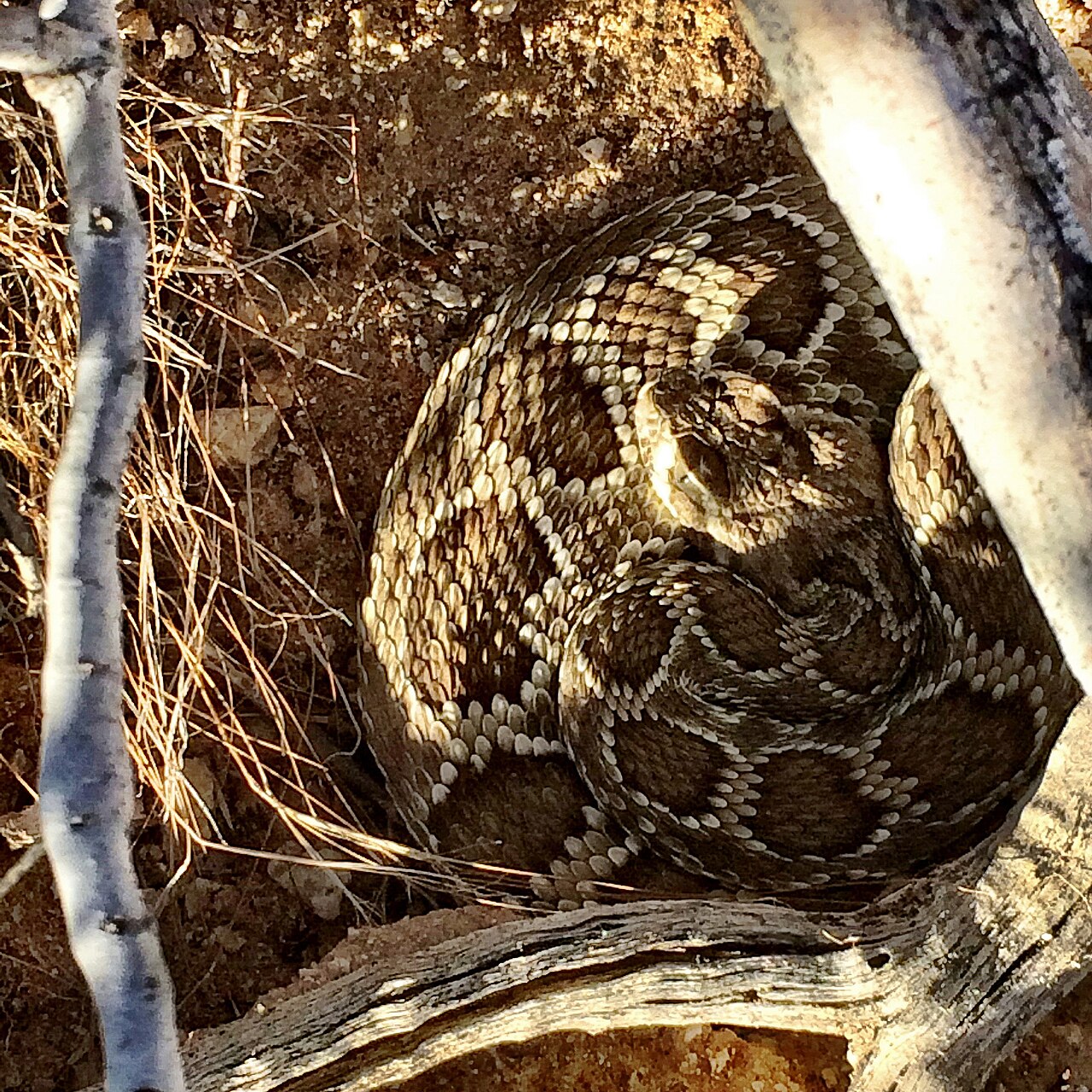
In still air with no background noise, most people pick up a large rattlesnake at about 25 to 30 ft (8 to 9 m). A western diamondback in full alarm can be heard farther, sometimes 50 ft (15 m) or more across open desert, while a small sidewinder may not register past 15 ft (4.5 m).
Real conditions cut that distance hard. Wind through dry brush, a running creek, road noise and your own footsteps all sit in the same frequency band as the rattle and mask it. Hearing loss in the upper range, common after age 50 and in anyone who has worked around machinery, removes much of the signal before it ever reaches you.
Why the Rattle Sounds Closer Than It Really Is
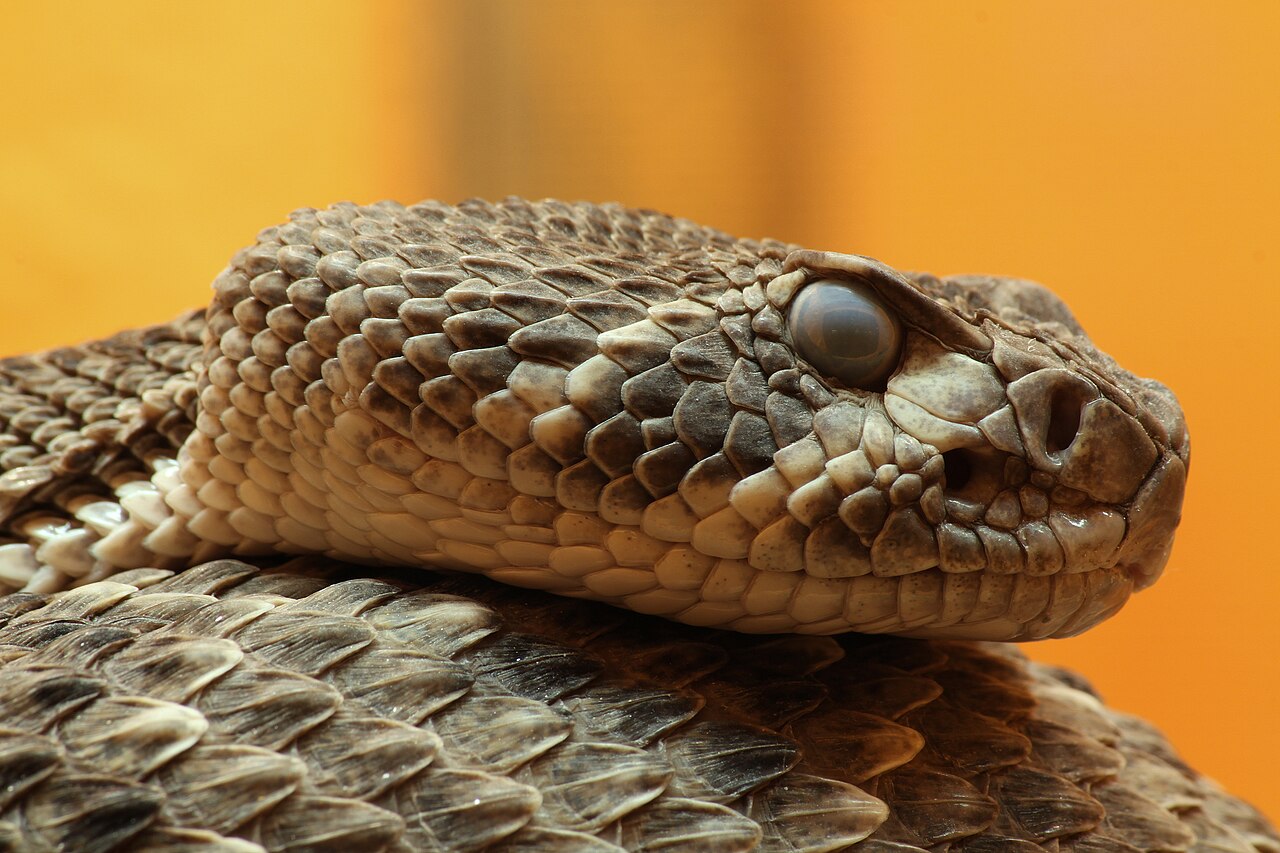
Rattlesnakes do not shake at a constant speed. Research published in 2021 found that as a threat approaches, the snake raises its rattling rate gradually, then jumps abruptly to a much higher rate at close quarters. Human listeners in that study consistently judged the snake to be nearer than it actually was once the high rate kicked in.
The practical effect works in your favor. The snake is telling you that you have crossed a line, and your brain overestimates the urgency, which is exactly the reaction that keeps feet out of striking range. Treat any rise in rattling speed as the snake saying you are still moving the wrong way.
How Do You Identify a Rattlesnake by Sound?
Ask three questions. Does the noise start and stop instantly, with no wind up and no trailing decay? Does it stay in one place instead of moving through the canopy or across the yard? Does it change speed when you shift your weight?
A yes to all three points strongly at a rattlesnake. Insects drift, rise and fall in volume, and ignore you entirely. A rattle reacts to you within a second, which is the single most reliable tell in the field. If the sound answers your movement, stop moving.
What Sound Can Be Mistaken for a Rattlesnake?
Cicadas are the most common false alarm in the eastern and central states, and the resemblance is genuinely close on a hot afternoon. The difference is that a cicada buzz swells and fades over several seconds and comes from above you, in a tree. Compare it against the seasonal buzz of cicadas before your next hike and the two stop blurring together.
Other regular impostors are lawn sprinklers, dry seed pods in wind, and several harmless snakes that vibrate their tails in leaf litter. Gopher snakes and bullsnakes (Pituophis catenifer) also hiss loudly and flatten the head, a bluff good enough to get them killed by mistake every summer. Night hikers often mix rattles up with the trilling of field and tree crickets, which run continuously rather than in reactive bursts.
Can a Copperhead Sound Like a Rattlesnake?
A copperhead (Agkistrodon contortrix) has no rattle at all, but it can absolutely produce a rattlesnake-like noise. When alarmed it vibrates its tail rapidly, and in dry leaves that vibration produces a convincing dry buzz. Rat snakes, racers and kingsnakes do the same thing.
Tell them apart by substrate and texture. A real rattle sounds the same on bare rock, sand or grass because the noise comes from the snake itself. A tail buzzing in leaves sounds like leaves, with an irregular crackle, and it goes silent the moment the snake moves onto soil. When you cannot tell, assume venomous and back away.
Do Rattlesnakes Sound Like a Human Scream or a Baby Crying?
No. That search keeps coming up, and the answer is that people are hearing something else. Rattlesnakes have no larynx and cannot vocalize; their only other noise is a loud, sustained hiss made by forcing air out of the lungs, which sounds like a punctured tire.
Screaming noises at night in rattlesnake country are almost always a red fox, a rabbit caught by a predator, or a bobcat in the breeding season. If you want to rule that out, the yowls and screams in our guide to bobcat vocalizations cover the sounds most often mistaken for a person in distress.
Timber Rattlesnake Sound vs Western Diamondback
Species do differ, mostly in volume and pitch rather than in pattern. The timber rattlesnake (Crotalus horridus) of the eastern woodlands produces a lower, slightly softer buzz that blends easily into leaf litter and cicada season. Hikers regularly walk within a few feet of one without registering it.
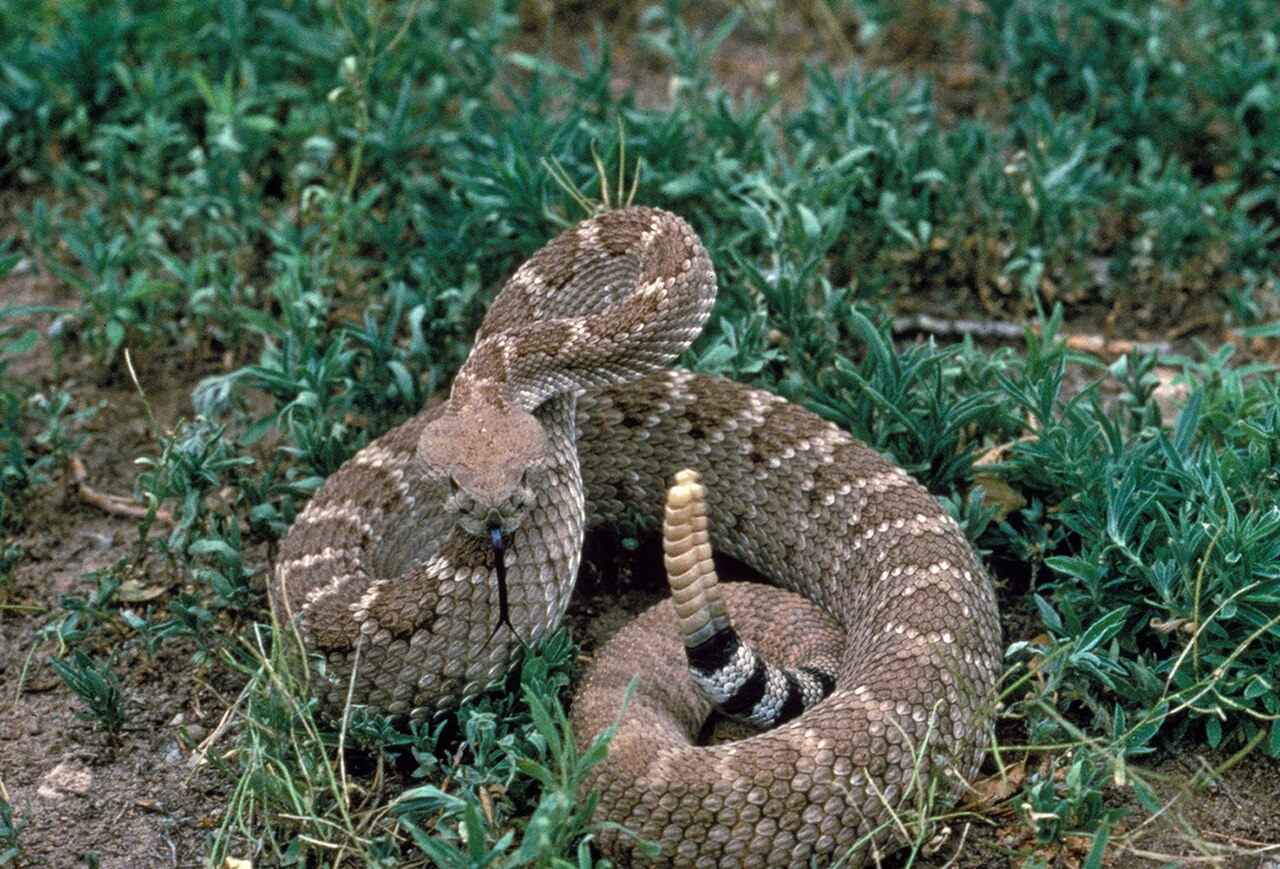
The western diamondback (Crotalus atrox) is the loudest of the North American species and the one most people picture. It rattles readily, holds the buzz, and does it from a raised coil. The Mojave rattlesnake (Crotalus scutulatus) sits between the two and is worth knowing by sound because its venom is the most dangerous of the group. Field recordings and range maps are available from the National Park Service for most parks where these species occur.
How to Tell If a Rattlesnake Is Near
The rattle is the obvious sign, but silence proves nothing. Roughly a quarter to a third of defensive encounters involve no rattle at all, because the snake is relying on camouflage and only buzzes once that fails. Newborns cannot rattle for their first week or two of life, and they are fully venomous.
Read the habitat instead of waiting for a sound. Rock piles, wood stacks, sunny trail edges in the morning, and shaded overhangs at midday are the places snakes actually are. Rodent activity is the best proxy of all, which is why a yard full of chipmunk chatter and burrows is worth more attention than a quiet one.
What to Do the Moment You Hear a Rattle
Stop. Look at the ground within one body length of your feet before you look anywhere else, because the snake is usually closer than the sound suggests. Once you have located it, move away slowly in the direction you came from, and give it at least 10 ft (3 m).
Do not throw anything, do not try to move it with a stick, and do not attempt to kill it. Most bites in the United States happen to people who are handling or harassing a snake, and the head remains capable of a reflexive envenoming bite for up to an hour after death. If a bite happens, keep the limb still, remove rings and watches, and get to a hospital; no tourniquet, no cutting, no suction device.
Related reading: Southern Pacific Rattlesnake.
Related reading: Prairie Rattlesnake.
Frequently Asked Questions
What is a rattlesnake’s biggest enemy?
Kingsnakes are the classic answer, since they are immune to rattlesnake venom and eat rattlesnakes routinely. Red-tailed hawks, roadrunners, coyotes and feral pigs also take them. By numbers, though, the biggest killer is people: vehicles, habitat loss and deliberate killing remove far more rattlesnakes than any natural predator does.
Do baby rattlesnakes rattle?
Not at first. A newborn has only a single button at the tail tip, and one segment cannot knock against anything, so it makes no sound. It gains a working rattle after its first shed, usually one to two weeks after birth. Until then it is silent and fully venomous, which is why young rattlesnakes deserve the same respect as adults.
Can a copperhead rattle?
A copperhead has no rattle, but it vibrates its tail when threatened, and in dry leaves that produces a buzz close enough to fool most people. The giveaway is that the sound depends on the leaves. Move the same snake onto bare ground and the noise disappears almost completely.
What smell do copperhead snakes hate?
No smell reliably repels copperheads or rattlesnakes. Sulfur, mothballs, cinnamon oil and commercial granules have all been tested and none produced a consistent effect in controlled trials. Removing rodent food, sealing gaps under sheds and clearing wood piles works, because it removes the reason the snake came.
Why do people bury a rattlesnake head?
Because a severed head keeps its bite reflex. Heat-sensing pits and jaw muscles stay functional for up to an hour after death, and envenomed bites from detached heads are documented in medical literature. Burying or otherwise removing the head prevents a person or dog from stepping on it. Not killing the snake avoids the problem entirely.
Where can I hear a rattlesnake sound safely?
State wildlife agencies and university herpetology departments host free recordings, and they are more reliable than app store sound effects, which are often edited or mislabeled. Listening to a few real recordings once is the cheapest safety training available. It also helps you sort a rattle from the night chorus of coyotes and other common backyard noises.