Ladybug: Species, Life Cycle, and What the Spots Really Mean
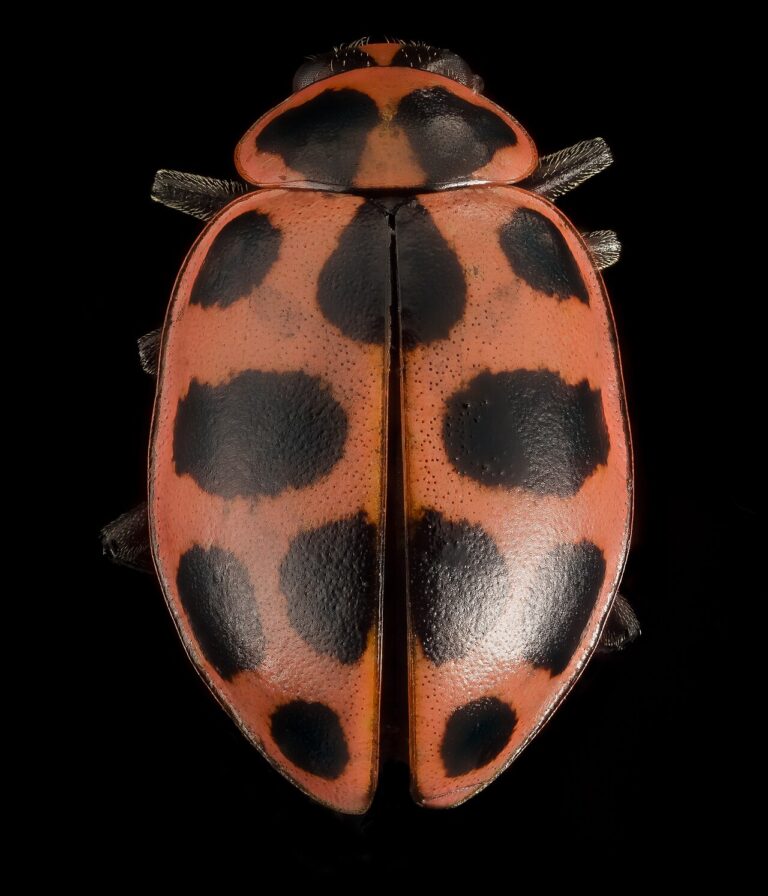
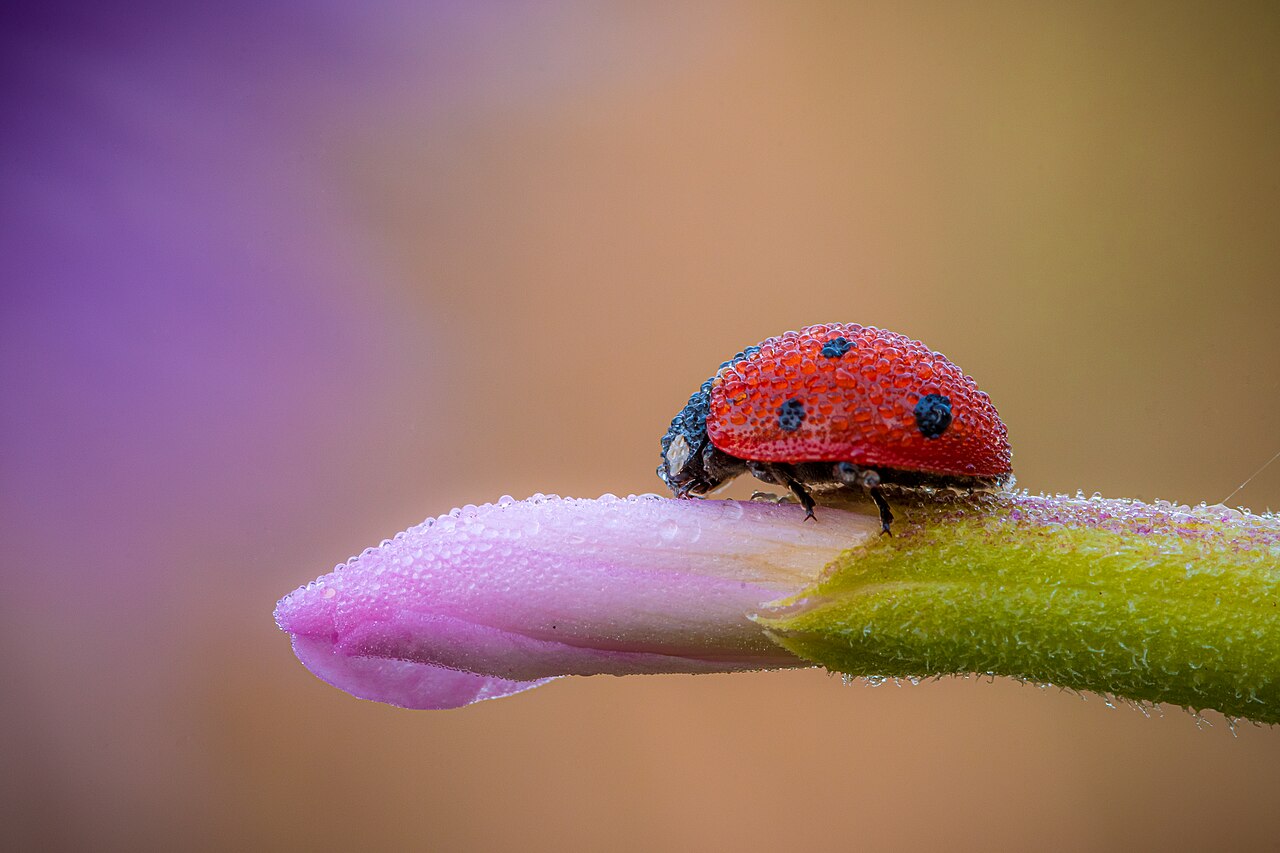
Ladybugs are small round beetles of the family Coccinellidae, with roughly 6,000 described species worldwide and about 500 in North America. They are predators rather than plant feeders, and a single adult eats around 5,000 aphids over its lifetime, which is why growers have bought and released them for over a century. The familiar red beetle with black spots is one species among thousands, and colour ranges through orange, yellow, brown, black, and even a rare green.
Almost everything people believe about spot counts is wrong. Spots do not indicate age, they do not indicate years of good luck, and they do not reliably indicate the species without checking pattern and shape as well. What spots do indicate is a warning: the bright colouring is aposematic, telling birds that the beetle tastes foul and will bleed an acrid yellow fluid from its leg joints if attacked.
| Feature | Detail |
|---|---|
| Family | Coccinellidae, about 6,000 species |
| North America | Roughly 500 species |
| Diet | Aphids, scale, mites, about 5,000 per lifetime |
| Life cycle | Egg, larva, pupa, adult in 4 to 8 weeks |
| Adult lifespan | Up to 1 year including overwintering |
| Spots | Species marker, not an age or luck count |
| Defence | Reflex bleeding of foul yellow fluid |
What a Ladybug Actually Is
Ladybugs are beetles, order Coleoptera, and the domed shape comes from the elytra, the hardened forewings that cover the membranous flight wings underneath. When a ladybug takes off, the elytra lift and the folded flight wings unfurl from beneath them, which is why the beetle looks briefly clumsy at the moment of launch.
Body length runs from about 1 mm in the smallest species to roughly 10 mm in the largest North American ones, and the classic domed oval outline is consistent across the family even where colour is not. The head is small and partly tucked under a shield-like pronotum, which usually carries its own pattern of pale and dark markings.
The great majority are predatory, feeding on aphids, scale insects, mites, and other soft-bodied pests. A small minority are plant feeders, including the Mexican bean beetle and the squash beetle, which look like ladybugs and are agricultural pests. Our guide to what ladybugs eat covers the diet in detail.
Why They Are Called Ladybugs
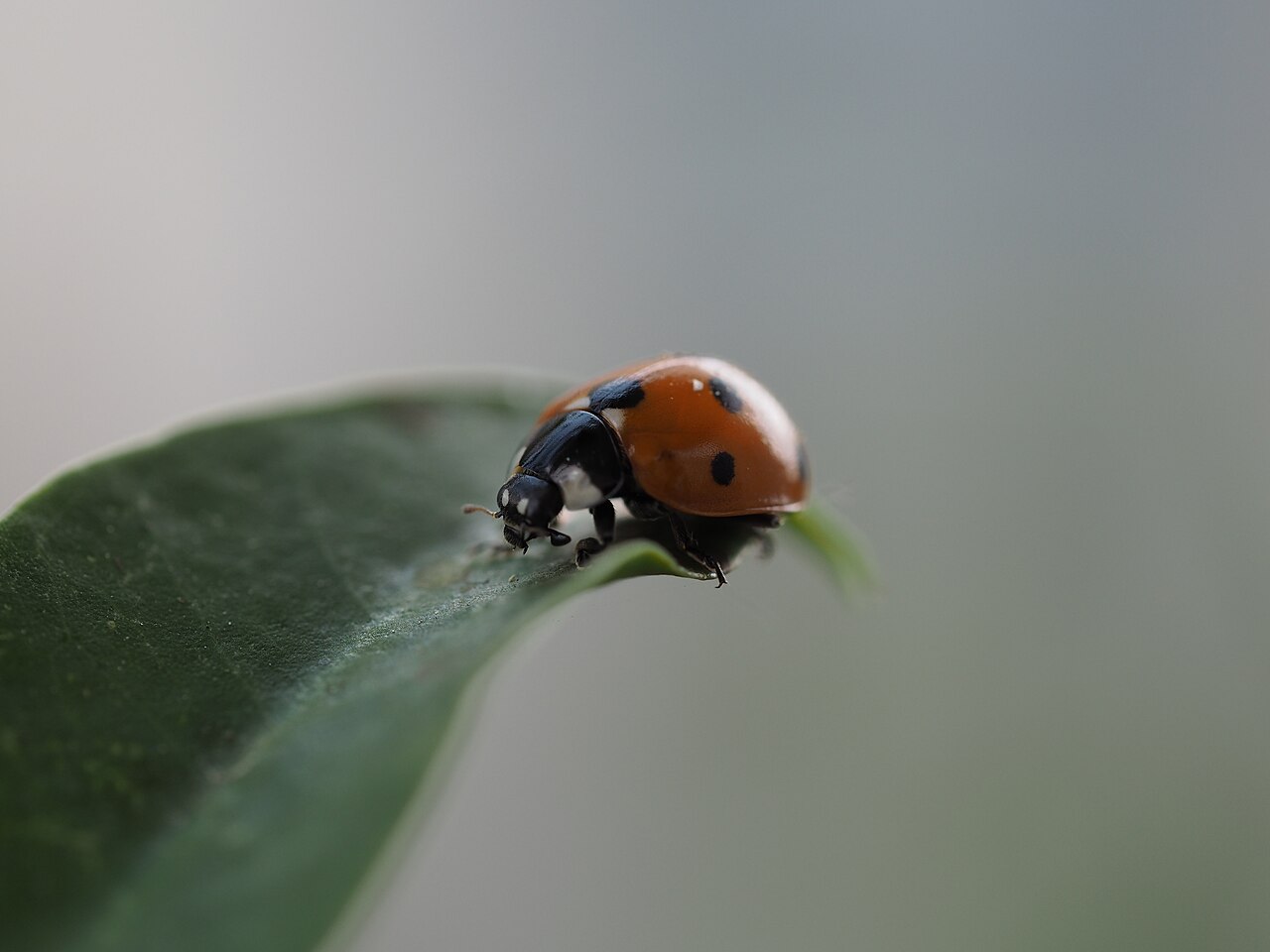
The name is religious in origin. In medieval Europe farmers plagued by aphids reportedly prayed to the Virgin Mary and credited the arriving beetles with saving their crops, calling them beetles of Our Lady. The seven-spot ladybird, the common European species, was linked to Mary’s seven sorrows and its red colour to her cloak.
British and most Commonwealth English kept the older form ladybird, while American English shifted to ladybug. Entomologists in both regions increasingly prefer lady beetle, because the insects are neither birds nor true bugs, and true bugs are a specific order that beetles do not belong to.
The same religious naming pattern shows up across European languages. German uses Marienkäfer, meaning Mary’s beetle, and several Scandinavian and Slavic languages use similar constructions. That consistency across unrelated languages is unusual and reflects how widespread the association became.
The association also explains why killing one is treated as unlucky across so much of Europe. A beetle credited with divine protection of a harvest was not something a farming household destroyed casually, and the taboo outlasted the belief that produced it by several centuries.
The Ladybug Life Cycle
Ladybugs undergo complete metamorphosis through four stages. Females lay clusters of small yellow or orange eggs on the undersides of leaves, deliberately close to aphid colonies so the larvae hatch into a food supply. Clutches typically number 10 to 50 eggs and a female may lay over a thousand in a season.
The larval stage is the one nobody recognises. Ladybug larvae look nothing like adults: elongated, spiny, dark grey or black with orange or yellow markings, and often described as tiny alligators. They are voracious, eating far more aphids per day than adults do, and they are routinely killed by gardeners who mistake them for pests.
After roughly two to four weeks the larva attaches itself to a leaf and pupates, emerging as an adult that is pale and soft-shelled at first and darkens over several hours. The whole cycle from egg to adult takes about four to eight weeks depending on temperature and food supply. Our guides to ladybug eggs and ladybug larvae cover the two stages people most often fail to identify.
Ladybug Colours and What They Mean
Colour indicates species, not age or toxicity level. The classic red with black spots covers several species including the seven-spot and the convergent lady beetle. Orange forms are common and in North America are frequently the introduced Asian lady beetle. Yellow species include the fourteen-spotted and twenty-two-spotted lady beetles.
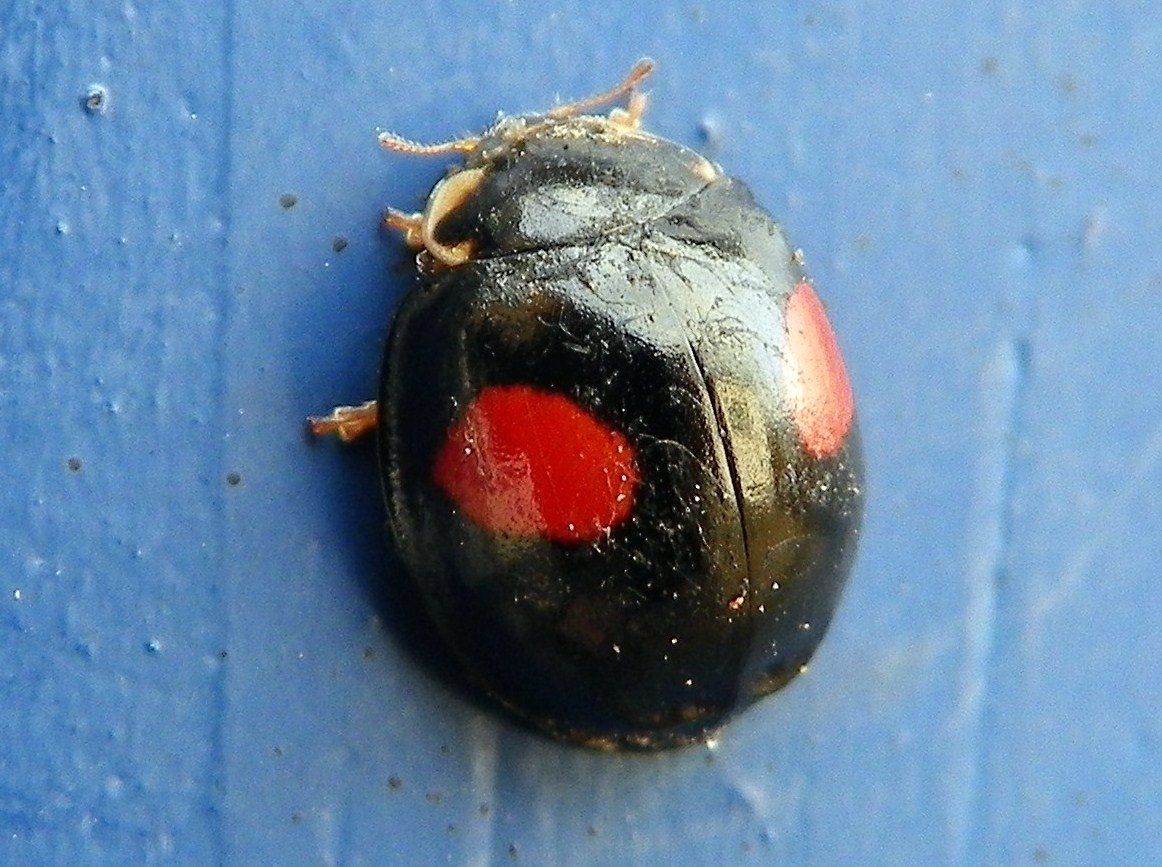
Black ladybugs with red spots exist and are usually the twice-stabbed lady beetle, a native North American species that specialises in scale insects. Brown forms include the larch ladybird and several inconspicuous species that most people never register as ladybugs at all. Green is genuinely rare and usually indicates a different beetle family entirely.
Within a single species, colour intensity varies with diet, temperature during development, and age, and freshly emerged adults are pale before darkening. This is the real source of the belief that colour changes with age, and it is true only within the first day of adult life rather than across a season.
Do Ladybugs Bite?
They can, and it is minor. Ladybugs have chewing mouthparts built for soft-bodied prey, and a beetle on skin will occasionally test it, producing a sensation most people describe as a pinch rather than a bite. There is no venom, no stinger, and no risk of disease transmission.
Asian lady beetles bite more readily than native species and are responsible for most reported incidents, particularly in autumn when large numbers gather on and inside buildings. Some people develop mild allergic reactions to their reflex bleeding fluid, and heavy indoor infestations have been linked to respiratory irritation.
The reflex bleeding is the more noticeable defence. A disturbed ladybug releases a yellow fluid from its leg joints, containing alkaloids that taste extremely bitter to a bird. It stains fabric and upholstery and smells unpleasant, which is the practical reason not to crush them indoors. Our guide to whether ladybugs bite covers the details.
Ladybug vs Asian Lady Beetle
This is the distinction that matters most in North America, because the beetles swarming houses each autumn are almost always Asian lady beetles rather than native species. The marking to check is the pronotum, the shield behind the head. Asian lady beetles carry a black M or W shape on a white background there. Native species have different pronotal patterns without that M.
Colour and spot count vary too much in Asian lady beetles to be useful, since they range from pale yellow-orange to deep red with anywhere from zero to twenty-two spots. Behaviour is the other reliable clue: native ladybugs overwinter outdoors under bark and leaf litter, while Asian lady beetles seek out buildings in large aggregations.
The species was introduced deliberately for aphid control and established widely, and it now outcompetes several native ladybugs, with the nine-spotted lady beetle in particular becoming scarce across its former range. Our comparison of the Asian lady beetle and the ladybug covers every distinguishing feature.
Ladybugs in the House
Autumn aggregations on south-facing walls are normal behaviour rather than an infestation in the pest sense. Asian lady beetles seek overwintering sites, are drawn to warm sunlit surfaces and pale colours, and enter through gaps around windows, siding, soffits, and utility penetrations. They do not feed, breed, or damage anything indoors.
Vacuuming is the standard removal method, ideally with a stocking placed inside the hose to catch beetles without them reaching the vacuum body, since crushing releases the staining fluid. Sweeping and squashing both leave marks on walls and fabric that are difficult to remove.
Exclusion is the durable answer and it has to happen before the aggregation arrives. Sealing gaps, repairing screens, and caulking around window frames in late summer prevents entry, and insecticide sprays applied indoors are largely ineffective because the beetles are already inside wall voids by the time they are noticed. Our guide to ladybug infestations covers the full process.
Ladybugs in the Garden
A resident ladybug population is one of the more effective forms of biological pest control available to a home gardener. Adults and larvae together consume aphids, scale insects, mealybugs, and spider mites in quantities that meaningfully suppress outbreaks, and university extension programmes consistently recommend encouraging them over spraying.
Buying and releasing ladybugs is less effective than most people expect. Commercially sold beetles are usually wild-collected convergent lady beetles harvested during overwintering aggregations, and released adults disperse within days regardless of how much food is present. Extension entomologists generally recommend habitat provision over purchase.
What works is providing what they need year round: flowering plants with small accessible blooms such as dill, fennel, yarrow, and alyssum for adult nectar and pollen feeding, some tolerance for aphids so there is prey, undisturbed leaf litter and bark for overwintering, and avoidance of broad-spectrum insecticides that kill predators alongside pests. Our guide to what it means when a ladybug lands on you covers the folklore side.
Frequently Asked Questions
What does seeing a ladybug symbolize?
Ladybugs are treated as good luck across most European and North American folklore, tied to the medieval belief that they were sent by the Virgin Mary to save crops from aphids. Associations include protection, answered wishes, and a coming change, and killing one is traditionally considered unlucky.
What bug is mistaken for a ladybug?
The Asian lady beetle is the most common, distinguished by a black M or W shape on the white shield behind its head. Mexican bean beetles and squash beetles look similar but are plant pests, and several unrelated beetles including some leaf beetles share the domed spotted form.
Do ladybug spots tell you its age?
No. Spot count indicates species rather than age, and it stays fixed throughout adult life. The seven-spot ladybird always has seven, and the Asian lady beetle can have anywhere from zero to twenty-two depending on the individual. The luck-per-spot belief is folklore rather than biology.
Why are they called ladybugs?
From medieval Europe, where farmers credited the beetles with saving aphid-infested crops after praying to the Virgin Mary and called them beetles of Our Lady. The seven-spot species was linked to Mary’s seven sorrows. British English kept ladybird, American English shifted to ladybug, and entomologists prefer lady beetle.
What is the downside of ladybugs?
Mainly the introduced Asian lady beetle, which aggregates on and inside buildings in autumn, bites more readily than native species, stains surfaces with its reflex bleeding fluid, and outcompetes several native ladybugs. A few species including the Mexican bean beetle are plant pests rather than predators.
What happens if you squish a ladybug?
It releases a yellow fluid from the leg joints containing bitter alkaloids, which stains fabric, carpet, and paintwork and smells unpleasant. This is the practical reason to vacuum rather than crush them indoors, ideally with a stocking in the hose so the beetles can be released outside.
Do ladybugs actually control garden pests?
Yes. A single adult eats around 5,000 aphids over its lifetime and larvae eat more per day than adults do. Buying and releasing them works poorly because commercially collected beetles disperse within days, so providing habitat and avoiding broad-spectrum insecticides is far more effective.