What Do Ladybugs Eat? Diet, Aphids, and More
Ladybugs eat mostly aphids and other soft-bodied garden pests, which makes them one of the most useful insects a gardener can have. A single ladybug can devour dozens of aphids a day and thousands over its life, and it will also take scale insects, mealybugs, mites, whiteflies, and insect eggs. When prey runs short, ladybugs round out their diet with pollen, nectar, and honeydew, and they sip water from dew and droplets rather than drinking from a dish.
This guide explains exactly what ladybugs eat at every stage, how many aphids they can put away, what their strange larvae eat, whether they drink water, the few ladybugs that actually damage plants, and how to feed one you are keeping for a short time. It also shows why they are such powerful natural pest control.
| Food | Notes |
|---|---|
| Aphids | Main prey, up to 50 a day per adult |
| Other soft pests | Scale, mealybugs, mites, whiteflies |
| Insect eggs | Including pest eggs and small larvae |
| Pollen and nectar | Backup food when prey is scarce |
| Honeydew | Sugary residue left by aphids |
| Water | Dew and droplets, not from a bowl |
What Do Ladybugs Eat?
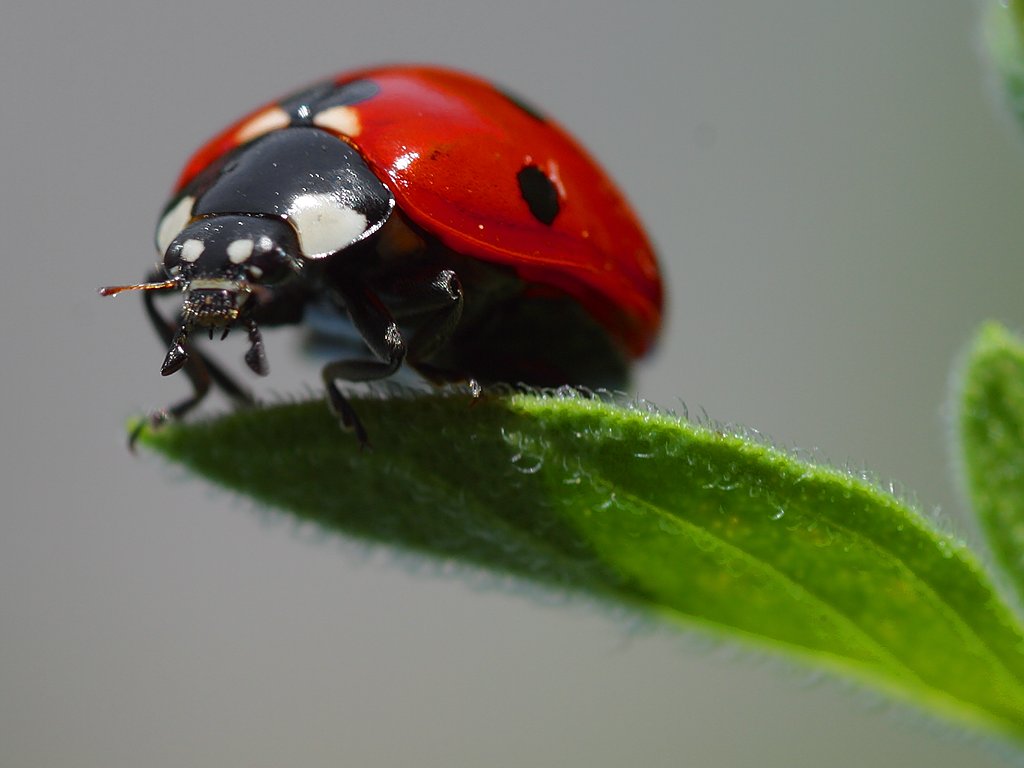
The short answer is that ladybugs are predators, and their favorite food is the aphid. These small, soft, sap-sucking insects swarm on roses, vegetables, and countless other plants, and ladybugs hunt them relentlessly. Both the familiar adult beetles and their larvae are dedicated aphid eaters, which is why gardeners welcome them so warmly.
Aphids are far from the only thing on the menu. Ladybugs also eat other soft-bodied pests, including scale insects, mealybugs, spider mites, whiteflies, psyllids, and the eggs and young larvae of many insects. Almost any small, slow, soft creature on a plant is potential prey for a hungry ladybug.
This broad appetite for pest insects is exactly what makes ladybugs valuable. By clearing aphids and their relatives from a garden, they protect plants from the damage and disease those pests cause. In that sense a ladybug is doing the same job as the methods used to control other pests, only naturally and for free.
How Many Aphids Does a Ladybug Eat?
The numbers behind a ladybug’s appetite are genuinely impressive. A single adult ladybug can eat around 50 aphids in a day, and estimates from university extension entomologists suggest one beetle may consume up to 5,000 aphids over the course of its life. For a creature the size of a pea, that is an enormous amount of pest control.
Those totals climb even higher when you count the larvae, which are voracious in their own right. Across its development a single ladybug, larva and adult combined, removes thousands of aphids from the plants around it. Release a modest group into an infested garden and the effect on an aphid outbreak can be dramatic.
Appetite depends on supply, of course. When aphids are abundant, ladybugs eat and reproduce quickly, laying eggs right in the middle of the food source so their hungry larvae hatch into a feast. When prey thins out, they slow down, disperse, or switch to backup foods until pests build up again.
What Ladybug Larvae Eat
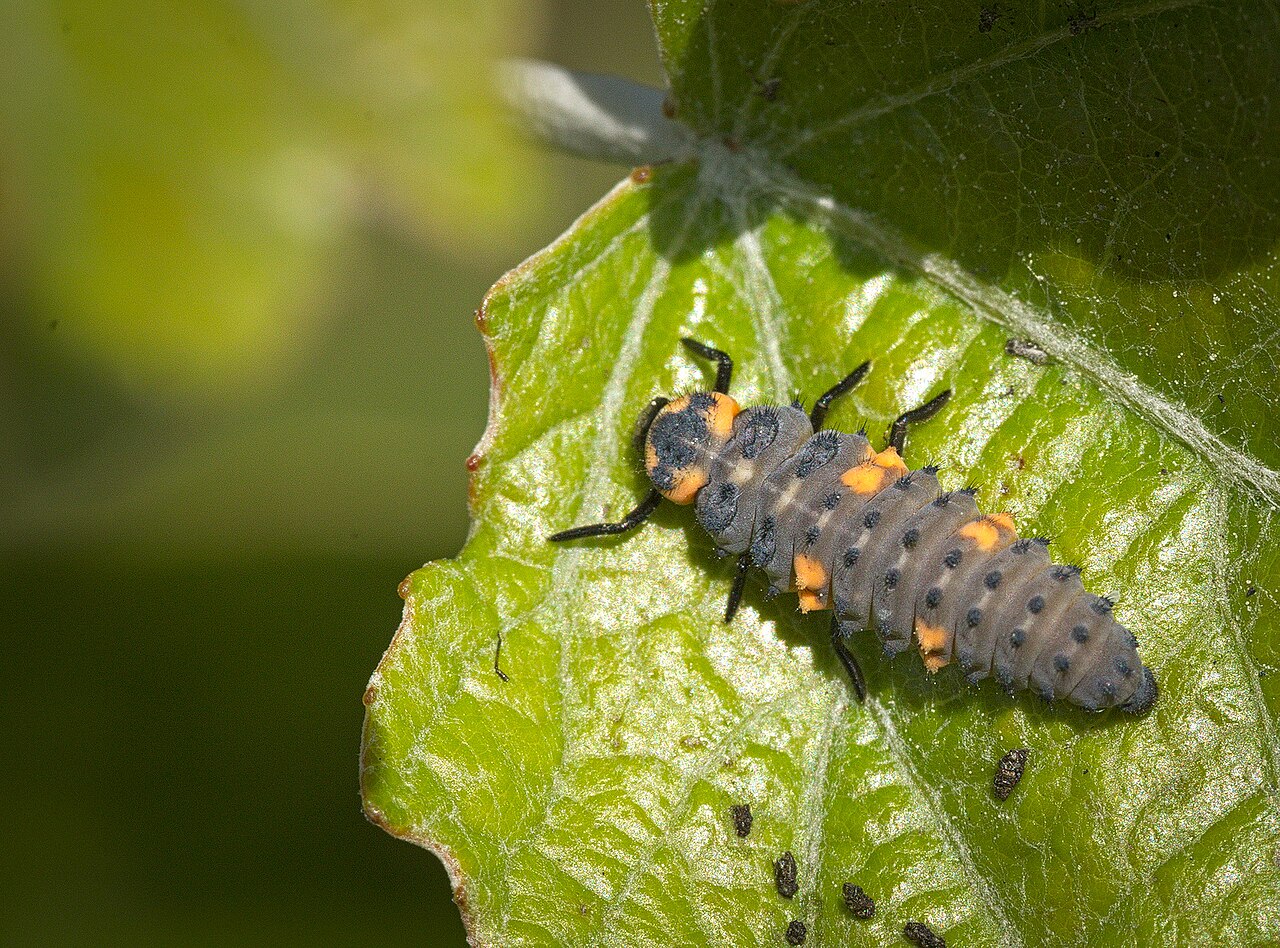
Ladybug larvae look nothing like the round adults. They are small, spiky, and often black with orange markings, resembling tiny alligators as they crawl over leaves. Many people mistake them for pests and remove them, which is a shame, because the larvae are even hungrier hunters than the adults.
Like their parents, larvae feast mainly on aphids, along with mites, scale insects, and the eggs of other insects. A larva does little except eat and grow through several stages over a couple of weeks, and in that time it can clear a remarkable number of pests from a single plant. Their hunting protects crops long before the beetles ever take wing.
Learning to recognize the larvae is one of the most useful skills a gardener can pick up. Leaving these strange little creatures alone means keeping a free workforce of pest controllers on the job. The same principle applies across the garden food web, where predators from ladybugs to orb-weaving spiders each take their share of pests.
Do Ladybugs Drink Water?
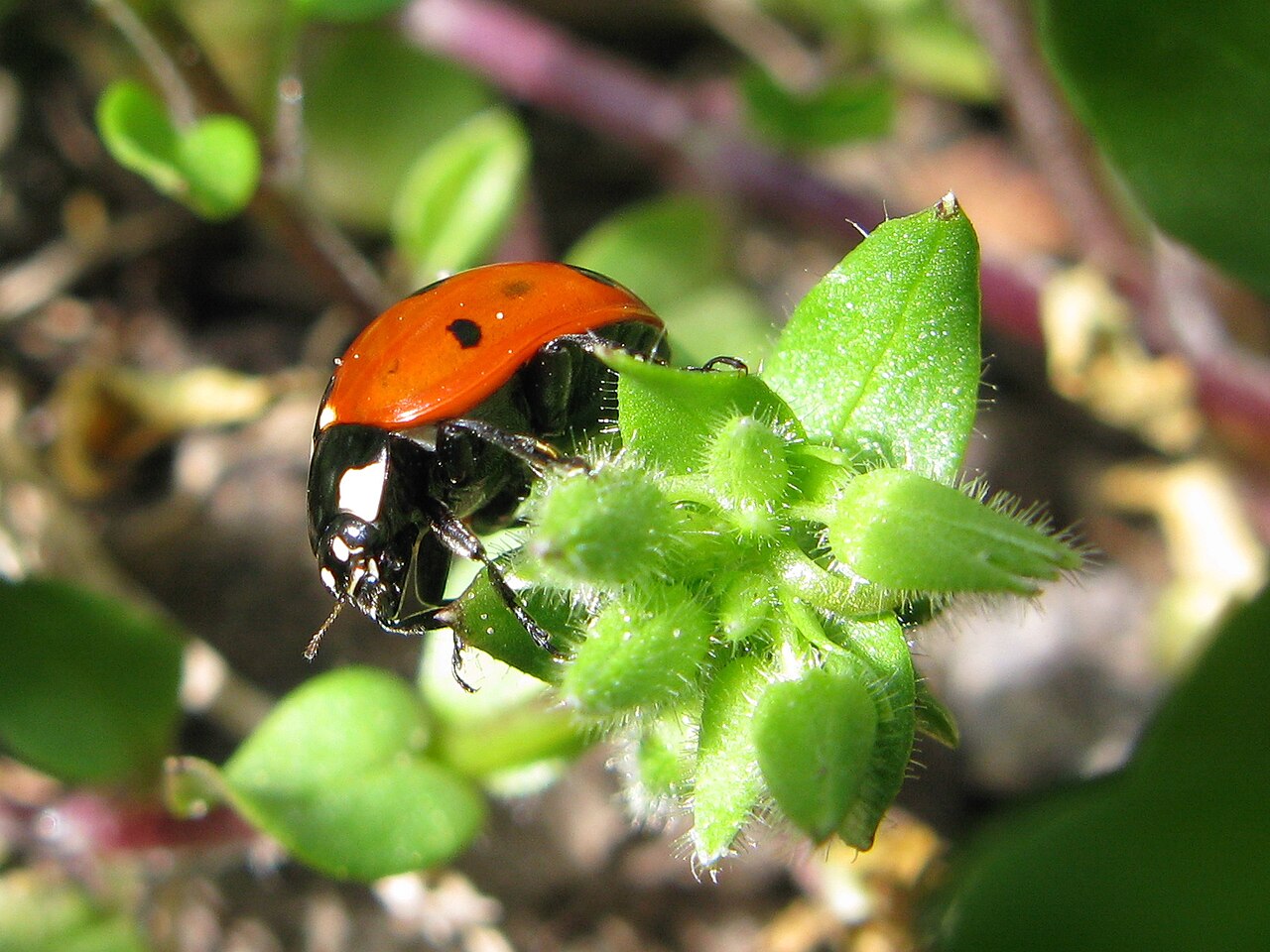
Ladybugs do need water, but not in the way a pet does. They do not drink from a bowl or a puddle in any meaningful amount. Instead they take in moisture from the dew that collects on leaves in the morning, from tiny droplets after rain or watering, and from the moisture contained in their soft-bodied prey.
Aphids themselves are full of fluid, so a ladybug that is eating well is also staying hydrated at the same time. This is one reason a healthy, prey-rich garden supports ladybugs so well, since food and water arrive together in every meal. Honeydew, the sugary liquid that aphids excrete, adds both energy and moisture.
If you are keeping a ladybug briefly indoors, you can offer moisture with a damp cotton ball, a lightly misted surface, or a small piece of soaked raisin. A shallow dish of water is a hazard rather than a help, since a ladybug can drown in it, so damp surfaces are always the safer way to provide water.
What Else Ladybugs Eat
When their preferred prey is scarce, ladybugs are flexible enough to survive on other foods. They will feed on pollen and nectar from flowers, which provides protein and sugar to tide them over between pest outbreaks. This is why planting flowers alongside vegetables helps keep ladybugs in the garden even when aphids are few.
They also consume honeydew, the sticky sweet substance that aphids and scale insects leave behind, and some will nibble on fungal growth such as mildew on leaves. A handful of ladybug species specialize entirely in eating mildew and fungus rather than insects, quietly cleaning leaves of the powdery growth that harms plants.
This dietary flexibility is a survival strategy, not a preference. Given a choice, most garden ladybugs will always take live aphids first, since insect prey is richer and supports faster reproduction. The backup foods simply let them persist through lean stretches so they are on hand the moment pests return, much as insect-eating birds linger where food is reliable.
The Few Ladybugs That Eat Plants
Almost all ladybugs are helpful predators, but a small number break the rule and feed on plants instead. The best known are the Mexican bean beetle and the squash beetle, members of a plant-eating subfamily that look like ladybugs but chew on the leaves of beans, squash, and related crops. These are genuine garden pests despite their friendly appearance.
Telling them apart takes a close look. The plant-eating species tend to have a slightly fuzzy look and specific spot patterns, and crucially they are found doing damage on the leaves rather than hunting aphids. If a ladybug-like beetle is skeletonizing your bean plants, it is one of these vegetarian relatives, not a helpful predator.
The introduced Asian lady beetle is a separate case. It is a beneficial aphid hunter like other ladybugs, but it sometimes nibbles soft ripe fruit and famously gathers indoors in large numbers in fall. Its diet is still overwhelmingly helpful, even if its autumn home invasions and occasional fruit feeding make it less welcome than native species.
What to Feed a Pet Ladybug
If you are keeping a ladybug for a short time, perhaps with children observing it, you can offer a simple menu. The ideal food is live aphids gathered from infested plants, which mimics a natural diet exactly. A few aphids on a leaf cutting will keep a ladybug fed and comfortable.
When aphids are not available, soft sweet foods work as a substitute. A raisin or sultana soaked in water, a small piece of soft lettuce, or a tiny smear of honey or sugar water on a leaf gives a ladybug energy. These are stopgaps rather than a complete diet, so they suit short observation periods, not long-term keeping.
Always provide gentle moisture with a damp cotton ball and keep the container ventilated and out of direct sun. Most importantly, release the ladybug back into the garden within a day or two so it can return to hunting real pests. A ladybug does far more good outdoors than it ever could in a jar, controlling the same garden insects it evolved to hunt.
Why Ladybugs Are Good for Your Garden
Ladybugs are among the most effective natural pest controllers available to a gardener. By eating aphids, mites, scale, and whiteflies in large numbers, they protect plants from the stunting, curling, and sooty mold that these pests cause. A healthy ladybug population can keep an aphid problem in check without a drop of pesticide.
Encouraging them is straightforward. Plant pollen-rich flowers such as dill, fennel, yarrow, and marigolds to give ladybugs backup food, avoid broad-spectrum insecticides that kill helpful insects along with pests, and tolerate a few aphids so there is always something for the ladybugs to eat. A garden with some prey is a garden that keeps its predators.
Ladybugs also fit into a bigger picture of natural balance. They work alongside other beneficial creatures, from lacewings and predatory beetles to the birds that eat insects, forming a web of pest control that keeps a garden healthy. Supporting that whole community, rather than reaching for sprays, is the surest path to fewer pests over time, and it pairs well with growing plants that attract wildlife.
Related reading: what do mice eat.
Related reading: what do axolotls eat.
Related reading: What Do Dolphins Eat?.
Related reading: What Do Koalas Eat?.
Related reading: what do possums eat.
Related reading: what do giraffes eat.
Related reading: what do jumping spiders eat.
Related reading: what do tadpoles eat.
Related reading: what do scorpions eat.
Related reading: what do beavers eat.
Related reading: what do grasshoppers eat.
Related reading: Animals That Eat Ticks.
Related reading: what eats snakes.
Related reading: what do jellyfish eat.
Related reading: what do camels eat.
Related reading: what do foxes eat.
Related reading: what do kangaroos eat.
Frequently Asked Questions
What do ladybugs eat?
Ladybugs eat mainly aphids and other soft-bodied pests such as scale insects, mealybugs, mites, and whiteflies, plus insect eggs. When prey is scarce they also feed on pollen, nectar, and honeydew. Their strong appetite for aphids makes them valuable natural pest control.
Do ladybugs eat aphids?
Yes, aphids are a ladybug’s favorite food. Both adults and larvae hunt aphids constantly, and a single ladybug can eat dozens in a day. This is the main reason gardeners welcome ladybugs and even buy them to release on infested plants.
What do ladybugs drink?
Ladybugs take in moisture from dew, small droplets on leaves, and the fluid in their prey rather than drinking from a dish. Honeydew from aphids adds both sugar and water. A bowl of water is dangerous because a ladybug can drown in it.
What do ladybug larvae eat?
Ladybug larvae eat the same prey as adults, mainly aphids along with mites, scale insects, and insect eggs. The spiky, alligator-shaped larvae are even hungrier than the adults and clear large numbers of pests from plants before they mature.
What can I feed a ladybug at home?
Live aphids are the best food. If none are available, offer a water-soaked raisin, a small piece of soft lettuce, or a tiny smear of honey or sugar water, along with a damp cotton ball for moisture. Release it back outdoors within a day or two.
Do ladybugs eat plants?
Almost all ladybugs are predators and do not eat plants, but a few relatives do. The Mexican bean beetle and squash beetle are plant-eating members of the family that damage crops. Most ladybugs, though, are purely beneficial insect hunters.
How many aphids can a ladybug eat?
An adult ladybug can eat around 50 aphids a day and up to about 5,000 over its lifetime. Counting the voracious larval stage, a single ladybug removes thousands of aphids in total, making even a small group a powerful force against an outbreak.