What Do Tadpoles Eat? Wild Diet and Feeding at Home
Tadpoles eat algae, decaying plant matter, and biofilm scraped from submerged surfaces, and most species are largely herbivorous for the first part of their lives. That changes as they develop. During metamorphosis the gut physically shortens and rearranges from a long coiled plant-processing tube into the short one of a carnivore, and by the time a froglet leaves the water it eats insects exclusively.
That dietary switch is one of the more dramatic transformations in the animal kingdom, and it explains most of the confusion people have when raising tadpoles at home. This guide covers what wild tadpoles eat at each stage, the carnivorous and cannibalistic exceptions, what to feed captive tadpoles, and the mistakes that kill most home-raised batches.
| Stage | What They Eat |
|---|---|
| Newly hatched | Remaining yolk, then algae film on surfaces |
| Growing tadpole | Algae, biofilm, decaying plants, detritus |
| Late metamorphosis | Little or nothing, absorbs its own tail |
| Froglet | Small insects and other live prey |
| In captivity | Boiled lettuce or spinach, algae wafers, fish flakes |
| Never feed | Bread, processed human food, untreated tap water |
What Do Tadpoles Eat in the Wild?
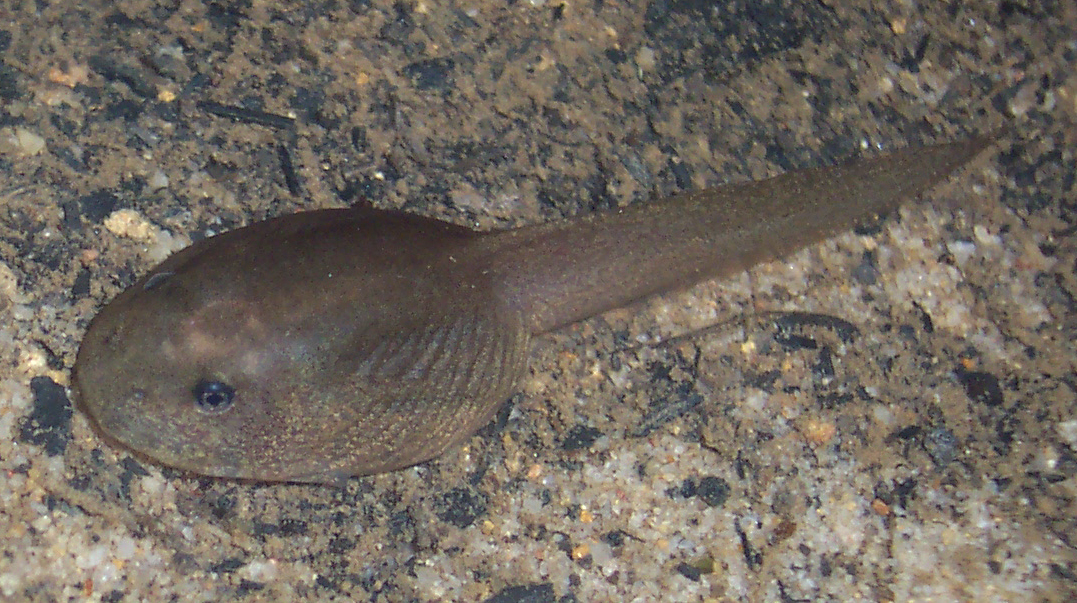
Algae dominate the diet of most species. Tadpoles have rows of tiny keratinized teeth called labial teeth arranged around a beak-like mouth, and they use them to rasp algae and biofilm off rocks, submerged leaves, plant stems, and any other surface in the pond. They are grazers rather than hunters.
Detritus fills in the rest. Decaying leaves, softened plant matter, and the bacterial and fungal film that coats decomposing material are all consumed, and in many ponds that decaying leaf litter matters more than living algae. A pond with a good layer of autumn leaves on the bottom supports far more tadpoles than a clean one.
Most species are opportunistic rather than strictly vegetarian. Tadpoles readily scavenge dead insects, dead fish, and dead tadpoles when they encounter them, and this animal protein accelerates growth substantially. The line between herbivore and omnivore in this group is blurry and shifts with what is available.
Newly Hatched Tadpoles
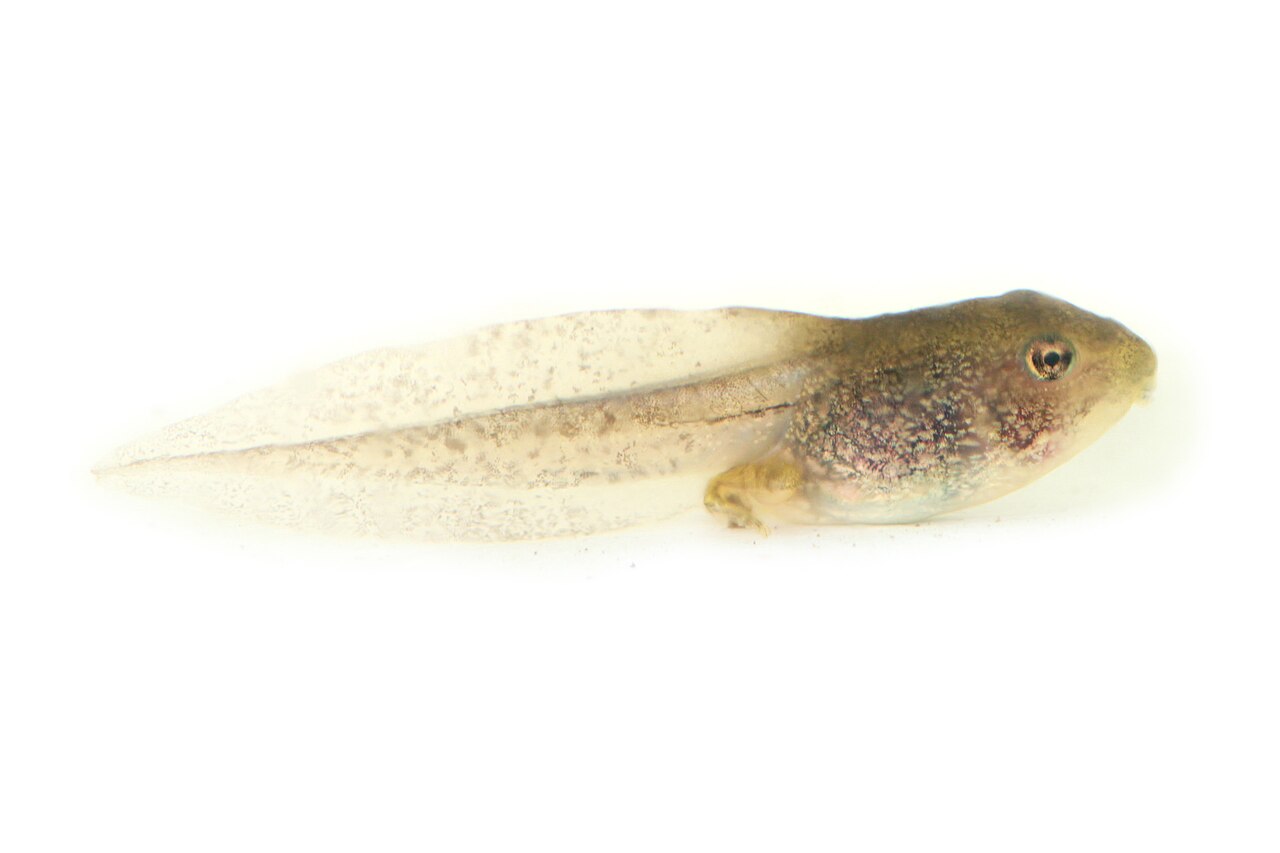
A tadpole does not eat at all for its first days. It emerges with a remaining yolk supply still attached internally, and it typically clings motionless to the egg mass, a plant stem, or the pond bottom while absorbing it. Its mouth is not yet functional.
Feeding begins once the mouthparts and gut develop, usually within a few days to a week depending on species and temperature. The first food is the algae film growing on whatever surface the tadpole is attached to, which is why hatchlings stay put rather than swimming.
Gills are also changing during this window. Newly hatched tadpoles have external gills that are gradually covered by a flap of skin, leaving a single opening called a spiracle. All of this happens in the first week or two, and it is the most fragile period of the whole life cycle.
How the Diet Changes During Metamorphosis
The gut rebuild is the key fact and it explains everything else. A herbivorous tadpole has an extremely long coiled intestine, visible as a spiral through the belly wall in many species, because plant material requires extended fermentation and processing. A frog needs nothing of the kind.
During metamorphosis that intestine shortens dramatically and reorganizes into the simple short gut of a carnivore. The mouth transforms at the same time, losing the labial teeth and beak and developing the wide jaws and tongue of a frog, and the digestive enzymes change accordingly.
Feeding largely stops while this happens. A tadpole in late metamorphosis with four legs and a shrinking tail typically eats little or nothing for several days, drawing on the tail itself as a nutrient source, since the tail is absorbed rather than shed. Once the tail is gone the froglet must start hunting live prey, and this is the moment when captive-raised animals most often die, because keepers are still offering plant food to an animal that now needs insects. Our guide to what crickets eat covers gut-loading the feeder insects a new froglet needs.
What Bullfrog Tadpoles Eat
American bullfrog tadpoles are a special case because of how long they stay tadpoles. In cooler parts of the range they overwinter in the pond and take one to two years, occasionally three, to complete metamorphosis, reaching 4 to 6 in before transforming.
Their diet is broader in proportion to their size. Alongside algae and detritus they take insect larvae, snails, small fish, fish eggs, amphibian eggs, and other tadpoles, and larger individuals are effective predators on anything small enough to swallow. Their size lets them exploit food sources smaller tadpoles cannot.
This matters ecologically. American bullfrogs are invasive across much of the western United States and beyond, and their long-lived predatory tadpoles compete with and consume native amphibian larvae, which is a major reason for their impact. Never move bullfrog tadpoles between water bodies or release captive ones anywhere they did not come from, a point our guide to the African bullfrog echoes for a species widely kept in captivity.
Carnivorous and Cannibalistic Tadpoles
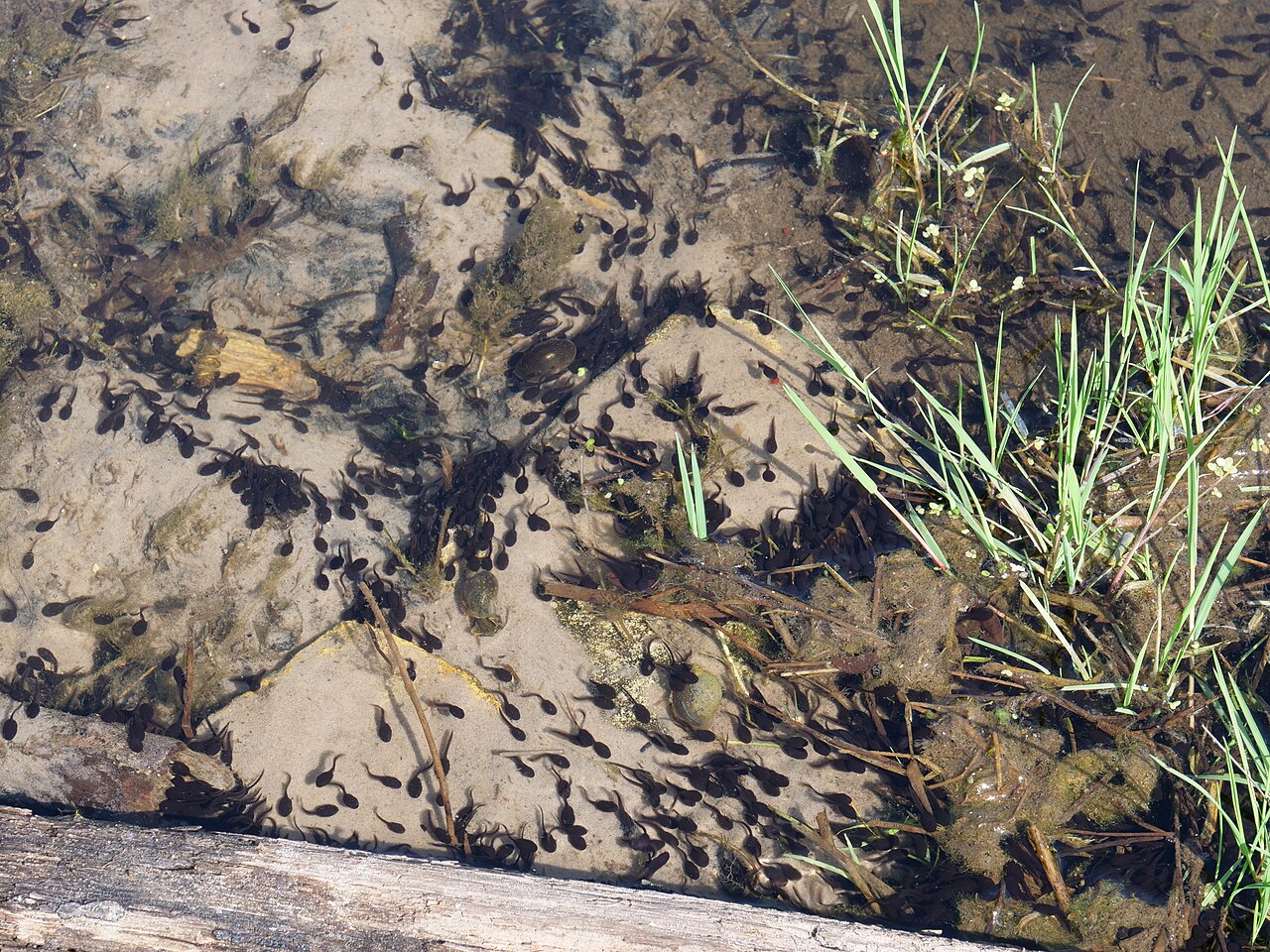
Some species abandon the herbivore plan entirely. Spadefoot toad tadpoles in the arid southwest develop into two distinct forms depending on conditions: an ordinary omnivore morph, and a carnivore morph with a wider head, stronger jaw muscles, and a shorter gut that eats fairy shrimp and other tadpoles.
The trigger is diet and density. Tadpoles that consume enough animal protein early, often by eating fairy shrimp, develop into the carnivorous form, and in the temporary desert pools these animals breed in, that faster development can be the difference between transforming and dying when the pool evaporates.
Cannibalism is common across many species under crowded conditions, and some poison dart frogs take it further by depositing each tadpole in its own tiny pool of water held in a bromeliad, where the mother returns to feed it unfertilized eggs. Those tadpoles eat nothing else at all, which is about as far from algae grazing as the group gets.
What to Feed Tadpoles in Captivity
Boiled leafy greens are the standard and they work well. Romaine lettuce, spinach, or kale boiled for a few minutes until limp, cooled, and drained gives tadpoles something they can rasp at for days. Boiling breaks down the cell walls enough for them to process it, and raw leaves are far less useful.
Commercial options round it out. Algae wafers sold for plecos and other bottom-feeding fish are excellent and convenient, tropical fish flakes work in small amounts, and specialized tadpole foods exist. Frozen or thawed peas with the skins removed, and small amounts of blanched broccoli or zucchini, add variety.
Feed small amounts and remove leftovers. Uneaten food fouls the water quickly, and poor water quality kills more captive tadpoles than starvation does. Once a day or every other day is usually right, adjusted so that food is mostly gone within a day. Once front legs appear, switch entirely to small live prey such as fruit flies, pinhead crickets, and springtails.
Common Mistakes When Raising Tadpoles
Untreated tap water kills tadpoles. Chlorine and chloramine are lethal to amphibians, and amphibian skin absorbs whatever is in the water directly. Use pond or rainwater from the source they came from where possible, or dechlorinate tap water with an aquarium conditioner, noting that letting water stand overnight removes chlorine but not chloramine.
Overfeeding is the second killer, working indirectly through water quality. Decaying food consumes oxygen and produces ammonia, and a container that looks cloudy is already in trouble. Partial water changes of about a quarter, using water of the same temperature, keep conditions stable.
The others are quick to list. Overcrowding stunts growth and triggers cannibalism, so fewer tadpoles in more water is always better. Direct sunlight overheats a small container within hours. No exit ramp drowns froglets. And keeping tadpoles from one pond and releasing the frogs somewhere else spreads chytrid fungus and ranavirus, which have devastated amphibian populations worldwide. Always return animals to the exact water they came from.
What Tadpoles Should Not Eat
Bread and crackers are the classic mistake, offered because they float and get eaten. They provide almost no usable nutrition, swell in the gut, and foul water rapidly. The same applies to any processed human food, anything salted, and anything oily.
Meat and pet food cause similar problems. While tadpoles do scavenge animal protein in the wild, a chunk of raw meat in a small container decomposes fast and crashes the water quality within a day. If you want to add protein, a very small amount of fish flake is a far safer route.
Avoid anything from a treated source. Lettuce from a garden sprayed with insecticide, plants from a nursery treated with neonicotinoids, and water from a pond receiving lawn runoff all carry compounds that amphibian skin absorbs efficiently. Tadpoles are used as pollution indicators precisely because they are so sensitive to what is in their water.
Should You Collect Tadpoles at All?
Legality varies and is worth checking first. Many states regulate the collection of amphibians, some require a fishing license, and certain species are protected outright. A state wildlife agency website answers this in a few minutes and the rules are not intuitive.
The conservation case for leaving them is strong. Amphibians are among the most threatened vertebrate groups globally, with habitat loss, disease, and pollution driving steep declines, and chytrid fungus in particular has been spread between water bodies on boots, nets, and containers. Moving animals or water between ponds is a genuine transmission route.
If you do raise them, do it as a short observation with a plan. Take a few rather than many, use water from the source pond, keep the container out of direct sun, provide an exit before the legs appear, and return the froglets to the exact pond they came from. Watching the gut and mouth transform over a few weeks is a genuinely worthwhile thing to see, and it costs the pond nothing if the animals go home. Our guides to the Pacman frog and the baby snapping turtle cover similar judgment calls about wild versus captive amphibians and reptiles, and our guide to what snails eat describes the other main grazer in the same ponds.
Frequently Asked Questions
What do tadpoles eat?
Mostly algae, biofilm scraped from submerged surfaces, and decaying plant matter, using rows of tiny labial teeth around a beak-like mouth. Most species also scavenge dead insects and other animal matter opportunistically, which speeds growth considerably.
What do you feed tadpoles at home?
Boiled romaine lettuce, spinach, or kale, cooled and drained, is the standard. Algae wafers sold for bottom-feeding fish work well, as do small amounts of fish flakes and skinned peas. Feed small amounts and remove leftovers, since fouled water kills more tadpoles than hunger.
Do tadpoles eat meat?
They scavenge dead animals in the wild, and some species are actively predatory, including bullfrog tadpoles and the carnivore morph of spadefoot toads. In a container, raw meat decomposes too fast and crashes water quality, so a pinch of fish flake is the safer way to add protein.
When do tadpoles stop eating plants?
During metamorphosis, when the long coiled herbivore gut shortens into a carnivore gut and the mouth loses its rasping teeth. Feeding largely stops for several days while the tail is absorbed, and once the tail is gone the froglet needs small live insects rather than plant food.
Why did my tadpoles die?
The most common causes are untreated tap water, since chlorine and chloramine are lethal to amphibians, overfeeding that fouls the water, overcrowding, overheating in direct sun, and no exit ramp once legs develop, which drowns froglets that now breathe air.
What do bullfrog tadpoles eat?
Algae and detritus plus insect larvae, snails, small fish, fish eggs, and other tadpoles. They take one to two years to metamorphose and reach 4 to 6 in, and their size lets them prey on things smaller tadpoles cannot, which is part of why they are so damaging where they are invasive.
Is it legal to collect tadpoles?
It depends on the state, and some require a fishing license or protect particular species. Beyond legality, moving amphibians or water between ponds spreads chytrid fungus and ranavirus, so any animals raised at home should be returned to the exact pond they came from.