Possum Lifespan: Just 1 to 2 Years, and Here Is Why
The possum lifespan is the shortest of any North American mammal of its size: 1 to 2 years in the wild, and rarely more than 3. A Virginia opossum (Didelphis virginiana) that reaches its second birthday is already an old animal, and most never get there at all.
This is not bad luck. Opossums age fast at the cellular level, and the short life is written into the species rather than imposed on it from outside. What follows is what the numbers look like in the wild, in captivity, and why the Australian animals that share the name live several times longer.
Wild opossums live 1 to 2 years on average, with a maximum around 3 years. In captivity, with no predators and veterinary care, they reach 4 to 5 years at most. That ceiling is unusually low for a mammal of 8 to 14 pounds, and it reflects genuinely rapid biological aging rather than predation alone.
| Measure | Virginia opossum |
|---|---|
| Average wild lifespan | 1 to 2 years |
| Maximum wild lifespan | About 3 years |
| Captive lifespan | 4 to 5 years |
| Age at sexual maturity | 6 to 8 months |
| Litters per year | 1 to 3, with 6 to 9 surviving young |
| Adult weight | 8 to 14 lb (3.6 to 6.4 kg) |
How Long Do Possums Live in the Wild?
Field studies consistently put wild opossum survival at 1 to 2 years. Fewer than 10 percent of animals born in a given spring are still alive two years later, and a 3 year old wild opossum is exceptional enough to be worth noting in a study.
The species compensates with speed. Females breed at 6 to 8 months, carry young for just 12 to 13 days, and can raise two or three litters in a single year. An opossum is built to reproduce before it dies, not to survive long enough to try repeatedly.
Why Are Possums So Short-Lived?
Opossums age quickly in a measurable, physical way. Older animals develop cataracts, lose muscle mass, and show degenerative changes in the heart and joints within their second year, at a point when a raccoon of similar size is barely an adult.
Research on island populations points to the reason. Opossums on Sapelo Island, Georgia, which has far fewer predators than the mainland, evolved slower aging and longer lives across a few thousand years. Where predation is heavy, natural selection has little reason to maintain a body past age two, so it does not.
Opossum Lifespan in Captivity
Captive opossums reach 4 to 5 years, occasionally a little more. Compared with other wild mammals this is a very small gain. A raccoon roughly triples its lifespan in captivity, and a groundhog can quintuple it, while an opossum gains perhaps two extra years.
That small margin is the clearest evidence that predation is not the main limit. Remove every external threat, provide balanced food and veterinary care, and the animal still declines on schedule. Captive opossums commonly die of cancer, kidney disease, or simple organ failure before age five.
Possum vs Opossum: Two Very Different Lifespans
In the United States, “possum” means the Virginia opossum, the continent’s only marsupial. In Australia and New Zealand it means a different group of marsupials entirely, including the common brushtail possum (Trichosurus vulpecula), which is more closely related to kangaroos than to anything in North America.
The lifespans are not comparable. A brushtail possum lives 6 to 11 years in the wild and has been recorded past 13 in captivity. If a source claims possums live a decade, it is describing an Australian animal, not the one crossing your driveway in Ohio.
What Kills Possums the Most?
Vehicles are the leading cause of death across most of the US range. Opossums are slow, they forage along roadsides, and their defensive response to a threat is to freeze or play dead, which is the worst possible reaction to an oncoming car.
Beyond traffic, the main killers are great horned owls, coyotes, foxes, bobcats, and domestic dogs, along with winter exposure. Opossums have hairless ears and tails and do not hibernate, so frostbite is common at the northern edge of the range and severe cases lead to infection and death. Their nightly foraging habits are covered in our guide to whether possums are nocturnal.
How Long Do Possums Live as a Pet?
A captive opossum lives 4 to 5 years at best, and keeping a wild-caught one is illegal in most states without a rehabilitation permit. The animals that do live in homes are usually non-releasable rehab cases or the domesticated short-tailed opossum, a much smaller South American species.
The practical problems are real. Opossums are nocturnal, they mark with scent, they need a varied diet high in calcium to avoid metabolic bone disease, and they do not house-train in the way a pet rat does. Short lifespan plus high care demands makes them a poor pet even where the law allows it.
Frequently Asked Questions
What is the oldest living opossum?
Documented captive Virginia opossums have reached about 5 years, and a few zoo records approach 6. In the wild, 3 years is close to the ceiling. Reports of opossums living 10 years or more almost always refer to Australian brushtail possums, a different family of marsupials.
Can possums bond with humans?
Hand-raised opossums recognize their caretakers and tolerate handling, but they do not form the social attachments a dog or even a pet mouse does. Opossums are solitary by nature, with no pack or family structure past weaning, so what looks like affection is usually habituation to a food source.
Why can’t you touch possums?
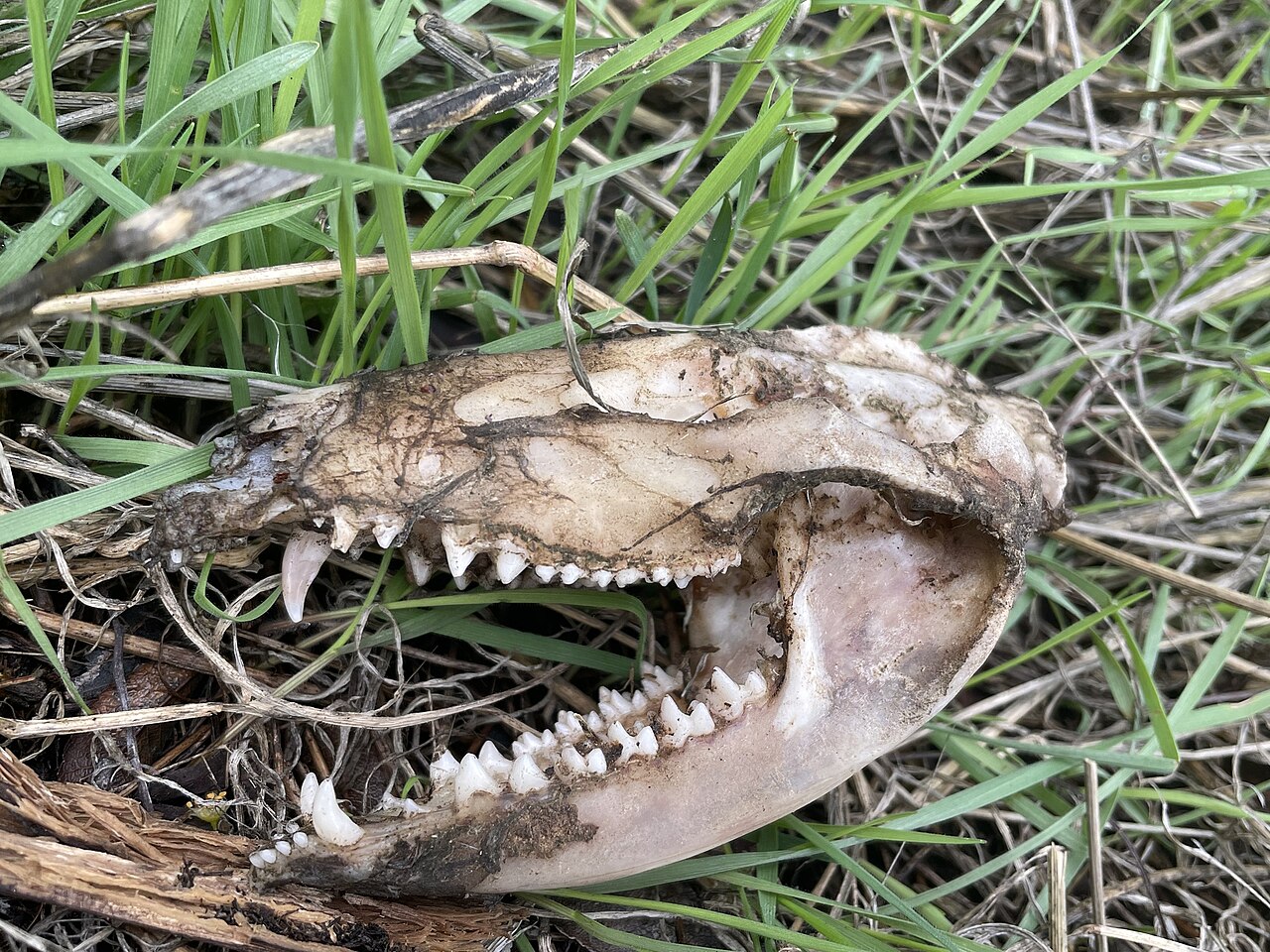
A frightened opossum bites, and it has 50 teeth, more than any other North American land mammal. They also carry fleas, ticks, and sometimes leptospirosis. They very rarely carry rabies, since their low body temperature is inhospitable to the virus, but handling one is still a bad idea.
What smell does a possum hate?
Ammonia, garlic, and strong mint are the deterrents most often reported to work, along with predator urine sold for nuisance wildlife. All of them fade with rain and none work as well as removing the attractant. Opossums come for food, so sealed trash outperforms any scent.
What does it mean when a possum hangs around your house?
It means there is food. Unsecured garbage, pet bowls left outside, fallen fruit, or a compost pile will hold an opossum for several nights. There is no folkloric meaning to it, and the animal is a net benefit while it stays, eating ticks, slugs, and rodents. More on North American mammals is available through the Smithsonian National Zoo animal guides.