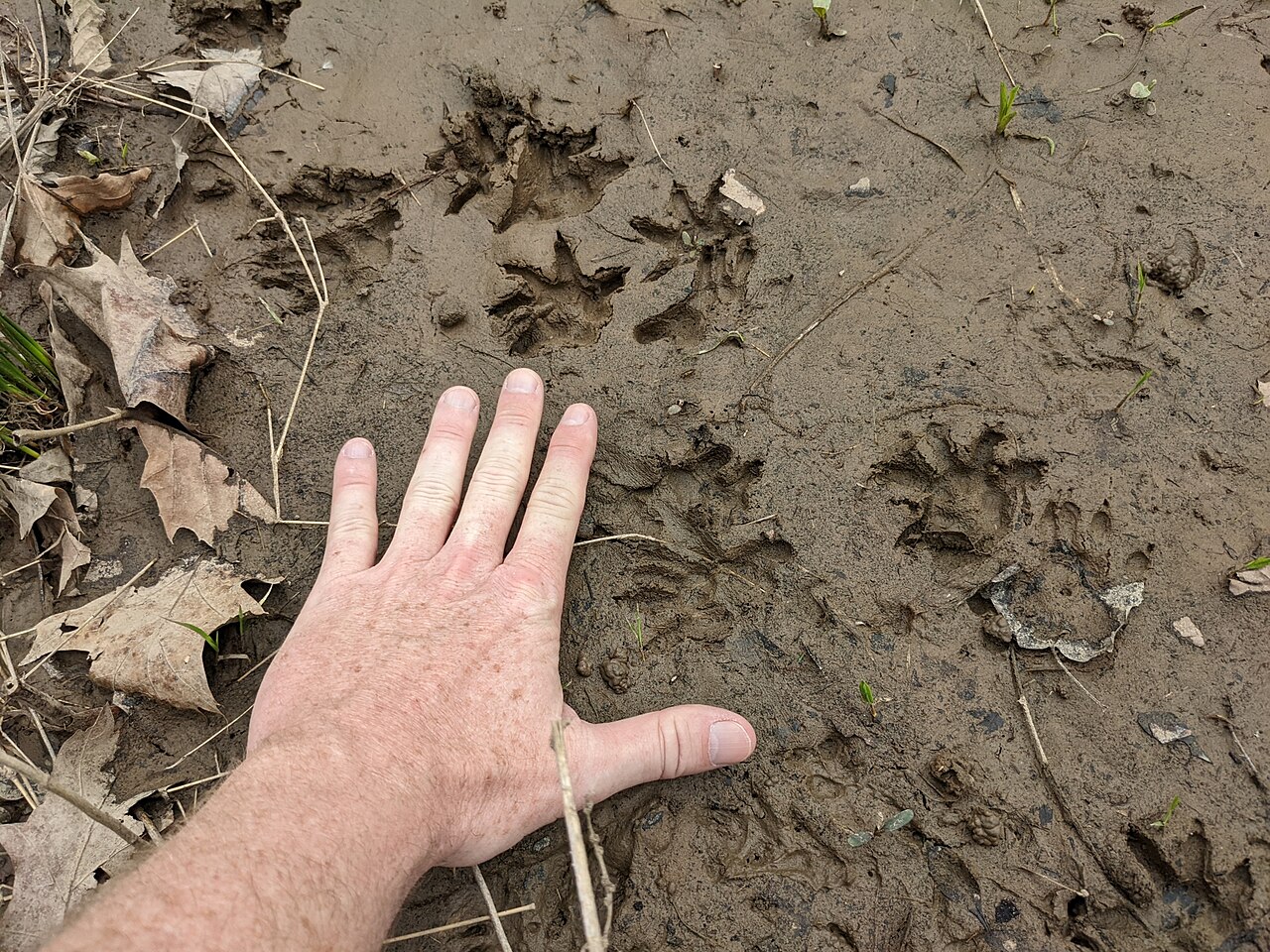
Are Possums Nocturnal? Yes, and Daytime Sightings Are Normal
Possums are nocturnal. The Virginia opossum (Didelphis virginiana), the only marsupial living north of Mexico, does most of its feeding and travelling between dusk and dawn, with the busiest stretch in the first few hours after sunset. That is why the animal turning over your trash at 11 p.m. is behaving exactly as it should.
The complication is that nocturnal does not mean never awake in daylight. Cold snaps, hunger, nursing young and a disturbed nest all push opossums into daytime movement, and none of that means the animal is sick. Below is what the schedule actually looks like, where opossums sleep, what pulls them into a yard, and how long one is likely to stay.
Yes, possums are nocturnal. Virginia opossums forage mainly from dusk until dawn, with peak activity in the two to four hours after sunset, and sleep through the day in hollow logs, brush piles, culverts or spaces under decks. Daytime sightings are common in cold weather or when a female is feeding young, and are not a sign of rabies.
| Question | Short answer |
|---|---|
| Active hours | Dusk to dawn, peak 2 to 4 hours after sunset |
| Daytime sightings | Normal in winter, after disturbance, or for nursing females |
| Day roost | Hollow trees, brush piles, burrows dug by other animals, under decks |
| Nights in one spot | Usually 2 to 3, rarely more than a week without a strong food source |
| Home range | Roughly 12 to 40 acres, shifting constantly |
| Rabies risk | Very low; body temperature of 94 to 97 F (34 to 36 C) makes infection rare |
| Main attraction | Pet food, open trash, fallen fruit, compost, water |
Are Opossums Nocturnal or Crepuscular?
Both labels get used, and the honest answer is that opossums are nocturnal with a strong crepuscular peak. Radio tracking studies put the bulk of movement in full darkness, but the sharpest burst of activity comes in the twilight window right after sunset, when the animal leaves its day roost and starts working a route. A second, smaller burst often shows up before dawn as it heads back. Activity also shifts with the calendar: summer nights are short, so foraging is compressed, while a mild winter night can have an opossum out for eight hours straight. If you want the wider picture of which backyard animals share that schedule, our list of nocturnal animals sorts them by when they actually move.
What to Do If You See a Possum During the Day
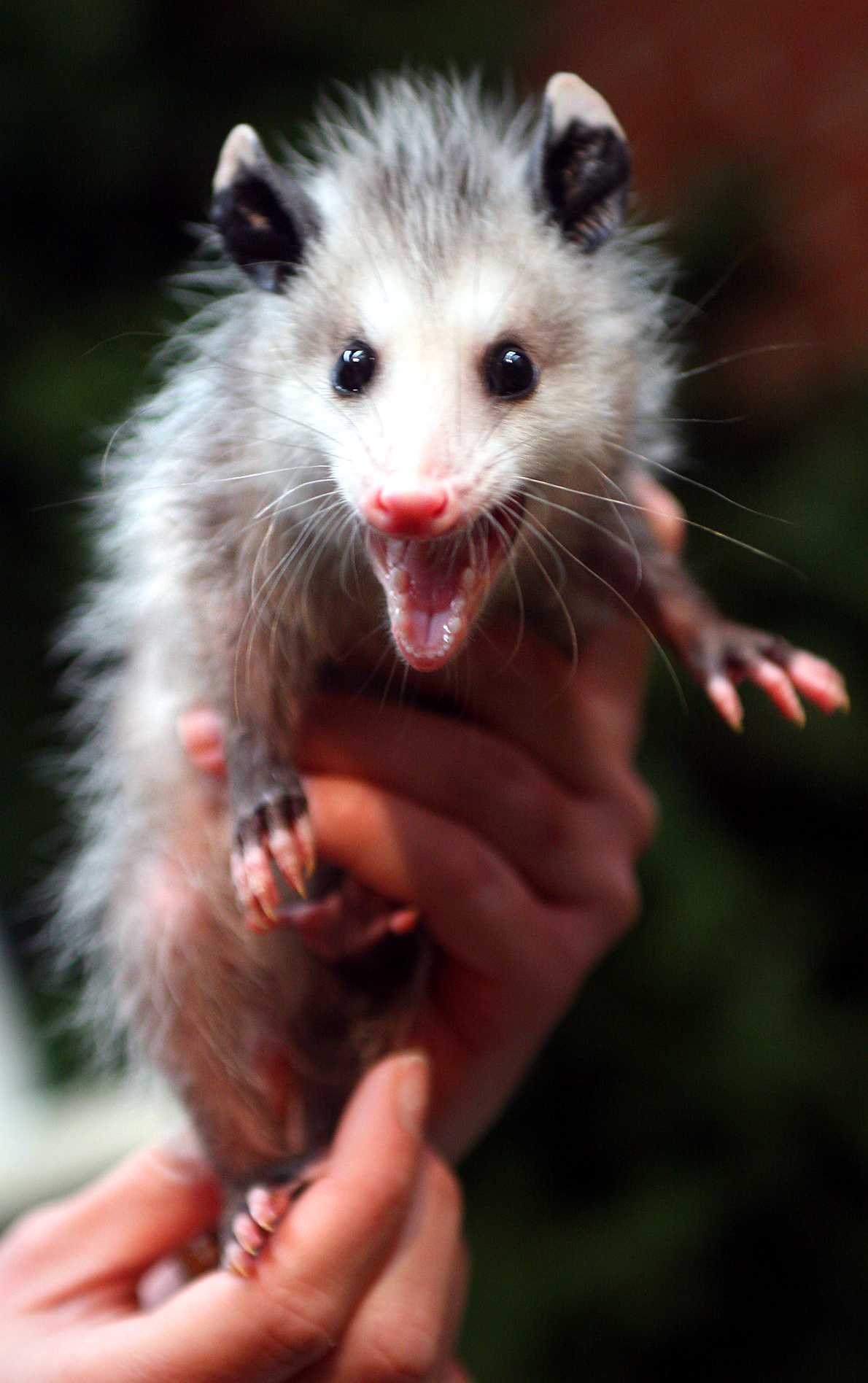
Leave it alone and watch from a distance. A daytime opossum is usually a hungry one, and cold weather is the most common trigger, because a fat reserve that thin forces the animal to feed whenever food is available. Females carrying or nursing young also break the night schedule to keep up with the calorie load. Signs that genuinely warrant a call to a licensed wildlife rehabilitator are different: circling, staggering, no reaction at all to your presence, obvious injury, or a very small opossum under about 7 in (18 cm) of body length travelling alone. Rabies in opossums is rare, so daytime activity by itself is weak evidence of illness. Do not corner it, and keep dogs inside until it moves on.
Where Do Opossums Sleep During the Day?
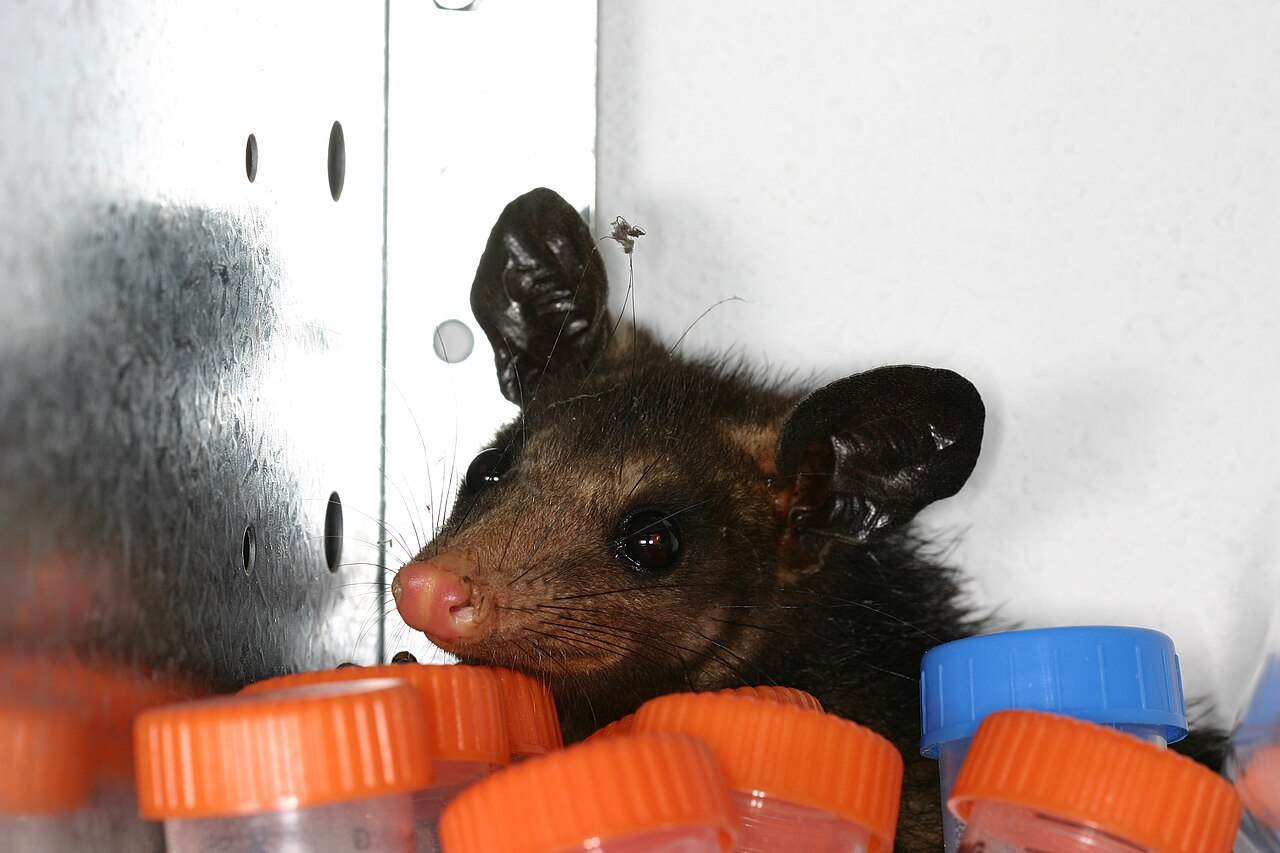
An opossum does not maintain one home. It sleeps wherever it finished the night, which means hollow trees and logs, rock crevices, culverts, dense brush, woodpiles, the burrow some other animal abandoned, or the crawl space under a deck or shed. They dig very little themselves. What they do build is a loose nest of dry leaves and grass, gathered into a bundle and carried with the prehensile tail, which is one of the few jobs that tail actually performs. Because roosts rotate, sealing a gap under your deck in the afternoon is the fastest way to trap an animal inside, so always confirm the space is empty first.
Why Night Suits an Opossum
The sensory kit points straight at darkness. Eyesight is poor and largely rod based, tuned to detect movement in low light rather than resolve detail, while smell does the real work of finding grubs, carrion and fruit. Whiskers and a sensitive nose handle close range decisions, and the animal follows scent trails rather than sight lines. Fifty teeth, more than any other North American land mammal, let it handle almost anything it finds, from beetles to bones. Night also means fewer daytime predators such as hawks, and cooler air, which matters for a mammal that runs a body temperature several degrees below most placental mammals.
What Attracts Possums to the Yard?
Food, in this order: pet bowls left outside, unsecured trash, fallen fruit and berries, compost with kitchen scraps, birdseed spilled under feeders, and open water. Shelter comes second, which means woodpiles, overgrown ivy, gaps under sheds and decks, and unscreened crawl spaces. An opossum is an opportunist, not a specialist, and its diet is wide enough that almost any yard offers something; our breakdown of what possums eat covers the full range. If you are unsure which animal is visiting, the droppings are diagnostic, and the differences in raccoon versus possum poop are easier to read than tracks on grass.
What Does It Mean When a Possum Hangs Around Your House?
It means the property is currently paying better than the alternatives. Opossums are nomadic and do not defend territory, so one that keeps returning has found either a reliable food source or a good dry roost close to it. That is the useful part of the answer, because it tells you what to change. It does not mean the animal has chosen your house permanently, and it is not a sign of an infestation, since adults are solitary outside of mating and females with young. On the upside, the visitor is eating snails, slugs, beetles, mice and carrion. The widely repeated claim that a single opossum kills 5,000 ticks a week comes from one lab study that has not held up, and later stomach content work found ticks to be a minor item, so treat it as a bonus rather than a pest control plan.
How Long Will a Possum Stay, and How to Move It Along
Most stay two or three nights, then drift on. Remove the reason to stay and that timeline shortens immediately: bring pet food in before dark, switch to a locking trash lid or a bungee cord, pick up fallen fruit daily, keep compost closed, and clear spilled seed under feeders. Motion activated lights and a radio near the entry point help for a few nights, while ammonia rags and mothballs do not work and are not legal to scatter outdoors in many states. Trapping is the last resort and is regulated almost everywhere; relocated opossums frequently die, and the vacancy simply fills. Once you are certain nothing is inside, close the gap under the deck with hardware cloth buried several inches deep. A den that already holds a baby possum needs a rehabilitator, not a shovel.
Are Opossums Aggressive? Will a Possum Hurt a Dog?
Opossums are among the least aggressive mammals in a suburban yard. Cornered, one will hiss, show all fifty teeth, drool and sometimes collapse into the involuntary catatonic state known as playing dead, which can last from a few minutes to several hours. That display is defense, not a charge. A large dog will usually win a fight outright, and the real risk runs the other way, with bites, punctures and secondary infection for the dog and a dead opossum. Keep dogs leashed for the last walk of the night, and if a scuffle happens, call your vet rather than treating it as harmless; the full picture is in our guide to whether possums are dangerous.
Frequently Asked Questions
What do possums hate most?
Bright motion activated light, sudden noise and open exposed ground. They avoid places with no cover to retreat into, which is why clearing brush along a fence line works better than any repellent. Commercial granular repellents and mothballs have little measurable effect, and the reliable deterrent is simply removing accessible food.
Should I be concerned if I see a possum in my yard?
Usually not. A healthy opossum passing through poses almost no risk to people, carries rabies very rarely, and eats insects and carrion while it visits. Take it seriously only if the animal is injured, unresponsive, circling, or clearly a lone juvenile, or if it has moved into a crawl space under your house.
What time do possums come out at night?
Most emerge within about 30 minutes of sunset and are busiest for the following two to four hours. Timing shifts with season and weather, and heavy rain or deep cold can delay emergence by hours. Trail cameras on suburban properties typically show the first pass between 8 p.m. and 11 p.m.
Are possums nocturnal during the day in winter?
Winter is when the night schedule breaks down most often. Opossums do not hibernate and store little fat, so a long freeze forces daylight foraging, and frostbitten ear and tail tips are common in northern populations. Seeing one crossing a yard at noon in January is ordinary, not a red flag.
Do other yard animals keep the same hours?
Partly. Raccoons and skunks overlap closely with opossums, and the differences matter when you are identifying a night visitor. Other familiar species are only loosely nocturnal, which is why squirrels are not nocturnal and why deer and rabbits are better described as crepuscular.
Species accounts and range information for the Virginia opossum are maintained by the Smithsonian’s National Zoo and Conservation Biology Institute.