Softshell Turtle: ID, Bite, and Handling
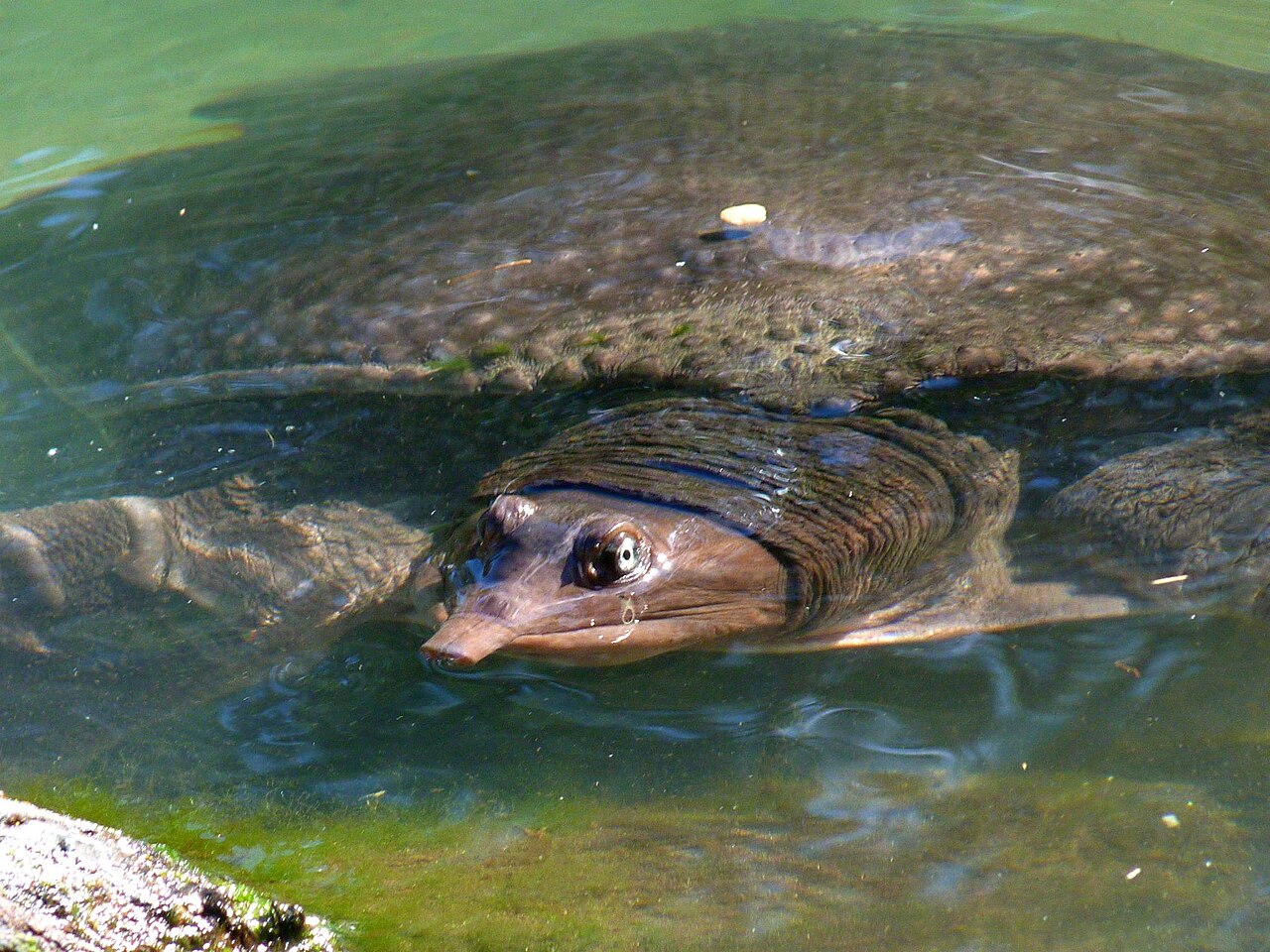
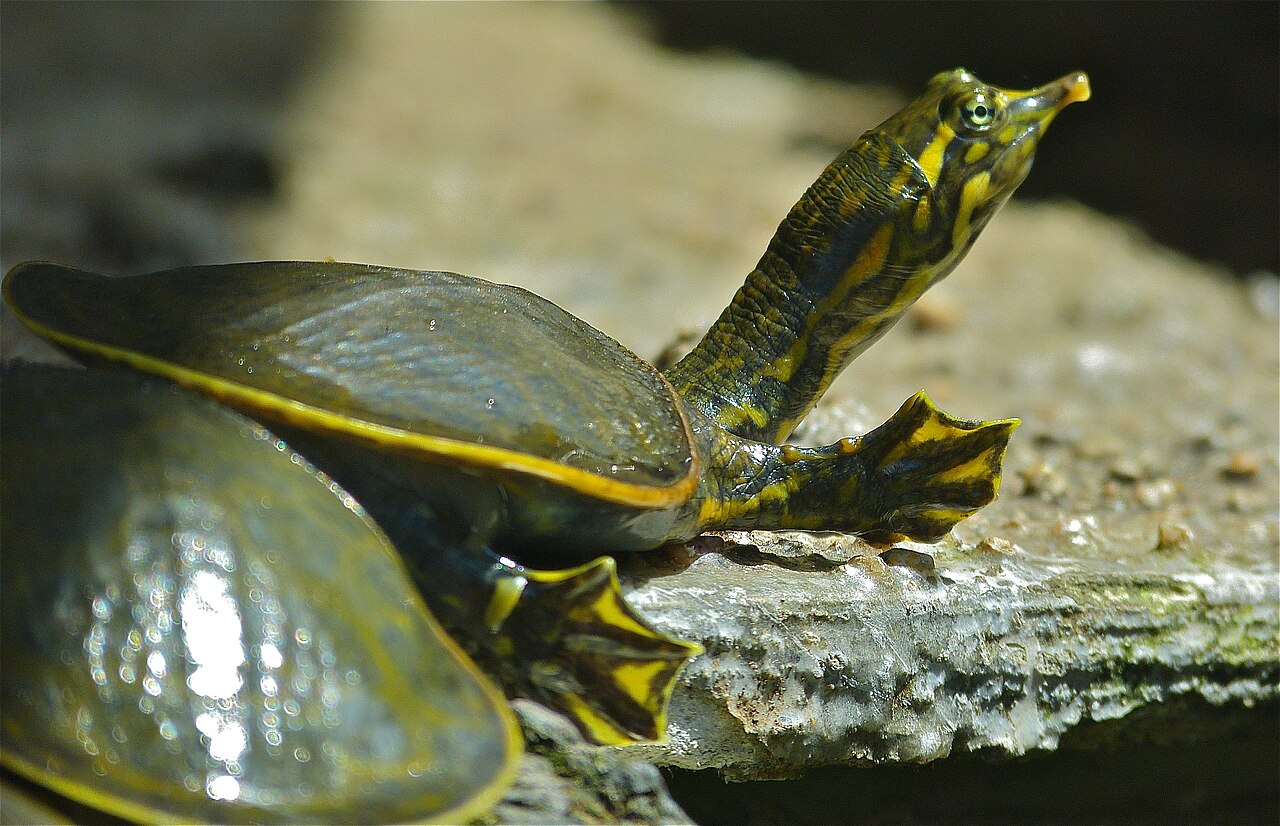
A softshell turtle is a freshwater turtle with a flat, leathery, pancake-like shell instead of a hard bony one, a long neck, webbed feet, and a snorkel-like snout. Three species occur in the United States, the spiny, smooth, and Florida softshells, and they are among the fastest turtles in the water and surprisingly quick on land.
They are also the ones most likely to bite. Softshells have long necks that can reach well back along their own bodies, powerful jaws, and a defensive temperament, and they are not a turtle to pick up casually or a beginner’s pet. This guide covers identification, the bite, handling, keeping them, and the legal position.
Softshell turtles are freshwater turtles with flat leathery shells, long necks, and tubular snouts, with three US species: spiny, smooth, and Florida. They are not venomous but bite hard and can reach far back along their own shell. They are fast swimmers, spend much of their time buried in sand, and are poor beginner pets.
| Feature | Softshell Turtle |
|---|---|
| Shell | Flat, leathery, no hard scutes |
| US species | Spiny, smooth, and Florida softshell |
| Size | Females 12 to 24 in; males much smaller |
| Snout | Long and tubular, used as a snorkel |
| Bite | Powerful; neck reaches far back |
| Venom | None |
| Lifespan | 25 to 50 years |
What Is a Softshell Turtle?
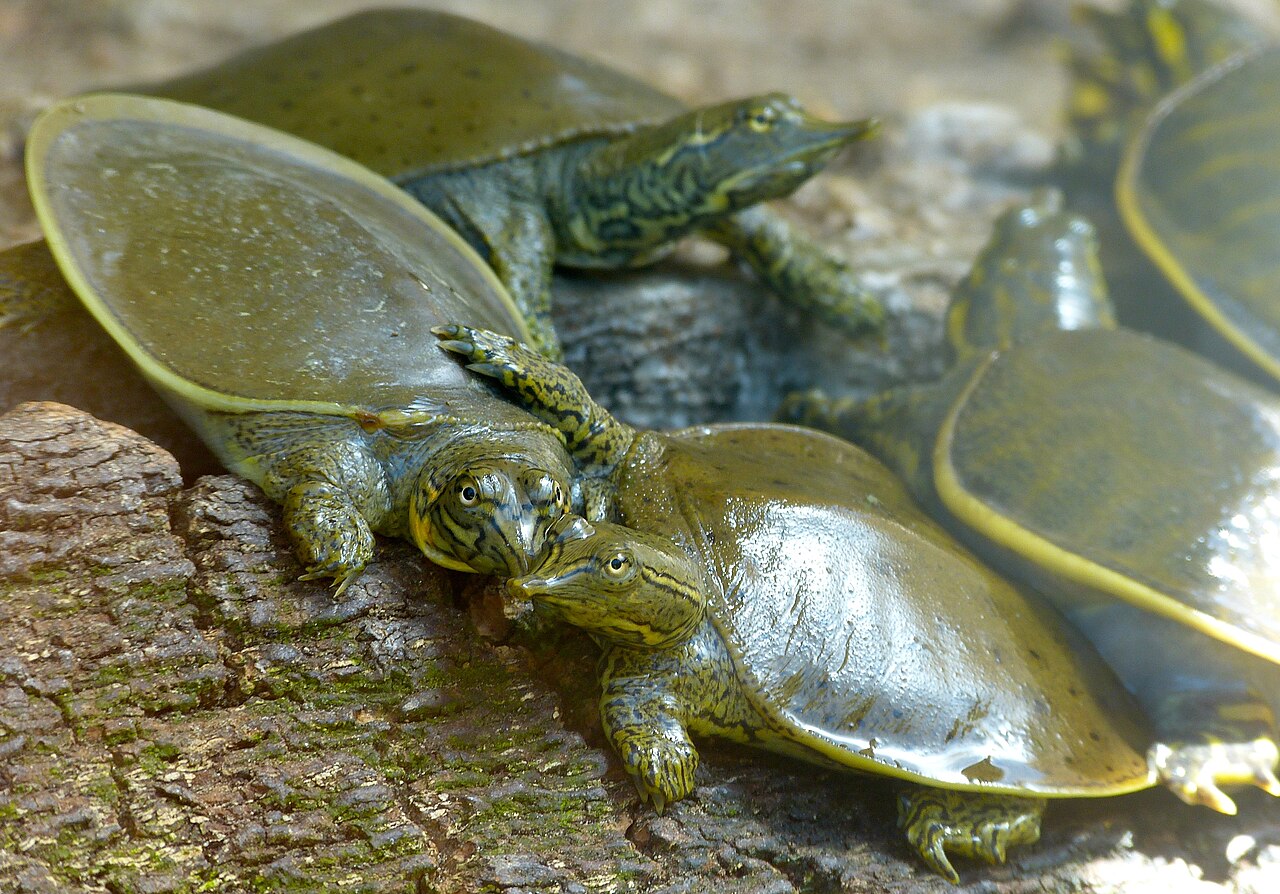
A turtle in the family Trionychidae, distinguished by a shell covered in leathery skin rather than the hard keratin scutes found on other turtles. The bony part underneath is reduced and the edges are flexible, which is why the shell looks and feels like a rubbery pancake.
Three species occur in the United States. The spiny softshell has small conical projections along the front edge of the shell, the smooth softshell has none, and the Florida softshell is larger, darker, and more heavily built, with females regularly exceeding two feet. Females are far larger than males in all three.
The snout is the other giveaway. Softshells have a long tubular nose ending in fleshy nostrils, which lets them lie buried in sand in shallow water with only the tip extended to breathe, like a snorkel. They can also absorb oxygen through the skin and the lining of the throat, allowing extended periods submerged. The baby turtle guide covers hatchlings across species.
Do Softshell Turtles Bite?
Yes, readily and hard. Softshells have strong jaws with sharp cutting edges and, crucially, a neck long enough to reach back past the middle of their own shell, so the usual advice about holding a turtle at the sides does not apply. There is no safe grip on a large softshell for someone inexperienced.
The bite is not venomous. No turtle anywhere is venomous, and the frequent claim that softshells are is simply wrong. What a bite does is crush and cut: a large individual can cause deep lacerations and, on a finger, potentially break bone.
Wild softshells will usually flee first, burying into sand or swimming off, and biting is a last resort when cornered or handled. Individuals encountered on land during the nesting season, or hooked by anglers, are the ones most likely to bite because they have no escape route. The snapping turtle bite guide covers the other North American turtle with a serious bite.
Can You Pick One Up?
Only if you know what you are doing, and preferably not at all. If a softshell must be moved off a road, the correct hold is at the very rear of the shell, on the back edge just above the hind legs, keeping the animal low and pointed away from you, and moving it in the direction it was already heading.
Do not lift by the tail, which can dislocate vertebrae and cause permanent injury, and do not hold at the sides, which puts your hand within reach of the neck. A large individual is heavy, slippery, and strong, and dropping one causes serious injury to the turtle.
For a large Florida softshell or a big snapper, a flat shovel slid underneath or a car mat used as a drag sheet is safer than hands for both parties. Never move a turtle to a different body of water; turtles have home ranges and a relocated animal will attempt to return, often across roads.
Are Softshell Turtles Aggressive?
Defensive rather than aggressive, and the distinction matters. A softshell in water almost always flees, and they are among the fastest swimming turtles in North America, capable of outrunning most things that pursue them. Fleeing is the first response, not fighting.
Out of water the picture changes because escape is limited. A softshell on land, particularly a nesting female or one caught on a line, will hiss, lunge, and bite, and the speed of the strike is startling. They can also move quickly across ground, faster than most people expect from a turtle.
In captivity they are frequently described as nervous rather than bold. Softshells stress easily, bury themselves when disturbed, and often refuse food after handling, and a captive individual that bites is usually frightened. That temperament is a large part of why they are a poor choice for a first turtle. The baby snapping turtle guide covers a species with the opposite disposition.
Where Do Softshell Turtles Live?
Rivers, lakes, ponds, and slow streams with soft sandy or muddy bottoms, which is what they need for burying. Spiny softshells are the most widespread, occurring across much of the central and eastern United States into Canada and Mexico, and smooth softshells occupy the larger river systems of the Mississippi basin.
Florida softshells occur across Florida and into Georgia, Alabama, and South Carolina, and are common in lakes, canals, and ponds throughout the state, including in urban settings. They are the largest of the three and the ones most often seen basking on banks.
All three spend a large share of their time buried in substrate in shallow water, waiting for prey and breathing through the extended snout. That habit makes them far more numerous in most water bodies than sightings suggest, and it is why anglers encounter them more often than swimmers do.
What Do They Eat?
Mostly animal prey. Softshells are primarily carnivorous, taking crayfish, aquatic insects, fish, tadpoles, frogs, snails, and worms, and they hunt both by ambush from buried positions and by active pursuit in open water.
Crayfish and aquatic insects dominate the diet in most studies, with fish taken opportunistically rather than as a staple. Some plant material is consumed, but softshells are not the omnivores that sliders and painted turtles are, and a captive diet built around pellets and vegetables does not suit them.
Foraging is more active than in most turtles. They probe substrate with the long snout, dig into sand and leaf litter, and pursue prey in open water using speed rather than ambush alone. That combination of speed and reach is what makes them effective predators in habitats where other turtles are slower. The painted turtle guide covers a more herbivorous relative.
Can You Keep a Softshell Turtle?
Legally in some places, practically for very few people. Softshells need a large aquatic setup with fine sand substrate deep enough to bury in, powerful filtration, warm water, a basking option, and space measured in hundreds of gallons for an adult female that may exceed two feet.
The shell is the complicating factor. Leathery shells are prone to abrasion, fungal infection, and shell rot, which means sharp gravel and rough decor cause injuries and water quality has to be excellent rather than merely adequate. Sand, not gravel, is essential.
They also do not tame down the way sliders do. A softshell that has been kept for years will still bury, still stress at handling, and still bite, and the combination of adult size, aggression, water quality demands, and a 25 to 50 year lifespan makes them a specialist animal. Anyone considering one should look at adult specimens rather than hatchlings before deciding.
Is It Legal to Have One?
It depends entirely on the state, and the rules are more restrictive than for most turtles. Several states prohibit taking softshells from the wild or set closed seasons and size limits, since some populations are declining and softshells are harvested commercially in parts of the south.
The federal rule that applies everywhere is the four-inch law. Since 1975 the sale of turtles with a shell length under four inches has been prohibited in the United States, a measure introduced because small turtles were a significant source of Salmonella infection in children. That applies to all turtle species.
Because rules vary so widely and change, checking the current state wildlife agency regulations before acquiring, collecting, or transporting any turtle is essential rather than optional. The U.S. Fish and Wildlife Service (fws.gov) and state agencies publish current species and possession rules.
Are Softshell Turtles Rare?
Not generally, but some populations are under pressure. Spiny and Florida softshells remain common across much of their ranges, and softshells are often among the most abundant large turtles in suitable rivers and lakes despite being seldom seen.
The threats are consistent across turtle species: habitat loss, road mortality of nesting females, nest predation by raccoons and skunks, drowning in fishing gear and crab traps, and in some areas commercial harvest for the food trade. Turtles are slow to mature and long-lived, so removing adults damages populations far more than removing eggs.
Globally, softshells include some of the most endangered animals on the planet. The Yangtze giant softshell turtle is down to a handful of known individuals and may already be functionally extinct, and several Asian softshell species are critically endangered through harvest for food and traditional medicine. The sea turtle guide covers a group facing similar pressures at a different scale.
Frequently Asked Questions
What is a softshell turtle?
A freshwater turtle with a flat leathery shell instead of hard scutes, a long neck, and a tubular snorkel-like snout. Three species occur in the US: spiny, smooth, and Florida softshells.
Do softshell turtles bite?
Yes, hard, and their necks reach back past the middle of their own shell, so there is no safe grip at the sides. The bite crushes and cuts but is not venomous; no turtle is.
Can you pick up a softshell turtle?
Only at the very rear of the shell above the hind legs, kept low and pointed away. Never lift by the tail. For large individuals a flat shovel or a car mat is safer than hands.
Are softshell turtles aggressive?
Defensive rather than aggressive. In water they flee and are among the fastest swimming turtles. On land, cornered, or on a fishing line they will hiss, lunge, and bite quickly.
Is a softshell turtle a snapping turtle?
No, they are unrelated families. Snapping turtles have hard ridged shells and long tails; softshells have flat leathery shells and tubular snouts. Both bite hard and are often confused.
Is it illegal to have a softshell turtle?
It varies by state, with collection limits, closed seasons, and prohibitions in some places. Nationally, selling any turtle under four inches of shell length has been illegal since 1975.
Are softshell turtles rare?
Common in much of the US but seldom seen because they stay buried. Several Asian species are critically endangered, and the Yangtze giant softshell may be functionally extinct.

Similar Posts
Baby Iguana: Size, Diet, Care, and How Fast They Grow
A baby iguana hatches at 6 to 12 inches and reaches 4 to 6 feet within a few years. Size, herbivore diet, UVB and heat needs, health risks, and wild hatchlings.
Rabbit Poop: Identification, Safety, and the Fertilizer Bonus
Rabbit poop is perfect pea-sized spheres of plant fiber, up to 300 a day per rabbit. ID vs deer and squirrel, safety for kids and dogs, and the fertilizer bonus.
Baby Alligator Snapping Turtle: ID, Care, and the Law
A baby alligator snapping turtle has three rows of spiked ridges from hatching. How to tell it from a common snapper, what to do if you find one, and why keeping one is usually illegal.
Blue-Tailed Skink: Identification & Facts
How to identify the blue-tailed skink, why juveniles have vivid blue tails, and whether they pose any real risk.
How to Get Rid of Bats: Exclusion, Timing, and the Law
Exclusion is the only legal way to remove bats, and doing it in summer traps flightless pups inside. Here is the method and the timing that matters.
Black Butterfly Spiritual Meaning: Omen or Blessing?
Ominous in parts of Europe, auspicious in Japan and China. Why the readings contradict each other, what the black witch moth has to do with it, and which butterfly you saw.