Ostrich Egg: Size, Taste, Price, and How to Open One
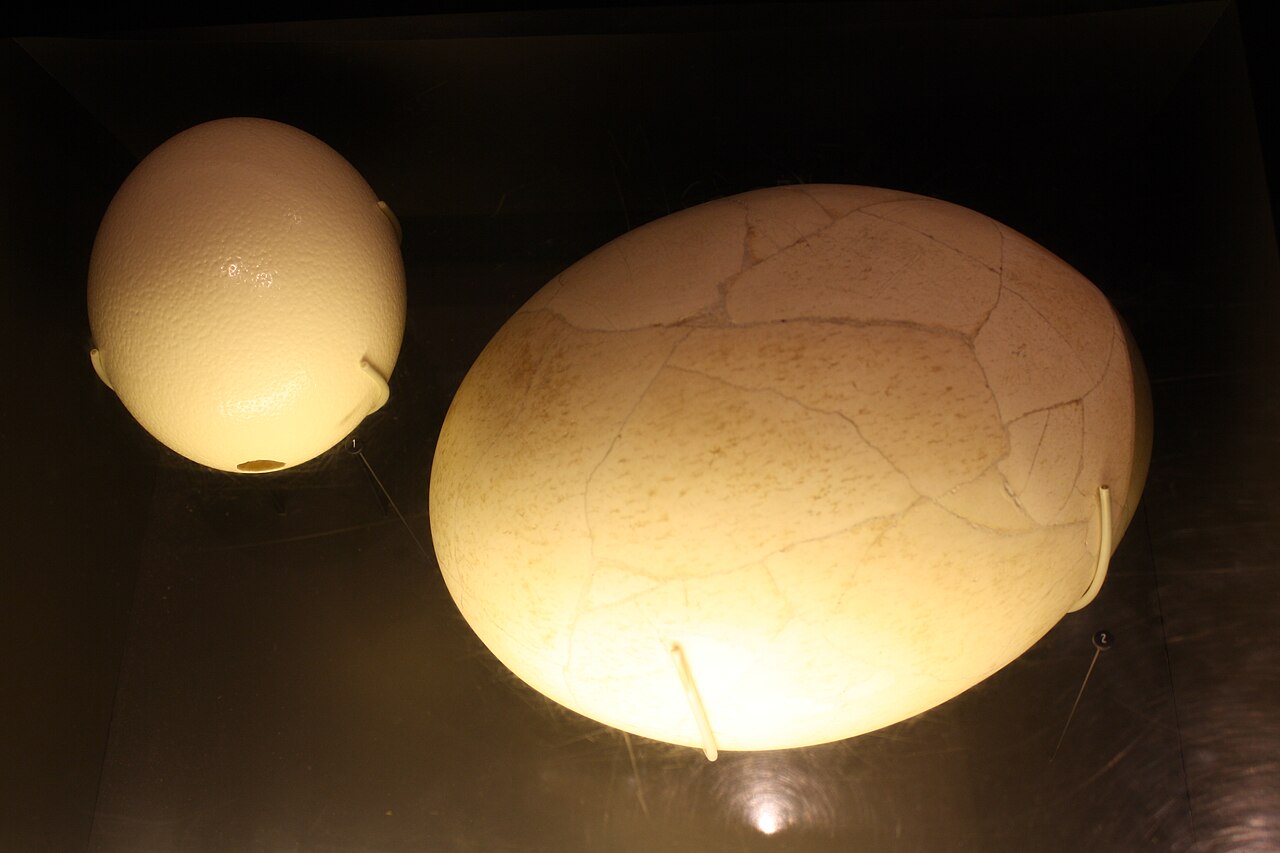
An ostrich egg is the largest egg laid by any living bird, weighing about three pounds and equivalent to roughly 24 chicken eggs. It is around six inches long, cream coloured with a glossy pitted surface, and the shell is about two millimetres thick and strong enough to support the weight of an adult person standing on it.
They are edible, legal to buy and eat in the United States, and taste much like a chicken egg, though the practical problems are considerable: opening one requires a drill or a saw, cooking one takes an hour and a half hard-boiled, and a single egg feeds a dozen people. This guide covers size, taste, opening, legality, price, and how ostriches actually lay them.
An ostrich egg weighs about three pounds and equals roughly 24 chicken eggs. The shell is about two millimetres thick and needs a drill or saw to open. They are legal and safe to eat in the US, taste similar to chicken eggs though slightly richer, and cost 30 to 100 dollars each because hens lay only 40 to 60 a year.
| Feature | Ostrich Egg |
|---|---|
| Weight | About 3 lb (1.4 kg) |
| Equivalent | Roughly 24 chicken eggs |
| Length | About 6 in |
| Shell thickness | About 2 mm; supports adult weight |
| Incubation | 42 to 46 days |
| Eggs per hen per year | 40 to 60 |
| Boiling time | About 90 minutes hard-boiled |
How Big Is an Ostrich Egg?
About six inches long, five inches across, and three pounds in weight, which makes it the largest egg of any living bird by a wide margin. In volume it holds roughly the equivalent of 24 chicken eggs, and a single egg contains around 2,000 calories.
Relative to the bird, though, it is small. An ostrich weighs 200 to 300 pounds, so the egg is only around one to one and a half percent of the hen’s body weight, whereas a kiwi’s egg can reach 20 percent of the female’s weight. Ostrich eggs are the largest in absolute terms and among the smallest proportionally.
Larger eggs have existed. The extinct elephant bird of Madagascar laid eggs of around 20 pounds holding the equivalent of roughly 160 chicken eggs, and those are the largest bird eggs known. Surviving elephant bird eggs occasionally come to auction and sell for tens of thousands of dollars. The bird egg identification guide covers the other end of the size range.
Can You Eat an Ostrich Egg?
Yes. Ostrich eggs are edible, legal to sell and eat in the United States, and are farmed commercially, though most production goes to breeding rather than to the table because an egg is worth more as a chick than as food.
The taste is close to a chicken egg, described as slightly richer, a little more buttery, and with a firmer texture when scrambled. The yolk is proportionally smaller than a chicken egg’s, so the ratio of white to yolk is higher, which affects baking and makes the scrambled result denser.
Nutritionally they are comparable per gram: high protein, lower in cholesterol per unit weight than chicken egg, and higher in some minerals including iron and magnesium. The practical difference is entirely scale. One egg makes scrambled eggs for ten to twelve people, so there is no such thing as an ostrich egg for one.
How Do You Open One?
Not by cracking it on a bowl. The shell is about two millimetres thick and remarkably strong, and the usual method is to drill a hole with a power drill, insert a long implement such as a skewer or thin knife to break the internal membrane and yolk, and pour the contents out, which takes several minutes.
For cooking where the shell will be discarded, a hacksaw, a hammer and chisel, or a serrated knife scored around the top works, but the shell fragments are sharp and go everywhere, and a drilled hole is cleaner. Anyone wanting to keep the shell intact for carving or display drills a single small hole and blows the contents out.
Boiling it whole takes about an hour and a half for hard-boiled and roughly 45 to 60 minutes for soft, and the egg needs a large stockpot. Most people who buy one scramble or bake with the contents rather than boiling, simply because turning a three-pound boiled egg into something people will eat is awkward.
Why Are Ostrich Eggs Expensive?
Because hens lay so few. An ostrich hen produces roughly 40 to 60 eggs a year, in a season running from spring into autumn, compared with 250 to 300 for a laying chicken, and each of those eggs is worth considerably more as a fertile egg for hatching than as food.
A chick is worth substantially more than an egg, so farms incubate almost everything and only sell surplus, infertile, or out-of-season eggs for eating. Prices typically run 30 to 100 dollars for a table egg, and fertile hatching eggs cost more.
Handling and shipping add to it. A three-pound egg needs careful packing, is fragile in a way that makes couriers nervous, and does not fit any standard packaging, so shipping frequently costs as much as the egg. Buying directly from an ostrich farm is usually the cheapest route, and many will sell blown shells separately.
How Do Ostriches Lay and Incubate?
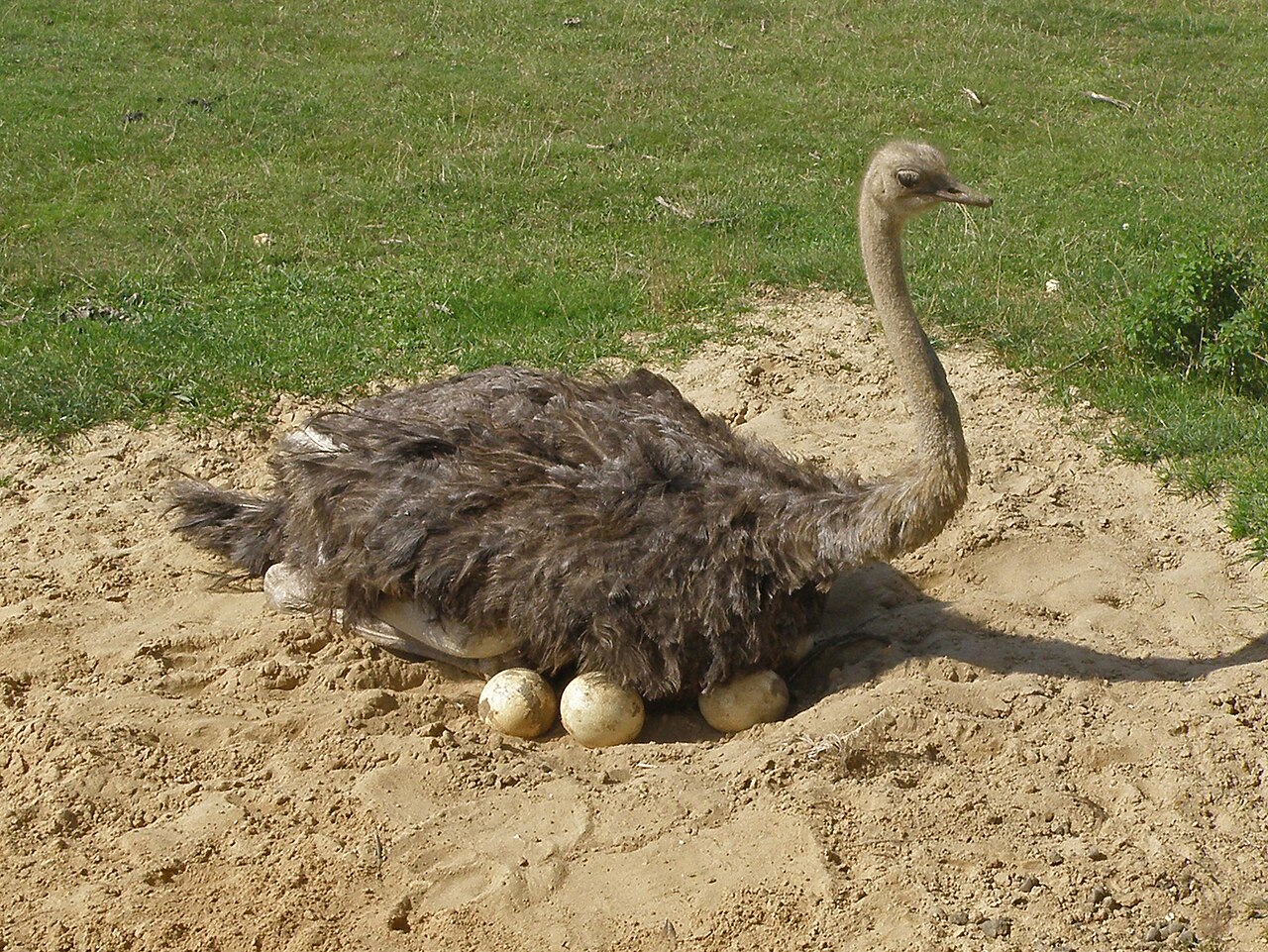
Communally, which is unusual. A dominant hen and several minor hens lay in the same shared ground nest, a simple scrape in the sand, and a full nest may hold 15 to 25 eggs or more, though the dominant hen manages the clutch and pushes surplus eggs to the outside where they do not hatch.
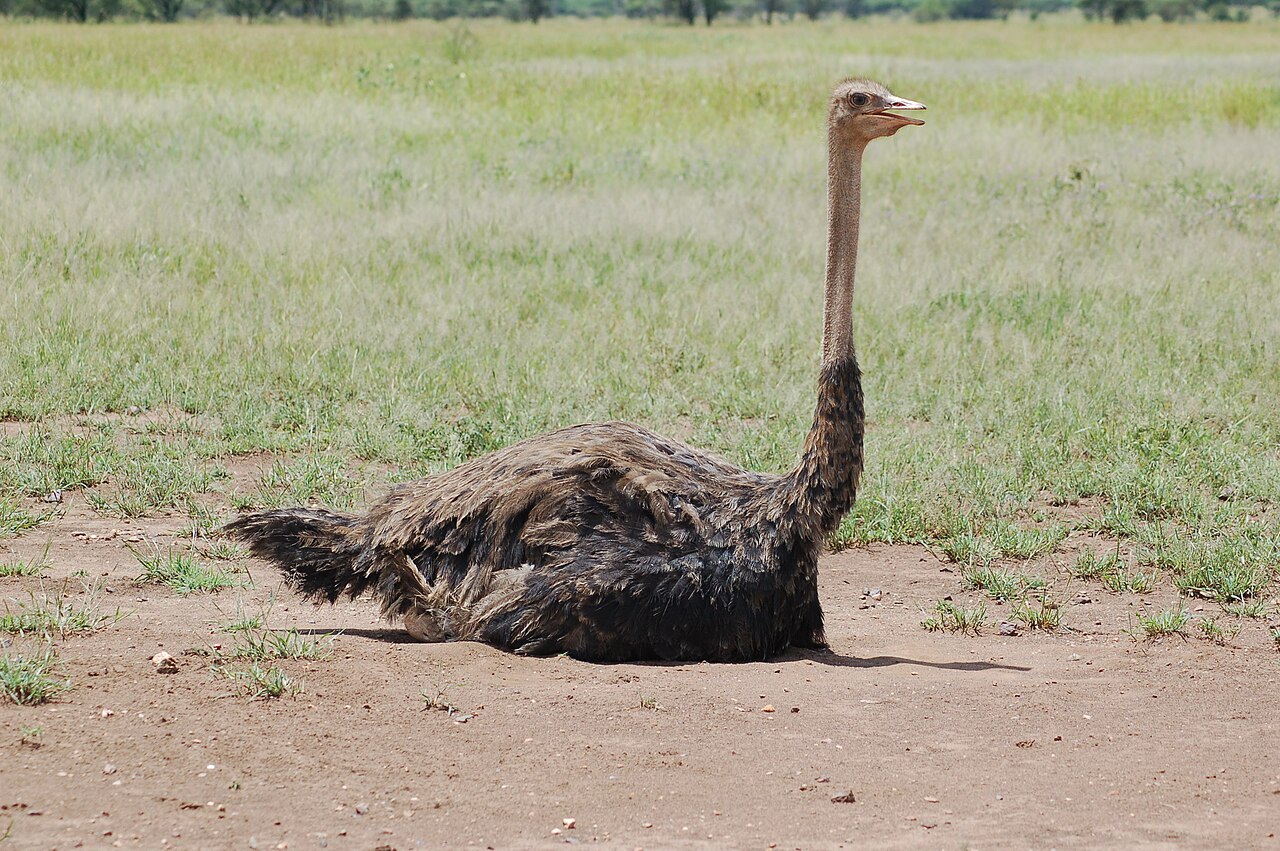
Incubation is shared between the sexes on a schedule matched to camouflage. The female, who is grey-brown, sits by day, and the male, who is black and white, sits at night, and the arrangement means the sitting bird blends into its surroundings at each time. Incubation runs 42 to 46 days.
The dominant hen recognises her own eggs among the others, a genuinely striking ability given how similar they look to a human eye, and she prioritises them in the centre of the nest where hatching success is highest. Chicks hatch at about the size of a domestic chicken and grow roughly a foot a month in the first year, far faster than any nest bird covered in the bird nest identification guide. The emu vs ostrich guide covers the differences in breeding between the two.
How Strong Is the Shell?
Strong enough to stand on. An ostrich egg shell can support the weight of an adult person distributed carefully across the ends, and figures of 220 pounds or more of load appear in testing, which is a function of the dome geometry as much as the material.
The thickness is about two millimetres, roughly six times a chicken eggshell, and the surface is covered in shallow pits that are pores for gas exchange. A developing chick needs oxygen, so the shell is porous despite the strength, and the pores are visible as the pitted texture.
Chicks hatch by chipping through with an egg tooth over a period that can run to a full day or longer, which is far harder work than for a chicken. That strength is also why intact ostrich shells survive archaeologically: engraved ostrich eggshell fragments from southern Africa have been dated to around 60,000 years ago and are among the oldest known decorative art.
What Are Ostrich Eggshells Used For?
Decoration and craft, mostly, and the tradition is ancient. Carved and engraved ostrich eggs appear in ancient Egyptian, Nubian, Phoenician, and Minoan contexts, often as grave goods and luxury objects, and elaborately mounted ostrich eggs were prized in European Renaissance collections.
In southern Africa, San communities have used ostrich eggshells as water containers for thousands of years, sealed with grass and buried at known caches, and shell fragments were and are worked into beads. The engraved fragments from Diepkloof Rock Shelter are a significant archaeological find precisely because of what they indicate about symbolic behaviour.
Today whole blown shells are sold for carving, painting, lamp making, and as display pieces, and they are used in Ethiopian and Coptic church architecture, mounted above altars and on crosses. A blown shell typically costs less than a full egg and is the part most buyers actually want.
How Do You Store and Use One?
Refrigerate a whole ostrich egg and use it within a few weeks, the same as any egg, and check it before opening: a fresh egg sinks in water while a spoiled one floats, and a bad ostrich egg is memorable in a way most people would rather avoid.
Once opened, whisk the contents thoroughly and portion them. A three-pound egg yields roughly two litres of liquid egg, and it freezes well in sealed containers or ice cube trays if lightly beaten first, which turns a single unwieldy egg into a month of ordinary cooking.
Substitute at about 24 chicken eggs to one ostrich egg by volume, and for recipes measure rather than count, since the white-to-yolk ratio differs. Around 50 grams of beaten ostrich egg replaces one medium chicken egg. Baking works but the higher proportion of white produces a slightly firmer result, which suits sponge cakes better than custards. The guide to chicken keeping treats covers the everyday end of egg production.
Are Ostrich Eggs Legal in the US?
Yes. Ostriches are farmed livestock in the United States, and their eggs and meat are legal to sell and eat, subject to normal food safety rules. Ostrich meat is inspected under a voluntary USDA programme rather than mandatory inspection, which is one reason it is less common in shops than beef or poultry.
They are not usually stocked by supermarkets, since demand is low and a three-pound egg does not fit conventional retail. Ostrich farms, farmers markets, specialist online suppliers, and some butchers are the practical sources, and availability is seasonal because hens only lay for part of the year.
Wild ostriches are a different matter entirely: African wild populations are protected and importing eggs or products from wild birds is restricted under CITES. Anything sold legally in the United States comes from farmed birds. The emu egg guide covers a smaller alternative that is far easier to source and cook.
Frequently Asked Questions
How big is an ostrich egg?
About six inches long and three pounds, equivalent to roughly 24 chicken eggs and around 2,000 calories. It is the largest egg of any living bird but only about one percent of the hen’s body weight.
Can you eat an ostrich egg?
Yes, and they taste much like chicken eggs, slightly richer with a higher white-to-yolk ratio. One egg makes scrambled eggs for ten to twelve people, so there is no small portion.
How do you open an ostrich egg?
Drill a hole, break the internal membrane with a skewer, and pour the contents out. The shell is about two millimetres thick and cannot be cracked on a bowl edge.
Why are ostrich eggs expensive?
Hens lay only 40 to 60 eggs a year and each is worth more as a hatching egg than as food, so farms sell only surplus. Prices run 30 to 100 dollars, and shipping often costs as much again.
How strong is an ostrich eggshell?
Strong enough to support an adult standing on it with weight distributed across the ends, with load figures over 200 pounds reported. Chicks need up to a day or more to chip out.
Do ostriches lay eggs like chickens?
No. Several hens share one ground nest, the dominant hen manages the clutch, and incubation is split between the grey-brown female by day and the black-and-white male at night.
Are ostrich eggs legal in the US?
Yes, from farmed birds. Ostriches are farmed livestock and their eggs and meat are legal to sell and eat. Products from wild African ostriches are restricted under CITES.

Similar Posts
Backyard Birds of Missouri: 15 Common Species (2026 Identification Guide)
Identify 15 common backyard birds of Missouri — Eastern Bluebird (state bird), Cardinal, Carolina Wren, Tufted Titmouse. Photos, ranges, attract tips.
Types of Doves: A Complete Guide
There are several types of doves in North America, from the mourning dove to the rock pigeon. Learn common dove species and how to tell them apart.
Barn Owl: Identification, Sounds, and Facts
The Barn Owl is a pale, heart-faced owl and the world’s best rodent hunter, famous for its eerie screech instead of a hoot. Here is how to identify it, what it eats, and how to help it.
Largest Birds in the World: Giants of the Sky and Ground
The ostrich is the largest bird on Earth and the wandering albatross has the biggest wingspan. Meet the giant birds of the world, past and present.
Hawk Symbolism and Spiritual Meaning Explained
What it means when you see a hawk, the spiritual symbolism behind hawk sightings, and how different cultures and traditions interpret this powerful bird of prey.
Common Grackle: Identification and Behavior Guide
How to identify a common grackle, tell males from females, and understand why these iridescent blackbirds gather in such large flocks.