Can Chickens Eat Strawberries? Tops, Amounts, and Mold
Chickens can eat strawberries, and the whole fruit is safe including the green leafy tops that most people throw away. Strawberries are among the better fruit treats for a flock, being lower in sugar than grapes or bananas, high in water, and rich in vitamin C, and hens will chase a tossed berry across the run with more enthusiasm than the nutrition strictly justifies.
The limits are the ones that govern every treat rather than anything specific to strawberries. All treats combined should stay under about 10 percent of daily intake, because a hen filling up on fruit eats less of the layer ration that supplies the protein and calcium she needs to build a shell every day. This guide covers safe amounts, the tops and leaves, moldy fruit, garden protection, and what strawberries do and do not do for egg quality.
| Quick Facts | Strawberries for Chickens |
|---|---|
| Safe to feed | Yes, fruit and green tops |
| Serving | 2 to 3 berries per bird, 2 to 3 times weekly |
| Sugar content | About 5 percent, low for a fruit |
| Water content | Roughly 91 percent |
| Leaves and tops | Safe and readily eaten |
| Never feed | Moldy berries, sugared or preserved fruit |
Are Strawberries Safe for Chickens?
Yes. Strawberries contain nothing toxic to poultry, and unlike tomatoes or potatoes they carry no problematic compounds anywhere in the plant, so there is no part of a strawberry that needs removing before feeding.
Nutritionally they compare well against other fruit treats. Strawberries run about 5 percent sugar, which is roughly half that of grapes and a third that of bananas, and they are around 91 percent water, making them genuinely useful in hot weather when heat stress suppresses appetite and laying.
They also supply meaningful vitamin C at roughly 59 mg per 100 g, along with manganese, folate, potassium, and anthocyanins. Chickens synthesize their own vitamin C internally, so they do not depend on dietary sources the way guinea pigs do, but supplemental vitamin C does appear to help birds cope with heat stress. The same moderation framework applies as in our guide to whether chickens can eat grapes.
Strawberry Tops and Leaves
The green tops are safe and this surprises most keepers, who cut them off and bin them out of caution. Strawberry leaves, the calyx, and the stems are all edible for chickens and are readily taken.
They also add something the fruit does not. The green parts provide fiber and additional micronutrients, and they take longer to eat than soft fruit, which extends foraging time and provides more enrichment per item offered.
One caution applies. Strawberry leaves from plants treated with fungicide or insecticide should not be fed, and commercial strawberries are among the more heavily treated crops, so washing thoroughly matters or choosing organic removes the question. Wilted leaves from a home garden are entirely fine, and a bowl of hulled tops from jam-making is a genuinely good treat.
How Much and How Often
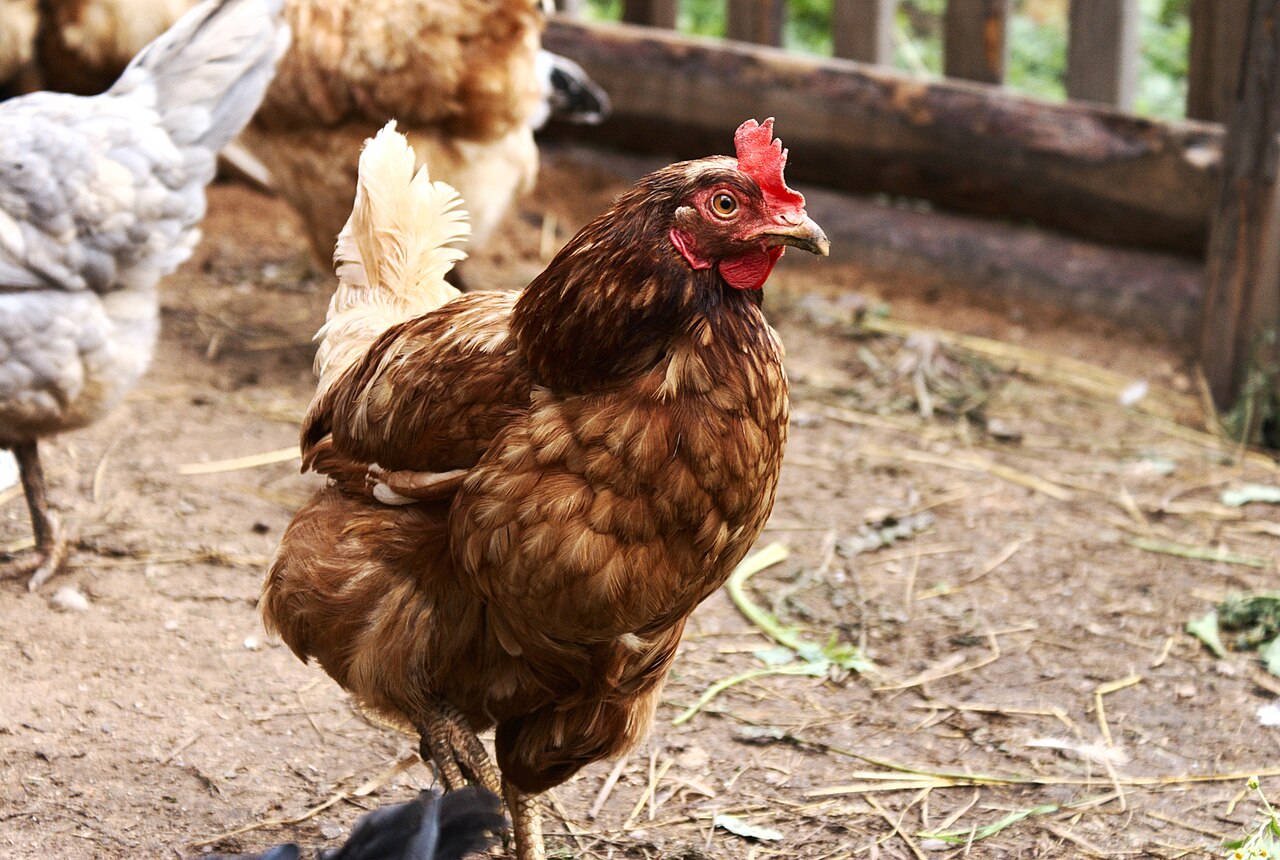
Two or three berries per bird, two or three times a week, is a sensible level. In practice a handful of berries scattered among six hens is a full treat serving for the day, and the fruit disappears in under a minute regardless of how much you give.
The 90 percent rule governs the total. Complete layer feed should make up around ninety percent of daily intake, supplying the 16 to 18 percent protein and the calcium a hen needs, with all treats combined limited to the remaining tenth. That tenth covers scratch grain, mealworms, kitchen scraps, garden produce, and every fruit together rather than each separately.
Judge by what happens at the feeder rather than by counting berries. Steady consumption of layer ration and firm normal droppings mean the balance is right, while untouched crumble, persistently loose droppings, or thinning eggshells mean treats have taken over. Keep crushed oyster shell available free choice so hens can regulate calcium independently.
Moldy and Overripe Strawberries
Soft and overripe is fine, moldy is not, and strawberries deteriorate faster than almost any other fruit. A punnet left on a counter for three days routinely develops grey mold, and that is where the actual danger in this topic sits.
Mold produces mycotoxins that damage the liver and immune system and suppress laying, and the effects accumulate rather than appearing as sudden illness. The common assumption that chickens will simply avoid moldy food is wrong, since hungry birds readily eat visibly spoiled material.
Cutting away a mouldy patch does not make the rest safe, because the fungal network penetrates the whole fruit well before surface mold becomes visible. Bruised, mushy, or slightly fermented berries are acceptable, while anything fuzzy, slimy, or smelling of alcohol belongs in the bin, and the same rule applies across every food as our guide to whether chickens can eat bread explains.
Fresh, Frozen, and Processed
Fresh whole berries are the best form and need no preparation beyond washing. There is no need to cut them, since a chicken will tear a berry apart efficiently, and whole fruit takes longer to eat than chopped pieces.
Frozen strawberries are excellent in summer and work either thawed or offered frozen as a cooling treat. Freezing costs some vitamin C but retains most of the value, and a frozen berry in a shallow dish of water makes a simple heat-wave enrichment item.
Processed forms should be avoided. Strawberry jam, preserves, syrup, and sweetened frozen fruit all carry heavy added sugar, which disrupts gut flora and can contribute to sour crop, and strawberry-flavored products contain nothing resembling actual fruit. Dried strawberries concentrate sugar substantially and should be occasional at most.
Do Strawberries Affect Eggs?
Not meaningfully, and this is worth stating because the claim circulates. Yolk color is driven by carotenoids in the diet, and the pigments that deepen yolks are the yellow and orange carotenoids found in marigold, corn, leafy greens, and pasture rather than the red anthocyanins in strawberries.
Anthocyanins are water-soluble and are not deposited in the yolk in any quantity, so feeding strawberries does not produce pink yolks or tinted shells regardless of how many you offer. Shell color is genetically determined by breed and does not change with diet.
Where fruit does affect eggs is indirect and negative. A hen that displaces layer ration with treats takes in less calcium and protein, and within a couple of weeks that shows as thinner shells, smaller eggs, or reduced laying frequency. The fix is always the same, which is to cut treats back and let the formulated ration do its job.
Chickens in the Strawberry Patch
Free-ranging chickens and a strawberry bed are incompatible during fruiting season, and any keeper who has tried knows it. Chickens locate ripe berries with remarkable efficiency, take a single peck from several fruits rather than finishing one, and scratch mulch away from the crowns.
Physical exclusion is the only reliable answer. Netting over hoops, a wire cage frame, or a fenced bed all work, and the barrier needs to be in place before the first berries colour rather than after the flock finds them. Chickens fly poorly, so a 3 ft barrier usually suffices.
Used at the right time, though, chickens are useful in a strawberry bed. Turning a flock in after the harvest ends lets them eat slugs, snails, and overwintering pests, scratch out weed seedlings, and manure the bed, and doing the same in early spring before flowering achieves the same without costing fruit. The timing principle is identical to the one in our guide to whether chickens can eat tomatoes.
Feeding Strawberries to Chicks and Young Birds
Chicks should stay on complete starter feed for their first weeks, since growth demands precise protein and nutrient levels that no fruit approaches. Extension poultry guidance is consistent on keeping starter feed as close to the whole diet as possible during that period.
After a few weeks, tiny amounts of soft fruit are harmless as an occasional novelty, offered finely chopped alongside chick grit so the gizzard can process it. The quantity should be genuinely token, since a chick’s daily intake is small and anything displacing starter feed has a disproportionate effect.
Growing birds between six weeks and point of lay follow the adult framework at reduced quantities. Their protein requirement stays higher than an adult layer’s while their calcium requirement stays lower, which is why grower feed exists as a separate product, and loading treats onto a grower ration undermines both.
Other Berries and Fruit
Most berries suit chickens and follow the same rules. Blueberries, raspberries, blackberries, and mulberries are all safe and readily eaten, and their lower sugar content compared with tropical fruit makes them among the better options.
A short list should be avoided. Avocado contains persin and is toxic to birds, raw dried beans contain lectins lethal to poultry, chocolate and caffeine are toxic, and anything moldy carries mycotoxins. Citrus is not toxic but is often refused and can cause loose droppings in quantity.
Green potato and green tomato deserve mention because they are the genuine toxicity risk in a kitchen scrap bucket, containing solanine and related glycoalkaloids. Beyond that, the rule is simple: whole fresh unprocessed produce in small amounts, nothing sugared, salted, or spoiled. Anyone keeping the larger heritage breeds covered in our guides to the Brahma chicken and the Polish chicken will find their appetite for treats undiminished by size.
Frequently Asked Questions
Can chickens eat strawberries?
Yes. The whole fruit is safe including the green tops, and strawberries are among the better fruit treats at roughly 5 percent sugar and 91 percent water. Serve two or three berries per bird, two or three times a week.
Can chickens eat strawberry tops and leaves?
Yes, all of it. Leaves, calyx, and stems are safe and readily eaten, and they add fiber and take longer to eat than soft fruit. Wash thoroughly or use organic, since commercial strawberries are heavily treated with pesticides.
How many strawberries can a chicken eat?
Two or three berries per bird, two or three times weekly. All treats combined should stay under about 10 percent of daily intake, which includes scratch grain, mealworms, and every other scrap, so the tenth is shared rather than per item.
Can chickens eat moldy strawberries?
No. Mold produces mycotoxins that damage the liver and immune system and suppress laying, and chickens do not reliably avoid spoiled food. Cutting away a moldy patch does not help, since the fungal network penetrates the whole fruit before mold becomes visible.
Will strawberries change my egg yolks or shells?
No. Yolk color comes from yellow and orange carotenoids in marigold, corn, and greens, not from the red anthocyanins in berries, which are water-soluble and not deposited in the yolk. Shell color is determined by breed genetics and does not change with diet.
How do I keep chickens out of my strawberry patch?
Netting over hoops, a wire cage frame, or a fenced bed, installed before the first berries colour. Chickens fly poorly so 3 ft usually suffices. Turn the flock in after harvest or in early spring instead, when they eat pests and weed seedlings without costing fruit.
What other fruit can chickens eat?
Blueberries, raspberries, blackberries, mulberries, melon, apple without seeds, and most common fruit in small amounts. Avoid avocado, which contains toxic persin, raw dried beans, chocolate, anything moldy, and green potato or green tomato, which contain solanine.