Can Chickens Eat Pumpkin Seeds? Portions, Prep and the Deworming Myth
Chickens can eat pumpkin seeds, and most flocks go after them the moment a pumpkin is cracked open. The seeds are safe raw or roasted, whole or ground, and they carry more protein and zinc than almost anything else that comes out of a fall garden.
The one claim worth treating carefully is the old homestead idea that pumpkin seeds work as a natural dewormer. That belief is widespread, it is repeated on most poultry forums, and the evidence behind it is far weaker than the confidence with which it gets stated.
Yes, chickens can eat pumpkin seeds safely. Serve them raw or roasted without salt or oil, whole or crushed, as part of the 10 percent of the diet reserved for treats. Pumpkin seeds supply protein, zinc and magnesium, but they do not reliably deworm a flock.
| Question | Short answer |
|---|---|
| Safe to feed? | Yes, raw or plain roasted |
| Whole seeds? | Fine, the gizzard handles them |
| How much? | About 1 tbsp per adult bird, two or three times a week |
| Salted or seasoned? | No, sodium and spices are the real risk |
| Deworms the flock? | No, not a substitute for a veterinary product |
| Chicks under 8 weeks? | Only crushed, in small amounts, with grit available |
Can Chickens Eat Pumpkin Seeds?
Yes. Pumpkin seeds are safe for chickens of laying age in any normal quantity a backyard flock would consume. There is no toxin in the seed, the hull is digestible after the gizzard grinds it, and birds eat them readily without any coaxing.
The simplest method is to split a pumpkin and set the halves in the run. Chickens will empty the seed cavity, strings and all, and then work on the flesh for a day or two. Nothing needs scooping, chopping or cooking for that to be safe.
Are Pumpkin Seeds Nutritious for Chickens?
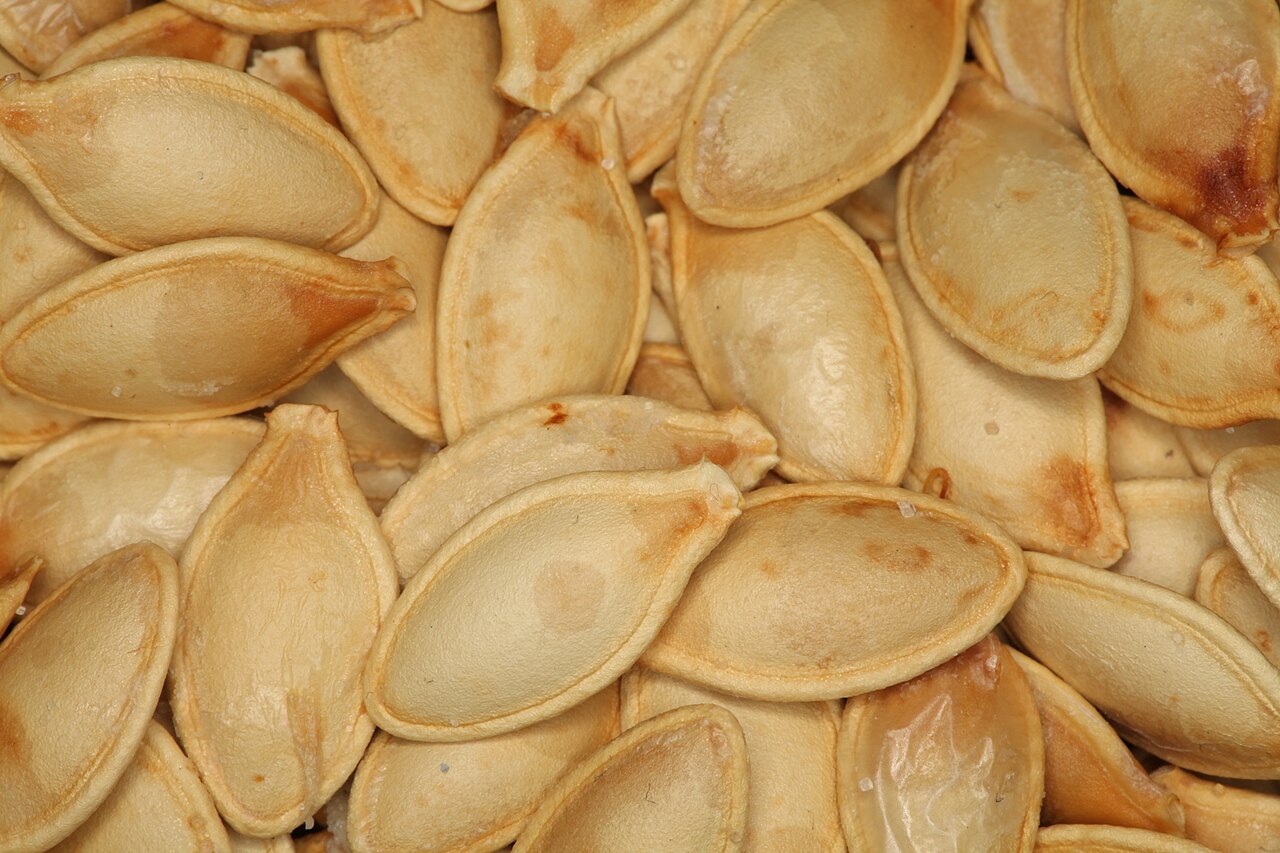
Pumpkin seeds are roughly 30 percent protein and 45 to 49 percent fat by weight, which makes them one of the richer treats a flock will encounter. They also deliver zinc, magnesium, phosphorus, iron and vitamin E in meaningful amounts.
That fat content is the reason for portion control. A treat this dense displaces layer feed, and a hen filling up on seeds is a hen eating less of the balanced ration that supplies her calcium. The nutrition is real, the volume still has to stay small.
Do Pumpkin Seeds Deworm Chickens?
Not reliably. The theory rests on cucurbitacin, a compound in the seed hull that can paralyze intestinal worms in laboratory conditions. Controlled poultry trials have not shown that feeding seeds clears an established worm burden, and the doses used in lab work are far above what a hen eats from a pumpkin.
Treat pumpkin seeds as a healthy snack that may offer marginal support, never as a treatment. If birds show weight loss, pale combs, diarrhea or worms in droppings, a fecal float through a veterinarian and a licensed dewormer is the answer. Extension programs such as Penn State Extension consistently make the same point about natural remedies in poultry.
Raw or Roasted: Which Is Safer?
Both are safe when plain. Raw seeds straight from the pumpkin retain slightly more of the fat soluble vitamins, and they need no preparation at all, which is why most keepers simply hand over the guts.
Roasted seeds are fine as long as they were dried or baked with nothing added. No salt, no oil, no garlic powder, no chili. A seasoned snack mix from a grocery store is not a chicken feed, and the sodium load is the part that actually causes problems in birds.
How Many Pumpkin Seeds Can a Chicken Eat?
About 1 tbsp per standard sized adult bird, two or three times a week, keeps pumpkin seeds inside the usual treat allowance. The rule of thumb across all extras is that treats stay under 10 percent of daily intake, and layer feed makes up the rest.
A free feeding flock with a whole pumpkin will self regulate better than you expect, because they lose interest once the novelty wears off. Smaller birds need proportionally less, so a bantam breed should get roughly half what a heavy dual purpose hen gets.
Do the Seeds Need to Be Chopped or Ground?
Adult chickens do not need the seeds processed. The gizzard is a muscular grinding organ, and with grit available it handles pumpkin seeds as easily as it handles whole grains.
Grit is the condition, not the seed size. Birds that free range pick up small stones on their own, but a confined flock on pellets alone may have nothing in the gizzard to grind with. Provide insoluble grit in a separate dish whenever you feed anything beyond crumble.
Can Chicks and Young Pullets Eat Pumpkin Seeds?
Chicks over about six weeks can have small amounts of crushed seed, provided chick grit is available. Whole seeds are a choking and impaction risk in very young birds, whose gizzards are not yet strong enough to break them down.
Under six weeks, skip them. A chick’s entire nutritional need is covered by a proper starter feed, and high fat treats at that stage do nothing but reduce the intake of the protein a growing bird actually needs.
How to Serve Pumpkin Seeds to Your Flock
Cutting a pumpkin in half and setting it out cut side up is the easiest delivery method and doubles as enrichment on a cold day. Birds will pick at it for hours, which reduces boredom pecking in a run.
For stored seeds, rinse the strings off, spread them on a tray and dry them fully before putting them in a sealed jar. Damp seeds mold quickly. Dried seeds keep for months and can be scattered in bedding to encourage scratching, the same way people use apple pieces or other fruit scraps.
Pumpkin Seeds to Avoid
Three forms cause actual harm. Salted snack seeds push sodium far past what a bird’s kidneys handle well. Seasoned or candied seeds add garlic, onion powder and sugar that have no place in a poultry diet. Moldy seeds from a rotting jack o lantern risk mycotoxins, which damage the liver and can kill.
A carved pumpkin that has sat on a porch for a week is compost, not feed. The same caution applies to soft, fuzzy or fermenting produce of any kind, including overripe tomatoes and spoiled berries.
Do Pumpkin Seeds Affect Egg Laying?
Pumpkin seeds do not increase egg production, and in excess they can reduce it. The mechanism is simple: a hen that fills up on a high fat treat eats less layer ration, which means less calcium and less balanced protein going into shell and yolk formation.
Kept within the treat allowance, seeds have no measurable downside, and the added zinc and vitamin E support feather quality during molt. Molting birds benefit more from the extra protein than laying birds do, which makes late fall the natural time to feed them. For the wider picture on safe extras, see what chickens can eat and our guide on whether chickens can eat sweet potatoes.
Frequently Asked Questions
Can chickens eat pumpkin seeds whole?
Yes, adult chickens eat pumpkin seeds whole without any trouble. The gizzard grinds the hull, provided the birds have access to insoluble grit. Only chicks under about six weeks need seeds crushed, since their gizzards are not yet strong enough to break a whole seed down safely.
Do pumpkin seeds really work as a natural dewormer?
No. The cucurbitacin in pumpkin seeds paralyzes worms in laboratory settings, but controlled poultry studies have not shown that feeding seeds clears an existing infestation. Use them as a healthy treat and rely on a fecal test plus a licensed dewormer when parasites are actually present in the flock.
Can chickens eat salted or roasted pumpkin seeds?
Plain roasted seeds are safe. Salted, oiled or seasoned seeds are not, because chickens tolerate sodium poorly and garlic and onion powders offer no benefit. If the seeds came out of a snack bag meant for people, assume they contain salt and keep them away from the flock.
How often can I give my chickens pumpkin seeds?
Two or three times a week, around 1 tbsp per standard adult bird, keeps pumpkin seeds within the 10 percent treat allowance. A whole pumpkin set out in the run is fine less often, since birds pace themselves over a day or two rather than eating the entire seed cavity at once.
Can chickens eat the whole pumpkin, not just the seeds?
Yes. Flesh, seeds, stringy pulp and even the skin are all safe, and splitting a pumpkin in half is the easiest way to serve it. Discard any pumpkin that has gone soft, moldy or fermented, since mycotoxins from spoiled squash are genuinely dangerous to poultry.