Ladybug Eggs: ID, Hatching, and the Potato Beetle Mixup
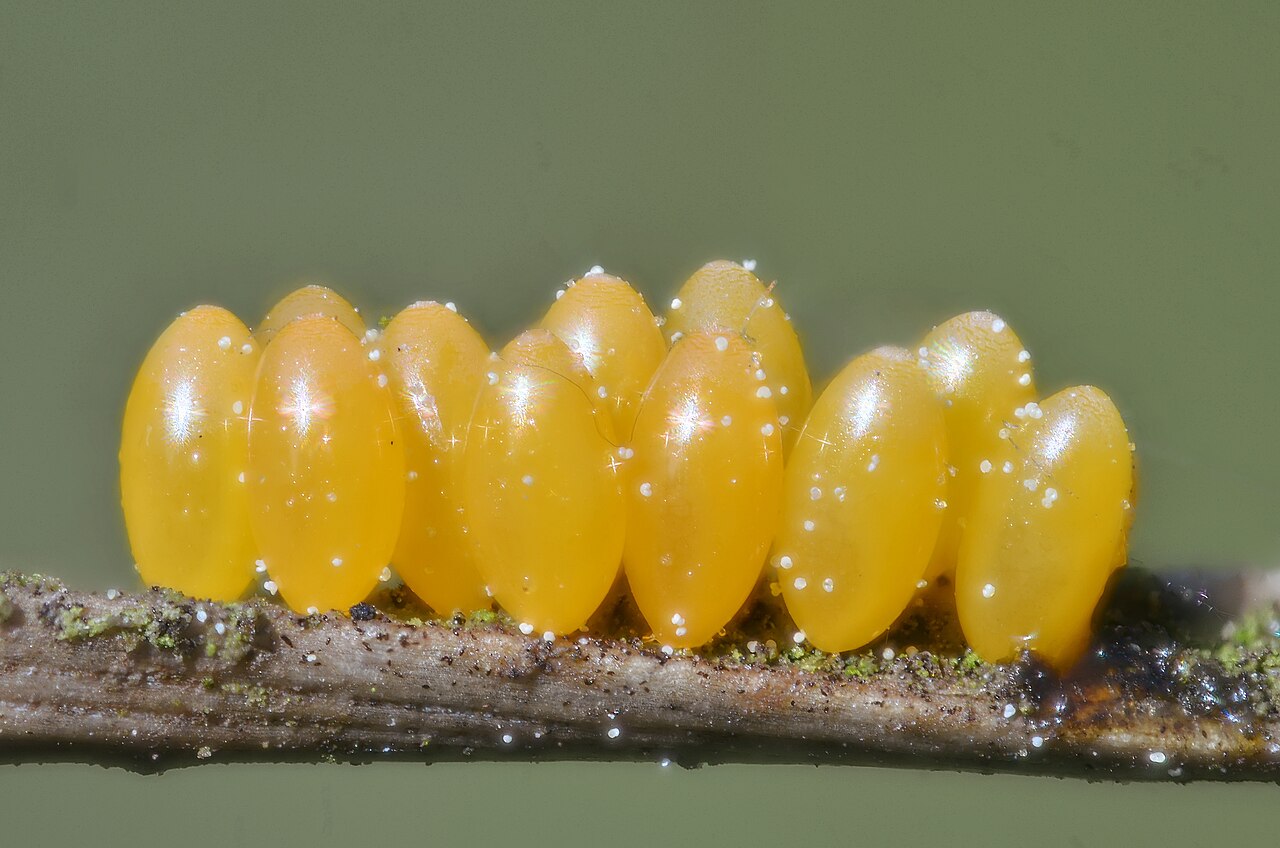
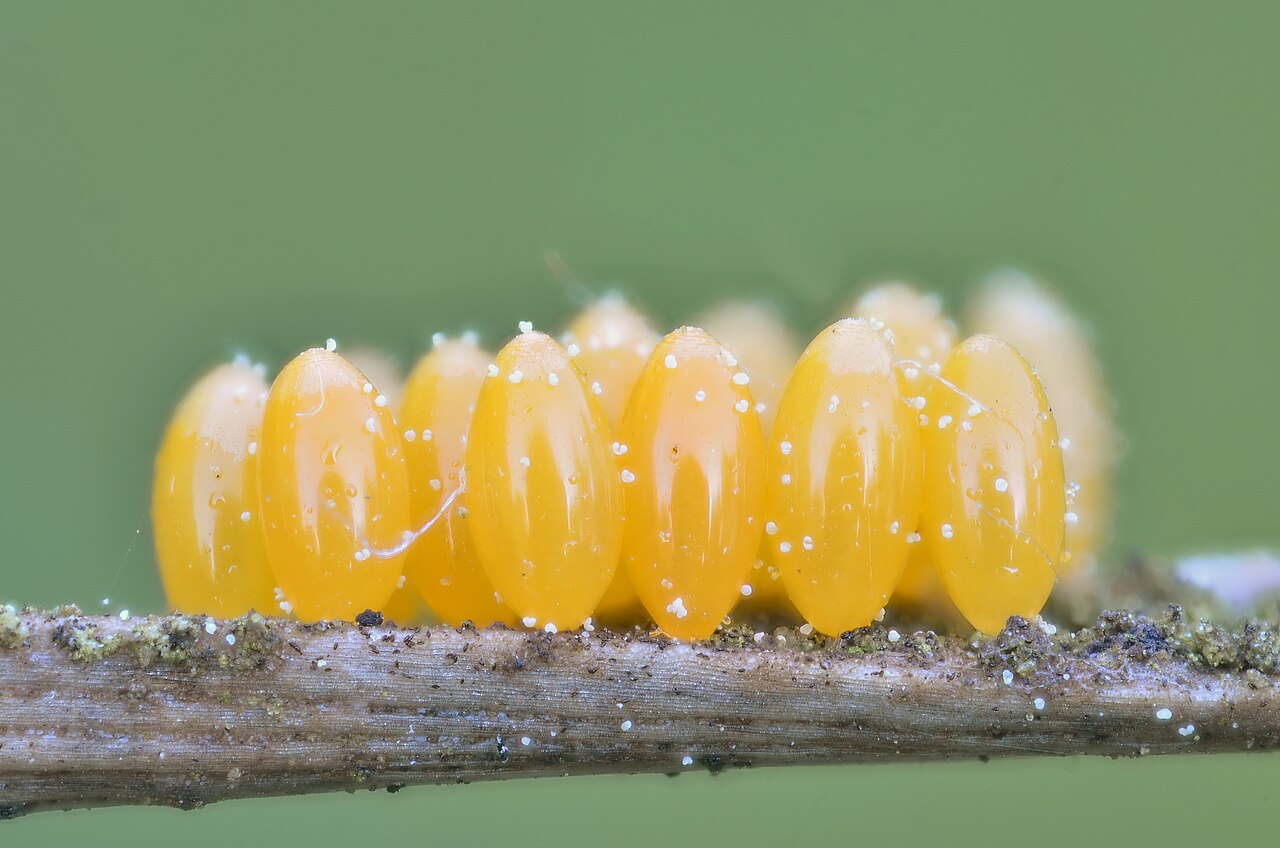
Ladybug eggs are tiny yellow to orange ovals, about 0.04 in long, standing upright in tight clusters of 10 to 50 on the underside of leaves. They are almost always laid close to an aphid colony, because the larvae that hatch three to five days later need to start eating within hours and cannot travel far to find food.
The main reason people search for them is to avoid destroying them by mistake. Ladybug egg clusters look strikingly similar to the eggs of the Colorado potato beetle, a serious garden pest, and gardeners regularly wipe out the predator they wanted while leaving the pest alone. This guide covers identification, the potato beetle comparison, what hatches, the cannibalism that follows, and how to encourage laying in a garden.
| Quick Facts | Ladybug Eggs |
|---|---|
| Size | About 0.04 in, roughly 1 mm |
| Color | Yellow to pale orange |
| Arrangement | Upright, in clusters of 10 to 50 |
| Location | Underside of leaves near aphid colonies |
| Hatching time | 3 to 5 days in warm weather |
| Eggs per female | Several hundred to over 1,000 in a season |
What Ladybug Eggs Look Like
Individual eggs are elongated ovals, slightly tapered, and stand on end rather than lying flat, which gives a cluster the appearance of a tiny bundle of upright grains. They are yellow when freshly laid, deepening toward orange as they develop, and darkening noticeably in the day before hatching.
The cluster is tight and organised. A female lays her eggs close together in a group of roughly 10 to 50, packed side by side, and the whole cluster typically covers an area smaller than a fingernail.
Placement is the most reliable identifier. Ladybugs lay almost exclusively on the underside of leaves, which shelters the eggs from rain, sun, and many predators, and they lay next to or within an aphid colony. A yellow cluster on a leaf underside surrounded by aphids is a ladybug clutch with high confidence. Our guides to the orange ladybug and the yellow ladybug cover the adults that produce them.
Ladybug Eggs vs Colorado Potato Beetle Eggs
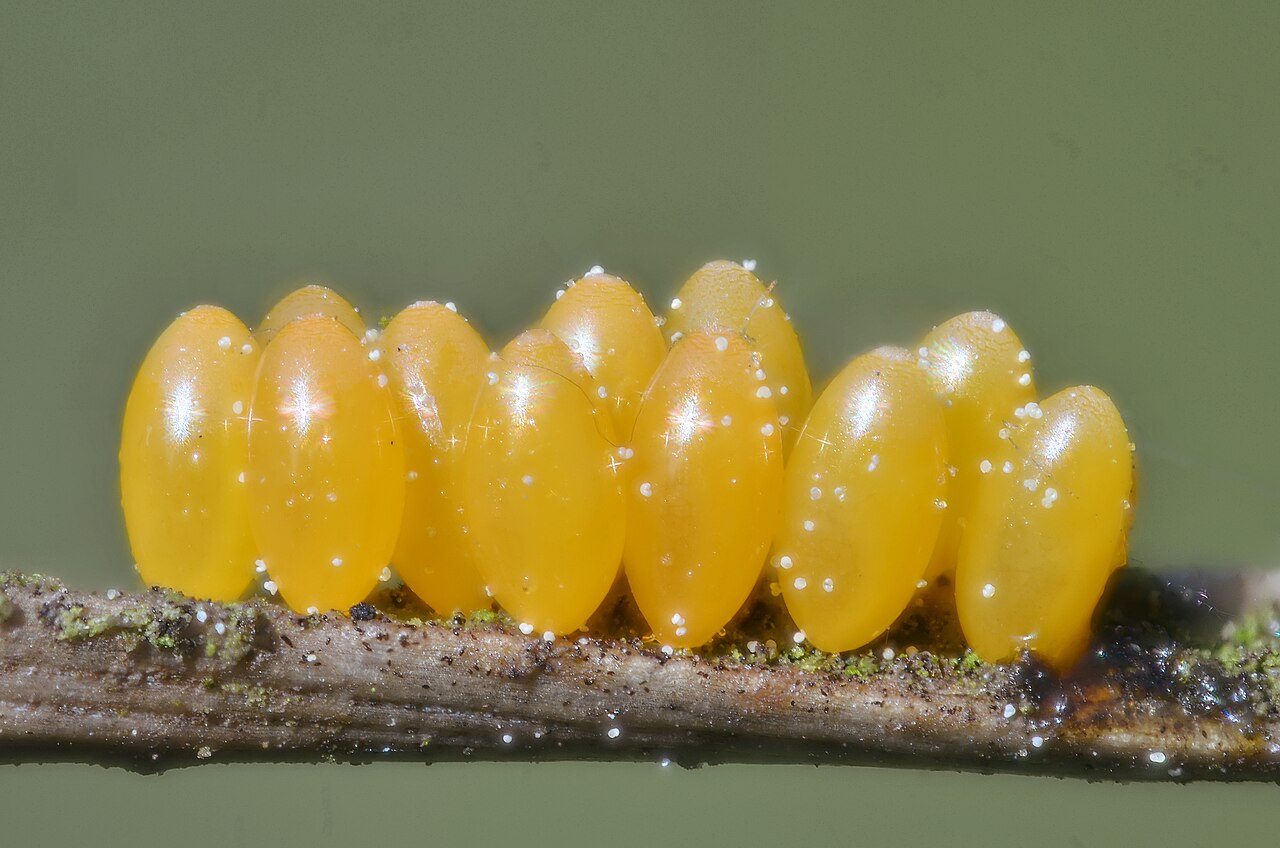
This is the comparison that matters, and getting it wrong is worse than doing nothing. Colorado potato beetle eggs are also yellow to orange, also laid in clusters on leaf undersides, and also stand upright, so a quick glance does not distinguish them.
Three differences are reliable. Potato beetle eggs are larger and more distinctly orange, often described as bright orange rather than yellow. Their clusters are looser and more irregular, while ladybug clusters are tightly packed and neatly aligned. Most decisively, potato beetle eggs appear on potato, tomato, eggplant, and pepper, all nightshades, while ladybug eggs appear wherever aphids are, which is rarely on those crops.
The host plant test resolves nearly every case. A yellow-orange cluster on a potato leaf is almost certainly Colorado potato beetle and should be removed. The same-looking cluster on a rose, milkweed, bean, or fruit tree leaf with aphids nearby is almost certainly a ladybug clutch and should be left alone.
What Hatches
Ladybug larvae look nothing like the adults, which is why so many gardeners kill them. A newly hatched larva is dark, elongated, and slightly spiny, and as it grows it develops into a segmented alligator-shaped creature roughly 0.4 in long, usually black or dark grey with orange or yellow markings.
They are voracious. A larva eats aphids continuously from the moment it hatches, and across its two to three weeks of development a single one consumes hundreds, in many species more than the adult beetle will eat in the same period. This is the stage doing most of the pest control.
The larva then pupates, attaching itself to a leaf or stem and forming an orange and black pupa that looks like a curled shrivelled thing and is also frequently destroyed by gardeners who do not recognize it. The adult emerges after roughly a week, pale and soft at first and darkening over the following hours, and the whole cycle from egg to adult runs three to six weeks. Our guide to what ladybugs eat covers the diet across all stages.
Why Some Eggs Never Hatch
A proportion of every clutch is infertile by design, and this is one of the more surprising details in ladybug biology. Females deliberately lay some unfertilized eggs among the fertile ones.
Those eggs are food. The first larvae to hatch eat the unhatched eggs around them, including infertile ones and any siblings that have not emerged yet, which gives them a critical energy boost before they need to hunt. In a poor aphid year the proportion of infertile eggs laid appears to increase.
Sibling cannibalism follows the same logic and is routine rather than exceptional. A larva that hatches first has a substantial advantage, and clusters where hatching is staggered lose a share of the later emergers. It looks wasteful and is a hedge against the real possibility that the aphid colony the mother chose has already been eaten out by the time her young arrive.
Where and When Ladybugs Lay
Timing follows the aphids. Ladybugs emerge from overwintering in spring, feed to build reserves, and begin laying once aphid populations establish, typically from late spring through summer, with several generations possible in a long season.
Site selection is deliberate rather than random. Females assess aphid density before laying and avoid leaves where other ladybug larvae are already feeding, apparently detecting chemical traces left by larvae. A female that finds an aphid colony already claimed will move on rather than lay into competition.
Output is substantial. A single female lays several hundred eggs over a season and some species exceed 1,000, spread across many small clutches rather than concentrated in one place. That distribution spreads the risk, since any individual clutch may fail entirely if the aphid colony collapses or a predator finds it.
What Eats Ladybug Eggs
Plenty of things, which is why the numbers are so high. Ants are the most significant threat in many gardens, because many ant species farm aphids for honeydew and actively defend the colony against predators, removing or destroying ladybug eggs laid nearby.
Other predators take their share. Lacewing larvae, predatory bugs, spiders, and other ladybug larvae all eat eggs, and parasitoid wasps attack both eggs and larvae in some species.
Fungal infection and weather account for further losses. The overall survival rate from egg to adult is low, and the several hundred eggs a female produces typically yield a small number of breeding adults. That mortality is normal and is the reason the reproductive output looks excessive.
Native and Introduced Ladybugs
Not all ladybug eggs in a North American garden belong to native species, and this matters more than it might appear. The Asian lady beetle was introduced repeatedly for pest control from the early twentieth century onward and is now the most abundant ladybug across much of the continent.
Several native species have declined sharply in the same period, including the nine-spotted ladybug, once common enough to be the New York state insect and now rare. Competition and predation by introduced species are implicated alongside habitat change and pesticide use, and citizen science projects now track native ladybug sightings specifically because they have become hard to find.
Distinguishing eggs by species is not practical for a gardener, since the clutches look broadly alike. The adults are separable, and the Asian lady beetle is identified by a dark M-shaped or W-shaped mark on the white shield behind the head, which our guide to the Asian lady beetle covers along with the autumn indoor aggregations that make it a nuisance.
Raising Ladybugs From Eggs
Raising a clutch is a straightforward project and one of the better ways to see why larvae matter more than adults for pest control. Cut the leaf section holding the eggs, place it in a ventilated container with a damp paper towel for humidity, and keep it at room temperature out of direct sun.
The feeding problem starts immediately after hatching. Larvae need live aphids from the first day and eat continuously, so a supply has to be arranged before the eggs hatch rather than after, which usually means collecting infested shoots from the garden every day or two.
Separate the larvae if you can, since cannibalism is routine and a crowded container yields far fewer adults than the egg count suggests. Release them where you collected the eggs once they pupate and emerge, and expect losses at every stage, because that is what happens in the wild too.
Encouraging Ladybugs to Lay in Your Garden
Tolerate some aphids, which is the requirement most gardeners resist. Ladybugs lay where their larvae can eat, so a garden with zero aphids gets zero ladybug eggs, and a modest early-season aphid population is what draws the predators that suppress the later one.
Stop spraying, including the products marketed as safe. Broad-spectrum insecticides kill ladybug adults, larvae, and eggs along with the pests, and neonicotinoids persist in plant tissue and reach anything feeding on the plant. Insecticidal soap kills soft-bodied ladybug larvae on contact just as readily as aphids.
Then plant for the adults. Ladybugs supplement their diet with pollen and nectar, and flat open flowers including dill, fennel, yarrow, cosmos, calendula, and alyssum are readily accessible to them. Leave leaf litter and hollow stems through winter for overwintering adults, and skip buying ladybugs by mail, since released beetles overwhelmingly disperse within days and commercially collected ones can spread parasites. The larvae they produce are the ones that will actually clear an aphid colony, as our guide to whether ladybugs bite notes alongside the harmless nature of every stage.
Frequently Asked Questions
What do ladybug eggs look like?
Tiny yellow to orange ovals about 0.04 in long, standing upright in tight clusters of 10 to 50, almost always on the underside of leaves near an aphid colony. They darken noticeably in the day before hatching.
How do I tell ladybug eggs from potato beetle eggs?
Check the plant. Colorado potato beetle eggs appear on potato, tomato, eggplant, and pepper, while ladybug eggs appear wherever aphids are. Potato beetle eggs are also larger, brighter orange, and in looser irregular clusters, while ladybug clusters are tightly packed and aligned.
How long do ladybug eggs take to hatch?
Three to five days in warm weather. The larvae that emerge look nothing like adults, resembling small spiny alligators in black and orange, and they eat hundreds of aphids over the two to three weeks before pupating.
Why do some ladybug eggs never hatch?
Because females deliberately lay some infertile eggs among the fertile ones as food for the first larvae to hatch. Sibling cannibalism is routine, giving early hatchers an energy boost before they need to hunt, and it hedges against the aphid colony being gone by hatching time.
How many eggs does a ladybug lay?
Several hundred over a season and more than 1,000 in some species, spread across many small clutches rather than one location. Survival from egg to adult is low, which is why the output is so high.
Should I move ladybug eggs to a different plant?
No. The female chose that leaf because aphids are there, and larvae hatch needing to eat within hours and cannot travel far. Moving a clutch away from the food supply usually kills it.
How do I attract ladybugs to lay in my garden?
Tolerate a modest aphid population, since ladybugs lay only where larvae can feed, and stop spraying, including insecticidal soap which kills larvae on contact. Plant flat open flowers such as dill, fennel, yarrow, and alyssum, and leave leaf litter for overwintering adults.