Snapping Turtle Bite: Force, First Aid, and the Myths
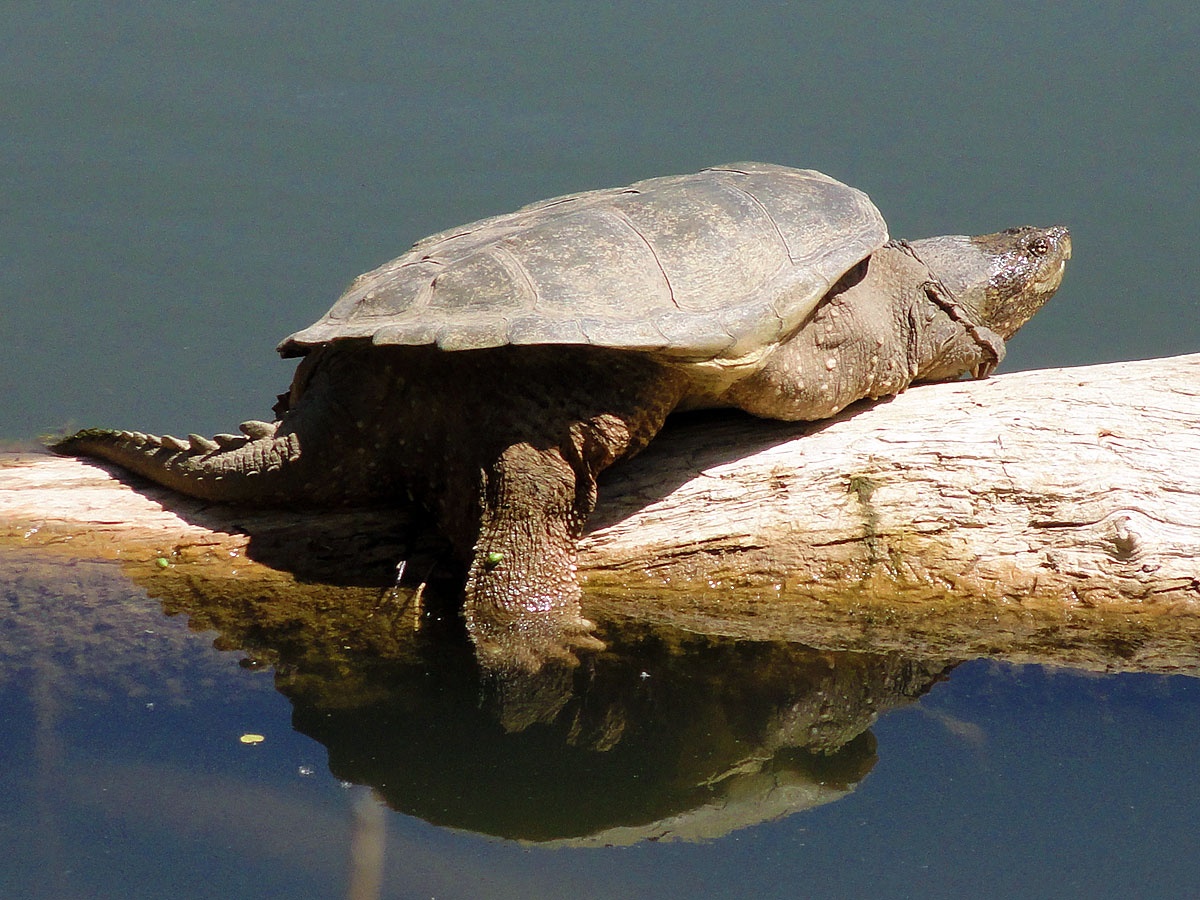
A snapping turtle bite is a serious injury on land and almost never happens in water. Common snapping turtles bite defensively when cornered away from a pond, delivering a fast strike from a neck that reaches much further back than people expect, and the beak cuts rather than crushes. Alligator snapping turtles are larger and stronger but far less inclined to strike.
The famous claim that a snapping turtle can bite through a broom handle or take off a finger with ease does not survive measurement. Published bite force studies put common snapping turtles at roughly 210 to 225 newtons and alligator snappers around 158 newtons at the beak tip, which is comparable to a strong human bite rather than to a crocodile. That is enough to cause deep lacerations and to remove a fingertip in the worst cases, and not enough for the folklore. This guide covers what the bite actually does, first aid, safe handling, and why nearly all bites are avoidable.
| Quick Facts | Snapping Turtle Bite |
|---|---|
| Measured bite force | Roughly 210 to 225 N in common snappers |
| Typical injury | Deep laceration, crushing, occasional fingertip loss |
| Venom | None |
| Main risk | Wound infection, including Salmonella |
| When bites happen | On land, when the turtle is cornered or handled |
| In water | They flee, bites are very rare |
What the Bite Actually Does
Snapping turtles have no teeth. They have a sharp keratin beak with a hooked upper tip, and the injury it produces is a cutting and crushing wound rather than a puncture, often with ragged edges because the beak shears as the jaws close.
The strike itself is what surprises people. A snapping turtle can extend its neck roughly two-thirds of its shell length backward and sideways, and the movement is fast, so the safe zone behind the animal is much smaller than it appears. Anyone grabbing a snapping turtle by the sides of the shell is within reach.
Realistic injuries range from a deep laceration requiring stitches to crushed tissue and, in a small number of documented cases involving large animals and small fingers, partial amputation of a fingertip. Serious injuries almost always involve a large adult and a child’s hand, and the animal frequently holds on rather than releasing immediately.
The Bite Force Numbers
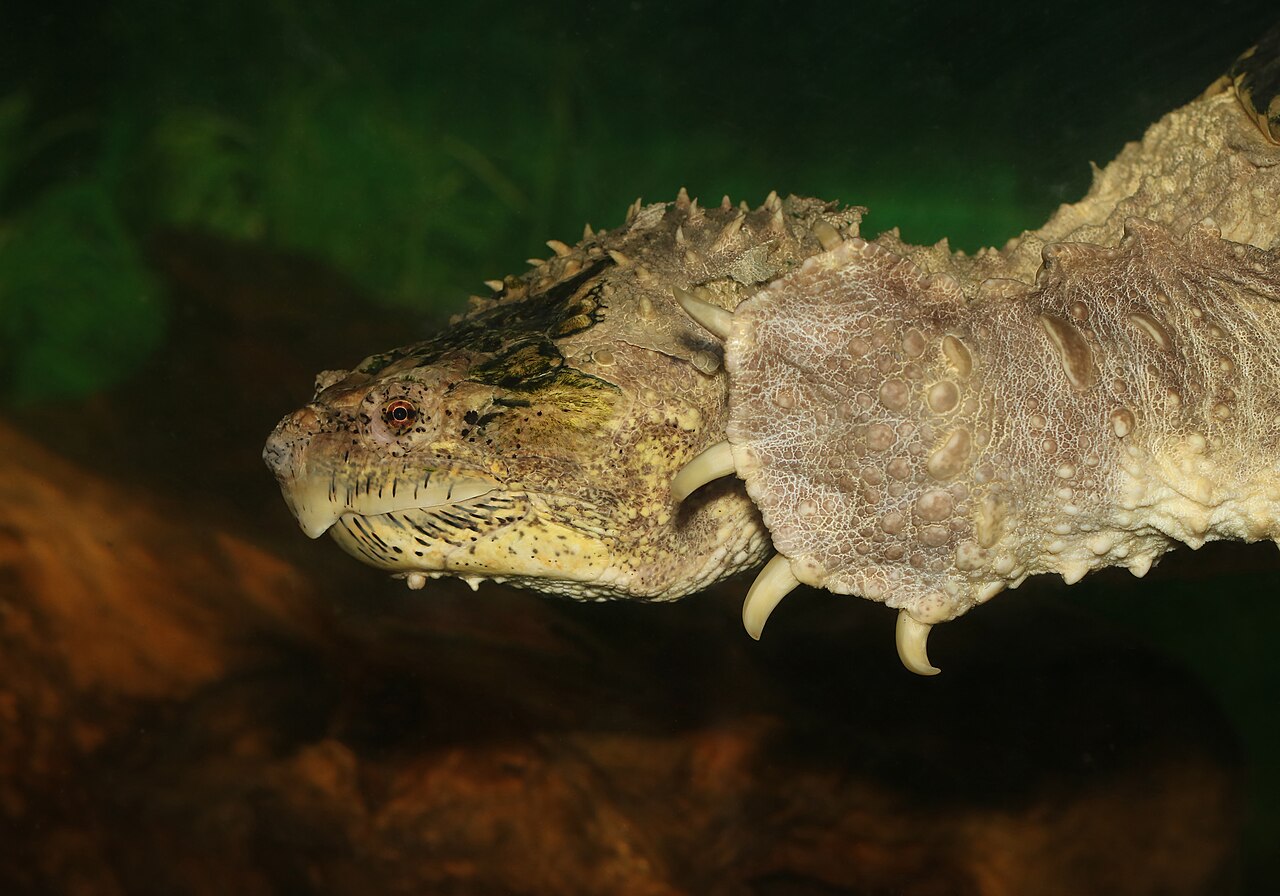
The internet figures for snapping turtle bite force are wildly inflated, and the published research tells a different story. A study measuring bite force across turtle species recorded common snapping turtles at around 208 to 226 newtons and alligator snapping turtles at approximately 158 newtons at the beak tip.
For comparison, human bite force at the molars is commonly measured in the range of 300 to 700 newtons, which means a snapping turtle bites with less force than a person chewing. What makes the injury worse than a human bite is the sharpness of the beak and the shearing action, not raw power.
The broom handle claim is the clearest casualty of this. A snapping turtle cannot bite through a wooden broom handle, and demonstrations circulating online typically involve rotten wood or a thin dowel. Overstating the danger is not harmless, because it drives people to kill turtles they encounter rather than simply stepping around them.
Why They Bite on Land and Not in Water
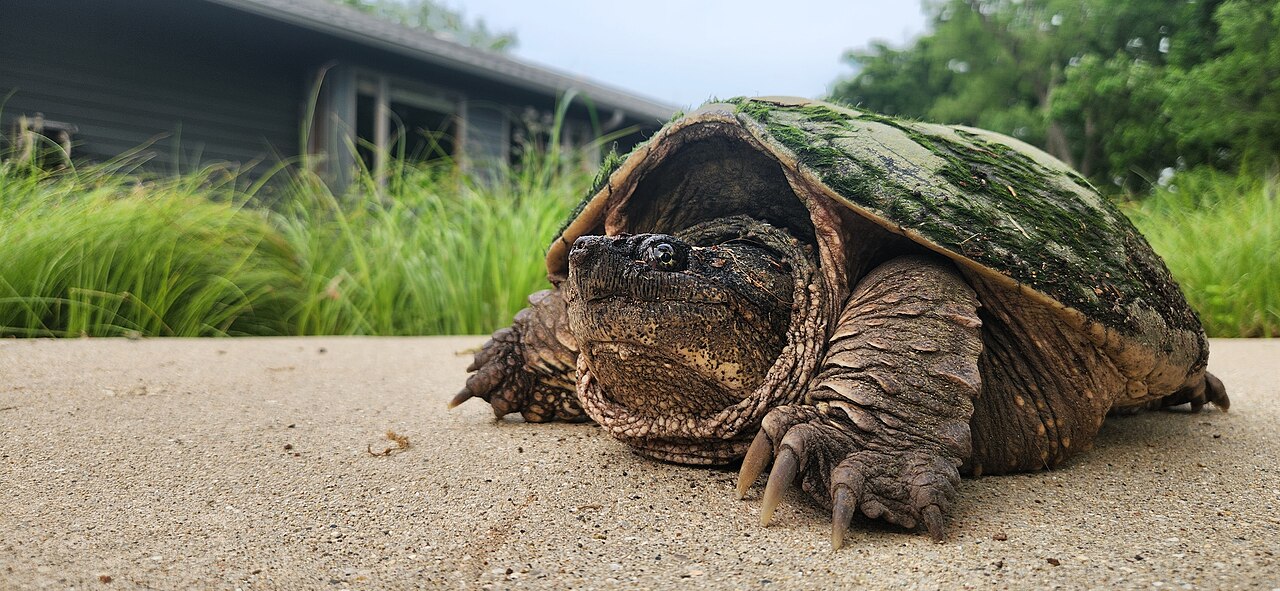
The behavior difference is the most useful thing to understand about this species. In water a snapping turtle almost always flees, sinking into sediment or swimming away, and bites to swimmers are genuinely rare despite widespread fear of them.
On land the animal is at a serious disadvantage. Its plastron, the underside of the shell, is small and cross-shaped, leaving the legs, neck, and tail substantially exposed, and unlike a box turtle it cannot withdraw into its shell at all. It also moves slowly on land and cannot outrun anything.
Aggression is therefore its only defense out of water, and the snapping is a bluff-and-strike display from an animal that knows it is vulnerable. A turtle crossing a road in June is usually a female searching for a nesting site, which is why land encounters cluster in early summer. Our guide to the baby snapping turtle covers what happens after she lays.
First Aid for a Bite
If the turtle is still attached, do not pull. Yanking tears tissue and worsens the wound considerably. Setting the animal down and letting it release, or gently lowering it into water, usually works, and a snapping turtle that feels the ground or water beneath it typically lets go and leaves.
Once free, control bleeding with direct pressure using a clean cloth, then irrigate the wound thoroughly with clean running water for several minutes. Wash with soap, apply an antiseptic, and cover with a clean dressing.
Seek medical care for anything beyond a superficial scratch. Deep lacerations frequently need stitches, crush injuries need assessment for tendon and bone damage, and infection risk is the main concern in every case. Tetanus status should be checked, and a physician may prescribe antibiotics given the bacterial load involved. Any bite to a child, any wound that will not stop bleeding, and any injury to a finger joint warrants prompt evaluation.
Infection Risk
This is the part that matters more than the mechanical injury in most cases. Turtles carry Salmonella as normal gut flora, and their mouths and the water they live in host a wide range of bacteria including Aeromonas, Pseudomonas, Mycobacterium, and various anaerobes.
The CDC (cdc.gov) documents Salmonella transmission from turtles regularly, which is why the sale of turtles with shells under 4 in has been prohibited in the United States since 1975. A bite delivers those organisms directly into deep tissue, which is a more efficient route than the hand-to-mouth contact behind most cases.
Watch the wound closely over the following days. Spreading redness, increasing pain, warmth, swelling, pus, red streaking up the limb, or fever all indicate infection and need medical attention rather than waiting. Puncture and crush wounds seal over at the surface while bacteria remain deep, which is why they become infected more often than clean cuts.
Common vs Alligator Snapping Turtles
The two species behave quite differently and the more dangerous-looking one is the less dangerous in practice. Common snapping turtles reach 8 to 18 in of shell and 10 to 35 lb, occur across most of the eastern and central United States, and are the ones people meet crossing roads.
Alligator snapping turtles are the largest freshwater turtle in North America, with males exceeding 100 lb and occasionally 200, restricted to river systems draining into the Gulf. They are far more sedentary, sitting on the bottom and luring fish with a worm-like appendage on the tongue rather than actively hunting.
Temperament differs accordingly. Common snappers are quick to strike and will pursue a perceived threat a short distance, while alligator snappers are slower and less inclined to bite unless directly handled. The larger species can cause a far worse injury when it does bite, but encounters are rarer and the animal is protected across much of its range.
How to Move a Snapping Turtle Safely
The safest method requires no contact at all. Slide a car mat, a shovel, or a piece of stiff cardboard under the turtle and drag or lift it, keeping the animal low so a fall cannot injure it. Most road crossings can be handled this way in under a minute.
If you must lift it directly, grip the rear edge of the shell above the back legs with both hands, keep the turtle low and away from your body, and be aware that the hind claws will scratch. Never grip the sides, since the neck reaches there easily, and never lift by the tail.
Move it in the direction it was already heading. A turtle turned back will simply attempt the crossing again, which defeats the purpose, and a female searching for a nest site has a destination in mind. Move it well clear of the road, and if traffic conditions make the crossing unsafe for you, leave it and call a local wildlife agency instead.
Bites to Pets
Dogs are the animals most often bitten, usually because they investigate a turtle crossing a yard or shoreline. A snapping turtle bite to a dog’s face or paw causes the same shearing laceration it would in a person, and the risk of infection is comparable.
Any dog bitten by a turtle should see a veterinarian. Bites to the muzzle and paws frequently involve tendon and cartilage, wounds seal over deep contamination, and antibiotics are usually warranted given the bacterial load.
Prevention is straightforward. Keep dogs leashed near ponds and slow rivers in early summer when females are nesting, and check yards near water before letting a dog out unsupervised. Cats generally avoid turtles entirely, and a snapping turtle poses no threat to a cat that keeps its distance.
Do Snapping Turtles Attack Swimmers?
Essentially never, and this fear is out of proportion to the risk. In water a snapping turtle’s response to a large animal is to swim away or bury itself in sediment, and there is no pattern of unprovoked attacks on swimmers anywhere in their range.
The rare incidents that do occur involve someone stepping directly on a buried turtle or reaching into a hole or under a submerged log. Both are contact with a cornered animal rather than an attack, and both are avoidable by shuffling feet in murky water and not reaching blindly into underwater cavities.
The disproportionate fear has a real cost. Snapping turtles are killed regularly on the assumption that they threaten swimmers or deplete fish stocks, when they are largely scavengers and omnivores that eat carrion, plants, invertebrates, and slow or dying fish. They mature slowly and reproduce poorly, so removing adults damages populations for decades. Our guides to the painted turtle, the Gila monster bite, and coral snakes versus king snakes cover other reptiles whose reputations exceed their actual risk, and our guide to what tadpoles eat covers the pond life they share water with.
Related reading: Baby Alligator Snapping Turtle.
Frequently Asked Questions
How strong is a snapping turtle bite?
Published measurements put common snapping turtles at roughly 208 to 226 newtons and alligator snappers around 158 newtons at the beak tip, which is less than human molar bite force. The injury comes from the sharp shearing beak rather than raw power.
Can a snapping turtle bite off a finger?
In rare cases involving a large animal and a small finger, a fingertip can be lost, and deep lacerations requiring stitches are the more typical serious outcome. The claim that they routinely amputate fingers or bite through broom handles is not supported by measured bite force.
What should I do if a snapping turtle bites me?
Do not pull if it is still attached, since setting it down or lowering it into water usually makes it release. Control bleeding with direct pressure, irrigate thoroughly with running water, wash with soap, and seek medical care for anything beyond a superficial scratch.
Do snapping turtles bite swimmers?
Essentially never. In water they flee or bury themselves in sediment, and there is no pattern of unprovoked attacks. The rare incidents involve stepping on a buried turtle or reaching into an underwater cavity, both of which are contact with a cornered animal.
How do I safely move a snapping turtle off a road?
Slide a car mat, shovel, or stiff cardboard underneath and drag it, keeping the animal low. If lifting directly, grip the rear of the shell above the back legs, never the sides and never the tail, since lifting by the tail dislocates vertebrae. Move it in the direction it was heading.
What is the infection risk from a turtle bite?
Significant. Turtles carry Salmonella as normal gut flora along with Aeromonas, Pseudomonas, and other bacteria, and a bite delivers them into deep tissue. Watch for spreading redness, warmth, pus, red streaking, or fever, and check tetanus status.
Which is more dangerous, a common or alligator snapping turtle?
Common snapping turtles bite far more readily and account for nearly all incidents, while alligator snappers are larger but slower and rarely bite unless handled. The larger species can cause a worse injury, but encounters are rare and it is protected across much of its range.