Mourning Dove Sounds: Every Call and What It Means
The sound most people know from mourning doves is a soft mournful coo-OO-oo, oo, oo, delivered by the male from an exposed perch, and it is so owl-like that it gets reported as an owl constantly. The other sound they make is not vocal at all: the sharp whistling produced by their wings on takeoff comes from modified feathers, not from the bird’s throat.
Those two sounds account for most of what a mourning dove produces, and each carries specific information. The perch coo advertises for a mate and is heard from spring through late summer, while the wing whistle is an alarm signal that alerts the whole flock when one bird bolts. This guide covers every call in the repertoire, why the coo sounds like an owl, why they call at night, and what the sounds mean.
| Sound | What It Means |
|---|---|
| Perch coo, coo-OO-oo oo oo | Unmated male advertising for a mate |
| Nest call, soft coo-oo-oo | Male inviting female to a nest site |
| Greeting coo | Between mates when one returns to the nest |
| Alarm call, short abrupt roo-oo | Startled bird, often just before flight |
| Wing whistle | Mechanical, produced by feathers on takeoff |
| Bill snapping and wing clapping | Aggression or courtship display |
The Perch Coo
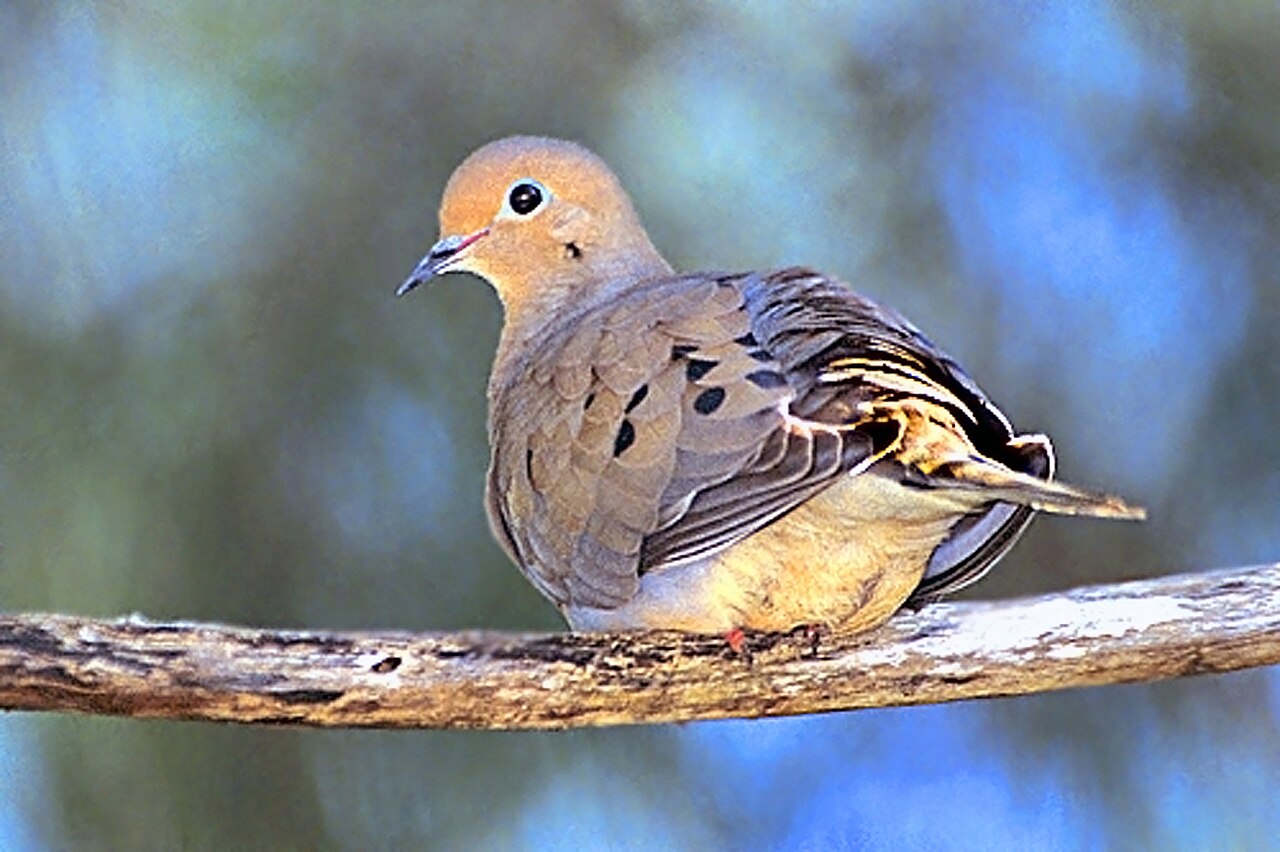
This is the signature sound and the reason for the bird’s name. The perch coo is a slow, low, five-part call usually written as coo-OO-oo, oo, oo, with the second syllable rising sharply and the last three falling away, and it carries a long distance on still mornings.
Only males produce it, and its function is advertising. An unmated male sings it repeatedly from a conspicuous perch such as a wire, bare branch, or roofline, and a male that has paired usually stops or reduces it substantially, which is why the sound thins out as the season progresses even though the birds remain.
Timing follows breeding. The perch coo starts in early spring and continues through the extended breeding season, which in mourning doves can run from February into October in southern regions with multiple broods. Peak singing is in the first hours after dawn and again toward dusk. Our guide to the mourning dove covers the bird itself in full.
Why It Sounds Like an Owl
Mourning doves are reported as owls more than any other bird, and the confusion is entirely reasonable. Both produce low-frequency hooting sounds in the same general pitch range, both call in the low light of dawn and dusk, and both use a repeated multi-syllable pattern.
The differences are learnable. A great horned owl gives a deeper, more resonant series usually of four or five hoots with a distinctive rhythm often written as hoo-h’HOO-hoo-hoo, and the tone is fuller and more hollow. A mourning dove’s coo is softer, breathier, and mournful rather than resonant, with that characteristic rising second syllable.
Context helps as much as tone. A mourning dove calls from an open exposed perch in full daylight, frequently in suburban yards near feeders, while owls call from cover and are most vocal in genuine darkness. A hooting sound at two in the afternoon from a telephone wire is a dove.
The Wing Whistle
This is the sound people notice without identifying, a sharp fluttering whistle when a dove takes off suddenly. It is not vocal. The noise comes from air passing through specially modified outer primary feathers on the wings.
Research on the closely related crested pigeon in Australia demonstrated that these modified feathers produce a specific alarm note, and that the sound functions as a genuine signal rather than an incidental byproduct. Birds hearing the rapid-tempo whistle of an alarmed takeoff flee, while the slower whistle of a routine departure does not trigger the same response.
The practical consequence is that mourning doves have an automatic alarm system requiring no decision. A bird that bolts from a predator broadcasts that fact to every dove within earshot through the act of leaving, and the whistle is louder and more urgent precisely because the escape is faster.
The Other Calls
The nest call is softer and shorter than the perch coo, a subdued coo-oo-oo given by a male sitting at a potential nest site while the female inspects it. It is quiet enough that you generally only hear it standing close to an active pair.
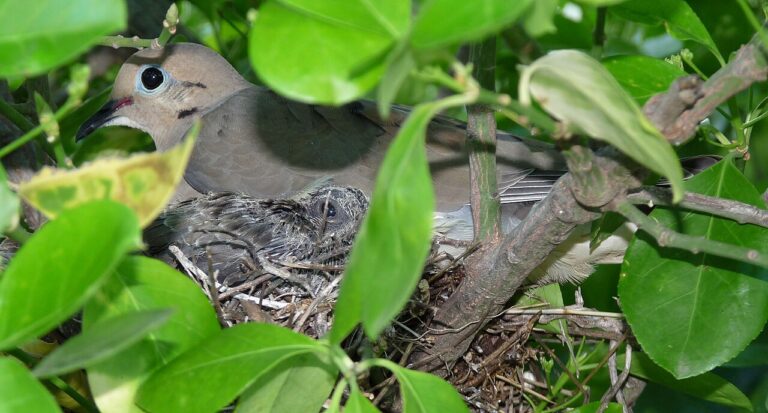
Greeting coos pass between mates. A returning bird gives a soft call as it arrives at the nest, and the sitting bird answers, which is a quiet exchange easily missed unless you are watching a nest directly.
The alarm call is abrupt and unmistakable next to the others, a short sharp roo-oo given by a startled bird, often immediately before it flushes. Doves also produce non-vocal sounds in display, including bill snapping and a wing clap during the male’s courtship flight, in which he ascends steeply with noisy wingbeats and then glides down in a wide circle with wings held stiffly out.
Why Doves Call at Night
Mourning doves are diurnal and most vocal at dawn and dusk, but night calling happens and generates a steady stream of questions from people hearing it.
Several ordinary things trigger it. Artificial lighting near a roost extends perceived daylight, a bright moon has a similar effect, and disturbance from a cat, a car door, or a passing owl prompts calls from a bird that would otherwise be silent. Unmated males in peak breeding season sometimes call very early, well before genuine dawn.
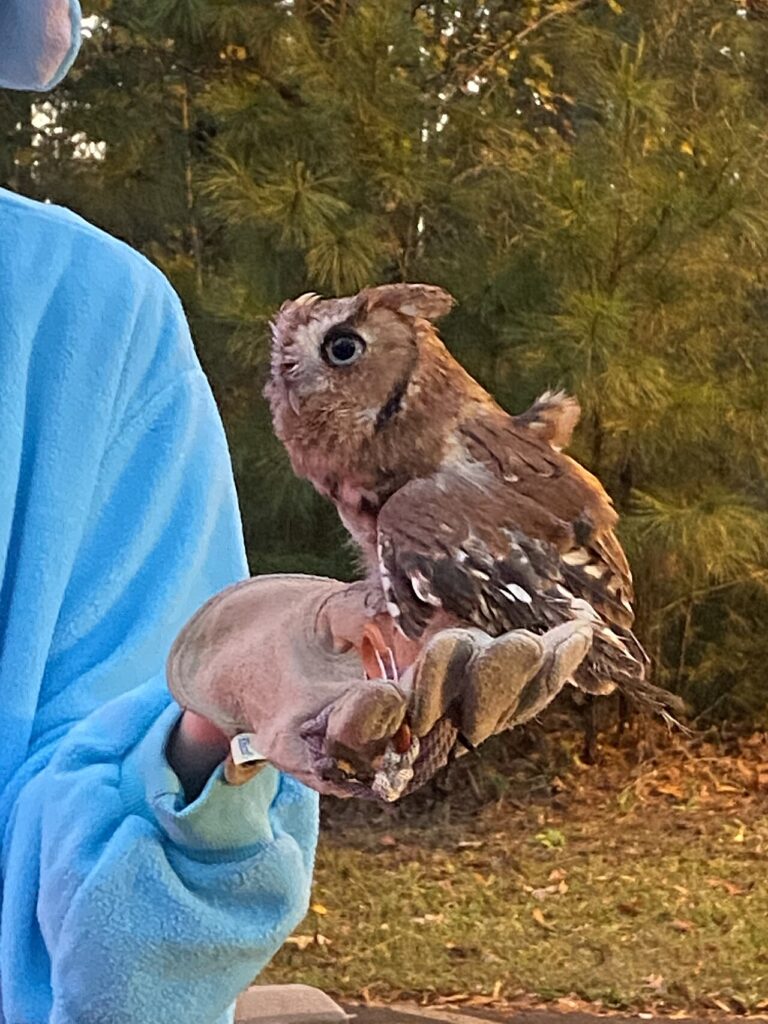
What people hear at night in North America is more often a genuine owl than a dove, and the distinction matters if the identification is the point. Eastern screech owls produce a descending whinny and a monotone trill rather than hoots, and great horned owls give the classic deep hooting series. A soft mournful five-part coo at three in the morning is a dove, and anything more resonant probably is not.
What the Sounds Mean
Doves carry unusually heavy symbolism, and the mourning dove’s name and voice have attracted more of it than most. The call is widely heard as expressing grief or longing, and across many traditions a dove appearing or calling after a death is interpreted as a message from or about the person who died.
Peace and hope are the other dominant associations, drawing on the dove’s role in the biblical flood narrative and its long use as a peace symbol. Some traditions read a dove calling near a home as a sign of coming peace or of a burden lifting.
The biological meaning is simpler and worth holding alongside the symbolic one. A mourning dove calling repeatedly from your roofline is an unmated male advertising for a female, and the sound stops when he succeeds. Both readings can be true at once, and our guides to mourning dove symbolism and dove symbolism cover the traditions in more depth.
When You Hear Them
Seasonally, the perch coo begins in late winter or early spring and continues through the breeding season, which is exceptionally long in this species. Mourning doves raise up to six broods a year in southern regions, and calling persists accordingly.
Daily, singing peaks in the first hour or two after sunrise and again in the late afternoon and early evening. Midday calling drops off, particularly in hot weather when the birds are inactive.
Weather affects it too. Calm still mornings carry the sound furthest and doves call most readily then, while wind and rain suppress it. Cold snaps reduce calling, and a warm spell in late winter frequently produces the first coos of the year, which is why many people associate the sound with the arrival of spring.
Telling Doves From Similar Birds
Several birds produce cooing sounds and get confused with mourning doves. Eurasian collared-doves, now widespread across North America, give a three-part coo-COO-cook that is harsher and more insistent, lacking the mournful quality, and they are larger and paler with a black collar mark.
Rock pigeons produce a throaty rolling coo quite different in tone, more of a gurgle than a hoot, and they are usually calling from ledges and buildings rather than wires and branches. White-winged doves in the southwest give a distinctive who-cooks-for-you pattern often described as sounding like a barred owl.
Common ground doves and Inca doves add further variety in the south and southwest, both smaller with different rhythms. Our guides to types of doves and to attracting mourning doves cover identification and how to bring them into a yard.
Encouraging Doves to Call in Your Yard
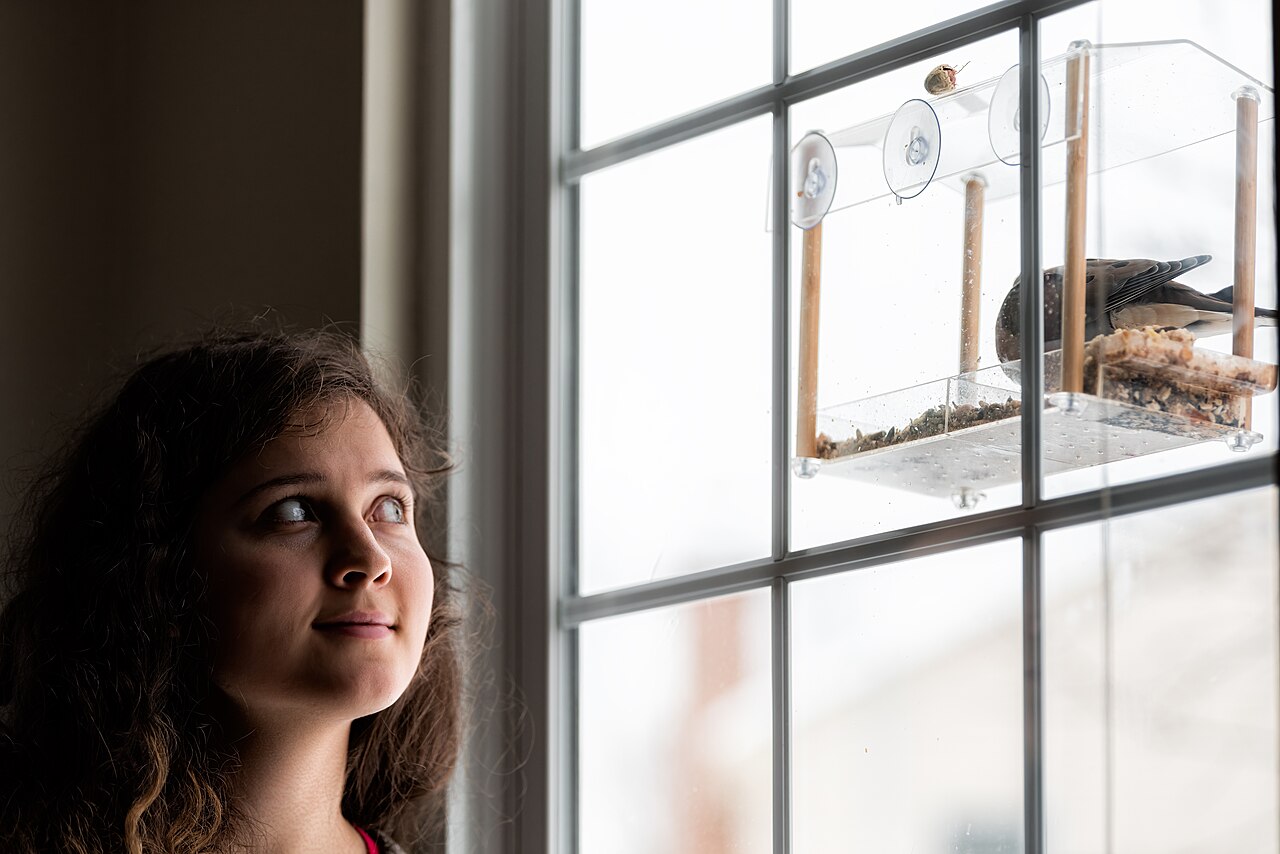
Mourning doves are ground feeders and the single most effective change is offering seed where they can reach it. They struggle with tube feeders and hanging perches, and a platform feeder or simply scattering seed on the ground suits their feeding style far better.
Seed preference is straightforward. Black oil sunflower, white millet, cracked corn, safflower, and nyjer are all taken readily, and millet in particular is a dove favorite that many other feeder birds ignore.
Then provide the structures they use. Open perches such as wires, bare branches, and rooflines give males the exposed singing posts they prefer, and a shallow water source is used for both drinking and bathing. Doves drink differently from most birds, sucking water up without tilting the head back, which is worth watching for once. Their diet is entirely seed-based, which our guide to what mourning doves eat covers in detail.
Frequently Asked Questions
What does a mourning dove sound like?
A soft, low, mournful coo-OO-oo, oo, oo in five parts, with the second syllable rising and the last three falling. Only males give this perch coo, and it functions as advertising for a mate rather than as a territorial or distress call.
Is that hooting an owl or a mourning dove?
If it is daylight and coming from an open perch such as a wire or roofline, it is a dove. Owl hoots are deeper, more resonant, and hollow, and owls call from cover in genuine darkness. The dove’s coo is softer and breathier with a distinctive rising second syllable.
Why do mourning doves whistle when they fly?
The whistle is mechanical, produced by air passing through modified outer primary feathers rather than by the bird’s voice. It functions as an alarm signal, since a fast panicked takeoff produces a more urgent whistle that causes other doves to flee.
Why do mourning doves call at night?
Artificial lighting, bright moonlight, and disturbance from cats, cars, or predators all prompt night calling, and unmated males in peak season sometimes start well before dawn. Genuine nighttime hooting in North America is more often an owl.
Do female mourning doves coo?
Not the perch coo, which is exclusively male. Females give softer greeting and nest calls in exchanges with their mate, and both sexes produce the abrupt alarm call and the mechanical wing whistle.
What does hearing a mourning dove mean?
Traditionally, grief, longing, peace, or a message from someone who has died, and the associations are widespread and long-standing. Biologically, a repeated coo from your roofline is an unmated male advertising for a female, and it stops once he pairs.
How do I attract mourning doves?
Offer seed on a platform feeder or scattered on the ground rather than in tube feeders, since they are ground feeders that struggle with hanging perches. White millet, cracked corn, and black oil sunflower all work, along with open perches and a shallow water source.