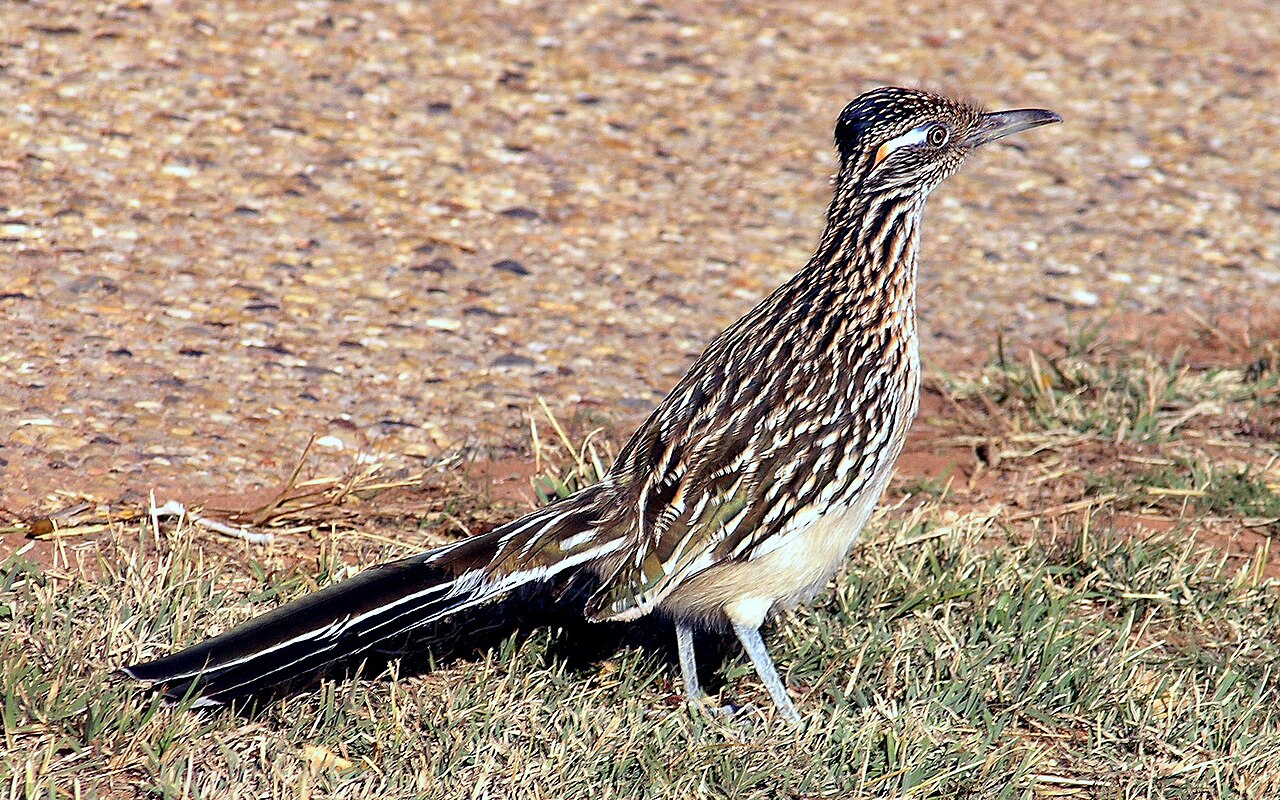
Roadrunner Sounds: 6 Calls and What Each One Means
A greater roadrunner (Geococcyx californianus) does not say beep beep. The real bird makes a low, descending series of coos that sounds much closer to a mourning dove than to a cartoon, plus a dry clattering rattle it produces with its bill. Roadrunner sounds fall into two groups: soft vocal coos and whirrs used between mates, and hard mechanical clatters used as threats.
Most people hear the coo first, usually at dawn in spring, drifting across open desert scrub from a fence post or a rooftop. The clatter comes later, at close range, when the bird is annoyed by a cat, a snake, or a person standing too near a nest. Knowing which sound you heard tells you what the bird was doing and whether it is likely to stay in your yard.
Roadrunners make a soft, descending series of five to eight low coos that drops in pitch, a dry mandible clatter like two sticks knocked together, a rising whirr between mates, and growls or barks at close range. The cartoon beep beep is a studio invention and no wild roadrunner produces it.
| Sound | What it is like | Who makes it | When you hear it |
|---|---|---|---|
| Descending coo | Low coo coo coo coo, falling in pitch | Mostly males | Dawn, February to June |
| Bill clatter | Dry wooden rattle, 1 to 2 seconds | Both sexes | Threat, any season |
| Whirr or whine | Rising buzzy wheee | Both sexes | Pair contact, courtship |
| Growl | Rough low rasp | Both sexes | Face to face conflict |
| Bark or clack | Single sharp note | Adults | Alarm near nest |
| Begging buzz | Thin insect like buzzing | Nestlings | Daylight, April to July |
What do roadrunners sound like in real life?
In real life a roadrunner sounds like a slightly hoarse dove. The advertising song is a run of five to eight coos, each one lower than the last, delivered slowly over three to five seconds. The tone is breathy rather than pure, and the final note often trails off as if the bird ran out of air.
The second impression most people report is percussion. Roadrunners snap and grind their mandibles together to produce a dry rattle that carries 50 to 100 ft across open ground. It is not a voice at all, which is why recordings labeled as roadrunner calls often contain two completely different kinds of noise.
Nothing in the natural repertoire is shrill or metallic. If you heard something sharp and ringing, you were probably listening to a cactus wren or a curve-billed thrasher sharing the same desert scrub.
The Descending Coo: The Advertising Song
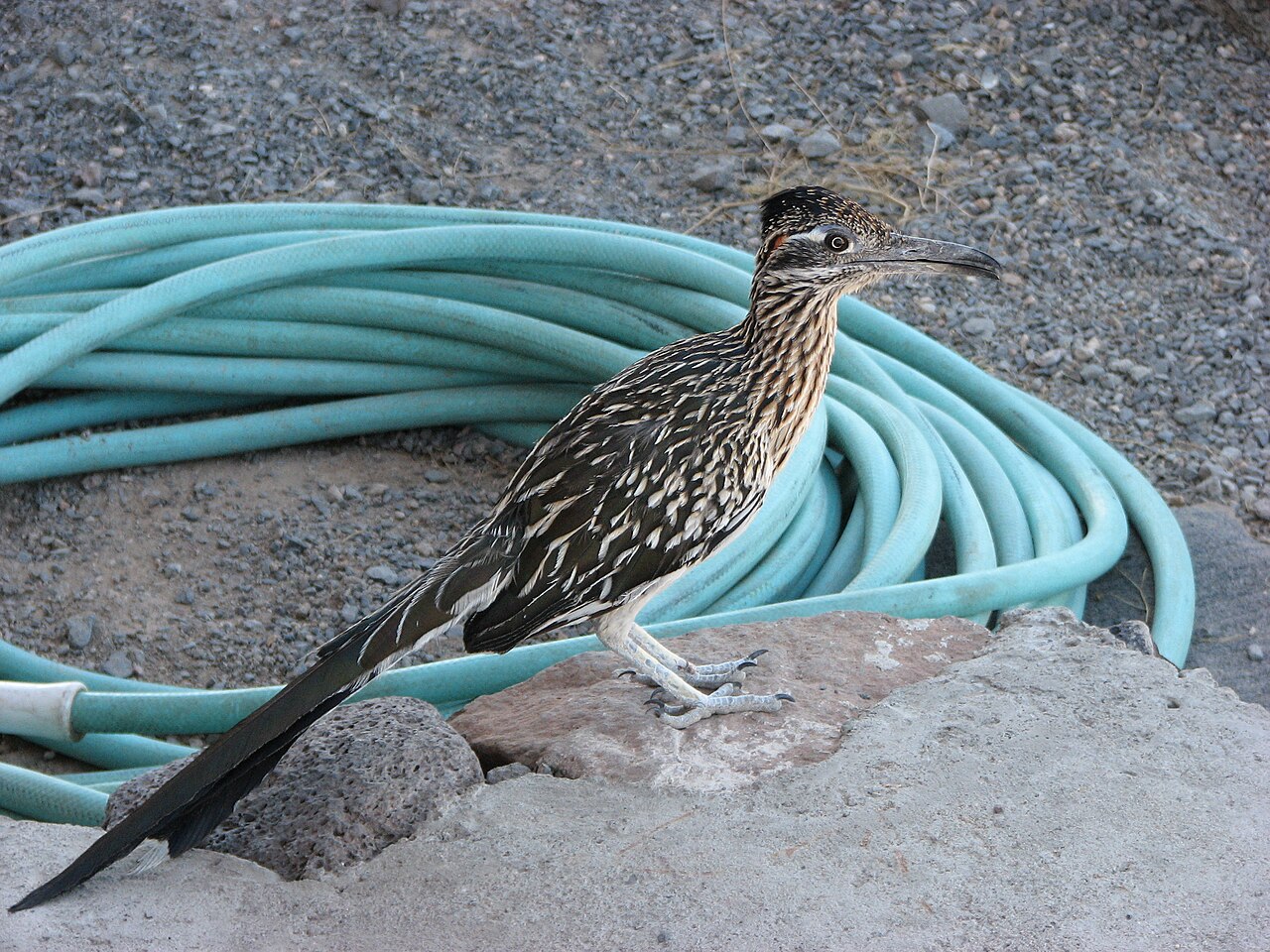
The coo is the sound that defines the species. A male climbs a fence post, a low mesquite branch, or a flat roof, points his bill down toward his feet, and pushes out the series with his whole body. The posture matters: the head drops with each note, which is why the pitch slides downward.
Each coo sits around 400 Hz, low enough to travel well through brush. Males sing most heavily from February through June, which is why February mornings in Tucson or Albuquerque are the easiest time to confirm a bird by ear alone. A female may answer with a shorter, quieter version.
Count the notes if you can. Mourning doves deliver a stuttered coo-OO-oo-oo-oo that rises at the start, while a roadrunner only falls. That single difference settles most identifications. The same trick works for several other confusing species covered in birds that sound like owls.
Bill Clatter: The Warning Sound
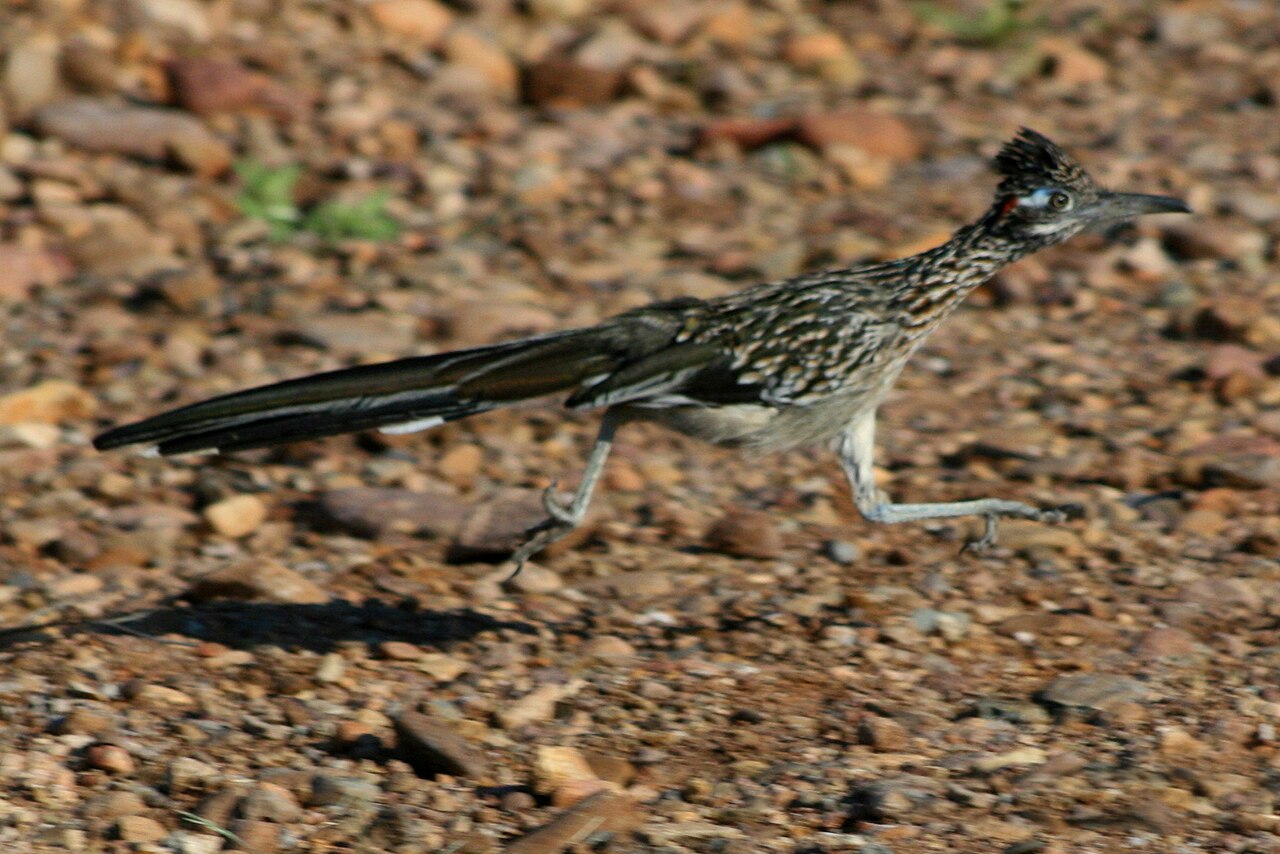
The mandible clatter is the roadrunner equivalent of a raised voice. The bird holds its crest up, fans the tail, and rattles its bill for one to two seconds in bursts. Up close it sounds like a handful of dry twigs shaken in a can, with no musical pitch at all.
Clattering means the bird feels crowded. A domestic cat on the patio, a gopher snake near the nest, or a photographer who closed to 15 ft will all trigger it. Roadrunners also clatter at rivals during territorial standoffs, often alternating the rattle with short charges across open ground.
Mechanical bird noises confuse a lot of listeners, because the sound comes from anatomy rather than a syrinx. Woodpecker drumming is the other common case, and so is the rapid-fire effect described in the bird that sounds like a machine gun.
The Whirr and the Whine: Pair Contact
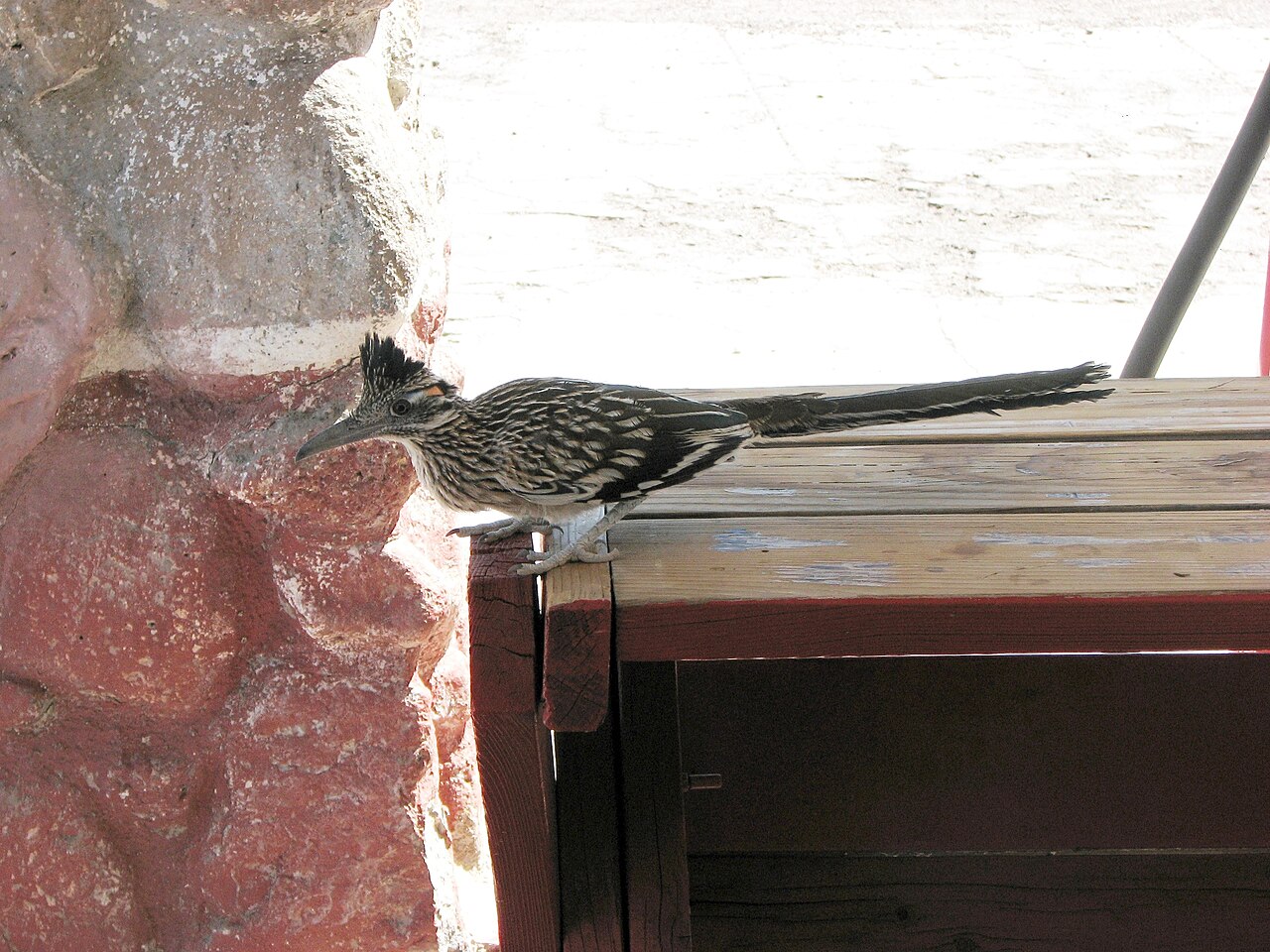
Between mates, roadrunners use a rising whirr that starts thin and swells into a buzzy whine. It lasts under a second and is usually repeated every few seconds while the pair moves through cover. The sound is quiet and easy to miss beyond 40 ft.
During courtship the whirr carries a food gift. A male often holds a lizard or a large grasshopper crosswise in his bill, whirrs, raises his crest, and wags his tail in front of the female. If she accepts the prey, copulation usually follows within a minute or two.
Paired birds also whirr when separated in dense brush, the way quail use contact notes. Hearing a whirr in April tells you there is very likely a nest within a few hundred feet.
Growls, Barks, and Clacks
At very close range roadrunners add a short vocabulary of rough noises. A growl is a low rasping buzz given face to face, typically by a bird that has already clattered and is escalating. A bark is a single harsh note, abrupt and dog-like, used when something moves suddenly near a nest or a brood.
Clacks are isolated bill snaps, slower and more deliberate than a full clatter, often given while a bird watches a threat it has not yet decided to flee. All three carry poorly, which is why they rarely show up in field recordings made from a distance.
Why do roadrunners make noise?
Roadrunners make noise for three reasons: to hold a territory, to keep a pair bonded, and to warn off anything that gets close enough to matter. The descending coo does the first job, the whirr does the second, and the clatter and growl do the third.
Open desert shapes all of it. Sound travels well across creosote flats, so a low coo from a single perch covers a territory of roughly 20 to 100 acres without the bird spending energy chasing intruders. Visual display handles the rest at close range, which is why the loud calls stop almost entirely once two birds are within sight of each other.
Begging Calls of Young Roadrunners
Nestlings produce a thin buzzing beg that sounds almost like an insect, repeated whenever a parent lands at the nest with prey. Volume climbs steadily over the 18 to 21 days the chicks stay in the nest, and by the end a brood of four is audible from 30 to 50 ft away.
Fledglings keep begging for two to three weeks after leaving, following the adults on foot and buzzing at them. People who report a strange whining noise from a low hedge in June are usually hearing fledged young rather than an adult.
Does roadrunner say beep or meep?
Neither. The beep beep belongs to the Warner Bros. cartoon, where the effect was built in a studio, and no wild bird produces it. Roadrunners also do not meep. The confusion survives because the coo is the only sound most people have never heard, while the cartoon is the only one they have.
The closest real match to a short mechanical beep is the bill clatter, and even that is dry and multi-pulsed rather than tonal. If a recording online plays a clean two-note electronic beep over a roadrunner photo, it is a sound effect.
When You Hear Roadrunners: Time of Day and Season
Dawn is the reliable window. Males coo from first light until roughly two hours after sunrise, then go quiet for most of the day and may resume briefly at dusk. Midday desert heat shuts the singing down entirely, with birds moving into shade between 11 a.m. and 4 p.m.
Seasonally, cooing peaks from February through June and tapers off by August. Clattering happens year round because threats do. In the southern part of the range, where a second brood is common after summer rains, you can hear a short return of song in late July and August.
Sounds People Confuse With a Roadrunner
Mourning doves cause most of the mistakes. Their song rises then falls and holds a steadier pitch, and they call through the middle of the day when roadrunners have gone quiet. White-winged doves give a rhythmic who-cooks-for-you phrase that sounds closer to an owl than to a roadrunner.
Great horned owls overlap with the same desert and deliver evenly pitched hoots, never a falling run. Gambel’s quail add sharp ascending calls that no roadrunner makes. Listeners who want a reference point for the owl end of the spectrum can compare barn owl sounds and bald eagle sounds, both of which are nothing like what people expect.
Roadrunners Around the House: Roofs, Patios, and Windows
Roadrunners are not attic animals. They do not get into walls or crawl spaces, so a scratching or thumping noise overhead at night is a rodent, a raccoon, or a roosting bird of another species. What roadrunners do is sing from flat roofs and parapets at dawn, which places a loud low coo directly above a bedroom.
The other household complaint is window attacks. A territorial bird sees its reflection, clatters at it, and may tap or lunge at the glass for days. Breaking the reflection with soap, screen, or an exterior film ends it. Birds also bathe in dust near patios and clatter at pets that approach, and a noisy standoff with a house cat is common enough that it is worth keeping the cat indoors at dawn.
Where to Hear Roadrunners and How to Find Them
Texas holds the most roadrunners of any state, with New Mexico and Arizona close behind; the species also reaches Oklahoma, Kansas, Colorado, Nevada, Utah, and inland California. Look along the edges of desert scrub, mesquite flats, washes, golf course margins, and ranch roads, where the birds hunt lizards and large insects on open ground.
At night roadrunners roost off the ground in dense shrubs, cholla, small trees, or on sheltered ledges, usually alone. Sound archives make good preparation: the species account at All About Birds includes clean reference recordings of both the coo and the clatter. If you want sharper contrast for your ear, the other extreme in desert acoustics is covered in alligator sounds.
Frequently Asked Questions
What noise does roadrunner make?
The main noise is a descending series of five to eight low coos, each lower in pitch than the one before, given mostly by males at dawn. Roadrunners also rattle their bills in a dry clatter, whirr at mates, growl, and bark sharply near a nest.
How do you call a roadrunner?
Imitate the coo by producing five or six low breathy notes that step downward, spaced roughly half a second apart. Playback of a recorded male will often draw a territorial bird in during spring, but repeated playback stresses nesting birds and is prohibited in most national parks and refuges.
What is a flock of roadrunners called?
There is no standard collective noun, and the question rarely comes up in the field because roadrunners are not flocking birds. They live singly or in mated pairs on defended territories, and the only groups you see are a pair with fledged young in summer.
Where do roadrunners stay at night?
They roost off the ground in thick cover, typically a dense shrub, a cholla cactus, a low tree, or a protected rock ledge 3 to 10 ft up. Roosting birds sit quietly and do not call, so nighttime desert noises almost never come from a roadrunner.
Can a road runner be a pet?
No. Greater roadrunners are protected under the Migratory Bird Treaty Act, which makes it illegal to keep, capture, or possess one without a federal permit. Videos of so called pet roadrunners usually show wild birds that have learned to take food near a house.
Do roadrunners make noise at night?
Very rarely. Cooing is a dawn and dusk behavior, and roosting birds stay silent. A low repeated hooting after dark in roadrunner country is far more likely a great horned owl, and a rapid trill is usually an elf owl or a western screech-owl. Compare blue jay sounds for an example of a daytime bird that is often blamed for night noise.