Snowy Owl Sounds: 6 Calls and What Each One Means
Snowy owl sounds are built around one call: a deep, booming hoo from the male that carries for miles across open ground. Most people searching for this bird’s voice are trying to match something they heard in the dark, and that is where the answer gets useful fast. The snowy owl (Bubo scandiacus) is one of the quietest owls in North America for most of the year, and nearly all of its vocal life happens on the Arctic tundra between May and August.
In the lower 48 states, where snowy owls show up as winter visitors, this bird hunts in near total silence from a fence post, a dune or a snowbank, usually in daylight. The hoots, barks, hisses and chick calls below come with the season and the time of day you can actually expect them, plus the far more likely suspects when something is hooting over an American backyard in October.
Male snowy owls give a deep booming hoot of two to six notes that can carry up to 7 miles (11 km) across flat tundra. Females hoot higher and far less often. Both sexes bark, cackle, hiss and snap their bills near the nest. In their winter US range, snowy owls are almost completely silent.
| Call | What it sounds like | Who gives it | When you hear it |
|---|---|---|---|
| Booming hoot | Deep, foghorn hoo hoo, 2 to 6 notes | Male | Breeding season, mostly dusk and night |
| Higher hoot | Shorter, less resonant hoo | Female | Breeding season, answering the male |
| Barking alarm | Harsh krek krek krek or a dog-like yap | Both sexes | Intruder near the nest, any hour |
| Cackle | Rapid ka-ka-ka-ka, rattling | Both sexes | Agitation, often in flight |
| Hiss and bill snap | Snake-like hiss, sharp wooden click | Both sexes and young | Close-range threat, last warning |
| Begging mew | Thin whistled pyew or squeaky whine | Female and chicks | Food exchange at the nest, summer |
What Sound Do Snowy Owls Make?
A snowy owl’s main sound is a hoot, but it is nothing like the rolling five-note phrase of a great horned owl. The male delivers two to six flat, foghorn notes on one pitch, slow and evenly spaced, with no rhythm you could tap along to. Birders often describe it as a boat horn heard through fog rather than a song.
Everything else in the repertoire is short and harsh: barks, cackles, hisses, whistled mews and bill snapping. There is no trill, no whinny and no screech of the kind that makes barn owls famous. If you want the full range of owl voices side by side, the guide to owl sounds across North America lays them out by species.
The Male’s Booming Hoot
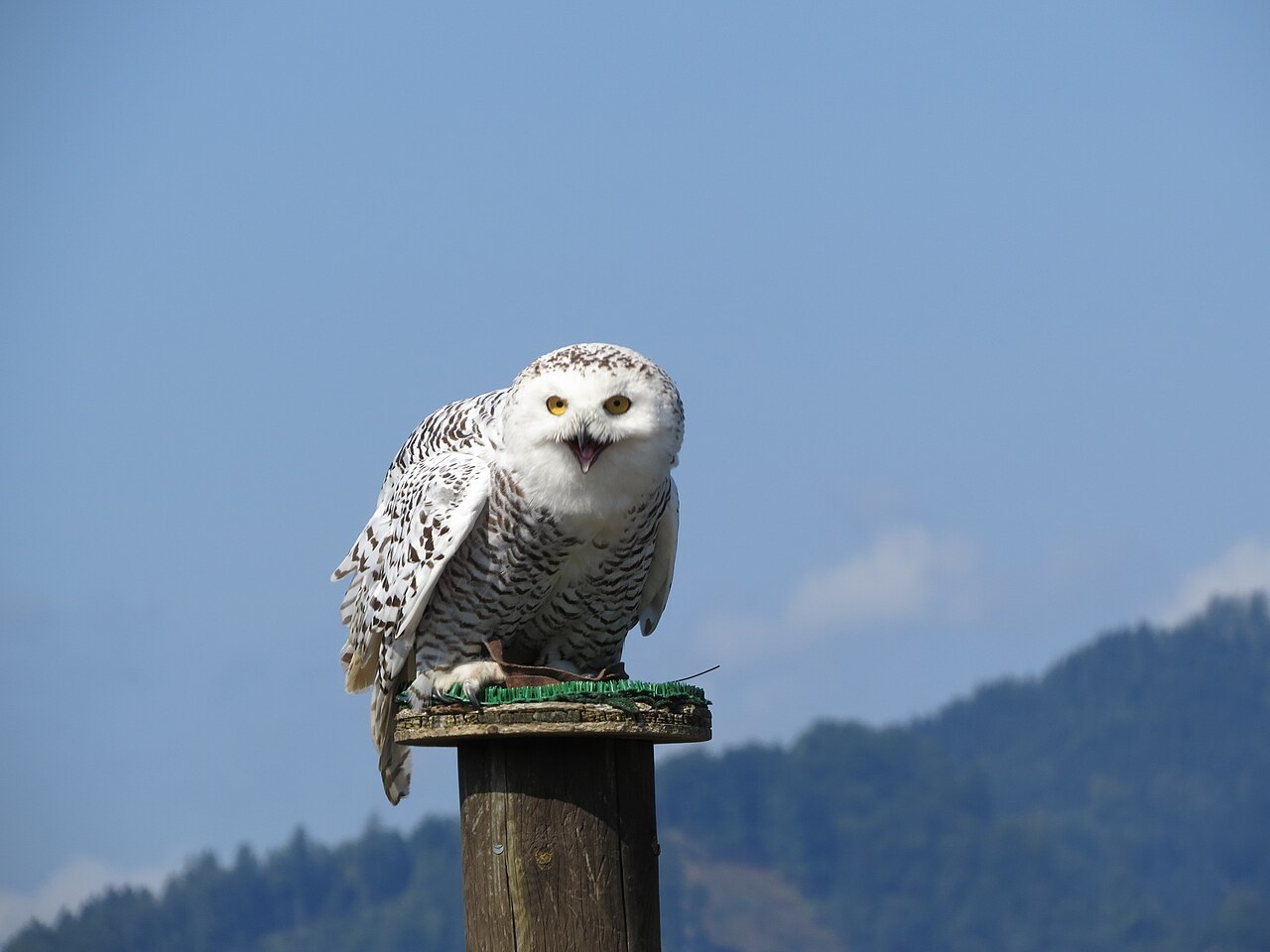
The territorial hoot is the loudest thing a snowy owl does. A displaying male climbs onto a hummock, a rock or a low rise, inflates his throat, leans forward and delivers a series of deep hoo notes that observers on the tundra have tracked from 2 to 7 miles (3 to 11 km) away. Flat, treeless ground and cold, still air carry it that far.
He hoots most in May and June, when territories are being settled, and he often calls while flying a slow, exaggerated display flight with his wings held high. Hooting tapers off once the eggs hatch and the pair switches to hunting for the brood. By the time the birds reach Michigan or Massachusetts in winter, the hoot has essentially stopped.
The Female’s Higher Hoot and Mate Calls
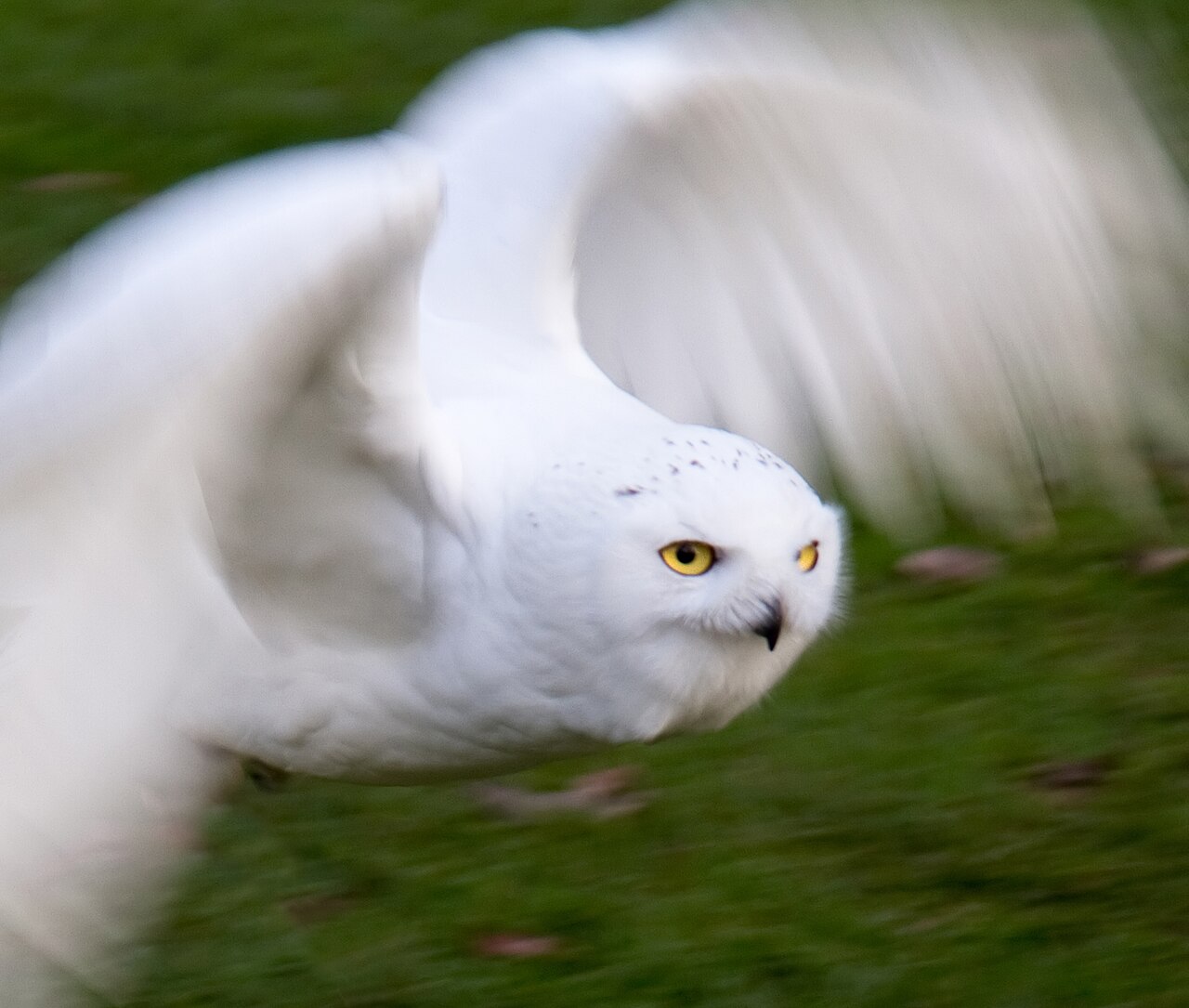
Females hoot too, which surprises people who assume only males call. Her version is shorter, higher and thinner, and she usually gives it in answer to the male rather than on her own initiative. Pairs sometimes duet, and the pitch difference between the two birds is obvious once you have heard them together.
The female also has a soft whistled mew she uses when the male arrives with prey, a sound closer to a squeaky hinge than to anything owl-like. Around the nest she adds low clucks and murmurs directed at the chicks. These quiet calls carry only a few hundred feet and are the part of the repertoire almost no visitor ever hears.
Alarm Barks and Cackles Near the Nest

Approach a snowy owl nest and the barking starts well before you see the bird. The alarm call is a harsh, flat krek repeated at speed, and plenty of field observers hear it as a small dog yapping rather than a bird. Both parents give it, and both will fly straight at a fox, a jaeger or a human who keeps walking.
When agitation rises, the bark breaks into a rapid cackle, ka-ka-ka-ka, usually delivered in flight above the intruder. On the tundra this is the sound that tells researchers a nest is within a few hundred yards. It is a stop signal, not a greeting, and the right response is to back away along the line you came in on.
Hisses, Bill Snapping and Screams
At close range snowy owls drop vocal calls and switch to mechanical ones. A cornered adult flattens its feathers, spreads its wings, hisses like a snake and snaps its bill in sharp wooden clicks. Nestlings and fledglings do the same from the ground, which is why a downy grey chick can sound genuinely alarming.
Occasionally a bird adds a rough scream or a drawn-out shriek during a physical fight with another owl. None of these are long-distance sounds; if you can hear a snowy owl hiss, you are far too close. Other owls use the same close-range vocabulary, which is covered in the breakdown of barn owl sounds and its famous rasping shriek.
What Snowy Owl Chicks Sound Like
Snowy owl chicks hatch two days apart over a week or more, so a single nest holds young at several stages, each with a different voice. The smallest give thin peeps. Within two weeks those peeps coarsen into a raspy, insistent begging call that repeats whenever a parent lands.
Older chicks that have left the nest scrape and wander the tundra on foot give a squeaky, two-note call that sounds like an unoiled gate, and they keep using it for weeks after they can fly. Parents locate scattered young by that call. It is the most persistent sound at a snowy owl nest in July, and it stops abruptly when a predator appears.
Snowy Owl Sounds at Night and by Season
Snowy owls are the most daylight-active owl in North America, a habit shaped by Arctic summers where the sun never sets. During the breeding season they call at any hour, with a peak around dusk and through the pale northern night. That is the window when the booming hoot is most likely.
From October through March the pattern inverts. Wintering birds in the United States perch quietly through the day, hunt voles and waterbirds at dawn and dusk, and vocalize almost never. Rare exceptions are a bark at a harassing crow or a hiss at a photographer who walked too close.
Why Snowy Owls Are Silent in Winter
Calling costs energy and advertises position, and neither pays off away from the breeding grounds. A wintering snowy owl holds no territory worth defending with sound, has no mate to coordinate with and no chicks to answer. Silence is the efficient choice, and it is also good camouflage for a white bird sitting on snow.
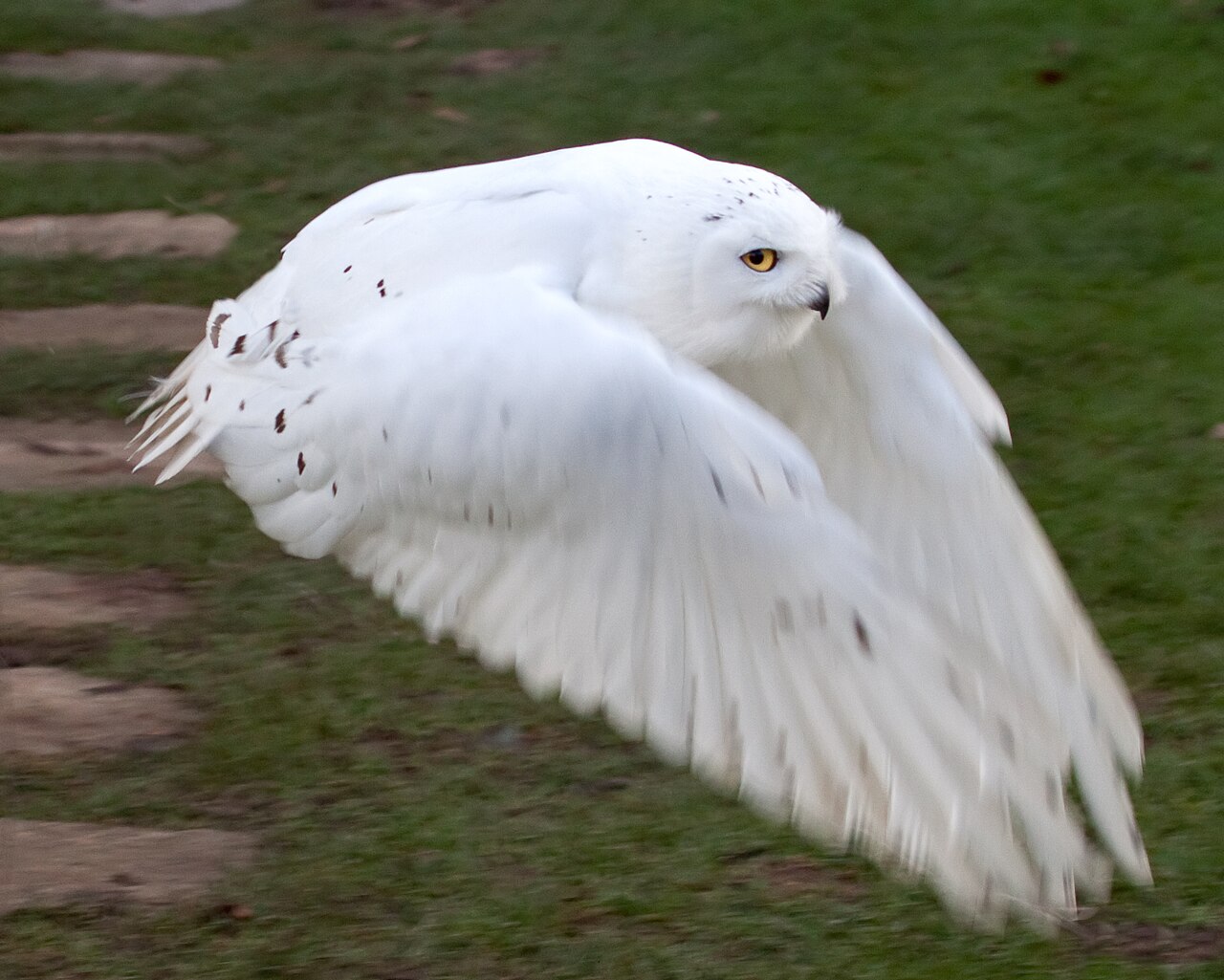
This matters for anyone trying to confirm a sighting by ear. You will not call a snowy owl in by hooting, and you will not hear one announce itself. Identification in winter is visual: a thickset white owl with yellow eyes and a small round head, often on the ground, usually in open country such as farmland, airports, beaches and dunes.
What Kind of Owl Sounds Like This?
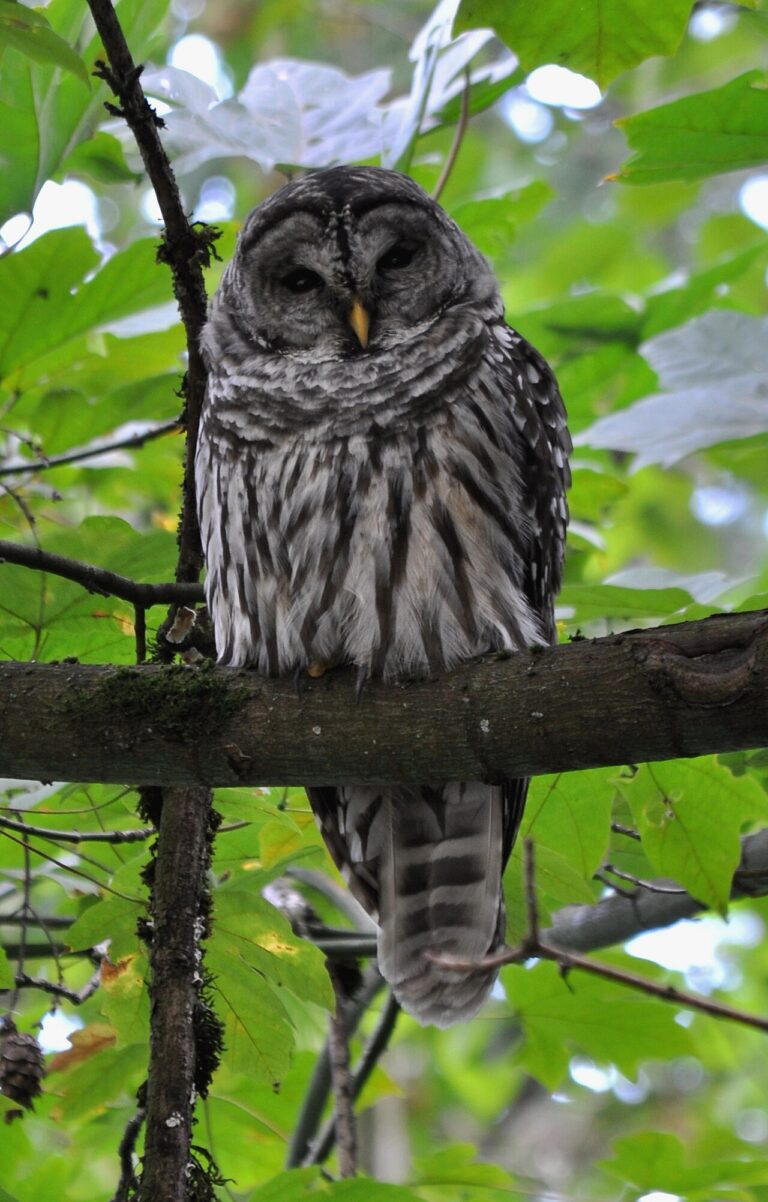
If something is hooting over a yard in the continental United States, it is almost certainly not a snowy owl. The classic deep hoo-h’HOO-hoo-hoo in five notes belongs to the great horned owl, the trembling trill or soft whinny belongs to the eastern screech-owl, and the emphatic eight-note who-cooks-for-you is a barred owl.
Work it out by rhythm rather than by pitch. Snowy owl hoots are flat, slow and even; great horned hoots have a stuttered middle. Compare the recordings on the great horned owl sound guide and the eastern screech-owl call breakdown before settling on an identification.
Sounds That Are Not Owls at All
Mourning doves fool more people than any owl. Their soft, sad coo-OOO-coo-coo comes from suburban roofs and wires at dawn and reads as a distant hoot to most ears. Band-tailed pigeons do the same thing in the West, and a few other species produce convincing hoots and screeches of their own.
Daylight is the quickest test, since a dove in bright sun on a telephone wire rules out an owl immediately. The rundown of birds that sound like owls covers the usual impostors. Rabbits, foxes and bobcats add screams to the night mix, none of which an owl would produce.
Where to Hear Verified Snowy Owl Recordings
Trust archives tied to museum or lab collections, because they list the recordist, the date and the location, and the identification has been reviewed. The Cornell Lab of Ornithology publishes free, vetted audio for the species on its All About Birds snowy owl account, including the booming male hoot and the barking alarm call.
Avoid stock-audio sites and video uploads for identification work. Much of that library is mislabeled, re-recorded or lifted from film sound design, and the same clip of a great horned owl circulates under half a dozen species names. For a sense of what else you might hear on a winter night, the full snowy owl species profile covers range, diet and irruption years.
Frequently Asked Questions
What are owls doing in October?
October is migration and dispersal month. Young great horned and barred owls are claiming their first territories and calling heavily at dusk, while snowy owls are leaving the Arctic and starting to appear along the northern border. Northern owls are quietly scouting hunting ground, not setting up breeding territories yet.
Are there Snowy Owls in the USA?
Yes. Snowy owls breed in Alaska and winter across the northern United States most years, regularly reaching the Great Lakes, New England and the northern Plains. During irruption winters, when Arctic lemming numbers crash after a boom, birds turn up as far south as Oklahoma, Tennessee and even Florida.
How rare is it to see a snow owl?
In the northern tier it is uncommon but achievable most winters, with coastal dunes, airports and open farmland being the reliable spots. South of roughly 40 degrees latitude a sighting is a notable local event. Irruption years can put dozens of birds in a single state that normally records none.
Are snow owls friendly?
No. A snowy owl that lets you walk up to it is stressed, not tame, and a bird that hisses or snaps its bill is on the edge of defending itself. Stay 150 ft (45 m) back, keep dogs leashed and never bait one with live mice for a photograph.
What is a Snowy Owl’s enemy?
Arctic foxes take eggs and chicks and are the main threat at the nest, which is a bare scrape on the ground. Jaegers, gulls and ravens also raid nests. Adults have few natural predators, so collisions with cars and aircraft and starvation during poor prey years cause more deaths than predation does.
What does it symbolize to see a Snowy Owl?
Across European folklore the white owl stands for wisdom, foresight and transition, and the bird carries sacred weight in several Arctic cultures. Biologically a sighting means something plainer: prey conditions in the Arctic pushed that bird south. Treat the symbolism as culture and the sighting as a datapoint worth reporting to eBird.