Snowy Owl: Identification, Facts, and Where to See One
The Snowy Owl is a large, striking white owl of the Arctic tundra, and the heaviest owl in North America, instantly recognizable by its white plumage, piercing yellow eyes, and rounded, tuftless head. Made famous worldwide as Hedwig in the Harry Potter stories, it is a bird of open, treeless country that breeds on the high Arctic tundra and, in some winters, wanders far south into the United States in dramatic events called irruptions. Unlike most owls it is often active in daylight, an adaptation to the endless summer sun of the Arctic. This guide covers how to identify a Snowy Owl, where and when to see one, its diet, behavior, nesting, and why its future is a growing concern.
| Feature | Detail |
|---|---|
| Scientific name | Bubo scandiacus |
| Length | 20 to 28 in (52 to 71 cm) |
| Wingspan | 49 to 57 in (125 to 145 cm) |
| Weight | 3.5 to 6.5 lb (1.6 to 3 kg) |
| Range | Arctic breeder; winters south in some years |
| Diet | Lemmings and other small mammals, birds |
| Conservation | Vulnerable (declining) |
How to identify a Snowy Owl
The Snowy Owl is a big, bulky owl with a rounded head, no ear tufts, bright golden-yellow eyes, and dense white plumage. Adult males are the whitest, sometimes almost pure white, while females and young birds are white heavily marked with dark brown bars and spots, which help distinguish age and sex. Thick feathering extends right down over the legs and feet to the talons, insulating the bird against extreme Arctic cold.
Its size, white color, and habit of perching in the open on the ground, a fence post, or a low mound make it unlike any other owl in North America. There is little chance of confusion, since no other large white owl occurs on the continent. The heavily barred young birds are sometimes mistaken for a different species, but the overall shape and yellow eyes give them away. To compare it with other owls, see our owl types guide.
Range, irruptions, and where to see one
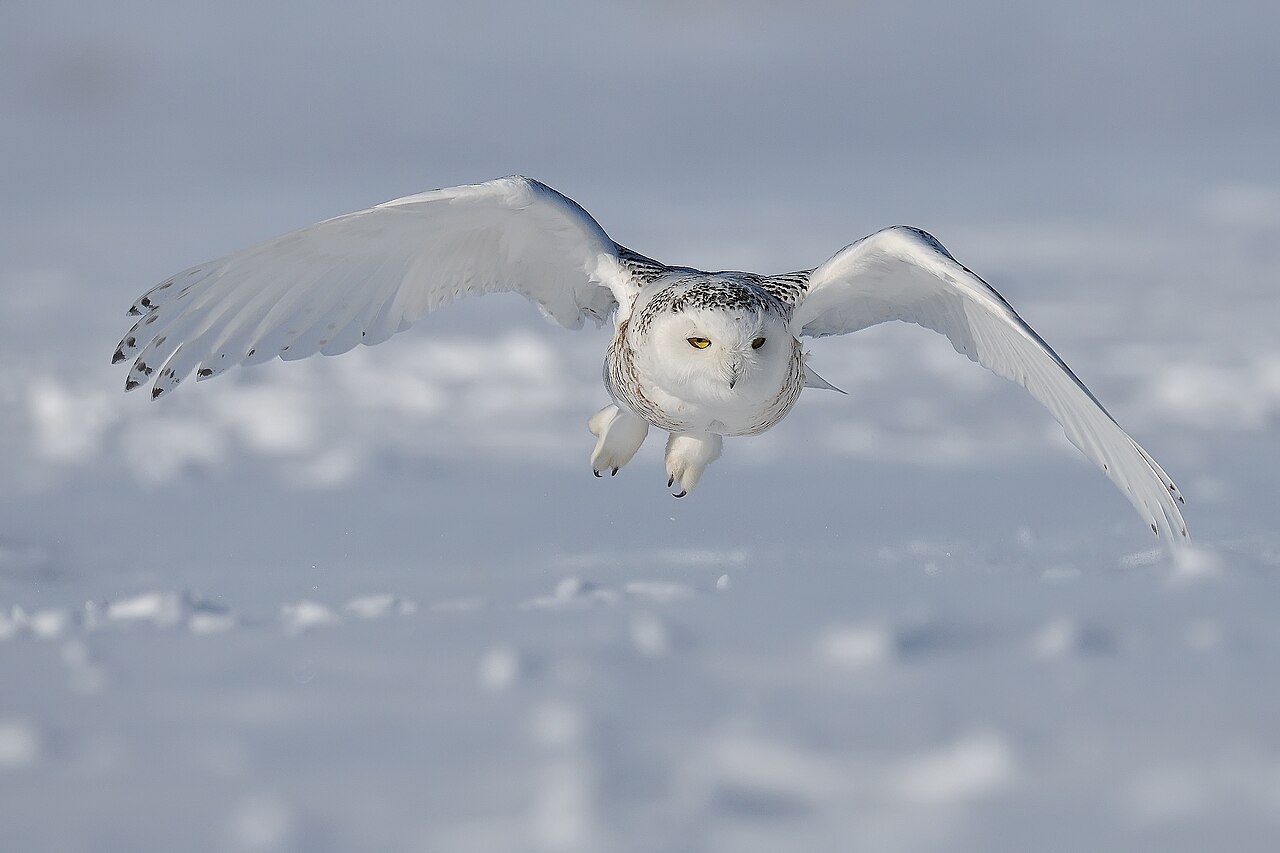
The Snowy Owl breeds on the open Arctic tundra of northern Canada, Alaska, Greenland, and across the top of Eurasia, one of the most northerly nesting birds in the world. In winter it moves south, usually into southern Canada and the northern United States, but the extent varies enormously from year to year. In certain winters, huge numbers push far south in events called irruptions, delighting birdwatchers when owls turn up on beaches, farm fields, and even airport runways that mimic open tundra.
These irruptions are driven largely by lemming cycles on the breeding grounds: in years of abundant lemmings, owls raise many young, and the following winter more birds, especially juveniles, disperse south in search of food. When a Snowy Owl appears in a field or along a shoreline, it often perches conspicuously in the open, making it one of the more approachable large owls, though it should always be viewed from a respectful distance so it can rest and hunt undisturbed.
What Snowy Owls eat
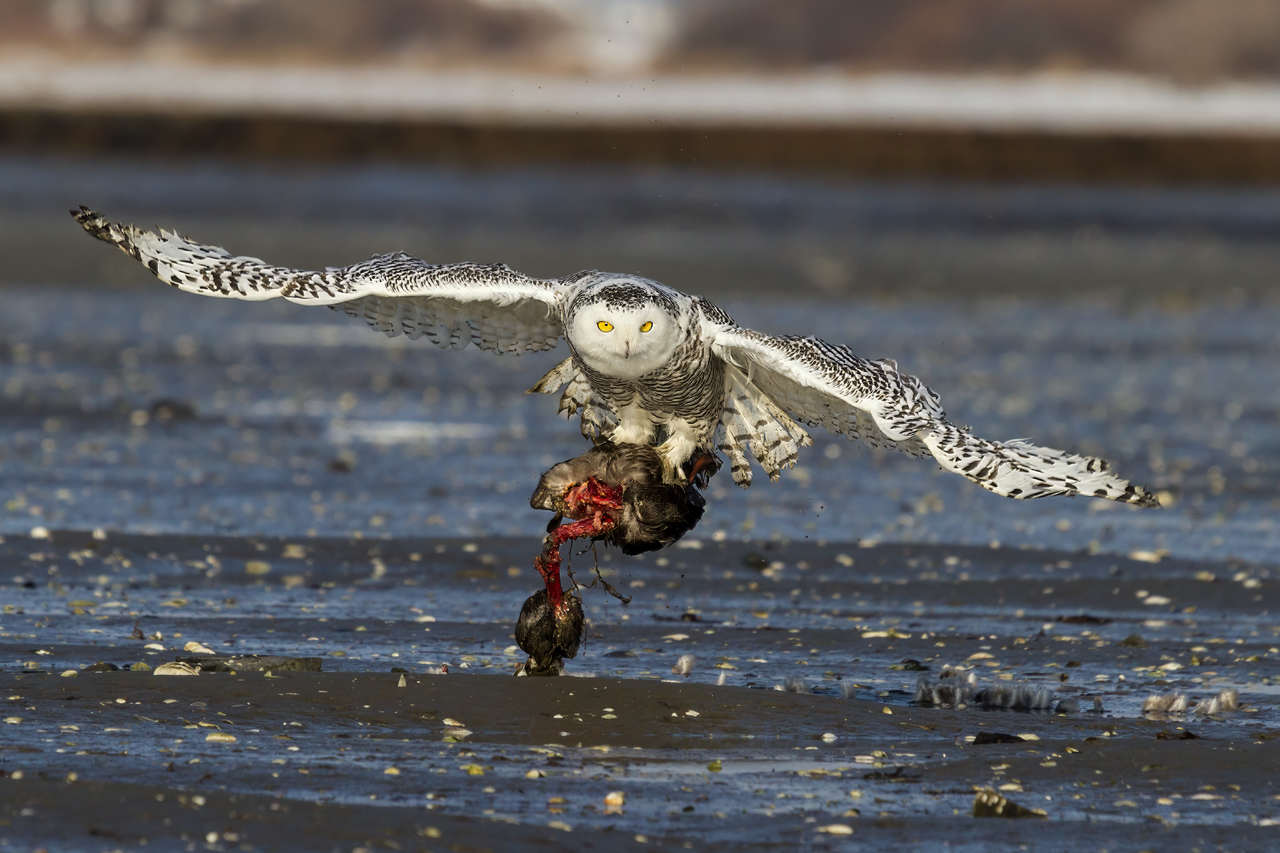
On the breeding grounds the Snowy Owl is a lemming specialist, and its nesting success rises and falls with the boom-and-bust cycles of these small Arctic rodents. In a good lemming year a single owl may eat more than 1,600 lemmings, and pairs raise large families; in poor years they may not breed at all. Away from the tundra and in winter, the Snowy Owl broadens its diet to include other rodents, rabbits, and a wide range of birds, including ducks, grebes, and other waterbirds.
Unlike most owls, the Snowy Owl often hunts by day, watching from a low perch or the ground and flying out to seize prey, an adaptation to the 24-hour daylight of the Arctic summer. It is a powerful predator capable of taking sizable prey. This tight link to lemmings, unusual among the broadly feeding owls in our guide to owl diets, is central to the species’ biology.
Behavior and daytime activity
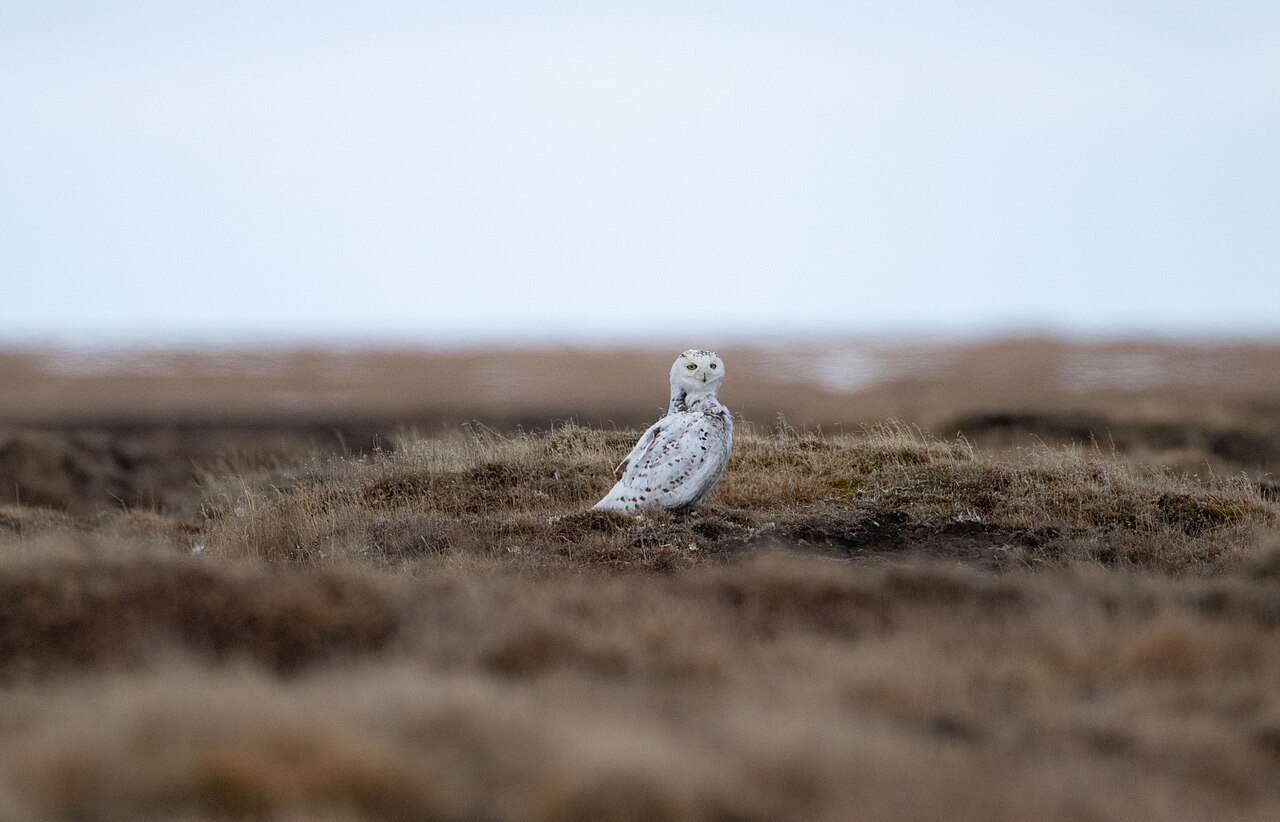
The Snowy Owl breaks the usual owl mold in several ways. Most strikingly, it is frequently active during daylight, a necessity in a homeland where the summer sun never sets, and this makes it one of the easier owls to observe in good light. It spends much of its time perched motionless on the ground or a low vantage point, scanning for prey with its keen eyesight and hearing, then flying low and powerfully to strike.
Snowy Owls are generally silent away from the breeding grounds, so wintering birds are usually quiet. On the tundra, males give deep, booming hoots to defend large territories and attract mates. Their comfort perching in the open, combined with their size and color, makes a Snowy Owl one of the most memorable birds a person can encounter, and a highlight of any winter when they venture south.
Nesting and conservation
The Snowy Owl nests on the ground, choosing a slightly raised, windswept mound or ridge on the open tundra where the female scrapes a shallow bowl. Clutch size tracks food, from a few eggs in lean years to many when lemmings are abundant, and the female incubates while the male defends the territory and delivers prey. The parents are fierce defenders, driving off foxes and even wolves that approach the nest.
The Snowy Owl is now listed as Vulnerable, reflecting evidence of a significant long-term population decline. A warming Arctic that disrupts the lemming cycles the owl depends on is a leading concern, along with collisions and other hazards during southern movements. Its status is a reminder that even an iconic, seemingly abundant bird can be in trouble, and the Cornell Lab of Ornithology reports that the global Snowy Owl population is now thought to be far smaller than once believed. Beyond biology, the white owl carries deep symbolism, and its appearance inspires the beliefs behind seeing a white owl. Regional guides such as types of owls in Texas show which owls occur where you live.
Snowy Owl facts that surprise people
The Snowy Owl is full of surprises. It is the heaviest owl in North America, outweighing even the Great Horned Owl, with dense feathering that insulates it against Arctic cold and extends right down over its toes. Unlike almost all other owls it is happy to be active in daylight, a necessity in a land of the midnight sun. And its whole life runs on lemmings: in a boom year a single owl can eat well over 1,600 of these small rodents, and pairs raise large broods, while in a crash year they may not breed at all.
Snowy Owls are also great travelers. Some individuals wander enormous distances, and satellite tracking has followed birds ranging across the Arctic and far out onto sea ice, hunting seabirds at openings in the pack. This combination of size, daytime habits, dietary specialization, and wandering makes the Snowy Owl one of the most remarkable birds of the far north.
The ‘orange snowy owl’ explained
Every so often an image of a bright orange Snowy Owl goes viral, prompting people to ask whether such a bird is real. It is not a natural color form. Snowy Owls are white, with dark barring in females and young birds, and there is no orange morph. Verified cases of orange-tinged Snowy Owls have been traced to feathers stained by an outside source, such as de-icing fluid at an airport, or, in at least one famous instance, deliberate dyeing.
Naturally, a healthy Snowy Owl ranges only from the pure white of an old male to the heavily dark-barred plumage of a female or juvenile. So while an orange owl makes a dramatic photo, it reflects a stained or altered bird rather than a rare variety. For the deeper cultural meaning people attach to these striking white birds, see our guide to seeing a white owl.
Related reading: Long-eared Owl.
Frequently Asked Questions
How big is a Snowy Owl?
The Snowy Owl is the heaviest owl in North America, measuring 20 to 28 inches long with a 49 to 57 inch wingspan and weighing 3.5 to 6.5 pounds. Females are larger and more heavily marked than males.
Where do Snowy Owls live?
They breed on the open Arctic tundra of northern Canada, Alaska, and across the top of Eurasia. In winter they move south into Canada and the northern US, sometimes much farther in irruption years.
What do Snowy Owls eat?
On the tundra they specialize in lemmings, eating over 1,600 in a good year. In winter and elsewhere they broaden to other rodents, rabbits, and many birds including waterfowl.
Are Snowy Owls active during the day?
Yes. Unlike most owls, Snowy Owls often hunt in daylight, an adaptation to the 24-hour summer sun of the Arctic. This makes them easier to observe than many other owls.
What is a Snowy Owl irruption?
An irruption is a winter when unusually large numbers of Snowy Owls move far south, driven by lemming cycles. After a good breeding year, many young owls disperse in search of food.
Are Snowy Owls endangered?
They are listed as Vulnerable due to evidence of a long-term population decline. A warming Arctic that disrupts the lemming cycles they depend on is a leading conservation concern.
Is Hedwig from Harry Potter a Snowy Owl?
Yes. Hedwig was portrayed as a Snowy Owl, which made the species famous worldwide. In reality Snowy Owls are wild Arctic birds and are not suited to life as pets.
Why are some Snowy Owls whiter than others?
Adult males are the whitest, sometimes nearly pure white, while females and young birds show heavy dark barring and spots. The amount of dark marking helps indicate a bird’s age and sex.