Mississippi Kite: Southern Grace Guide
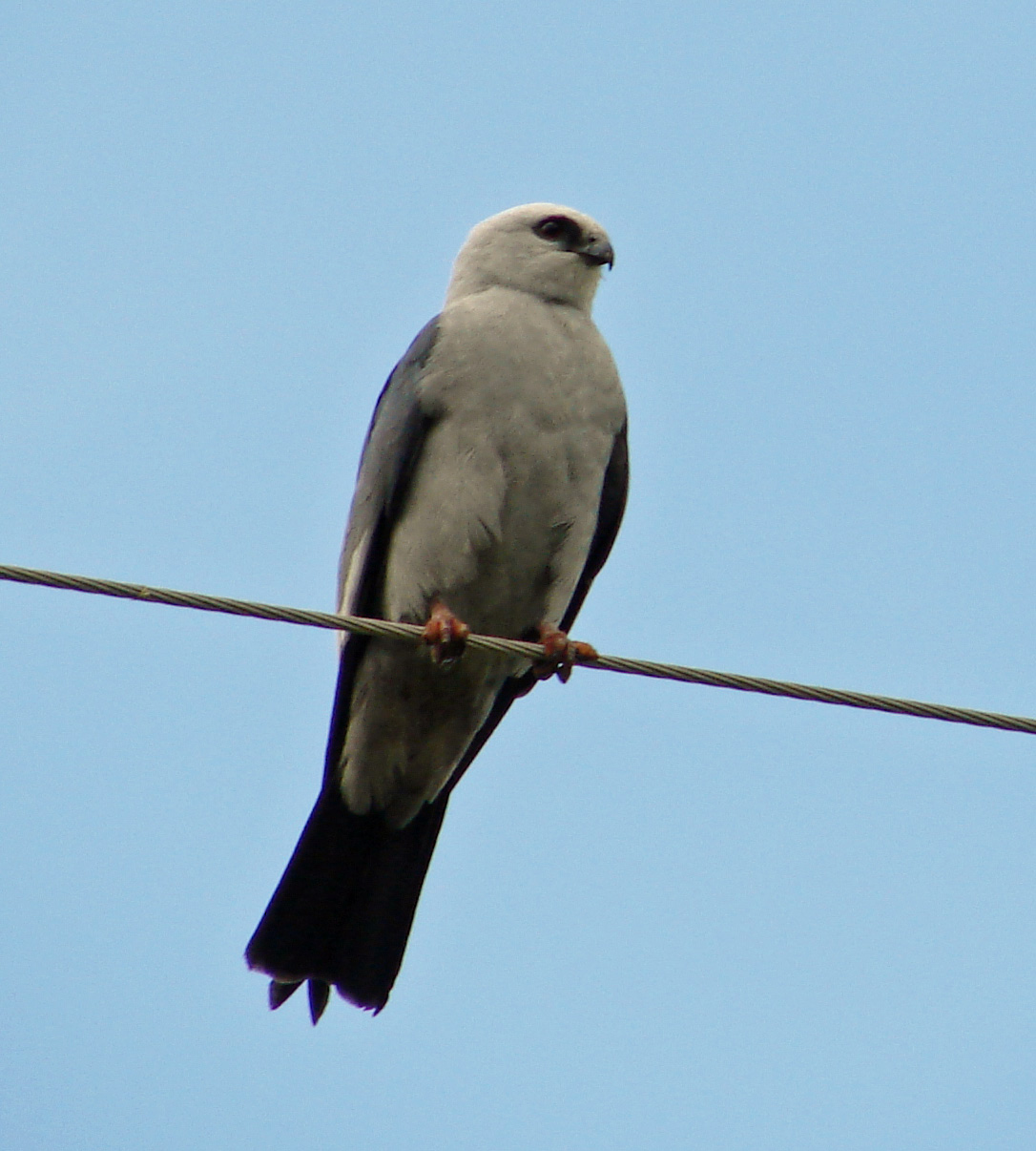
The Mississippi kite is a small, slender, pale gray raptor known for buoyant, graceful flight and a diet made up almost entirely of large flying insects, caught and eaten cleanly on the wing in midair. Despite its delicate build and mild-mannered feeding habits, the species has earned a well-documented reputation for aggressively dive-bombing people, pets, and even golfers who wander too close to an active nest, a defensive behavior that generates local news coverage in parts of the South almost every summer without fail.
| Fact | Detail |
|---|---|
| Wingspan | 2.8 to 3 ft |
| Weight | Under 1 lb |
| Diet | Almost entirely large flying insects, caught in flight |
| Habitat | Southern and central US, increasingly suburban areas |
| Behavior note | Aggressively defends nest against people and pets |
| Migration | Long-distance migrant to South America |
Size and Appearance
The Mississippi kite is a small raptor, noticeably lighter and more slender than a red-tailed hawk, with pale gray plumage overall, a darker gray back and wings, and a black tail that contrasts against an otherwise soft, uniform coloring. Adults show a pale, almost whitish head, and the wingtips appear dark against the paler body in flight, a pattern visible even at a distance as the bird soars and glides overhead on warm updrafts throughout the day. Juveniles look quite different from adults, showing heavy brown streaking on the chest and belly that takes a full year or more to molt into the clean gray adult plumage. In flight, the Mississippi kite has long, pointed wings and a buoyant, almost tern-like flight style, frequently gliding and banking with minimal wingbeats in a way that looks distinctly more graceful than the flight of most other North American raptors, a quality that has earned it a reputation among birders as one of the more elegant hawks or kites to watch on a clear summer afternoon.
Diet: An Insect Specialist
Large flying insects, especially cicadas, dragonflies, grasshoppers, and beetles, make up the overwhelming majority of a Mississippi kite’s diet, caught and often eaten entirely on the wing without the bird needing to land, a foraging style that keeps it airborne for extended stretches during the warmest parts of a summer day when insects are most active. This heavy reliance on insects sets the Mississippi kite apart from most other North American raptors, which lean far more heavily on small mammals, birds, or fish, and it allows kites to forage in loose, social groups over open fields, wetlands, and even suburban lawns where flying insects concentrate. Kites are also known to follow tractors, lawnmowers, and other machinery that stirs up insects from vegetation, taking advantage of an easy, concentrated food source, a behavior that brings them into close, tolerant proximity with people and equipment far more often than most other raptors would allow. Occasionally, Mississippi kites take small reptiles, amphibians, or nestling birds, but insects remain the dominant food source across virtually all of their range.
Nest Defense: Why Mississippi Kites Dive-Bomb People
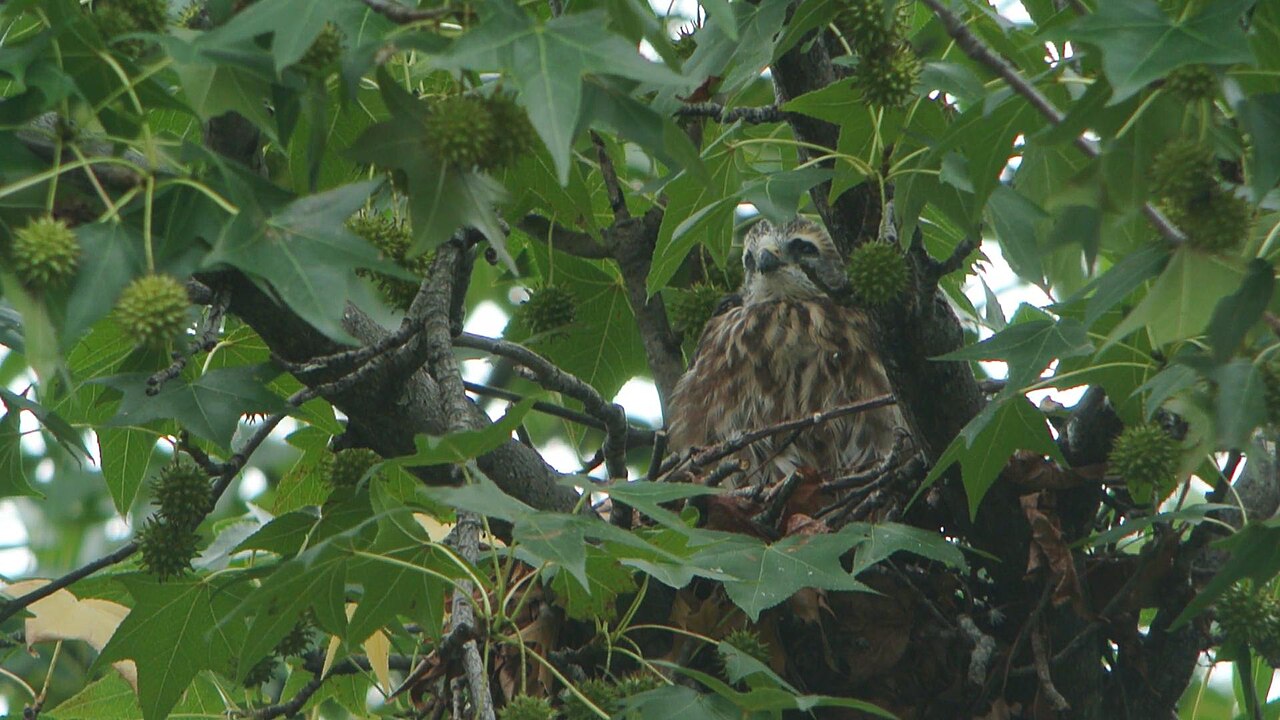
Mississippi kites are notorious for aggressively diving at people, pets, and even loud machinery that comes near an active nest, a behavior that peaks during the weeks when eggs or young chicks are most vulnerable and typically eases once the young have fledged and left the immediate nest area entirely. Unlike a true attack meant to cause serious harm, these dives are almost always a startling, low pass intended to drive off a perceived threat, and actual physical contact or injury is uncommon, though the sudden approach of a fast-flying bird at head height understandably alarms most people caught off guard. News stories about kite dive-bombing incidents are a near-annual summer occurrence in parts of the South, particularly in suburban neighborhoods, golf courses, and parks where kites have nested in mature trees close to foot traffic, often prompting local news coverage and neighborhood discussion each time a new pair settles into a well-trafficked area. According to the Cornell Lab of Ornithology, the safest response to a diving kite near its nest is simply to avoid that specific area entirely until the young have fledged, rather than attempting to remove or disturb the nest itself, which remains fully protected under federal migratory bird law.
Range, Migration, and Where to See Them
Mississippi kites breed across much of the southern and south central United States, from the Southeast through Texas and increasingly into the southern Great Plains, and the species has expanded its range and adapted well to suburban neighborhoods with mature trees over the past several decades, a range expansion that has brought the species into contact with far more people than in previous generations. They are long-distance migrants, wintering in South America and undertaking one of the longer migratory journeys of any North American raptor relative to their small size, a pattern also seen in the peregrine falcon. Mississippi kites are often seen foraging in loose groups, circling and gliding over open areas in a distinctly social pattern uncommon among most solitary hunting raptors such as hawks or falcons. For the wider raptor picture, see our guide to birds of prey.
Population and Range Expansion
Mississippi kite populations have expanded significantly over the past several decades, both in overall numbers and in geographic range, a trend linked partly to the species’ success nesting in mature shade trees planted throughout expanding suburban neighborhoods across the South. This adaptability to human-altered landscapes sets the Mississippi kite apart from many raptors that decline as development replaces natural habitat, and it is one of the clearer examples of a native predator benefiting from suburban tree cover rather than being displaced or driven away by expanding residential construction. The species is not currently considered threatened anywhere in its range, and its increasingly visible presence in city parks, golf courses, and residential neighborhoods, sometimes accompanied by the dive-bombing behavior the species is known for, has made it one of the more commonly encountered summer raptors across much of the South, a suburban and urban adaptability shared with the peregrine falcon in a different setting.
Nesting Behavior
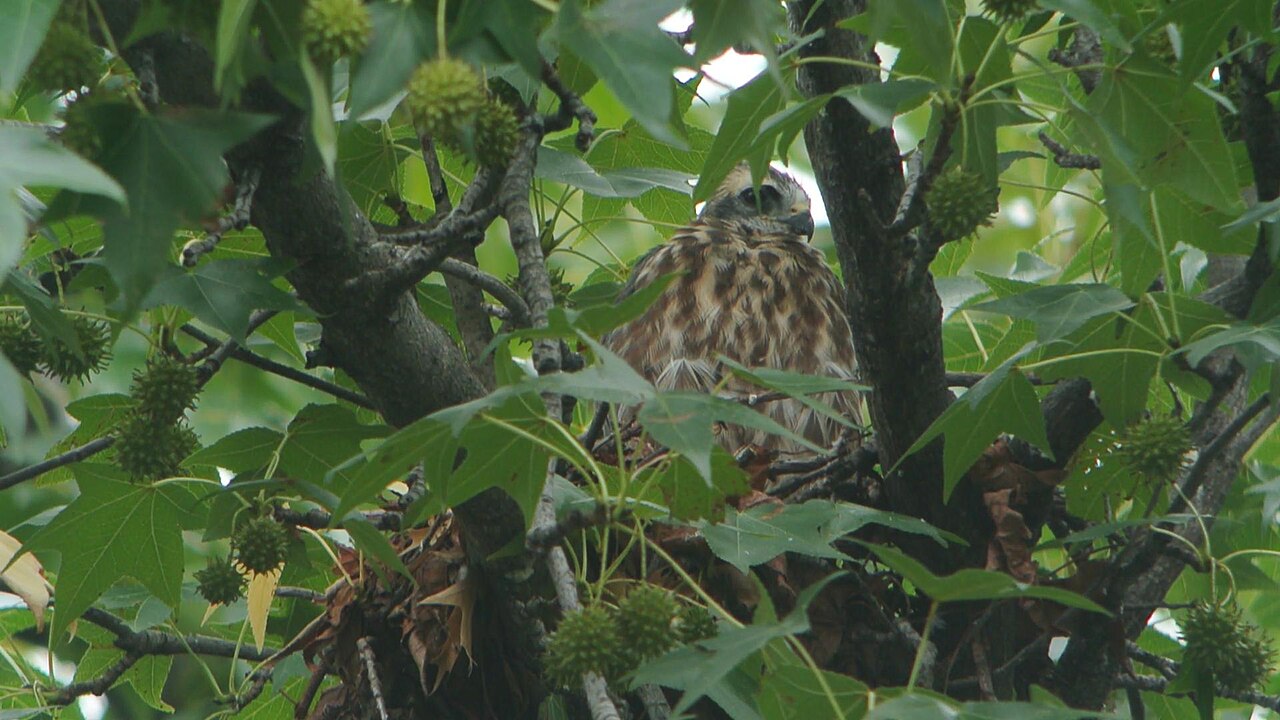
Mississippi kites often nest loosely colonially, with several pairs settling in mature trees within the same neighborhood, park, or wooded area, a more social nesting arrangement than most North American raptors typically show. A pair usually raises a single chick per season, and both adults share incubation and feeding duties over a roughly month-long incubation period followed by another month before the young bird fledges, a relatively modest reproductive output compared to some other raptors that typically raise larger broods each year. This loose colonial nesting is part of why dive-bombing incidents can affect an entire neighborhood block or several holes of a golf course rather than a single isolated yard, since multiple defensive pairs may be active in overlapping territory during the same weeks each summer season. Once the breeding season ends and young have fledged, kites become far less territorial and are commonly seen foraging together in loose, tolerant groups ahead of their long migration south, a noticeable behavioral shift from the defensive posture seen just weeks earlier.
Related reading: Northern Goshawk.
Frequently Asked Questions
Do Mississippi kites attack people?
Mississippi kites will aggressively dive at people who come too close to an active nest, but these are almost always startling defensive passes rather than attacks meant to cause real injury.
What do Mississippi kites eat?
Mississippi kites eat almost entirely large flying insects, such as cicadas, dragonflies, and grasshoppers, caught and often consumed in flight.
Where do Mississippi kites live?
Mississippi kites breed across the southern and south central United States and migrate to South America for the winter, increasingly nesting in suburban neighborhoods with mature trees.
How big is a Mississippi kite?
A Mississippi kite has a wingspan of about 2.8 to 3 feet and weighs under a pound, making it noticeably lighter and more slender than a red-tailed hawk.
What does a Mississippi kite sound like?
Mississippi kites make a thin, high-pitched, whistled call, often given repeatedly in flight or when defending territory near an active nest.
Why do Mississippi kites dive at golfers?
Golf courses often have mature trees that kites choose for nesting, and golfers walking near an active nest during breeding season can trigger the same defensive diving behavior seen in any suburban yard.
What does a juvenile Mississippi kite look like?
Juvenile Mississippi kites show heavy brown streaking on the chest and belly, quite different from the clean, pale gray plumage of adults, and take more than a year to molt into adult coloring.
Do Mississippi kites nest in groups?
Yes, Mississippi kites often nest loosely colonially, with several pairs settling in mature trees within the same neighborhood or wooded area, more social than most North American raptors.