Swallow-Tailed Kite: Graceful Aerialist
The swallow-tailed kite is a striking black-and-white raptor with a deeply forked tail and long, pointed wings, widely regarded as one of the most graceful fliers of any bird of prey in North America. Named for the deep fork in its tail that recalls a barn swallow, this kite spends almost its entire active day on the wing, gliding and banking with barely a wingbeat as it snatches insects and small prey from the air and treetops without ever needing to land.
| Fact | Detail |
|---|---|
| Wingspan | About 4 ft |
| Weight | Under 1 lb |
| Diet | Flying insects, small reptiles, tree frogs, nestling birds |
| Habitat | Southeastern US swamps and woodlands in summer |
| Key field mark | Deeply forked tail, crisp black-and-white pattern |
| Migration | Long-distance migrant to South America |
Size and Appearance
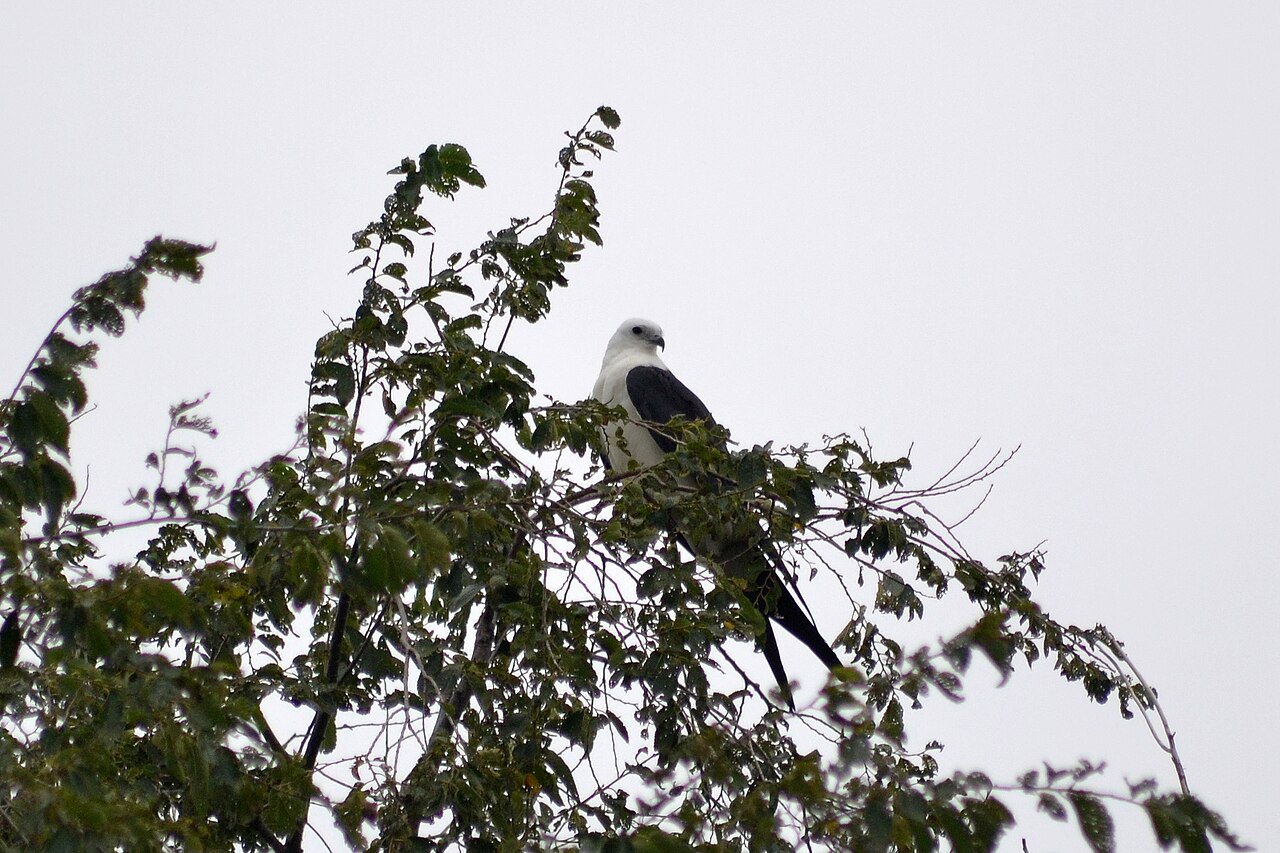
The swallow-tailed kite is a mid-sized but very lightweight raptor, with a wingspan of around four feet yet a body weight under a pound, giving it the buoyant, effortless flight the species is known for and allowing it to stay aloft for hours with minimal energy. This unusually low weight relative to wing area is a large part of why the bird can soar and glide so tirelessly compared with heavier, more powerfully built hawks of similar wingspan. Its plumage is boldly patterned, with a clean white head and underparts contrasting sharply against black wings and a black, deeply forked tail, a combination that is unmistakable once seen well. The forked tail, from which the bird takes its name, is the single most distinctive feature, opening and closing like scissors as the kite steers through the air with remarkable precision. In flight, the long, pointed wings and forked tail give the swallow-tailed kite a silhouette unlike any other North American raptor, closer to an oversized swallow or tern than a typical hawk or falcon.
The Most Graceful Flier Among Raptors
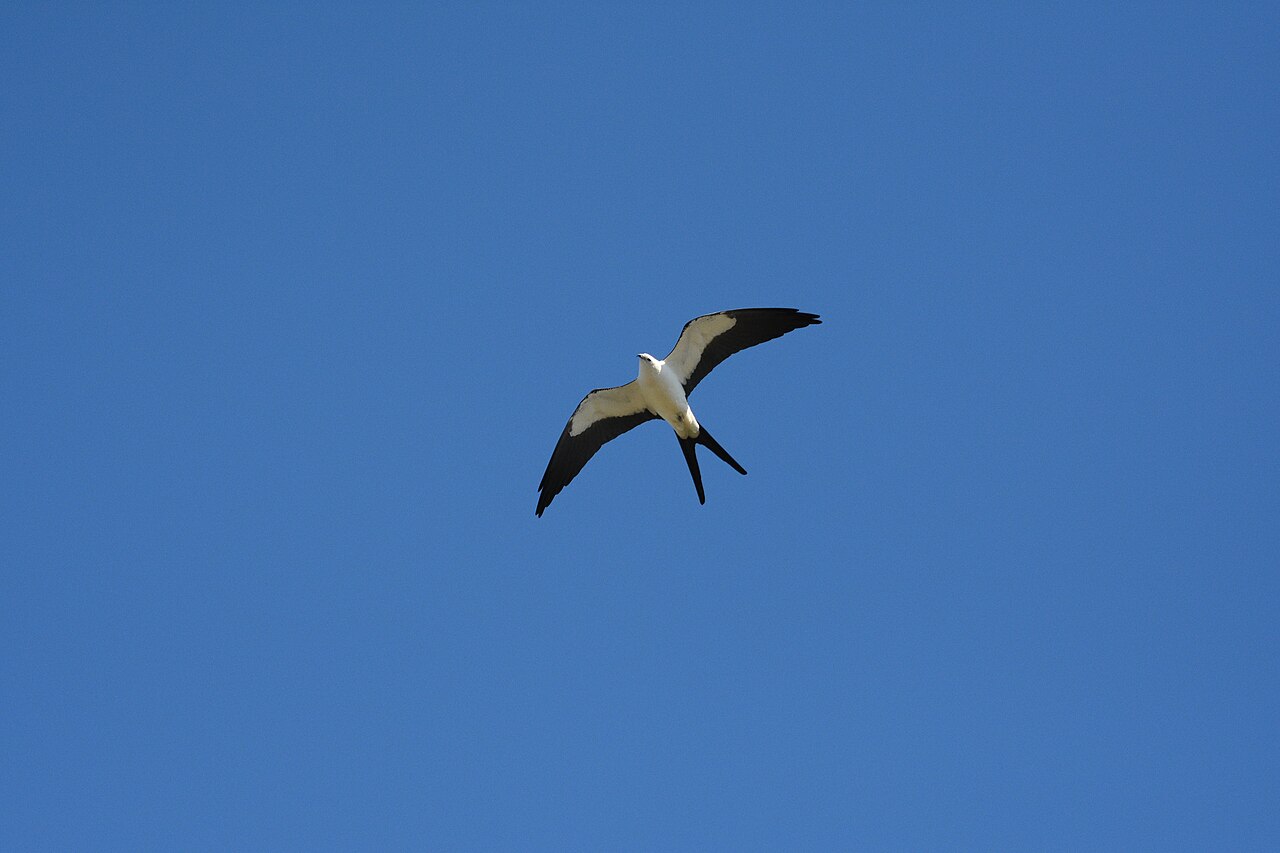
Few birds of prey rival the swallow-tailed kite for sheer aerial grace, and the species spends the vast majority of its active hours soaring and gliding rather than perching or flapping. The deeply forked tail acts as a highly maneuverable rudder, constantly adjusting to let the bird bank, turn, and hover with minimal effort, and swallow-tailed kites routinely drink and even eat while still in flight rather than landing. This buoyant, tireless flight is not just for show; it is central to how the kite hunts, plucking insects and small prey directly from the air or from the outer foliage of treetops without ever slowing to a stop. Watching a group of swallow-tailed kites wheeling over a southern swamp on a summer afternoon is regularly described by birders as one of the most beautiful sights in North American birding, and the species is frequently singled out as a favorite even among experienced observers who have seen hundreds of other raptors. Their effortless, almost weightless flight makes them appear to hang and drift on the air rather than actively fly, an impression that has earned the swallow-tailed kite a place in the birding imagination out of all proportion to how often most people actually encounter one.
Diet and Hunting
Swallow-tailed kites feed heavily on flying insects such as dragonflies, wasps, and beetles, along with small tree-dwelling prey including lizards, tree frogs, snakes, and the nestlings of other birds plucked directly from their nests, an unusually varied menu for a bird that so rarely touches the ground. Cicadas and other large, slow-flying insects are a particular favorite when they are abundant, and a group of kites will sometimes gather to feed over a single insect-rich patch of forest or field. Nearly all of this hunting happens on the wing, with the kite snatching prey from the air or from the outermost leaves and branches of tall trees without landing, then often consuming it in flight. During the breeding season, nestling birds and small reptiles become especially important as the kites work to feed their own growing young. This aerial, grab-and-go hunting style, combined with a diet centered on insects and small tree-dwelling animals, sets the swallow-tailed kite apart from ground-hunting raptors like the red-tailed hawk and the falcon family.
Range, Migration, and Where to See Them
In the United States, swallow-tailed kites breed mainly across the Southeast, from Florida up through the coastal plain of the Carolinas and west along the Gulf Coast toward Louisiana and eastern Texas, favoring bottomland forests, swamps, and river woodlands. They are long-distance migrants, spending the northern winter in South America and returning to the southeastern US only for the breeding season, which makes them a seasonal highlight for birders in the region. Florida in particular is one of the most reliable places to see them, especially in summer when kites gather in loose groups before migration. Historically the species ranged much farther north up the Mississippi River valley, but its US breeding range contracted significantly over the past century, making the remaining southeastern population all the more valued. For related raptors that share part of this range, see our guides to the Mississippi kite and birds of prey more broadly.
Nesting and Conservation
Swallow-tailed kites build their nests high in the tallest available trees, often near the top of pines or cypress in bottomland forest, where the flimsy stick platform can be difficult to spot from the ground far below. Pairs typically raise a small brood, and both parents share the work of feeding the young a steady diet of insects and small tree-dwelling prey gathered on the wing throughout the breeding season. According to the Cornell Lab of Ornithology, the swallow-tailed kite’s dependence on large tracts of intact bottomland and riverine forest makes it sensitive to habitat loss, which is a major reason its US breeding range contracted so dramatically from its historic extent. Conservation efforts in the Southeast now focus heavily on protecting the mature forested wetlands the species needs for nesting, since the loss of these specific habitats, rather than direct persecution, is the main long-term threat to the remaining US population. The species also gathers in large communal roosts before fall migration, a spectacle that has become a focus of both birding tourism and population monitoring efforts across the region, unlike the more solitary hawks that share its range.
A Shrinking and Recovering Range
Two centuries ago, the swallow-tailed kite ranged far more widely across the eastern United States, breeding well up the Mississippi River valley into states like Minnesota and Illinois, but a combination of habitat loss, shooting, and wetland drainage caused a dramatic contraction of that range by the early twentieth century. Today the US breeding population is concentrated in the Southeast, a fraction of its former extent, though the birds that remain are closely studied and increasingly protected. Encouragingly, the species has shown signs of stabilizing and even modestly expanding in parts of its remaining range in recent decades, aided by wetland protection and a growing appreciation for the bird among landowners and conservation groups. Satellite tracking of individual swallow-tailed kites has revealed remarkable migration journeys spanning thousands of miles between the southeastern US and wintering grounds in South America, deepening scientific understanding of a species that spends so much of its life in the air and so little within easy reach of observers on the ground.
Related reading: White-Tailed Kite.
Frequently Asked Questions
What does a swallow-tailed kite look like?
A swallow-tailed kite has a clean white head and underparts, black wings, and a long, deeply forked black tail, giving it an unmistakable black-and-white pattern and a silhouette closer to a giant swallow than a typical hawk.
What do swallow-tailed kites eat?
They eat flying insects such as dragonflies and wasps, along with small reptiles, tree frogs, snakes, and nestling birds, nearly all caught on the wing without landing.
Where do swallow-tailed kites live?
In the US they breed across the Southeast, especially Florida and the Gulf and Atlantic coastal plain, then migrate to South America for the winter.
How big is a swallow-tailed kite?
A swallow-tailed kite has a wingspan of about four feet but weighs under a pound, making it a large-looking yet very lightweight and buoyant raptor.
Are swallow-tailed kites rare?
They are uncommon and localized in the US, with a breeding range that has contracted over the past century, but they can be reliably seen in the right southeastern habitat in summer.
Why is it called a swallow-tailed kite?
The name comes from its deeply forked tail, which resembles the forked tail of a barn swallow and gives the bird its distinctive scissor-like steering in flight.
Do swallow-tailed kites migrate?
Yes, they are long-distance migrants that spend the northern winter in South America and return to the southeastern US only for the breeding season.