Rooster Sounds: 8 Calls Decoded, From Crowing to Alarm
A rooster makes far more than one sound. The crow is the famous one, but a healthy rooster runs through at least eight distinct vocalizations in a day: two different alarm calls, a food call aimed at hens, a courtship murmur, a low contentment purr and a sharp squawk. Each one has a meaning you can read once you know what to listen for.
Knowing which sound you are hearing matters practically, because an aerial alarm scream means a hawk is overhead right now and a repeated ground alarm means something is walking toward the coop.
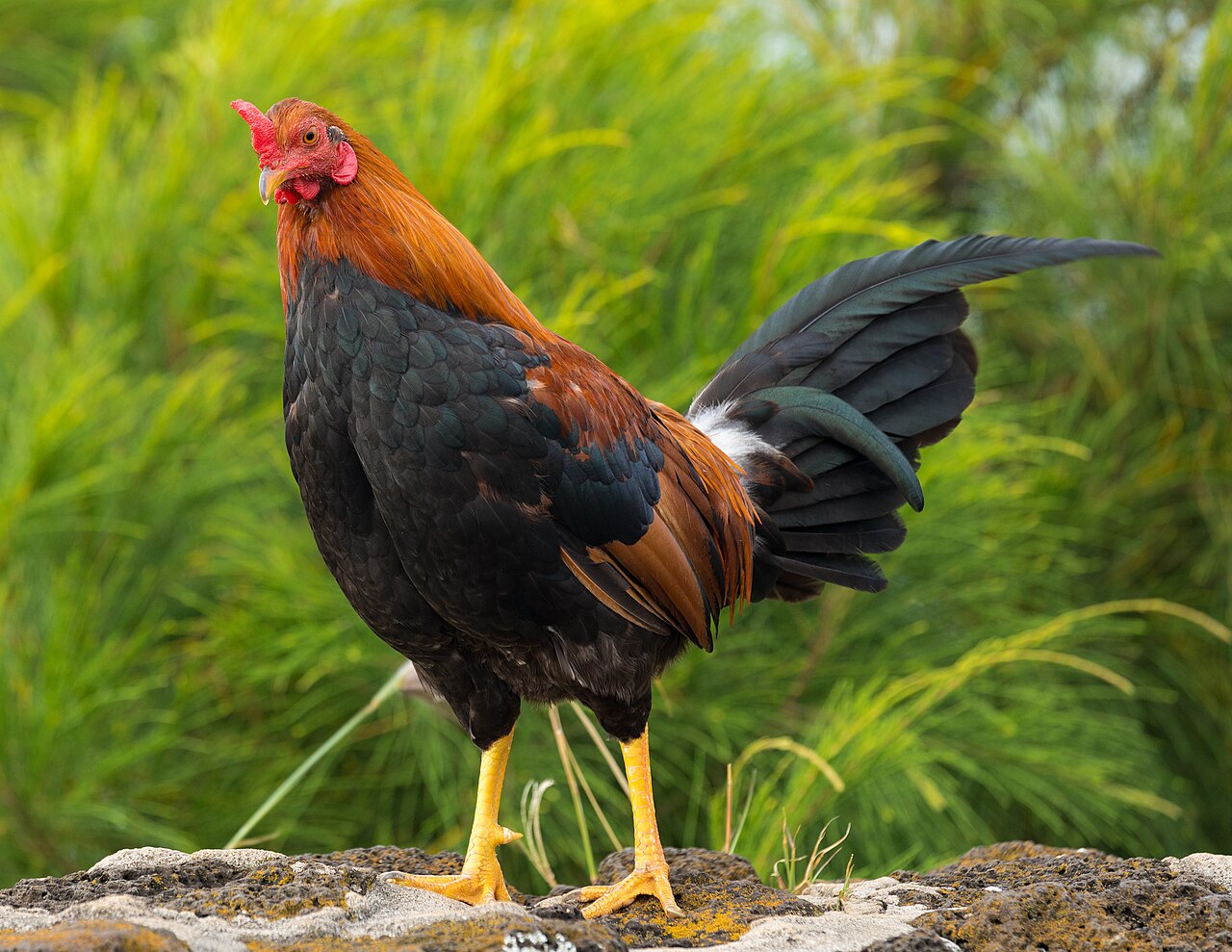
A rooster’s main sound is the crow, a loud two to three second “cock-a-doodle-doo” used to claim territory and announce rank. Roosters also give a screaming aerial alarm for hawks, a clucking ground alarm for predators on foot, a rapid “took took took” food call, a soft courtship murmur, and a quiet purring sound when relaxed. Crowing peaks at dawn but happens all day.
| Sound | How it sounds | Meaning | When |
|---|---|---|---|
| Crow | Cock-a-doodle-doo, 2 to 3 sec | Territory, rank, all clear | Peaks 1 to 2 hrs before dawn |
| Aerial alarm | One drawn out raaaay scream | Hawk or owl overhead | Daylight, any season |
| Ground alarm | Hard repeated kut kut kut | Dog, fox or person approaching | Day, and at night from the roost |
| Food call | Quick took took took | Calling hens to food | All day, strongest in spring |
| Courtship murmur | Low rolling hum with wing drag | Mating display | Spring and summer |
| Purr or trill | Soft rolling brrr | Content, settling to roost | Dusk |
| Squawk | Single harsh shriek | Pain, grabbed, or lost a fight | Any time |
What Sound Does a Rooster Make?
The sound a rooster makes most of the time is the crow, a loud four syllable call that carries well over a mile in still air. Measured at a few feet, a crow from a standard sized rooster of Gallus gallus domesticus runs 90 to 100 decibels, roughly a chainsaw at arm’s length, which is why a loud rooster sound is the most common neighbor complaint in backyard poultry.
Beyond crowing, the vocal range is wide. Researchers working on domestic chicken communication recognize around 24 separate calls across both sexes, and roosters use most of them. The ones you will actually notice are the two alarms, the food call, the courtship sounds, the roosting purr and the occasional flat out squawk.
What Is the Sound a Rooster Makes Called?
The sound a rooster makes is called crowing, and a single instance is called a crow. The verb and the noun are both centuries old and unrelated to the crow family of birds despite the spelling, tracing back to an Old English word imitating a harsh cry.
“Cockcrow” is the traditional English word for the time of day when it happens, and it survives in older writing as a synonym for first light. British English keeps “cock” where American English uses “rooster,” so British sources describe the same sound as a cock crowing.
What Do Different Rooster Noises Mean?
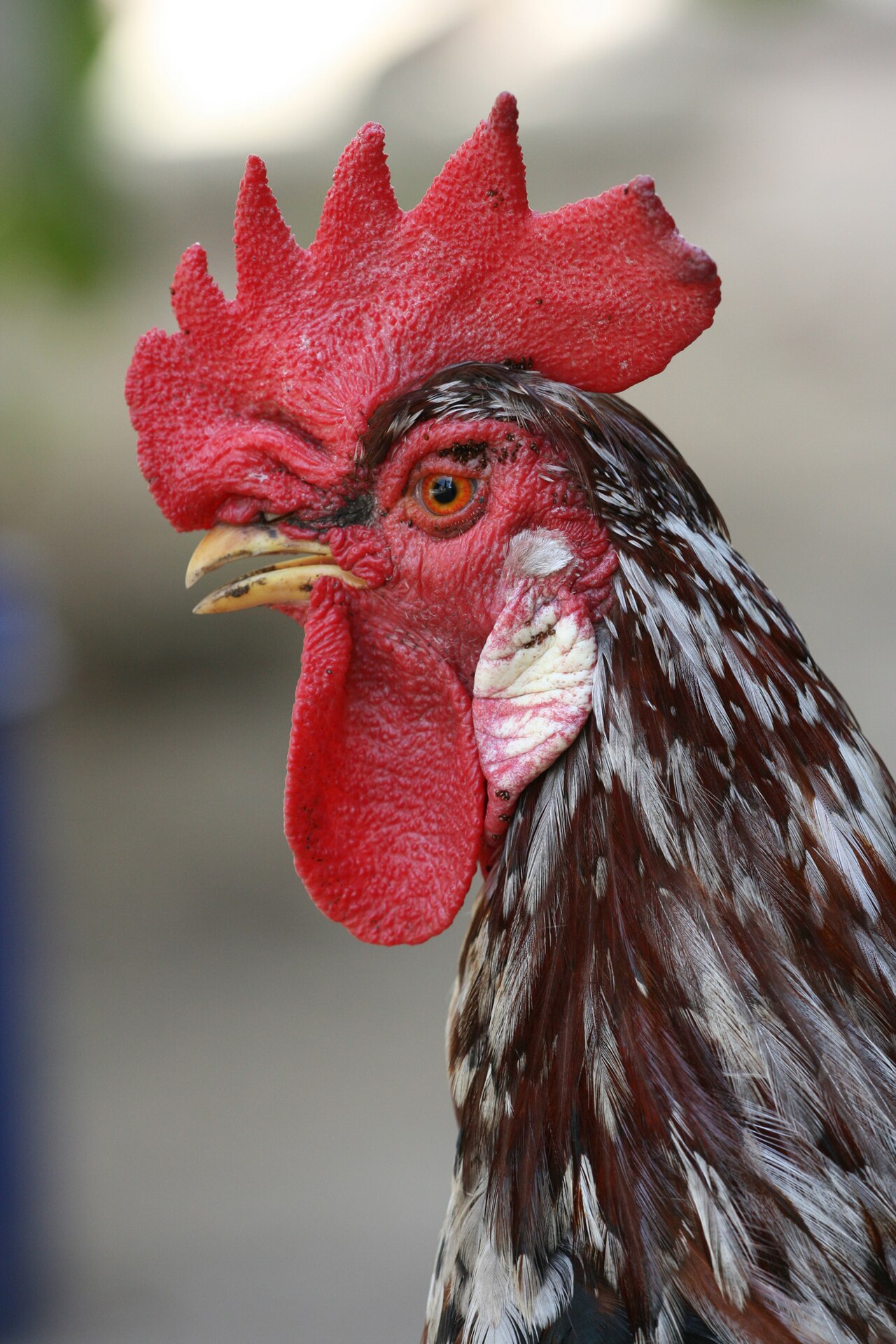
Each rooster noise maps to a situation, and the pattern is consistent enough to act on. A crow is a broadcast statement with no urgency behind it. An alarm is specific and tells you what kind of threat to look for. A food call and a courtship murmur are both aimed at hens and sound nothing alike up close.
Volume and repetition carry the urgency. One short sound repeated fast means act now, while a long drawn out single note means look up. A sound the rooster makes standing tall with his neck stretched is public; a sound he makes with his head low near a hen is private.
The Crow: Territory, Rank and Daily Rhythm
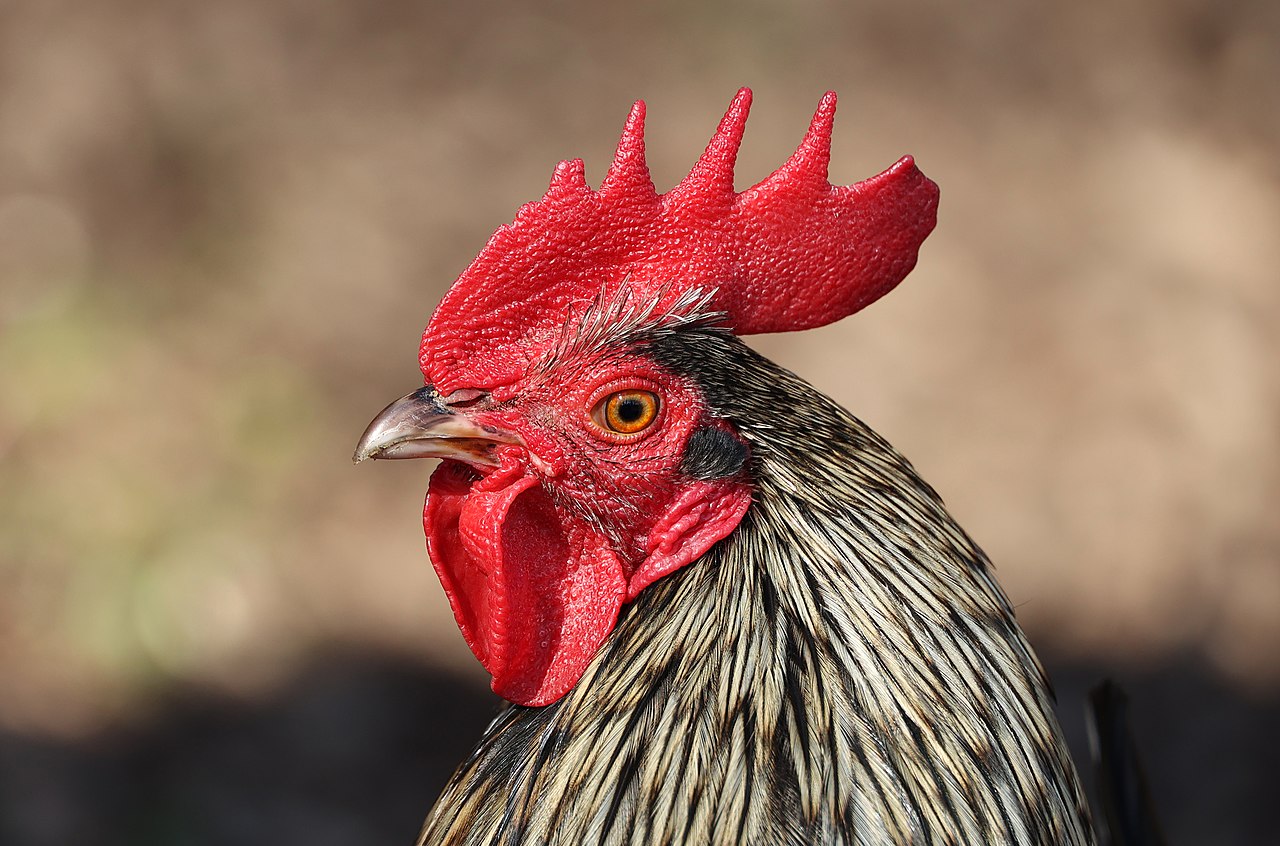
Crowing is primarily a territorial advertisement. A rooster crows to tell rival males the area is occupied and to keep his hens oriented to him, and a flock will answer across a valley in a chain that can run for several minutes.
The sequence inside a flock is not random. Work by Japanese researchers found that the top ranked rooster consistently crows first at dawn and subordinates follow in strict order of rank, waiting their turn. If the usual first voice goes quiet, the pecking order has changed.
Frequency varies enormously. Fifteen to twenty crows a day is typical, but a young cockerel in spring can push past a hundred, and Mediterranean breeds such as Leghorns tend to be noisier than heavy dual purpose birds.
Why Is a Rooster Crowing at 3 AM?
A rooster crowing at 3 am is following an internal clock, not reacting to light. A 2013 study at Nagoya University kept roosters in constant dim light with no time cues and they still crowed on a roughly 23.8 hour cycle, beginning about two hours before their expected dawn. Anticipating sunrise is the point: the first voice heard claims the territory.
Light pollution shifts that estimate earlier. A streetlamp, a motion sensor floodlight or a neighbor’s porch light reads as pre dawn to a bird that has been asleep since dusk, and you get a 2 am start instead of a 5 am one.
The other trigger is disturbance. Roosters crow when startled awake, so a raccoon on the run, an owl landing on the roof or a dog barking two yards over sets off a round of defensive crowing. If the 3 am crowing is new and the lighting has not changed, check for tracks around the coop.
Alarm Calls: Hawk Overhead Versus Fox on Foot
Roosters use two completely different alarm calls, one of the clearest examples of referential signaling in birds. The aerial alarm is a single, loud, drawn out scream, often written as “raaaay,” given while the bird freezes, flattens and scans the sky. Hens respond by crouching under cover immediately.
The ground alarm is the opposite: a hard, fast, repeated “kut kut kut” delivered while the rooster stands upright and watches the threat. Hens respond by standing tall and moving away rather than hiding, because flattening does nothing against a fox.
Roosters give these calls at real cost, since screaming at a hawk draws attention to the caller. Related raptor calls are covered in our guide to eagle sounds and the barn owl’s night calls.
Tidbitting and Courtship Sounds
The courtship sound most keepers hear without recognizing it is tidbitting: a rapid, high “took took took” while the rooster picks up a morsel, drops it, picks it up again and bobs his head. It is a food call used as a come here signal, and hens that respond are showing mate choice. Roosters tidbit most in spring, when day length drives breeding condition.
Just before mating, a rooster performs the wing drag, sometimes called the waltz, circling a hen with the outer wing lowered and scraping. The vocal part is a low rolling murmur, much quieter than anything else in his range and audible only from a few feet.
Food Calls, Egg Song and Contentment Purrs
At dusk the flock settles with a soft rolling purr or trill, the quietest rooster sound there is, and it means nothing is wrong. Keepers who sit in a coop at dark hear it as a low continuous murmur from the roost bar.
The loud repetitive cackle people call the egg song comes from hens rather than roosters, though a rooster will often join in with crowing while a hen announces a nest. A female rooster sound is a contradiction in terms, but hens in flocks with no male occasionally begin crowing, driven by hormonal changes, and the result is a thinner, shorter version of the real call.
What Sound Does a Baby Rooster Make?
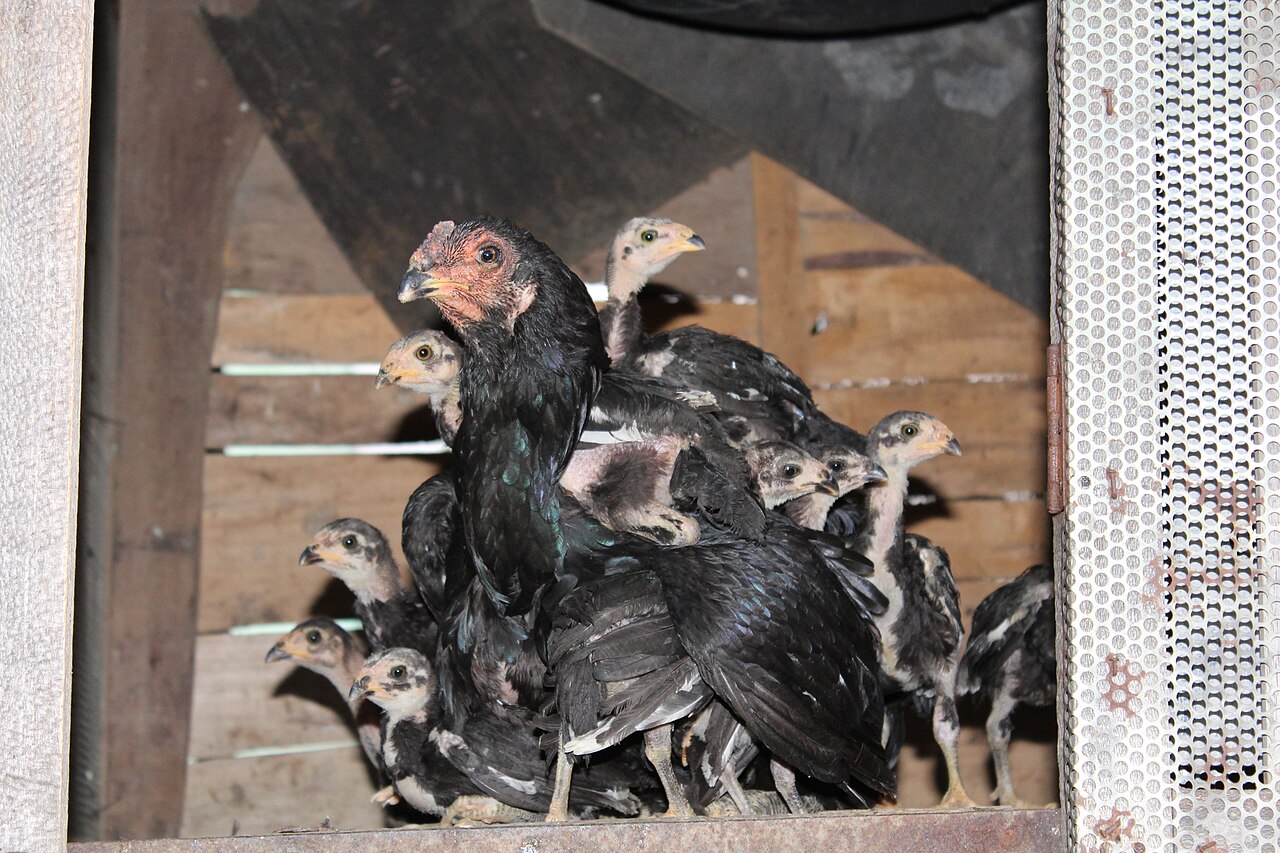
A baby rooster makes the same peeping and cheeping as any chick, and there is no reliable way to tell males from females by voice in the first weeks. Chicks give a sharp repeated distress peep when cold or separated and a soft trill when warm and settled under the heat source.
Crowing starts between four and five months on average, though some cockerels try at two or three months and a few late maturing breeds wait past six. The first attempts are famously bad: a broken, croaking two note sound that trails off, usually practiced away from the dominant male.
How Do You Write the Sound of a Rooster?
In American and British English the rooster sound is written “cock-a-doodle-doo,” first recorded in print in the early 1600s. It is one of the least accurate pieces of English onomatopoeia, since the real call is closer to a two part rising then falling cry with a rough break in the middle.
Other languages hear it very differently, which tells you how much of this is convention. French uses “cocorico,” Spanish “quiquiriquí,” German “kikeriki,” Japanese “kokekokko” and Mandarin “wo wo wo.” None are wrong; the bird is making a sound that does not map onto human syllables.
What Sounds Like a Rooster but Is Not One
Several birds get mistaken for roosters at distance. Ring necked pheasants (Phasianus colchicus) give a harsh double croak followed by a wing drum that rural listeners regularly report as a rooster. Peafowl produce a loud “may-AW” scream that carries farther than a crow and passes for one through trees, and guinea fowl make a relentless two syllable “buck-wheat” alarm.
Among wild birds, the yelping of a pileated woodpecker and the screaming of a Cooper’s hawk both get misfiled. Mimics complicate matters further, and birds that imitate other species are a standing source of misidentification, as is the surprisingly varied repertoire in blue jay calls and cardinal songs.
How Do You Shut Up a Crowing Rooster?
You cannot stop a rooster from crowing, but you can reduce it. The most effective legal approach is a light tight coop with a low ceiling: a rooster has to stretch his neck fully upward to crow, so a roost bar with limited headroom suppresses the dawn round until you open up in the morning. Blacking out windows removes the light cue that starts it early.
No crow collars, velcro bands that limit airflow through the syrinx, reduce volume rather than frequency. They are widely used and widely argued about; fitted too tight they restrict breathing, and they need daily checking. Keeping only one rooster also helps, since much of the noise is call and answer between males.
If the issue is a neighbor’s bird, the sound based options described in our review of audio bird deterrents do not work on chickens. Local ordinances usually address roosters directly, and extension services such as Penn State Extension publish guidance on backyard flock rules and welfare. For the terminology around groups, see what a group of chickens is called.
Frequently Asked Questions
What did Jesus say about a rooster crowing?
At the Last Supper, Jesus told Peter that before the rooster crowed Peter would deny him three times, recorded in Matthew 26:34 and the other gospels. The detail reflects Roman era timekeeping: cockcrow marked a watch of the night, so the phrase meant before daybreak.
How many times a day will a rooster try to mate?
A vigorous adult rooster attempts to mate 10 to 30 times a day in spring and summer, declining sharply in winter as day length drops. Each attempt is usually preceded by tidbitting or the wing drag display. Eight to ten hens per rooster prevents individual hens from being overmated.
Do roosters only crow in the morning?
No. Crowing peaks one to two hours before sunrise but continues all day in bouts, triggered by rival roosters, passing people, vehicles and territorial disputes. Roosters also crow at night when startled. The dawn concentration comes from an internal circadian clock, not from sunlight itself.
Is a rooster crowing an alarm?
Not usually. Rooster sounds alarm functions are handled by two separate calls: a single long scream for aerial threats and a fast repeated cluck for ground threats. Crowing is a territorial broadcast, and a rooster often crows right after a threat passes, which reads as an all clear.
Why does my rooster make a low purring sound?
A soft rolling purr or trill is a contentment sound, heard most at dusk as the flock settles on the roost and when a rooster is near hens he is not actively courting. It signals a relaxed bird. A sudden stop in that murmur across the coop is worth investigating.
Can you tell a rooster from a hen by sound before it crows?
Not reliably. Chick peeps are indistinguishable between sexes, and the claim that cockerel chicks peep at a lower pitch does not hold up. The first dependable vocal sign is attempted crowing at four to five months, by which point comb growth and saddle feathers have usually already given it away.