Crow Tattoo Meaning: Intelligence and Transformation
A crow tattoo means intelligence, transformation, and adaptability, with an undercurrent of mystery that the bird has carried through folklore for centuries. The crow earned its symbolic resume honestly: crows solve multi-step puzzles, use tools, hold grudges against specific human faces for years, and thrive everywhere from wilderness to city dumpsters. As ink, the crow speaks for people who survive by wit rather than force, who have reinvented themselves, or who feel at home on the edge between worlds.
Crow tattoos also live in the long shadow of a nearly identical design, the raven, and most wearers benefit from understanding the difference before the needle starts. This guide covers the crow’s core meanings, how a crow tattoo differs from a raven tattoo, what the design signals for men and for women, the skull pairing and the gothic reading, the crow’s cultural range from Japan’s three-legged Yatagarasu to the 1994 film that put a crow on a generation’s skin, and the design and placement choices that make the bird work.
| Core meaning | Intelligence, transformation, adaptability |
| Darker reading | Mystery, death as change, watchfulness |
| Crow vs raven ink | Crow leans clever and communal; raven leans mythic |
| Famous cultural crows | Yatagarasu (Japan), The Crow (1994), counting rhymes |
| Popular pairings | Skull, moon, clock, flock silhouettes |
| Best placements | Forearm, shoulder blade, chest, calf |
What a Crow Tattoo Means
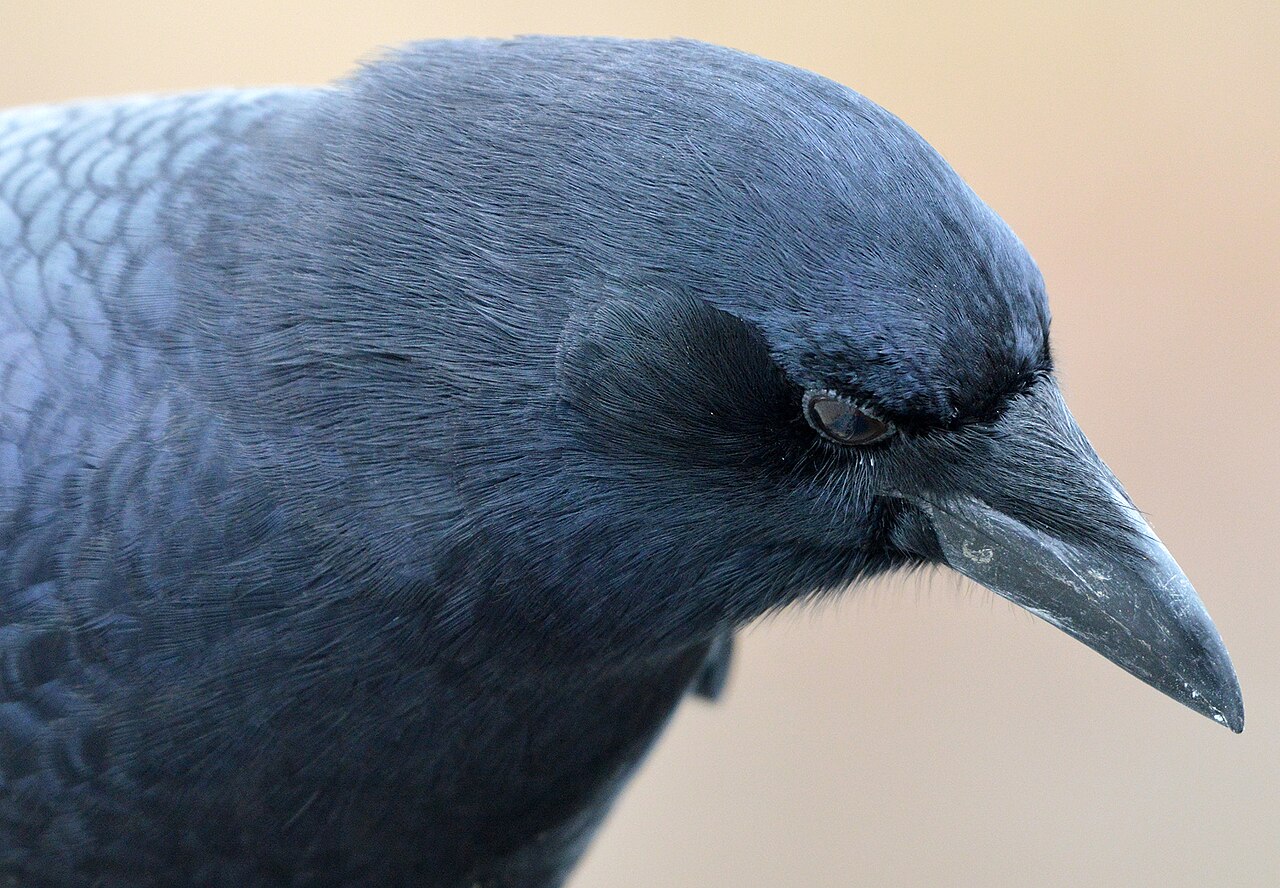
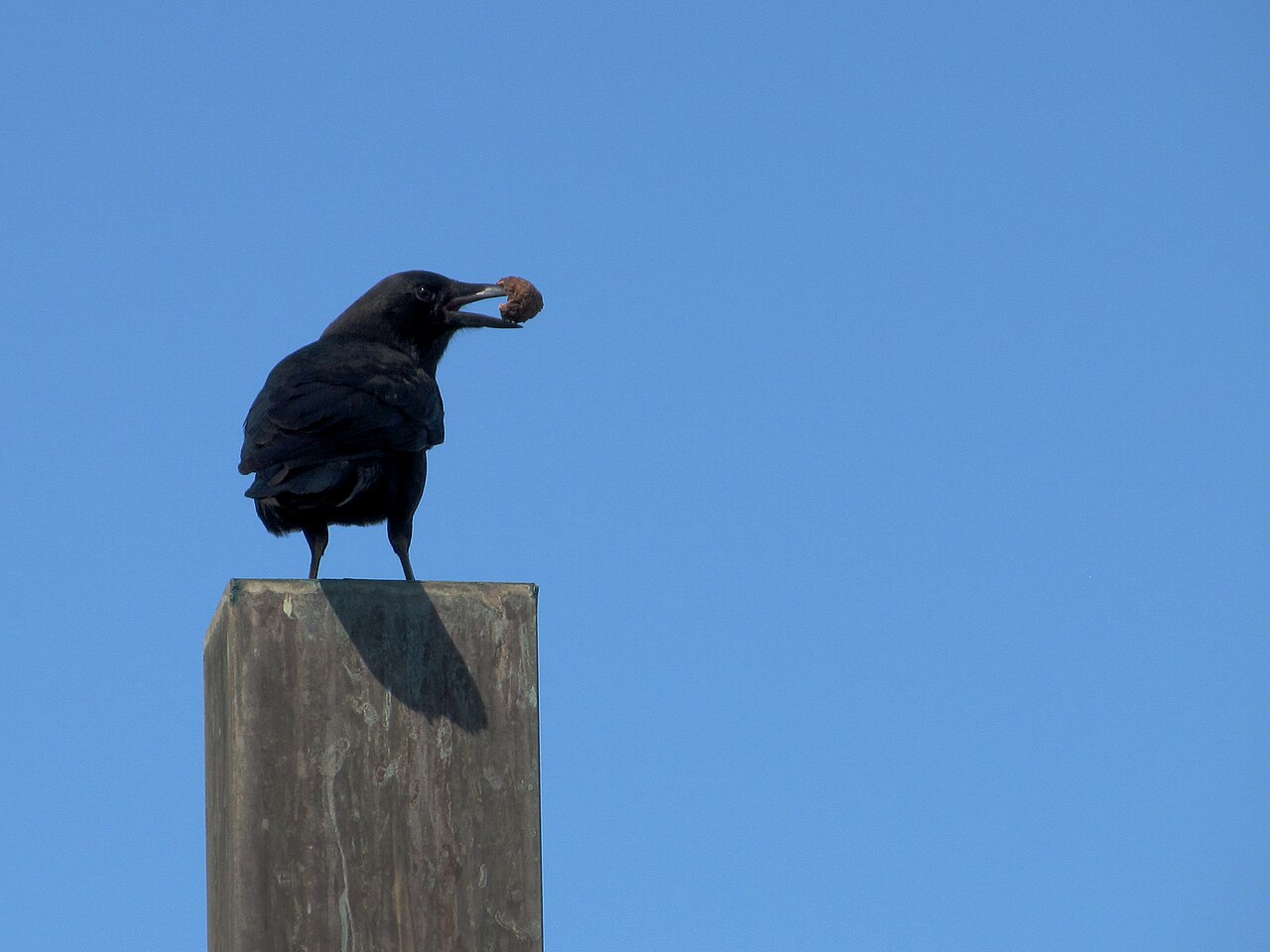
Three meanings anchor almost every crow tattoo. Intelligence comes first, and it is the rare tattoo meaning with peer-reviewed support: corvids are documented tool users and puzzle solvers, and research made famous by the Cornell Lab of Ornithology (allaboutbirds.org) and other institutions has shown crows recognize and remember individual human faces for years, passing the grudge to their offspring. A crow on your skin claims that kind of mind, observant, calculating, never fooled twice.
Transformation is the second pillar. Across folklore the crow moves between worlds, day and night, life and death, town and wild, and its glossy black plumage made it a natural emblem of the void that precedes renewal. People routinely choose crow tattoos after divorces, recoveries, career burnings-down, and other personal demolitions that turned out to be construction sites. The crow does not represent the loss; it represents the intelligence that survived it and adapted.
Adaptability rounds out the trio, and it is the most modern reading. Crows are among the few wild animals that answered human sprawl by winning, learning traffic patterns, timing garbage days, thriving in every city on the continent. As a tattoo, that story suits immigrants, veterans re-entering civilian life, hustlers of every honest kind, anyone whose skill is landing on their feet in a world that keeps changing the rules. Where an eagle tattoo claims dominance of the sky, the crow claims something arguably harder: dominance of circumstances.
Crow vs Raven Tattoo: Which Bird Are You Actually Getting?
Here is the practical problem: in silhouette, a tattooed crow and a tattooed raven are nearly the same image, and most flash sheets use the labels interchangeably. The symbolic centers of gravity differ, though. The crow’s mythology is social and clever, the sharp-eyed trickster of counting rhymes, the watchful neighbor, the urban survivor, while the raven carries the heavyweight mythic roles: Odin’s messengers, Poe’s midnight visitor, the Tower of London’s guardians. Crow ink says wit and reinvention; raven ink says mystery and fate.
If you want the design itself to declare which corvid it is, borrow the field marks birders use. A crow has a smooth throat, a lighter, straighter bill, and a fan-shaped tail; a raven shows a heavy, arched bill, shaggy throat feathers, and a wedge-shaped tail, differences a good artist can render clearly even in small black work. Scale reads too: ravens are half again a crow’s size, so a massive, brooding bird beside a skull reads raven, while a sleek bird in a group reads crow. Our raven vs crow guide covers every distinguishing mark worth handing your artist.
The honest answer for many wearers is that either bird carries their meaning, and the choice comes down to which story resonates: the clever survivor or the mythic omen. If Norse mythology, Poe, or gothic fate-symbolism is the pull, read our companion guide to raven tattoo meaning before booking, because that is likely your bird. If the pull is intelligence, adaptation, street-smart resilience, and the slightly mischievous edge of a bird that remembers your face, you are in the right article.
Crow Tattoo Meaning for Men
For men, crow tattoos most often signal sharp intelligence and self-made resilience, a deliberate alternative to the brute-force animals. Where lions and bulls advertise power, the crow advertises the mind that beats power: the strategist, the reader of rooms, the man who wins by seeing two moves ahead. It is a favorite among men in cerebral or improvisational trades, chess players and poker players, engineers, musicians, chefs, and among men whose life story features outthinking bad circumstances rather than overpowering them.
The darker masculine readings are equally established. A lone crow perched on barbed wire, a bare branch, or a skull reads as the survivor of something, grief, war, addiction, prison, watchful and unillusioned. Flocks tell another story: crows live in tight family groups where older siblings help raise the young and the whole neighborhood mobs a common enemy, so a small flight of crows across a forearm or chest often stands for brotherhood, crew loyalty, or family carried through hard times.
Style choices push the tone. Bold American traditional crows with heavy black and a touch of grey read old-school and unbothered. Photorealistic black and grey crows, every feather rendered, read contemplative and serious, the most popular current style for large single-bird pieces. Neo-traditional versions with moons, daggers, or clockwork add narrative flair, and blackwork silhouettes strip the bird to pure symbol. Placement follows the same logic as other statement birds, with the forearm, chest, and shoulder leading, and the full options covered in our bird tattoo meanings overview.
Crow Tattoo Meaning for Women
For women, the crow most often stands for sharp instinct, independence, and transformation worn openly. The bird’s folklore gives it a distinctly feminine register of knowing, the crow as the one who sees through performances, remembers everything, and cannot be charmed twice, and many women choose it precisely for that unbluffable quality after seasons of life that demanded it. It is a popular post-reinvention tattoo: new city, ended marriage, recovered self, the black bird as the sleek survivor of the fire.
Design language tends to differ from the male-skewing pieces. Women more often choose crows in flight rather than hunched and perched, fine-line and dotwork renderings, and pairings that complicate the darkness: a crow carrying a key, a sprig of flowers, or a moon phase band; a crow morphing into scattered feathers or birds; a crow silhouette inside a botanical frame. Placements skew to the shoulder blade, spine, ribs, forearm, and behind the ear for small silhouettes, spots that keep the bird personal rather than declarative.
The witchy-mystical reading deserves its own mention, because it is currently the crow’s fastest-growing niche. The crow as familiar, moon-companion, and keeper of intuition runs through modern witch aesthetics, cottagecore’s darker sister, and a crow with a crescent moon or crystal has become shorthand for trusting one’s own perception over anyone’s approval. It borrows from the bird’s genuine omen-folklore, the superstitions explored in our guide to what it means when crows visit you, and repurposes the old fear into modern self-possession.
The Crow and Death: Skull Pairings and the Gothic Reading
The crow-and-skull tattoo is the design’s gothic flagship, and its meaning is more nuanced than shock value. Crows are carrion birds that historically attended battlefields and gallows, which made them death’s witnesses in the European imagination, not its cause, but its observers. A crow perched on a skull therefore reads as memento mori: remember you will die, so live deliberately. Wearers frequently choose it after losing someone, surviving something lethal, or making peace with mortality in a way they want to keep visible.
Within the memento mori frame, details steer the message. A crow holding a rose or a coin over the skull leans toward remembrance of a specific person; an hourglass or clock adds the time-is-short urgency; a crow pulling a ribbon or thread from the skull invokes fate unraveling. Black crows in a bare tree over a graveyard scene push full gothic, while a single small skull in a crow’s talons keeps the idea almost playful. None of it reads as worshiping death; the crow is the survivor standing on top of it.
The folklore that feeds this design also answers a common worry: is a crow tattoo bad luck? The counting rhymes (“one for sorrow, two for joy”) assigned crows both fortunes, most traditions treated the bird as messenger rather than cause, and several cultures considered crows protective and lucky outright. Tattoo tradition follows suit; no established school treats crow ink as cursed. The full ledger of omens, good and bad, lives in our crow symbolism guide, and the balance is far friendlier than the gothic aesthetic suggests.
Crows in Culture: Yatagarasu, Sacred Traditions, and The Crow
The crow’s cultural range surprises people who know only the spooky version. Japan’s Yatagarasu is a divine three-legged crow sent as a guide from heaven, credited with leading the first emperor through hostile mountains, and it remains a national emblem today, worn on the badge of Japan’s national soccer teams. A Yatagarasu tattoo, usually a bold crow with three legs against a red sun, means divine guidance and finding the way, one of the most unambiguously positive crow designs available.
East Asian tradition adds the three-legged sun crow of Chinese mythology, an inhabitant of the sun itself, and Hindu tradition connects crows with ancestors, feeding crows during Shraddha rites as an offering to the departed. Several North American Indigenous traditions hold Crow as a distinct figure of intelligence and adaptability; the heavyweight trickster-creator role on the Northwest Coast belongs to Raven specifically, one more reason to know which bird your design invokes, and formline-style corvid imagery belongs to those nations’ living artistic traditions rather than to flash sheets.
Then there is the modern myth: The Crow (1994), in which the bird resurrects a murdered man to set things right, wrapped in Brandon Lee’s own tragic death during filming. The film welded the crow to gothic devotion, love-beyond-death, and righteous grief for an entire generation, and film-inspired pieces, the face paint, the bird against a broken window, remain steady tattoo requests three decades on. It is the crow’s transformation meaning turned up to eleven: what was destroyed comes back changed, and settles accounts.
Flying, Perched, and a Murder of Crows: Compositions That Change the Message
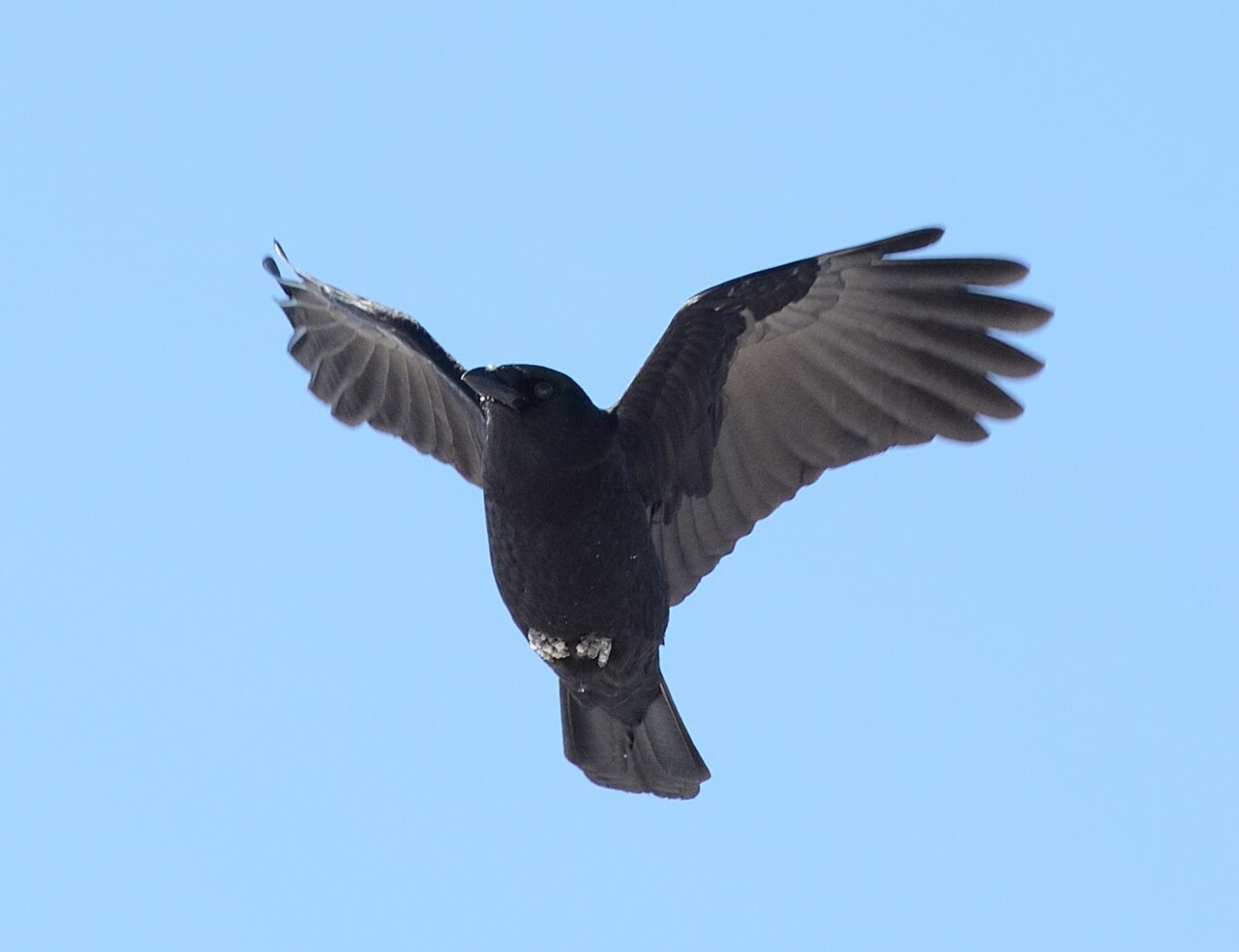
Posture is grammar in crow tattoos. A perched crow, still, head turned, watching, reads as vigilance, patience, and memory, the bird that sees everything and waits. A crow in full flight reads as freedom and transition, the transformation meaning in motion, and a flying crow trailing scattered feathers or dissolving into birds has become the standard visual for grief releasing or a self being rebuilt mid-air. A crow taking off says leaving; a crow landing says arriving; artists genuinely compose around that difference.
Numbers speak too, courtesy of the counting rhyme. A single crow carries the lone-survivor tone. Two crows invoke “two for joy” and are a quiet couples choice. Three crows, per rhyme versions, signal a girl or good fortune coming, and a full murder of crows, five or more scattered up a forearm, ribcage, or spine, reads as family, crew, or the gathered past, each bird sometimes sized or marked for a person. The flock design also solves a practical problem beautifully: it scales from wrist to full back without losing meaning.
Anatomical accuracy is the quiet quality marker in all of these. Real crows have five visible primary “fingers” in flight silhouettes, fan tails, and straight bills, and cheap flash routinely gets all three wrong, drifting the bird toward raven or generic blackbird. Reference photos cost nothing and make the difference between a crow and a smudge, exactly the advice that applies to every bird design. Bring your artist images of American crows specifically, in the pose you want, and the finished piece will read as the intelligent, particular bird you chose rather than a gothic decal.
Placements and Styles That Suit Crow Tattoos
The crow’s shape gives it unusual placement range. The forearm is the modern default, fitting a perched crow vertically or a flight sequence along the muscle, visible when you choose and an easy conversation piece. The shoulder blade suits single birds in flight, wings following the bone’s line, and the chest carries the watchful perched crow over the heart, the guardian position. Calves take perched compositions with branches and moons beautifully, and the spine hosts the murder-of-crows ladder better than any other real estate.
Small crow tattoos hold meaning at minimal scale precisely because the silhouette is so recognizable: a half-inch black bird behind the ear, on the wrist, or at the ankle still reads instantly as crow, which few animals manage. Style-wise, blackwork and silhouette suit the bird’s natural palette; black and grey realism showcases feather texture and the intelligent eye; traditional and neo-traditional add the moons, daggers, and roses; and dotwork or geometric hybrids, a crow dissolving into triangles or mandala work, carry the transformation meaning in the technique itself.
Frequently Asked Questions
What does a crow tattoo symbolize?
Intelligence, transformation, and adaptability first, with secondary readings of mystery, watchfulness, and survival. Pairings steer it: skulls toward memento mori, moons toward intuition, flocks toward family and loyalty.
Is a crow tattoo bad luck?
No tradition in tattooing treats crow ink as unlucky. Folklore assigned crows both fortunes (“one for sorrow, two for joy”), many cultures considered them protective or divine, and the death association casts them as witnesses, not causes.
What is the difference between a crow and a raven tattoo?
Symbolically, crow ink leans intelligence, adaptation, and the clever survivor; raven ink leans myth, fate, and mystery (Odin, Poe). Visually, a crow shows a straight bill, smooth throat, and fan tail; a raven a heavy bill, shaggy throat, and wedge tail.
What does a black crow tattoo mean?
Since all crows are black, “black crow” designs emphasize the silhouette: mystery, elegance, and the void-before-renewal reading of transformation. In blackwork style it is the crow reduced to pure symbol.
What do three crows mean in a tattoo?
Counting-rhyme tradition makes three crows a sign of good fortune ahead (in some versions, a daughter). Groups more generally read as family or chosen crew, with a full murder of crows representing the gathered past.
What does a crow and skull tattoo mean?
Memento mori: a reminder of mortality worn to sharpen life, often chosen after loss or survival. Added roses lean remembrance; hourglasses lean urgency. The crow stands as death’s witness and survivor, not its servant.
What does a tattoo from The Crow mean?
Pieces referencing the 1994 film invoke love beyond death, righteous grief, and coming back changed to set things right, intertwined with the memory of Brandon Lee. It remains one of the most requested pop-culture crow designs.