Chicken Sounds: 7 Calls, What Each Means and When You Hear It
Chicken sounds are not random background noise: a flock runs on roughly two dozen distinct calls, and most of them mean something specific enough to act on. The loud repeated cackle is almost always the egg song, the sharp repeated cluck means something is moving on the ground, and a drawn out scream means something is in the air. Learning four or five of them tells you what is happening in the yard without walking out to look.
The calls below are grouped by sound rather than by bird, with the time of day and the season you can expect each one, and with the noise it gets mistaken for. The last sections handle the two questions people actually arrive with: why a chicken is screaming at night, and what the noise in the wall is if it is not a chicken.
Chickens use about 24 to 30 calls. The main ones are clucking for contact, the loud egg song after laying, a rapid “kuk kuk kuk” for ground predators, a long scream for hawks, a rooster’s crow for territory, soft trilling for contentment, and a growl from a broody hen. Chicks peep when content and cheep loudly when cold or lost.
What Noises Does a Chicken Make?
A chicken’s working vocabulary is wider than the cluck everyone knows. Researchers studying Gallus gallus domesticus have catalogued somewhere between 24 and 30 separate vocalizations, including two different alarm calls for two different kinds of danger, a food call, a courtship call, a nesting call and several contact sounds. Extension programs such as UGA Extension teach the alarm calls to keepers for exactly this reason.
The sounds fall into four families: contact noises that keep the flock together, loud announcements aimed outward, warnings, and the chick specific peeps. Volume is the quickest sorting tool. Soft and continuous means all is well; loud and repetitive means something changed.
The Egg Song: The Loud Repeated Cackle After Laying
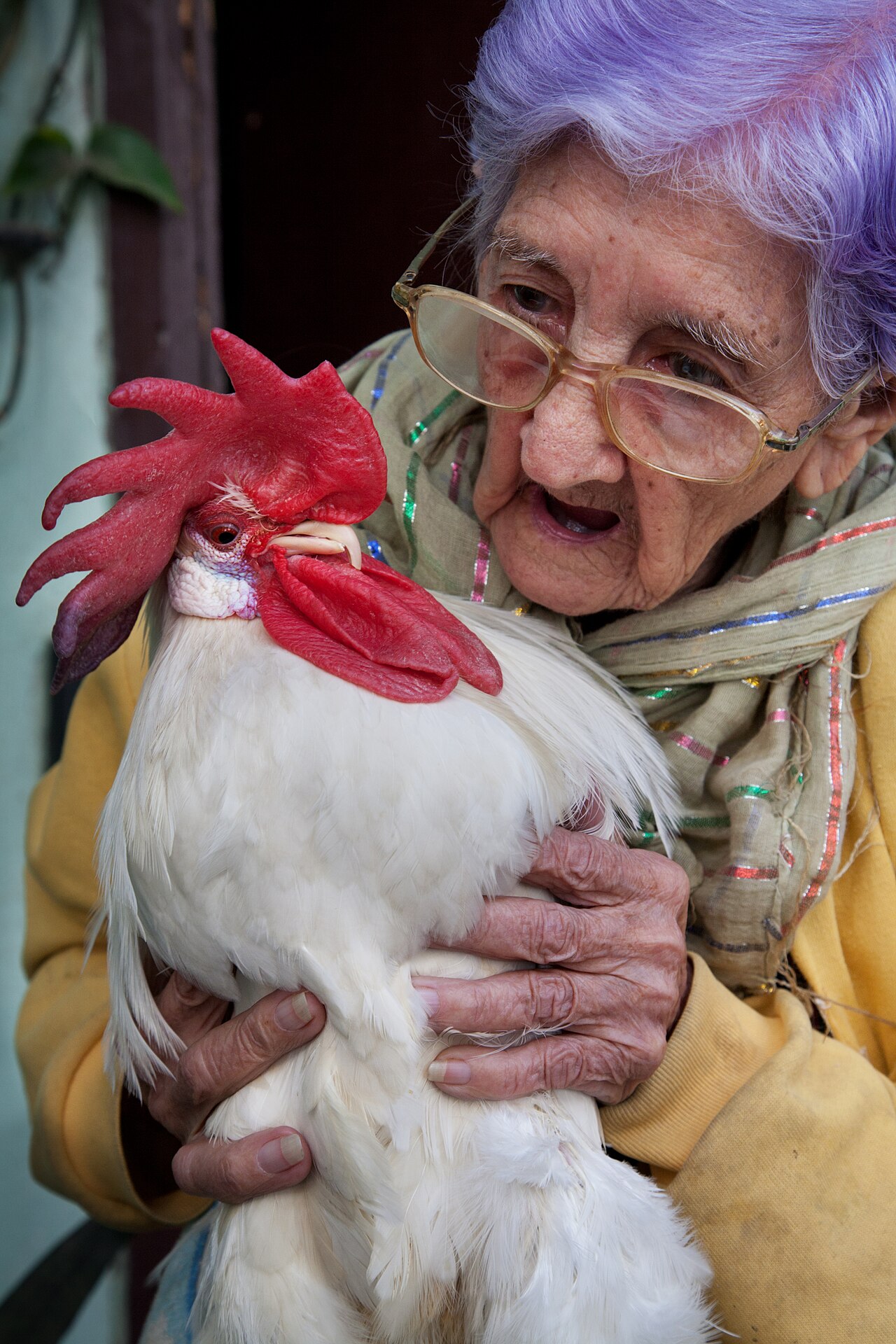
The egg song is the sound that makes new keepers think something is wrong. A hen leaves the nest box and delivers a rising, repeated “buk buk buk ba-GAWK” for thirty seconds to a couple of minutes, often loud enough to carry two houses down. Other hens frequently join in, which is why one egg can set off a five minute chorus.
You hear it mid morning through early afternoon, year round but heaviest in spring when laying peaks. It is routinely mistaken for a distress call. The difference is the ending: the egg song trails off and the hen goes back to foraging, while real distress keeps going and brings the whole flock to a standstill.
Contented Clucking, Chirping and the Dust Bath Purr
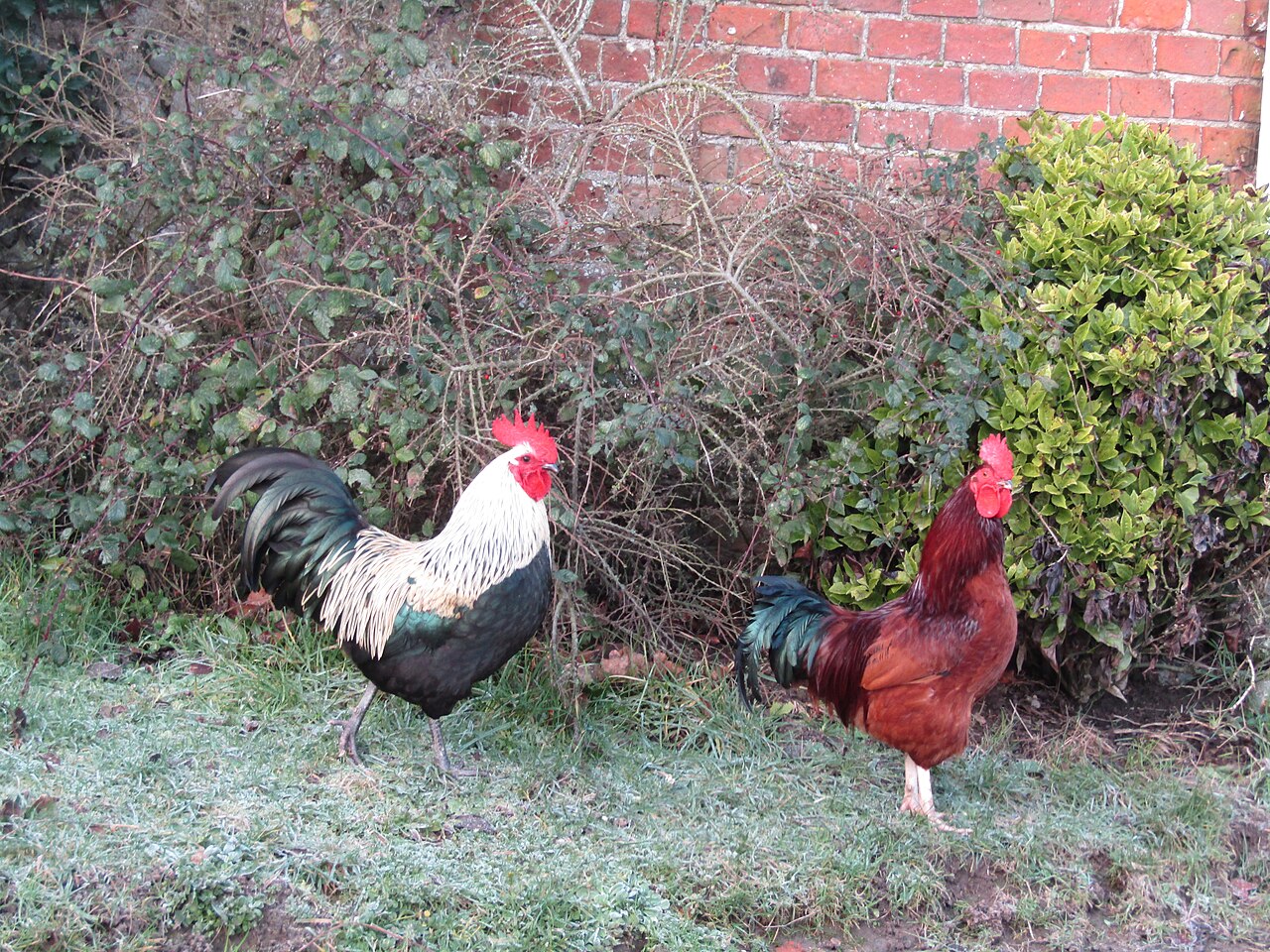
The baseline sound of a healthy flock is a low, irregular “buk … buk … buk” as birds keep track of each other while foraging. Underneath it sits a softer chicken chirping and a rolling purr or trill, heard mostly during dust bathing and in the first minutes on the roost. Both are quiet enough that you only notice them when you are a few feet away.
This is also the sound that stops first. If a yard that normally murmurs has gone silent, every bird is looking at something. In practice the silence is a better warning than any call, and it comes seconds before the alarm.
The Food Call and Tidbitting: How a Rooster Courts a Hen
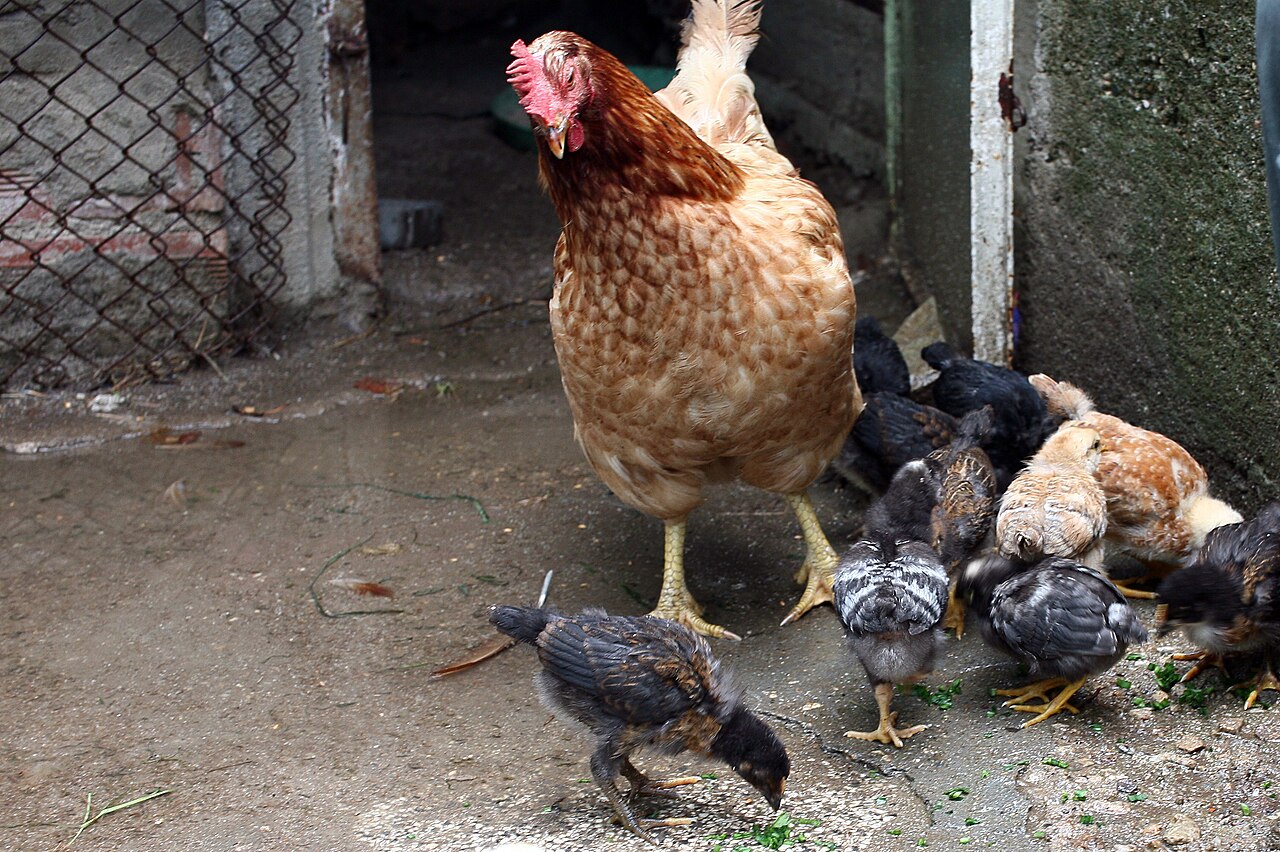
Tidbitting is the most theatrical chicken sound there is. A rooster finds something worth eating, picks it up, drops it, picks it up again and bobs his head while giving a rapid, clipped “took took took.” Hens come at a run. The display works as both a food call and a courtship call, and a rooster will use it with nothing in his beak at all.
Hens give a plainer version to call chicks to food. The call is strongest in spring and early summer and is easiest to trigger on purpose with scratch grain or a handful of greens from the list of foods chickens can eat. Expect it any time you open the run gate.
Alarm Calls: The Ground Cluck and the Aerial Scream
Chickens keep two separate alarm calls, and they are not interchangeable. A ground threat, meaning a dog, fox, raccoon or snake, produces a sharp, fast, repeated “kuk kuk kuk kuk” from whichever bird saw it, usually with the head up and the body frozen. The flock responds by clustering and watching.
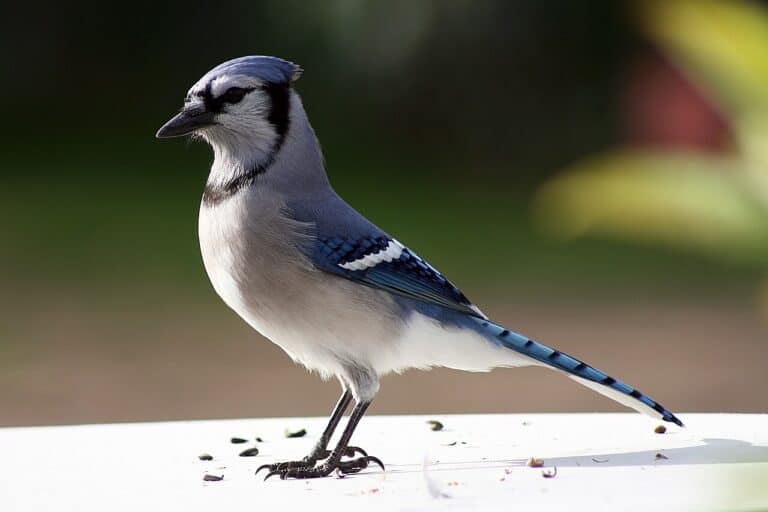
An aerial threat produces something completely different: a single drawn out, high, grating scream, after which every bird flattens or runs for cover. That call means hawk. Keepers often confuse it with the raptor itself, which is fair enough, since blue jays imitate hawk screams well enough to clear a feeder.
Crowing: What Are Some Sounds That Roosters Make?
A rooster crows, but that is only part of his repertoire. The crow itself, the “cock-a-doodle-doo” of English spelling, runs two to four seconds and announces territory and rank. Research on circadian rhythm in roosters shows the dawn crow is driven by an internal clock, which is why it starts before first light rather than in response to it, and why the top ranked bird in earshot crows first.
Beyond the crow he gives the tidbitting call, both alarm calls, a low warning rumble aimed at other roosters, and a soft wing dragging display sound during courtship. Hens occasionally crow too, usually in flocks with no rooster, and the result is a shorter, flatter and noticeably worse version.
The Broody Hen Growl and Hiss
A broody hen sounds like a small angry machine. Sitting on eggs, she flattens herself in the nest box, fluffs out, and gives a low rolling growl that rises into a hiss if you reach under her. Many will peck as well. The sound is unmistakable once heard, and it is the easiest way to confirm that a hen has gone broody rather than merely egg bound or unwell.
She keeps it up for the full three week incubation, mostly in spring and early summer, and will growl at the other hens too. The same hen becomes vocal in a new way once chicks hatch, trading the growl for a steady maternal cluck.
Baby Chicken Sounds: Peeping, Trilling and the Distress Cheep
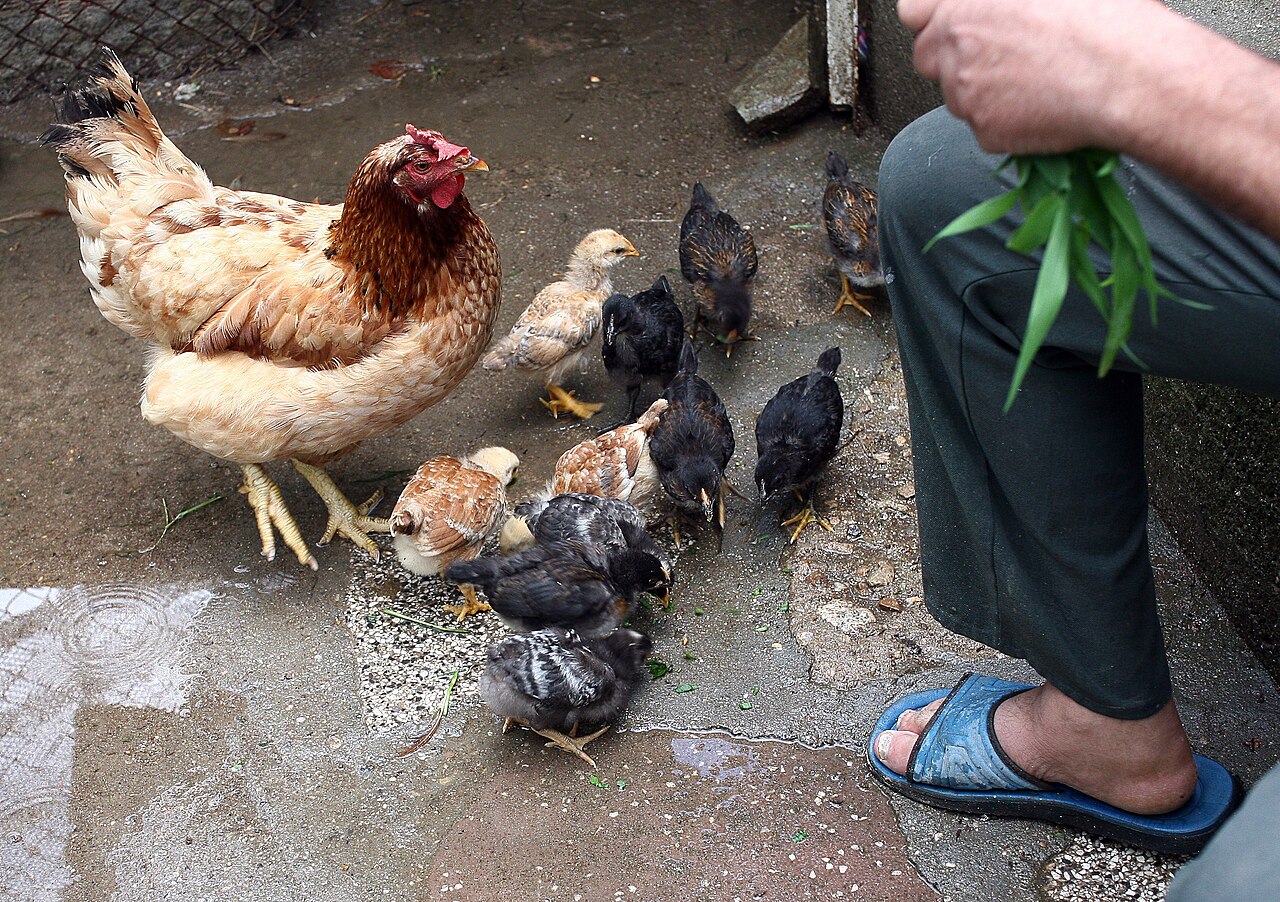
Chicks talk from before they hatch. In the last day or two inside the egg they peep audibly and the hen clucks back, which synchronizes the hatch. Once out, contentment is a soft, slow, musical peeping and a rolling trill, loudest when they settle under the hen or the brooder lamp.
The distress cheep is the one to act on: loud, fast, high and relentless, it means cold, lost, hungry or trapped. In a brooder it is almost always temperature, and a chick that has wandered from the heat will cheep until it finds it again. Quiet chicks are warm chicks.
Roosting, Night Noises and Chickens Screaming After Dark
Chickens are close to silent at night. Settling on the roost at dusk comes with ten or fifteen minutes of grumbling, soft clucks and the occasional squabble, then nothing until the sky lightens. Any loud sound from a coop after full dark deserves a flashlight.
Screaming, panicked flapping or a sustained chorus at 2 a.m. means a predator is at the coop, and raccoons, foxes, owls and bobcats all work those hours. The calls of a barred owl or a bobcat nearby are worth knowing for the same reason. A rooster crowing at night is ordinary by comparison, usually triggered by a light, a car or another bird.
Noises in the Attic or Wall Are Not Chickens
The household version of this question has a different answer. Scratching, thumping or chirping inside a wall, ceiling or attic is never a chicken, even on a property with a flock, because chickens cannot get in and would be deafening if they did. Daytime scratching and chattering is squirrels; nighttime scurrying is rats or mice; heavy thumping and growling overhead is raccoons.
High, rapid chittering at dusk near a soffit or gable vent usually means bats, and bat sounds are the closest thing to a chick’s peep that comes out of a building. For birds in vents and on ledges, a deterrent sound is a partial fix at best; exclusion is the real one.
What Chicken Sounds Get Confused With
Outside the coop, three birds account for most misidentifications. Guinea fowl produce a far louder, machine gun “buck-wheat buck-wheat” that neighbors regularly report as a chicken in trouble. Ring necked pheasants give a harsh double croak followed by a wing burst, and peafowl scream in a way that carries a mile.
In the other direction, a hen’s egg song gets reported as a hawk, and a young rooster learning to crow gets reported as an animal in pain. Both are normal. Recordings help, and the free sound libraries at state wildlife agencies and university extension sites are a safer reference than a video titled for views.
| Sound | What it means | When you hear it | Mistaken for |
|---|---|---|---|
| Loud repeated cackle | Egg song, a hen just laid | Mid morning to afternoon | Distress, hawk attack |
| Soft irregular clucking | Contact, all is well | All day while foraging | Nothing, often unnoticed |
| Rapid “kuk kuk kuk” | Ground predator seen | Daylight, any season | Ordinary clucking |
| Long grating scream | Aerial predator, take cover | Daylight, peaks in fall | The hawk itself, a jay |
| Crow | Territory and rank | Pre dawn onward, year round | Distress in young roosters |
| Low growl and hiss | Broody hen on eggs | Spring and early summer | Illness, injury |
| Fast loud cheeping | Chick cold, lost or hungry | First six weeks | Contented peeping |
Related reading: Mallard Sounds.
Related reading: Rooster Sounds.
Related reading: Parakeet Sounds.
Related reading: Cockatiel Sounds.
Related reading: Goose Sounds.
Related reading: bird that sounds like machine gun.
Related reading: Pheasant Sounds.
Related reading: Swan Sounds.
Related reading: Puffin Sounds.
Related reading: Roadrunner Sounds.
Related reading: Vulture Sounds.
Related reading: Falcon Sounds.
Related reading: Meadowlark Sounds.
Related reading: Titmouse Sounds.
Related reading: Cedar Waxwing Sounds.
Frequently Asked Questions
How do you say hello in chicken language?
The closest thing to a greeting is the contact cluck, a short soft “buk” that birds trade to confirm where everyone is. Repeat it quietly as you approach and hens often answer. It is not a greeting in the human sense, just a flock member announcing itself, which is close enough to serve as one.
How do you say “I love you” in chicken language?
Chickens have no affection call, so the honest answer is that you say it with food. The signal a chicken reads as positive attention is the food call, a clipped repeated “took took took” paired with something edible in your hand. Done consistently, birds will run to your voice, which is as close as the species gets.
How do chickens say goodbye?
They do not. Chickens have calls for gathering, warning and announcing, none for parting. What looks like a farewell is usually the dusk grumble as the flock settles on the roost, a run of soft clucks and shuffling that fades out over about fifteen minutes once the last bird has picked its spot.
How do you spell the noise a chicken makes?
English writes the hen as “cluck,” “buk buk” or “bawk,” the egg song as “ba-gawk,” and the rooster as “cock-a-doodle-doo.” To write chicken noise convincingly, double the consonants and vary the rhythm. Other languages hear it differently: German has “kikeriki,” Japanese “kokekokko,” French “cocorico.”
Do chickens like it when you talk to them?
Chickens learn to recognize individual voices and faces and will approach a familiar keeper who talks to them while staying wary of a stranger who does the same. Whether they enjoy it is unknowable, but they clearly associate a calm familiar voice with safety and food, and birds handled with one tend to be easier to catch and inspect.
What is a chicken in slang for a girl?
The word usually meant here is “chick,” mid twentieth century American slang for a young woman, now dated and often unwelcome. “Chicken” on its own has carried other senses: a coward, and in older usage a naive young person. None of them are poultry terms, and none are advisable in conversation.