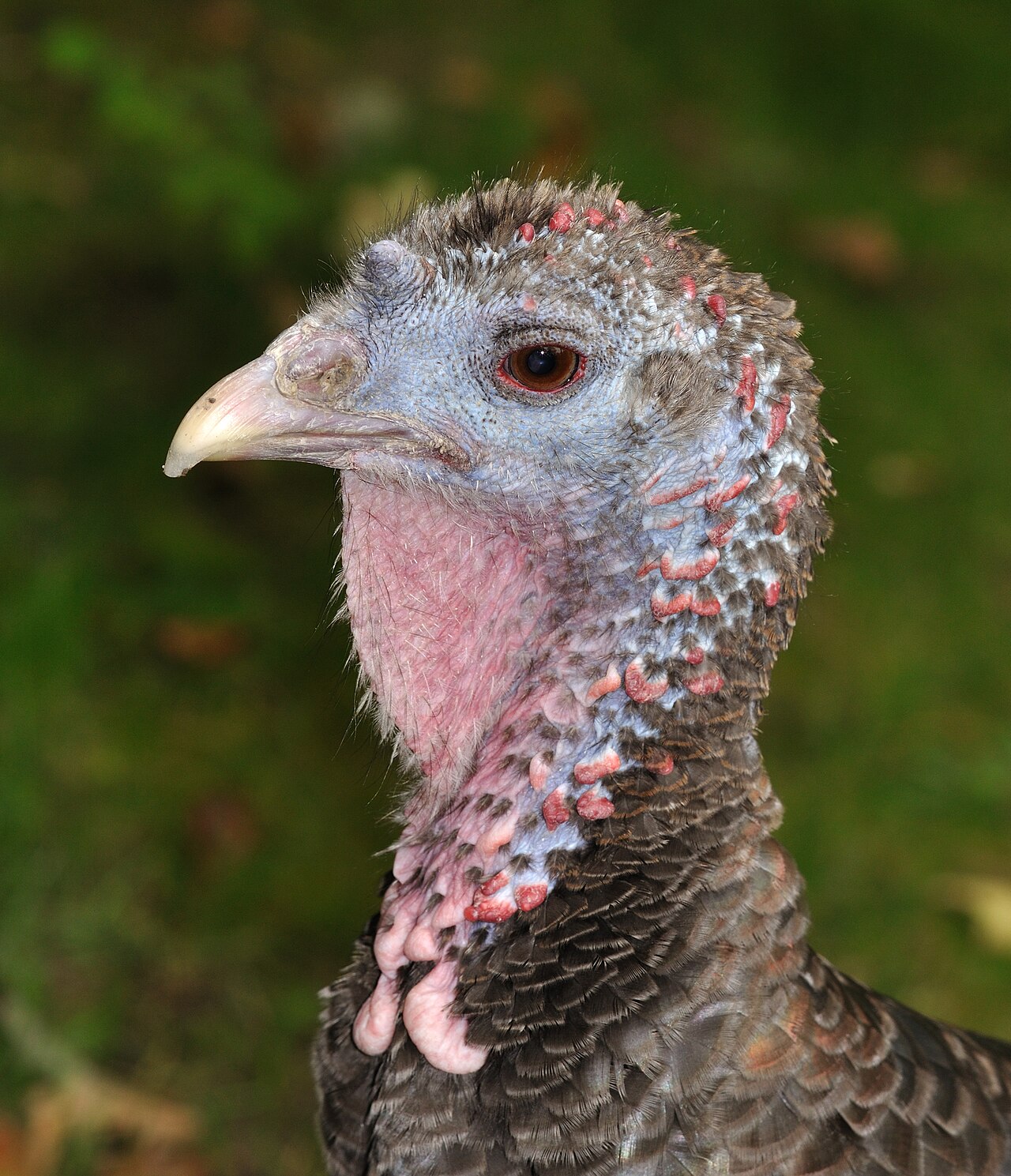
Turkey Sounds: Gobbles, Clucks, and Purrs Explained
Turkey sounds revolve around one superstar, the gobble, but wild turkeys actually use a vocabulary of more than 20 calls, and the quiet ones run the flock. The gobble is the tom’s spring advertisement, audible up to a mile. The real daily language belongs mostly to hens: yelps that assemble the flock, soft clucks that keep everyone in touch, contented purrs while feeding, and the sharp putt that freezes every turkey in earshot because it means danger, located, now. Hunters spend lifetimes learning this language; this guide gives you the working translation.
Below you will find what each turkey sound means, what a female turkey sounds like, why toms gobble at owls, crows, and thunder, the kee-kee whistle of lost young birds, the roost-time soundtrack of cackles and tree yelps, and the alarm putt that ends more hunts than bad camouflage ever did. By the end, a walk past a spring woodlot will sound like a conversation you can follow.
| Gobble | Tom’s breeding call, carries up to a mile |
| Yelp | The basic hen call, assembles and locates the flock |
| Cluck | Short contact note, “I am here, all is well” |
| Purr | Contentment while feeding; fighting purr means a brawl |
| Putt | Sharp alarm, danger spotted, flock scatters |
| Kee-kee | Whistle of young birds regrouping in fall |
The Gobble: The Sound That Defines Spring
The gobble is one of North America’s great wild sounds, a rolling, throaty explosion lasting about a second that a tom throws across the landscape to announce himself. Its purpose is double: pull hens toward him and warn rival males off. A strong gobble carries up to a mile in open, still air, and toms deliver it from the ground, from strut, and famously from the roost limb before dawn, where the sound rolls downhill through the dark timber like something prehistoric.
Gobbling runs on a hormonal calendar. It begins as days lengthen in late winter, peaks through the spring breeding season, roughly March to May depending on latitude, and shows a daily rhythm: hardest at first light on the roost, tapering through the morning, with a smaller evening bump. A dominant tom may gobble dozens or even hundreds of times on a peak morning, while subordinate males nearby stay nearly silent to avoid a beating, meaning the woods systematically underreport how many toms are actually present.
Only males gobble as a rule, and the ability arrives with adolescence: jakes, the teenage males, produce cracked, half-finished attempts that sound like a gobble with a voice break. According to the Cornell Lab of Ornithology (allaboutbirds.org), the gobble functions primarily as a long-distance breeding advertisement, which explains its most famous quirk: a fired-up tom will gobble reflexively at almost any loud noise, a phenomenon covered below that hunters exploit shamelessly. For the bird behind the voice, our wild turkey profile covers the rest of the animal.
Hen Sounds: Yelps, Clucks, and Purrs
Ask what a female turkey sounds like and the answer is: most of the language. The hen’s signature is the yelp, a clear, rhythmic “yawp yawp yawp” in series of three to eight notes, and it is the workhorse call of turkey society. Plain yelps assemble scattered birds, locate flock mates, and, in spring, tell distant toms a hen is present and interested. Every turkey hunter’s first lesson is a passable hen yelp, because it is the sound a gobbler cannot ignore.
Around the yelp sits a cluster of everyday hen sounds. The cluck is a single short, sharp note, spaced casually, meaning roughly “here I am, all is well,” the flock’s idle chatter while feeding. The purr is softer still, a fluttering, rolling trill of pure contentment from birds feeding close together, turkey for a cat’s purr in both sound and mood. Strung together, cluck-and-purr is the soundtrack of a relaxed flock working through leaf litter, and it means every bird within earshot has its guard down.
Hens escalate too. Excited or insistent hens run yelps faster and sharper into cutting, a burst of quick, irritated clucks that in spring often means a fired-up hen challenging another hen or demanding a tom’s attention. An assembly yelp, longer and more urgent, is a mother hen recalling scattered poults after a scare. Volume-wise everything here is quieter than a gobble; hen talk is mostly meant for birds within a hundred yards, which is why standing quietly near a feeding flock reveals a conversation most people never knew turkeys were having.
The Full Turkey Vocabulary: Kee-Kees, Cackles, and Whines
Beyond the famous calls, turkey language fills out with specialist sounds. The kee-kee is a high, clear three-to-five-note whistle, “kee kee kee,” given mostly by young birds in fall, essentially the juvenile version of a yelp from a voice that has not matured. A kee-kee run adds rough yelps at the end as adolescents find their adult voice. Fall flocks broken up by predators or hunters reassemble to a chorus of kee-kees, each young bird whistling until it hears family.
The cackle is a loud, fast, irregular burst of 10 to 15 excited notes tied to one specific act: flying. Hens cackle coming off the roost at dawn, crossing creeks, or flying up to roost at dusk, and hunters read a cackle as a bird’s wings in motion. The tree yelp is the roost’s other bookend, a soft, muffled, sleepy series of quiet yelps a still-roosted hen gives at first gray light, the turkey equivalent of talking before getting out of bed.
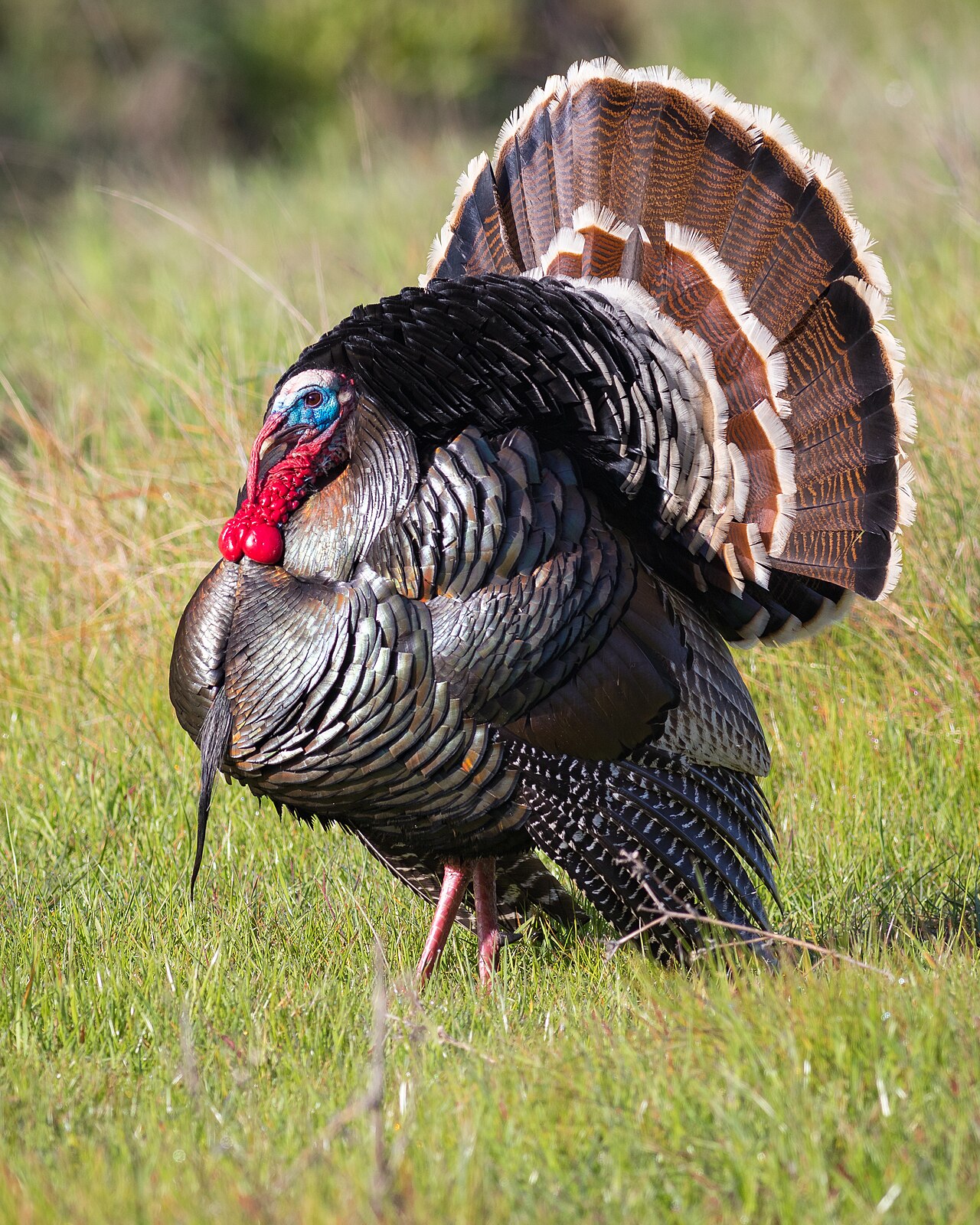
Two more round out the set. The whine is a thin, drawn-out complaint woven between clucks and purrs in close flocks, subtle enough that most people never notice it. Spitting and drumming is the strangest: a strutting tom produces a sharp “pfft” spit followed by a deep, resonant “dooommm” hum generated in his body, felt almost more than heard, audible only within about 75 yards. A drumming tom is a tom in full display; many hunters have had one strut invisible behind brush, betrayed only by that low pulse in the air.
Turkey Mating Calls and the Spring Soundtrack
Spring turkey courtship is a duet with strict roles. The tom broadcasts: gobbling from the roost in darkness, gobbling on the ground, then closing the distance in strut, tail fanned, wingtips dragging, spitting and drumming continuously. The hen answers with yelps and cutting that communicate location and interest, and in the natural order she then goes quiet and walks to him. That direction of travel, hen to tom, is the single most important fact in turkey hunting, because calling reverses it, asking the tom to do the unnatural thing and come find the voice.
A real spring morning layers all of it. Tree yelps start in the gray dark, then roost gobbles hammer back, hens fly down cackling, the tom pitches down and gobbles on the ground, and the flock’s yelps, cuts, and gobbles converge until the group assembles, after which the woods go strangely quiet: a tom with hens beside him has no reason to shout. That mid-morning silence is not absence, and the gobbling often reignites around 9 or 10 a.m. when the first hens slip away to their nests and leave him lonely.
The hen’s own “mating call” barely exists as a separate sound; her standard yelps and cutting carry the message, intensified rather than replaced. What people describe as a hen’s mating call is usually excited cutting near a strutting tom. Late in the season the roles bend further: hens sit nests, toms gobble longer into the morning for a shrinking audience, and jakes grow bold, cracking their broken gobbles at anything. By June the great spring soundtrack fades to clucks, purrs, and the first thin peeps of new poults in the grass.
Alarm Putts: The Sound That Ends Everything
The putt is the turkey’s danger word, and it is unmistakable once heard: a single sharp, hard “putt!” or a fast urgent series, “putt-putt-putt,” cutting through whatever the flock was doing. It means a threat has been seen and located. Every turkey in earshot snaps upright, necks periscoping, and within seconds the flock is walking briskly or flying out. Hunters speak of the putt with genuine grief, because one putt from one suspicious hen ends a morning three hours in the making.
What separates the putt from a cluck confuses beginners, since both are single short notes. The difference is edge and posture: a cluck is soft, rounded, and casual from a relaxed, feeding bird; a putt is loud, clipped, and percussive from a bird standing tall and frozen, staring at something. Context settles it instantly, because a putt is never followed by more feeding. One putt is suspicion; rapid stacked putts with wing noise mean the decision is made and the flock is leaving.
The putt showcases how turkey survival works: many eyes, instant broadcast, no debate. A flock feeding heads-down still has sentries scanning, and studies of flock vigilance show alarm information moves through a turkey flock faster than the predator can close. The system’s hair trigger explains suburban homeowners’ favorite complaint, a yard flock putting and scattering over a garden hose or a plastic bag. To a turkey, false alarms are free and hesitation is fatal, the exact opposite of the bluff-heavy alarm economy of blue jays, who scream wolf for sport.
Shock Gobbles: Why Owls and Crows Set Toms Off
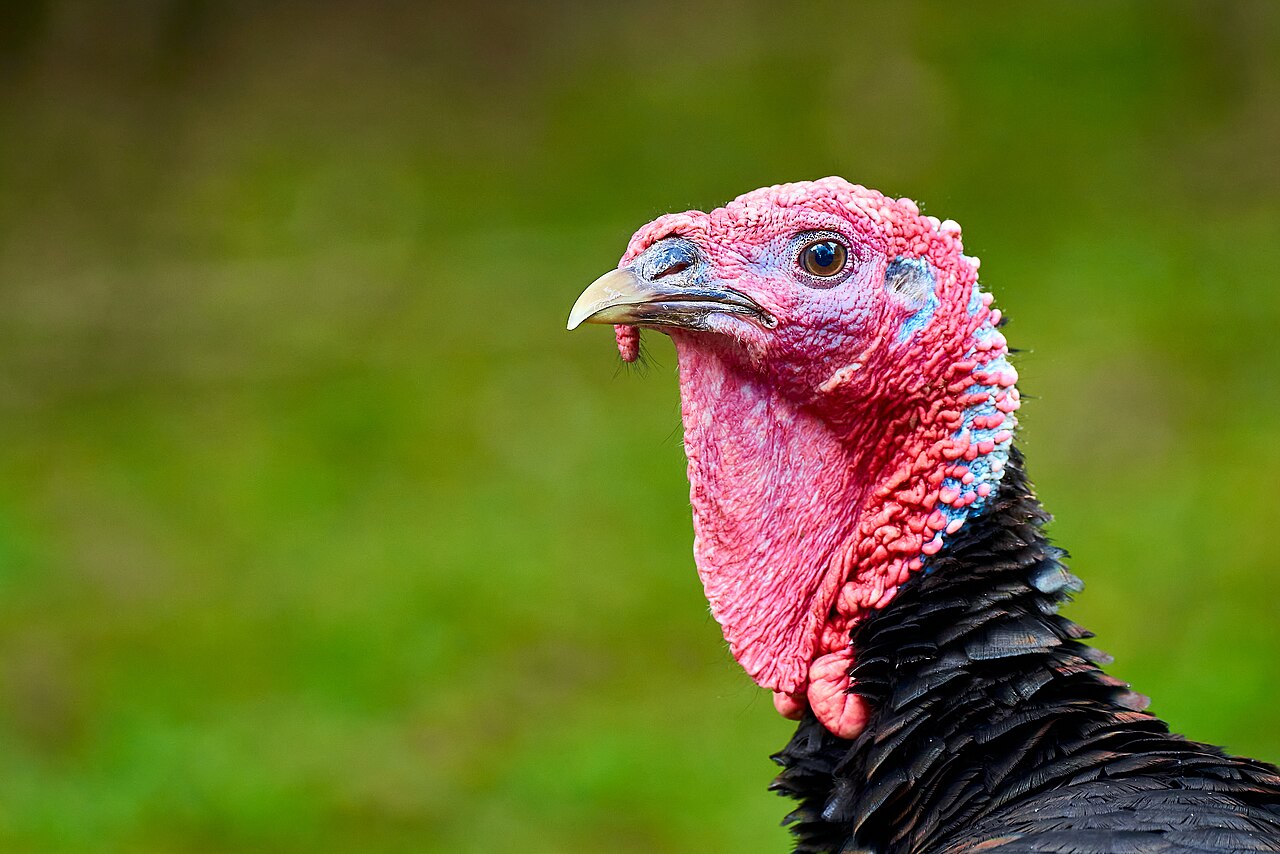
A fired-up spring tom gobbles at things that have nothing to do with turkeys: owl hoots, crow calls, thunder, coyote howls, slamming truck doors, train horns, woodpecker drumming. The reflex is called the shock gobble, an involuntary response in a hormone-loaded male whose gobble trigger is set so light that any sudden loud sound trips it. It is the acoustic equivalent of a knee-jerk reflex, and toms often gobble at a noise before it has even finished.
Hunters build a whole tactic on it. “Locator calls,” most classically an owl hooter imitating a barred owl and a loud crow call, let a hunter walk timber at dawn or midday, throw a sound, and shock-gobble a silent tom into revealing his position without ever suggesting a hen is present. The owl hooter owns the dawn shift, because barred owls naturally call then and roosted toms answer; the crow call runs the day shift. It works because the tom cannot help himself, and it fails the moment breeding urgency fades.
The deeper reason a barred owl’s baritone hooting or a crow’s raucous cawing works so well is acoustic: both are loud, abrupt, and pitched to carry through timber, exactly the profile that trips the reflex. Biologists read shock gobbling as a byproduct of a breeding system that rewards the loudest, most responsive advertiser; a tom primed to out-gobble rivals instantly cannot afford a slow trigger. For everyone else, it is simply one of spring’s best free shows: hoot convincingly at a dark ridge in April and the ridge may answer.
Turkey Sounds for Hunters: Reading and Using the Language
Turkey hunting is applied linguistics. The working sequence is locate, set up, and converse: shock-gobble a tom with a locator, close to inside 150 yards, then speak hen. Soft tree yelps before flydown, then plain yelps and clucks after, is the standard opening, saying an unbothered hen is nearby. Cutting adds excitement when a tom hangs up out of range. The universal beginner mistakes are calling too loud, too often, and too fast; real hens mostly murmur, and silence after contact is often the strongest call of all.
Reading beats speaking. Gobbling that answers you but never gets closer usually means a tom with hens, hunters call him henned-up, and the counter is calling to the boss hen instead, mirroring her own yelps back until irritation drags her, flock in tow, to the fake rival. Fall hunting flips the script entirely: scatter a flock, sit down at the break site, and kee-kee like a lost young bird while the family reassembles. Every tactic is the same trick at heart, saying one true sentence in turkey at the right moment.
Roost Sounds: The Dawn and Dusk Soundtrack
Turkeys sleep in trees, and the roost frames their whole acoustic day. Evenings begin with fly-up: birds cackling as they wing into the roost grove around sunset, followed by a few minutes of wing-flapping, branch-shifting, and soft settling clucks as the flock arranges itself. A roost grove at dusk sounds like a small, disorderly airport closing down, and finding one by ear in the evening is how hunters “put birds to bed” for the next morning.
Dawn runs the tape backward with additions. First light brings tree yelps, the soft, muffled waking murmurs of hens still on the limb, then roost gobbles from any tom in the neighborhood, delivered while still standing on his branch. Fly-down follows within half an hour of good light: cackles, heavy wingbeats, and the thump of big birds hitting the ground, after which the flock’s chatter shifts to ground-level assembly yelps and feeding clucks as the day’s first foraging line forms.
Night itself is nearly silent, which matters for backyard diagnosis. A turkey roosted safely in a tree makes essentially no sound between full dark and first gray light, so mystery gobbles or yelps at midnight are not turkeys; screech-owls, barred owls, and foxes take those hours. The exception proves the rule: a nighttime predator climbing the roost tree triggers explosive putts, wingbeats, and crash-landings in the dark, an unmistakable emergency evacuation. If the racket resembles a flock relocating at 2 a.m., something with claws found the bedroom.
Frequently Asked Questions
What sound does a female turkey make?
Hens yelp, a rhythmic series of clear notes, plus clucks for contact, purrs for contentment, cutting when excited, and cackles when flying. Hens do not gobble except in rare hormonal oddities; the everyday flock chatter you hear is mostly hen talk.
Why do turkeys gobble?
The gobble is the tom’s breeding advertisement, attracting hens and warning rival males across up to a mile. It peaks at dawn during the spring season and doubles as an involuntary reflex to sudden loud noises.
What does it mean when a turkey purrs?
A soft rolling purr means contentment, typically from birds feeding calmly close together. A loud, aggressive fighting purr between two toms is the opposite: a dominance dispute about to become a brawl.
What is a kee-kee call?
A high three-to-five-note whistle from young turkeys, mainly in fall, used to reassemble a scattered flock. It is the juvenile version of the yelp, often ending in rough yelp notes as the bird’s voice matures.
Do turkeys make noise at night?
Almost none. Roosted turkeys stay silent from dark to first light, so nighttime gobbles or yelps are usually owls or foxes. Loud crashing and putting from a roost at night signals a predator raiding the tree.
What does a turkey putt mean?
Danger, seen and located. A putt is a sharp, clipped alarm note from an alert, frozen bird, and rapid putts mean the flock is leaving now. It differs from the soft, casual cluck of a relaxed turkey.
How far away can you hear a turkey gobble?
Up to about a mile in calm, open conditions, and commonly a half mile in timber. Terrain, wind, and foliage cut the range, while the deep spit-and-drum of a strutting tom carries only about 75 yards.