Wild Turkey: Identification, Behavior, and Habitat Guide
The wild turkey (Meleagris gallopavo) is North America’s largest game bird, recognizable by its iridescent bronze and green body feathers, featherless red and blue head, and the male’s dramatic fan-shaped tail display. Wild turkeys are strong runners and surprisingly capable fliers over short distances, roosting in trees at night to avoid ground predators. Once nearly eliminated from much of their historic range by overhunting and habitat loss, wild turkey populations have rebounded dramatically through conservation efforts and now thrive in forests, farmland, and even suburban edges across most of the continental United States, a recovery story often cited as one of the great wildlife management successes of the 20th century.
| Quick Reference | Detail |
|---|---|
| Length | Male: 43 to 45 inches; Female: 30 to 37 inches |
| Weight | Male: 16 to 24 lbs; Female: 8 to 12 lbs |
| Top ground speed | Up to 25 mph |
| Flight speed | Up to 55 mph over short distances |
| Diet | Seeds, nuts, berries, insects, small reptiles |
| Lifespan | 3 to 5 years in the wild |
| Habitat | Deciduous and mixed forests with open clearings |
Male vs Female Wild Turkey Identification
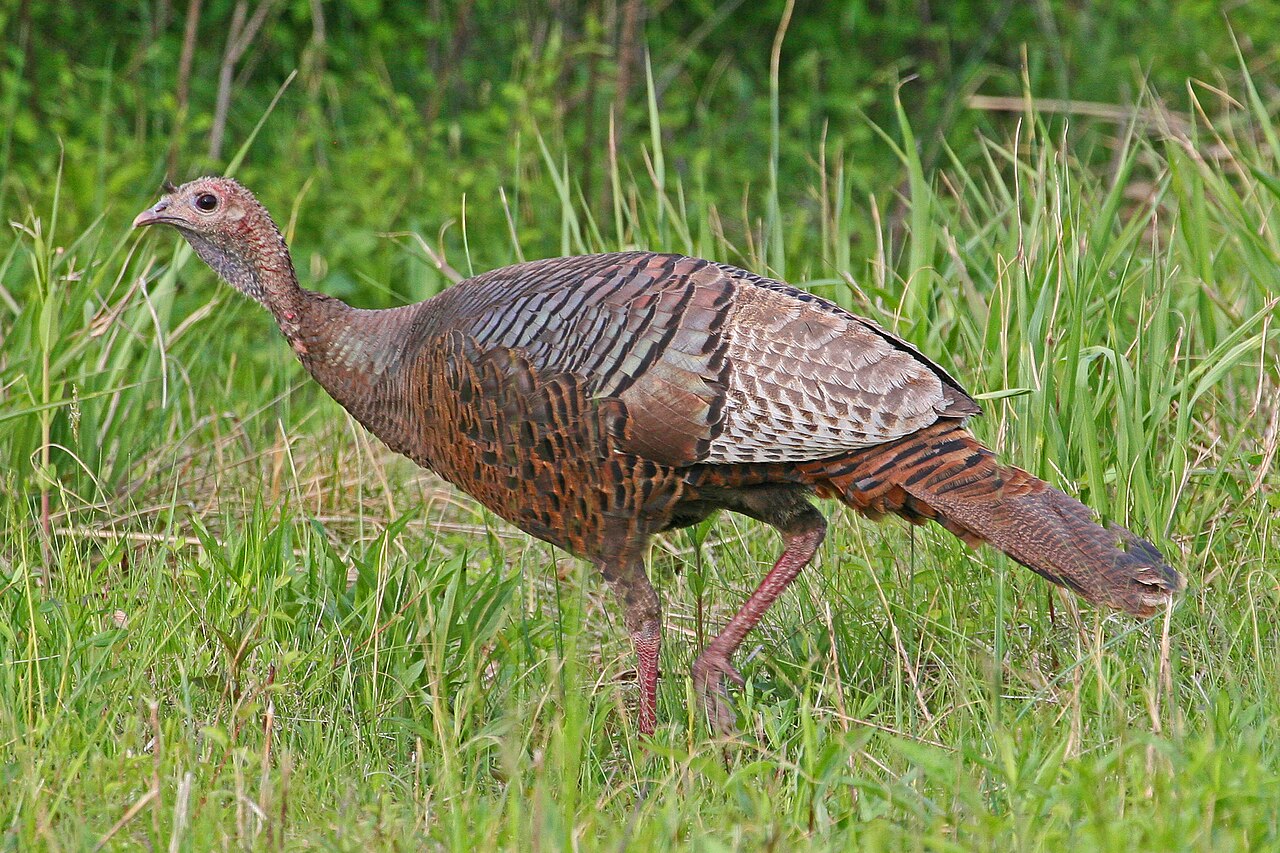
Male wild turkeys, called toms or gobblers, are considerably larger than females and display iridescent bronze, copper, and green body feathers that shimmer in sunlight, along with a featherless head that changes color between red, blue, and white depending on mood. Toms also grow a “beard,” a cluster of coarse, hair-like feathers hanging from the chest, and sharp spurs on the back of their legs used in fights with rival males. Female turkeys, called hens, are noticeably smaller, duller in color with more brown and gray tones for camouflage while nesting, and typically lack a visible beard, though a small percentage of hens do grow one. This dramatic size and color difference between sexes is far more pronounced than in most other North American game birds, including species like the red-winged blackbird, where males and females differ mainly in color and pattern rather than overall body size.
The Tail Fan Display
The iconic image of a wild turkey with its tail spread into a full, rounded fan is almost always a male performing a courtship or dominance display, called strutting. During this display, the tom also puffs out his body feathers, drags his wingtips on the ground, and produces the classic gobble call to attract hens and warn off rival males. Hens can occasionally fan their tails as well, but the display is far less dramatic and much less frequently observed than the male version. Strutting displays intensify sharply in early spring, when multiple toms often compete within sight of one another at a shared display ground, with dominance established through a mix of visual posturing, gobbling contests, and occasional physical fights using their leg spurs as weapons.
Diet and Foraging Behavior
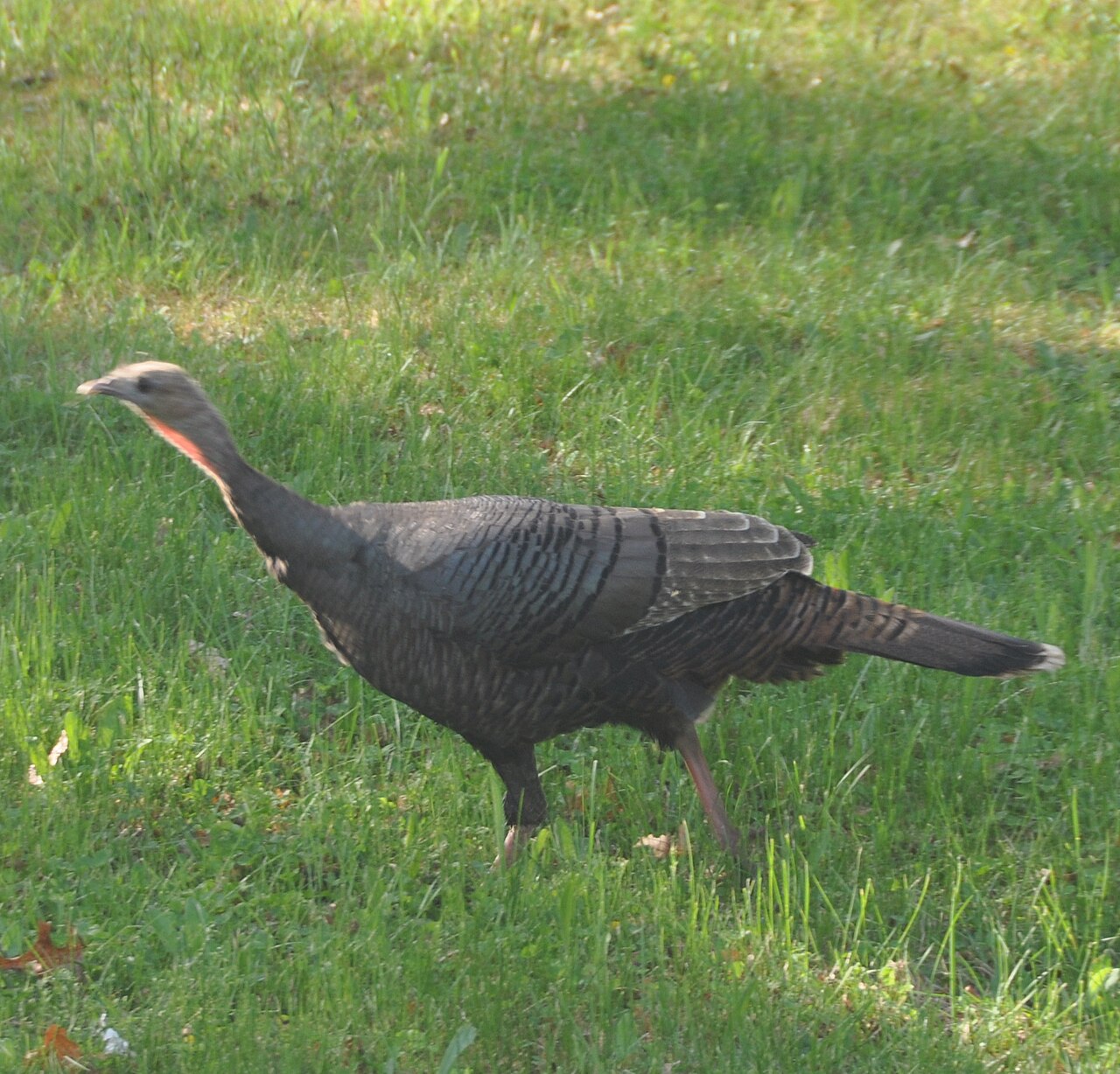
Wild turkeys are opportunistic omnivores, feeding on acorns, seeds, berries, and agricultural grains, along with insects, snails, and occasionally small reptiles or amphibians. They forage by scratching through leaf litter with their strong feet, a behavior that also helps them locate food buried under snow in winter, similar to the ground-scratching foraging style used by common grackles searching for insects in lawns. Acorns are a particularly important food source in fall, and turkey populations often shift their range seasonally to follow abundant mast crops in oak forests.
Can Wild Turkeys Actually Fly?
Yes, despite their bulky appearance, wild turkeys are capable fliers over short distances, reaching speeds up to 55 mph in brief bursts, primarily used to escape predators or reach roosting trees at dusk. Unlike domesticated turkeys, which have been bred for size and cannot fly at all, wild turkeys roost in trees every night as a primary defense against ground predators like coyotes and bobcats. Their flight is powerful but not sustained, more like an explosive escape maneuver than long-distance travel, quite different from the sustained soaring flight of large raptors such as bald eagles that share some of the same forest habitat.
The Gobble Call and Other Vocalizations
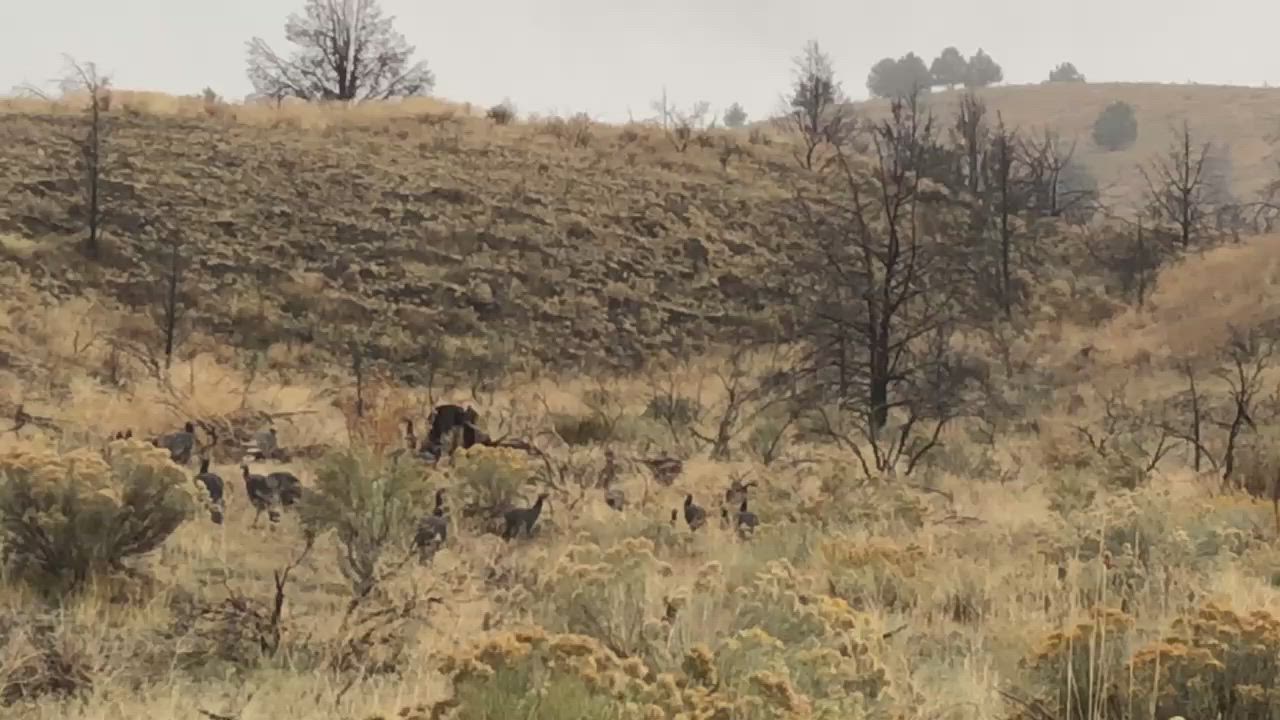
The gobble, a loud, rolling call produced almost exclusively by males, is used to attract hens and announce territory during spring breeding season, and can carry up to a mile on a calm morning under the right wind and humidity conditions. Hens communicate primarily through a series of clucks, yelps, and purrs used to keep poults (young turkeys) together and coordinate flock movement. Both sexes also produce alarm putts, a sharp single note used to warn the flock of nearby danger, and experienced turkey hunters and wildlife observers alike learn to distinguish these calls by ear well before they ever see the bird making them.
Habitat and Range
Wild turkeys favor mature deciduous and mixed forests with open clearings nearby for foraging and displaying, though they have adapted well to farmland edges, suburban parks, and golf courses in many parts of the country. Populations were reduced to an estimated 200,000 birds nationwide by the early 1900s due to habitat loss and unregulated hunting, but reintroduction programs led by state wildlife agencies have restored the population to several million birds across all 49 continental US states today, a species recovery that ranks among the most successful wildlife conservation stories in American history.
Nesting and Family Life
Hens build a shallow ground nest hidden in dense vegetation and lay a clutch of 10 to 14 eggs, incubating them alone for about 28 days without any help from the male. Poults are precocial, able to walk and feed themselves within hours of hatching, but remain vulnerable to predators and stay close to the hen for the first several weeks. Multiple hens and their broods often merge into larger “brood flocks” later in the season, providing more eyes for predator detection as the young turkeys grow, a strategy also used by nesting Canada geese once goslings hatch.
A Conservation Success Story
According to Audubon, the wild turkey’s recovery from near-elimination in much of its historic range stands out as one of the most dramatic conservation turnarounds among North American game birds, achieved largely through trap-and-transfer programs that relocated wild-caught birds into suitable habitat rather than relying on captive-bred stock, which had repeatedly failed in earlier restoration attempts. This approach worked far better than the pen-raised release programs used through the mid-20th century, since wild-caught turkeys already possessed the instincts and wariness needed to survive and reproduce successfully once released, unlike birds raised in captivity that had never learned to evade predators.
Wild Turkeys vs Domestic Turkeys
Domestic turkeys raised for meat production have been selectively bred for such large breast size that they can no longer fly, mate naturally, or even walk normally in extreme cases, a stark contrast to the athletic, wary wild turkey capable of running 25 mph and flying up to 55 mph. Wild turkeys also retain far more varied plumage and iridescence, while commercial domestic turkeys are almost always solid white, a color bred specifically to avoid dark pinfeather stubs showing on processed meat. Understanding this difference matters for anyone comparing wild turkey behavior to the turkeys most people are familiar with from farms or holiday meals, since the two are the same species but behave completely differently due to selective breeding, much as the relationship between the wild mallard and heavily domesticated duck breeds follows a similar pattern.
Frequently Asked Questions
How do you tell a male and female wild turkey apart?
Males are much larger with iridescent bronze and green feathers, a featherless colorful head, and a chest beard, while females are smaller, duller brown and gray, and typically lack a visible beard.
Can wild turkeys fly?
Yes, wild turkeys can fly short distances at speeds up to 55 mph, mainly to escape predators or reach roosting trees, though they are not built for sustained long-distance flight the way migratory waterfowl are.
What do wild turkeys eat?
Wild turkeys eat acorns, seeds, berries, agricultural grains, insects, and occasionally small reptiles or amphibians, foraging by scratching through leaf litter.
Why do male turkeys fan their tails?
Male turkeys fan their tails during a courtship and dominance display called strutting, used to attract hens and intimidate rival males, especially during spring breeding season.
How fast can a wild turkey run?
Wild turkeys can run on the ground at speeds up to 25 mph, making them surprisingly fast despite their bulky build.
Where do wild turkeys sleep at night?
Wild turkeys roost in trees at night, flying up to branches at dusk as protection from ground predators like coyotes and bobcats, often choosing the same roost trees repeatedly across a season.
How many eggs do wild turkeys lay?
A hen typically lays 10 to 14 eggs per clutch in a shallow ground nest and incubates them alone for about 28 days.