Owl Identification by Size: A Guide to North American Owls
Owl identification becomes far easier once you start with size, because a bird’s overall length and bulk quickly narrow the possibilities before you even look at finer details. North American owls range from tiny species barely bigger than a sparrow to giants with a five-foot wingspan, and sorting a mystery owl into a rough size class is the fastest first step to naming it. This guide ranks the common owls from smallest to largest, with lengths and wingspans, then explains the other clues, ear tufts, eye color, face shape, habitat, and voice, that clinch each identification. Used together, size and these features let you identify almost any owl you encounter.
| Owl | Length | Wingspan |
|---|---|---|
| Northern Saw-whet Owl | 7 to 8.5 in | 17 to 22 in |
| Screech-owls | 6 to 10 in | 18 to 24 in |
| Burrowing Owl | 7.5 to 11 in | 21 to 24 in |
| Northern Hawk Owl | 14 to 18 in | 27 to 35 in |
| Long-eared / Short-eared Owl | 13 to 17 in | 33 to 40 in |
| Barn Owl | 13 to 16 in | 39 to 49 in |
| Barred / Spotted Owl | 16 to 25 in | 39 to 49 in |
| Great Horned Owl | 18 to 25 in | 40 to 57 in |
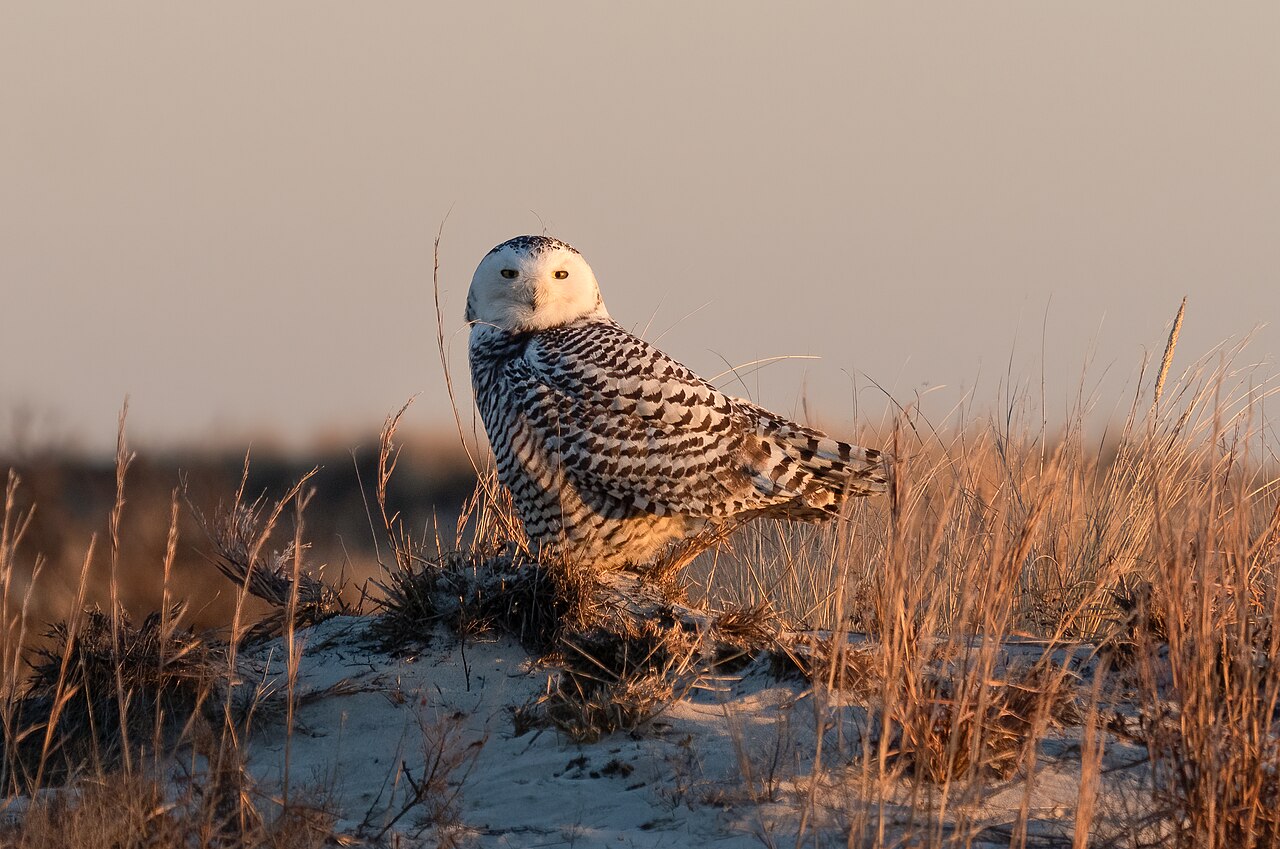
| Snowy Owl | 20 to 28 in | 49 to 57 in |
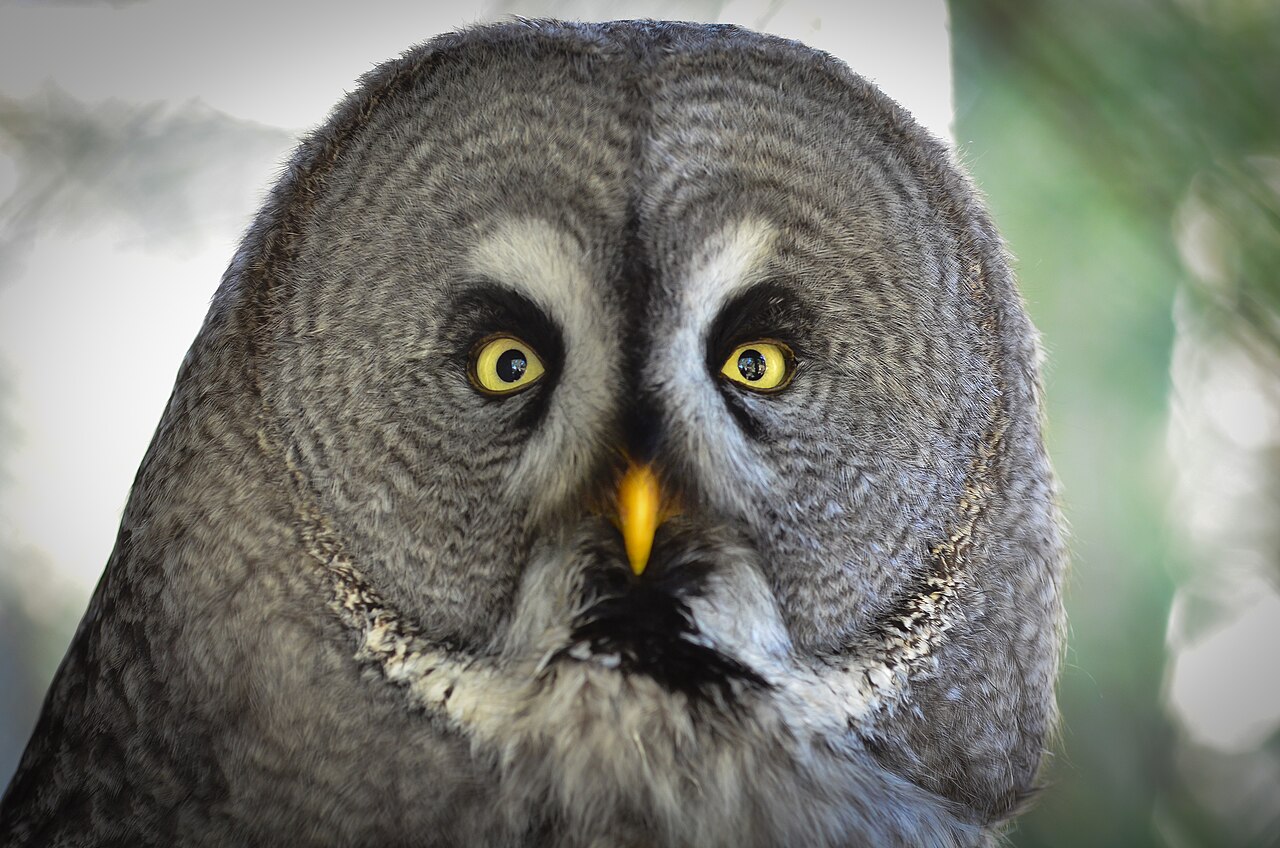
| Great Gray Owl | 24 to 33 in | 54 to 60 in |
Why size is the best starting point
Size is the most useful first filter in owl identification because it is obvious at a glance and instantly rules out large groups of species. An owl the size of a soda can cannot be a Great Horned Owl, and a bird with a five-foot wingspan cannot be a screech-owl. Even a rough impression, tiny, medium, or large, cuts the list of candidates dramatically before you start weighing subtler marks like plumage pattern or eye color.
Of course, judging size on a lone perched owl can be tricky without something for scale, so it helps to note the perch, nearby birds, or the owl’s proportions. Length and wingspan figures, like those in the table above, give a framework, but in the field the practical categories of small, medium, and large owls are usually enough to point you toward the right group. The sections below work through those groups from smallest to largest.
Tiny owls: saw-whet, screech, and kin
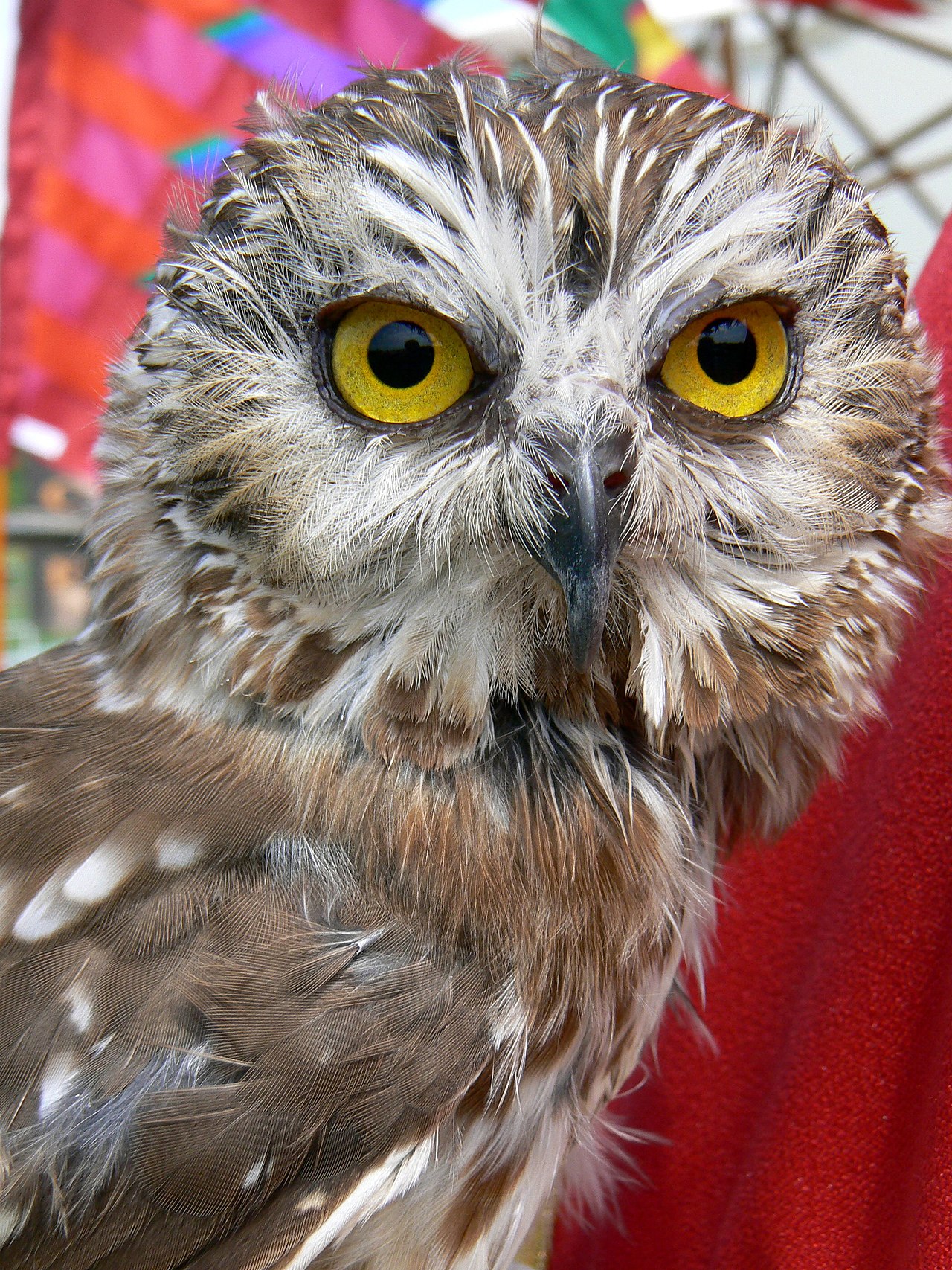
The smallest North American owls are true pocket-sized predators. The Northern Saw-whet Owl is among the tiniest, only seven to eight inches tall, with a round tuftless head, a white V on its face, and an endearingly cat-like look. The Eastern Screech-Owl and Western Screech-Owl are similarly small but have short ear tufts and come in gray or reddish forms, superbly camouflaged against bark.
Also in the small class is the Burrowing Owl, unmistakable for its long legs and ground-dwelling, daytime habits rather than its size alone. If an owl is roughly robin-sized or smaller, you are almost certainly looking at one of these, and the presence or absence of ear tufts, plus habitat, quickly separates them. Voice helps too, as detailed in our guide to owl calls by species.
Medium owls: hawk owl, eared owls, and barn owl
The medium-sized owls span a varied group. The Northern Hawk Owl has a hawk-like long tail and pointed wings and perches conspicuously by day. The Long-eared Owl and Short-eared Owl are slim, medium owls of woodland edges and open grassland respectively, told apart by their ear tufts and faces: the Long-eared has tall tufts and an orange face, the Short-eared has tiny tufts and a pale face.
The Barn Owl is also medium-bodied but appears larger in flight on its long wings, and its white, heart-shaped face makes it impossible to confuse with any other owl. In this size class, face shape, ear tufts, and behavior, day-active and hawk-like, or floppy and moth-like over fields, do most of the identification work once size has placed the bird in the medium group.
Large and giant owls: barred, spotted, great horned, snowy, and great gray
The large owls are the ones most people picture. The Barred Owl and its western relative the Spotted Owl are big, round-headed, dark-eyed owls without ear tufts, separated by pattern: bars and streaks on the Barred, white spots on the Spotted. The Great Horned Owl is bulkier still, with prominent ear tufts and yellow eyes, and is the heaviest widespread owl on the continent.
The two largest by different measures are the Snowy Owl, the heaviest North American owl, unmistakable in white, and the Great Gray Owl, the tallest, with a huge round gray face and small yellow eyes though much of its size is fluffy feather. If an owl looks big and bulky, these are the candidates, and eye color, ear tufts, plumage color, and range sort them out. Browse the whole group in our guide to owl types.
Beyond size: the other ID clues
Once size has placed an owl in a group, a handful of features finish the job. Ear tufts are the first: the Great Horned, screech-owls, and Long-eared Owl have them, while the Barred, Spotted, Barn, Snowy, Great Gray, saw-whet, and Burrowing Owls do not. Eye color is next: most owls have yellow eyes, but the Barred and Spotted Owls have dark brown eyes, and the Barn Owl’s eyes are dark within a white face.
Face shape and pattern add more: the Barn Owl’s heart-shaped disk, the Great Gray Owl’s concentric gray rings, the screech-owl’s bark-like camouflage. Finally, habitat and behavior are powerful clues, an owl hunting by day over a marsh, standing at a burrow, or perched atop a spruce tells you a great deal, as does its voice. Combining size with these features, and with the sounds in our owl calls guide, makes confident owl identification achievable for anyone. The Cornell Lab of Ornithology and Audubon are authoritative references for owl identification.
Common owl identification mistakes to avoid
A few recurring mistakes trip up people identifying owls. The biggest is assuming every hoot is an owl, when a Mourning Dove’s soft cooing is a frequent impostor, especially by day. Another is treating ear tufts as ears; the tufts on a Great Horned Owl or Long-eared Owl are just display feathers, and their presence or absence is a plumage clue, not a sign of hearing. A third is judging size from a lone perched bird without anything for scale, which can make a small owl look large or a large owl look modest.
Range and season also prevent errors. A Snowy Owl in a southern field is a winter irruption, not a summer resident, and a Western Screech-Owl in the East would be extraordinary. Checking which owls actually occur in your area and at that time of year, using regional guides and the sounds in our owl calls guide, rules out unlikely candidates and keeps identifications grounded. Combining size, features, range, and voice is the reliable path to a confident ID.
Related reading: White Owls Identification.
Frequently Asked Questions
How do you identify an owl by size?
Start by placing the owl in a rough size class, tiny, medium, or large, which instantly rules out many species. Then use ear tufts, eye color, face shape, habitat, and voice to pin down the exact owl.
What is the smallest owl in North America?
Among the smallest widespread owls are the Northern Saw-whet Owl and the screech-owls, all roughly seven to ten inches tall. The Elf Owl of the Southwest is even tinier, the smallest owl in the world.
What is the largest owl in North America?
By length the Great Gray Owl is the tallest at up to 33 inches, but much of that is fluffy feather. By weight the Snowy Owl is the heaviest, and the Great Horned Owl is the heaviest widespread species.
Which owls have ear tufts?
The Great Horned Owl, the Eastern and Western Screech-Owls, and the Long-eared Owl have prominent ear tufts. The Barred, Spotted, Barn, Snowy, Great Gray, saw-whet, and Burrowing Owls lack them.
How do I tell owls apart by eye color?
Most North American owls have yellow eyes, but the Barred Owl and Spotted Owl have dark brown eyes, and the Barn Owl has dark eyes set in a white heart-shaped face. Eye color is a quick clue.
Can I identify an owl without seeing its size clearly?
Yes. Use the perch and surroundings for scale, then rely on other features, ear tufts, eye color, face shape, habitat, and especially voice, which often identifies an owl even when it stays hidden.
How do you tell a Barred Owl from a Great Horned Owl?
The Great Horned Owl is bulkier with prominent ear tufts and yellow eyes, while the Barred Owl has a smooth round head, no tufts, and dark brown eyes. Size and the head shape make the difference clear.
What features besides size help identify owls?
Ear tufts, eye color, face shape and pattern, plumage color, habitat, time of activity, and voice. Combining size with two or three of these features is usually enough to identify any North American owl.