Burrowing Owl: Identification, Facts, and Habits
The Burrowing Owl is a small, long-legged owl that breaks almost every owl stereotype: it lives underground in burrows, is often active in broad daylight, and stands on the open ground on comically long legs rather than perching high in trees. Sandy brown, spotted, and no bigger than a robin, it inhabits open grasslands, prairies, and deserts of the Americas, where it nests in the abandoned burrows of prairie dogs and ground squirrels or digs its own. Charismatic and easy to watch, it is also a species of growing conservation concern. This guide covers how to identify a Burrowing Owl, its remarkable underground and daytime lifestyle, diet, calls, nesting, and the threats it faces.
| Feature | Detail |
|---|---|
| Scientific name | Athene cunicularia |
| Length | 7.5 to 11 in (19 to 28 cm) |
| Wingspan | 21 to 24 in (53 to 61 cm) |
| Weight | 5 to 8.5 oz (147 to 240 g) |
| Habitat | Open grassland, prairie, desert |
| Diet | Insects and small mammals |
| Conservation | Declining; concern in many regions |
How to identify a Burrowing Owl
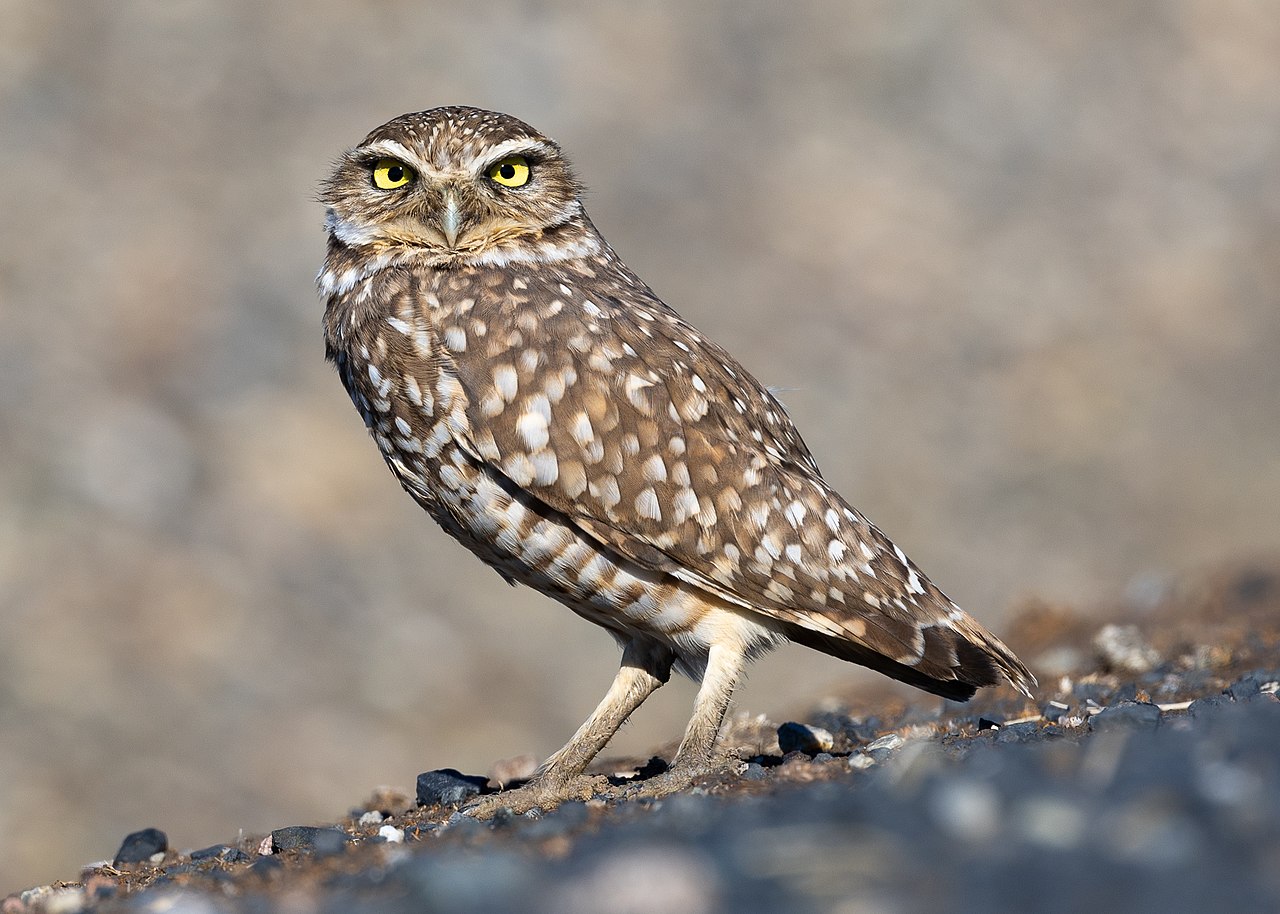
The Burrowing Owl is a small, rounded owl distinguished above all by its long legs, which give it a leggy, upright stance unlike any other North American owl. It is sandy brown above with white spotting and barred underparts, has a flat-topped head with no ear tufts, bright yellow eyes, and a prominent white chin stripe. When alert or curious it bobs and bows at the entrance to its burrow, a behavior that makes it especially endearing to watch.
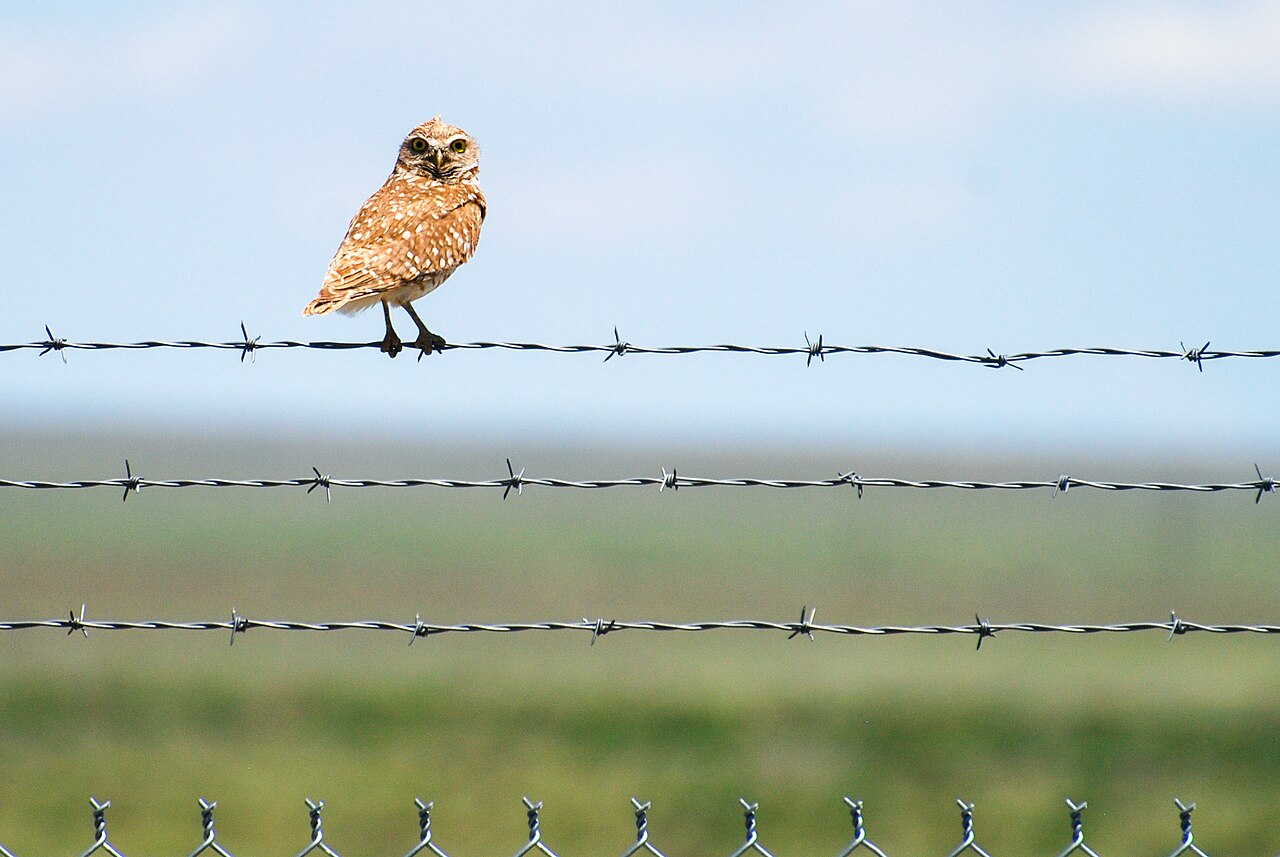
Its ground-dwelling, daytime habits are the biggest clue: a small owl standing on open ground or a fence post in daylight, near a burrow, is almost always this species. Its long legs alone separate it from every other small owl, such as the tree-roosting screech-owls. Juveniles are buffier and less spotted below. Place it among relatives in our owl types guide.
An owl that lives underground
The Burrowing Owl’s most famous trait is right in its name: it lives and nests in underground burrows. Across most of its range it relies on burrows dug by prairie dogs, ground squirrels, badgers, or tortoises, though in places like Florida it readily digs its own tunnels in sandy soil. This underground home shelters the owls and their young from the harsh sun, cold, wind, and predators of the open plains where few other refuges exist.
This dependence on burrowing mammals ties the owl’s fate to theirs. Where prairie dog colonies have been eliminated, Burrowing Owls often vanish too, because the ready-made burrows disappear. The owls frequently nest in loose colonies, and a landscape dotted with active burrows, sentinel owls standing guard at the entrances, is one of the classic images of a healthy western grassland.
What Burrowing Owls eat
The Burrowing Owl has a mixed diet that shifts with the seasons. Large insects, especially beetles and grasshoppers, make up much of its warm-season food, while small mammals such as mice and voles become more important in cooler months, and it also takes small birds, reptiles, and amphibians. Uniquely among owls, it hunts around the clock, catching insects by day and small mammals more often at dusk and night.
Burrowing Owls are clever foragers. They catch insects on the ground and in short flights, hover to spot prey, and even cache surplus food in their burrows. In one remarkable behavior, they gather mammal dung and scatter it around the burrow entrance, which attracts dung beetles that the owls then eat, a rare example of a bird using bait. This resourceful, insect-heavy diet sets it apart from the rodent-focused owls in our guide to what owls eat.
Sounds, behavior, and a clever defense
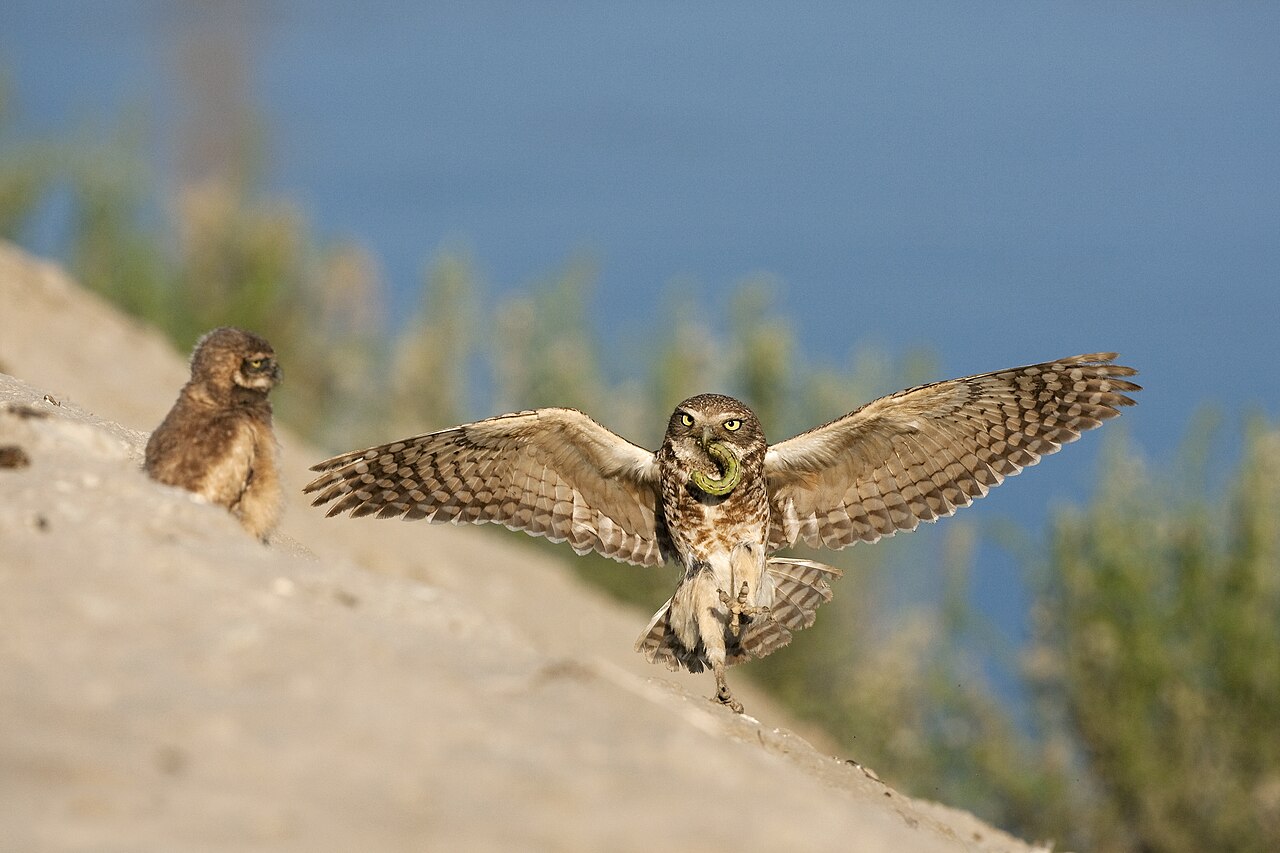
Burrowing Owls are quite vocal, giving a soft, two-note coo-coo song, chattering calls, and various chuckles and scolds. Their most famous sound, though, is a defensive one: when threatened in the burrow, young owls produce a rasping, hissing call that closely mimics the rattle of a rattlesnake, a startling bluff that can deter predators from reaching into the tunnel. It is one of the most striking examples of vocal mimicry among birds.
By day, Burrowing Owls are often seen standing sentinel at their burrow entrances, bobbing and turning their heads to watch for danger and prey. They are far more visible than typical owls, which makes them a favorite of grassland birdwatchers. This bold, daytime, ground-level lifestyle, combined with their expressive body language, gives them an outsized personality for such a small bird.
Nesting and conservation
Burrowing Owls nest underground, lining the nest chamber at the end of the burrow with grasses, feathers, and, characteristically, scattered dung. The female lays a fairly large clutch, often six to twelve eggs, and does most of the incubating while the male stands guard and hunts. The young emerge to stand at the burrow mouth well before they can fly, and broods of fuzzy owlets lined up at the entrance are a beloved sight in owl country.
The Burrowing Owl is declining across much of its range and is considered a species of concern, threatened, or endangered in various states and provinces. The main causes are the loss of grassland to agriculture and development and the widespread eradication of the prairie dogs and ground squirrels whose burrows it needs. Artificial burrows and protection of colonies are important conservation tools, and both Audubon and the Cornell Lab of Ornithology flag the Burrowing Owl as a grassland species in need of active protection. Like all owls, it features in owl symbolism and the meaning behind seeing an owl. Regional guides such as types of owls in Texas show which owls live near you.
Burrowing Owls in Florida versus the West
Burrowing Owls in North America fall into two well-known groups with slightly different lifestyles. Across the western plains and deserts, the owls depend heavily on burrows dug by prairie dogs, ground squirrels, and badgers, and where those mammals have been wiped out, the owls usually disappear with them. In Florida, a separate resident population lives in sandy soils and, unusually, digs its own burrows, and these owls have adapted to open, human-modified spaces like pastures, airports, vacant lots, and even suburban yards.
The Florida birds have become local celebrities in some towns, where residents mark and protect nesting burrows on lawns and playing fields. Both groups share the same charming habits, standing sentinel at the burrow, bobbing when curious, and hunting by day and night, but their differing reliance on other animals to provide homes shapes how each population must be conserved.
How to help Burrowing Owls
Because Burrowing Owls are declining across much of their range, they are a species where people can make a real difference. The single most important thing is protecting open grassland and the colonies of burrowing mammals the owls depend on, since eradicating prairie dogs and ground squirrels removes the ready-made homes the owls need. Where natural burrows are scarce, conservationists install artificial burrows, buried tubes with a nest chamber, that Burrowing Owls readily adopt.
On a personal level, giving nesting owls plenty of space, keeping cats and dogs away from colonies, and avoiding rodenticides all help. In areas with resident owls, supporting local protection programs that mark and safeguard burrows is one of the most effective ways to ensure these engaging little owls have a future. Like all owls, they carry rich symbolism and inspire the beliefs behind seeing an owl.
Frequently Asked Questions
Do Burrowing Owls really live underground?
Yes. Burrowing Owls live and nest in underground burrows, usually ones dug by prairie dogs, ground squirrels, or tortoises, though in sandy soil like Florida’s they dig their own tunnels.
Are Burrowing Owls active during the day?
Yes. Unlike most owls, Burrowing Owls hunt around the clock, catching insects by day and small mammals more often at dusk and night. They are frequently seen standing at their burrows in daylight.
How big is a Burrowing Owl?
It is small, 7.5 to 11 inches tall with a 21 to 24 inch wingspan, weighing 5 to 8.5 ounces, roughly robin-sized but with distinctively long legs.
What do Burrowing Owls eat?
A mix of large insects like beetles and grasshoppers plus small mammals, birds, reptiles, and amphibians. They even scatter dung near the burrow to attract dung beetles, which they then eat.
Why do Burrowing Owls sound like rattlesnakes?
When threatened in the burrow, young owls give a rasping call that mimics a rattlesnake’s rattle. This clever bluff can deter predators from reaching into the tunnel after them.
Where do Burrowing Owls live?
In open grasslands, prairies, and deserts of the Americas, including the western US and Florida. They depend on treeless country with burrows for nesting and open ground for hunting.
Are Burrowing Owls endangered?
They are declining and are listed as a species of concern, threatened, or endangered in various regions. Grassland loss and the eradication of burrowing mammals like prairie dogs are the main threats.
How many eggs do Burrowing Owls lay?
They lay a relatively large clutch, often six to twelve eggs. The young emerge to stand at the burrow entrance well before they can fly, a favorite sight among birdwatchers.