Black-Chinned Hummingbird: Identification, Range, and Behavior Guide
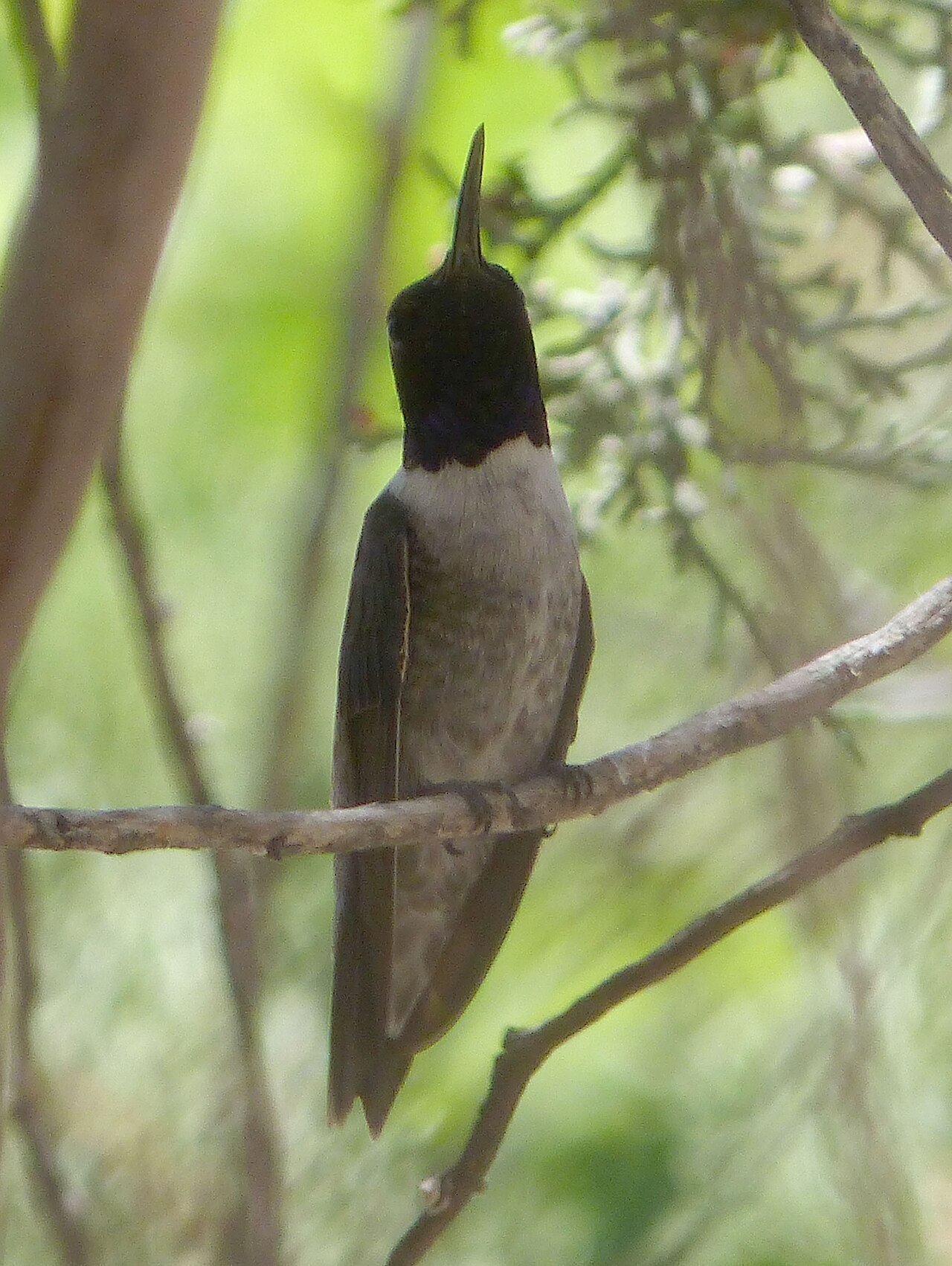
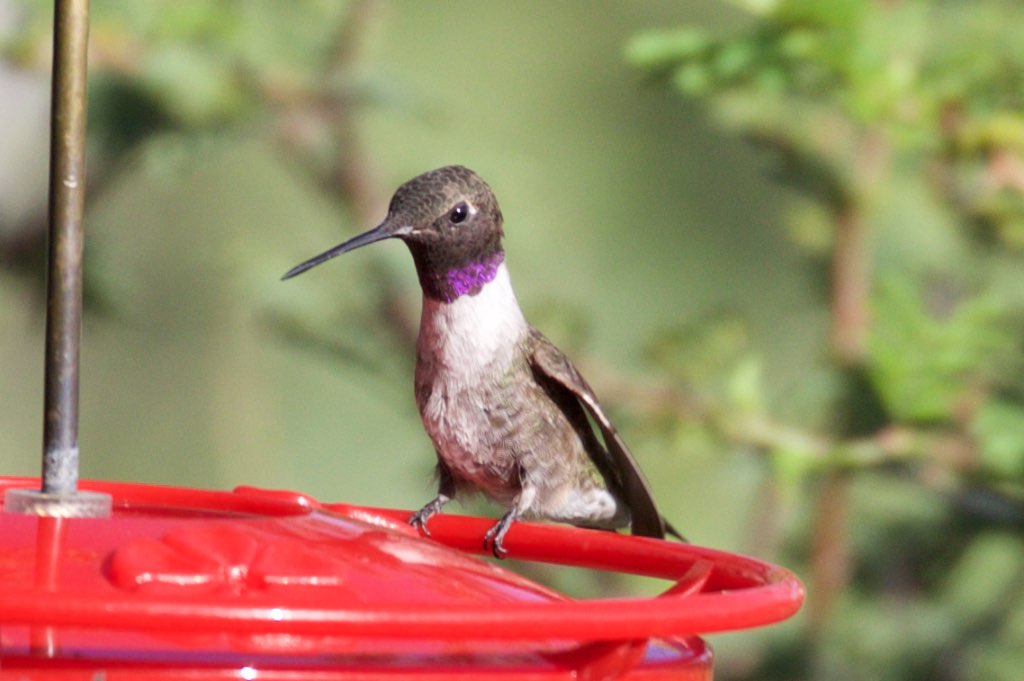
The black chinned hummingbird is one of the most widespread and adaptable hummingbirds across the western United States, equally at home in desert washes, mountain canyons, and busy suburban gardens. Adult males show a velvety black throat that can look entirely solid in shade, but reveals a thin, iridescent purple band along the lower edge whenever the bird tilts its head into direct light, a subtle field mark that gives the species its common name. Closely related to the ruby throated hummingbird of the eastern United States, this species fills a broadly similar ecological role across much of the West, tolerating a wider range of habitats, elevations, and climates than many of its more specialized relatives, from scorching low desert canyons to cool mountain riparian corridors thousands of feet higher in elevation.
| Trait | Detail |
|---|---|
| Scientific name | Archilochus alexandri |
| Length | 3.5 in |
| Weight | 2.5 to 4.5 g |
| Range | Western US and Mexico, British Columbia to Baja |
| Habitat | Desert washes, canyons, riparian woodland, gardens |
| Gorget color | Black with thin iridescent purple band |
How to Identify a Black-Chinned Hummingbird
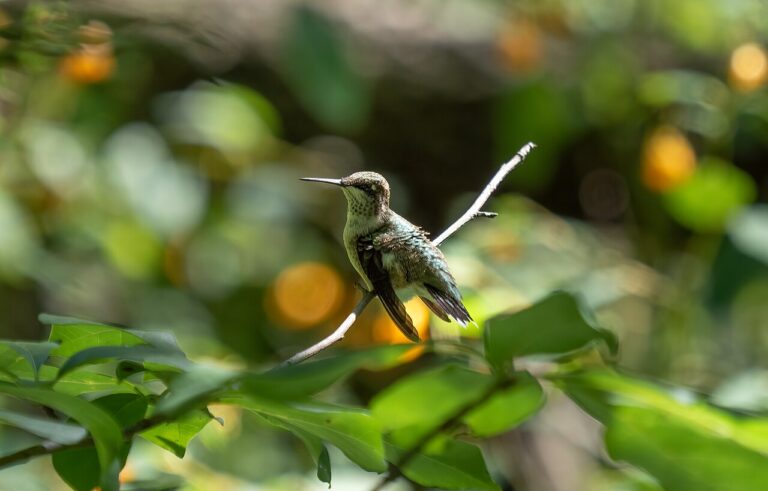
Adult males show a solid black throat patch bordered along the bottom by a narrow band of iridescent purple that is often invisible except at precisely the right angle to the sun, leading many observers to see only a plain dark throat until the light cooperates. The back is a plain metallic green, and the underparts are pale grayish white, without any rufous or orange tones that would suggest a species like the rufous hummingbird.
Females and juveniles closely resemble female ruby throated hummingbirds, showing a plain whitish throat, green back, and white-tipped outer tail feathers, making range and season the most reliable clues for separating the two species in areas where migration might bring them into brief contact. Bill length also runs very slightly longer than in some related species, an adaptation that may help the bird access nectar in a broader range of flower shapes across its varied desert and canyon habitats.
One distinctive behavioral field mark applies to both sexes: black chinned hummingbirds frequently pump their tail up and down while hovering at a flower or feeder, a habit not as pronounced in most other North American hummingbird species and a useful confirming clue even when plumage details are hard to see. This pumping motion is most obvious when the bird is stationary at a feeder port, making feeder watching one of the easiest ways to learn the behavior firsthand.
Range and Habitat
Black chinned hummingbirds breed across a broad swath of the western United States, from southern British Columbia and the Pacific Northwest south through California, the Great Basin, and the desert Southwest into Mexico. Within this large range, the species shows remarkable habitat flexibility, breeding successfully in hot desert canyons, mountain riparian corridors, and increasingly in suburban and urban gardens across many western cities.
Most populations migrate south into Mexico for the winter, though a small number remain along the immediate California and Gulf Coast through the colder months, particularly where reliable feeders are maintained. Spring arrival on breeding grounds typically occurs from March through May depending on latitude and elevation.
This adaptability to human altered landscapes has allowed black chinned hummingbirds to expand into many western towns and cities where suitable native habitat has otherwise been reduced, making them one of the more commonly reported hummingbirds in backyard surveys across much of their range. In some desert regions, the species has become one of the very few hummingbirds able to breed successfully in extremely hot, low elevation canyon habitat that few other North American species can tolerate for an entire nesting cycle.
Diet and Feeding Behavior
Nectar from a wide variety of native and ornamental tubular flowers forms the bulk of the diet, supplemented by small insects caught in flight or gleaned from foliage, an especially important protein source for females during the breeding season. Black chinned hummingbirds are considered important pollinators of several desert and canyon wildflower species across their range.
At feeders, standard sugar water at a 1 to 4 ratio is readily accepted, and this species often proves less aggressive at shared feeders than a rufous hummingbird, tolerating other hummingbirds at the same feeding station more often than some of its more territorial relatives.
In particularly arid parts of its range, this tolerance for shared resources may reflect a practical adaptation to scarce and widely scattered nectar sources, where aggressively excluding every other hummingbird from a feeding site would carry a higher energy cost than the benefit of exclusive access would provide.
Nesting Behavior
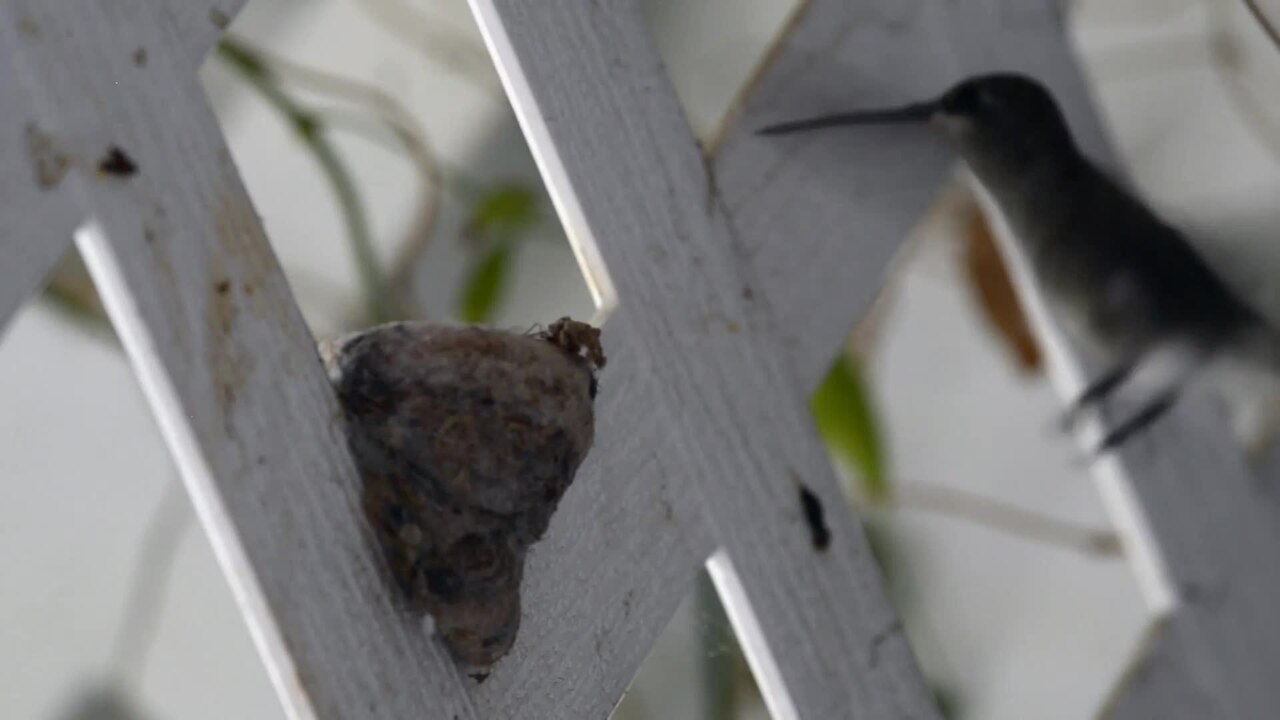
Females build a small cup nest of plant down bound with spider silk, often camouflaged with lichen and placed on a horizontal branch anywhere from a few feet off the ground up to about 20 feet high. Nest sites range from desert shrubs to shaded riparian trees, reflecting the species’ broad habitat tolerance.
Clutches typically contain 2 eggs, incubated solely by the female for about 13 to 16 days, with chicks fledging roughly 3 weeks after hatching. As with all hummingbirds, males take no part in nest building, incubation, or chick rearing after mating has occurred.
In particularly favorable years with abundant nectar and insect availability, a female may attempt a second brood, especially in the milder, lower elevation portions of the species’ range where the breeding season extends over a longer window. Nest reuse across consecutive seasons has also been documented, with some females returning to refurbish a previous year’s nest rather than building an entirely new structure, saving valuable time and energy during the demanding breeding period.
Black-Chinned Hummingbird vs Ruby-Throated Hummingbird
Because these two species are closely related and share a broadly similar structure, range is usually the fastest way to distinguish them, since black chinned hummingbirds occupy the West while ruby throated hummingbirds dominate the East, with only a narrow zone of overlap in the central United States during migration. Where ranges do overlap, the black chinned male’s black rather than red throat, and its habit of pumping the tail while hovering, offer the clearest distinguishing marks. For a broader overview of the family, see our hummingbird guide.
Vocalizations differ subtly as well, with the black chinned hummingbird giving a slightly softer, more warbling series of chip notes compared to the sharper calls typical of a ruby throated hummingbird, though this distinction is difficult for most casual observers to use reliably without considerable field experience with both species side by side.
Conservation Status
The black chinned hummingbird is not currently considered threatened, and its broad habitat tolerance across desert, canyon, riparian, and urban environments has likely helped buffer the species against some of the localized habitat pressures affecting more specialized western hummingbirds. According to Audubon, populations across most of the western range appear stable to slightly increasing, aided in part by the widespread popularity of backyard hummingbird feeders throughout the region.
Continued loss of desert riparian habitat to development and water diversion remains a longer term concern in parts of the Southwest, since these corridors provide critical nesting and stopover habitat not just for this species but for a wide range of desert wildlife, including migratory songbirds, bats, and numerous insect species that in turn support the hummingbird’s own food supply.
Climate projections for the desert Southwest suggest increasingly extreme summer heat in coming decades, and researchers are watching closely to see whether this heat tolerant species, already adapted to some of the hottest breeding habitat used by any North American hummingbird, will fare better than more temperature sensitive relatives as conditions continue to shift.
Black-Chinned vs Anna’s and Rufous Hummingbirds
The Black-chinned is the understated one. Its male shows a velvety black throat with a thin iridescent purple band along the lower edge that only appears in direct light, so in shade the bird looks plain green and gray with a dark bib, and that plainness is itself the field mark.
Anna’s Hummingbird overlaps with it across much of California and shows rose pink across the entire crown as well as the throat, and it stays on the coast through winter rather than migrating. The Rufous Hummingbird is unmistakable by color alone, copper orange across the back and tail, and by behavior, since it will hold a feeder against both of the others for as long as it is passing through.
Frequently Asked Questions
What does a black chinned hummingbird look like?
Males show a solid black throat with a thin iridescent purple band at the bottom, visible only in direct light, along with a green back and pale grayish white underparts.
Where do black chinned hummingbirds live?
They breed across the western United States from British Columbia south through California and the desert Southwest into Mexico, tolerating a wide range of habitats.
Why does a black chinned hummingbird pump its tail?
Both sexes frequently pump their tail up and down while hovering at flowers or feeders, a behavior useful for identification even when plumage details are hard to see.
What is the difference between a black chinned and ruby throated hummingbird?
Black chinned hummingbirds have a black throat with a purple band and live in the West, while ruby throated hummingbirds have a red throat and live mainly in the East.
What does a black chinned hummingbird eat?
It feeds on nectar from a wide variety of tubular flowers, supplemented by small insects, and readily visits backyard feeders filled with standard sugar water.
How big is a black chinned hummingbird?
Adults measure about 3.5 inches long and weigh between 2.5 and 4.5 grams, similar in size to the closely related ruby throated hummingbird.
Do black chinned hummingbirds migrate?
Most populations migrate south into Mexico for the winter, though small numbers remain along the immediate California and Gulf Coast where feeders are maintained.