Pheasant Sounds: 6 Calls and What Each One Means
The sound most people mean by pheasant sounds is the rooster’s crow: a harsh, two-note korrk-kok that carries half a mile across open farmland, almost always followed by a rapid burst of wing beating. Ring-necked pheasants (Phasianus colchicus) also cackle when flushed, cluck softly to a brood, and peep as chicks, and each of those calls tells you something different about what the bird is doing.
Pheasants are heard far more often than they are seen, because a bird that spends its day in standing corn or switchgrass announces itself long before it shows itself. Learning the four main call types separates a rooster claiming ground in April from a hen moving chicks in June, and it also keeps you from mistaking a pheasant for the three birds that sound closest to it.
Male pheasants make a loud, raspy two-syllable crow, written as korrk-kok, immediately followed by a drumming wing whirr. Both sexes cackle sharply when flushed, a stuttered kuk-kuk-kuk-kuk as they explode into flight. Hens use quiet clucks to call chicks, and chicks answer with thin peeps. Crowing peaks at dawn in spring.
| Call | What it sounds like | Who makes it | When you hear it |
|---|---|---|---|
| Crow | Harsh korrk-kok, two notes, carrying | Rooster only | Dawn and dusk, March to June |
| Wing whirr | Fast muffled drumming, 2 to 3 seconds | Rooster only | Always right after the crow |
| Flush cackle | Stuttered kuk-kuk-kuk-kuk, rising | Both sexes, roosters louder | Any time the bird is startled |
| Hen cluck | Soft low kia-kia or hushed clucking | Hen | May to August with a brood |
| Chick peep | Thin high peeping, insistent when lost | Chicks under 3 weeks | June and July, ground level |
| Distress squeal | Loud ragged screeching | Either sex | When caught by a predator |
What Sound Do Male Pheasants Make?
A male pheasant makes a double crow that sounds closer to a rusty gate than to a songbird. The first note is lower and rougher, the second shorter and sharper, and the whole call lasts about a second. Hunters write it as korrk-kok and farmers often describe it as a squawk.
The crow is a territorial advertisement. A rooster uses it to hold a patch of cover and the hens in it, which is why the call is loudest and most frequent during the spring breeding season and nearly absent in midwinter. The Cornell Lab’s Ring-necked Pheasant sound library has clean recordings of all of them.
The Wing Whirr: The Second Half of the Crow
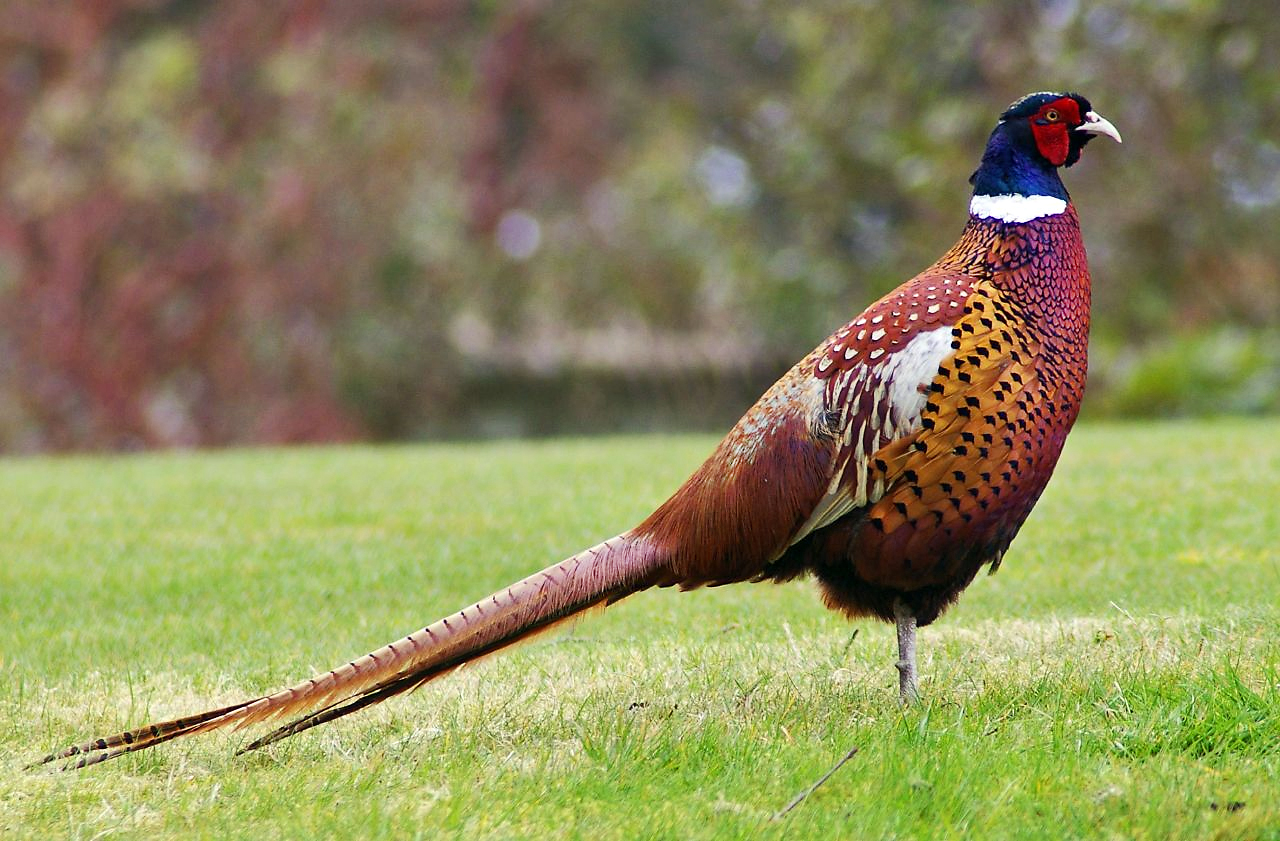
Almost every crow is followed by a short burst of wing beating that sounds like a muffled drum roll, two to three seconds long. The bird stands still, often on a fence line or a rise, and beats its wings hard without leaving the ground.
This matters for identification. If you hear a harsh squawk with no drumming afterward, you are probably not listening to a pheasant. The pairing of harsh call plus mechanical whirr is close to diagnostic in North America, and it is the easiest thing to listen for in the field.
What Noise Do Pheasants Make When Flushed?
The flush cackle is the call most people hear accidentally. A pheasant holding tight in cover lets you walk within a few feet, then launches almost vertically with a stuttered, rising kuk-kuk-kuk-kuk-kuk and a loud clatter of wings.
Roosters cackle longer and louder than hens, and hens sometimes flush silently, which is why a quiet flush in the middle of a field is often a hen with chicks nearby. The cackle serves as a general alarm: other pheasants in the same cover usually go quiet or slip away on foot after hearing it.
Pheasant Alarm Calls on the Ground
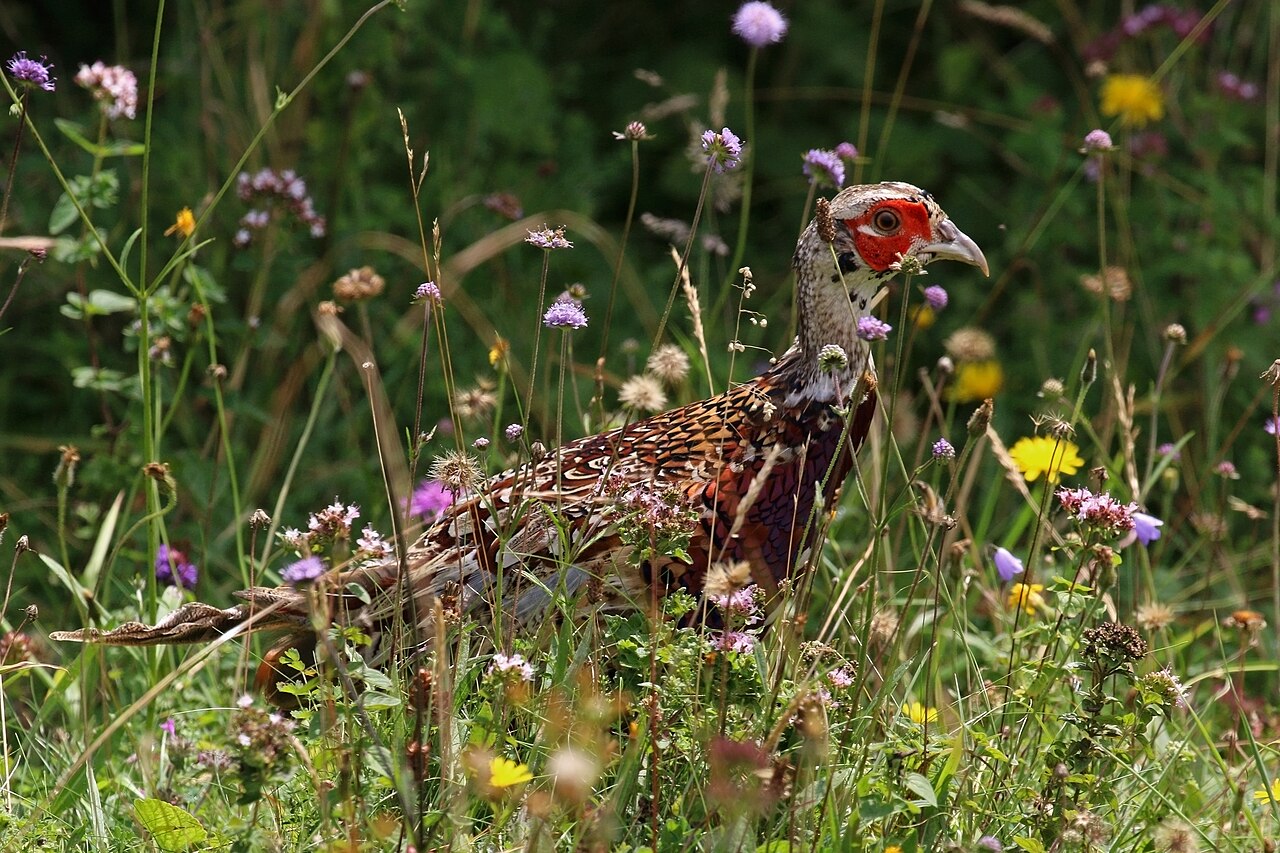
Before a pheasant flushes, it often gives a lower warning note while still hidden. This is a short, flat cluck repeated at irregular intervals, much quieter than the flush cackle and easy to miss from more than 50 ft (15 m) away.
Birds use it when something is approaching but not yet close enough to force flight, including a hawk overhead or a fox working a ditch. If you hear it and stop walking, the bird will usually hold and keep calling, which is the only reliable way to hear an alarm note without ending it in a flush.
What Sounds Do Female Pheasants Make?
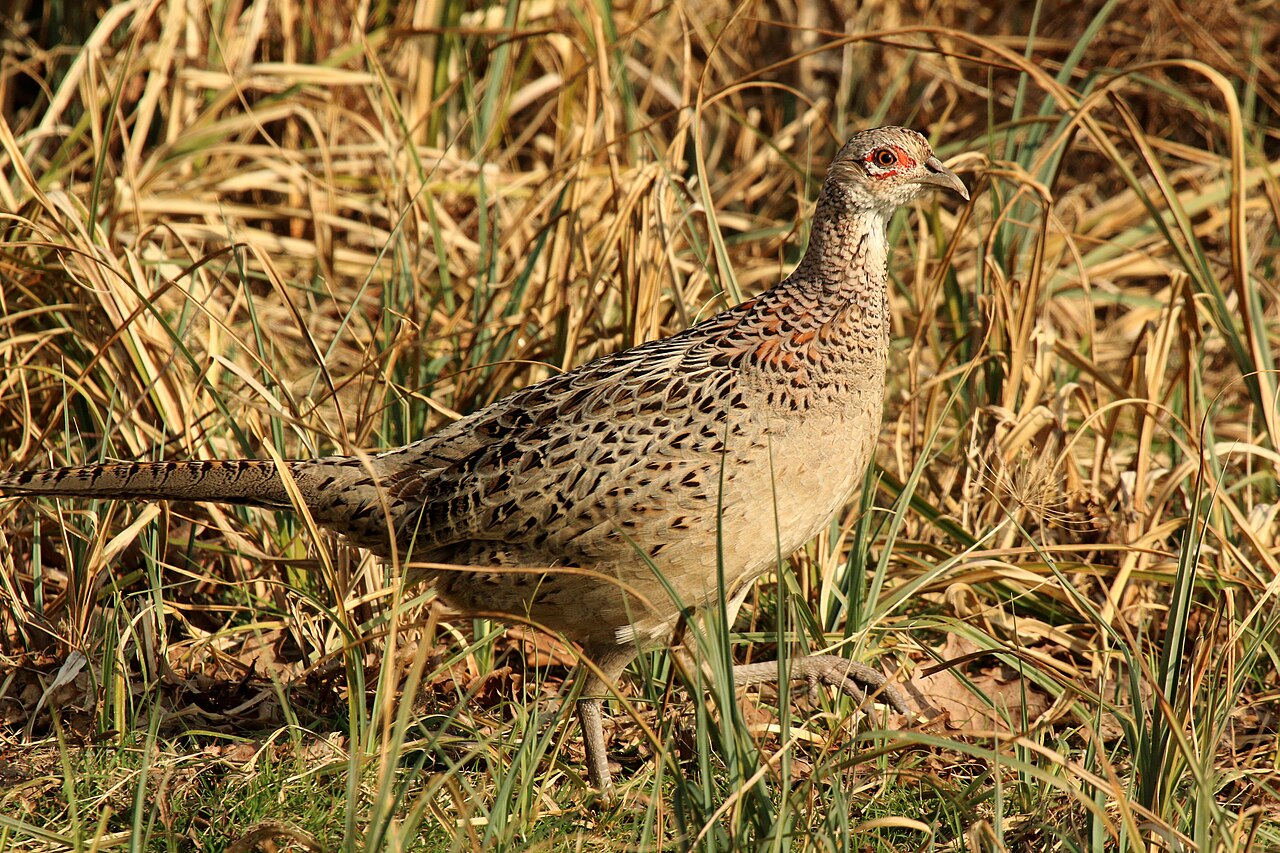
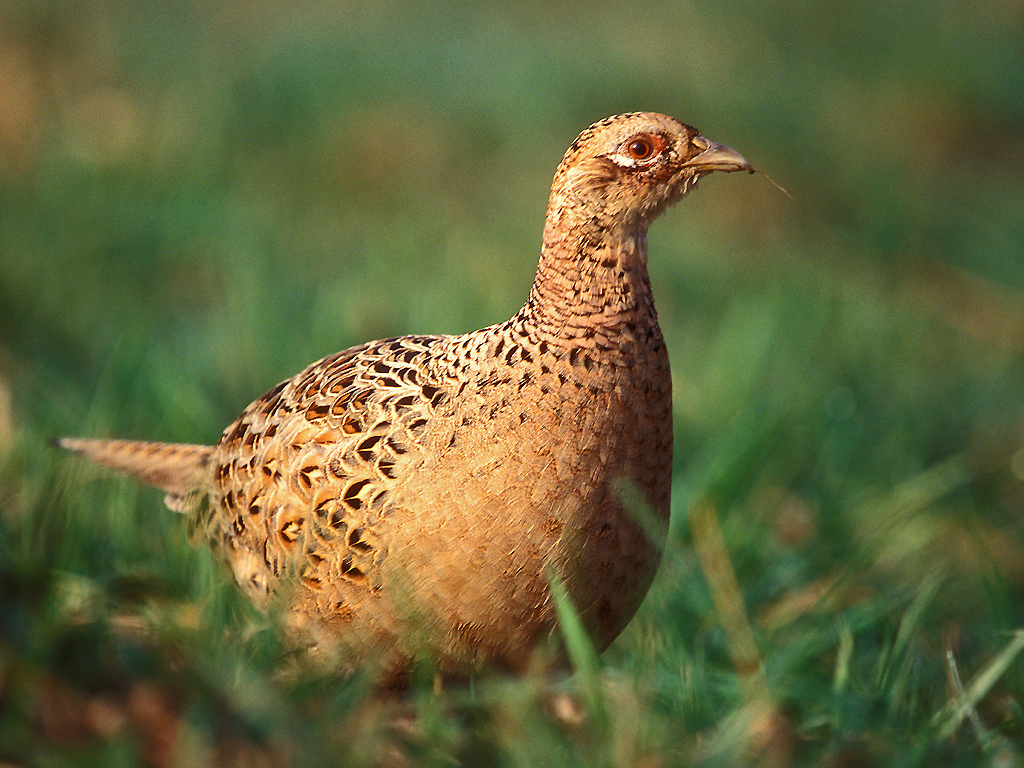
Hens do not crow. Their vocal range is almost entirely quiet, short, and close-range: a low kia-kia contact note, a hushed clucking used with chicks, and the flush cackle when startled. A hen on a nest is silent for long stretches.
Because the hen’s calls carry so poorly, most people never hear them unless they are sitting still in good cover during summer. For plumage and behavior differences that go with the quieter voice, our guide to the female pheasant covers how to tell a hen from a young rooster in the field.
Chick Calls: Peeps and Brood Contact
Pheasant chicks peep almost continuously while foraging, a thin high note that sounds much like a domestic chick and never carries far. A separated chick switches to a louder, more urgent peeping that repeats on a fast beat until the hen answers.
The hen replies with soft clucks and sometimes a single sharp note that drops the whole brood flat into cover. If you walk into this exchange in June or July, the correct move is to back out the way you came rather than searching for the chicks.
Do Pheasants Make Sounds at Night?
Pheasants are not nocturnal, but they do call at night. Roosters crow on bright moonlit nights, and a bird disturbed on its roost will cackle in full darkness, which is why a sudden harsh squawk at two in the morning from a hedgerow is often a pheasant rather than something unusual.
Thunder, headlights, aircraft, and gunshots all trigger night crowing, and the response is reflexive. Birds roost off the ground in hedges and small trees, so the sound comes from above head height, not from a field. If a night call seems to come from a roofline or a wall cavity instead, you are hearing something else entirely.
Time of Day and Season: When Each Call Happens
Crowing follows a sharp daily cycle. The peak is the half hour before and after sunrise, with a smaller peak at dusk, and very little in the middle of the day unless weather is changing. Barometric drops and distant noise both set roosters off outside those windows. The timing overlaps the dawn chorus, so expect to pick the crow out from behind songbirds such as the northern cardinal.
Seasonally, crowing climbs from late February, peaks in April and May while hens are nesting, and falls off through July. By October, when most hunting seasons open, roosters are nearly silent and the flush cackle is the only call most people hear all autumn.
Sounds That Get Confused With Pheasants
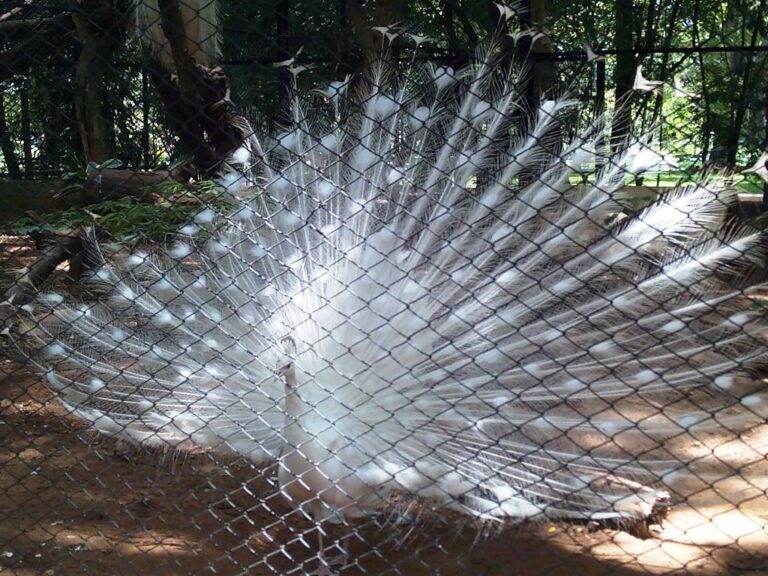
Three birds account for most mistaken pheasant reports. A ring-necked pheasant crow is sometimes attributed to a peacock, but peafowl give a far louder, more drawn-out wailing may-AWE with no wing whirr. Guinea fowl produce a rapid repeated chattering that is much faster and more continuous, closer to the mechanical rattle described in our piece on the bird that sounds like a machine gun.
The third confusion is the flush. A startled rooster leaving cover sounds similar to a ruffed grouse flush, but the grouse adds no cackle, only wing noise. Unfamiliar harsh calls at night are also commonly blamed on pheasants when the real source is a barn owl, and our guide to barn owl sounds covers that screech, which is longer, hoarser, and does not come in pairs.
How Do You Call a Pheasant, and Does It Work?
You can imitate a pheasant, and you can usually get an answer. A rooster will crow back at a crude imitation of a crow during spring, and recorded crow calls are the standard tool for locating birds before the season. Shock-calling works the same way an owl call works on turkeys: the bird answers without being drawn in.
What it will not do is bring a pheasant to you. Unlike turkeys or ducks, pheasants are not reliably called into gun range, and the practical use of calling is scouting rather than hunting. A rooster that answers tells you where he lives, nothing more.
What US States Have Pheasants, and Is It Rare to Hear One?
Ring-necked pheasants were introduced to North America from Asia in the 1880s and now hold established populations across the northern grain belt. South Dakota, Kansas, Nebraska, Iowa, North Dakota, Minnesota, Montana, Colorado, and eastern Washington carry the strongest numbers, with scattered birds in the upper Midwest and parts of the Northeast.
Where habitat exists, hearing one is routine in spring and the birds are anything but rare. Where grassland has been lost to tillage, populations have fallen hard, and in those counties a crowing rooster has become a notable sound. The same pattern of range tied to open country shows up in bald eagle calls near water and in blue jay calls in woodland edge.
Frequently Asked Questions
What bird goes woop woop?
A rhythmic woop woop is not a pheasant. In North America it usually points to a barred owl’s shorter hoots, a pileated woodpecker’s rolling call, or a mourning dove heard at a distance. Pheasant crowing is harsher, two-noted, and always paired with a burst of wing drumming.
How do you identify bird calls by sound?
Start with rhythm and quality rather than pitch: count the notes, note whether the call repeats, and decide if it is harsh, whistled, or buzzy. Then check habitat and season. Free recordings on allaboutbirds.org and xeno-canto let you compare directly, and phone apps now identify many calls live.
Where can I listen to pheasant sounds as mp3 files?
The Cornell Lab’s All About Birds pages host streaming recordings of each pheasant call, and xeno-canto carries hundreds of field recordings that can be downloaded. Both are free and both label the call type, which matters more than audio quality when you are learning to tell a crow from a cackle.
What does it mean when a pheasant visits you?
Folk interpretations read a pheasant visit as a sign of abundance, confidence, and unexpected good fortune, partly because of the rooster’s showy plumage. In practical terms a pheasant in a yard means nearby cover and spilled grain, and young roosters wander widely in autumn looking for ground of their own.
Can pheasants bond with humans?
Hand-reared pheasants will tolerate and follow the person who feeds them, and some become confident enough to take food from a hand. That is imprinting rather than attachment, and wild pheasants remain wary throughout life. Adult roosters raised in captivity can also turn aggressive during the breeding season.
Is it rare to see a pheasant?
Not in the northern grain states, where pheasants are common and widely stocked. They are hard to see rather than rare, because the birds run through dense cover instead of flying. Listening at dawn in spring is a far better way to confirm pheasants on a property than looking for them.