Types of Orioles: A Complete Guide
North America is home to several types of orioles, most familiarly the Baltimore oriole in the East and Bullock’s oriole in the West, along with the orchard, hooded, and Scott’s orioles. These brilliant orange and black birds are prized for their color, their woven nests, and their fondness for fruit and nectar. This guide covers how many types of orioles there are, common species you can see, how to tell them apart, where they live, and how to attract orioles to your yard.
| Oriole | Key Features |
|---|---|
| Baltimore Oriole | Flame orange, black hood, East |
| Bullock’s Oriole | Orange, black cap, white wing, West |
| Orchard Oriole | Deep chestnut, smaller |
| Hooded Oriole | Slender, curved bill, Southwest |
| Scott’s Oriole | Yellow and black, deserts |
| Altamira Oriole | Large, orange, south Texas |
| Audubon’s Oriole | Yellow, black hood, Texas |
| Spot-breasted Oriole | Orange, breast spots, Florida |
How Many Types of Orioles Are There?
There are several species of orioles in North America, part of a group of colorful songbirds in the blackbird family. The most familiar are the Baltimore oriole, common in the East, and Bullock’s oriole, its western counterpart, but the group also includes the orchard oriole, the hooded oriole, Scott’s oriole, and several species largely restricted to the southern border regions, such as the Altamira, Audubon’s, and spot-breasted orioles. New World orioles are known for their brilliant plumage, usually in combinations of orange or yellow and black, though this coloring evolved separately from the unrelated orioles of the Old World. They are famous for weaving elaborate hanging nests, for their sweet fondness for fruit and nectar, and for their rich, whistling songs. Most orioles are migratory, spending the breeding season in North America and wintering farther south. This variety of orioles brings vivid color to gardens and woodlands, as covered in our guide to the female oriole.
Common Types of Orioles
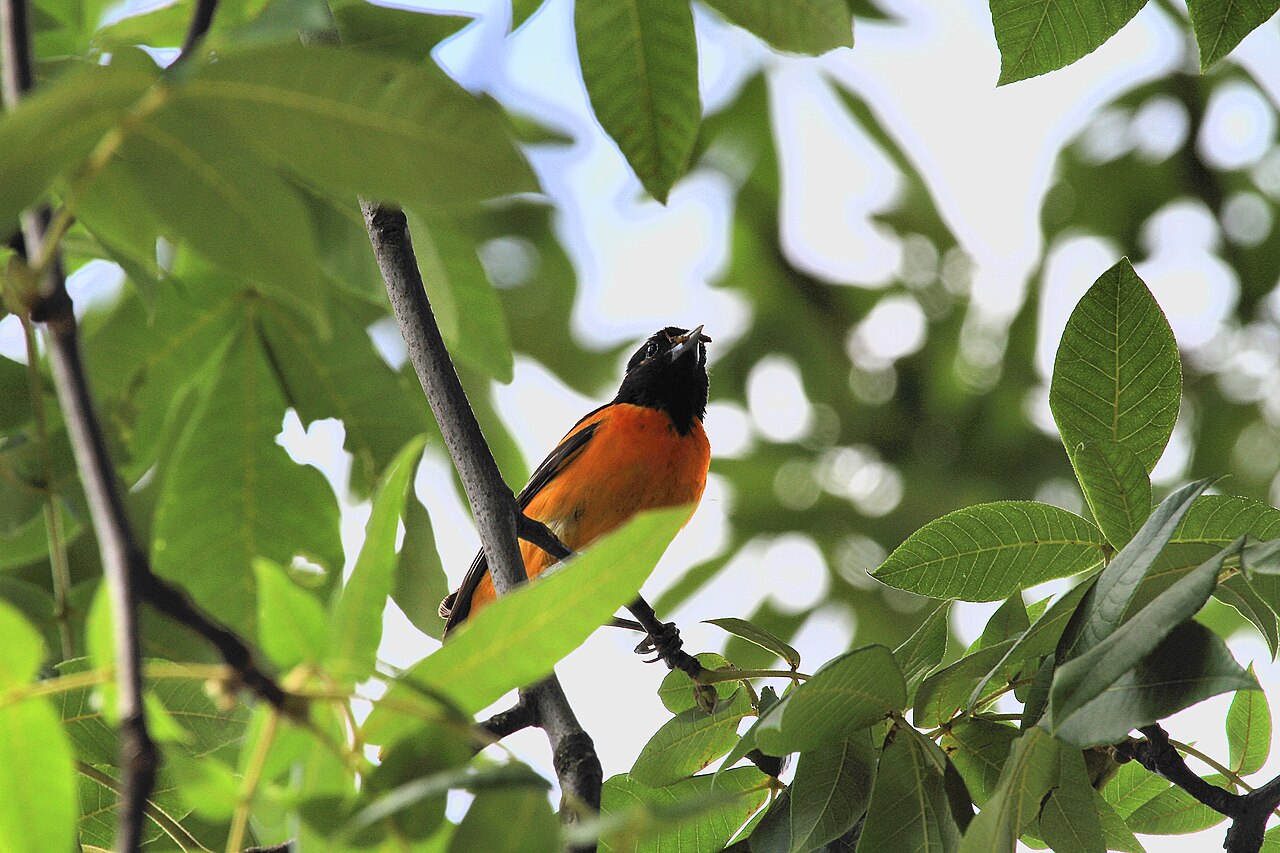
Several types of orioles are especially notable. The Baltimore oriole is the classic eastern oriole, the male a brilliant flame orange with a solid black hood and back. Bullock’s oriole is the common western oriole, the male orange with a black cap and throat and a large white wing patch, and the two species can hybridize where their ranges meet. The orchard oriole is smaller and the male a deep chestnut rather than orange, favoring open woodlands and orchards. The hooded oriole of the Southwest is slender with a curved bill and is often associated with palm trees. Scott’s oriole is a striking yellow and black bird of desert and mountain areas. A few orioles, including the large Altamira oriole, the yellow Audubon’s oriole, and the introduced spot-breasted oriole of Florida, are found only in limited southern regions. Each brings its own vivid beauty, but all share the orioles’ love of fruit and nectar.
How to Tell Orioles Apart
Telling orioles apart is easier when you use color, pattern, and region. Start with the male’s coloring, since the different species show distinct patterns: the Baltimore oriole has a solid black hood, Bullock’s oriole has a black cap and throat with a bold white wing patch and an orange face, the orchard oriole is deep chestnut rather than orange, and Scott’s oriole is yellow and black. Range is very helpful, since some orioles are eastern, others western, and several are limited to the far southern border. Note the bird’s size and bill shape, as the hooded oriole has a notably slender, curved bill. Females and young orioles are duller and trickier, usually yellowish or orange with olive tones, so range and structure become especially important for them. By combining the male’s pattern, the region, and structural clues, you can identify most orioles, a rewarding challenge for a group that includes the bird in our guide to the female oriole.
Where Orioles Live
Orioles live in a variety of wooded and semi-open habitats across North America, and most are present only during the warmer months. The Baltimore oriole breeds across the East in open woodlands, parks, and shade trees, often high in the canopy, while Bullock’s oriole fills a similar role in the West, including riverside groves and towns. The orchard oriole favors open woodlands, orchards, and edges, and the hooded oriole of the Southwest is closely tied to palms and desert oases. Scott’s oriole inhabits arid deserts and mountains with yuccas, and the border specialists like the Altamira and Audubon’s orioles are found in southern Texas woodlands. Nearly all North American orioles are migratory, arriving in spring and departing by fall to winter in Mexico, Central America, or the tropics, though a few may linger in the far south. Because orioles are drawn to trees with fruit and nectar, gardens with the right plantings and feeders can attract them, as detailed in our guide to attracting birds.
How to Attract Orioles
Attracting orioles to your yard is very rewarding, since these birds have a well-known fondness for sweet foods and the color orange. The classic approach is to offer orange halves, which orioles readily eat, along with grape jelly and nectar in special oriole feeders, which are often orange to catch their attention. Timing matters, so putting out these offerings in spring, right as orioles return from migration, gives the best chance of attracting them before they settle into nesting. Planting native, fruit-bearing trees and shrubs, as well as nectar-rich flowers, provides natural food and shelter that orioles favor. A water source, especially a moving or dripping one, can also draw them in. Because orioles often feed high in trees, these feeders and plantings help bring them into view. With oranges, jelly, nectar, and the right plantings offered at the right time, you can enjoy the dazzling sight of orioles up close, adding brilliant color to your yard.
The Oriole’s Woven Nest
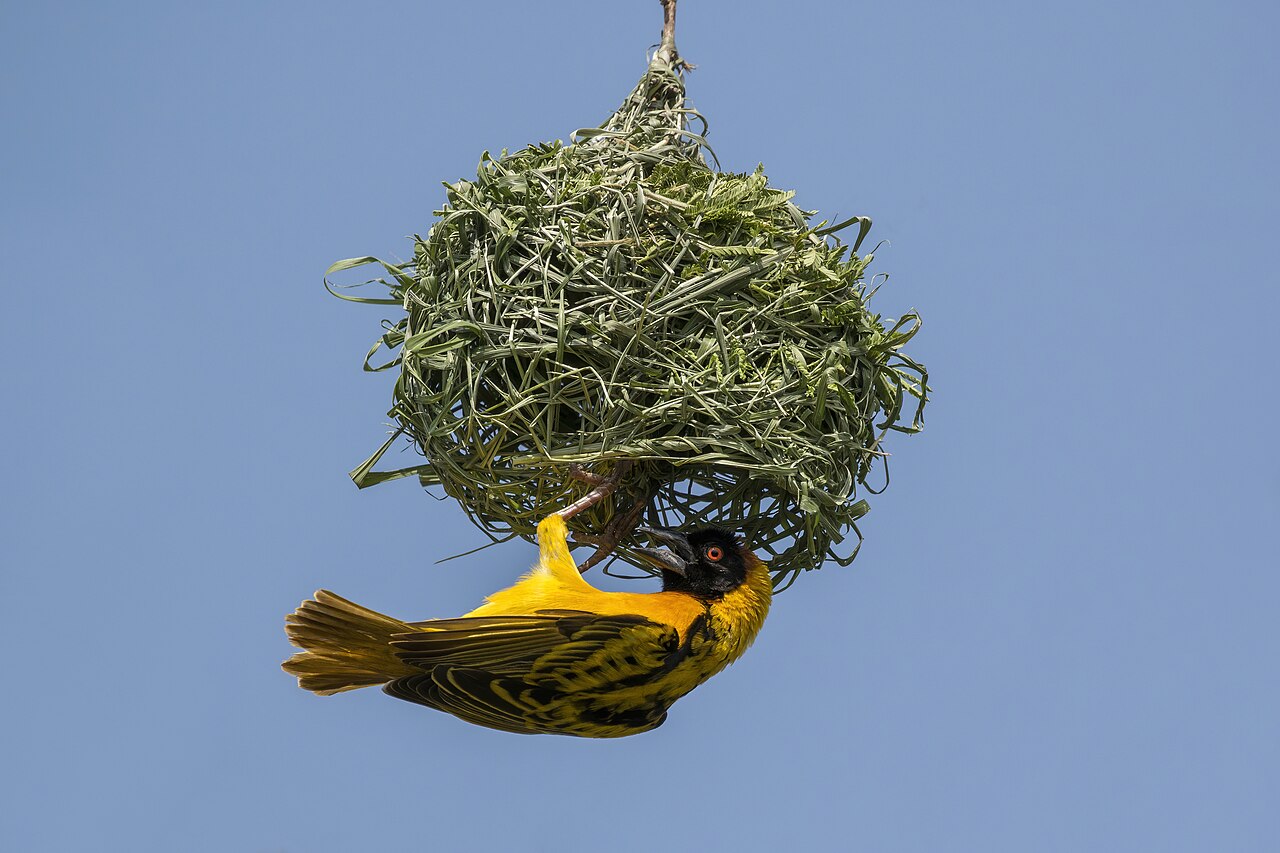
One of the most remarkable things about orioles is the elaborate nest they build. According to the Cornell Lab of Ornithology, orioles such as the Baltimore oriole weave an intricate hanging nest, a deep pouch suspended from a slender branch, and it is the female who does this skillful weaving. Using plant fibers, grasses, and other materials, she knots and weaves a sock-like structure that hangs safely out of reach of many predators, swaying gently in the breeze. This woven nest is one of the most impressive pieces of avian architecture in North America, and finding one in a tree is a good sign that orioles are nesting nearby. The nest also reflects the oriole’s ties to leafy trees, where it forages and breeds. Understanding this extraordinary nest-building deepens appreciation for orioles, brilliant birds worth attracting with fruit and nectar, as detailed in our guide to the best bird foods.
Female and Young Orioles
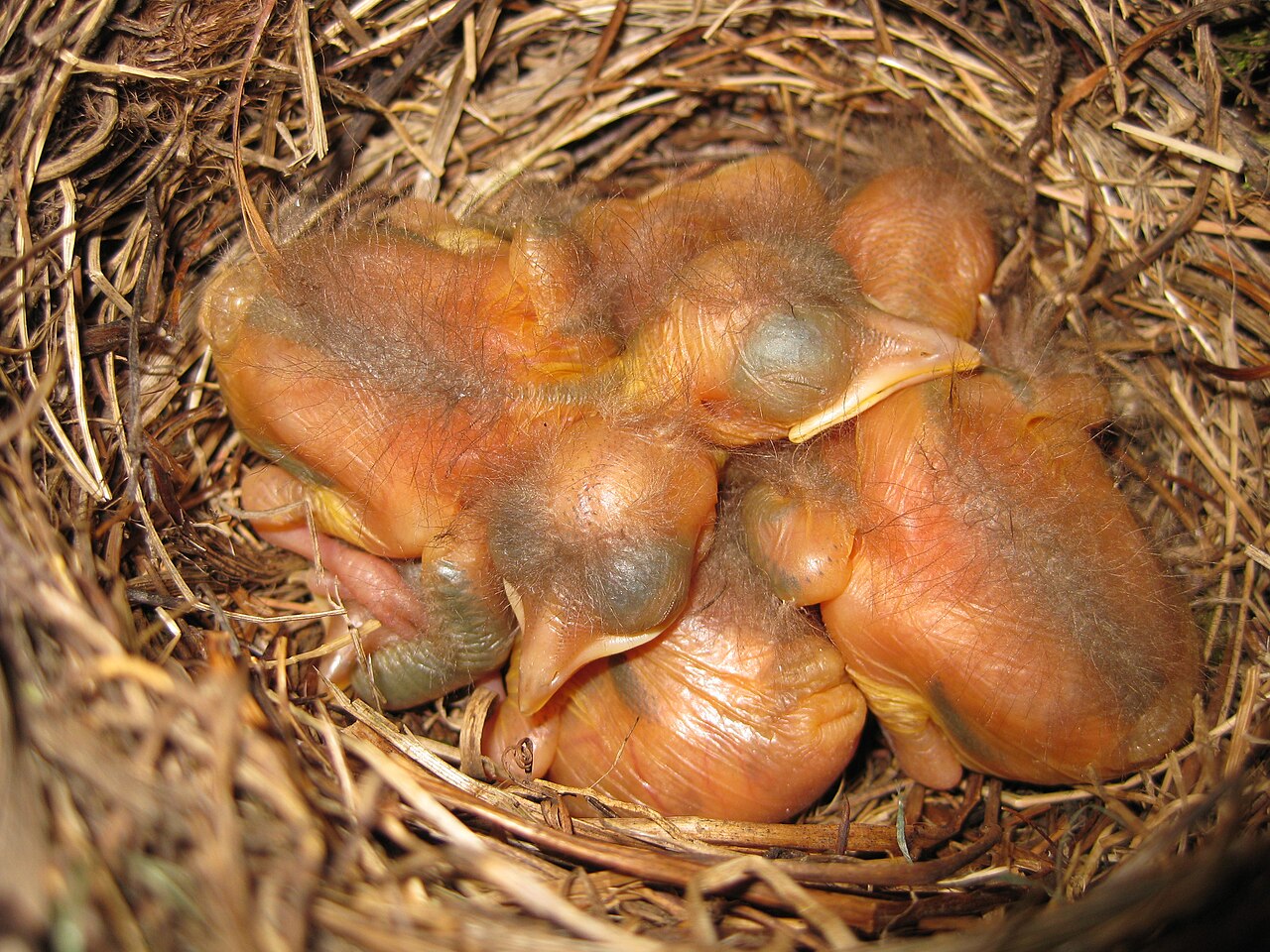
While the brilliant male orioles get the most attention, female and young orioles are worth understanding too, since they can be trickier to identify. Female orioles are generally much duller than the males, typically yellowish to orange with olive-brown tones and often showing white wingbars, lacking the male’s bold black hood and vivid color. Young orioles resemble females and gradually gain adult plumage as they mature, with young males of some species taking more than a year to reach full color. This means that at any given time, an oriole you see could be a bright adult male, a duller female, or an immature bird in between, which is why range and structure are so helpful for identification. Recognizing these differences helps you appreciate the full picture of oriole identification beyond the striking males, as explored in detail in our guide to the female oriole and the broader world of bird symbolism.
Related reading: female Baltimore oriole identification.
Related reading: types of orange birds.
Related reading: types of blackbirds.
Frequently Asked Questions
How many types of orioles are there?
North America has several oriole species, including the Baltimore, Bullock’s, orchard, hooded, and Scott’s orioles, plus southern specialties like the Altamira and Audubon’s orioles.
What is the most common oriole?
The Baltimore oriole is the most familiar oriole in the East, while Bullock’s oriole is its common counterpart in the West. Both are brilliant orange and black.
What is the difference between a Baltimore and Bullock’s oriole?
The male Baltimore oriole has a solid black hood, while the male Bullock’s oriole has a black cap and throat with an orange face and a large white wing patch.
What does an orchard oriole look like?
The male orchard oriole is smaller than other orioles and a deep chestnut color rather than orange, with a black hood. It favors open woodlands and orchards.
How do you attract orioles?
Offer orange halves, grape jelly, and nectar in oriole feeders, especially in spring when they arrive, and plant fruit-bearing and nectar-rich plants.
Are orioles related to blackbirds?
Yes, New World orioles belong to the blackbird family, despite their bright orange and black coloring, which evolved separately from the unrelated Old World orioles.
Where do orioles live?
Orioles live in open woodlands, parks, orchards, and desert oases across North America in the warmer months, then migrate south to winter in the tropics.