Birds That Eat Other Birds: Every Predator Explained
Birds that eat other birds include the bird-hunting hawks in the genus Accipiter, falcons such as the peregrine and merlin, great horned and barred owls, shrikes, jays, crows, ravens, grackles, gulls, herons, roadrunners, and even chickadees taking nestlings. The technical term for this is avivory, and it is far more common than most backyard bird watchers assume.
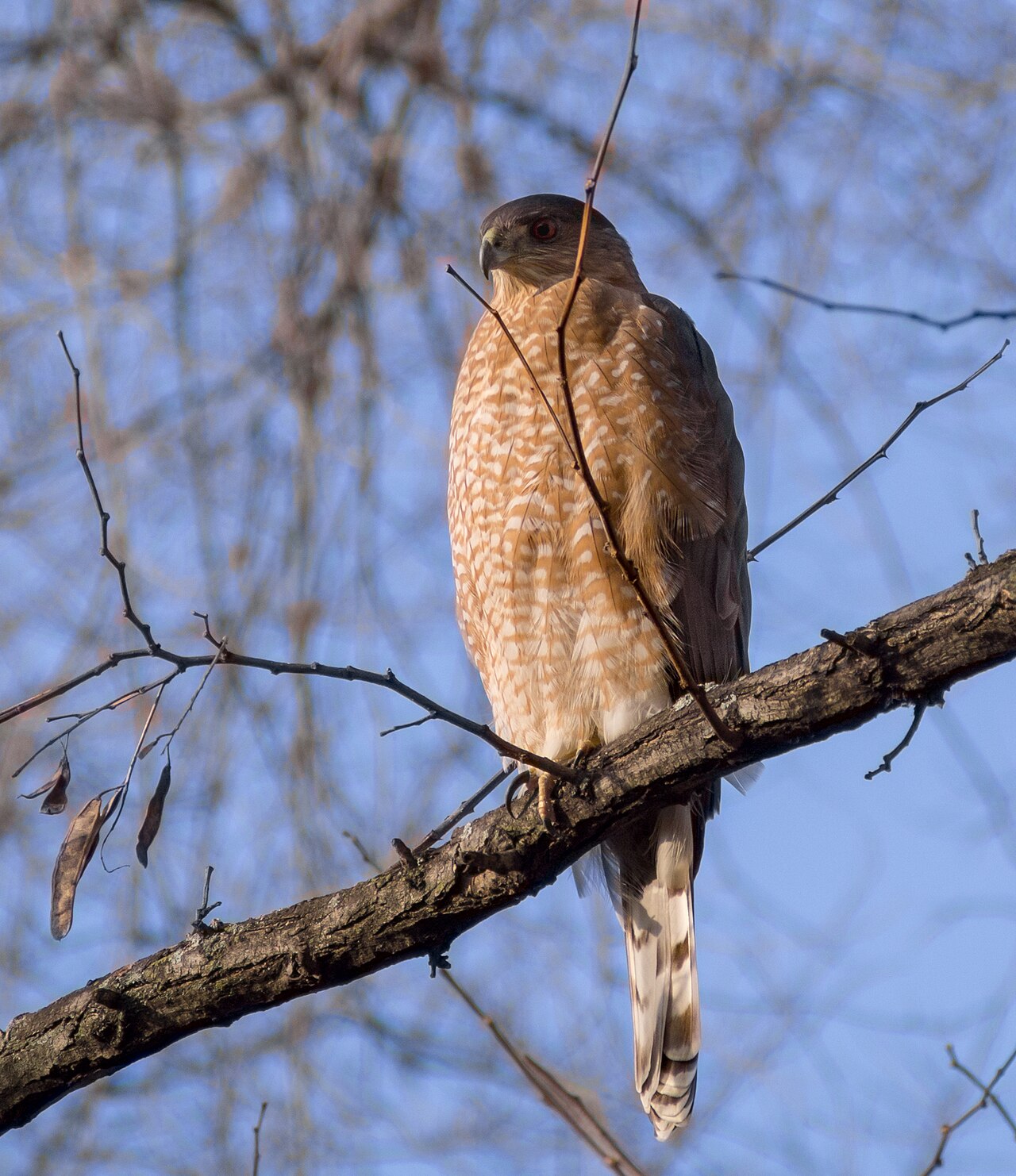
The single most likely predator at a feeder is a Cooper’s hawk or a sharp-shinned hawk. Both are built specifically for pursuing small birds through cover, with short rounded wings for acceleration and a long rudder-like tail for steering between branches, and a feeder is a concentration of prey they learn about quickly. A pile of plucked feathers on the lawn is nearly always one of these two.
| Predator | Typical Prey |
|---|---|
| Cooper’s hawk | Doves, jays, starlings, robins |
| Sharp-shinned hawk | Sparrows, finches, warblers |
| Peregrine falcon | Pigeons, shorebirds, ducks in flight |
| Great horned owl | Other owls, crows, ducks, at night |
| Loggerhead shrike | Small songbirds, impaled on thorns |
| Jays and crows | Eggs and nestlings |
| Grackles and gulls | Nestlings and fledglings, opportunistic |
Is It Common for Birds to Eat Other Birds?
Yes, and it operates at two very different scales. Adult predation is the visible kind, carried out by a relatively small number of specialists that hunt full-grown birds and are equipped for it. Nest predation is the far larger one numerically, and it involves species people never think of as predators at all.
Nest predation is one of the largest single causes of songbird mortality in North America. Jays, crows, grackles, magpies, and ravens all take eggs and nestlings routinely, and studies using nest cameras have documented predation by species as unlikely as chickadees, wrens, and woodpeckers. A songbird nest has roughly even odds of failing, and most failures are predation.
Adult predation is rarer per encounter but concentrated. A single Cooper’s hawk holding a suburban territory may take several hundred birds in a year, and hawks that specialise on feeders become extremely efficient. The overall effect on populations is generally modest, since predators respond to prey abundance rather than driving it.
Accipiters: The Feeder Specialists
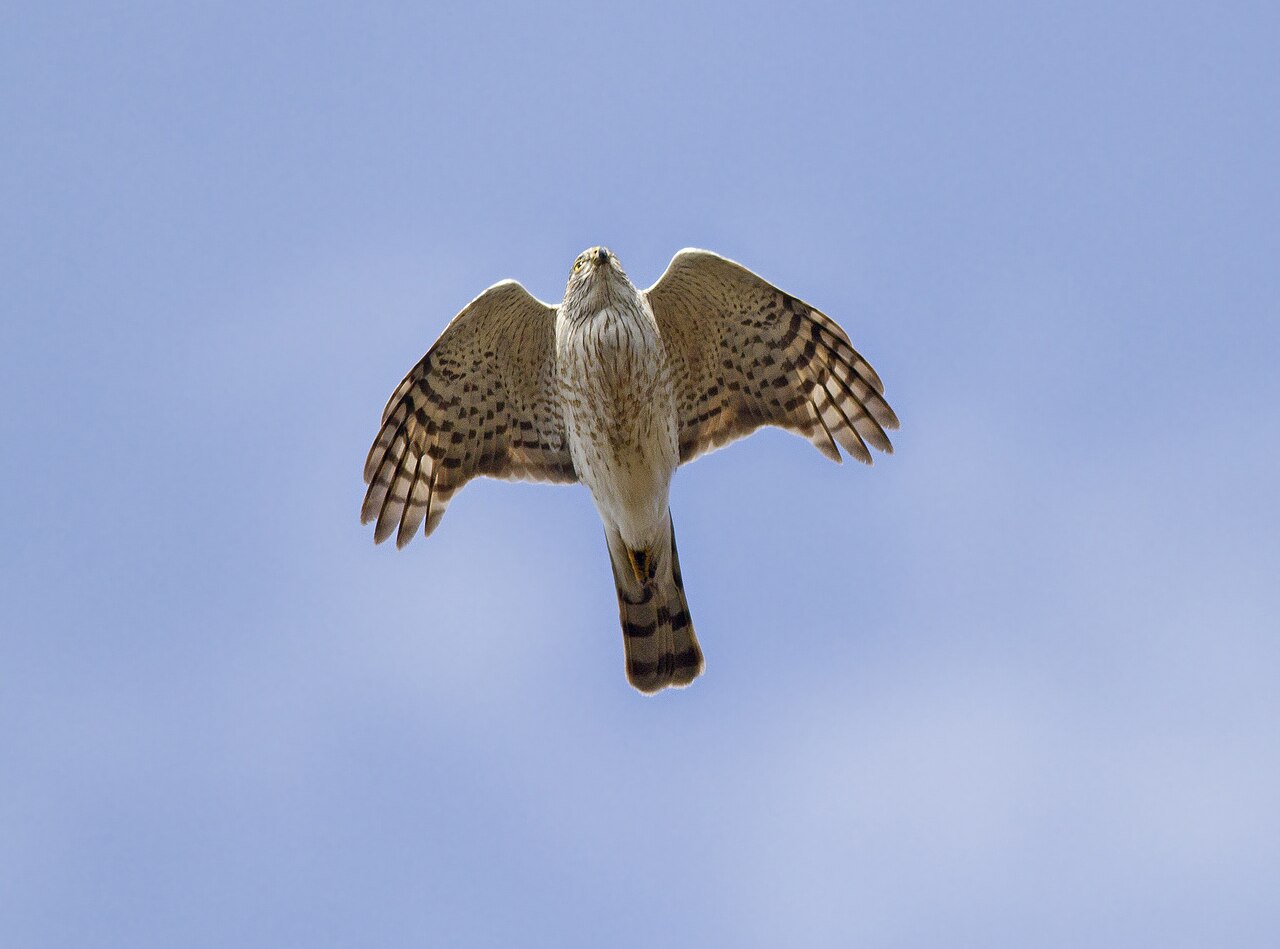
Cooper’s hawks and sharp-shinned hawks are the two birds most likely to be hunting at any North American feeder. Both are accipiters, built for the specific problem of catching a fast small bird inside vegetation: short broad wings that accelerate hard from a standing start, and a long tail used as a rudder for tight turns.
The two are notoriously difficult to separate. Cooper’s hawks are larger, crow-sized, with a proportionally bigger head that projects well beyond the wrists in flight and a rounded tail tip with a broad white terminal band. Sharp-shinned hawks are jay-sized with a small head that barely projects and a squared or notched tail. Size overlaps between a large female sharpie and a small male Cooper’s.
Prey size tracks predator size. Sharp-shinned hawks take sparrows, finches, and warblers. Cooper’s hawks take doves, starlings, robins, jays, and in urban areas a great many pigeons. Northern goshawks, the largest accipiter, take grouse, crows, and rabbits. Our guides to the Cooper’s hawk and the northern goshawk cover the accipiters behind most incidents.
Falcons: Speed Instead of Manoeuvrability
Falcons solve the same problem differently. Instead of chasing prey through cover, they take birds in open air using speed, and their long pointed wings and compact bodies are shaped for exactly that. The peregrine falcon’s hunting stoop is the fastest recorded movement of any animal, with measured dives exceeding 240 miles per hour.
Peregrines take pigeons, shorebirds, and ducks, striking with a clenched foot at speed rather than grabbing, then returning to collect the stunned or killed bird. Their recovery from near-extinction after the DDT ban is one of the better-known conservation successes, and urban populations now nest on skyscrapers and bridges hunting feral pigeons.
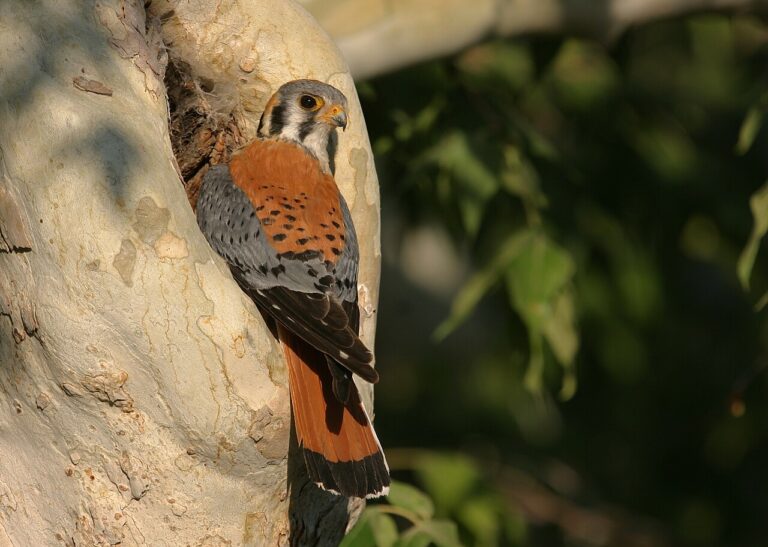
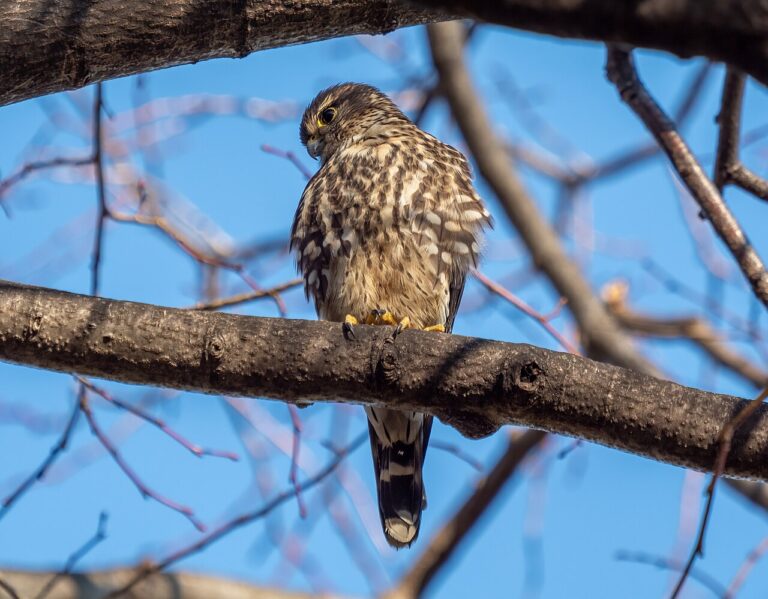
Merlins are the small falcon equivalent, hunting sparrows, waxwings, and shorebirds in fast direct pursuit, and they have expanded into towns across much of their range. American kestrels take mostly insects and voles but will take small birds, particularly in winter. Falcons also have a notched tomial tooth on the upper bill used to sever the spine.
Owls That Hunt Other Birds
Great horned owls are the most significant avian predator of other birds in North America and the only one that regularly kills other raptors. Their documented prey includes barred owls, screech owls, ospreys, crows, and ducks, and they will take a peregrine falcon from a nest ledge at night when the falcon has no defence.
The night-time advantage is total. Diurnal birds roost in darkness with essentially no ability to detect an approaching owl, and owl flight is silent because of the fringed leading edge on the flight feathers. Crows mob great horned owls aggressively during the day precisely because of what happens after dark.
Barred owls take smaller birds alongside their main rodent diet, and snowy owls take ptarmigan, waterfowl, and seabirds heavily in the Arctic. Even eastern screech owls take small songbirds regularly. Our guides to the great horned owl and birds that eat mice cover the wider hunting picture, and hawk calls covers identifying the hunter by sound.
Shrikes: The Songbird That Kills Songbirds
Loggerhead and northern shrikes are the anomaly on any list of bird predators, because they are songbirds rather than raptors. About the size of a robin, they hunt insects, lizards, mice, and small birds, killing vertebrate prey with a precise bite to the neck that severs the spinal cord.
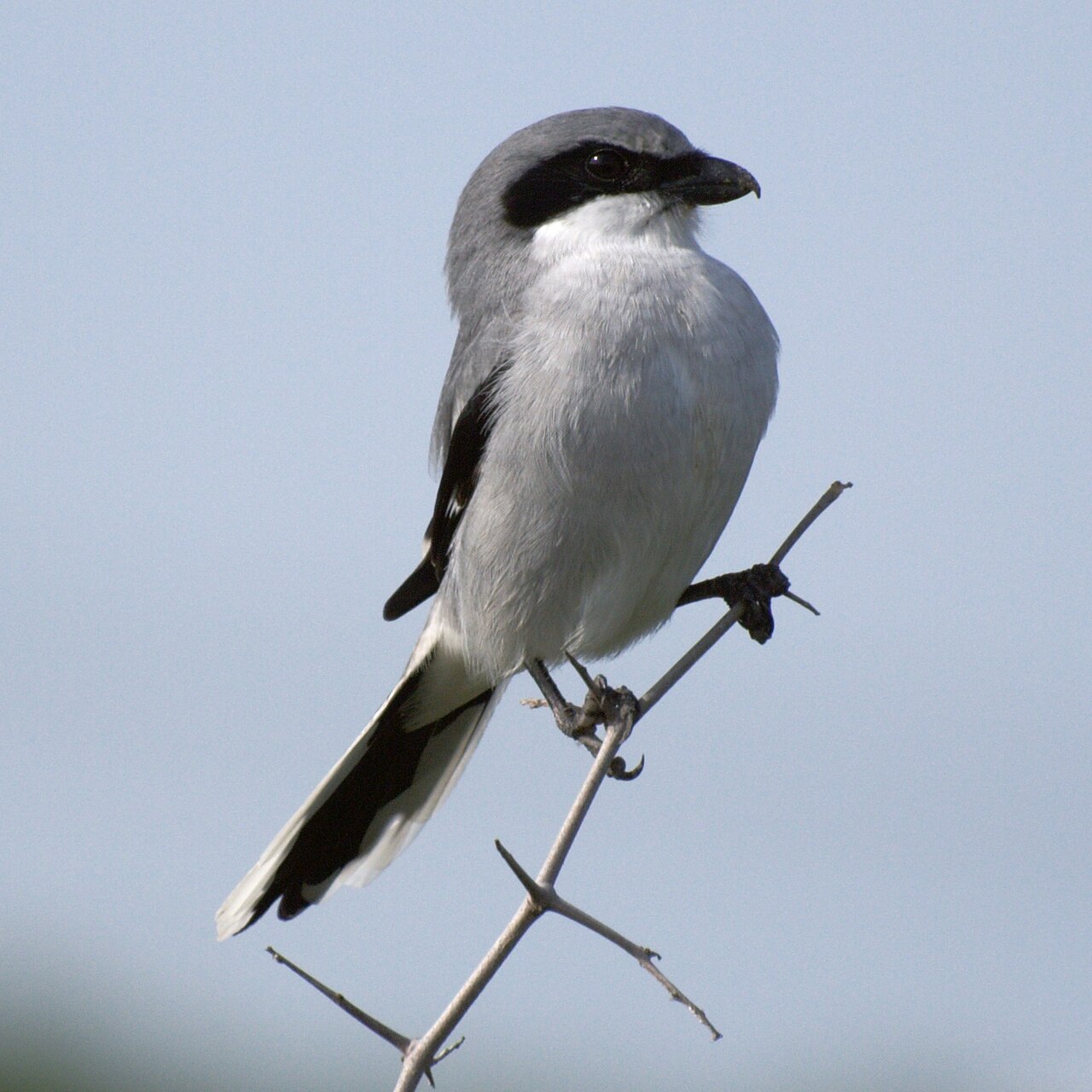
Lacking the powerful feet raptors use to hold prey while tearing, shrikes impale kills on thorns, barbed wire, and sharp twigs to anchor them, producing the larder that earned them the name butcherbird. In winter these caches also serve as food stores, and northern shrikes will build substantial ones.
Loggerhead shrike populations have fallen steeply across much of North America with the loss of open habitat containing scattered thorny shrubs. A shrike larder found on a fence line is a genuinely notable observation and worth reporting in regions where the species has become scarce.
Surprising Bird Eaters
Great blue herons swallow ducklings, rails, and small songbirds whole, and video of a heron taking a duckling circulates online every summer to widespread disbelief. Egrets do the same. Both are so strongly associated with fish that people assume the behaviour is aberrant when it is entirely routine.
Greater roadrunners kill and eat small birds regularly and will take them at feeders in the desert Southwest. Gulls take chicks and eggs at seabird colonies in enormous numbers, and great black-backed gulls kill adult puffins and shearwaters outright. Ravens and crows raid colonies in the same way.
The oddest cases involve small birds. Nest camera studies documented by the Cornell Lab of Ornithology have caught chickadees, wrens, and woodpeckers taking eggs and nestlings from other species, and in some cases destroying nests to claim the cavity. None of these birds is a predator in the ordinary sense, which is exactly why the footage was surprising.
Which Birds Bully Other Birds?
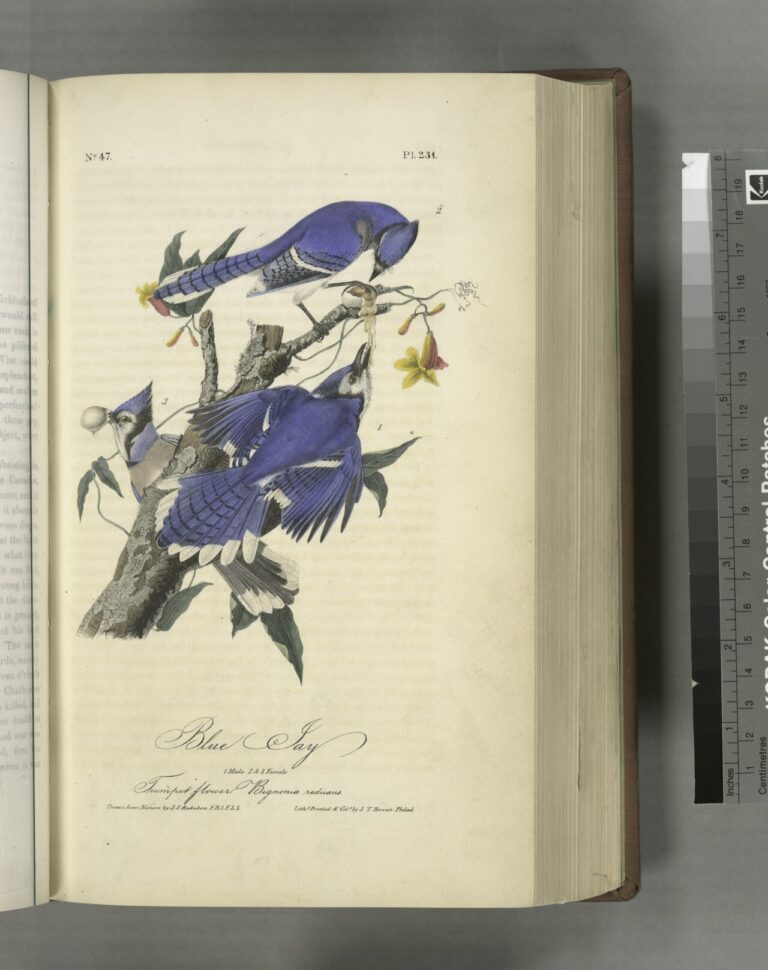
Bullying and predation are different things, and the birds people complain about at feeders are usually doing the former. Blue jays, grackles, starlings, house sparrows, and crows all displace smaller birds from feeders through size and persistence without any intention of eating them.
Some of these do cross into predation. Blue jays and grackles take eggs and nestlings during the breeding season, and house sparrows are genuinely destructive to cavity nesters, entering bluebird and swallow boxes, killing adults and young, and building over the remains. That behaviour is aggression over nest sites rather than hunting.
Legal status matters here. Native birds including blue jays, grackles, and crows are protected under the Migratory Bird Treaty Act, and killing them is illegal regardless of behaviour. House sparrows, European starlings, and rock pigeons are introduced and are not protected, which is the answer to the frequently asked question about which three birds lack protection.
What to Do About a Hawk at Your Feeder
The first thing to understand is that this is normal and that the hawk is doing the same thing the chickadees are: eating. A Cooper’s hawk taking birds at a feeder is not a sign of anything wrong, and it is protected under federal law, so removal is not an option.
If it bothers you, the effective response is to take the feeders down for one to two weeks. The hawk will move to another territory once the concentration of prey disappears, and songbirds disperse to natural food. Putting feeders back after the hawk has relocated usually works, and the alternative of leaving them up simply maintains the hunting ground.
Reducing risk while feeding is the other option. Place feeders either within about 3 feet of a window or more than 30 feet away to limit collision deaths during panic flushes, and site them within a few feet of dense shrub cover so birds have somewhere to reach in a second. Our guide on dealing with hawks at feeders covers the practical measures.
Frequently Asked Questions
Is it common for birds to eat other birds?
Yes. Adult predation by hawks, falcons, owls, and shrikes is the visible form, while nest predation on eggs and nestlings by jays, crows, grackles, and even chickadees is far larger numerically. Nest predation is one of the biggest single causes of songbird mortality in North America.
What is the term for birds that eat other birds?
Avivory, from the Latin for bird and to devour, and a bird that does it is avivorous. In practical usage most people simply say bird-eating raptor, and the specialists in the genus Accipiter are often called bird hawks.
What bird is most likely to eat birds at my feeder?
A Cooper’s hawk or a sharp-shinned hawk. Both are accipiters built for chasing small birds through cover, and both learn quickly that feeders concentrate prey. Cooper’s hawks take doves, starlings, and robins, while sharp-shinned hawks take sparrows, finches, and warblers.
Do owls eat other birds?
Yes, and great horned owls are the most significant, taking barred owls, screech owls, ospreys, crows, and ducks. Roosting birds cannot detect an approaching owl in darkness and owl flight is effectively silent, which is why crows mob great horned owls so aggressively during the day.
Which birds bully other birds?
Blue jays, grackles, starlings, house sparrows, and crows all displace smaller birds at feeders. Jays and grackles also take eggs and nestlings in the breeding season, and house sparrows kill cavity-nesting adults and young in bluebird and swallow boxes, which is aggression over nest sites rather than hunting.
What three birds are not protected?
House sparrows, European starlings, and rock pigeons, all introduced species not covered by the Migratory Bird Treaty Act. Every native bird including blue jays, grackles, crows, and all hawks and owls is federally protected, and killing them is illegal regardless of their behaviour.
How do I stop a hawk hunting at my feeder?
Take the feeders down for one to two weeks. The hawk relocates once the prey concentration disappears, and songbirds disperse to natural food. Removing the hawk is illegal and not an option. When feeders go back up, site them close to dense shrub cover so birds have immediate escape routes.