Birds That Eat Mice: The Rodent Hunters That Actually Work
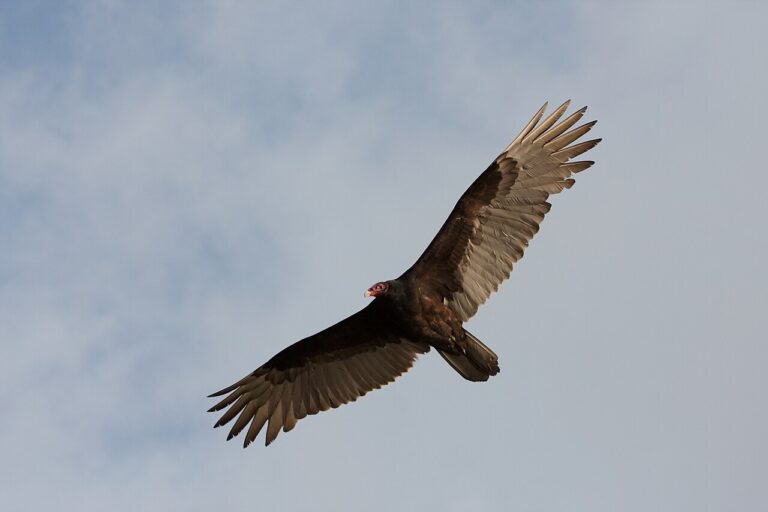
Birds that eat mice are dominated by owls and diurnal raptors: barn owls, great horned owls, screech owls, red-tailed hawks, American kestrels, and northern harriers all take rodents as a primary food. Beyond the raptors, loggerhead and northern shrikes hunt mice despite being songbirds, and crows, ravens, herons, gulls, magpies, and roadrunners all take them opportunistically.
The scale is larger than most people expect. A single barn owl family raising a brood can remove 1,000 to 3,000 rodents in one breeding season, which is why vineyards and row-crop farms across California and the Pacific Northwest install nest boxes as a deliberate pest management strategy rather than as a conservation gesture.
| Bird | Role in Rodent Control |
|---|---|
| Barn owl | Rodent specialist, 1,000+ per family per season |
| Great horned owl | Generalist, takes rats and larger prey |
| Red-tailed hawk | Daytime hunter, open country |
| American kestrel | Small falcon, voles and mice |
| Northern harrier | Quarters low over grassland, hunts by ear |
| Loggerhead shrike | Songbird, impales prey on thorns |
| Crows and ravens | Opportunistic, mostly nestlings and carrion |
Which Birds Eat Mice
Rodent predation among birds splits into specialists and opportunists. The specialists have anatomy built for it: silent flight feathers, asymmetrical ear openings for pinpointing sound, talons sized for gripping a small mammal, and a hooked bill for tearing. Owls and hawks fall here, and rodents make up the majority of their diet in most of their range.
The opportunists take a mouse when one presents itself but are not equipped to hunt them efficiently. Crows, ravens, magpies, gulls, and herons all belong in this group, and their mouse consumption is real but incidental. A great blue heron stalking voles in a hayfield is a common sight and surprises people who associate it only with water.
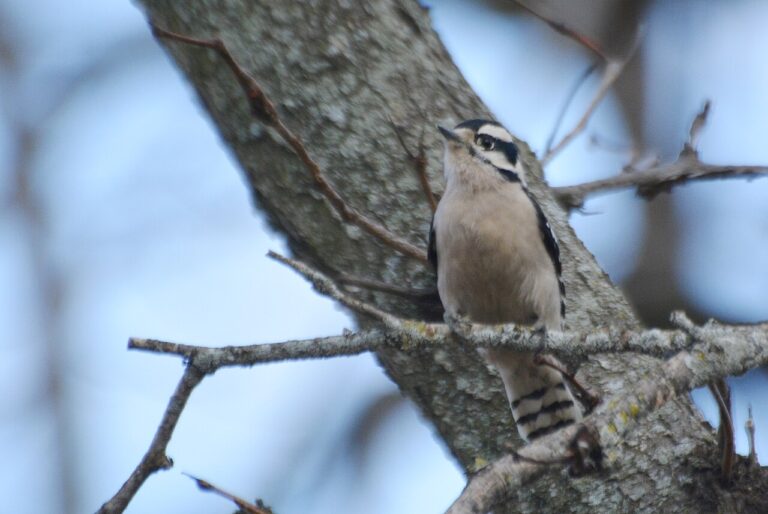
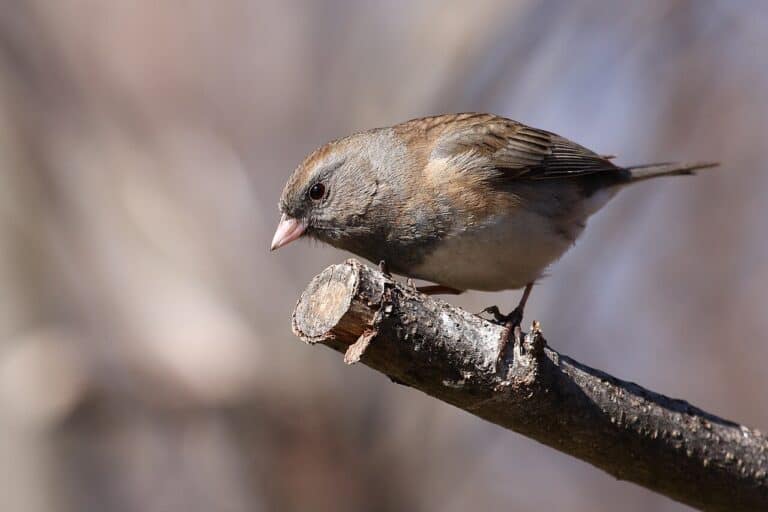
Almost no backyard feeder bird eats mice. Chickadees, finches, cardinals, and sparrows lack both the equipment and the inclination, and blue jays and grackles take nestling rodents only rarely. The birds doing the rodent work in a suburban yard are the ones you rarely see, hunting at dawn, dusk, and after dark. Our guide to birds that eat snakes covers a closely related set of hunters.
Owls: The Most Efficient Mouse Hunters
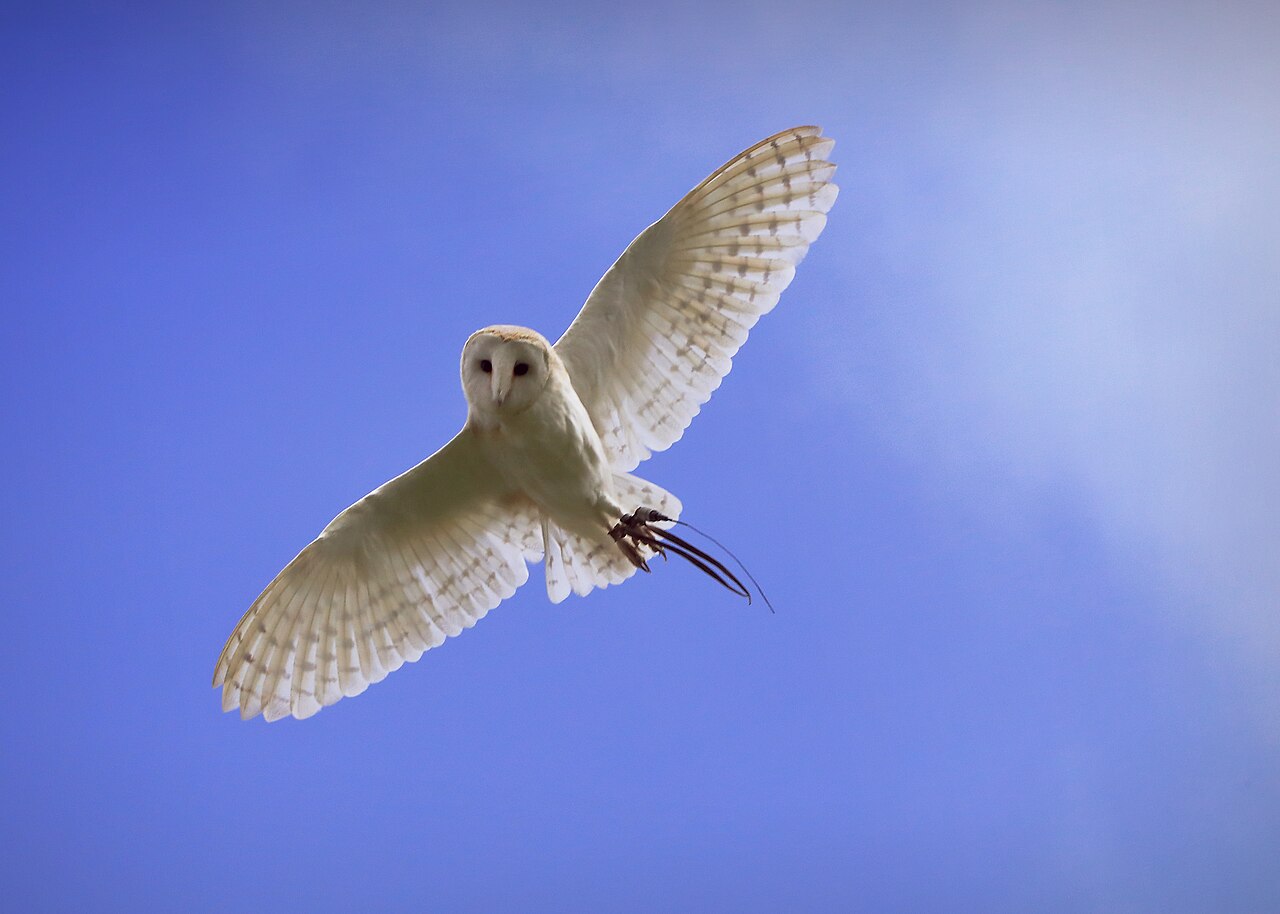
Barn owls are the clearest rodent specialists in North America. Their facial disc functions as a parabolic reflector directing sound to asymmetrically placed ear openings, which lets the bird locate a mouse by sound alone in complete darkness with an accuracy that has been demonstrated repeatedly in laboratory conditions.
Diet studies based on pellet analysis routinely find voles, mice, shrews, and rats making up well over 90 percent of barn owl intake. A breeding pair with a full brood removes rodents at a rate that measurably affects local populations, which is the basis for the nest box programmes now standard in California vineyards and studied extensively by researchers at the University of California.
Other owls contribute differently. Great horned owls take rats, voles, and mice but also rabbits, skunks, and other birds, so their rodent share is lower. Eastern screech owls take mice heavily alongside large insects. Short-eared owls hunt voles over open grassland by day as well as at dusk. Pellet contents reveal all of this directly, as our guide to owl pellets explains.
Silent flight is the shared advantage. Owl flight feathers carry a comb-like fringe on the leading edge and a soft trailing fringe that break up the turbulence responsible for wing noise, and the effect is complete enough that a barn owl passing a few feet overhead is inaudible. That silence serves the owl twice, hiding its approach and leaving its own hearing unobstructed during the final strike.
Hawks and Falcons
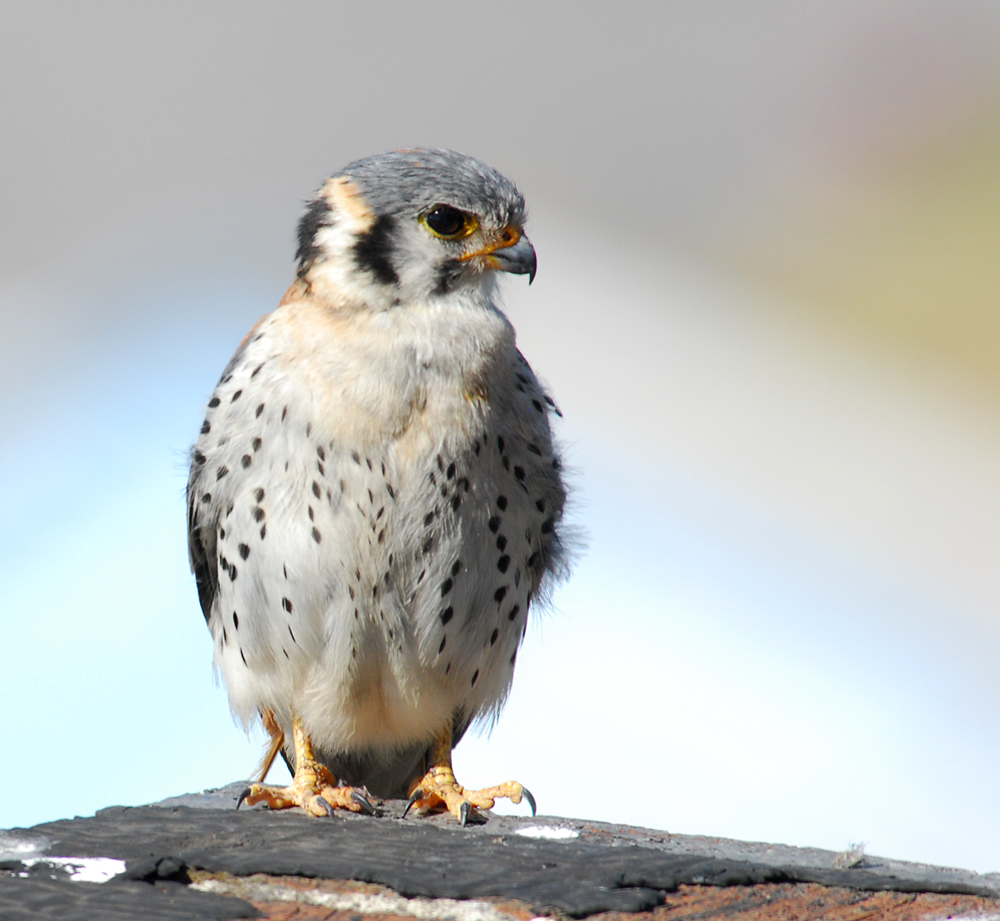
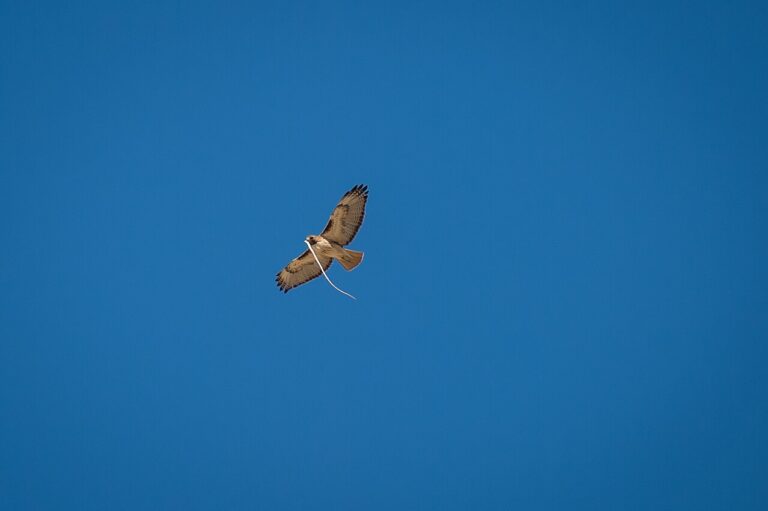
Red-tailed hawks are the most visible daytime rodent hunters across most of North America, and the bird perched on a highway light pole scanning the verge is almost always one. They hunt from elevated perches, drop onto prey, and take voles, mice, ground squirrels, and rats depending on what the local landscape offers.
American kestrels are the small falcon of the group, roughly the size of a mourning dove, and they hunt voles, mice, and large insects from wires and perches. They can see ultraviolet light, and vole urine trails fluoresce in UV, so a kestrel hovering over a field is reading rodent runways that are invisible to human eyes.
Northern harriers hunt differently again, quartering low and slow over grassland with a facial disc similar to an owl’s and hunting substantially by ear. Rough-legged hawks arrive from the Arctic in winter and take voles almost exclusively. Together these species cover the daylight hours that the owls do not, and in landscapes holding both, rodents face pressure around the clock.
Shrikes: The Songbird That Hunts Mice
Loggerhead and northern shrikes are the odd entry on any list of rodent-hunting birds, because they are songbirds rather than raptors. Roughly the size of a robin, they hunt insects, small birds, lizards, and mice, killing vertebrate prey with a precise bite to the neck that severs the spinal cord.
Lacking the powerful talons that raptors use to hold prey while tearing, shrikes impale their catches on thorns, barbed wire, and sharp twigs to anchor them. The resulting larder of impaled prey is the origin of the nickname butcherbird and is often the first sign that a shrike is present in an area.
Loggerhead shrike populations have declined steeply across much of North America, tied to loss of open habitat with scattered thorny shrubs. Finding a shrike larder on a fence line is a genuinely notable observation and worth reporting to a regional bird records committee in areas where the species is scarce.
Surprising Mouse Eaters
Great blue herons take voles and mice regularly in fields and marsh edges, swallowing them whole after a stabbing strike. Great egrets do the same. Both are so strongly associated with fish that a heron standing in dry grass often confuses observers who assume it is lost rather than hunting.
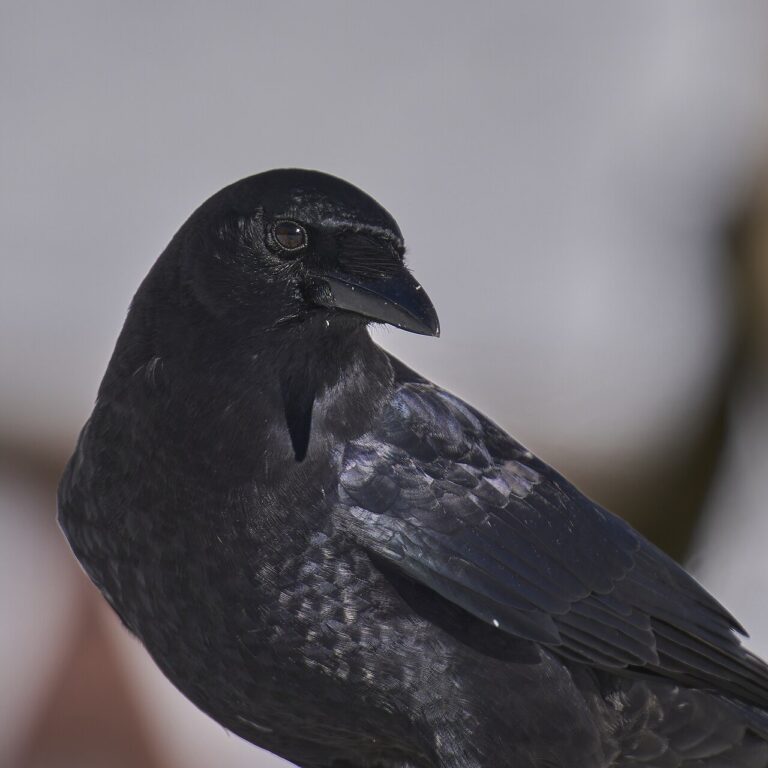
Corvids take mice opportunistically, and crows in particular will kill and eat nestling rodents found while foraging. Gulls do the same in coastal and landfill settings. Greater roadrunners in the Southwest are effective mouse hunters, running prey down and killing it with the bill.
Wild turkeys, guineafowl, and even chickens will kill and eat a mouse if one presents itself, which surprises people who think of them as seed eaters. Domestic poultry are genuinely useful for this in barns and outbuildings. Our guide to what mice eat covers the other side of that relationship.
Why Bird Feeders Attract Mice
Spilled seed under a feeder is a concentrated, reliable food source at ground level, and mice find it within days. This is the single most common way that people who feed birds inadvertently create a rodent problem, and it is why the rodent question comes up constantly in bird feeding forums.
Three measures do most of the work. Use a seed catcher tray under the feeder to intercept spill, sweep or rake the ground beneath it regularly, and switch to hulled sunflower hearts or nyjer, which produce far less waste than striped sunflower or mixed seed with filler. Bringing feeders in overnight during heavy rodent activity also helps.
Suet and nyjer attract fewer rodents than mixed seed. Cracked corn and millet-heavy blends attract the most, partly because much of it gets rejected by birds and ends up on the ground. Storing seed in sealed metal containers rather than the original bags matters as much as feeder management does. Our guide to mouse poop identification covers how to confirm what has arrived.
Attracting Rodent-Hunting Birds
Barn owl nest boxes are the most effective single intervention where habitat suits. Boxes need to be mounted 12 to 20 feet up, facing away from prevailing weather, with open hunting ground nearby, and they are most successful on farms, ranches, and large rural properties rather than in dense suburbs.
Raptor perches work for the daytime hunters. A bare pole 15 to 20 feet tall with a crossbar in an open field gives hawks and kestrels a hunting position where none exists naturally, and they are used within weeks in areas with resident birds. Kestrel boxes are a second option and are considerably easier to site than owl boxes.
Rodenticide use is the single biggest thing working against all of this. Second-generation anticoagulants accumulate in rodents that remain alive for days, and raptors that eat them accumulate the poison in turn, with documented mortality across owl and hawk populations. Encouraging rodent-hunting birds and using anticoagulant bait are mutually exclusive strategies. Our guide on attracting owls covers siting in detail.
How Much Difference Do They Actually Make?
Research on barn owl boxes in agricultural settings has found meaningful reductions in rodent activity, and the economics work out favourably compared with baiting programmes over multiple seasons. The Cornell Lab of Ornithology notes that barn owls are among the most economically valuable birds in North America for this reason.
Expectations should still be calibrated. Raptors reduce rodent numbers and suppress population growth, but they do not eliminate rodents from a property, and they respond to prey abundance rather than controlling it outright. A serious indoor mouse problem is a building exclusion problem, not a bird problem.
The realistic framing is that encouraging rodent-hunting birds lowers the background pressure while sealing entry points handles the part that matters indoors. Combining the two works. Relying on either alone generally does not, and relying on poison undermines the first while creating a secondary problem.
Related reading: Birds That Eat Fish.
Related reading: Birds That Eat Caterpillars.
Related reading: Birds That Eat Grasshoppers.
Frequently Asked Questions
Which birds will eat mice?
Barn owls, great horned owls, screech owls, red-tailed hawks, American kestrels, northern harriers, and rough-legged hawks are the main specialists. Loggerhead and northern shrikes hunt mice despite being songbirds, and crows, ravens, magpies, gulls, herons, and roadrunners take them opportunistically.
What bird eats the most mice?
The barn owl, by a clear margin. Rodents typically make up over 90 percent of its diet, and a breeding family can remove 1,000 to 3,000 rodents in a single season. This is why nest box programmes are used as a working pest management tool on farms and vineyards.
Do backyard birds eat mice?
Almost never. Chickadees, finches, cardinals, and sparrows lack both the equipment and the inclination, and jays and grackles take nestling rodents only rarely. The birds doing rodent work around a house are owls and hawks, hunting at times when most people are not watching.
Do bird feeders attract mice?
Yes, through spilled seed on the ground. Use a seed catcher tray, sweep beneath the feeder regularly, and switch to hulled sunflower hearts or nyjer, which produce far less waste than mixed seed with filler. Store seed in sealed metal containers rather than the original bags.
Will owls get rid of my mice?
They will reduce numbers outdoors but not eliminate them, and they do nothing about mice already inside a building. Raptors lower background rodent pressure on a property, and sealing entry points handles the indoor part. Combining both works, relying on either alone generally does not.
Do hawks hunt mice during the day?
Yes. Red-tailed hawks, American kestrels, northern harriers, and rough-legged hawks are all daytime rodent hunters, which is why they perch on highway poles and fence lines scanning the verge below. Kestrels can even see ultraviolet light, letting them track vole urine trails that fluoresce in UV.
Does rat poison hurt owls and hawks?
Yes, seriously. Second-generation anticoagulants stay in rodents that remain alive for days, and raptors that eat those rodents accumulate the poison, with documented mortality across owl and hawk populations. Encouraging rodent-hunting birds and using anticoagulant bait cannot be done at the same time.