Bird Feather Identification Guide
To identify a bird feather, work through four clues in order: the feather type (flight, tail, or body), its size, its color, and its pattern, then match those against the birds in your area. A long, stiff, asymmetrical feather is a wing or tail feather from a larger bird, while a small, soft, symmetrical one is a body or down feather. Barred patterns point to hawks and owls, iridescence to grackles or hummingbirds, and bold color to birds like cardinals and blue jays. Before you start a collection, though, there is a crucial legal point: in the United States it is illegal to keep the feathers of most native birds. This guide walks through how to identify a feather step by step, common backyard examples, and exactly what the law allows.
| Clue | What to look for |
|---|---|
| Type | Flight, tail, contour (body), or fluffy down |
| Size | Length hints at the size of the bird |
| Shape | Asymmetrical vane means a flight feather |
| Color and pattern | Barred, spotted, iridescent, or solid |
| Where found | Habitat narrows the likely species |
Identify a feather in four steps: type, size, colour and pattern. A long stiff asymmetrical feather is a flight feather, a symmetrical one comes from the tail, and a soft fluffy one is body down. Most feathers of native birds are illegal to keep in the United States.
How to identify a feather step by step
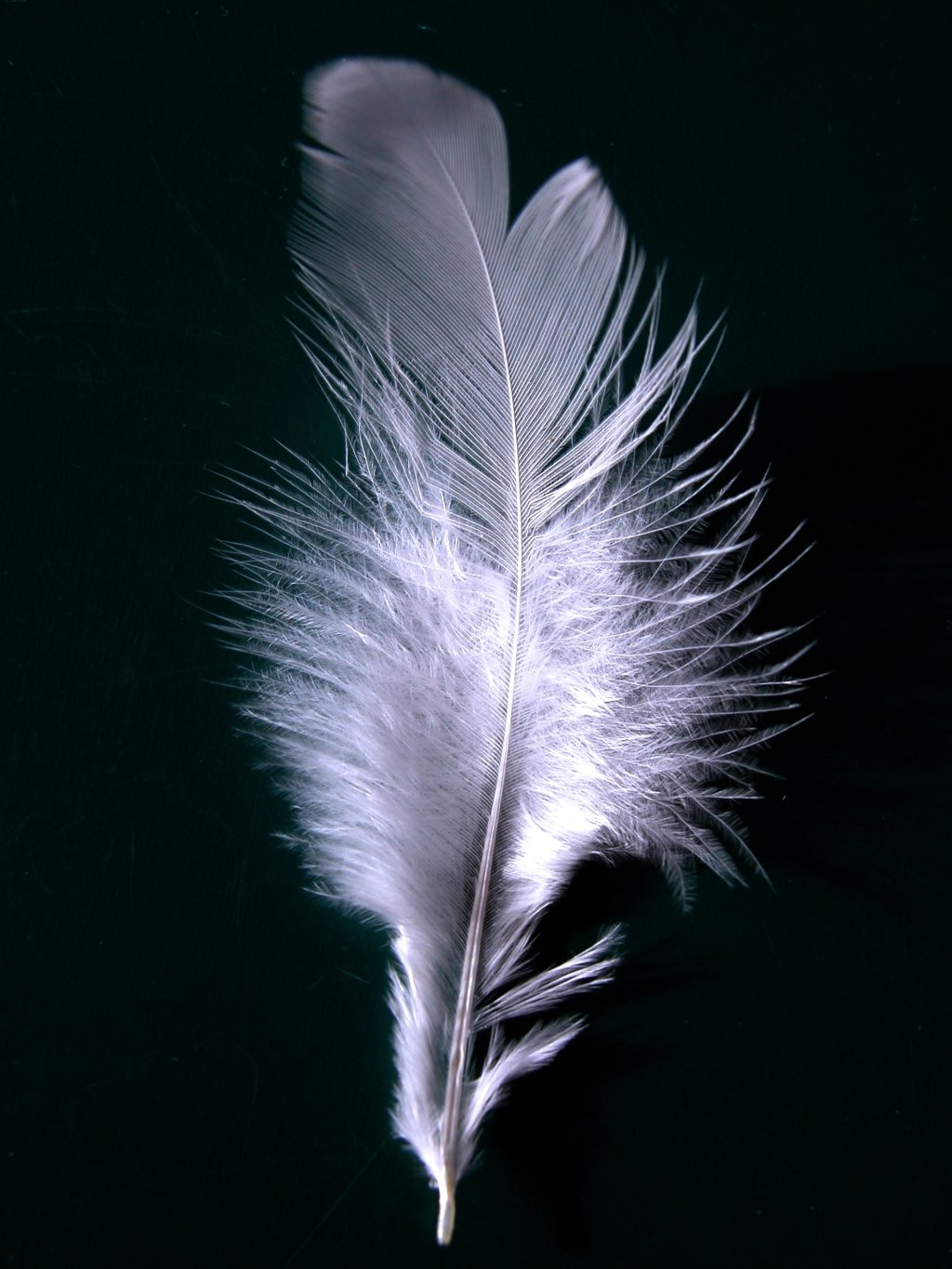
Start with type. A flight feather from the wing is long, stiff, and asymmetrical, with a narrow leading edge and a wider trailing edge, built to cut through air. A tail feather is also long and stiff but more symmetrical. A contour feather covers the body and is smaller and smoother, and a down feather is small, fluffy, and lacks a firm central shaft. Identifying the type tells you where on the bird the feather came from and roughly how big the bird was.
Next, gauge size and shape, then study color and pattern closely, including how the colors are arranged along the vane. Finally, factor in where you found it and what birds live there. A barred brown flight feather found under a backyard tree in the East is far more likely to be a hawk or owl than anything exotic. The U.S. Fish and Wildlife Service Feather Atlas is the authoritative free reference for matching a feather to a species.
Feather types explained
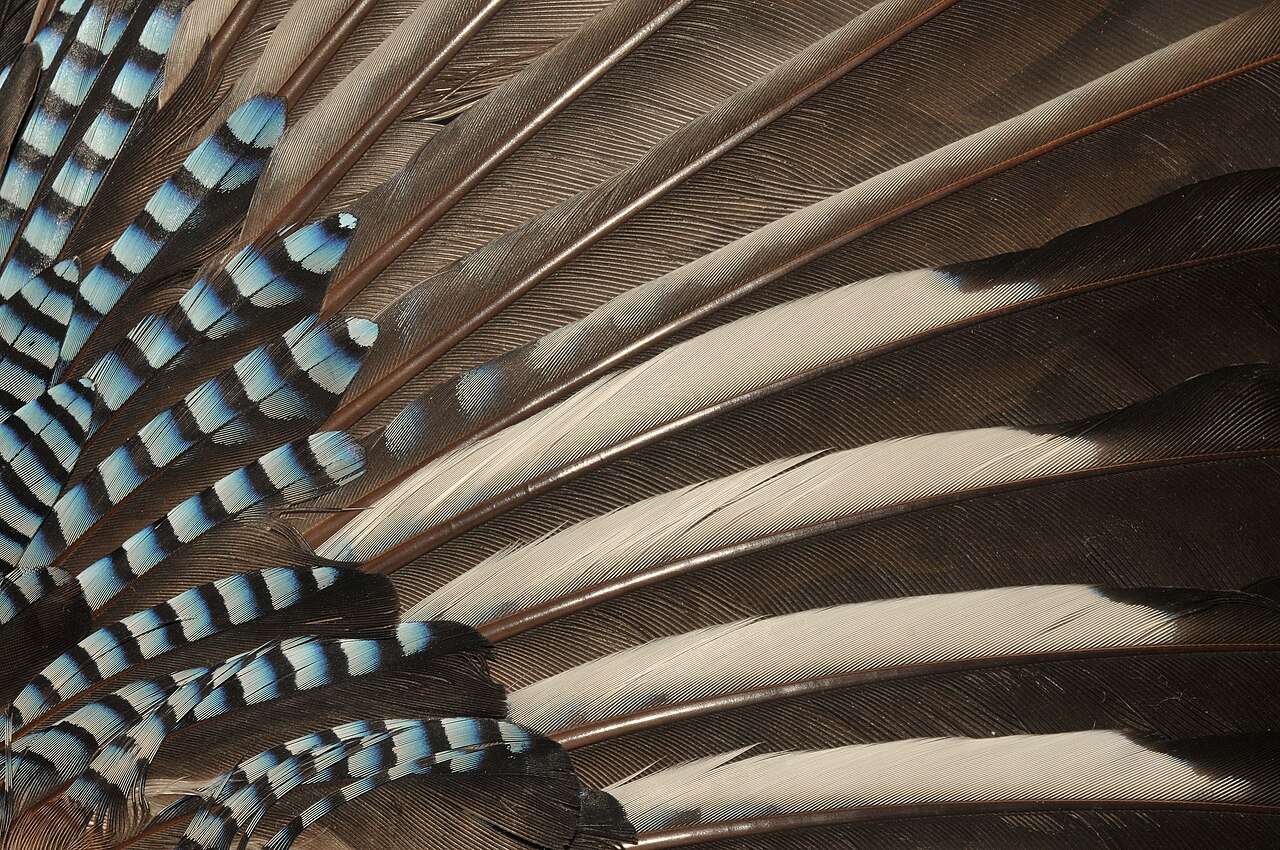
Birds grow several feather types, and knowing them speeds up identification. Primaries and secondaries are the flight feathers of the wing, long and asymmetrical, and they often show the barring or color bands used in identification. Rectrices are the tail feathers, which steer and brake and tend to be more symmetrical, sometimes with bold tips or spots. Contour feathers give the body its shape and color, and are what you most often see on a living bird.
Beneath those lie down feathers, soft and insulating with no stiff shaft, and semiplumes, a fluffy intermediate type. Most feathers you find on the ground are either dropped flight and tail feathers from molt or scattered contour feathers. Molt is the natural, gradual replacement of feathers, so finding a feather usually just means a bird passed through, not that anything is wrong. The Cornell Lab of Ornithology explains that this regular molt is why healthy birds routinely drop the feathers you later find.
Identifying feathers by color and pattern
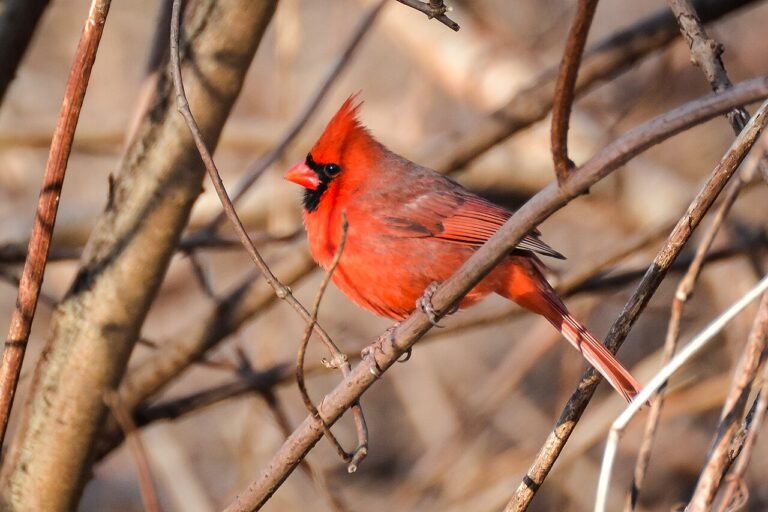
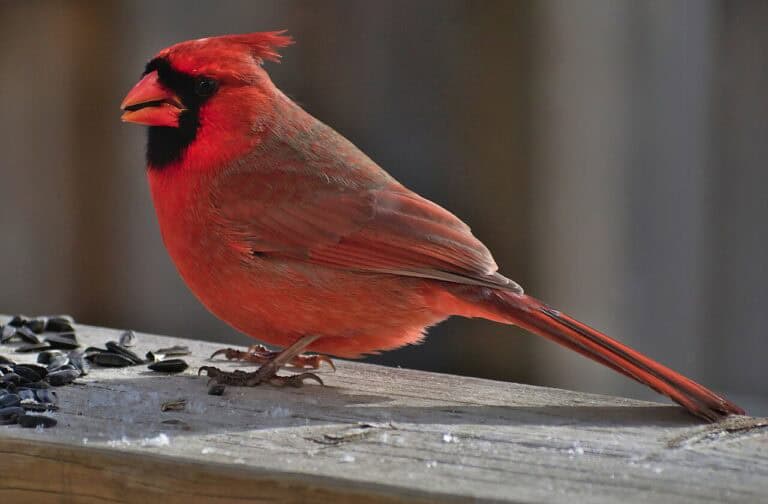
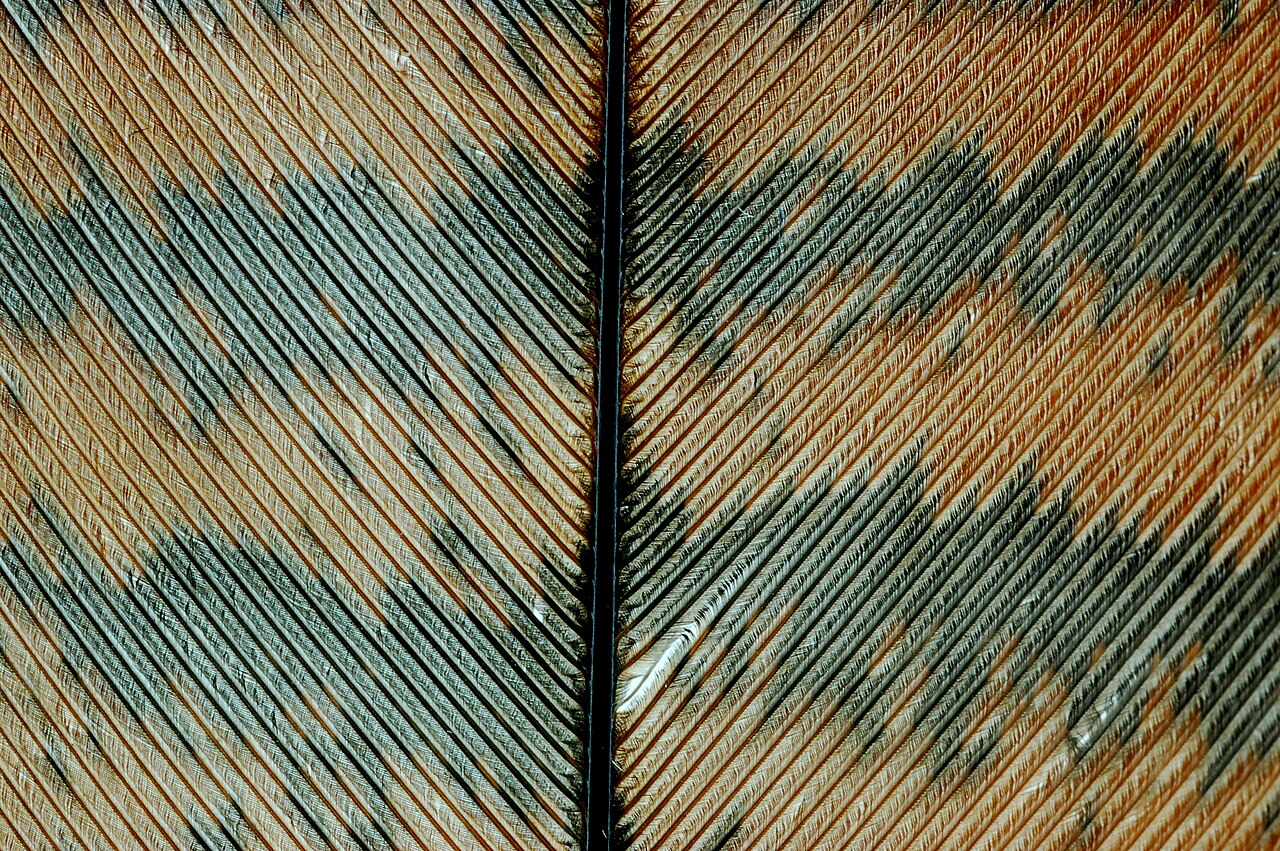
Pattern is one of the strongest clues. Barred feathers, with horizontal stripes, are typical of birds of prey: hawks show crisp brown-and-cream bars, and many owls show soft mottled barring. Spotted or speckled feathers appear on birds like flickers and some thrushes. Iridescent feathers that shift color in the light belong to grackles, starlings, hummingbirds, and the like. Solid bold colors point to specific birds: brilliant red to a Northern Cardinal, bright blue with black bars and white to a blue jay.
Color placement matters too. A feather that is one color at the base and another at the tip, or that has a dark band near the end, narrows the options quickly. Blue feathers are especially interesting: most bird blue is structural, created by the way the feather scatters light rather than by pigment, which is why a blue jay feather can look gray when backlit. Matching both color and its arrangement against a reference like the Feather Atlas usually cracks the identification.
Common backyard feathers
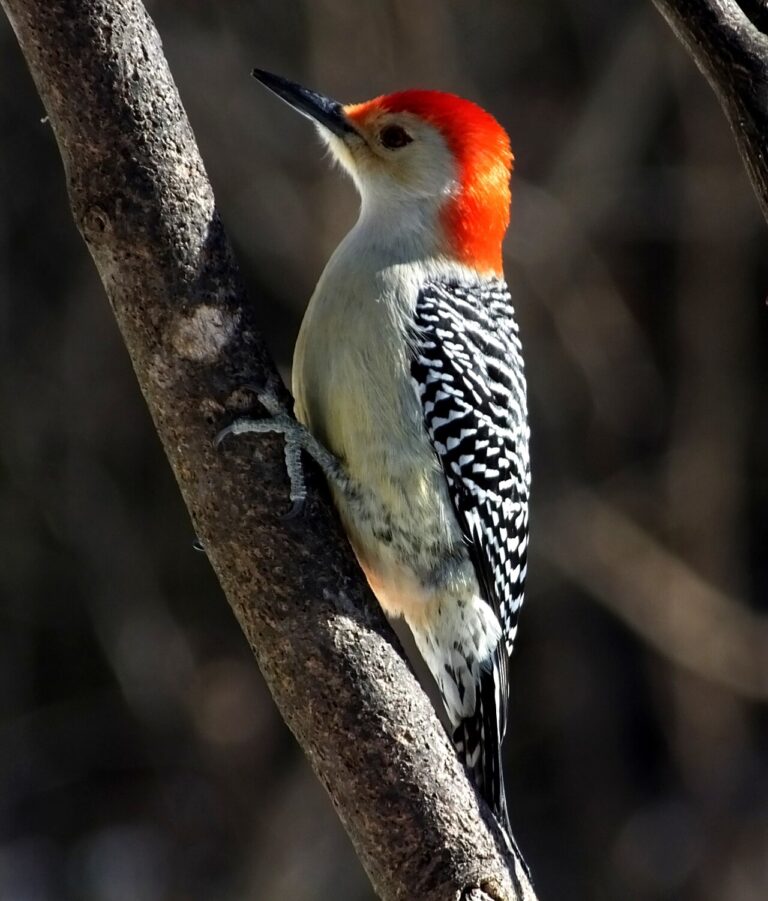
A handful of feathers turn up again and again in North American yards. Mourning Dove feathers are soft gray-brown, often with a black spot. Blue Jay feathers are unmistakable, vivid blue with black barring and white patches. Northern Cardinal feathers range from bright red (male) to warm brown with red edges (female). Woodpecker feathers, from species like the Northern Flicker, can show barring and bright shafts of yellow or red.
American Robin feathers are gray with warm orange on the breast feathers. Crow and raven feathers are glossy black, large, and often show a subtle purple or blue sheen. Wild Turkey feathers are large, banded, and iridescent. Larger barred feathers found in the yard are usually from hawks or owls, both of which are strictly protected, as covered next. Cross-referencing with our backyard bird ID guide helps you match feather to bird.
The law: which feathers are illegal to keep
This is the part every collector needs to know. In the United States, the Migratory Bird Treaty Act makes it illegal to possess the feathers, nests, or eggs of most native bird species, even feathers you simply find on the ground. The law was written to stop the plume trade, and it does not distinguish between a hunted bird and a naturally shed feather. Eagle feathers carry additional, even stricter protection under a separate federal law, and possessing hawk or owl feathers is likewise prohibited for most people.
There are limited exceptions. Feathers from non-native birds such as the European Starling, House Sparrow, and feral pigeon are not protected, and feathers from legally hunted game birds like wild turkey, pheasant, and quail may generally be kept. Federally recognized Native American tribal members have specific provisions for eagle feathers through the National Eagle Repository. For everyone else, the safe and lawful approach is to admire, photograph, and identify a found feather, then leave it where it lies. Enjoying feathers this way keeps you on the right side of the law and supports bird conservation.
Tools and resources for feather ID
Several free resources make identification easier. The U.S. Fish and Wildlife Service Feather Atlas offers high-resolution scans of flight and tail feathers for hundreds of North American species and is searchable by color, pattern, and size, making it the gold standard. Birding communities and apps can help with photos, and a good regional field guide narrows the candidates by range.
Pair those tools with the step-by-step method here, type, size, shape, color, pattern, location, and most backyard feathers become identifiable. If you enjoy this kind of detective work, you will likely also enjoy our companion guides to bird egg identification, bird nest identification, and even bird poop identification, which use the same clue-based approach to reading the signs birds leave behind.
Parts of a feather: a quick anatomy guide
Knowing a feather’s anatomy makes identification easier. The central shaft has two parts: the hollow calamus (the bare quill that anchors into the skin) and the rachis (the shaft running through the feathered portion). Spreading from the rachis is the vane, the flat surface, built from hundreds of barbs. Those barbs hook together with microscopic barbules and hooklets, which is what gives a flight feather its smooth, zip-together surface.
When you assess a found feather, note whether the vane is symmetrical (tail feather) or asymmetrical with a narrow leading edge (wing flight feather), and whether the base is fluffy down (for insulation) or firm. These structural cues, read alongside color and size, quickly place a feather in the right category before you ever open a reference like the Feather Atlas.
What to do with a feather you find
Once you have identified a feather, the best practice in most of the United States is to photograph it and leave it where it lies, because the Migratory Bird Treaty Act makes possessing feathers of most native birds illegal even when found. A clear photo next to a ruler captures everything you need for identification and for sharing with birding communities, without the legal risk of collecting.
If you do handle a feather to examine it, wash your hands afterward, as feathers can carry mites or bacteria. For teaching or curiosity, feathers from legal sources, non-native species, or purchased craft feathers are fine to keep. Approaching found feathers with a look-photograph-leave habit keeps you lawful and supports conservation, and it fits naturally with the observe-don’t-collect ethic behind our nest and egg identification guides.
Is There an App That Identifies Bird Feathers?
There is no reliable app that identifies a feather from a photo, and this is worth stating plainly because the search results suggest otherwise. Bird identification apps such as Merlin are trained on whole birds, on song and on habitat context, none of which a single loose feather provides. Pointing one at a feather will produce a confident answer that is essentially a guess.
What does work is a reference collection you search by attributes rather than by image. The US Fish and Wildlife Service maintains the Feather Atlas, a searchable archive of scanned flight and tail feathers from North American birds that lets you filter by feather length, pattern and colour and compare your find against high-resolution scans. It is the closest thing to a definitive tool and it is free.
Two practical notes. Body feathers are far harder than flight feathers, since they are small, plain and similar across many species, so an unidentifiable soft grey feather may simply not be identifiable. And identification does not create a right to keep anything: under the Migratory Bird Treaty Act, possessing feathers of native migratory birds is prohibited without a permit, even feathers found on the ground. The USFWS Feather Atlas is the reference to work from.
Frequently Asked Questions
How do I identify a bird feather?
Work through four clues: the feather type (flight, tail, body, or down), its size, and its color and pattern, then match them to birds in your area. A free reference like the USFWS Feather Atlas is the best matching tool.
Is it illegal to keep bird feathers?
In the United States, yes for most species. The Migratory Bird Treaty Act makes it illegal to possess feathers of most native birds, even ones found on the ground. Non-native birds and legally hunted game birds are exceptions.
How do I identify a hawk feather?
Hawk feathers are typically long flight or tail feathers with crisp brown-and-cream barring. Note, however, that possessing hawk feathers is illegal for most people, so identify and photograph rather than collect.
How can I tell an owl feather?
Owl feathers often show soft, mottled barring and have a velvety edge that muffles sound in flight. Like hawk feathers, they are federally protected and should not be kept.
Can I keep a turkey feather?
Generally yes. Wild turkey is a legally hunted game bird, so its feathers are usually legal to keep, unlike the feathers of most protected native songbirds and raptors.
What do barred feathers mean?
Barred (horizontally striped) feathers most often come from birds of prey such as hawks and owls, though some other birds like flickers show barring too. Barring is a strong clue toward a raptor.
Why do blue feathers look gray sometimes?
Most blue in feathers is structural, produced by the way the feather scatters light rather than by pigment. When backlit, that structural blue disappears and the feather can look gray or brown.
What is the best tool for feather identification?
The U.S. Fish and Wildlife Service Feather Atlas is the authoritative free resource, with searchable high-resolution scans of flight and tail feathers for hundreds of North American species.