Baby Macaw: Development, Cost, and What Ownership Means
A baby macaw is called a chick, and it hatches naked, blind, and weighing around 20 to 25 grams, roughly the weight of four coins. Depending on the species it stays in the nest cavity for 90 to 110 days, one of the longest nestling periods of any parrot, and it is not fully weaned until 3 to 5 months old. By the time it leaves the nest it is close to adult size and already carries most of its adult colour.
Anyone considering one should start with the numbers rather than the photographs. A hand-raised blue-and-gold macaw typically costs 1,000 to 2,500 dollars, a hyacinth macaw runs 10,000 to 40,000 and is restricted under international trade rules, and either bird can live 50 to 80 years. A macaw bought by a person in their thirties will almost certainly outlive them.
| Feature | Baby Macaw |
|---|---|
| Name for young | Chick |
| Weight at hatching | About 20 to 25 g |
| Incubation | 24 to 30 days by species |
| Eyes open | Around 10 to 14 days |
| Time in nest cavity | 90 to 110 days |
| Weaning age | 3 to 5 months |
| Adult lifespan | 50 to 80 years |
What a Baby Macaw Looks Like
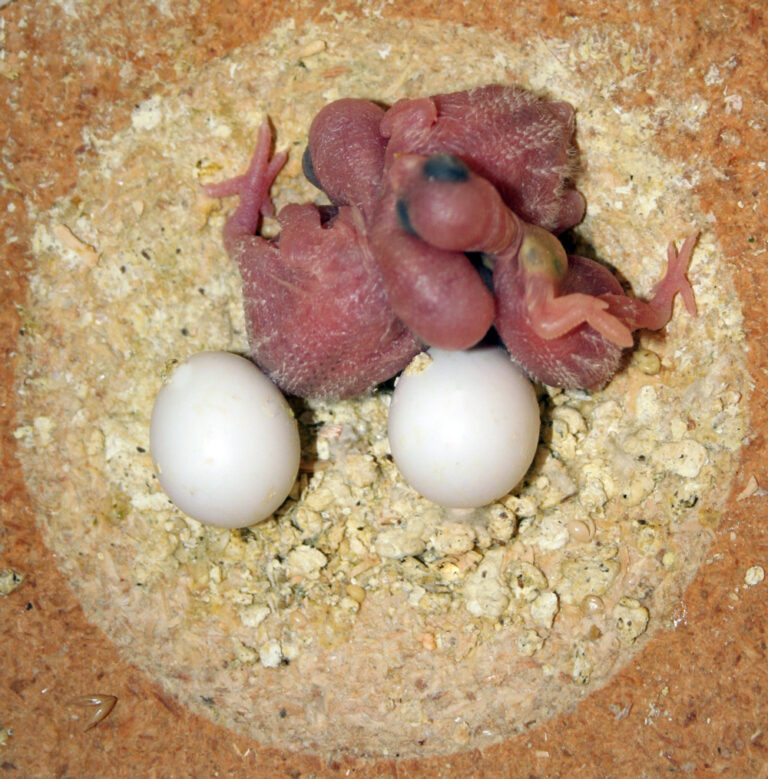
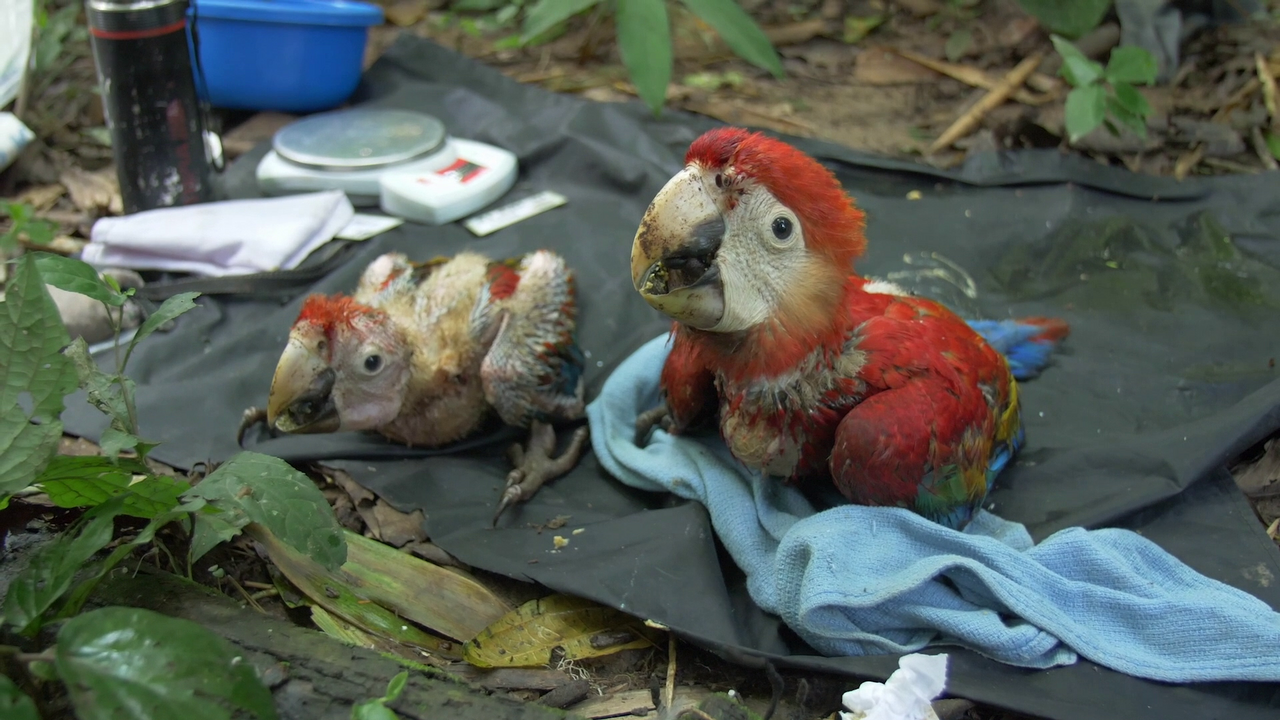
A newly hatched macaw looks nothing like the bird it becomes. The skin is pink and translucent, the eyes are sealed shut, and the head is disproportionately large and wobbles until neck muscles develop. There is no down at all in most species, which makes constant brooding by a parent essential in the first weeks.
Pin feathers begin pushing through at around three weeks as waxy grey quills, and the sequence of colour emergence follows the species. A blue-and-gold macaw chick shows the yellow chest before the blue back, and a scarlet macaw shows red first. By eight to ten weeks the bird is largely feathered and recognisable.
Juveniles differ from adults in three subtle ways that persist for a year or more. The iris is dark rather than the pale yellow or grey of an adult, the tail is shorter, and the beak is smoother and often slightly paler. Anyone being sold a bird as a young chick can check the eye colour, which is difficult to fake in a photograph. Our guide to the baby cockatiel shows the same developmental sequence in a much smaller parrot.
How Long Baby Macaws Stay in the Nest
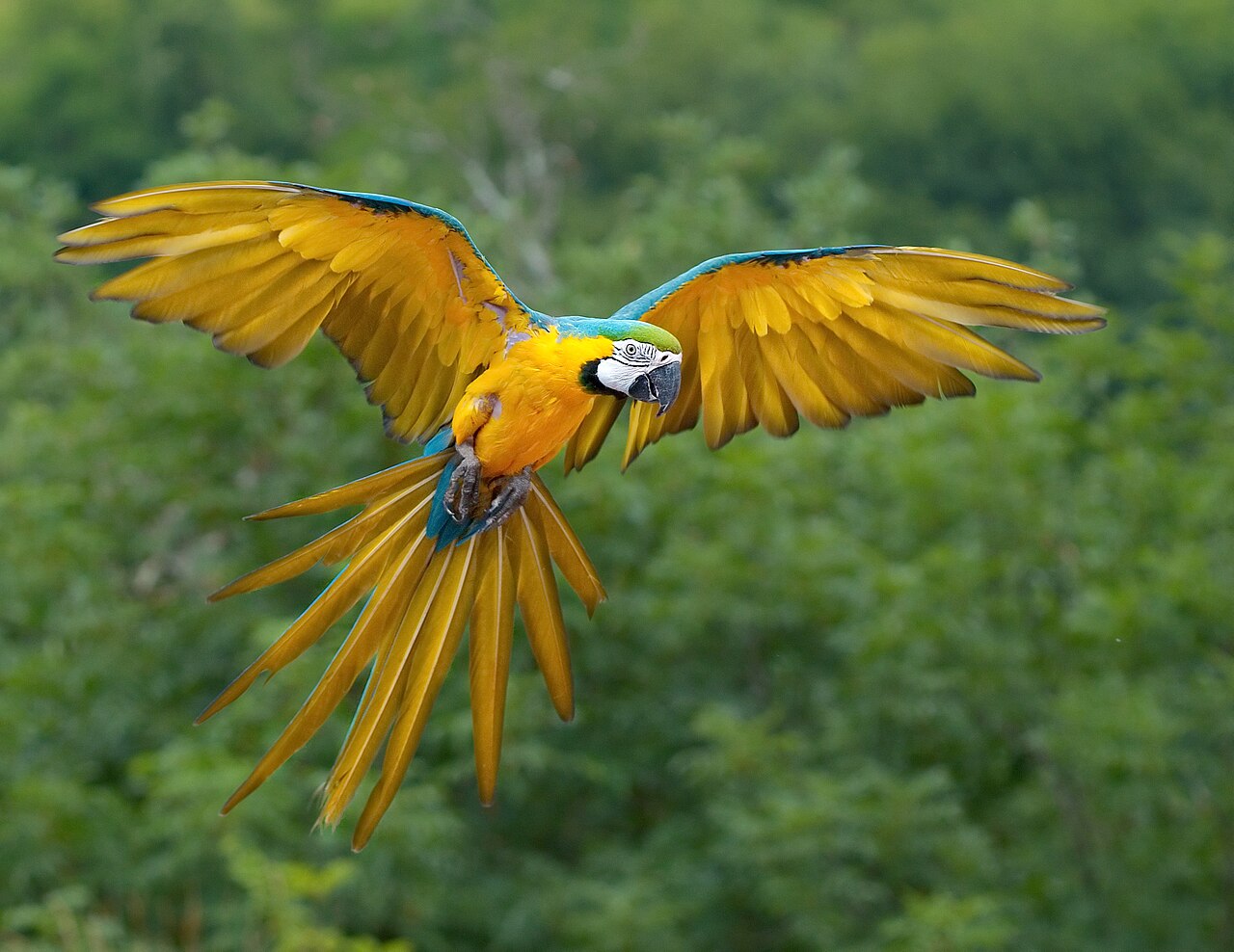
Macaws are cavity nesters, using hollows in large trees and, in some species, holes in cliff faces. Incubation runs 24 to 28 days in blue-and-gold and scarlet macaws and closer to 28 to 30 in hyacinths, and the female does nearly all of it while the male provisions her.
The nestling period is exceptionally long. Chicks remain in the cavity for roughly 90 to 110 days, which is triple what many similarly sized birds require, and this slow development is directly linked to the species’ long lifespan and delayed maturity. Macaws do not breed until they are 3 to 6 years old.
Clutch size is small, typically 2 to 3 eggs, and in the wild often only one chick fledges because the first-hatched has a decisive size advantage. Incubation begins with the first egg rather than the last, which is what creates that staggered hatching and the resulting size gap between siblings. That low reproductive output is why macaw populations recover so slowly from trapping and habitat loss, and why several species are in serious trouble.
Hand-Feeding and Weaning
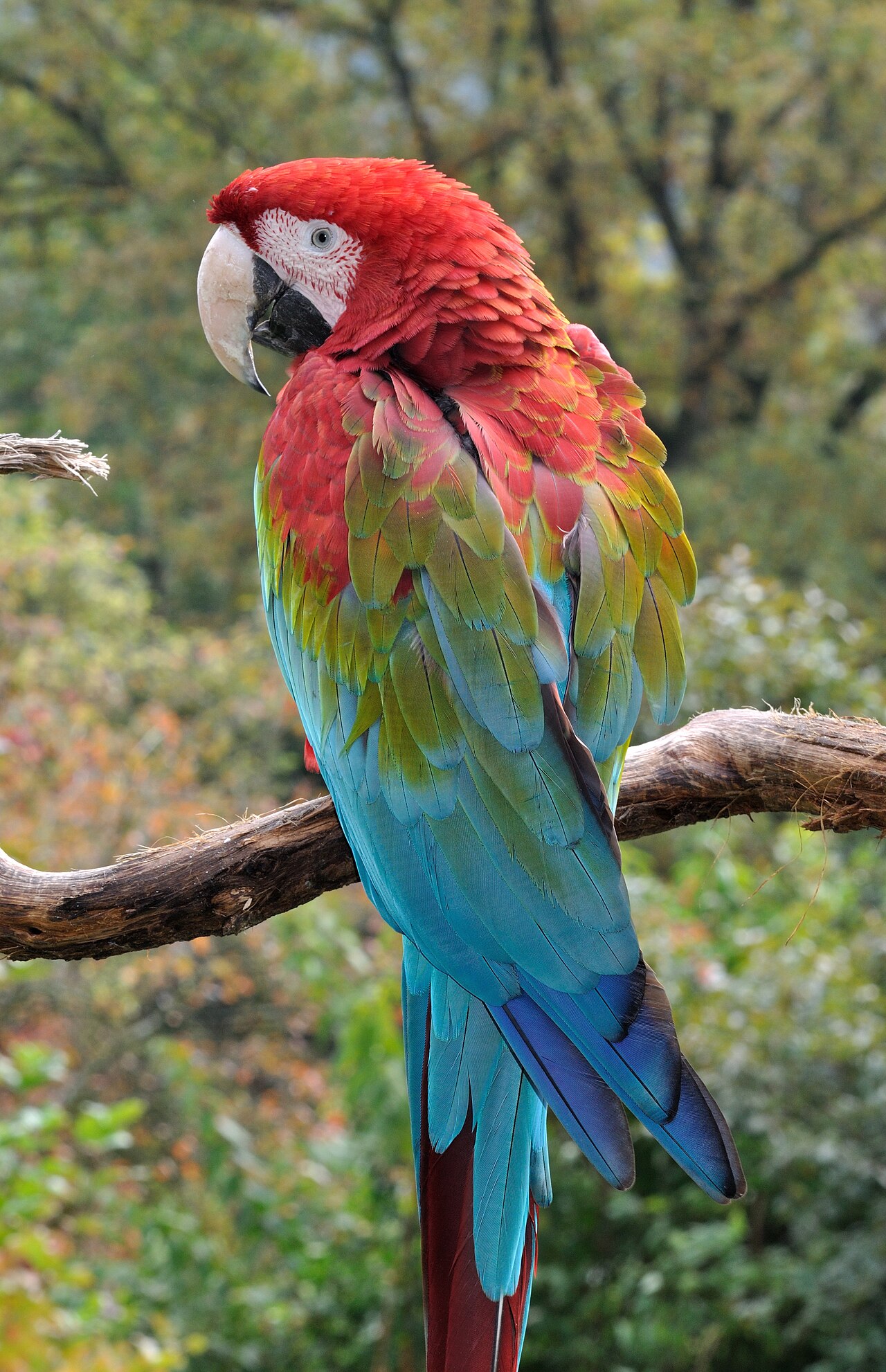
Hand-raised macaws are fed a commercial formula at a controlled consistency and temperature, and getting either wrong causes serious injury. Formula that is too hot causes crop burn, a full-thickness thermal injury that can perforate the crop wall. Formula that is too cool slows crop emptying and invites bacterial or yeast overgrowth.
The crop should visibly empty between feedings rather than staying persistently full, and a chick whose crop is not clearing needs veterinary attention rather than another feed. Aspiration, where formula enters the airway, can kill a chick in seconds and is frequently not survivable even with immediate care. The Association of Avian Veterinarians consistently advises leaving hand-feeding to experienced breeders.
Weaning should be driven by the bird, not by a schedule. Abundance weaning, where formula continues to be offered until the chick refuses it consistently, produces measurably calmer adults. Premature weaning is linked to persistent food insecurity, excessive screaming, and difficulty settling later in life. Our guide to the baby cockatoo covers the same pattern in a related family.
What Baby Macaws Cost
Prices vary enormously by species. Green-winged and blue-and-gold macaws are the most commonly available and typically run 1,000 to 2,500 dollars from a breeder. Scarlet macaws sit somewhat higher. Hyacinth macaws, the largest parrot in the world, run 10,000 to 40,000 dollars and are restricted under CITES Appendix I.
The purchase price is the smaller number. A macaw needs a cage large enough for a bird with a wingspan approaching 4 feet, which alone costs several hundred to over a thousand dollars, plus a continuous supply of destructible enrichment, a varied fresh diet, and routine avian veterinary care that is more expensive and harder to find than care for dogs or cats.
Annual running costs of 1,000 to 2,000 dollars are realistic, and over a 60-year life that is a six-figure commitment. Rescues are full of macaws surrendered by owners who priced the bird and not the decades. Adopting an adult from a parrot rescue costs a fraction and gives a home to a bird that already needs one.
Is It Legal to Own a Macaw?
In the United States, captive-bred macaws are legal to own in most states, with local ordinances occasionally restricting large parrots. What is not legal is importing wild-caught birds, which the Wild Bird Conservation Act of 1992 ended, and that legislation is the reason the domestic captive-breeding industry exists in its current form.
Hyacinth macaws carry additional restrictions as a CITES Appendix I species, meaning international commercial trade is prohibited and interstate movement in the US requires documentation. Buying one demands paperwork proving captive-bred origin, and a seller who cannot produce it is a serious warning sign.
Several macaw species are in far worse shape. The Spix’s macaw was declared extinct in the wild in 2000, with a reintroduction programme from captive stock beginning only recently, and the glaucous macaw is likely extinct. The illegal pet trade is a documented driver in every one of these cases, which is the argument for buying only from breeders who can prove provenance.
Noise, Size, and What Ownership Actually Involves
Macaws are loud in a way that is difficult to convey in writing. A blue-and-gold macaw’s contact call is a normal, healthy behaviour that cannot be trained away, and it carries through walls easily enough that apartment living is generally not viable. Calling concentrates at dawn and dusk, mirroring flock behaviour in the wild.
Bite force is the other underrated factor. A large macaw beak generates enough pressure to break a broom handle and can cause serious injury to a hand. Well-socialised birds rarely bite without warning, but hormonal adolescence brings a period of unpredictability that catches many first-time owners off guard.
Space and destruction round out the picture. Macaws chew constantly and will destroy furniture, trim, and anything wooden left within reach, and this is normal foraging behaviour rather than misbehaviour. They also need several hours outside the cage daily. Their intelligence is genuine, as covered in our list of the smartest birds, and an under-stimulated macaw becomes a very difficult animal.
What Baby Macaws Eat
Wild macaw parents feed chicks by regurgitation, delivering a slurry of nuts, seeds, fruit, and palm material. Several species also eat clay from exposed riverbanks, and the leading explanation is sodium supplementation rather than the older idea that it neutralises plant toxins.
Weaned captive macaws should eat a base of formulated pellets supplemented with fresh vegetables, some fruit, and a limited quantity of nuts. An all-seed diet is the most common serious husbandry error and causes obesity, fatty liver disease, and vitamin A deficiency. Nuts are the treat, not the meal. Feather condition is one of the first places a poor diet shows, and our guide to feather identification explains what healthy plumage structure looks like.
Several common foods are toxic to parrots, including avocado, chocolate, caffeine, alcohol, and onion. Avocado in particular can be fatal and there is no safe quantity. Our broader guide to what birds eat covers the dietary range across species, though pet parrot nutrition needs species-specific veterinary guidance.
Common Mistakes with Baby Macaws
Buying an unweaned chick to bond better is the most damaging and the most common. Bonding in macaws comes from consistent daily interaction over years, not from who delivered the formula, and buying unweaned puts a first-time owner in charge of a technically demanding procedure with no training. It is a leading cause of preventable chick death.
Over-petting is the second. Stroking along the back and under the wings stimulates reproductive behaviour in a mature macaw and contributes to hormonal aggression, chronic egg laying in females, and frustration screaming. Head and neck scratching is the appropriate contact and setting that pattern early makes adolescence far easier.
Underestimating the timeline is the third and the one that fills rescues. A macaw is not a decade-long commitment, it is a multi-decade one that will likely require a named caretaker in a will. Anyone unsure should foster through a parrot rescue for a year before buying. Our guide to how long birds live puts macaw longevity alongside other species.
Frequently Asked Questions
What is a baby macaw called?
A chick. While in the nest cavity it is more precisely a nestling, and once it has left but is still being fed by parents it is a fledgling. There is no distinct folk name for young macaws comparable to duckling or gosling.
How much do baby macaws cost?
Blue-and-gold and green-winged macaws typically run 1,000 to 2,500 dollars from a breeder, scarlet macaws somewhat more, and hyacinth macaws 10,000 to 40,000 dollars. Ongoing costs of 1,000 to 2,000 dollars a year over a 50 to 80 year lifespan far exceed the purchase price.
Can you legally own a macaw?
In the United States, captive-bred macaws are legal in most states, though local ordinances sometimes restrict large parrots. Importing wild-caught birds has been illegal since the Wild Bird Conservation Act of 1992. Hyacinth macaws are CITES Appendix I and require documentation proving captive-bred origin.
How long do macaws live?
Commonly 50 years, with many individuals reaching 60 to 80 in good captive conditions. This is one of the longest lifespans of any pet animal, and avian rescues routinely advise naming a caretaker for the bird in a will since it will very likely outlive its owner.
Is it hard to own a macaw?
Yes. Macaws are extremely loud with a contact call that carries through walls, they chew destructively as normal behaviour, they need several hours out of the cage daily, and a large beak can cause serious injury during hormonal periods. They are among the most demanding companion animals available.
How long do baby macaws need hand feeding?
Typically 3 to 5 months depending on species, with the larger macaws at the long end. Feeding should continue until the bird consistently refuses formula on its own rather than being stopped on a schedule, since premature weaning is linked to lasting behavioural problems.
Which macaw is the friendliest?
Blue-and-gold and green-winged macaws have the steadiest reputations, with green-wings often described as the most tolerant of the large species. Individual temperament and early socialisation matter far more than species, and a well-raised bird of any species will be easier than a poorly raised one of the calmest.