Moth vs Butterfly: The Differences That Actually Hold Up
The fastest reliable way to tell a moth from a butterfly is the antennae. Butterflies have thin antennae ending in a distinct club or knob. Moths have antennae that are feathery, comb-like, or taper to a fine point, and never end in a club. That single feature works on a resting insect, in a photograph, and on almost every species you will encounter.
Every other popular rule has exceptions. Plenty of moths fly by day, plenty are brilliantly coloured, and not all moths spin cocoons. The only genuinely universal structural difference is a wing-coupling device called the frenulum, present in most moths and absent in butterflies, and it is far too small to see in the field. For practical purposes, check the antennae first and the resting posture second.
| Feature | Butterfly | Moth |
|---|---|---|
| Antennae | Thin with a club at the tip | Feathery or tapered, never clubbed |
| Resting wings | Folded upright over the back | Flat or tented over the body |
| Body | Slender, smooth | Stout, furry |
| Activity | Almost always daytime | Mostly night, many exceptions |
| Pupa | Naked chrysalis | Silk cocoon or underground cell |
| Wing coupling | No frenulum | Frenulum in most families |
| Species worldwide | About 19,000 | About 160,000 |
The Antennae Test
Butterfly antennae are simple filaments that swell into a rounded club at the tip, and in skippers the club is hooked into a small backward point. The structure is consistent across the entire group and visible on any insect at rest, which is why it is the standard first check for anyone identifying Lepidoptera.
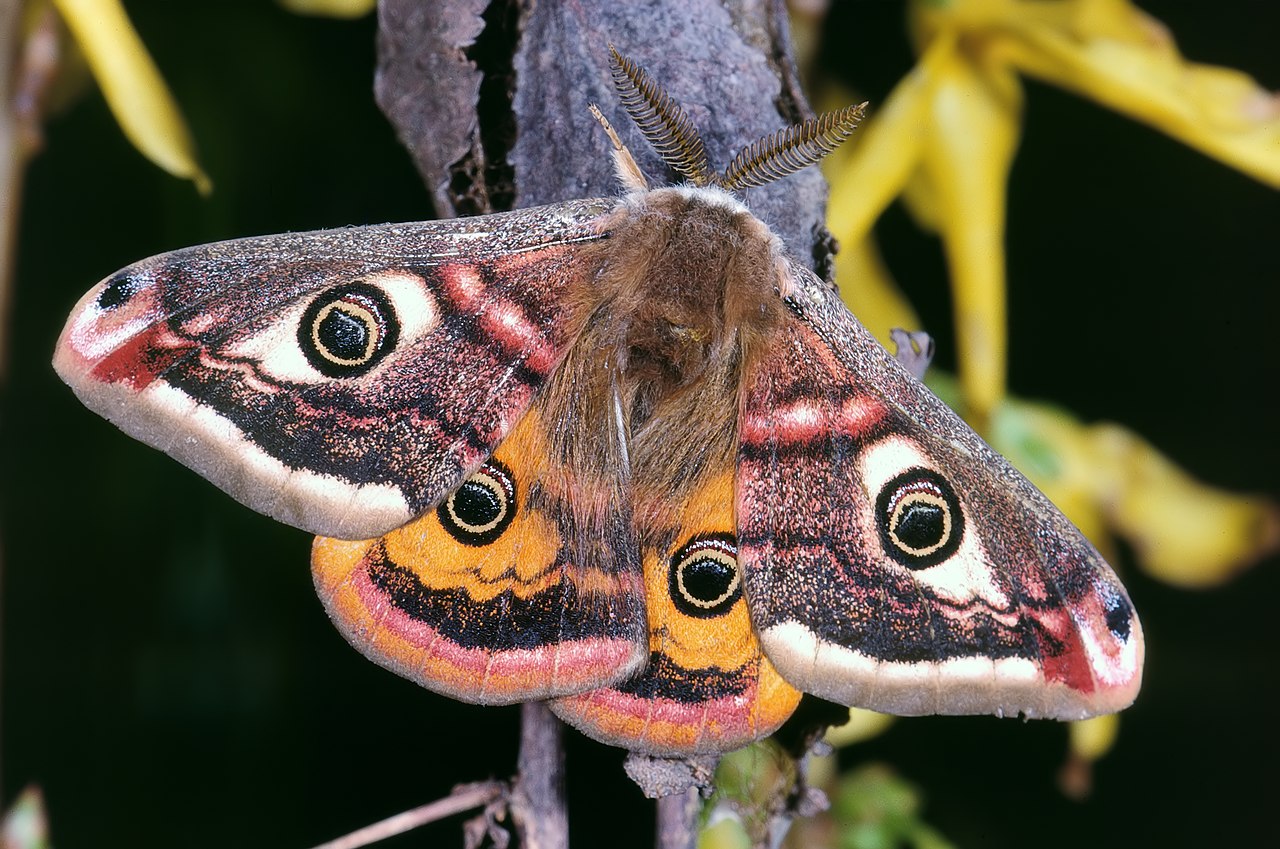
Moth antennae take many forms and none of them are clubbed. Male silk moths and saturniids carry spectacular feathered antennae covered in thousands of sensory receptors, used to detect female pheromones from as far as several kilometres away. Other moths have simple thread-like antennae, and some have comb-like or serrated ones.
The one group that causes trouble is a small set of day-flying moths with slightly thickened antenna tips, but even these lack a true rounded club. If you can see the antennae clearly and they end in a knob, you have a butterfly. If they end in a point, a feather, or a comb, you have a moth. Our guide to the hummingbird moth covers one of the day-fliers most often mistaken for something else entirely.
Resting Posture
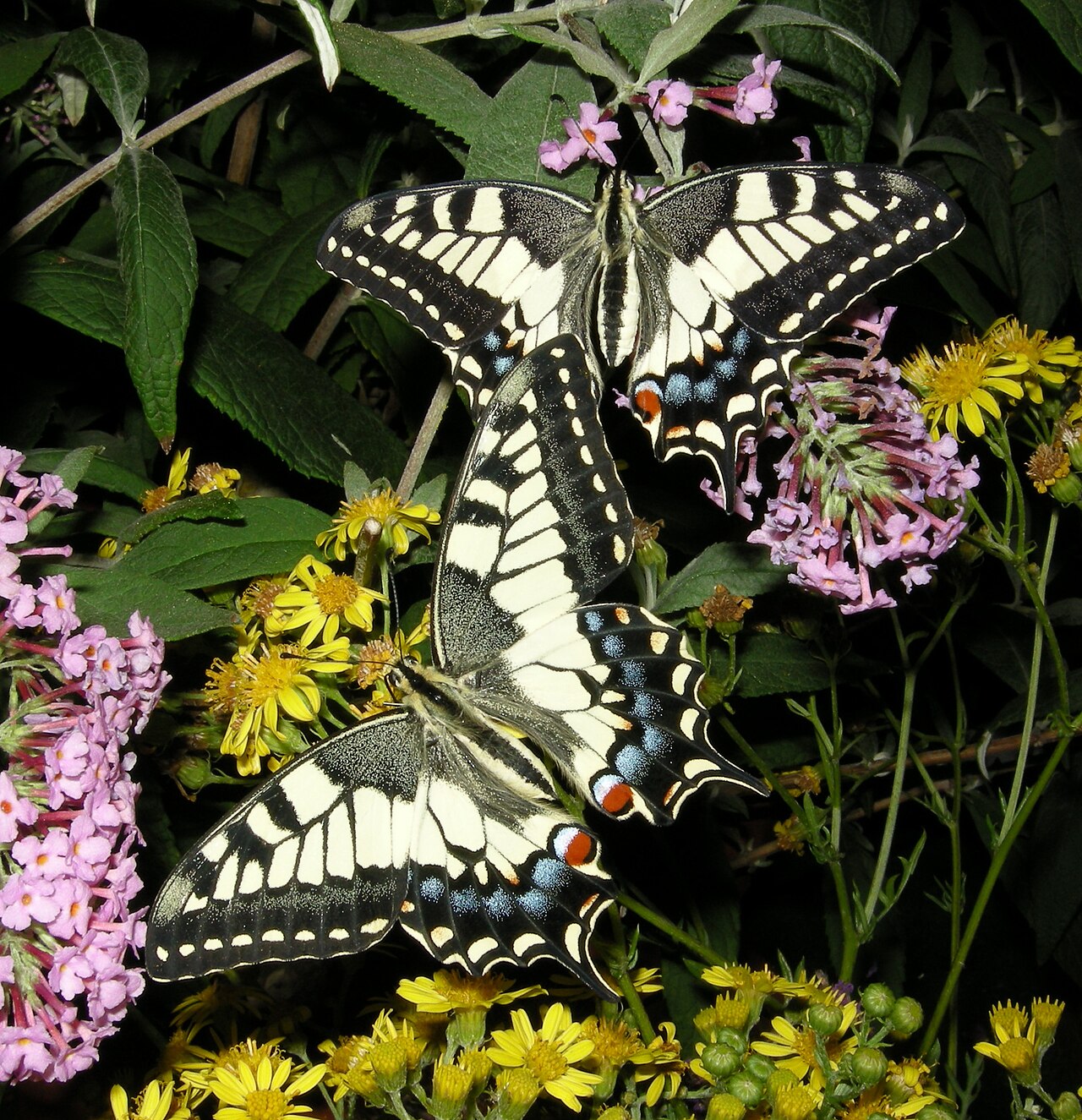
The second-best field mark is what the wings do when the insect stops moving. Butterflies almost always fold the wings vertically together above the back, showing only the underside, which is typically far duller than the upper surface. This is why a settled butterfly can look like a completely different insect from the one in flight.
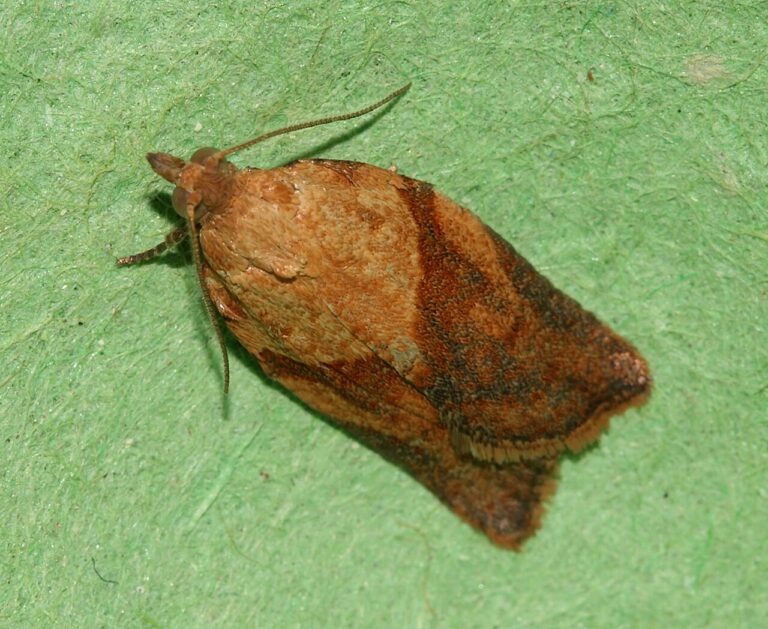
Moths generally hold the wings flat against the surface, tented like a roof over the body, or wrapped tightly around it. The result is that a resting moth usually shows its upper wing surfaces while a resting butterfly hides them, which is a useful thing to know when comparing photographs.
Exceptions exist in both directions. Some skippers rest with forewings and hindwings at different angles in a distinctive posture that looks like neither. Geometrid moths often rest with wings spread completely flat like a butterfly opened for basking. Posture is a strong clue rather than a rule, which is why it sits second behind the antennae.
Body Shape and Scales
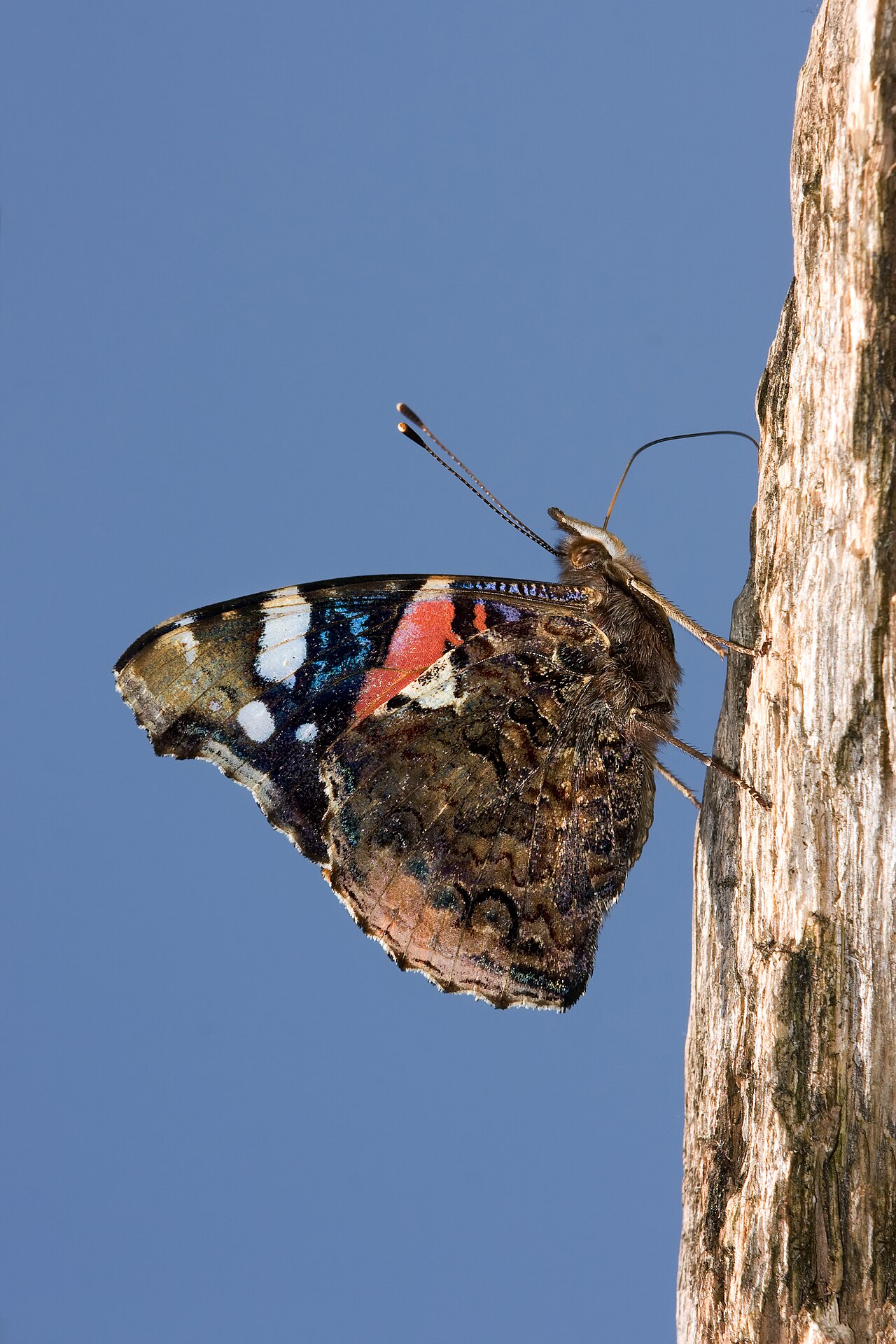
Moths tend to be built heavier. The thorax is broader, the abdomen thicker, and the whole body carries a dense covering of scales and hair-like structures that give a distinctly furry appearance. That insulation matters for a nocturnal insect, since moths must warm their flight muscles by shivering before they can take off on a cool night.
Butterflies are slender and comparatively smooth, with a narrow abdomen and much less body covering. A basking butterfly warms itself by spreading its wings toward the sun instead, which is why you see them open on paths and rocks in the morning and closed in the heat of the afternoon.
Scale structure is essentially the same in both, and the name Lepidoptera means scale wing. The powder that comes off on your fingers when you handle either is a layer of microscopic scales, and losing too many genuinely impairs flight, which is the practical reason not to handle them by the wings.
Day and Night Is Not a Reliable Rule
Butterflies are diurnal with very few exceptions, so seeing a butterfly at night is genuinely unusual. The rule fails in the other direction: a substantial number of moth species fly by day, and several of the most conspicuous insects in a summer garden are day-flying moths that most people assume are butterflies.
Hummingbird moths hover at flowers in bright sunshine and are routinely reported as tiny hummingbirds. Clearwing moths mimic wasps and fly by day. Many tiger moths and burnet moths are day-active and brightly coloured, which also breaks the colour rule.
The reverse assumption causes as many mistakes. Luna moths, cecropia moths, and rosy maple moths are among the most spectacularly coloured insects in North America and are strictly nocturnal, so drab equals moth fails badly. Our guides to the luna moth and the white moth cover two that regularly surprise people.
Chrysalis vs Cocoon
The pupal stage differs in a way that is genuinely useful, provided the rule is stated correctly. Butterflies form a chrysalis, which is the hardened pupal skin itself, exposed and unwrapped, often hanging from a silk pad and sometimes brilliantly marked or metallic.
Many moths spin a silk cocoon around the pupa, using silk produced from glands near the mouth of the caterpillar. Silk moths produce the most substantial examples, and commercial silk comes from the cocoon of Bombyx mori. A cocoon is therefore an added outer casing rather than the pupa itself.
The common overstatement is that all moths spin cocoons. Many do not. A large share of moth species, including most sphinx moths and cutworms, pupate in a chamber in the soil or under leaf litter with little or no silk. So a cocoon means a moth, but the absence of one means nothing either way.
Is a Butterfly Technically a Moth?
The taxonomy here is more interesting than the field marks. Butterflies form a single natural group, the Papilionoidea, with a shared common ancestor. Moths do not: the term covers every lepidopteran that is not a butterfly, and those lineages do not form a natural group at all.
The consequence is that butterflies are a branch that arose from within the moth lineage. Genomic work led by researchers at the Florida Museum of Natural History places the origin of butterflies around 100 million years ago, with the group evolving from nocturnal ancestors and shifting to daytime activity, probably tracking the diversification of flowering plants.
So the strictly correct statement is that butterflies are a specialised group of day-flying moths, while a moth is not a butterfly. This is the same relationship as birds and dinosaurs: birds are a branch within the dinosaur lineage, but not every dinosaur is a bird. It explains why every proposed universal difference except the frenulum has exceptions.
Telling the Caterpillars Apart
Caterpillars are harder than adults and there is no equivalent of the antennae test. Butterfly caterpillars tend to be smooth or bear fleshy projections, while many moth caterpillars carry dense hair, bristles, or tufts. The relationship is loose enough that it fails often.
Hair is worth treating carefully regardless. Several moth caterpillars carry urticating hairs that cause skin reactions, and the puss caterpillar, the larva of the southern flannel moth, delivers a genuinely painful sting through hollow spines beneath its fur. Handling any densely furred caterpillar barehanded is a bad idea.
The practical route to an answer is rearing or a good regional guide rather than a general rule. A caterpillar that spins a silk cocoon before pupating is a moth. One that hangs from a silk pad and forms an exposed pupa is a butterfly. Our guide to what moths eat covers the dietary side of both stages.
Why the Difference Matters
Ecologically, moths do far more pollination work than their reputation suggests. Night-blooming plants depend almost entirely on moths, and studies of pollen transport networks have found moths carrying pollen from a wider range of plant species than daytime pollinators do, partly because there are so many more of them.
The numbers are lopsided. Roughly 160,000 described moth species exist against about 19,000 butterflies, a ratio close to eight to one, and the true moth total is certainly higher since many remain undescribed. Any random lepidopteran you encounter is far more likely to be a moth on probability alone.
Size range differs sharply too. The smallest moths have wingspans under 3 mm and mine the inside of a single leaf as caterpillars, while the atlas moth exceeds 25 cm across. Butterflies occupy a much narrower band, with nothing approaching either extreme, which is another consequence of moths being a catch-all for many unrelated lineages rather than one group.
Conservation attention has not followed the numbers. Butterflies attract the funding, the monitoring schemes, and the public interest, while moth declines documented across Europe and North America receive comparatively little. Given the pollination role, that imbalance has practical consequences. Our guides to the painted lady and the viceroy cover two of the butterflies that do get the attention.
Frequently Asked Questions
What is the difference between a moth and a butterfly?
The most reliable field mark is the antennae: butterflies end in a distinct club, moths are feathery or taper to a point. Butterflies also rest with wings folded upright, have slender smooth bodies, and fly by day. Moths rest flat or tented, are stout and furry, and mostly fly at night.
Is a moth technically a butterfly?
No, but butterflies are technically a group that evolved from within the moth lineage. Butterflies form a single natural group, while moth is a catch-all term for every other lepidopteran and is not a natural group at all. So butterflies are specialised day-flying moths, not the other way round.
Do all moths turn into butterflies?
No. This is a common misconception. Moths and butterflies are separate lineages within the same order, and a moth caterpillar becomes a moth. Both go through the same four-stage life cycle of egg, caterpillar, pupa, and adult, but neither converts into the other.
Do all moths spin cocoons?
No. Silk moths and many others do, but a large share of moth species including most sphinx moths pupate in a soil chamber or under leaf litter with little or no silk. A cocoon indicates a moth, but no cocoon tells you nothing either way.
Are all moths brown and all butterflies colourful?
No. Luna moths, cecropia moths, rosy maple moths, and many tiger and burnet moths are as brightly coloured as any butterfly. Plenty of butterflies are drab, particularly on the underside they show at rest. Colour is one of the least reliable ways to tell them apart.
Can a butterfly fly at night?
Very rarely. Butterflies are almost entirely diurnal and their eyes and thermoregulation are adapted to daylight. A butterfly-like insect flying after dark is nearly always a moth, and several day-flying moths are mistaken for butterflies in daylight.
Are there more moths or butterflies?
Moths, by roughly eight to one. About 160,000 moth species have been described against about 19,000 butterflies, and the real moth total is certainly higher since many species remain undescribed. Moths also do substantially more pollination work than they are generally credited for.