Luna Moth Meaning: Symbolism of the Rarest Visitor
The luna moth‘s meaning centers on transformation, rebirth, and spiritual guidance through darkness: a pale green giant that spends most of its life hidden as a caterpillar, emerges with no mouth and only about a week to live, and flies exclusively by night, navigating by the moon it seems named for. Across spiritual traditions, seeing a luna moth is read as a rare blessing, a sign that a profound change is completing and that you are being asked to trust intuition over sight.
Part of the luna moth’s mystique is simple scarcity: although the species is widespread across eastern North America, adults live roughly 7 to 10 days, fly only after dark, and are drawn away from their natural routines by artificial lights, so most people see one a handful of times in their lives. This guide covers the full symbolism, what a luna moth means in different traditions and colors of encounter, the biology behind the mystery, and what to do if one lands on you.
| Aspect | Luna Moth Meaning |
|---|---|
| Core symbolism | Transformation, rebirth, trust in intuition |
| Lifespan message | Living fully in a brief, precious window |
| Night flight | Guidance through darkness and the unseen |
| Rarity of sightings | A visit is read as a rare blessing or message |
| Color (pale green) | Renewal, healing, heart-centered growth |
| Landing on you | Personal message, spiritual attention |
The Core Meaning: Transformation Perfected
All moths and butterflies carry metamorphosis symbolism, but the luna moth pushes it to the extreme, which is why it sits at the top of the spiritual insect hierarchy for many people. Its transformation is nearly total concealment followed by brief, spectacular revelation: months as an anonymous green caterpillar and a winter sealed in a cocoon, then a single week as one of the most beautiful insects on the continent.
Spiritually, that arc is read as a promise about hidden work. The luna moth is taken as a sign that a long, invisible process, grief metabolized, a skill built quietly, an identity outgrown, is about to surface in its finished form. People in the middle of slow transitions often describe luna moth encounters as arriving exactly when they doubted the work was going anywhere.
The adult moth’s strangest fact sharpens the message: luna moths emerge without functional mouthparts and never eat, living entirely on energy stored during the caterpillar stage. Symbolically, everything the moth needs for its final chapter was gathered earlier, a reading many take as reassurance that they already carry what the next phase requires.
Why the Short Life Is the Point
A luna moth lives about a week as an adult, and rather than reading that as tragic, most traditions read it as instruction: presence over duration. The moth spends its brief window entirely on purpose, finding a mate through moonlit air using feathery antennae that detect a female’s pheromones from remarkable distances, with no time spent on anything that does not matter.
As a spiritual prompt, the luna moth is therefore associated with urgency without anxiety, an invitation to ask what you would prioritize if the window were visibly short, because it always is. People marking anniversaries, recoveries, or new chapters often adopt the luna moth as a private emblem for exactly this reason.
The short adult life also frames luna moth encounters as inherently rare gifts. Unlike a cardinal at a feeder that returns daily, a luna moth on your porch screen is a once-a-season event at best, and folklore treats one-time visitors differently: not as companions but as messengers, arriving once, delivering, and moving on.
Night Flight, the Moon, and Trusting the Unseen
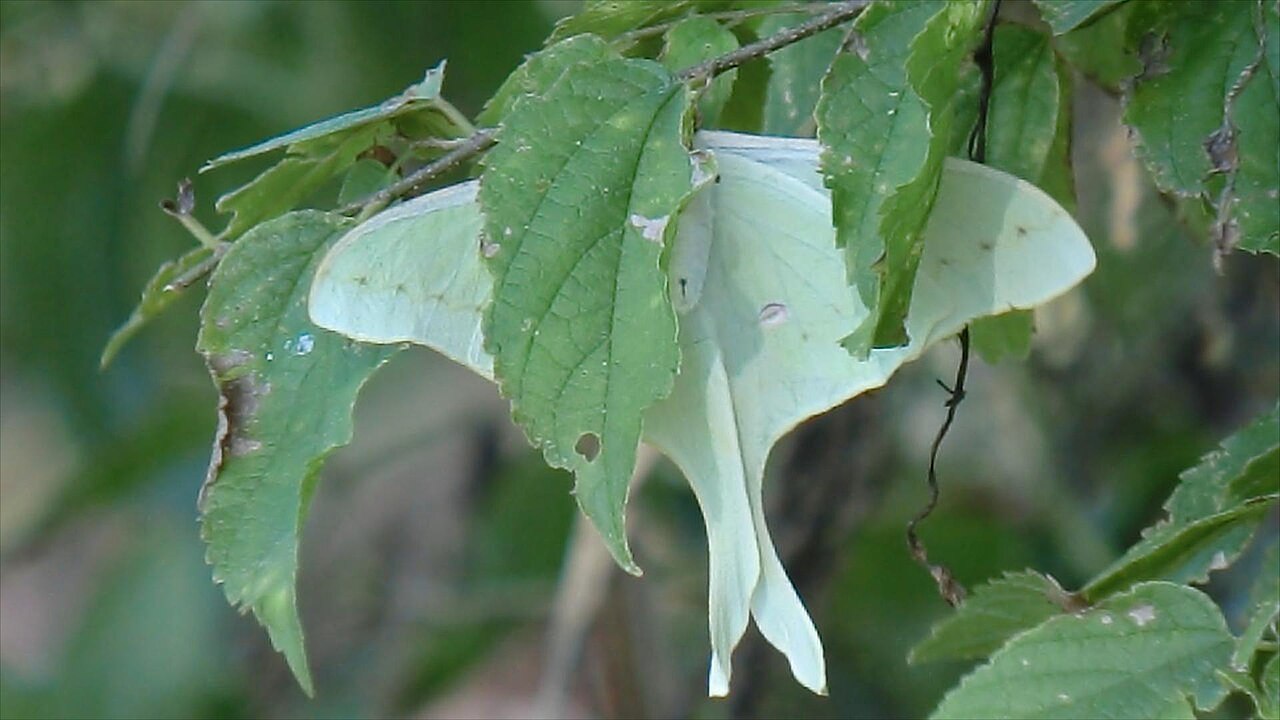
Luna moths are strictly nocturnal, and their name (Actias luna, from the Latin for moon) ties them to lunar symbolism: intuition, cycles, the feminine principle, and knowledge that arrives by feel rather than sight. Where butterflies own the daylight meanings of joy and visibility, the luna moth governs the night shift: dreams, the subconscious, and the parts of a transition no one else can see.
Seeing one is consequently read as encouragement to trust inner navigation. The moth crosses dark woods guided by moonlight and scent, without ever seeing its destination, and the traditional interpretation hands that image to the witness: proceed without full visibility, your instruments are working. Dream interpreters treat luna moths in dreams the same way, as the psyche flagging a transformation already in progress below awareness.
The moon connection also brings cycle symbolism. Luna moths in the South fly in two or three broods a year, appearing, vanishing, and returning like lunar phases, and people who encounter them repeatedly across years often read the visits as markers punctuating their own cycles, an ending here, a return there, the same messenger at each turning.
Luna Moth Meanings Across Traditions
In broader moth folklore, night moths have long been linked to souls and the spirit world, and the luna moth inherits the gentlest version of that lineage. Where dark moths in European tradition sometimes carried death-omen weight, the luna’s pale green glow flipped the reading toward visitation and comfort: a soul at peace, a message from a loved one, an ancestor checking in. Many people who find a luna moth after a loss keep the encounter as a private sign.
Some Indigenous North American traditions regard moths generally as messengers between worlds and companions of dreams, carrying communications the daylight mind cannot receive. Within that frame, the luna moth’s arrival at a window or porch light is read as correspondence arriving, with the witness left to interpret the letter.
Modern spiritual practice has folded the luna moth into color symbolism as well: its seafoam green is associated with the heart center, healing, and renewal, making the luna moth specifically a healing-transformation messenger rather than a generic change omen. That reading places it beside other pale messengers of folklore, from the white moth of soul traditions to the white butterfly of remembrance, but with growth where those carry memory.
What It Means When a Luna Moth Lands on You
A luna moth landing on you is the rarest tier of encounter, and folk interpretation scales accordingly: physical contact is read as a personal message rather than a general omen, spiritual attention directed specifically at you, often glossed as confirmation that the transformation you are inside is seen and supported. Many people treat it as a once-in-a-lifetime blessing and note the date.
The biological reality is friendlier than mystical: a luna moth that lands on a person after dark is usually a light-disoriented male resting, and it will sit calmly for minutes because adult moths conserve every unit of energy. That calmness is itself part of why the encounter feels charged; few wild animals will simply remain with you.
If it happens, the right response covers both worlds: stay still, enjoy it, take your photo, and if the moth lingers past your patience, let it step onto a leaf or your flat hand and place it on a tree trunk away from lights. Handling should be minimal, not because of danger (luna moths cannot bite or sting) but because wing scales shed with contact, and this animal has one week of wings to spend.
The Biology Behind the Mystery
The luna moth (Actias luna) is one of North America’s largest moths, spanning 3 to 4.5 inches, a member of the giant silk moth family that includes the cecropia moth and polyphemus moth. The long twisted hindwing tails are not decoration: research published through the National Academy of Sciences found the fluttering tails deflect bat echolocation strikes away from the body, a built-in acoustic decoy.
The life cycle runs egg, five caterpillar stages eating walnut, hickory, sweetgum, birch, and persimmon leaves, a papery cocoon spun in leaf litter, and, after overwintering in northern regions, the adult emergence, typically in late spring with additional summer broods in the South. Adults emerge in the morning, harden their wings for hours, and fly their first night, beginning the one-week finale.
Their genuine vulnerability is artificial light. Porch and street lights pull luna moths off their moonlit navigation and hold them until dawn exposes them to birds, wasting irreplaceable hours of their brief lives, one reason sightings have grown rarer around developed areas even where the species remains common. The moth of intuition is, fittingly, endangered mostly by distraction.
Luna Moth vs Other Meaningful Moths and Butterflies
Placement in the symbolic family helps sharpen the luna’s specific meaning. Butterflies carry daylight transformation, joy, and visible rebirth, the reading explored across our butterfly tattoo meaning guide; generic moths carry night, instinct, and the pull toward light at any cost; the luna moth threads between them: transformation like the butterfly, night navigation like the moth, plus its own signatures of rarity, brevity, and lunar trust.
Among its giant silk moth relatives, folk meanings diverge by appearance. The polyphemus moth’s huge eyespots read as watchfulness and seeing through deception, the cecropia’s red-banded bulk as groundedness and endurance, and the giant moths as a group carry amplified versions of moth symbolism generally. The luna alone gets the moon.
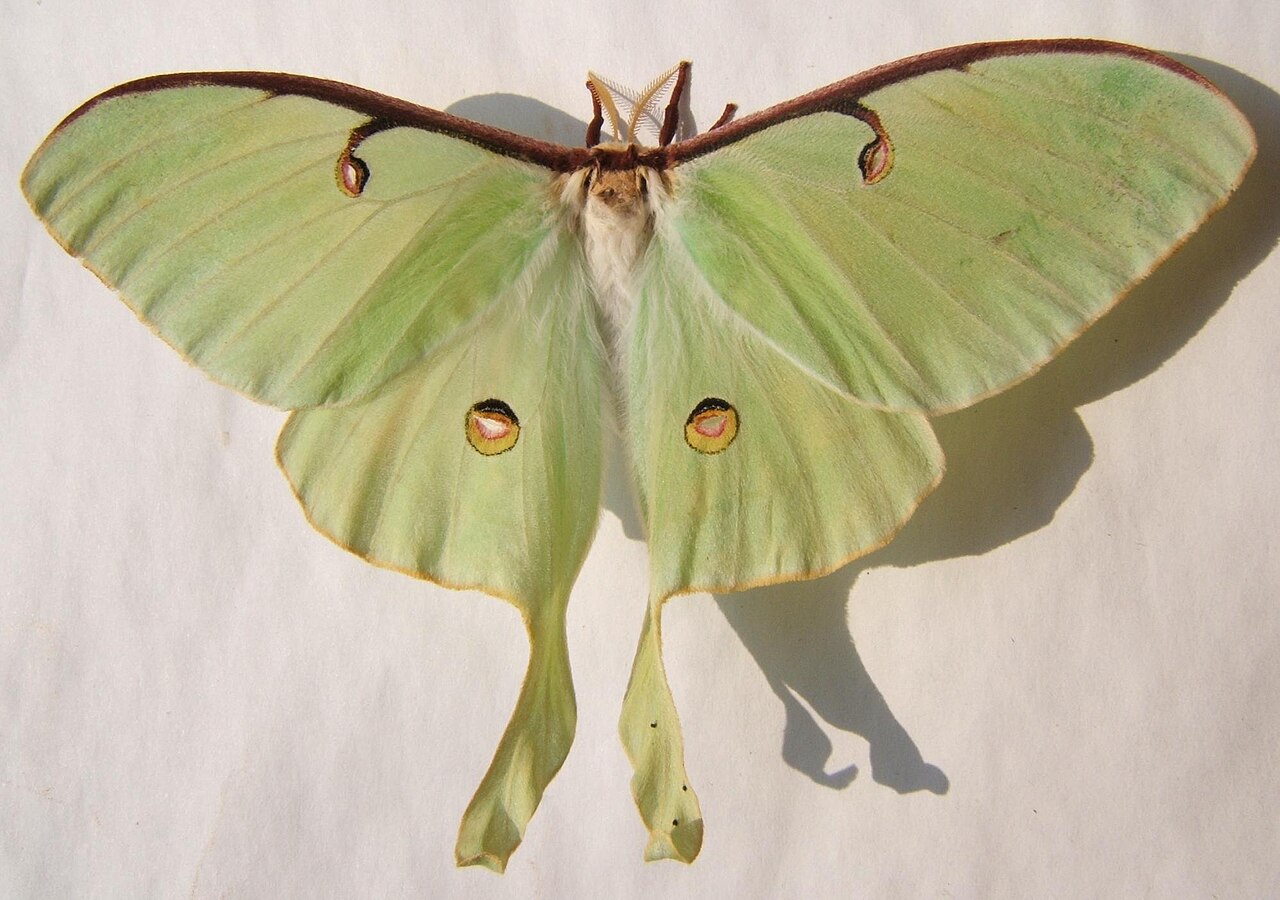
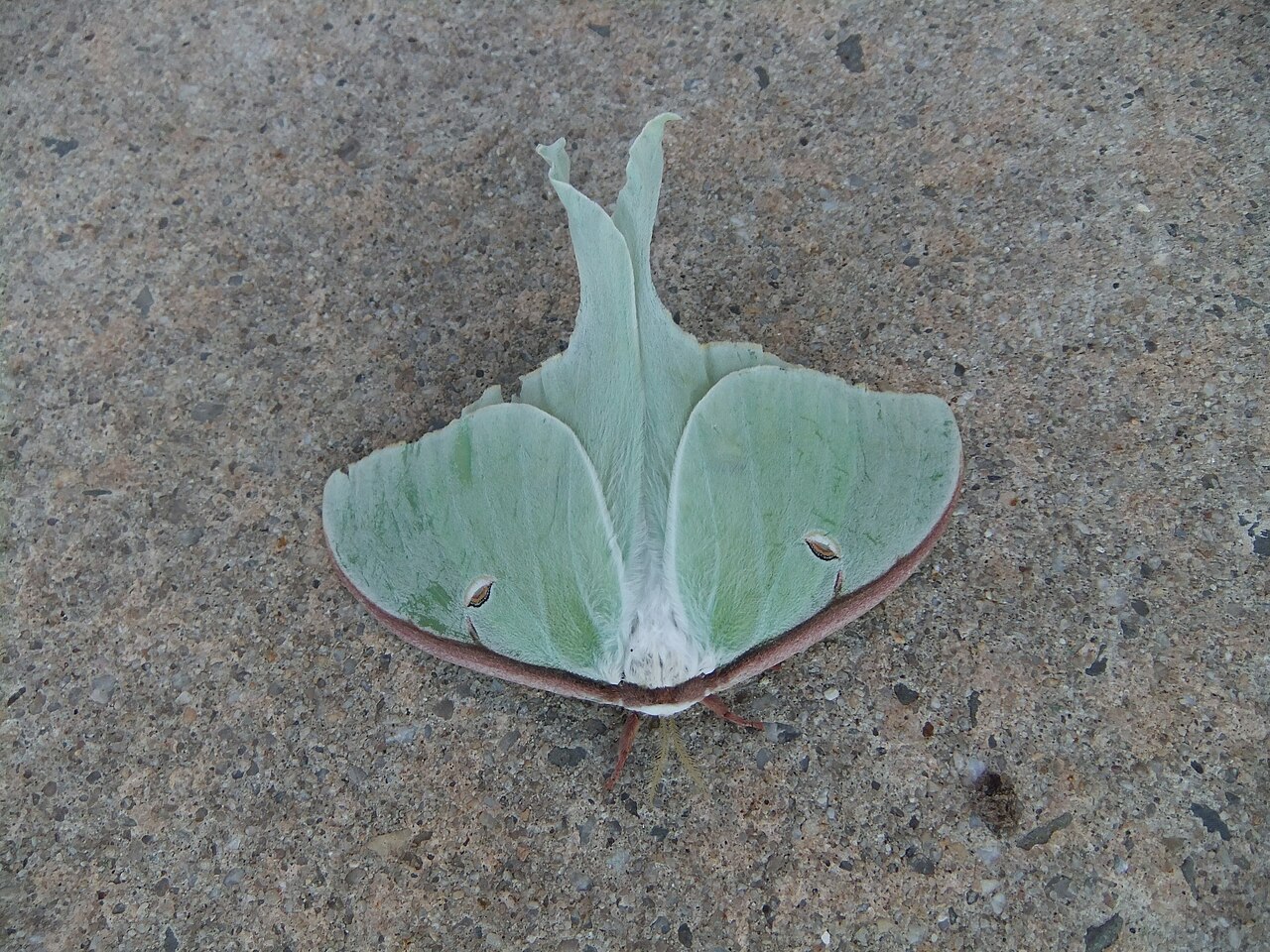
Identification matters for meaning-seekers, because pale green look-alikes exist. A luna moth is unmistakable at rest: pale green wings, long curving tails, an eyespot on each wing, white furry body, and feathered antennae; anything green without tails is likely a different silk moth or a large green lacewing. If your visitor hovered at flowers in daylight like a tiny bird, you met the hummingbird moth, a different messenger entirely.
Inviting Luna Moths (and Their Meaning) to Your Yard
You cannot schedule a messenger, but you can make your property the kind of place messages arrive. Host trees are the foundation: luna caterpillars need walnut, hickory, sweetgum, birch, or persimmon, so preserving or planting even one host tree makes a yard a potential nursery. Leaf litter left under those trees through winter shelters the cocoons; fall cleanup that bags every leaf also bags next spring’s moths.
Light discipline is the second half. Turning off porch and landscape lights during late spring and summer nights, or switching to motion-activated or warm-amber fixtures, keeps luna moths navigating naturally instead of dying at your bulbs, and it is the single change most likely to convert your yard from moth trap to moth habitat. Skipping broad insecticide sprays protects the caterpillars no one ever notices.
Then patience, and night eyes. Check porch screens and lit windows on warm, still nights in late May and June, walk host trees with a red-filtered flashlight, and let the encounter come when it comes; a luna moth found this way, on its own terms in the dark, tends to carry more weight for people than any staged sighting could. The messenger picks the moment, which is, in the end, most of the meaning.
Related reading: White Moth Meaning.
Frequently Asked Questions
What does it mean when you see a luna moth?
Traditionally, that a long transformation is completing and you should trust your intuition through the final unseen stretch. Because adults live only about a week and fly at night, a sighting is also read simply as a rare blessing.
What does a luna moth landing on you mean?
Folklore reads physical contact as a personal message and a mark of spiritual attention, the rarest tier of the encounter. Biologically, it is a calm, energy-conserving moth resting, which is exactly why the moment feels so charged.
Are luna moths good luck?
They are widely considered one of the luckiest moth sightings, associated with blessings, healing, and messages from loved ones, a gentle inversion of the darker omens older folklore attached to some night moths.
Why are luna moth sightings so rare?
Adults live roughly 7 to 10 days, fly only at night, and do not feed, so there is simply little time to be seen. Artificial lights and loss of host trees have made encounters rarer still around developed areas.
Do luna moths really have no mouth?
Yes. Adults emerge without functional mouthparts and never eat, living on energy stored as caterpillars, which is the biological root of their live-fully-in-a-short-window symbolism.
What is the spiritual meaning of the luna moth’s green color?
Its pale seafoam green is linked to healing, renewal, and heart-centered growth, which narrows the luna moth’s message from generic change to healing transformation specifically.
Is a luna moth a sign from a loved one who passed?
Many people read it that way, drawing on old traditions linking night moths to visiting souls, with the luna’s gentle appearance casting the visit as comfort rather than omen. The meaning any encounter carries is ultimately the one you give it.