Cecropia Moth: North America’s Largest Moth Explained
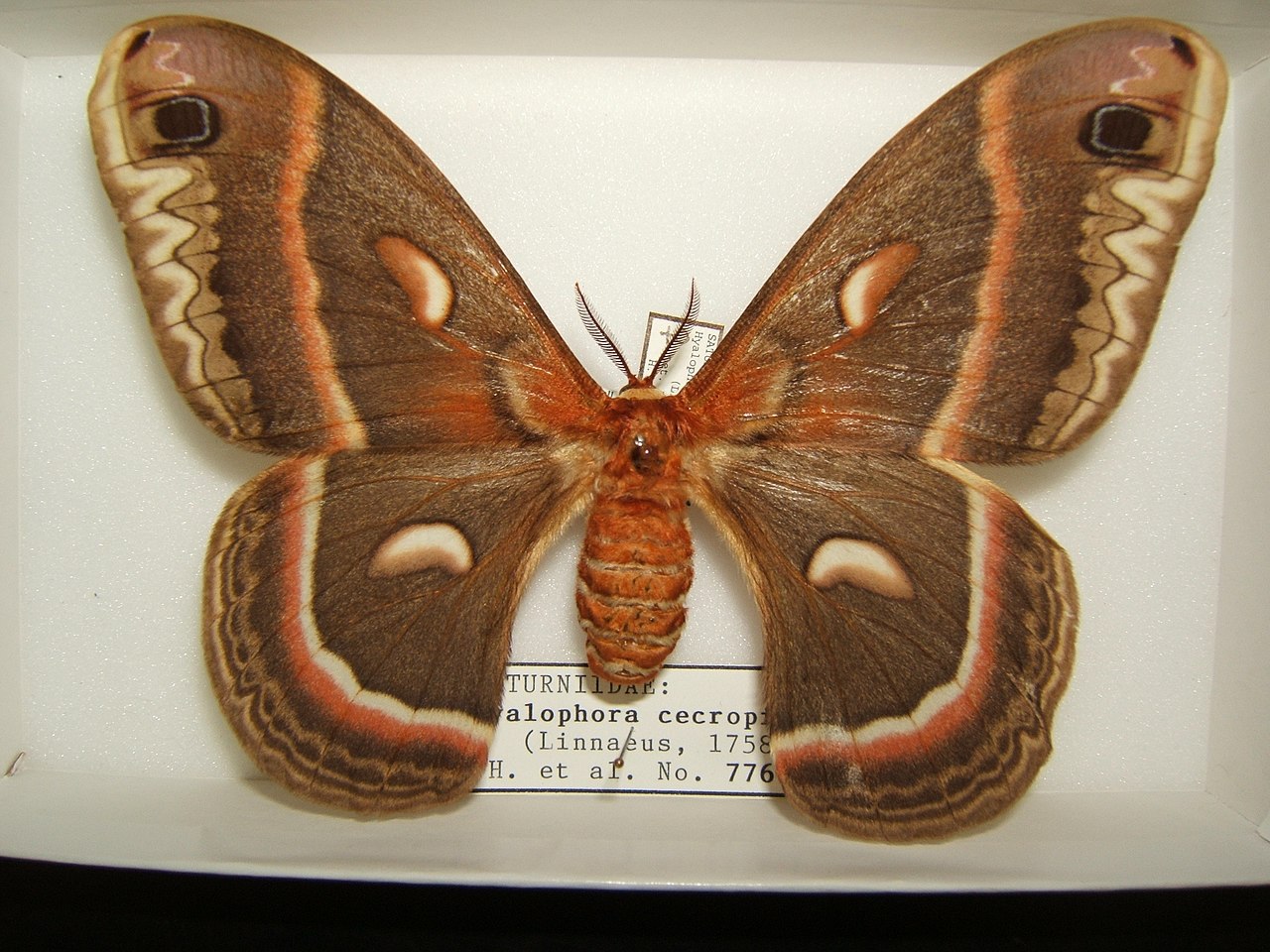
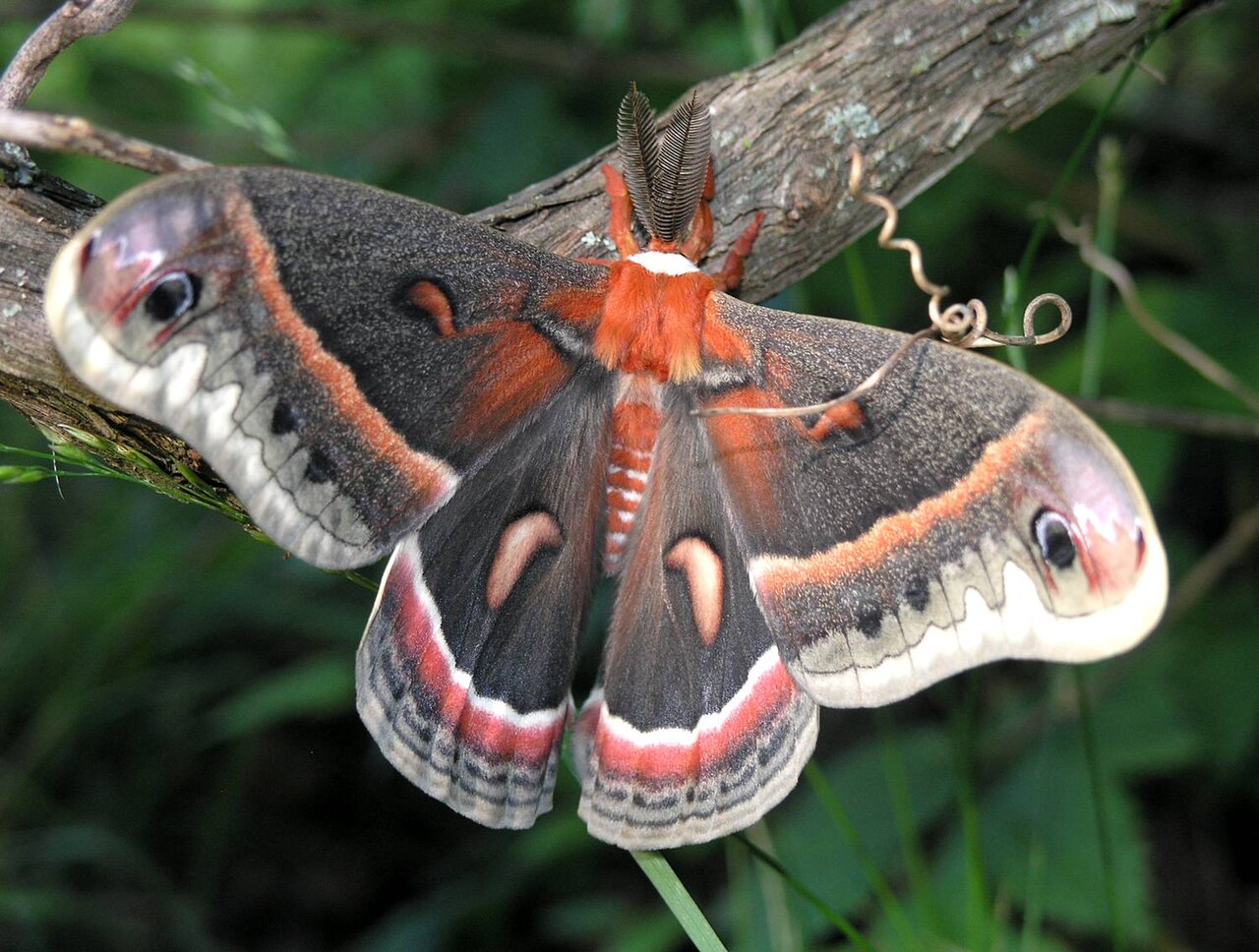
The cecropia moth (Hyalophora cecropia) is the largest moth in North America, with a wingspan reaching 5 to 7 in, patterned in reddish-brown and grey with white crescent marks and dark eyespots on each wing. It is harmless, it flies only at night, and it lives as an adult for one to two weeks.
The reason for that short life is startling: adult cecropia moths have no functional mouthparts and no digestive system worth the name. They cannot eat at all. Every calorie an adult spends flying, finding a mate, and laying eggs was banked by the caterpillar, and when the reserves run out the moth dies. This guide covers identification, the pheromone system males use to find females across miles of forest, the caterpillar and cocoon, why the species has declined sharply, and how to raise one.
| Quick Facts | Cecropia Moth |
|---|---|
| Wingspan | 5 to 7 in, largest moth in North America |
| Adult lifespan | 1 to 2 weeks, cannot feed |
| Caterpillar length | Up to 4.5 in when fully grown |
| Host plants | Maple, cherry, birch, apple, willow, lilac |
| Overwinters as | Pupa inside a cocoon attached to a branch |
| Flight season | Late spring to early summer, one generation |
What Is a Cecropia Moth?
Cecropia moths belong to the Saturniidae, the giant silk moths, a family that includes the luna, polyphemus, promethea, and io moths. They occur across the eastern and central United States and southern Canada, roughly east of the Rocky Mountains, in deciduous woodland, hedgerows, suburbs, and city parks with mature trees.
The size is what registers first. A wingspan of 5 to 7 in makes an adult roughly the size of a small bird, and people who find one on a porch screen frequently describe it as a bat at first glance. Females are usually larger and heavier-bodied than males.
They are strictly nocturnal and are most often seen at porch lights, screens, and lit windows during the brief early summer flight period. Because adults live so short a time and fly only at night, most people go a lifetime in cecropia range without knowingly seeing one, which is part of why sightings feel remarkable.
What a Cecropia Moth Looks Like
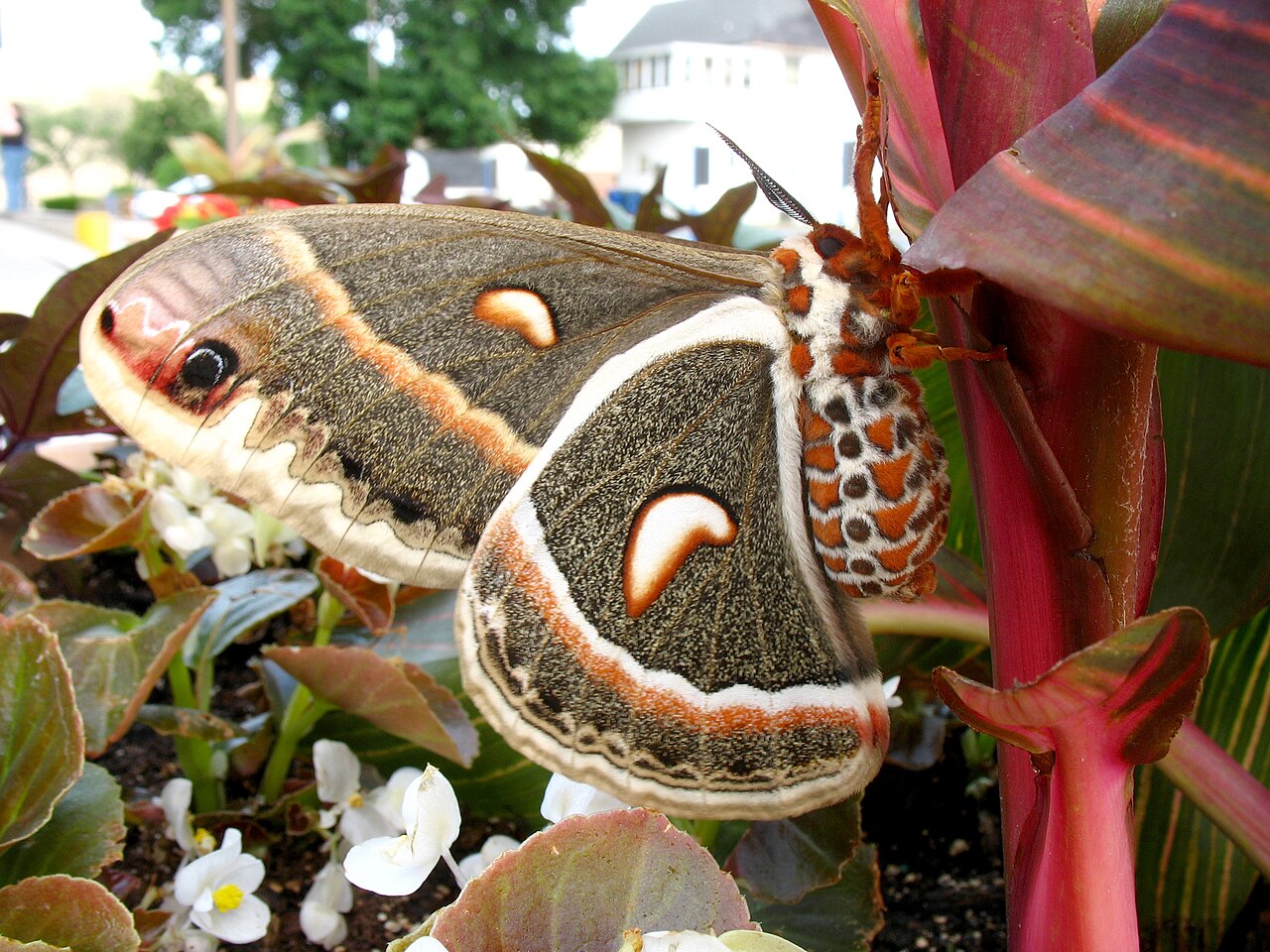
The wings are a warm reddish-brown crossed by a broad band of white and reddish scaling, with a pale grey to tan outer margin. Each of the four wings carries a crescent-shaped white mark outlined in red, and the forewing tips bear a dark eyespot with a pale center.
The body is thick and furry with a red-orange thorax marked by a white collar and a banded red and white abdomen. That heavy insulated body is standard in the giant silk moths and helps maintain flight temperature on cool spring nights.
Antennae separate the sexes at a glance. Males have large, broadly feathered antennae that look like miniature ferns, packed with sensory receptors, while females have narrower, more sparsely branched ones. That difference is not decoration but the machinery behind the mate-finding system.
Adults Cannot Eat
This is the central fact of cecropia biology. Adult giant silk moths emerge with vestigial mouthparts and a non-functional digestive tract, so they cannot drink nectar, water, or anything else. The entire adult stage runs on fat and glycogen stored during the caterpillar’s feeding.
Everything about adult behavior follows from that constraint. There is no reason to search for food, no territory worth defending, and no advantage in living long, so selection has optimized purely for finding a mate quickly. Adults typically live one to two weeks and often less.
The division of labor between life stages is complete. The caterpillar is a feeding and growth machine that increases its mass several thousandfold over about two months, and the adult is a dispersal and reproduction machine that spends that stored energy and dies. Our guide to the woolly bear caterpillar covers a moth with a similar arrangement and an even more extreme larval stage.
Finding a Mate Across Miles
A newly emerged female does not fly far. She releases a species-specific pheromone from a gland at the tip of her abdomen, usually in the hours after midnight, and waits.
Males detect it with those feathered antennae, which carry tens of thousands of receptors tuned to that single compound and are sensitive enough to respond to a handful of molecules. A male picks up the plume and flies upwind toward the source, correcting course each time he loses and regains the scent, and giant silk moth males have been documented locating females over distances of a mile or more, with some reports considerably further.
The whole system runs on a tight schedule. Mating typically happens before dawn, the pair remains coupled for hours, and the female then spends the following nights laying 200 to 300 eggs in small groups on host plant leaves. Both adults die within days. Porch lights disrupt this badly, since males orienting to a bright artificial source stop following pheromone plumes, which is one of the mechanisms behind the species’ decline.
The Caterpillar
Cecropia caterpillars are as impressive as the adults. Fully grown larvae reach 4 to 4.5 in and are thick-bodied and bright blue-green, studded with rows of tubercles: yellow along the sides, blue lower down, and a striking pair of red-orange knobs behind the head.
They change appearance completely as they grow. First instars are black and spiny, second instars yellow-orange, and only later stages develop the familiar green with colored tubercles, so early larvae are frequently mistaken for a different species entirely.
Host plants are broad, which is unusual in this family. Maple, cherry, birch, apple, willow, lilac, box elder, and plum all support them, and a single caterpillar feeds for about two months before pupating. Despite the size they cause no meaningful damage, since they occur in small numbers and mature trees easily spare the foliage. Identifying large green larvae correctly matters, and our guide to the black caterpillar covers the dark early instars that confuse people most.
The Cocoon and Winter
When fully fed, the caterpillar spins a tough spindle-shaped cocoon of brown silk, usually attached lengthwise along a twig or branch of the host plant, sometimes against a fence or wall. The cocoon has a double wall with an outer envelope and an inner casing, giving it real structural strength.
The pupa spends the entire winter inside. Cocoons are far more visible than either caterpillars or adults once leaves fall, and people frequently find them on bare winter branches and assume they are dead debris or a disease growth.
Leave them where they are. Pruning off a cocoon and bringing it indoors is the most common way well-meaning people kill a cecropia, because the pupa needs a genuine cold period to develop properly and a warm house triggers early emergence into a world with no mates and no host plants. If a cocoon must be moved, keep it outdoors in a sheltered spot, exposed to natural temperatures.
Why Cecropia Moths Are Declining
Cecropia numbers have fallen substantially across much of the range, and the causes are reasonably well understood. The most specific one is a parasitoid fly, Compsilura concinnata, introduced to North America in 1906 to control spongy moth, formerly called gypsy moth.
The fly did not stay on target. It attacks a wide range of native caterpillars, and studies have found it parasitizing large percentages of native giant silk moth larvae in some areas. It is a textbook case of biological control causing collateral damage, and giant silk moths across the northeast bear much of the cost.
Other pressures compound it. Light pollution disrupts the pheromone-based mate finding that the entire reproductive system depends on, habitat loss removes both host plants and the leaf litter and branch structure the life cycle needs, and broad-spectrum insecticide use kills larvae directly. Bacillus thuringiensis applied against spongy moth also kills cecropia caterpillars, since it does not distinguish between species.
Raising Cecropia Moths
Cecropia is one of the more approachable giant silk moths to raise, and it is legal in most places since the species is native and not protected. Caterpillars need a steady supply of fresh host plant leaves, which for most people means maple, cherry, or lilac cuttings kept in water with the stems sealed so larvae cannot fall in and drown.
Space and cleanliness matter more than anything technical. Give them a ventilated container with room to move, remove frass daily, and avoid crowding, which spreads disease quickly in Saturniidae. Never use leaves from trees that may have been sprayed, since systemic insecticides persist in foliage for a full season.
Overwintering is the step that decides the outcome. Cocoons must experience real cold, so keep them outdoors in a sheltered ventilated container or in an unheated garage or shed, protected from rodents and from drying out completely. Release the adults where the caterpillars were collected, and never release moths from purchased stock into an area they did not come from.
Cecropia, Luna, and Polyphemus
Three giant silk moths get confused with one another and they are easy to separate. The cecropia is reddish-brown and grey with white crescents and the largest wingspan at 5 to 7 in.
The luna moth is unmistakable, pale sea-green with long sweeping hindwing tails and a wingspan up to 4.5 in. The polyphemus moth is tan to reddish-brown with large dramatic eyespots on the hindwings and a wingspan of 4 to 6 in, and the promethea moth is smaller and darker with strong sexual dimorphism.
All share the same fundamental biology. None of the adults can eat, all live one to two weeks, all rely on pheromones for mate finding, all overwinter as pupae, and all have declined for the same reasons. Seeing any of them is worth stopping for, and our guide to the white moth covers the smaller pale species that turn up far more often, while our guide to the hummingbird moth covers the day-flying relatives people mistake for birds. Their caterpillars share space with the larvae in our guide to the fuzzy caterpillar.
Frequently Asked Questions
How big is a cecropia moth?
The wingspan reaches 5 to 7 in, making it the largest moth in North America. Females are usually larger and heavier-bodied than males. The caterpillar reaches 4 to 4.5 in and is correspondingly thick.
Do cecropia moths eat?
No. Adults emerge with vestigial mouthparts and no functional digestive system, so they cannot feed at all. The entire adult stage of one to two weeks runs on fat stored during the caterpillar’s two months of feeding.
Are cecropia moths rare?
They are widespread across the eastern and central United States but far less common than they once were, and most people never see one because adults live briefly and fly only at night. The parasitoid fly Compsilura concinnata, introduced in 1906, is a major cause of the decline.
Are cecropia moths dangerous?
No. Adults cannot bite, sting, or feed, and the caterpillars are harmless despite their size and colorful tubercles. They cause no meaningful damage to trees, since they occur in small numbers on plants that easily spare the leaves.
What do cecropia caterpillars eat?
Maple, cherry, birch, apple, willow, lilac, box elder, and plum among others. They feed for about two months, changing color dramatically between stages, from black and spiny as first instars to bright blue-green with yellow, blue, and red tubercles when full grown.
I found a cocoon on a branch, what should I do?
Leave it. Cecropia pupae need a genuine cold winter to develop properly, and bringing a cocoon indoors triggers early emergence into a world with no mates. If it must be moved, keep it outdoors in a sheltered spot exposed to natural temperatures.
How do male cecropia moths find females?
Females release a species-specific pheromone after midnight, and males detect it with large feathered antennae carrying tens of thousands of receptors. Males follow the scent plume upwind and have been documented locating females over a mile away. Porch lights disrupt this badly.