Birds That Eat Fish: Every Fishing Method Explained
Birds that eat fish fall into five hunting styles rather than one taxonomic group: plunge divers like ospreys, kingfishers, and terns; ambush waders like herons and egrets; underwater pursuit swimmers like cormorants, anhingas, mergansers, and loons; surface snatchers like bald eagles and gulls; and filter or scoop feeders like pelicans. Each style evolved independently, which is why a heron and a cormorant share a diet and almost nothing else.
For anyone with a garden pond, the practical question is which of these will actually visit. In most of North America the answer is great blue herons above all, followed by belted kingfishers, green herons, and in some areas cormorants. A great blue heron can empty a small ornamental pond in a handful of visits, and no single deterrent stops one reliably.
| Hunting Style | Birds |
|---|---|
| Plunge diving | Osprey, kingfishers, terns, brown pelican |
| Ambush wading | Herons, egrets, bitterns |
| Underwater pursuit | Cormorants, anhingas, loons, mergansers |
| Surface snatching | Bald eagle, gulls, skimmers |
| Scoop feeding | American white pelican |
| Main pond threat | Great blue heron |
| Best pond defence | Depth, cover, and netting combined |
The Main Fish-Eating Bird Groups
Fish are a difficult prey type. They are fast, they live in a medium the predator cannot breathe, and refraction bends light at the water surface so that a fish is not where it appears to be from above. Every fishing bird has solved some part of that problem, and the solutions sort into the five styles that define the group.
Anatomy follows the method. Plunge divers have reinforced skulls and closable nostrils. Waders have long necks with a hinge mechanism in the vertebrae that fires the bill forward like a spring. Pursuit divers have dense bones, legs set far back for propulsion, and in cormorants, wettable feathers that reduce buoyancy.
Bill shape tracks method too. Spear-shaped bills for stabbing in herons, hooked bills for gripping in cormorants and mergansers, and serrated edges in mergansers to hold a struggling fish. None of these birds chew, so nearly all swallow prey whole and head first so that fins and scales fold backward. Our guide to what fish eat covers the other end of that food chain.
Osprey: The Only Raptor Built Entirely for Fish
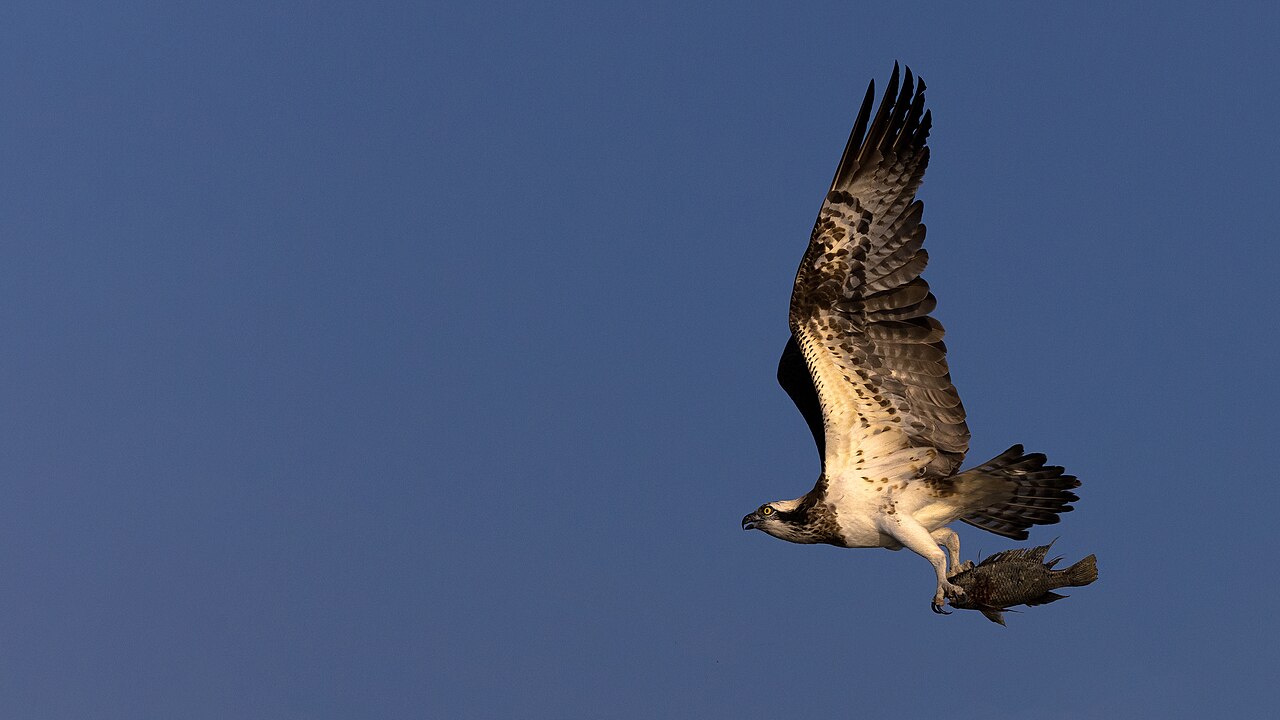
The osprey feeds almost exclusively on live fish and is the only diurnal raptor in North America that does so. It hunts by hovering 30 to 100 feet above water, then folding into a feet-first dive that carries it fully underwater before it powers back out with the catch.
Three adaptations make it work. A reversible outer toe lets the osprey grip a fish with two toes forward and two back rather than three and one, spreading the grip around a cylindrical body. Dense spicules on the underside of the toes give traction on scales. Closable nostrils keep water out during the plunge.
Ospreys carry fish head-first in flight, aligning the body to reduce drag, and this behaviour is distinctive enough to identify the bird at distance. Hunting success rates measured in field studies typically run around one in four dives, which is high for any predator. Our species guide to the osprey covers the full picture.
Herons and Egrets: Ambush Hunters
Herons hunt by standing still. A great blue heron will hold position for many minutes, then strike with a movement fast enough that a human observer sees only the result. The neck contains a kinked sixth vertebra that acts as a release mechanism, storing muscle tension and firing the head forward.
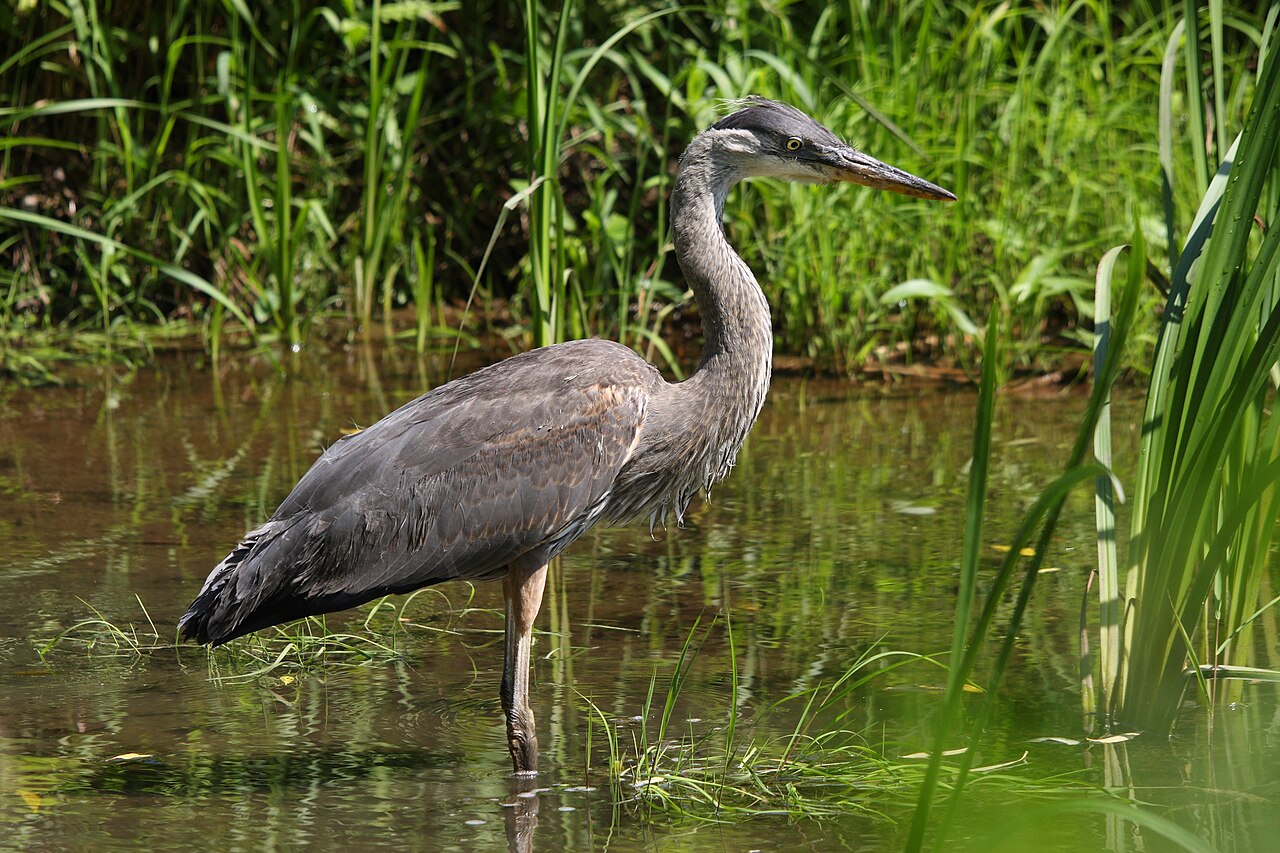
Large herons stab or grip depending on prey size, and both types of catch are manipulated at the surface until the fish can be swallowed head first. Great blue herons regularly take fish large enough to cause fatal choking, and dead herons with a fish lodged in the throat turn up often enough to be a documented mortality cause.
Green herons are the most interesting of the group because several populations use bait. Individuals drop insects, feathers, or bread on the water surface and wait for fish to investigate, which is one of the clearest documented cases of tool use in birds. Our guide to types of herons covers the North American species.
Kingfishers: Precision Plunge Divers
The belted kingfisher is the widespread North American representative and hunts from a perch or from a hover, dropping bill-first into the water from up to 40 feet. It closes a nictitating membrane over the eye during entry, so the final part of the strike is effectively made blind from a trajectory calculated before the dive.
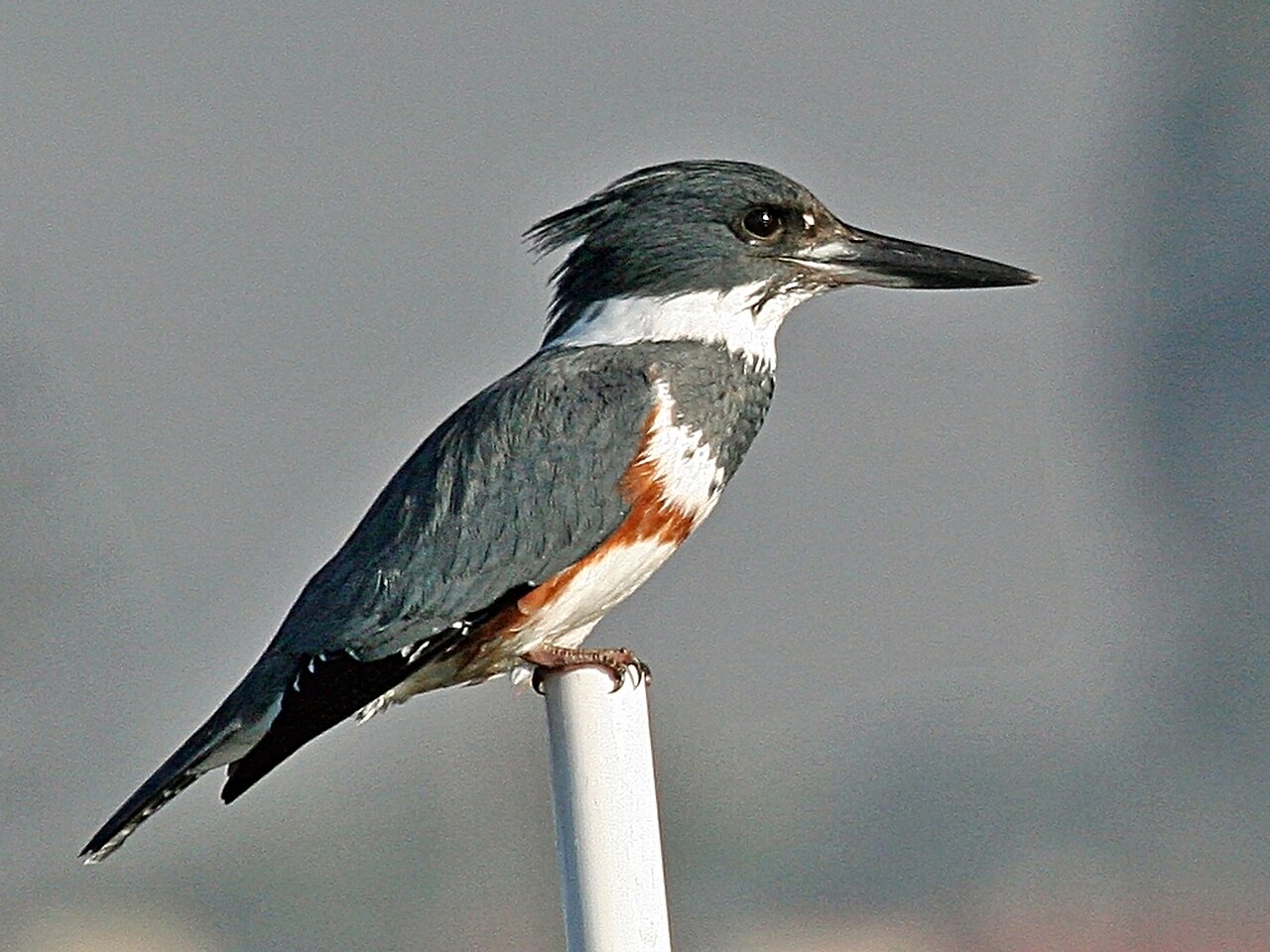
Correcting for refraction is the hard part, and kingfishers solve it with binocular vision that lets them judge the true position of a fish from above the surface. Young kingfishers miss frequently and improve over their first weeks, which indicates the skill is at least partly learned rather than purely innate.
After a catch, kingfishers return to a perch and beat the fish against it before swallowing, which stuns the prey and breaks spines that would otherwise catch in the throat. Belted kingfishers are one of the few North American birds where the female is more brightly marked than the male, as our guide to the female belted kingfisher covers.
Cormorants and Anhingas: Underwater Pursuit
Cormorants chase fish underwater rather than diving onto them, propelled by large webbed feet, and they routinely reach depths of 30 to 80 feet with dives lasting up to a minute. Their bones are denser than those of most birds and their plumage is partly wettable, both of which reduce buoyancy and make swimming down easier.
That wettable plumage is why cormorants stand with wings spread after fishing. They are drying feathers that would otherwise leave the bird waterlogged and unable to fly efficiently, and the posture is one of the most recognisable in North American birds.
Anhingas take the same approach further, swimming with only the neck above water, which produces the snakebird nickname, and spearing fish with a straight sharp bill rather than gripping them. Both groups have been the target of culling programmes around commercial fisheries, and the ecological case for those programmes is contested.
Double-crested cormorant numbers in North America collapsed under DDT contamination through the mid twentieth century and rebounded sharply after the ban, which is the main reason the species now appears superabundant to people who remember the low point. What looks like an explosion is largely a recovery to historical levels.
Eagles, Gulls, and Terns
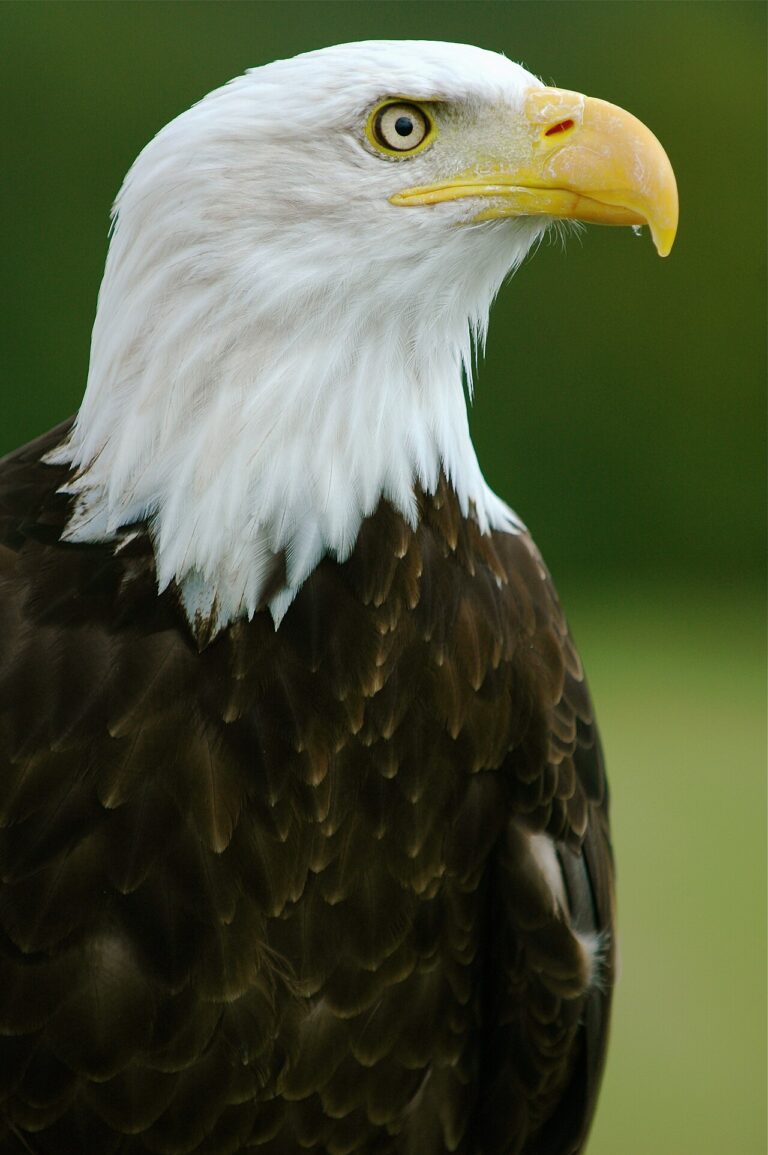
Bald eagles are fish specialists despite their reputation as general predators, and fish make up the majority of the diet across most of the range. They snatch prey from the surface with the feet rather than diving, and they steal from ospreys frequently enough that kleptoparasitism is a documented and significant part of their food intake.
Terns are the small plunge divers, hovering and dropping onto small fish near the surface, and they take fish appropriate to their size rather than the larger prey ospreys target. Black skimmers use a unique method, flying with the elongated lower mandible slicing the surface and snapping shut on contact.
Gulls are the opportunists and will take fish alive, dead, discarded, or stolen from another bird. Their versatility is why they thrive around harbours and landfills. Our guides to the bald eagle and types of eagles cover the raptor side.
Will Birds Eat My Pond Fish?
Yes, and the great blue heron is the main culprit across most of North America. Herons find new ponds quickly, they visit at dawn and dusk when nobody is watching, and a single bird can remove a substantial number of koi or goldfish from a small pond in a few visits. Fish valued in the hundreds of dollars are routinely lost this way.
Belted kingfishers take smaller fish and are more of a problem for ponds stocked with fingerlings or small ornamentals. Green herons work the margins and are easy to miss because they hunt from a crouch at the edge rather than standing in the open. Cormorants matter mainly at larger ponds and lakes.
Raccoons, mink, and otters get blamed for heron damage regularly, and the sign differs. A heron leaves fish gone with no remains and often leaves large droppings at the pond edge. A mammal leaves partly eaten fish on the bank and disturbed vegetation. Our guide to bird poop identification helps confirm which visitor you have.
How to Protect a Pond
Depth and structure do more than any deterrent. Herons wade and cannot hunt water deeper than roughly 2 feet, so a pond with steep sides and a deep central section gives fish a refuge that a heron simply cannot reach. Adding fish caves, pipes, or overhanging shelves gives them somewhere to go when a bird arrives.
Netting is the only measure that works reliably on its own, and it needs to be suspended above the water rather than floating on it so that a heron cannot stand on it and reach through. Motion-activated sprinklers work well initially and lose effectiveness as birds habituate, which typically takes a few weeks.
Plastic heron decoys are widely sold and largely ineffective, since herons are not strongly territorial outside the breeding season and often land next to them. Penn State Extension recommends exclusion and habitat modification over visual deterrents for exactly this reason. Note also that herons, egrets, kingfishers, and eagles are all federally protected under the Migratory Bird Treaty Act, so harming or trapping them is illegal.
Frequently Asked Questions
What kinds of birds eat fish?
Ospreys, herons, egrets, kingfishers, cormorants, anhingas, loons, mergansers, bald eagles, gulls, terns, and pelicans all eat fish. They belong to unrelated groups and use five distinct hunting styles: plunge diving, ambush wading, underwater pursuit, surface snatching, and scoop feeding.
Which bird mainly eats fish?
The osprey feeds almost exclusively on live fish and is the only diurnal raptor in North America that does. It has a reversible outer toe, spiny foot pads for gripping scales, and closable nostrils, all adaptations for a feet-first plunge dive.
Will birds eat my pond fish?
Yes. Great blue herons are the main threat across most of North America and can empty a small ornamental pond in a few visits. Belted kingfishers take smaller fish, green herons work the margins, and cormorants matter mainly at larger ponds.
How do I keep birds from eating my pond fish?
Combine depth and netting. Herons cannot hunt water deeper than about 2 feet, so steep sides and a deep central section create a refuge, and fish caves give somewhere to hide. Netting suspended above the water is the only measure that works reliably alone. Motion sprinklers work until birds habituate.
Do heron decoys work?
Generally no. Herons are not strongly territorial outside the breeding season and frequently land beside decoys rather than avoiding them. Extension services recommend exclusion and habitat modification instead, since visual deterrents lose effectiveness quickly as birds learn they are harmless.
Why do cormorants stand with their wings spread?
To dry their feathers. Cormorant plumage is partly wettable, which reduces buoyancy and makes underwater pursuit easier, but it leaves the bird waterlogged after fishing. The spread-wing posture dries the feathers so the bird can fly efficiently again.
Is it legal to kill a heron eating my fish?
No. Herons, egrets, kingfishers, eagles, and nearly all other native fish-eating birds are federally protected in the United States under the Migratory Bird Treaty Act. Harming, trapping, or killing them is illegal, and exclusion is the only lawful approach.