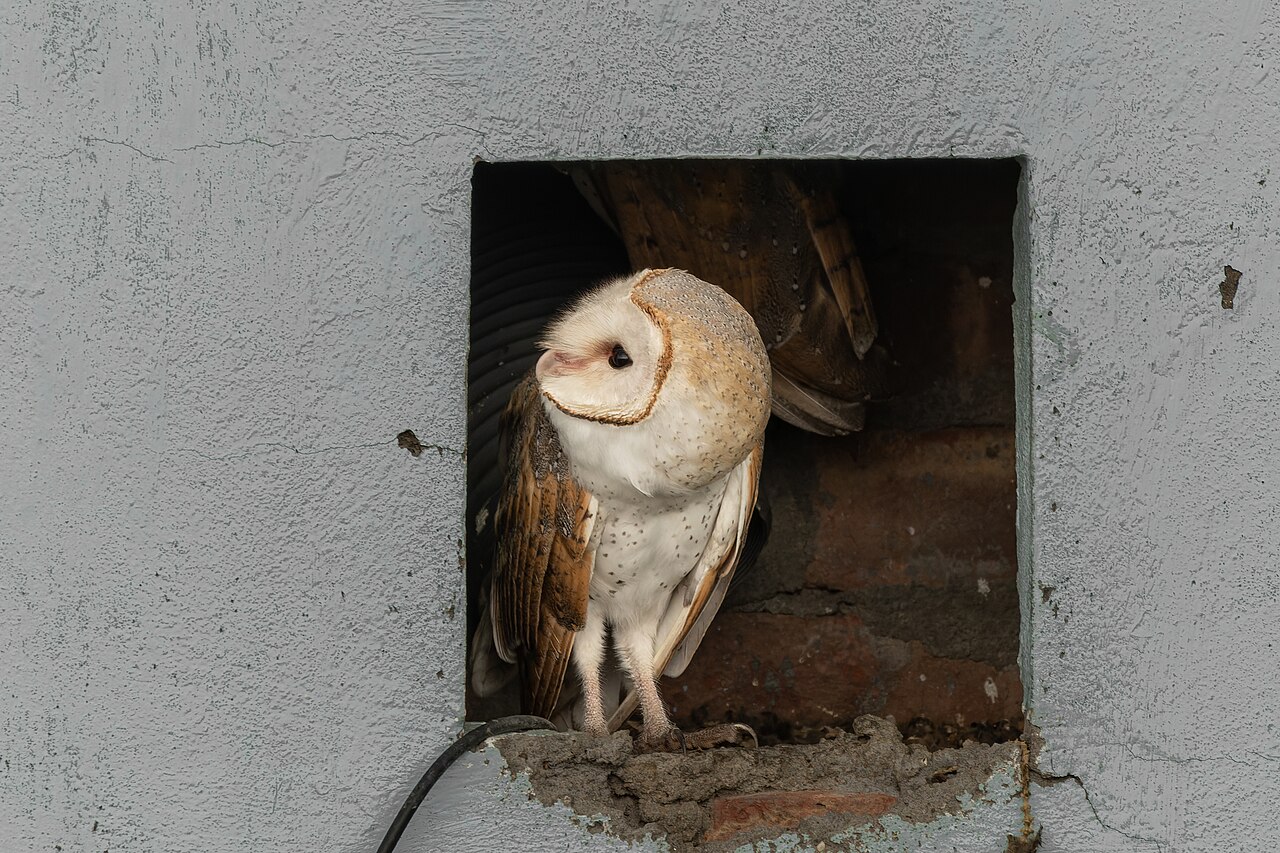
Do Birds Have Ears? Yes, and They Hide Behind Feathers
Birds have ears. They just have no ear flaps, so there is nothing sticking out of the head to point at. Every bird carries a pair of funnel-shaped ear openings on the sides of the skull, set slightly behind and below the eye, hidden under a patch of specialized feathers. Part those feathers on a live bird and you are looking down a short canal at the eardrum.
The missing flap is an aerodynamic tradeoff, not a missing sense. Birds hear a narrower band of frequencies than people do, but they resolve timing and direction far better, which is how an owl catches a mouse it never sees.
Yes, birds have ears. Instead of external flaps, each bird has a funnel-shaped ear opening behind and below the eye, covered by stiff feathers called auriculars. Most birds hear best between 1,000 and 4,000 Hz, a narrower range than humans, but they detect changes in timing and pitch with much finer precision.
| Species | Hearing feature | What it does |
|---|---|---|
| Human | 20 Hz to 20,000 Hz | Broad range, coarse timing resolution |
| Barn Owl (Tyto alba) | Ear openings set at different heights | Pinpoints prey in darkness by sound alone |
| Rock Pigeon (Columba livia) | Infrasound below 10 Hz | Detects distant storms and terrain |
| Oilbird (Steatornis caripensis) | Clicks near 2,000 Hz | Echolocates inside pitch-dark caves |
| American Robin (Turdus migratorius) | Fine low-frequency detection | Locates earthworms moving under soil |
| Anna’s Hummingbird (Calypte anna) | Sensitivity above 7,000 Hz | Hears tail chirps and wing trills of rivals |
Where Are a Bird’s Ears?
A bird’s ears sit on the sides of the head, roughly level with the eye and a short distance behind it. On a bare-headed bird such as a vulture or a newly hatched chick the openings are obvious, two dark holes about the size of the pupil. On a feathered adult you will only find them by blowing gently against the grain of the cheek feathers.
The opening leads into a short canal and a single eardrum. Behind it sits one bone, the columella, where mammals have three. Fewer parts means a simpler amplifier but a quicker one, and birds pair it with an inner ear that reads arrival-time differences between left and right in fractions of a millisecond. Stripped-down anatomy is a theme in bird bodies, which is also why birds have no teeth.
What Are Bird Ears Called?
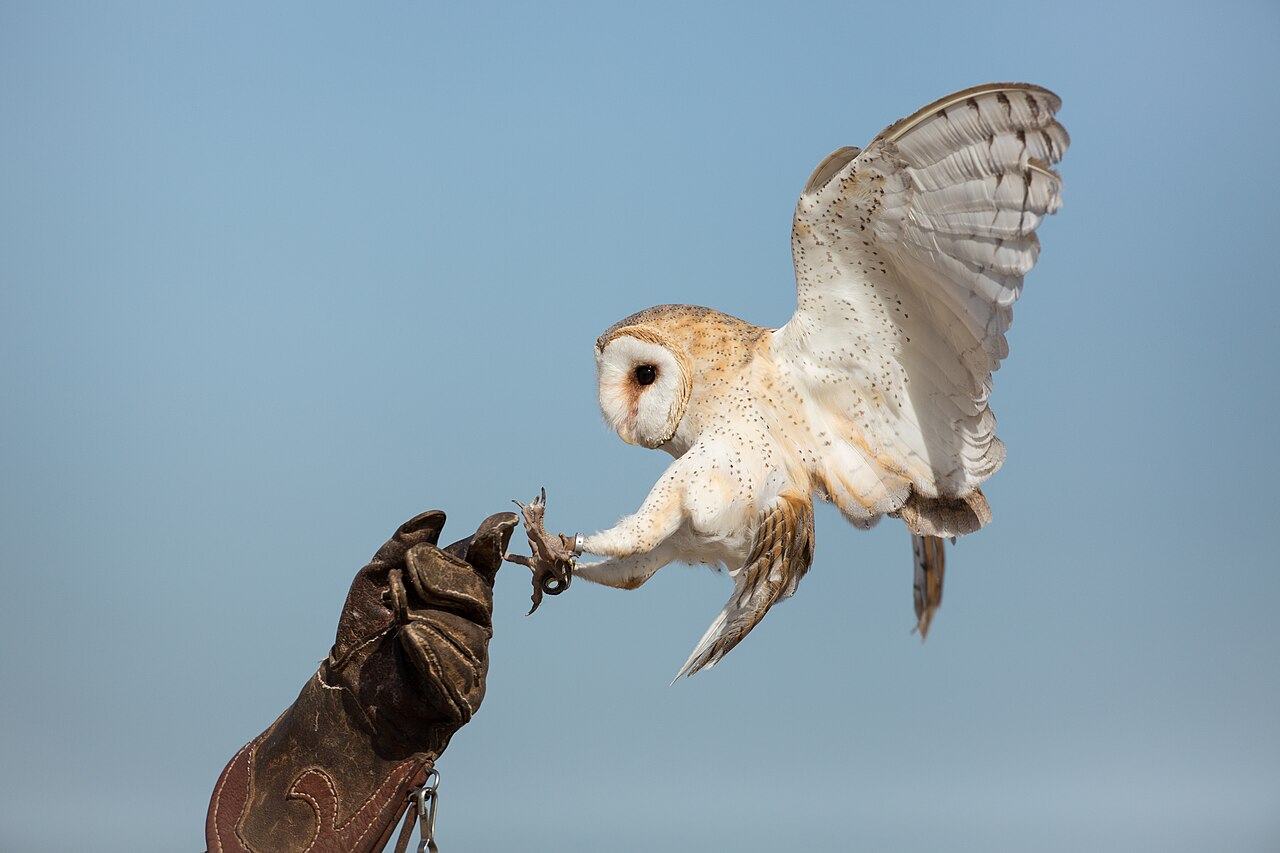
The feathers covering the opening are called auriculars, or ear coverts, and birders use the patch itself as a field mark. The dark cheek smudge on an American Kestrel and the contrasting face patch on many sparrows are auricular patterns, not markings on skin.
These feathers are built differently from the rest of the plumage. They lack the tight hook-and-barbule structure that makes a flight feather windproof, so sound passes through almost unimpeded while wind noise and debris do not. The result is a weatherproof grille over a hole in the skull, which is what a 40 mph flier needs instead of a protruding flap.
Do Birds Hear Human Voices?
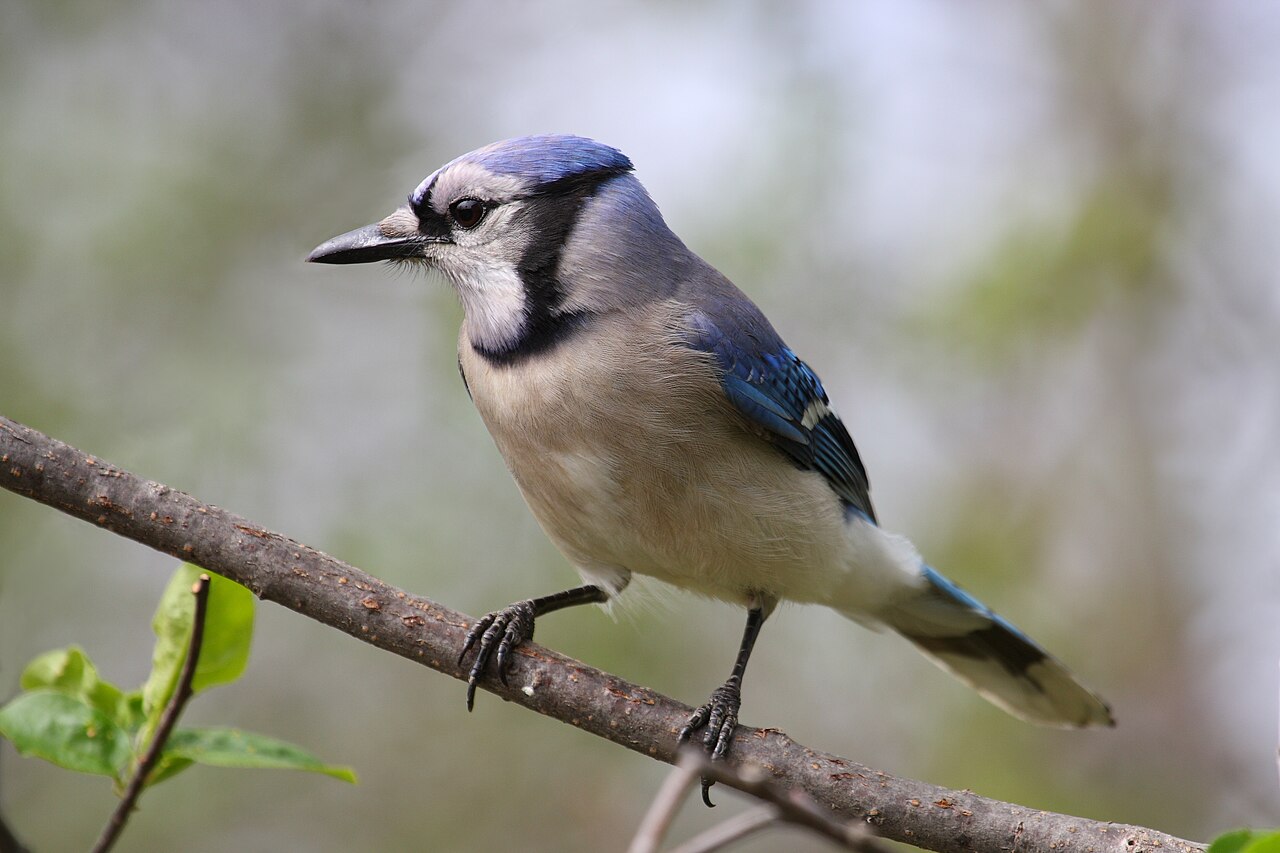
Yes, and better than most people assume, because ordinary speech sits in the 250 to 4,000 Hz band where bird hearing is sharpest. Parrots, corvids, and many songbirds distinguish individual human voices, and captive birds regularly react to one household member and ignore another.
How do birds hear you outdoors? Mostly as a threat cue. Feeder birds learn the sound of a specific door, car, and footstep on gravel, and they adjust their flush distance to it. American Goldfinches that scatter when a stranger crosses the yard keep feeding while the person who fills the feeder walks past.
How Do Birds Learn Their Songs?
By listening, which is the clearest proof that bird hearing does real work. A young songbird memorizes the song of adults nearby during a sensitive period in its first months, then practices a rambling subsong and tunes it against that stored memory until it matches.
Deafen a bird before it reaches that stage and it never produces normal song, because it cannot hear its own output to correct it. Regional dialects follow from the same mechanism: birds copy the neighbors they actually hear, so song varies from valley to valley within one species.
Which Birds Hear Best? Owls and the Asymmetrical Ear
Barn Owls hear best, and the reason is structural. Their left and right ear openings sit at different heights on the skull, so a sound from above hits one ear a hair earlier and louder than the other. The bird reads that mismatch as a vertical angle while timing differences give the horizontal angle, producing a full sound map of the ground below.
The stiff facial disc funnels sound toward those openings like a pair of parabolic dishes, and a hunting Barn Owl can take a vole under snow in complete darkness. Hunting by ear is not an owl monopoly: an American Robin cocking its head on a lawn is listening for a worm below the sod. At the other end of the scale, Allen’s Hummingbird and Anna’s Hummingbird push sensitivity upward, tracking the high wing trills rivals use to claim territory.
Are Any Birds Deaf?
No bird species is deaf as a group, and none is known to have lost hearing the way some cave fish lost sight. Song learning, pair contact, predator alarms, and flock coordination all run on hearing, so a lineage that dropped it would not last.
Individual birds do lose hearing to injury, infection, or loud noise, but they recover in a way mammals cannot. Birds regenerate the sensory hair cells of the inner ear within weeks, restoring function after damage that would leave a human permanently deaf. Cornell’s All About Birds covers the behavioral side of avian hearing in its species accounts.
Frequently Asked Questions
Do all birds have ears?
Yes. Every bird species, from hummingbirds to ostriches, has a pair of ear openings behind the eyes covered by auricular feathers. Diving birds such as loons and penguins can close the opening with muscle and feather to keep water out, but the ear itself is present in all of them.
Are owl ear tufts really ears?
No. The tufts on a Great Horned Owl or Long-eared Owl are feathers with no connection to hearing. They serve camouflage and signaling, breaking up the head outline against a branch and communicating mood. The real ears are hidden at the edges of the facial disc.
Can birds hear better than humans?
Not across the board. Humans hear a much wider frequency range, roughly 20 Hz to 20,000 Hz against a typical bird’s 1,000 to 4,000 Hz core band. Birds win on resolution instead, separating sounds milliseconds apart and pulling a single song out of a noisy dawn chorus.
How do birds hear without ears on the outside?
The funnel-shaped opening and the head itself do the job an external flap would do. Head feathers and, in owls, a facial disc gather and direct sound into the canal, and because the two openings sit far apart on a broad skull the bird still gets strong directional cues.
Can loud noise damage a bird’s hearing?
Temporarily, yes. Traffic, machinery, and gunfire raise hearing thresholds in birds as in people, and chronic urban noise pushes some species to sing louder or at higher pitch. Because birds regrow inner ear hair cells, most of the damage reverses within a few weeks.
Do birds have tongues?
Yes, and they vary enormously, from the barbed tip of a woodpecker to the brush tip of a lorikeet and the tube-and-groove tongue of a hummingbird. Tongues handle food manipulation rather than sound, and they pair with a beak that replaced teeth entirely.