Can Bearded Dragons Eat Strawberries? Portions and Ratios
Bearded dragons can eat strawberries, and they are one of the better fruit choices: lower in sugar than most, low in oxalates, and with a calcium to phosphorus ratio that is close to neutral rather than badly inverted. The limit is one small strawberry or half a large one, once or twice a month for an adult.
That frequency surprises people who expect fruit to be a regular treat. Fruit should stay under about 10 percent of an adult bearded dragon’s diet and less for a juvenile, because sugar disrupts gut flora in an animal built for insects and hard-leaved desert plants, and because anything sweet displaces the greens that actually supply calcium. This guide covers portions, the leaves, the ratio, and the fruits worth using instead.
Bearded dragons can eat strawberries once or twice a month, one small berry or half a large one, cut to a piece no bigger than the space between their eyes. Strawberries are lower in sugar and oxalates than most fruit. The leafy tops are safe and better than the fruit. Juveniles should have almost no fruit at all.
| Item | Guidance |
|---|---|
| Portion | Pieces no larger than the space between the eyes |
| Frequency | Once or twice a month for adults |
| Green tops | Safe; lower sugar than the fruit |
| Seeds | Safe; no need to remove |
| Juveniles | Minimal to none; insects and greens instead |
| Fruit total | Under 10 percent of an adult’s diet |
| Washing | Essential; high pesticide residue |
Are Strawberries Safe for Bearded Dragons?
Yes, and they are among the safer fruits. Strawberries contain nothing toxic to reptiles, are around 5 percent sugar which is low for a fruit, and are low in oxalates, which matters because oxalates bind calcium in the gut and block its absorption.
The calcium to phosphorus ratio is roughly neutral, close to 1:1, which is not ideal against the 2:1 target for the overall diet but is considerably better than bananas or grapes. That combination puts strawberries at the top of the fruit list rather than the bottom.
They also supply vitamin C and antioxidants, though bearded dragons synthesise their own vitamin C and do not need it from food, unlike guinea pigs. The genuine argument for strawberries is variety and enrichment rather than nutrition. The guide to watermelon for bearded dragons covers a fruit with a worse ratio.
How Many Can They Have?

One small strawberry or half a large one, once or twice a month for an adult, cut into pieces no larger than the space between the dragon’s eyes. That eye-width rule is the standard portion guide for every food item and prevents impaction from oversized pieces.
Fruit as a whole should stay under about 10 percent of an adult’s intake. Since adults should be eating roughly 75 to 80 percent plants, that means a salad of staple greens most days with fruit appearing as an occasional addition rather than a daily component.
Juveniles should have almost none. Growing dragons under twelve months need roughly 70 to 80 percent insects and the remainder greens, because they are building bone and muscle at speed and have no dietary room for sugar. Introducing fruit gradually as the ratio flips in adulthood is the sensible route.
Can They Eat the Leaves and Seeds?
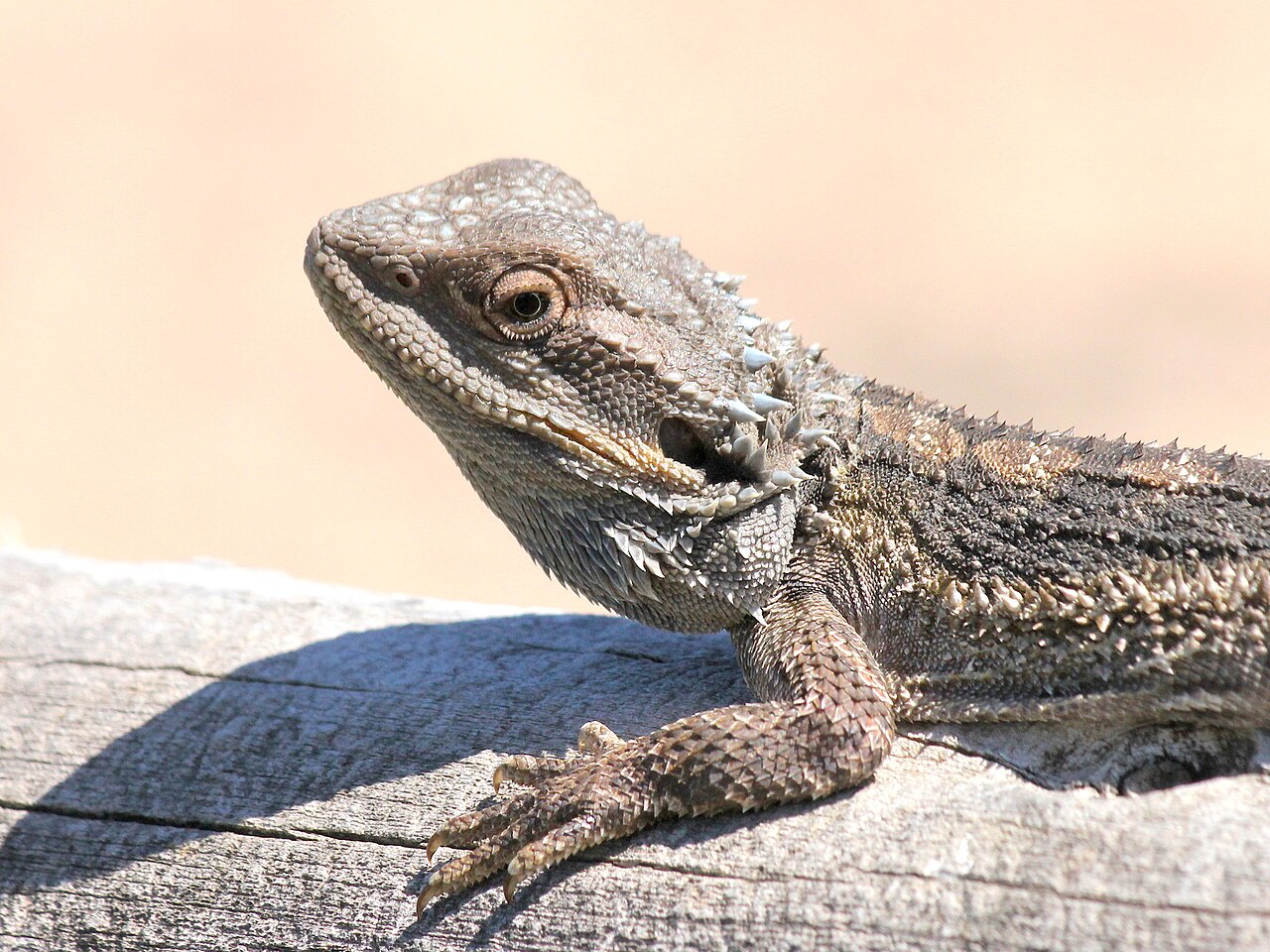
Both, and the leaves are the better part. Strawberry leaves and the green calyx are safe, fibrous, and lower in sugar than the fruit, and many bearded dragons take them readily, which turns the part you were going to discard into a better treat than the berry.
Seeds are soft, tiny, and entirely digestible, so there is no need to remove them. That differs from watermelon seeds, which are hard enough to pose an impaction risk, and from apple and stone fruit pits, which contain cyanogenic compounds.
Washing matters more than preparation. Strawberries rank consistently among the produce items with the highest pesticide residue, and a bearded dragon weighs a fraction of what a person does, so residues that are trivial for a human are not. Scrub under running water, and organic is worth the difference if strawberries are a regular treat.
Next question: Can Bearded Dragons Eat Blueberries? Portion Size by Age
Why Does the Calcium Ratio Matter?
Because metabolic bone disease is the most common preventable illness in captive bearded dragons and it is a calcium problem. Phosphorus binds calcium in the gut and blocks absorption, so a food with more phosphorus than calcium effectively subtracts from the calcium budget rather than adding to it.
The target for the whole diet is around 2:1 calcium to phosphorus. Individual items can fall below that as long as the overall balance holds, which is why an occasional strawberry is fine and a daily one is not. Oxalates in greens like spinach work the same way through a different mechanism.
Signs of metabolic bone disease include tremors, a soft or swollen lower jaw, bowed limbs, difficulty lifting the body off the ground, and lethargy, and advanced cases leave permanent deformity. It is entirely preventable through diet plus proper supplementation. The guide to spinach for bearded dragons covers the oxalate side.
Does UVB Matter More Than Diet?
They are inseparable, and this is the part most often missed in feeding discussions. Without ultraviolet B light a bearded dragon cannot synthesise vitamin D3, and without D3 it cannot absorb dietary calcium at all, so a dragon on a perfect diet with a failed bulb still develops bone disease.
Proper UVB means a linear tube running much of the enclosure length rather than a compact coil bulb, mounted at the manufacturer’s specified distance, with no glass or plastic between bulb and animal since both block UVB entirely. Mesh reduces output substantially and has to be accounted for.
Bulbs decay before they fail visibly, so replacement every six to twelve months depending on the product is standard practice, and writing the date on the bulb prevents the most common oversight in bearded dragon keeping. A UV index meter costs less than a single exotics vet consultation and removes the guesswork.
What Fruit Is Best for Bearded Dragons?
Papaya, figs, and prickly pear top the list because they have favourable or near-neutral calcium ratios, and figs are one of the rare fruits that supply meaningful usable calcium. Prickly pear pads and fruit are both suitable and are a natural food for related desert lizards.
Berries come next: strawberries, blueberries, raspberries, and blackberries, all low enough in sugar and oxalates to be reasonable occasional treats. Mango, peeled apple, pear, melon, and watermelon sit lower down as filler rather than nutrition.
Bananas and grapes are the ones to limit hardest. Both are high in sugar and both have badly inverted calcium to phosphorus ratios, and both are extremely palatable, which is exactly the combination that leads to overfeeding. The banana guide and grape guide cover each in detail.
What Foods Are Dangerous?
Avocado is the clearest exclusion, containing persin and genuinely toxic to bearded dragons in any part. Rhubarb is toxic through oxalic acid at dangerous levels, and both should never be offered.
Citrus is the common mistake. Oranges, lemons, limes, and grapefruit are too acidic and cause digestive upset and mouth irritation, and they offer nothing that justifies the risk. Iceberg lettuce is not toxic but is nutritionally empty and causes loose stools.
Wild-caught insects are the underrated hazard, carrying pesticide residue and parasites, and fireflies are lethal to bearded dragons even in tiny quantities because of the lucibufagin compounds that make them glow. Never offer a firefly or any glowing insect, and buy feeder insects rather than collecting them.
How Do You Introduce Fruit Safely?
One item at a time, in a small piece, with several days before adding another. Bearded dragon gut flora adjusts slowly, and offering two new foods together makes it impossible to tell which caused loose stools if they follow.
Watch the droppings, which are the daily readout. Healthy bearded dragon faeces are firm and brown with a distinct chalky white urate portion, and persistent runny stools after a fruit feed mean the portion was too large or too frequent. Blood, foul-smelling diarrhoea, or undigested food warrant an exotics vet.
Remove uneaten fruit within a couple of hours. Cut fruit spoils quickly under a basking lamp, attracts flies, and grows bacteria in an enclosure held at 95 degrees or more at the hot end, and a dragon eating fruit that has sat all day is a more realistic route to digestive upset than the fruit itself.
What Should the Diet Actually Be?
The insect to plant ratio flips with age and that is the core of it. Juveniles under about twelve months need roughly 70 to 80 percent insects fed two or three times daily, and adults need the reverse at roughly 20 to 25 percent insects offered two or three times a week.
Staple greens are collard greens, mustard greens, turnip greens, dandelion greens, endive, and escarole, offered fresh daily and chopped small. Butternut squash, bell pepper, and green beans work as supporting vegetables in rotation.
Staple insects are dubia roaches, crickets, and black soldier fly larvae, gut-loaded before feeding since an insect is only as nutritious as its last meal. Calcium powder on most feeds, a D3 or multivitamin supplement once or twice a week depending on the UVB setup, and fresh water available complete it. Exotics veterinary practices and university programmes such as the University of Florida (ufl.edu) publish current supplementation schedules. The lizard poop guide covers reading droppings as a health check.
Frequently Asked Questions
Can bearded dragons eat strawberries?
Yes, one small berry or half a large one once or twice a month, cut into pieces no larger than the space between the eyes. They are among the better fruit choices.
How many strawberries can a bearded dragon eat?
One small or half a large one per serving, once or twice a month for adults. Fruit as a whole should stay under 10 percent of an adult’s diet and juveniles should have almost none.
Can they eat strawberry leaves and seeds?
Yes to both. The leafy tops are fibrous and lower in sugar than the fruit, and the seeds are soft and digestible. Wash thoroughly since strawberries carry high pesticide residue.
What fruit is toxic to bearded dragons?
Avocado, which contains persin, and rhubarb, which is high in oxalic acid. Citrus is not toxic but is too acidic and causes digestive upset, so it should be avoided.
What fruit is best for bearded dragons?
Papaya, figs, and prickly pear, which have the most favourable calcium ratios, followed by berries. Bananas and grapes should be limited hardest because of sugar and inverted ratios.
Why does the calcium to phosphorus ratio matter?
Phosphorus binds calcium in the gut and blocks absorption, and the diet should run around 2:1 calcium to phosphorus. Getting it wrong causes metabolic bone disease.
What should bearded dragons eat most of?
Juveniles need 70 to 80 percent insects; adults need 75 to 80 percent plants. Collard, mustard, turnip, and dandelion greens are the staples, with dubia roaches and crickets as staple insects.

Similar Posts
Lionhead Rabbit: Size, Lifespan, Care and 4 Real Downsides
A lionhead rabbit weighs 2.5 to 3.75 lbs and lives 7 to 10 years. What the mane costs you in grooming, which types exist, and what new owners find out late.
Can Rabbits Eat Grapes? Safe Amounts by Size
Grapes are safe for rabbits but sugary. How many per week by body size, why raisins are worse, what happens if you overdo it, and which fruits to avoid entirely.
Can Guinea Pigs Eat Grapes? Safe Portions, Skin and Seeds
Guinea pigs can eat grapes as an occasional treat, but sugar makes portion size the whole game. Here is exactly how many, how often, and what to remove first.
Abyssinian Guinea Pig: Care, Rosettes, Cost, and Lifespan
What the eight rosettes mean, how big Abyssinians get, what they cost, and the weekly grooming this rough coat needs.
Guinea Pig Breeds: Complete Guide to All 13 Types
A complete guide to all 13 guinea pig breeds, what actually differs between them, and how to choose the right one.
Can Rabbits Eat Tomatoes? Safe Parts and What to Avoid
Ripe flesh yes, in small amounts. Leaves, stems, and green fruit are toxic. What’s safe, how much, and what solanine poisoning looks like.