Can Bearded Dragons Eat Bananas? Safe Amounts Explained
Bearded dragons can eat bananas, but only as an occasional treat, roughly once or twice a month for healthy adults. Bananas are not toxic and contain useful potassium, magnesium, and vitamin C. The problem is the mineral balance: a banana carries about four times more phosphorus than calcium, and excess phosphorus blocks calcium absorption. Over time, a diet with too much phosphorus contributes to metabolic bone disease, the most common and most preventable serious illness in captive bearded dragons.
The distinction that matters here is between a food that is dangerous and a food that is unbalanced. Avocado and rhubarb belong in the first category and should never be offered. Banana belongs in the second: harmless in a small piece every few weeks, harmful only if it displaces the greens and insects that should make up the real diet. Knowing which category a food falls into is what turns feeding decisions from guesswork into routine.
| Question | Answer |
|---|---|
| Safe to feed? | Yes, in strict moderation |
| How often | Once or twice a month for adult dragons |
| Portion size | One thin slice, chopped small |
| Calcium to phosphorus | Roughly 1:4, well below the ideal 2:1 |
| Sugar content | About 12 g per 100 g of fruit |
| Peel | Not recommended; remove before feeding |
| Babies and juveniles | Best avoided; prioritize insects and greens |
Can Bearded Dragons Eat Bananas Safely?
Yes, with clear limits. Banana appears on the accepted fruit list published by the North Carolina State University College of Veterinary Medicine alongside papaya, melon, figs, apples, mango, and peaches, with the standing caveat that fruits should be limited because of their sugar content. Nothing in a banana is chemically harmful to a bearded dragon. It contains no oxalates worth worrying about, no toxic compounds, and no choking hazard once it is sliced.
The reason banana still requires caution is its position in the overall diet. VCA Animal Hospitals recommends that fruit make up only 10 to 20 percent of the plant matter fed to a bearded dragon, and that it be treated as a treat rather than a staple because it is low in mineral content. Since plants themselves should be roughly 75 to 80 percent of an adult dragon’s intake, that puts fruit at a small slice of the overall picture, and banana is one of the weaker options within that slice.
What this means practically is that no single banana feeding will hurt a healthy adult dragon. Owners who discover their dragon has eaten a whole slice do not have an emergency. The risk accrues through repetition: a dragon offered banana several times a week, or one whose owner uses fruit to coax a picky eater instead of addressing husbandry, gradually accumulates a calcium deficit that shows up months later as tremors, a soft jaw, or difficulty walking.
The Calcium to Phosphorus Problem
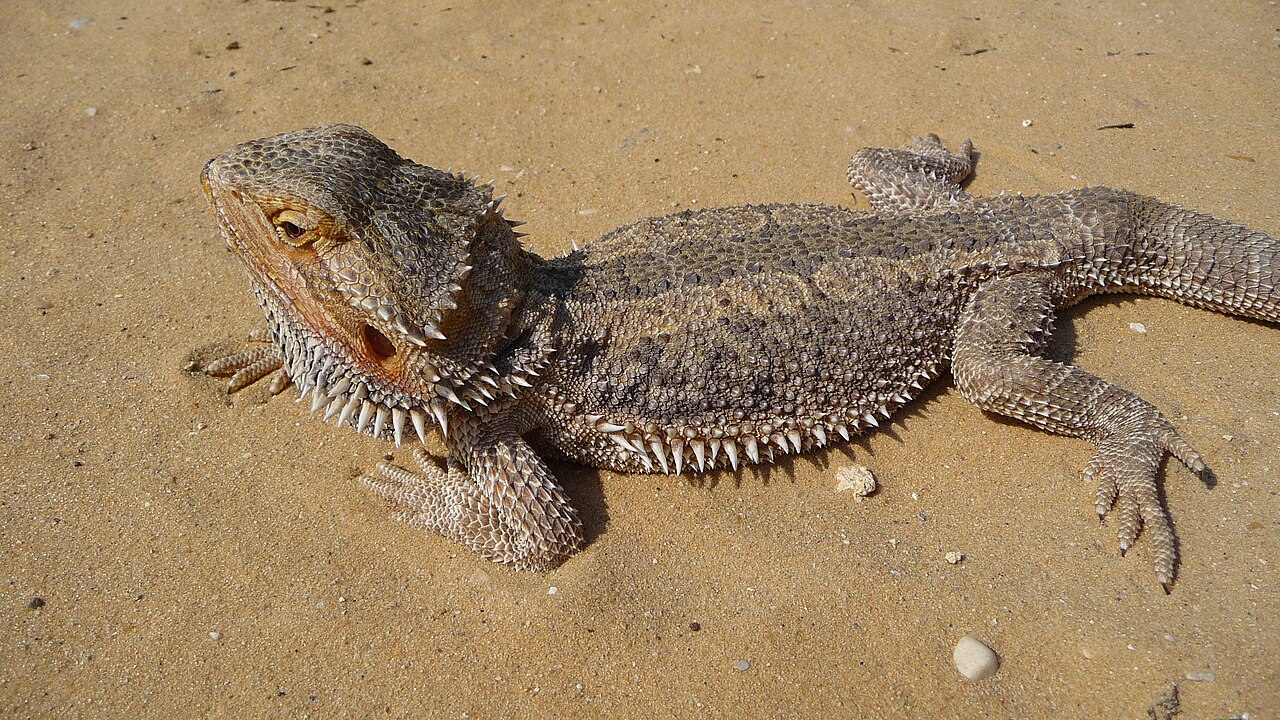
Phosphorus binds calcium in the digestive tract and prevents it from being absorbed. That single mechanism drives nearly every feeding rule in reptile keeping. The target ratio for a bearded dragon is roughly two parts calcium to one part phosphorus, and foods that reverse that ratio create a net calcium loss even when they contain some calcium themselves.
Raw banana contains approximately 5 mg of calcium and 22 mg of phosphorus per 100 grams, which works out to a ratio near 1:4. Every milligram of phosphorus can be treated as canceling out roughly a milligram of calcium, so a serving of banana does not simply fail to contribute calcium, it actively subtracts from what other foods provide. That is the difference between a neutral food and a negative one, and it is why banana sits well below blueberries or papaya in the fruit rankings despite being nutritious in human terms.
The consequence of a sustained calcium deficit is metabolic bone disease. The body pulls calcium from the skeleton to maintain blood levels, and bones soften. Early signs include muscle tremors, lethargy, and reluctance to climb; advanced cases produce a rubbery lower jaw, swollen limbs, spinal deformity, and fractures. It is largely irreversible once structural damage occurs, which is why the emphasis falls so heavily on prevention. The same phosphorus logic governs feeding decisions for other reptiles, and it appears again in our guides to the crested gecko and to what lizards eat in general.
How Much Sugar Is in a Banana
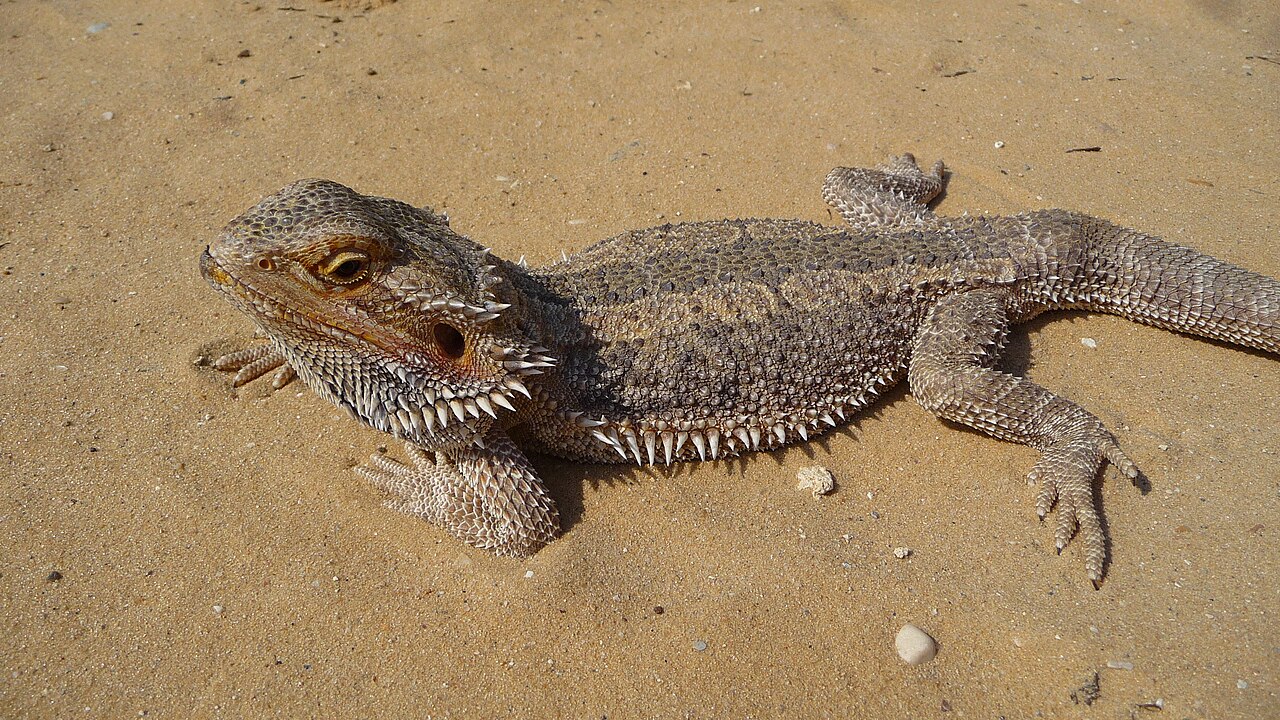
Roughly 12 percent of a banana’s weight is sugar, which is high for an animal evolved in the arid scrublands of central Australia. Wild bearded dragons encounter ripe sweet fruit rarely and seasonally, never in the quantities a well-meaning owner can supply from a kitchen. Their digestive physiology reflects that history: they process fructose adequately in small amounts and poorly in large ones.
Two problems follow from excess sugar. The first is obesity, which is widespread in captive dragons and compounds every other health issue, from fatty liver disease to reduced fertility. The second is dental. Bearded dragons have acrodont teeth fused directly to the jawbone rather than set in sockets, and they cannot be replaced once lost. Sugary foods promote plaque and oral bacterial overgrowth, and periodontal disease in beardies is both common and difficult to treat.
Loose stool is the most immediate and visible sign of too much fruit. A dragon that produces watery droppings after a fruit feeding has been given too much, and the correct response is to withhold fruit for a few weeks and return to greens and insects. Persistent diarrhea warrants a veterinary visit, since it also points to parasites and can cause dehydration quickly in a small animal.
How Often Can a Bearded Dragon Eat Banana?
Once or twice a month is the workable rule for a healthy adult, and once a month is the safer default. Some keepers stretch this to once every two weeks when the rest of the diet is calcium-rich and supplementation is consistent. Nobody credible recommends weekly banana, and daily banana would be actively harmful.
Portion size matters as much as frequency. A single thin slice, chopped into pieces no wider than the space between the dragon’s eyes, is an appropriate serving. That eye-width guideline is the standard sizing rule for all bearded dragon food and exists to prevent impaction and choking. A whole banana is never an appropriate serving for an animal that weighs well under a pound.
Frequency should also be counted against total fruit intake rather than banana alone. If a dragon received grapes last week and strawberry the week before, adding banana this week pushes the cumulative sugar and phosphorus load higher than the schedule suggests. Keep a rough mental tally of all fruit, not each item separately. Our guide to whether bearded dragons can eat grapes covers the same calculation for the fruit most often paired with banana in a rotation.
Can Baby Bearded Dragons Eat Bananas?
Baby and juvenile bearded dragons should not be given banana. Their requirements run in the opposite direction from what banana provides: rapid skeletal growth demands maximum calcium and protein, and every gram of high-phosphorus food consumed displaces something the animal actually needs during the window when bone is forming fastest.
The diet ratio is inverted for young dragons. Where an adult eats roughly 75 to 80 percent plants and 20 to 25 percent insects, a hatchling or juvenile eats predominantly insects, fed multiple times daily, with greens available continuously. Calcium supplementation is correspondingly heavier: VCA Animal Hospitals notes that veterinarians generally recommend dusting food with a phosphorus-free calcium powder daily, plus a calcium powder containing vitamin D3 two to three times weekly, with young growing dragons having the highest requirement of all.
Metabolic bone disease in juveniles progresses faster and does more permanent damage than in adults because the skeleton is still being built. A dragon that develops spinal or jaw deformity during its first year carries it for life. There is no nutritional argument for banana in a juvenile diet that greens and gut-loaded insects do not cover better, so the simplest policy is to wait until the dragon is a well-grown adult before introducing fruit at all.
Can Bearded Dragons Eat Banana Peel?
Banana peel is best left out of the enclosure. It is not toxic in itself, and the peel does contain fiber and some minerals, but three practical issues rule it out for most keepers. The peel is tough and fibrous in a way that a dragon’s jaws are not built to process, which raises the risk of impaction, particularly in smaller or younger animals.
Pesticide residue is the second concern. Banana is a heavily treated crop, and the peel carries the bulk of any residue. Because the peel is not something anyone routinely eats, it is also not something that gets washed with the same care as an apple skin. Even organic bananas accumulate handling residues in transit and storage.
Third, the peel offers nothing the flesh does not, and it does not improve the mineral ratio in any way that would justify the risks. If you want to feed banana, peel it, take a thin slice from the flesh, and discard the rest. The same reasoning applies to seeds, stems, and skins across the fruit list, a point that comes up repeatedly in feeding guides for other small pets including our article on whether guinea pigs can eat apples.
How to Prepare Banana for a Bearded Dragon
Preparation is straightforward but worth doing consistently. Choose a ripe but firm banana rather than one that has turned soft and brown, since sugar concentration rises as the fruit over-ripens. Peel it completely and cut a single thin round from the middle of the fruit.
Chop that round into pieces no wider than the gap between the dragon’s eyes. Mash is not recommended, because it sticks to the mouth and around the beard, which encourages exactly the bacterial overgrowth that sugar already promotes. Discrete pieces are cleaner and let the dragon chew normally.
Serve the banana on top of a salad of appropriate greens rather than alone. Collard greens, mustard greens, turnip greens, and dandelion greens all carry favorable calcium ratios and help offset the phosphorus in the fruit. Dusting the salad with a phosphorus-free calcium powder on a banana day is a reasonable extra precaution. Remove any uneaten fruit within a couple of hours; banana ferments and attracts insects quickly at the temperatures inside a dragon enclosure.
Better Fruit Choices Than Banana
If the goal is to give a dragon a fruit treat, several options beat banana on mineral balance. Papaya and figs carry markedly better calcium-to-phosphorus profiles and appear on veterinary-approved lists. Blueberries sit close to balanced and are a common recommendation as a weekly treat rather than a monthly one. Prickly pear, where available, is one of the few fruits with genuinely favorable calcium content.
Fruits in roughly the same category as banana, meaning acceptable but infrequent, include grapes, strawberries, mango, and melon. Apples and tomatoes are also phosphorus-heavy and belong on the occasional list. The fruits to avoid outright are short: avocado is toxic to bearded dragons, rhubarb is toxic, and citrus is acidic enough to cause digestive upset and is best skipped entirely.
The broader point is that fruit is the least important part of the diet and should never be used to solve a feeding problem. A dragon refusing greens usually has a husbandry issue, most often basking temperatures that are too low or a UVB bulb that has aged past its useful output, and offering sweet fruit to tempt it masks the real cause. Owners managing feeding schedules for multiple species often find it useful to compare the rules across animals, as in our guides to guinea pigs and tomatoes, guinea pig breeds and their dietary needs, and the care requirements of the Mediterranean house gecko.
Related reading: can bearded dragons eat watermelon.
Related reading: can bearded dragons eat spinach.
Related reading: can bearded dragons eat strawberries.
Related reading: can bearded dragons eat apples.
Related reading: can rabbits eat bananas.
Related reading: can bearded dragons eat blueberries.
Frequently Asked Questions
How much banana can a bearded dragon eat?
One thin slice from the middle of the fruit, chopped into pieces no wider than the space between the dragon’s eyes, is an appropriate serving for a healthy adult. A whole banana is never suitable. Offer it on top of a calcium-rich salad and remove anything uneaten within a couple of hours.
Can bearded dragons eat banana every day?
No. Daily banana would supply far too much sugar and phosphorus and would contribute to obesity and metabolic bone disease. Limit banana to once or twice a month for adults, and count it against total fruit intake rather than treating each fruit separately.
Can bearded dragons eat banana skin?
It is not recommended. The peel is tough and fibrous enough to raise impaction risk, carries the bulk of any pesticide residue, and provides no nutritional benefit over the flesh. Peel the banana completely and discard the skin.
Why is banana bad for bearded dragons?
Banana is not bad in itself, but its calcium-to-phosphorus ratio is roughly 1:4 when the target is about 2:1. Phosphorus binds calcium and prevents absorption, so frequent banana feeding creates a net calcium deficit that can lead to metabolic bone disease. The high sugar content adds separate risks of obesity and dental problems.
Can baby bearded dragons eat bananas?
Best avoided. Juveniles need maximum calcium and protein for rapid bone growth, and a high-phosphorus food works directly against that. Their diet should be dominated by gut-loaded insects and calcium-rich greens with daily calcium supplementation. Wait until the dragon is a well-grown adult before introducing fruit.
What fruits are best for bearded dragons?
Papaya, figs, blueberries, and prickly pear offer the best mineral profiles. Grapes, strawberries, mango, and melon are acceptable occasionally. Avocado, rhubarb, and citrus should be avoided entirely, with avocado and rhubarb being genuinely toxic rather than merely unbalanced.
What happens if my bearded dragon ate too much banana?
A single overfeeding is not an emergency. Expect loose stool for a day or two, withhold fruit for several weeks, and return to greens and gut-loaded insects with consistent calcium dusting. Contact an exotic-animal veterinarian if you see lethargy, appetite loss, tremors, or diarrhea that persists beyond a couple of days.