Baby Chipmunk: Growth Stages, Nests and What to Do
A baby chipmunk is called a pup or a kit, and it is born blind, hairless, and roughly the size of a bumblebee after a 31-day pregnancy. A typical litter holds two to six young, and they stay underground in the mother’s burrow for their entire first month. Eyes open at around four weeks, the striped coat is complete by about the same time, and the pups make their first trips above ground at six weeks old. By eight to ten weeks they are independent and gone.
That timeline explains why baby chipmunks are so rarely seen. A young chipmunk that appears in a yard looking small is almost always a fully weaned juvenile at about two thirds of adult size, not a helpless infant. Genuine newborns never leave the burrow, which means finding one on the surface is a signal that something has gone wrong with the nest.
| Stage | What Happens |
|---|---|
| Birth | Blind, naked, about 2.5 in long, roughly 3 grams |
| Day 8 to 10 | First fuzz appears, stripes begin to show |
| Day 28 | Ears open, body fully furred |
| Week 4 to 5 | Eyes open, pups become mobile in the burrow |
| Week 6 | First trips above ground, weaning begins |
| Week 8 to 10 | Fully independent, disperse from the mother |
| Litters per year | Two: spring and late summer |
A baby chipmunk is called a pup or a kit. It is born blind, hairless and roughly the size of a bumblebee after a 31-day pregnancy, in a litter of two to six. The eyes open near day 30, and the young stay underground for their entire first month.
What Is a Baby Chipmunk Called?
Baby chipmunks are called pups, and kit is an equally accepted term used by many state wildlife agencies. Both words belong to the broader rodent vocabulary; ground squirrels, mice, and rats all produce pups, and chipmunks are members of the squirrel family Sciuridae, so the naming follows the same convention. There is no distinct or specialized word for a young chipmunk the way there is for a fawn or a cygnet, which is why searches for the term so often return conflicting answers.
The group of pups born together is a litter, and the mother raising them is simply called a female or a dam. Male chipmunks take no part in raising young at all. After mating, the pair separates permanently, and the female excavates, provisions, and defends the nursery burrow alone. This single-parent structure is consistent across the eastern chipmunk and the western species, and it shapes almost everything about how the pups develop.
The species most North American readers are asking about is the eastern chipmunk, Tamias striatus, which occupies the eastern United States and southeastern Canada. Least chipmunks and other western species follow a broadly similar schedule with slightly different litter sizes. Where the numbers below vary, the eastern chipmunk figures are the ones cited, since that is the animal appearing in the overwhelming majority of backyard sightings.
What Baby Chipmunks Look Like at Each Stage
Newborn chipmunks are startlingly undeveloped. They arrive pink, completely hairless, with sealed eyes and sealed ear canals, measuring no more than about 2.5 inches from nose to tail tip and weighing roughly 3 grams, which is about the weight of a paperclip. Mass Audubon describes them as being no larger than a bumblebee at birth, and the comparison is accurate: a newborn pup fits comfortably in the bowl of a teaspoon. At this stage they cannot regulate their own body temperature and depend entirely on contact with the mother and with each other.
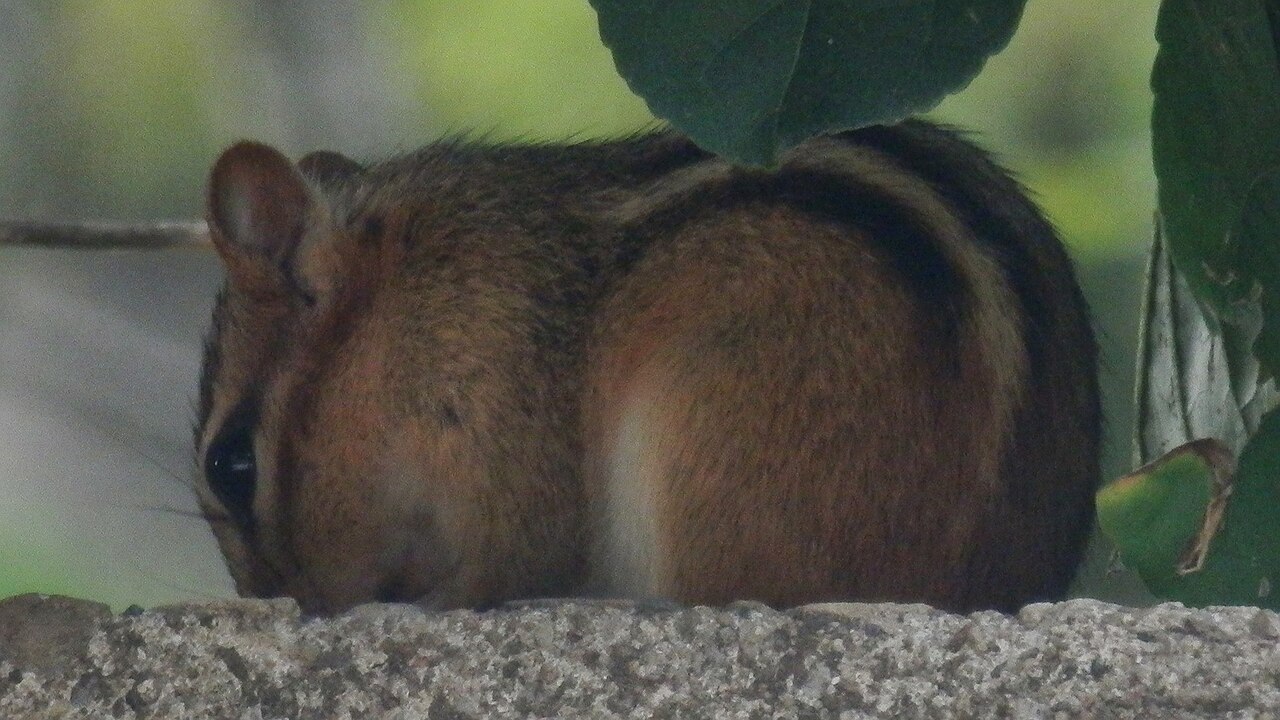
Development then moves quickly. A sparse covering of fuzz appears during the second week, and the signature dark and light stripes begin to show along the back and face by about day eight, well before the coat is dense enough to look like fur. The ear canals open around day 28. The eyes open at roughly four weeks, and by that point the body is completely furred and the pattern is a recognizable miniature of the adult: reddish-brown above, a single black stripe down the spine, two black stripes and one white stripe on each flank, and a pale belly.
By six weeks a pup looks like a small chipmunk rather than a rodent infant, and when it first appears above ground it stands at roughly two thirds of adult size. This is the source of most confusion. People report finding a baby chipmunk in the yard when what they have actually seen is a juvenile that is already weaned, mobile, and entirely capable of feeding itself. A true infant is pink and eyeless and will never be found running across a lawn.
Where Baby Chipmunks Are Born
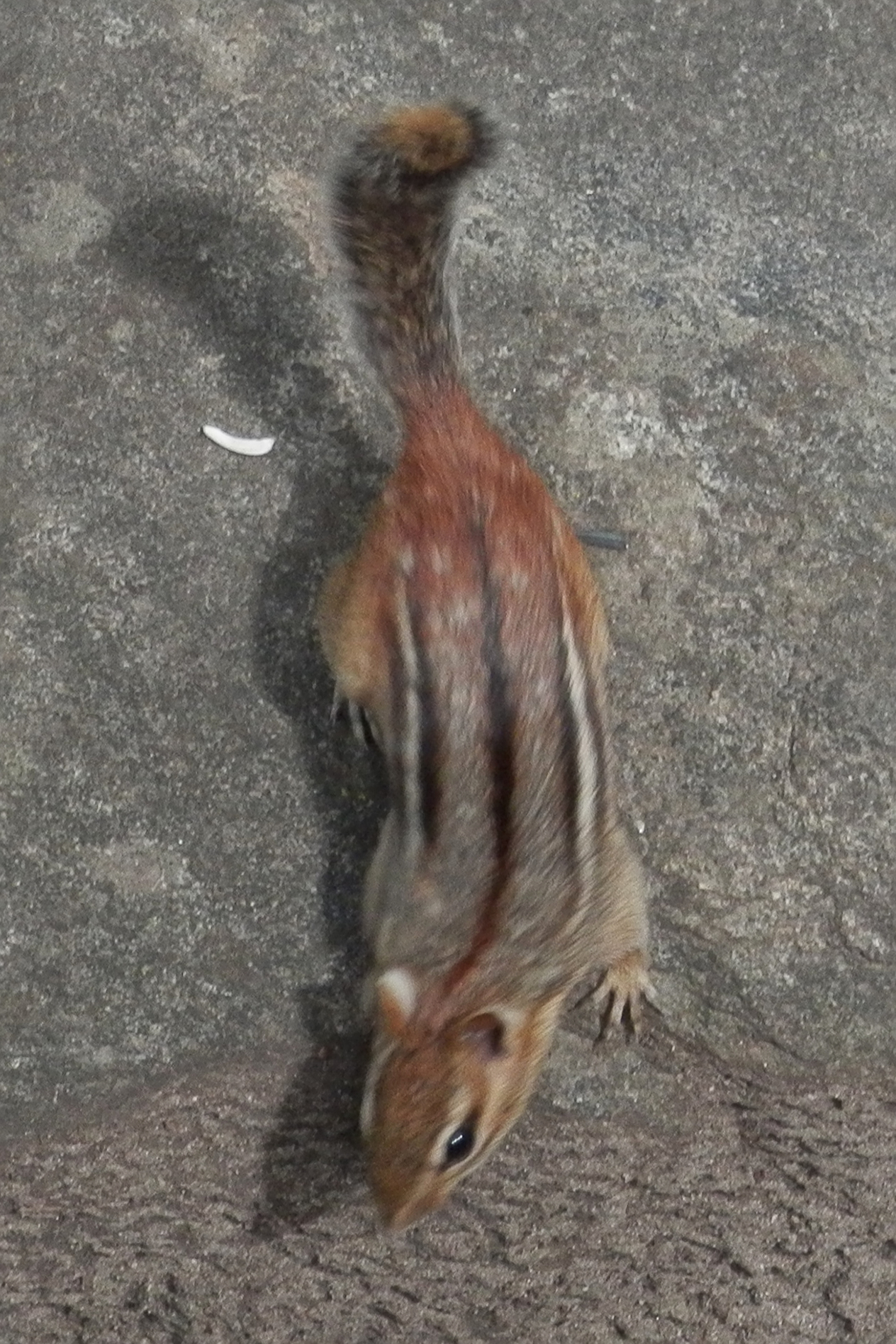
Chipmunk pups are born underground in a nesting chamber inside an extensive burrow system. Cornell Cooperative Extension notes that the young remain in that burrow for about six weeks, which means the nest has to be secure, dry, and defensible for the entire vulnerable period. The burrows are far more elaborate than the single tunnel most people imagine: complexes commonly exceed ten feet in length and reach three feet deep, with separate chambers for sleeping, for food storage, and for waste.
The nursery chamber sits on the upper level and is lined with shredded leaves and grass. Below it, the storage chamber holds the cached seeds and nuts that will carry the female through winter, since chipmunks do not build enough body fat to hibernate continuously and instead wake periodically from torpor to eat. The main entrance is only about two inches across, and there are usually one or more backup entrances plugged with leaves and debris as escape routes if the primary tunnel collapses.
What makes these burrows so hard to find is the absence of a spoil pile. A digging chipmunk carries excavated soil away in its cheek pouches and scatters it at a distance rather than pushing it out of the hole, so there is no telltale mound at the entrance the way there is with a mole or a ground squirrel. The result is a clean, unmarked two-inch opening beside a stump, wood pile, stone wall, patio, or foundation. Homeowners who suspect chipmunk activity but cannot locate a burrow often find the droppings first, and our guide to chipmunk poop covers what to look for and how it differs from mouse and rat sign.
When Baby Chipmunks Are Born
Eastern chipmunks produce two litters a year, and the timing is consistent enough to predict. Mating occurs first in early spring, roughly from March into early April, producing pups in April or May after the 31-day gestation. A second mating period runs from early June through mid-July, producing a second litter in August or September. In some years and some regions a female raises only one litter, usually the spring one, if food supplies were poor the previous autumn.
Litter size sits between two and six pups in most reports, with four to five being typical. Vermont Fish and Wildlife documents a range of two to eight, and the upper end tends to appear in years following heavy mast crops, when acorns and other nuts were abundant enough for females to enter breeding season in strong condition. Poor food years produce smaller litters and less frequent breeding, which is why chipmunk numbers in a given yard can swing noticeably from one summer to the next.
This two-litter schedule is why homeowners often notice a sudden surge of small chipmunks in late June and again in early October. Those are the two dispersal waves, arriving roughly eight to ten weeks after each birth pulse. It is the same pattern that produces seasonal spikes in sightings of other backyard mammals, and it lines up closely with the timing described in our guides to the baby rabbit and the baby raccoon.
What Baby Chipmunks Eat and Drink
For the first four to five weeks a baby chipmunk consumes nothing but its mother’s milk. The pups nurse in the nesting chamber and do not drink water, take solid food, or leave the nest during this period. Their digestive systems are not equipped to process seeds or nuts, and the mother does not bring solid food to the chamber for them. This is the single most important fact for anyone who has found a pup and is wondering what to offer it.
Weaning begins at around six weeks, coinciding with the first trips above ground. At that point the mother leads the pups on short foraging excursions and they begin sampling adult food while still nursing. The adult diet is broad: seeds, nuts, acorns, berries, fruit, mushrooms, insects, and occasionally small vertebrates including the eggs and nestlings of ground-nesting birds. Cheek pouches develop early, and juveniles begin caching food almost as soon as they start foraging, packing seeds into the pouches to carry back underground.
The critical caution concerns cow’s milk. It is a common instinct to offer milk to an orphaned pup, and it is one of the fastest ways to kill one. Cow’s milk causes severe diarrhea and fatal dehydration in wild rodent neonates, whose digestive systems are adapted to a very different milk composition. Water offered by dropper carries a high aspiration risk. If a genuinely orphaned pup needs feeding, it needs a licensed wildlife rehabilitator with species-appropriate formula, not a kitchen improvisation.
When Baby Chipmunks Leave the Nest
The first emergence happens at around six weeks, though sources place the window between four and six weeks depending on the population and the season. The pups do not disperse at that point. They make short supervised trips out of the burrow with the mother nearby, returning to the nest to sleep, and gradually extend their range over the following two weeks as they learn where food is and which cover is safe.
Independence follows at eight to ten weeks. Around week seven or eight, the mother becomes progressively more aggressive toward her own offspring, chasing them from the burrow entrance and refusing to nurse. This is not abandonment but a normal and necessary transition, since chipmunks are strongly territorial and a female defends roughly fifty feet around her burrow entrance against all comers, including her grown young. Some females instead vacate the burrow themselves and dig a new one nearby, leaving the original system to the pups.
Dispersing juveniles then have to establish their own burrows before winter, which is the most dangerous period of a chipmunk’s life. Mortality is high: hawks, foxes, snakes, and domestic cats all take large numbers of inexperienced young. Chipmunks that survive the first winter can live two to three years in the wild, and exceptional individuals have reached eight. The same steep first-year mortality shapes the dispersal of other small mammals, a pattern visible in our profiles of the baby mole and the baby fox.
What to Do If You Find a Baby Chipmunk
Start by deciding what you have actually found. A furred, striped, bright-eyed animal that moves quickly and is roughly the size of your thumb through to two thirds of an adult is a weaned juvenile. It is not orphaned, it does not need help, and the correct action is to leave it alone and bring pets indoors. Intervening with a healthy juvenile removes it from the territory it needs to learn before winter and dramatically lowers its survival odds.
A pink, hairless, or thinly furred pup with closed eyes is a different situation and genuinely cannot survive on the surface. This usually means a burrow has been disturbed by digging, mowing, or a predator. If the nest chamber is intact and visible, the best outcome is to replace the covering material, withdraw completely, and give the female several hours to retrieve her young; mothers routinely move displaced pups to a backup burrow. Watch from a distance rather than checking repeatedly, because human presence keeps her away.
Handle any wild rodent with gloves. The Centers for Disease Control and Prevention (cdc.gov) advises against bare-handed contact with wild rodents because of the risk of transmissible diseases and parasites, and a frightened juvenile chipmunk will bite hard enough to break skin. Chipmunks are not a significant rabies vector, but the general precautions for handling wildlife still apply.
Baby Chipmunk vs Baby Squirrel
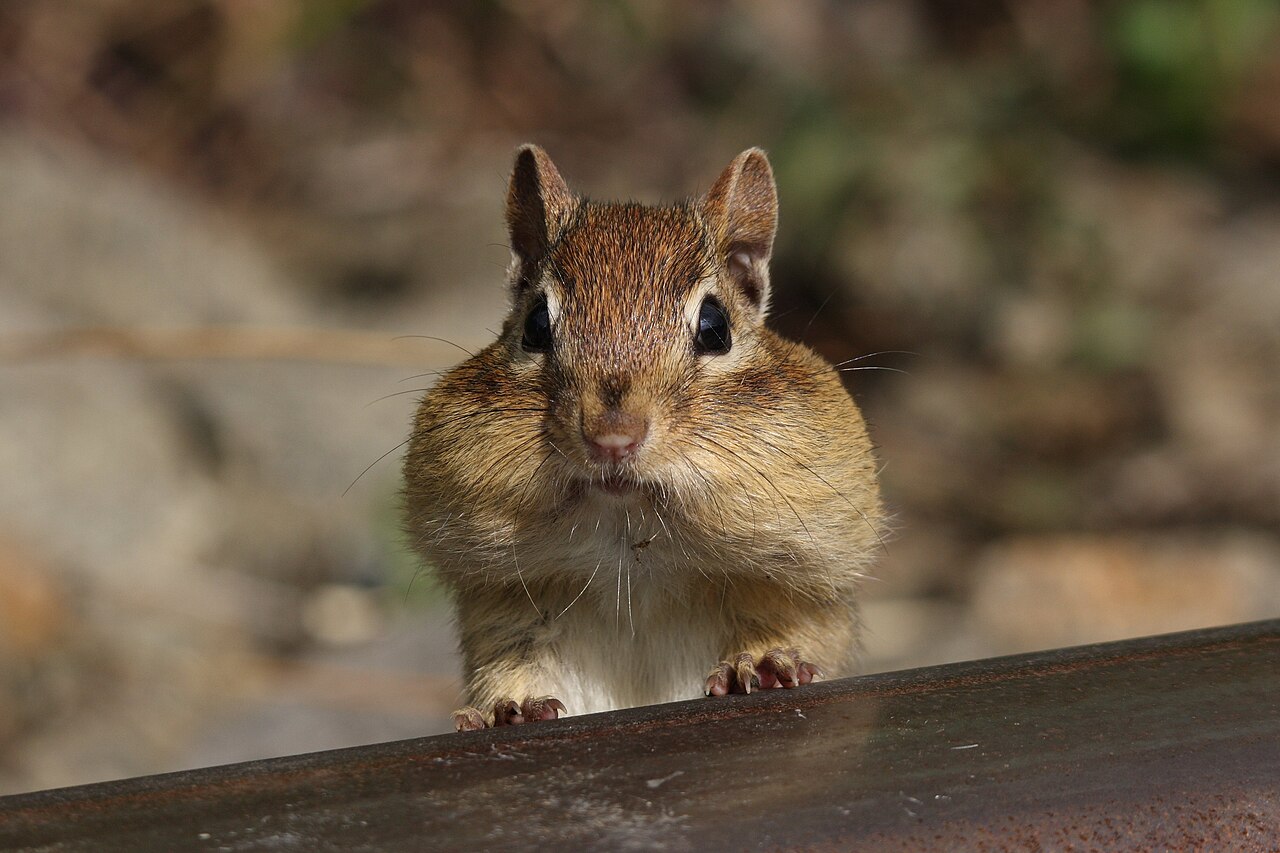
The two are confused constantly, and the stripes settle it immediately. A chipmunk of any age carries a black stripe down the center of the back plus two black stripes and one white stripe on each side, and distinct pale stripes above and below each eye. A gray squirrel or fox squirrel has no facial stripes and no body stripes at any age. If you can see striping on the face, you have a chipmunk.
Size and tail shape confirm it. Adult chipmunks run 8 to 10 inches including the tail and weigh 2 to 5 ounces, so even a juvenile chipmunk is small in the hand. The tail is thin, flattened, and modestly furred, held straight up when running. A juvenile tree squirrel of comparable body length carries a broad, plumed, obviously bushy tail. Ground squirrels sit between the two and are the genuinely tricky comparison, distinguished by their lack of facial stripes and blunter, less contrasting body markings.
Behavior offers a final check. Chipmunks are ground animals that dive into burrows when startled and only climb opportunistically; squirrels bolt for a tree trunk. A small striped rodent that vanishes into a hole at the base of a wall is a chipmunk. Homeowners trying to identify which species is actually working their feeders will find the sign-based comparisons in our guide to squirrel poop useful for confirming an identification without ever seeing the animal.
Related reading: Chipmunk Sounds.
How Long Do Baby Chipmunks Stay With Their Mother?
Baby chipmunks stay with their mother for about two months in total, and the split falls into two clear halves. For the first four to five weeks they never leave the burrow, nursing in a grass-lined chamber while blind and furless, and they only begin to look like recognizable chipmunks in the fifth week when the eyes open and the stripes come in.
The second half is the visible one. At around six weeks the pups start making short trips above ground near the burrow entrance, still returning to their mother and still nursing. They learn foraging routes, cheek-pouch handling and predator responses during this window, and they are noticeably smaller and less wary than adults, which is when most people spot them.
Dispersal comes fast and is complete. By seven to eight weeks the young are weaned and the mother pushes them out to establish their own burrows, since adult chipmunks are solitary and territorial outside the breeding season. A chipmunk seen alone at that size is independent, not abandoned. Penn State Extension’s guide to chipmunks and their burrow systems covers litter timing and dispersal.
Related reading: Chipmunk Lifespan.
Frequently Asked Questions
What is a baby chipmunk called?
A baby chipmunk is called a pup, and kit is also widely used. The terms are the standard rodent vocabulary and apply across the squirrel family. There is no unique species-specific name for young chipmunks. A group born together is a litter, typically containing two to six pups.
What do baby chipmunks eat?
For the first four to five weeks they consume only their mother’s milk and do not eat solid food or drink water. Weaning starts around six weeks, when the mother leads them above ground and they begin sampling seeds, nuts, berries, and insects. Never offer cow’s milk to an orphaned pup, as it causes fatal diarrhea in wild rodent neonates.
How long do baby chipmunks stay with their mother?
Pups remain in the burrow for about six weeks, then make supervised trips above ground for another two weeks. They become fully independent at eight to ten weeks old. Around week seven or eight the mother turns aggressive toward them, which is a normal cue that pushes them to disperse and establish their own territories.
Do baby chipmunks bite?
Yes. A frightened juvenile chipmunk will bite hard enough to break skin, and their incisors are sharp. Always use gloves if handling is unavoidable. The Centers for Disease Control and Prevention advises against bare-handed contact with wild rodents because of disease and parasite risk, though chipmunks are not considered a significant rabies vector.
Where do baby chipmunks nest?
They are born in a leaf-lined chamber inside an underground burrow system that often exceeds ten feet in length and three feet in depth. The entrance is about two inches wide and has no soil mound, because the chipmunk carries excavated dirt away in its cheek pouches. Burrows are usually tucked beside stumps, wood piles, stone walls, patios, or foundations.
When are baby chipmunks born?
Eastern chipmunks produce two litters a year. The first arrives in April or May after early spring mating, and the second in August or September after a June to mid-July mating period. Gestation is 31 days in both cases. Litter size is typically four to five pups, with a documented range of two to eight.
What should I do if I find a baby chipmunk in my yard?
If it is furred, striped, and alert, it is a weaned juvenile that needs no help; leave it alone and keep pets inside. If it is pink, hairless, or has closed eyes, the nest has likely been disturbed. Replace any covering material, withdraw for several hours so the mother can retrieve it, and contact a licensed wildlife rehabilitator if she does not return.