Chipmunk Poop: Identification and Comparison Guide
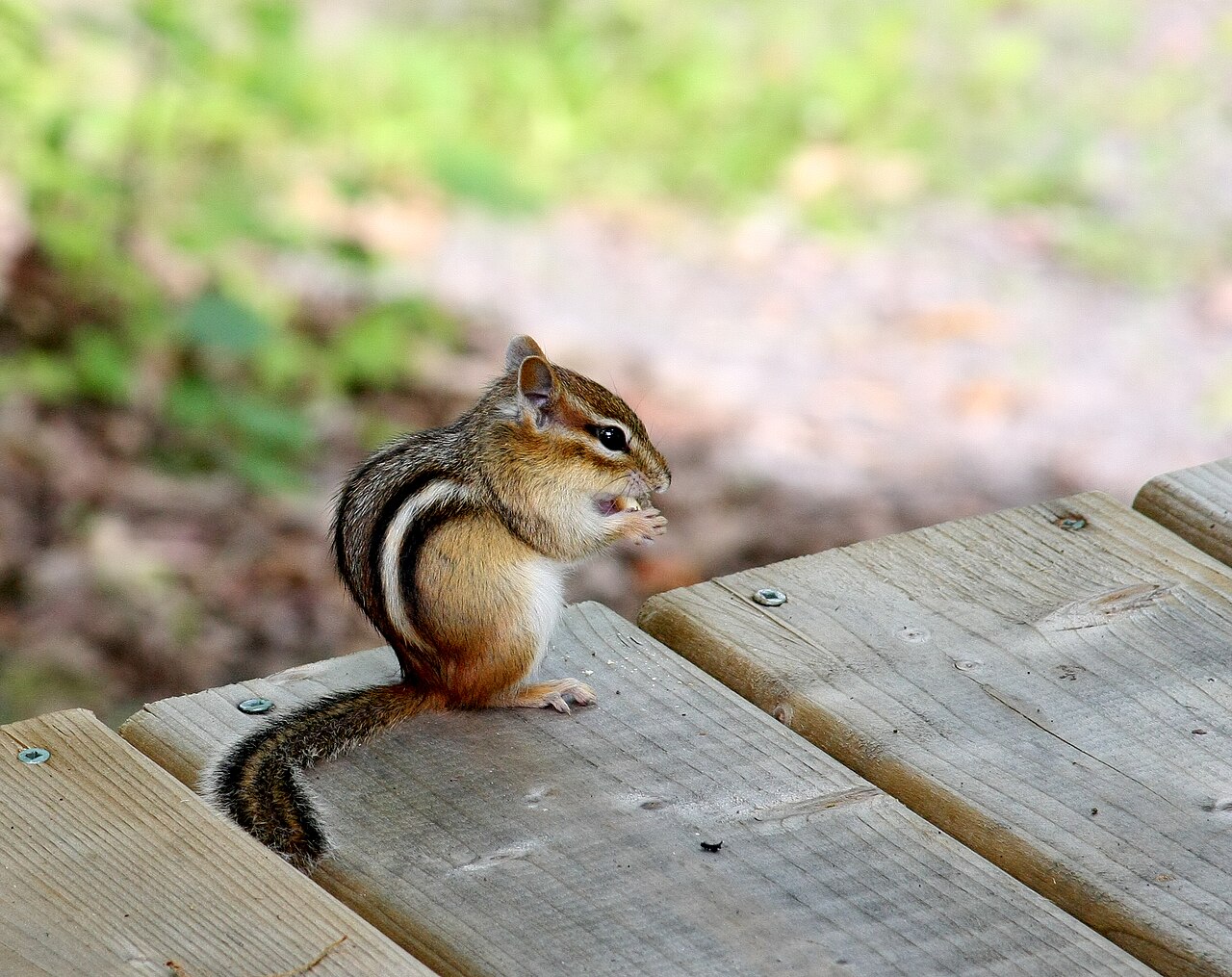
Chipmunk poop looks like small dark pellets roughly 0.25 in long and 0.125 in thick, oblong with slightly tapered ends, and it is one of the harder droppings to identify because most people never find any. Chipmunks are unusual among yard rodents in that they use latrine chambers inside their burrows, so the majority of their waste ends up underground rather than scattered where you would see it.
That habit is the single most useful identification clue. Finding a few small pellets on a deck or in a garage may point to a chipmunk passing through, but a real accumulation in an attic or along a wall almost always means mice or rats instead. This guide covers what chipmunk droppings look like, how they compare with mouse, rat, and squirrel droppings, the health risks, safe cleanup, and the other signs that identify a chipmunk problem.
| Quick Facts | Chipmunk Droppings |
|---|---|
| Length | About 0.25 in, roughly 6 to 8 mm |
| Shape | Oblong, slightly tapered, thicker than a mouse dropping |
| Color | Dark brown to black fresh, gray and crumbly when old |
| Where found | Rarely seen, most waste goes into burrow latrines |
| Burrow entrance | About 2 in wide with no soil mound |
| Main risks | Salmonella, leptospirosis, tick-borne disease |
Chipmunk poop is small dark pellets about a quarter inch long and an eighth inch thick, oblong with slightly tapered ends. It is rarely found in the open because chipmunks use latrine chambers inside the burrow, which is why it gets confused with the far more visible mouse droppings.
What Does Chipmunk Poop Look Like?
Chipmunk droppings are small dark pellets, roughly 0.25 in long and around 0.125 in thick, with an oblong shape and ends that taper slightly rather than coming to a sharp point. Fresh droppings are dark brown to nearly black and slightly moist, and they dry to a duller brown, then gray, becoming brittle and crumbling easily after a few weeks.
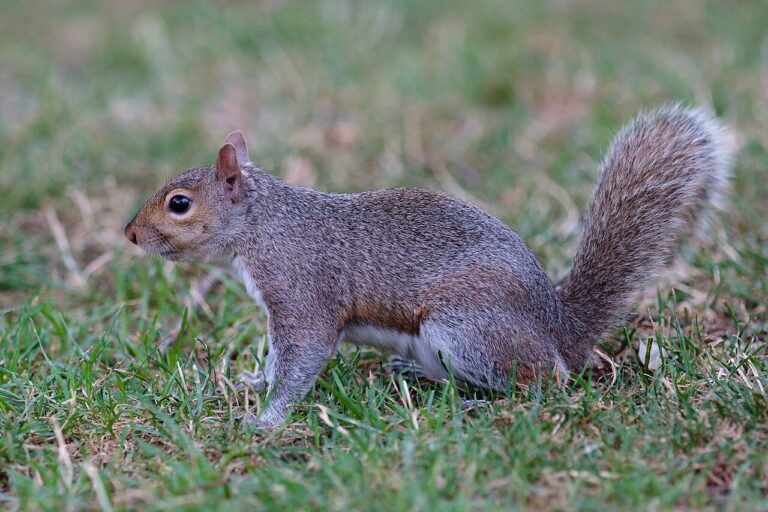
Size sits them awkwardly between the two rodents people most often compare them to. They are noticeably larger and thicker than mouse droppings, and clearly smaller than the 0.375 in droppings of a gray squirrel. That in-between size is exactly why identification by pellet alone is unreliable and why context matters so much.
Quantity is usually the giveaway. Because chipmunks deposit most waste in underground latrine chambers, surface droppings appear as a few scattered pellets rather than accumulations. Anyone finding dozens of pellets in one indoor location is almost certainly dealing with a different animal, a distinction our guide to squirrel droppings covers from the other direction.
Chipmunk Poop vs Mouse Poop
This is the most common comparison and it turns on size and volume. Mouse droppings measure 0.125 to 0.25 in, are thinner, and taper to distinct points at both ends, looking like dark grains of rice. Chipmunk droppings are thicker through the middle with blunter ends.
Volume separates them more decisively than shape. A single mouse produces 50 to 75 droppings per day, so an infestation leaves large numbers scattered across counters, inside drawers and cabinets, behind appliances, and along baseboards. Chipmunks produce comparable numbers but deposit almost all of it in the burrow, so you rarely see more than a few pellets.
Location resolves whatever remains. Mouse droppings turn up indoors in food preparation areas, storage, and along walls, since mice live inside structures year-round. Chipmunk droppings appear outdoors near burrow entrances, along foundations, under decks, on patios, and around bird feeders. Indoor droppings in a kitchen are essentially never from a chipmunk, and the rodents behind them are covered in our guide to what mice eat.
Chipmunk Poop vs Rat and Squirrel Poop
Rat droppings are 0.5 to 0.75 in long, considerably larger than chipmunk pellets, and taper to a point at one or both ends. Rats also deposit along walls in defined runways because they travel with their bodies against surfaces, producing lines rather than the scattered singles typical of a chipmunk.
Squirrel droppings are about 0.375 in and barrel-shaped with rounded ends at both tips. They appear on elevated surfaces such as decks, roofs, gutters, and attic floors, matching the animal’s climbing habits. Chipmunks are ground dwellers, so their droppings stay at ground level and never appear on a roof.
Height alone answers most cases. Elevated droppings mean squirrels or rats, ground-level ones near a burrow mean chipmunks, and indoor droppings in food areas mean mice or rats. When the pellets themselves are ambiguous, look for the entrance hole, since a chipmunk burrow is roughly 2 in across with no mound of excavated soil, which is a genuinely distinctive marker.
Why You Rarely Find Chipmunk Droppings
Chipmunk burrows are elaborate. A single system can run 10 to 30 ft with multiple chambers, including a nesting chamber, several food storage chambers, and dedicated latrine areas, all connected by tunnels and often with more than one entrance.
Waste goes into those latrine chambers rather than being scattered. This keeps the nest clean, and it also keeps scent concentrated underground where it is less likely to lead a predator to the entrance. The same behavior means the animal deposits comparatively little on the surface, even when it spends hours a day above ground foraging.
The practical consequence for a homeowner is that droppings are a poor way to detect chipmunks. Better indicators are the burrow entrances themselves, the sharp repeated chip call the animal is named for, shallow digging in flower beds and container plants, chewed bulbs, and seed hulls accumulating under bird feeders.
Is Chipmunk Poop Dangerous?
The direct risk is modest but real. Chipmunk droppings can carry Salmonella, and leptospirosis is transmissible through urine contaminating the same material. Both are handled through fecal-oral or contact routes rather than by simply being near the droppings, so ordinary hygiene handles most of the risk.
Ticks are the larger concern and the risk that operates at a distance. Eastern chipmunks are competent reservoir hosts for the bacterium that causes Lyme disease, and they support substantial populations of blacklegged tick larvae and nymphs. A yard with a heavy chipmunk population is a yard with more infected ticks, which matters far more than the droppings themselves. The CDC (cdc.gov) publishes tick prevention guidance that applies directly to properties with high rodent activity.
Hantavirus is not a chipmunk issue in North America, since the relevant reservoir is the deer mouse rather than chipmunks. Fleas and mites travel with chipmunks and can move indoors, and dogs that dig at burrows or eat droppings can pick up parasites, so treating pets for fleas and ticks matters more than treating the droppings.
How to Clean Up Chipmunk Droppings
The rule for all rodent waste applies here. Never dry sweep or vacuum droppings, because disturbing dried material aerosolizes particles that can then be inhaled. Damp cleanup is the standard approach, and it takes no more effort than the dry version.
Ventilate the area for 30 minutes first if it is enclosed, then wear disposable gloves, an N95 respirator, and eye protection. Spray the droppings and surrounding surface thoroughly with disinfectant or a bleach solution of roughly one part bleach to nine parts water, let it sit five minutes, then lift the material with paper towels and double bag it.
Disinfect the whole surface afterward, wash hands thoroughly, and wash the clothing separately in hot water. Outdoor droppings on soil or mulch generally need no intervention at all and break down on their own within weeks. The same protocol covers every rodent scat, and the comparisons in our guide to deer droppings help sort out what you are actually cleaning.
Signs of a Chipmunk Problem
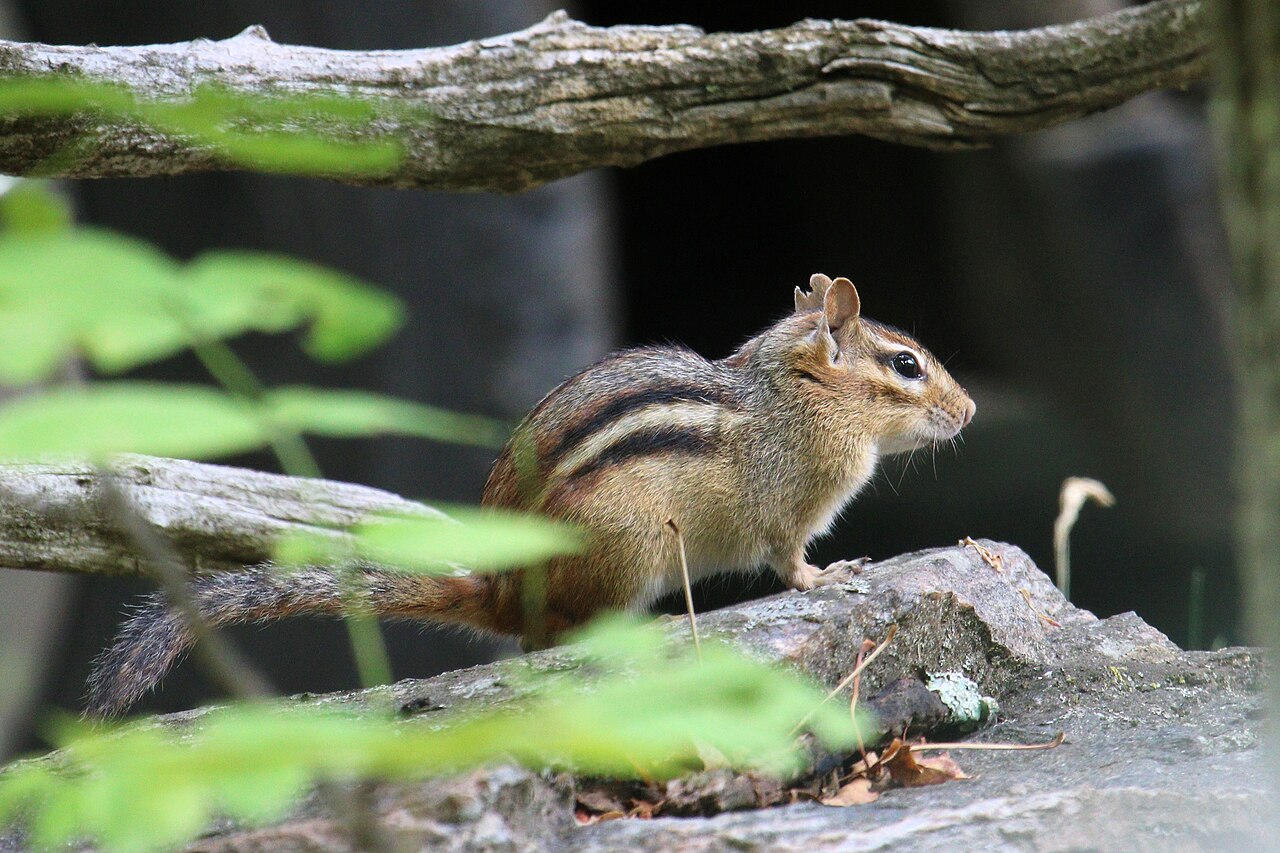
Burrow entrances are the primary sign, appearing as clean 2 in holes with no soil mound, typically near foundations, under decks and steps, in rock walls, beside sidewalks, and at the base of trees and shrubs. A single yard often supports several, since chipmunks are territorial and hold small individual ranges.
Damage tends to be cosmetic rather than structural, but it accumulates. Chipmunks dig up newly planted bulbs and seedlings, disturb container plants, strip bird feeders, and eat fruit and vegetables from gardens. The more serious version happens when burrows undermine patios, retaining walls, or foundation edges, which takes a sustained population over years rather than a single animal.
Chipmunks are diurnal, so activity is visible during the day, which distinguishes them from rats and mice. They are also solitary and territorial rather than colonial, so what looks like an infestation is usually a handful of animals each holding its own small territory. Damage from a genuine large population is uncommon.
Keeping Chipmunks Out
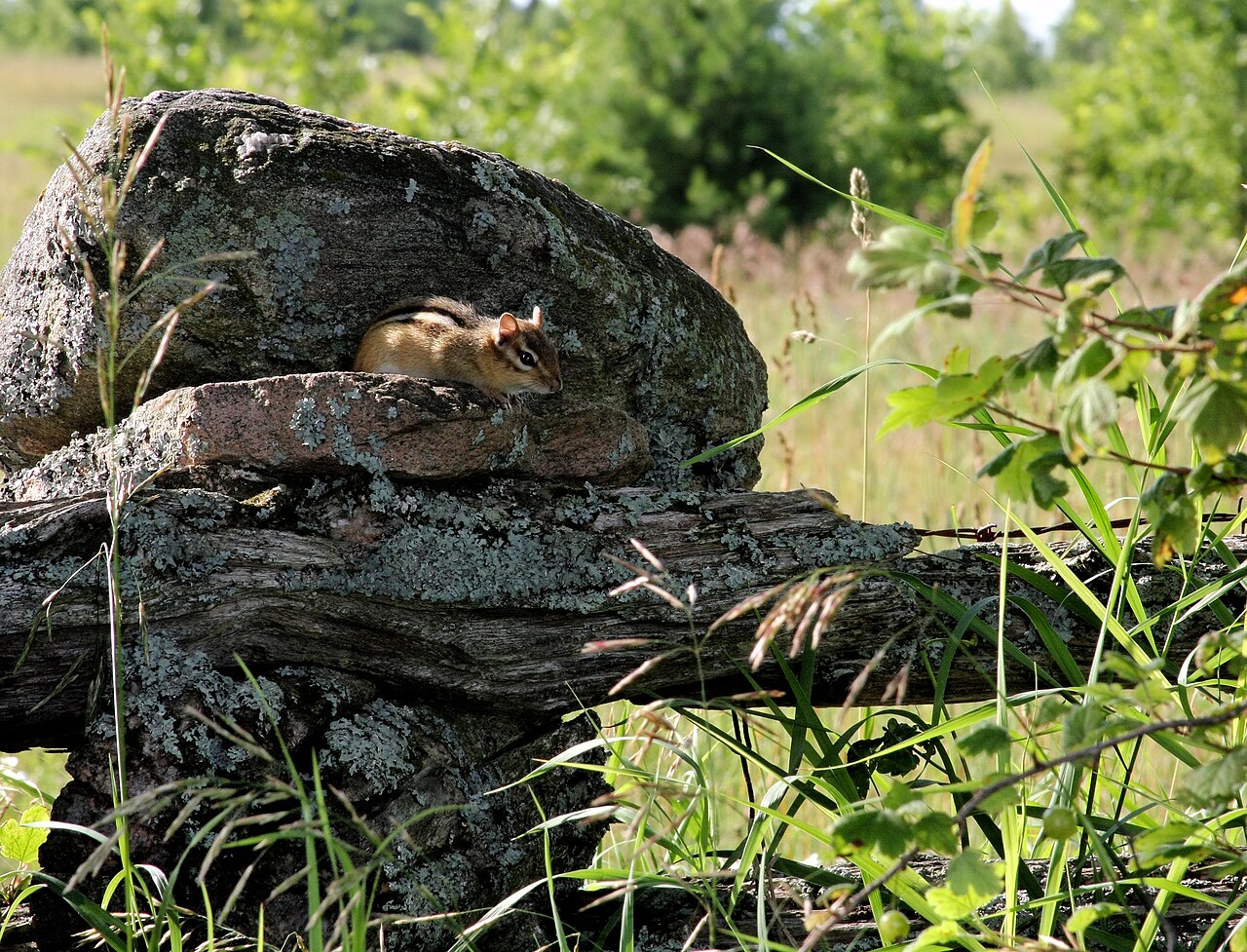
Removing food sources does most of the work. Use bird feeders with catch trays or clean up spilled seed daily, store birdseed and pet food in sealed metal containers, pick up fallen fruit, and avoid leaving pet food outdoors. Chipmunks turn up where food is easy and leave when it is not.
Physical barriers protect what matters. Hardware cloth laid under new plantings and around bulbs prevents digging, an L-shaped hardware cloth footer buried along a foundation or deck edge blocks burrowing, and gravel borders rather than mulch beds make an area less attractive to dig in. Sealing gaps around foundations, utility entries, and crawl spaces keeps them from getting under the structure.
Trapping and relocating is regulated in many states and frequently fatal for the animal, since a relocated chipmunk has no burrow, no cached food, and no knowledge of local predators. Repellents based on capsaicin or predator urine give inconsistent results at best. Habitat modification is the approach that actually holds, and it works on the other ground dwellers too, as our guides to possum droppings and coyote droppings illustrate for larger yard visitors.
What Attracts Chipmunks to a House?
Chipmunks come to a house for three things: food, cover and a place to dig. Fallen birdseed under a feeder is the single strongest draw, followed by spilled pet food, unharvested fruit and nuts, and open compost. A chipmunk can pack a remarkable volume into its cheek pouches, so a feeder that seems to lose seed faster than the birds explain is often feeding chipmunks first.
Cover and digging come as a pair. Chipmunks prefer burrow entrances hidden under something solid, which in a suburban yard means the gap beneath a deck, a porch step, a retaining wall, a woodpile or a dense foundation planting. Loose soil, mulch beds and the backfill along a foundation are easier to tunnel than compacted lawn, which is why entrances cluster right against the house.
Removing the food usually settles it without any need for trapping. Move feeders away from the house and use a seed catcher, clear windfall fruit, store birdseed and pet food in sealed containers, and close the gaps under decks and steps with hardware cloth buried a few inches deep. Penn State Extension’s guide to chipmunks around the home covers exclusion and the damage worth worrying about.
Frequently Asked Questions
What does chipmunk poop look like?
Small dark pellets about 0.25 in long and 0.125 in thick, oblong with slightly tapered ends. Fresh droppings are dark brown to black, drying to gray and becoming brittle. They are thicker than mouse droppings and smaller than squirrel droppings.
How is chipmunk poop different from mouse poop?
Chipmunk droppings are larger and thicker with blunter ends, while mouse droppings are 0.125 to 0.25 in, thin, and sharply pointed at both ends. Volume matters more: mice leave large numbers indoors, while chipmunks deposit most waste in underground latrines and rarely leave more than a few surface pellets.
Why do I never find chipmunk droppings?
Because chipmunks use dedicated latrine chambers inside their burrows, keeping the nest clean and the scent underground where predators are less likely to find the entrance. Burrow entrances, the sharp chip call, digging in flower beds, and seed hulls under feeders are far better detection signs.
Is chipmunk poop dangerous?
It can carry Salmonella, with leptospirosis transmissible through associated urine. The larger risk is indirect, since eastern chipmunks are reservoir hosts for Lyme disease bacteria and support large tick populations. Hantavirus is not associated with chipmunks in North America.
How do I clean up chipmunk droppings safely?
Never sweep or vacuum them dry. Ventilate the area, wear gloves, an N95 respirator, and eye protection, spray with disinfectant or a one to nine bleach solution, wait five minutes, then lift with paper towels and double bag. Outdoor droppings on soil usually need no cleanup at all.
How can I tell if I have chipmunks or rats?
Chipmunk burrow entrances are about 2 in wide with no soil mound, and the animals are active during the day. Rat droppings are 0.5 to 0.75 in and pointed, deposited in lines along walls, and rats are nocturnal. Indoor droppings in kitchens and pantries are essentially never from chipmunks.
Do chipmunks damage property?
Usually only cosmetically, by digging up bulbs and seedlings, disturbing containers, and raiding feeders and gardens. Serious damage from burrows undermining patios, walls, or foundation edges requires a sustained population over years. Habitat modification and hardware cloth barriers work better than trapping or repellents.