Water Monitor Lizard: Size, Bite Risk, and Komodo Comparison
A water monitor lizard is a large, semi-aquatic Asian lizard (Varanus salvator) that regularly reaches 5 to 7 ft (1.5 to 2.1 m) and swims as comfortably as it walks. It is not poisonous, it is not a Komodo dragon, and it is the second heaviest lizard on Earth. If you have seen a giant lizard sliding off a canal bank in Bangkok or a Florida drainage ditch, this is almost certainly the animal, or its African cousin.
Water monitors have a reputation problem. Viral clips of them raiding kitchens make them look like small dinosaurs on the hunt. The reality is a wary scavenger with excellent hearing, a strong flight response, and a bite it uses when cornered rather than to start fights.
The water monitor lizard (Varanus salvator) is a semi-aquatic monitor native to South and Southeast Asia, growing 5 to 7 ft long and weighing 44 to 55 lbs. It is not poisonous, though its bite carries bacteria and mild oral gland toxins. It is the second heaviest lizard in the world after the Komodo dragon.
| Quick Facts | Water Monitor Lizard |
|---|---|
| Scientific name | Varanus salvator |
| Typical length | 5 to 7 ft (1.5 to 2.1 m), rarely to 10 ft (3 m) |
| Typical weight | 44 to 55 lbs (20 to 25 kg), heavy males over 100 lbs |
| Range | Sri Lanka, India, Bangladesh, Myanmar to Indonesia and the Philippines |
| Habitat | Mangroves, rivers, canals, rice paddies, coastal forest |
| Diet | Carrion, fish, crabs, eggs, rodents, birds, snakes |
| Lifespan | 10 to 15 years wild, over 20 in captivity |
What Is a Water Monitor Lizard?
The water monitor is a member of the genus Varanus, the same group that contains every monitor lizard species from the 8 in (20 cm) Dampier Peninsula goanna to the Komodo dragon. Varanus salvator is the widespread Asian form, often called the Asian water monitor or Malayan water monitor. Its body is dark olive to nearly black with rows of pale yellow ocelli, and the snout is noticeably long and flattened compared to other large monitors.
Two features separate it from every other big lizard in its range. The tail is laterally compressed into a vertical paddle the animal sculls with while swimming, and the nostrils sit far forward near the snout tip, an adaptation for breathing with almost the whole head submerged.
Americans who meet a “water monitor” in Florida are usually looking at the Nile monitor (Varanus niloticus), an established nonnative reptile in several southern counties. The two share the same semi-aquatic habits, but the Nile monitor has a blunter snout and bolder yellow banding.
How Big Do Water Monitor Lizards Get?

Adult water monitors average 5 to 7 ft (1.5 to 2.1 m) in total length, of which roughly 60 percent is tail. Records from Sri Lanka and Malaysia document animals near 10 ft (3 m), though verified specimens that long are rare and usually old males from areas with heavy food subsidies such as fish markets and dumps.
Weight is the more useful number. A healthy 6 ft animal carries 44 to 55 lbs (20 to 25 kg), and unusually large males exceed 110 lbs (50 kg). That makes the water monitor the second heaviest lizard alive, behind only the Komodo dragon, and heavier than the longer but far more slender crocodile monitor.
Growth is fast. Hatchlings emerge at around 10 in (25 cm) and can triple in length within two years where food is abundant, which is why yearlings and mature males are often mistaken for separate species.
Is a Water Monitor Lizard Poisonous?

No, a water monitor lizard is not poisonous, and nothing about handling one or being bitten will poison you. “Poisonous” describes an animal that harms you when eaten or touched, and water monitor meat is in fact eaten across parts of its range. The word people usually want is venomous, and the answer there is more interesting.
Research on varanid oral glands found that monitors produce secretions with mild anticoagulant and blood-pressure-lowering compounds. In a water monitor the effect on a human is negligible; you will notice the teeth and claws long before any chemistry. There is no antivenom because none is needed.
The real medical risk from a monitor bite is infection. These lizards feed heavily on carrion, and their mouths carry a rich bacterial load. Any bite that breaks the skin needs cleaning and a medical opinion, the same advice the nonvenomous water snakes of North America come with for exactly the same reason.
Do Water Monitor Lizards Bite?
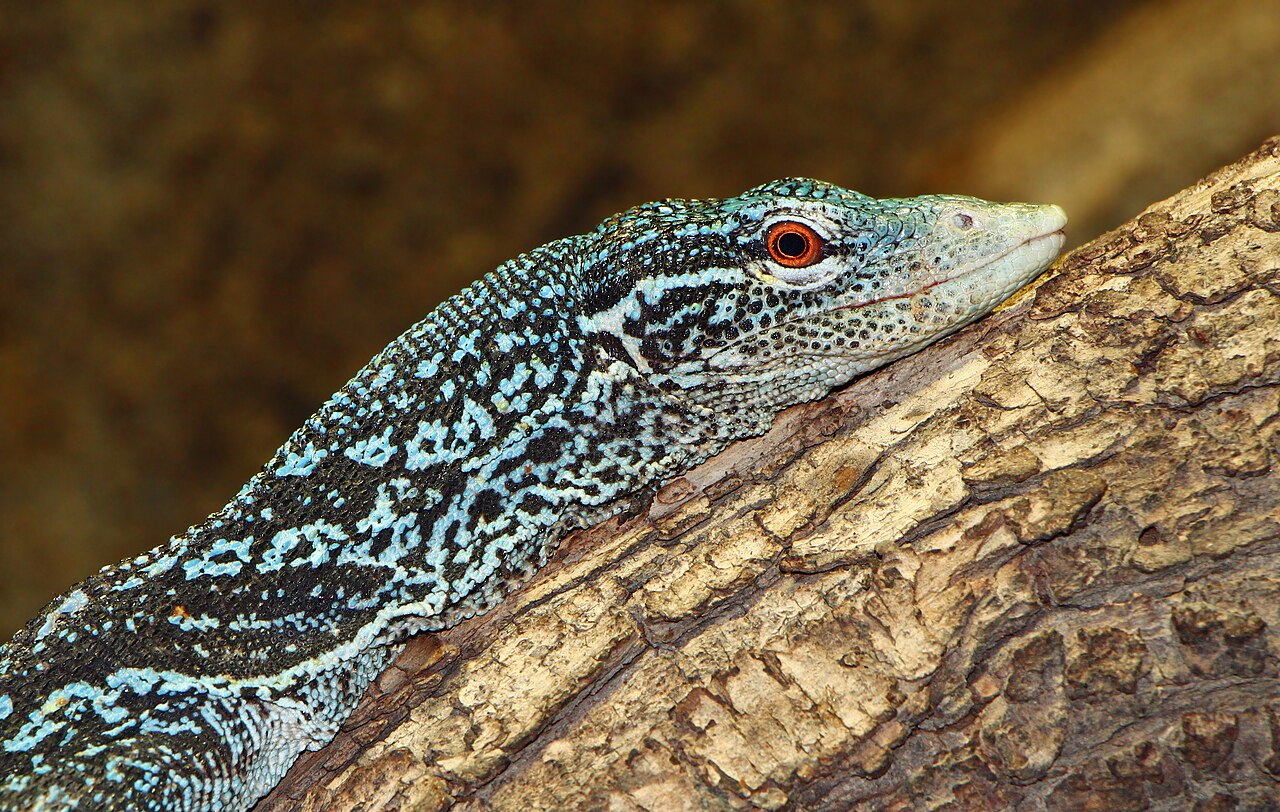
Yes, water monitor lizards bite, but almost always as a last resort after every other option has failed. A cornered monitor will first inflate its throat and hiss, then rear up and lash with the tail, which on a 6 ft animal lands with real force. The bite comes when the lizard cannot escape, and it is a slashing grip rather than a puncture.
Recorded injuries follow a pattern: people reaching into a trap, grabbing an animal by the tail, or cornering one in a garage. Free-ranging monitors in Thai and Sri Lankan cities walk past pedestrians daily without incident because the flight distance is long and the animal would rather be in the water.
The claws cause as much damage as the teeth. Water monitors climb, and the long recurved claws that grip bark open skin on a thrashing animal. Handlers wear heavy gloves and control the tail first, not the head.
Where Water Monitor Lizards Live
The species occupies a huge band of South and Southeast Asia: Sri Lanka and eastern India through Bangladesh, Myanmar, Thailand, Cambodia, Vietnam, peninsular Malaysia, and across Indonesia to the Philippines. Within that range it sticks close to water, and it is one of the few large reptiles that thrives in human landscapes.
Preferred habitats are mangrove swamps, river margins, tidal creeks, rice paddies, and urban canals. Bangkok’s Lumphini Park population is the best-known example, with dozens of adults living in a city center on a diet of fish, discarded food, and the occasional turtle. In the United States the parallel is the assortment of water birds in Florida that shifted onto retention ponds and golf-course lakes once the habitat was there.
Water monitors are excellent swimmers and divers, capable of remaining submerged for well over 20 minutes when threatened. They also climb well, and juveniles spend much of their time in trees where larger predators cannot follow. Range and habitat notes for varanids are documented by the Smithsonian’s National Zoo and Conservation Biology Institute.
What Water Monitor Lizards Eat
Water monitors are opportunistic carnivores that eat almost any animal protein they can subdue or find dead. Stomach contents across studies include fish, crabs, frogs, snakes, turtle eggs, rodents, nestling birds, insects, and a substantial share of carrion. They are among the most committed scavengers of any lizard, and they locate carcasses by scent using the forked tongue.
Foraging looks like patrolling. The lizard walks a bank or shoreline with the tongue flicking constantly, probes crab burrows, and digs out buried eggs. Prey the size of a rat is swallowed whole; larger items are pinned with the forelimbs and torn. This generalist appetite is the main reason the species tolerates cities so well, and it is a sharper version of the flexible feeding that shows up across lizard diets in general.
Predation on poultry is the most common conflict. A monitor that finds an unsecured coop takes eggs first and chicks second, which is why hardware-cloth-lined runs are standard in villages across the range.
Is a Water Monitor the Same as a Komodo Dragon?
No. A water monitor and a Komodo dragon (Varanus komodoensis) are separate species that only overlap in genus. Komodo dragons are restricted to a handful of Indonesian islands including Komodo, Rinca, and Flores. Water monitors range across thousands of miles of mainland and island Asia, including some of the same Indonesian territory.
Size and build separate them clearly. A Komodo dragon reaches 8 to 10 ft (2.4 to 3 m) and 150 to 200 lbs (68 to 91 kg), with a massive head, thick limbs, and a round tail. A water monitor of the same length weighs half as much, with a narrow snout and that flattened paddle tail. The Komodo is an ambush predator of deer and pigs; the water monitor is a forager and scavenger.
The venom question separates them too. Komodo dragons have well-developed venom glands with measurable effects on prey blood pressure and clotting, and bites on humans have needed serious treatment. That is why a Komodo bite is a medical emergency and a water monitor bite is a wound-care problem.
Are Water Monitor Lizards Friendly? Can They Bond With Humans?
Water monitor lizards are not friendly in the way a dog is friendly, but they are among the most trainable reptiles kept in captivity. They habituate quickly, recognize individual keepers by sight and scent, and learn feeding routines within weeks. Zoo staff routinely target-train them for voluntary weighing and health checks.
What looks like a bond is tolerance plus association. A monitor handled consistently since hatching will approach its keeper, tongue-flick calmly, and sit still for long periods. That is genuine recognition, more than most lizards manage, but it is not the attachment a mammal forms.
Aggression in adults is usually fear, food, or territory rather than temperament. Wild-caught adults rarely settle, and an animal that arrives as a nervous 5 ft lizard tends to stay one. That distinction matters more for the pet question than any other single factor.
Can Monitor Lizards Be Pets?
Monitor lizards can be pets, and water monitors are legally kept in much of the United States, but the species is a poor match for almost every private home. A full-grown animal needs a custom enclosure of at least 8 by 4 by 4 ft with a heated swimming pool it can fully submerge in, basking surfaces near 130 F (54 C), and daily cleaning of a carnivore’s waste output.
Cost and lifespan compound the problem. Whole prey for a 50 lb lizard, heat and filtration, and a veterinarian who treats large varanids add up for 20 years or more. Rescues are full of surrendered monitors for exactly this reason, so read an honest account of keeping a monitor lizard as a pet before buying a hatchling.
If the appeal is a monitor’s intelligence rather than its size, smaller relatives make better sense. Ackie monitors stay under 30 in and thrive in a manageable enclosure, and the oddball earless monitor lizard shows the variety the genus holds beyond the giants. Check state and municipal law first.
Frequently Asked Questions
Can an Asian water monitor kill you?
An attack on a healthy adult human is not realistically lethal. There is no documented case of an Asian water monitor killing an adult. The dangers are deep lacerations from teeth and claws, blood loss from a bad bite, and secondary infection from mouth bacteria. Small children and pets are a different matter and should never be left unsupervised near a large monitor.
What’s the most aggressive lizard?
Among commonly encountered species, the Nile monitor (Varanus niloticus) has the worst reputation, defending itself hard and rarely calming in captivity. Black-throated monitors and adult crocodile monitors are also notoriously unforgiving. Water monitors sit well below all three; most flee before they fight.
What is the friendliest big lizard?
The Argentine black and white tegu is the usual answer. Captive-bred tegus tolerate handling, recognize their keepers, and stay around 4 ft. Among monitors, the Savannah monitor and the water monitor tame down best, though both still need experienced handling and serious space.
Do water monitor lizards swim in the ocean?
Yes. Water monitors tolerate salt water well and are regularly recorded crossing tidal channels and swimming between coastal islands. This ability explains how the species reached so many Indonesian and Philippine islands, and why mangrove and estuary habitats hold some of the densest populations.
What does water monitor scat look like?
Monitor droppings are firm, dark, cylindrical pellets capped with a white urate deposit, often containing crab shell, fish bone, or insect fragments. The white cap distinguishes reptile scat from mammal scat at a glance. The general pattern is covered in our guide to lizard poop identification.
How long do water monitor lizards live?
Wild water monitors typically live 10 to 15 years, with predation and human harvest cutting most lives short. In captivity, with stable heat, clean water, and a varied diet, 20 years is common and individuals have passed 25. Plan for two decades of care before acquiring one.