Baby Earwig: What Nymphs Look Like and What They Mean
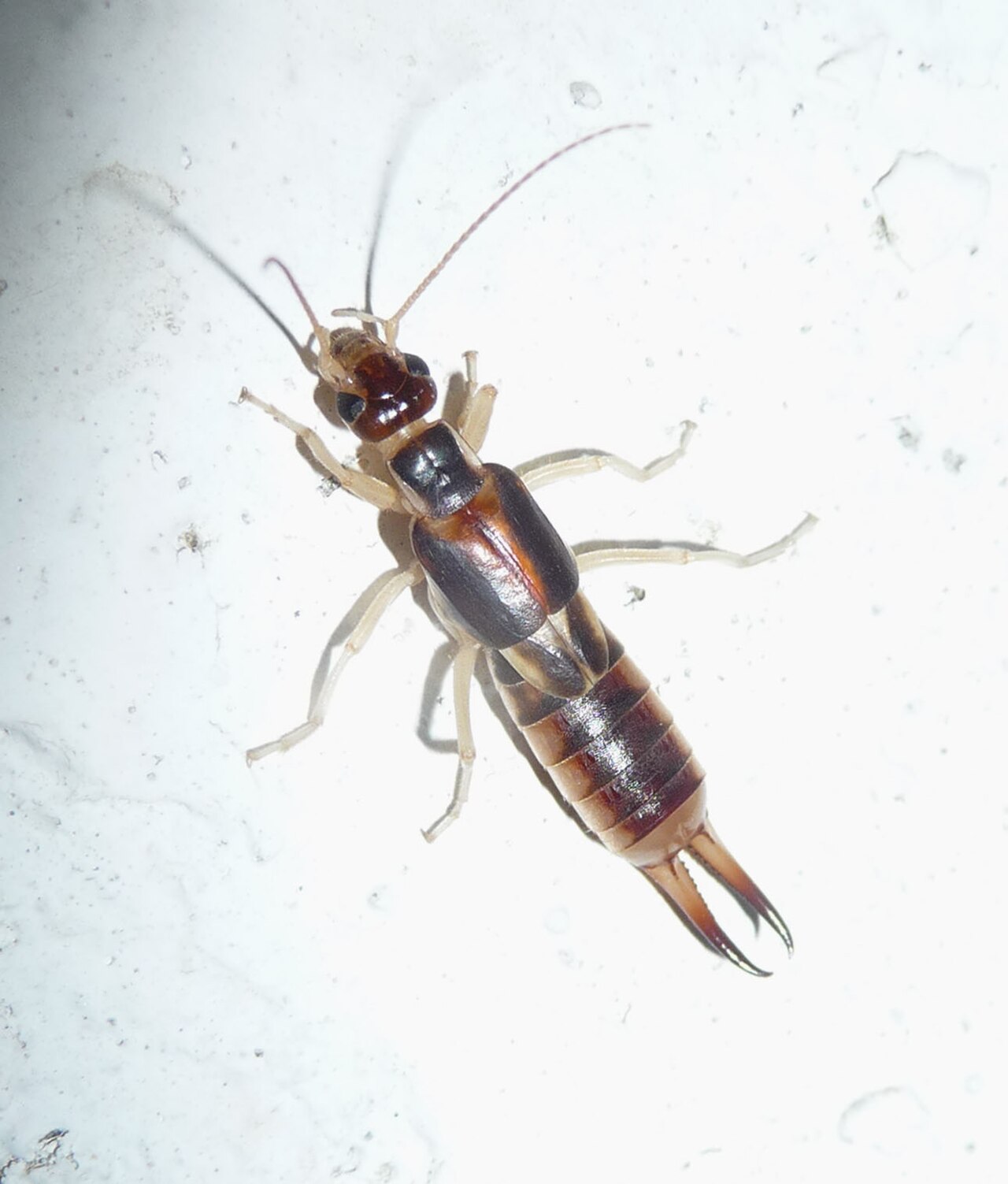
A baby earwig is called a nymph, and it looks like a smaller, paler version of the adult: soft-bodied, white to translucent when newly hatched, darkening to tan and then brown as it grows, with the same pair of pincers at the rear from the moment it emerges. Nymphs are about an eighth of an inch at hatching and pass through four or five molts over roughly two months before reaching adult size and developing functional wings.
Finding pale, wingless earwigs indoors usually means a nest is nearby rather than that stray adults have wandered in, since nymphs cannot travel far and stay close to where they hatched. Earwigs also have a genuine claim to being unusual among insects: the female guards her eggs and tends her young, which is rare in the insect world outside of the social species. This guide covers identification, what nymphs mean, the ear myth, and whether earwigs need dealing with at all.
A baby earwig is called a nymph and looks like a pale, wingless miniature adult, about an eighth of an inch at hatching, white to translucent at first and darkening through tan to brown. It already has the rear pincers. Finding nymphs indoors indicates a nest nearby, since nymphs cannot travel far from where they hatched.
| Feature | Baby Earwig (Nymph) |
|---|---|
| Size at hatching | About 0.125 in |
| Colour | White to translucent, darkening to brown |
| Pincers | Present from hatching, smaller than adult |
| Wings | Absent; develop at final molt |
| Molts to adult | 4 to 5, over roughly 2 months |
| Eggs per clutch | 20 to 80 |
| Maternal care | Female guards eggs and young nymphs |
What Does a Baby Earwig Look Like?
A newly hatched earwig nymph is about an eighth of an inch long, soft, and almost white or translucent, so pale that it can be mistaken for a maggot or a small pale beetle larva at first glance. The distinguishing feature is present immediately: a pair of forceps-like pincers, called cerci, at the rear end, proportionally smaller than an adult’s but unmistakably the same structure.
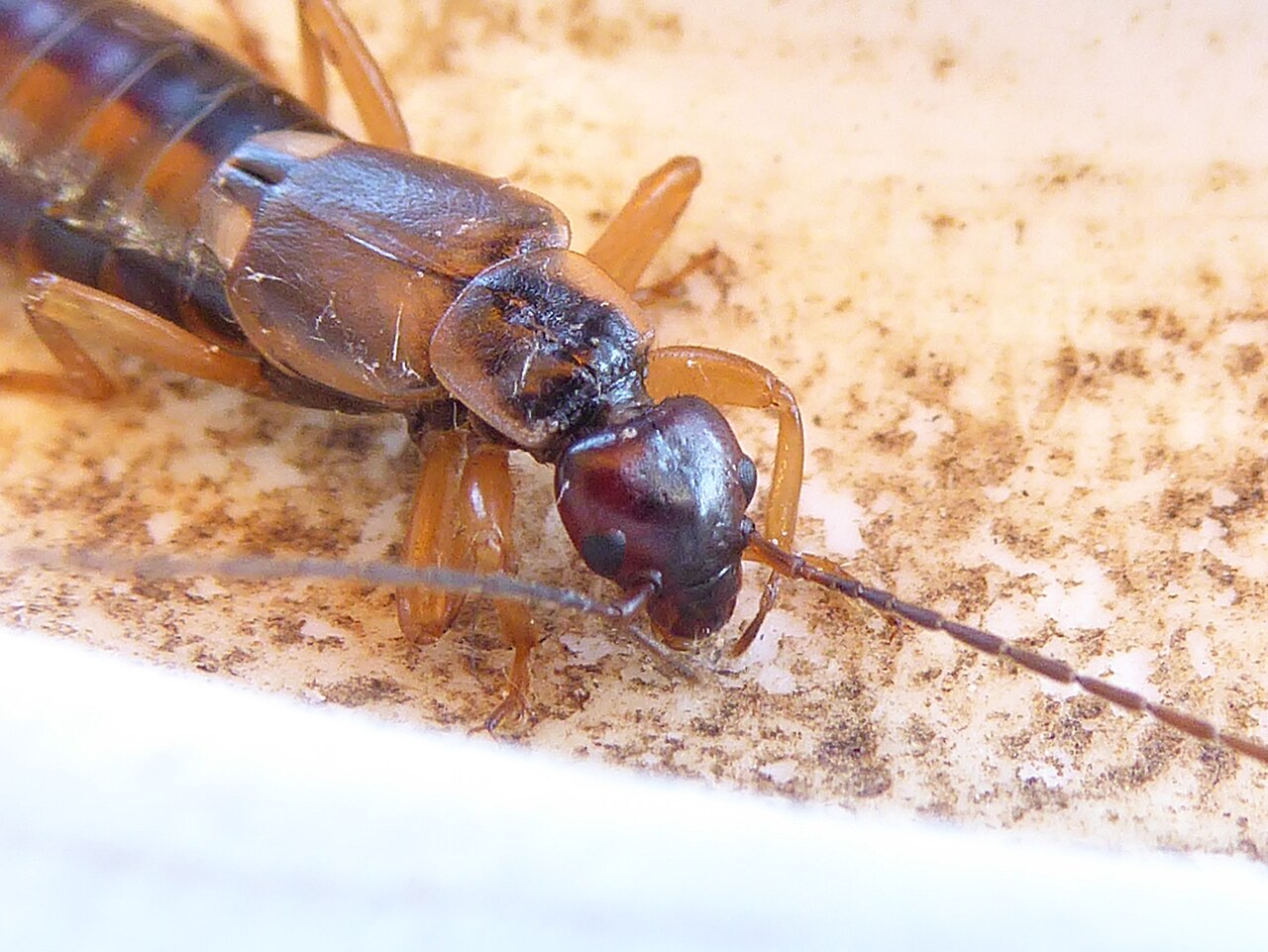
Colour darkens with each molt, moving through cream and tan to the reddish brown of an adult. Nymphs have the same elongated, flattened body shape as adults and the same antennae, but they lack wings entirely; the short leathery wing covers that give adults their distinctive look develop only at the final molt. A brown earwig without any wing covers is a late-stage nymph.
Size increases substantially through the stages, from an eighth of an inch to roughly half an inch at adulthood in the common European earwig, the species found across most of North America. The pincers also change: adult males have strongly curved, robust forceps while females have straighter, more slender ones, and this difference becomes visible in later nymph stages.
Do Earwigs Care for Their Young?
Yes, and it is genuinely unusual. The female earwig excavates a burrow in soil, lays a clutch of 20 to 80 eggs, and then stays with them, cleaning each egg individually with her mouthparts to remove fungal spores, moving the clutch if conditions change, and defending it against intruders. Eggs left untended by the female almost always succumb to mold within days.
The care continues after hatching. The mother remains with the nymphs through their first molt or two, guarding them and in some species providing food by regurgitation. Nymphs cluster beneath her, and she responds to their movements and to disturbance. This level of maternal investment is rare outside of ants, bees, wasps, and termites, and earwigs are one of the standard examples used in discussions of the evolution of parental care in insects.
There is a darker coda. Once the nymphs have passed the second molt and disperse, the mother’s protection ends, and in some species the young eat her. Maternal cannibalism has been documented in several earwig species and appears to represent a final nutritional contribution to the offspring. The mother is typically weakened and near the end of her life by that stage.
Do Earwigs Really Crawl Into Your Ears?
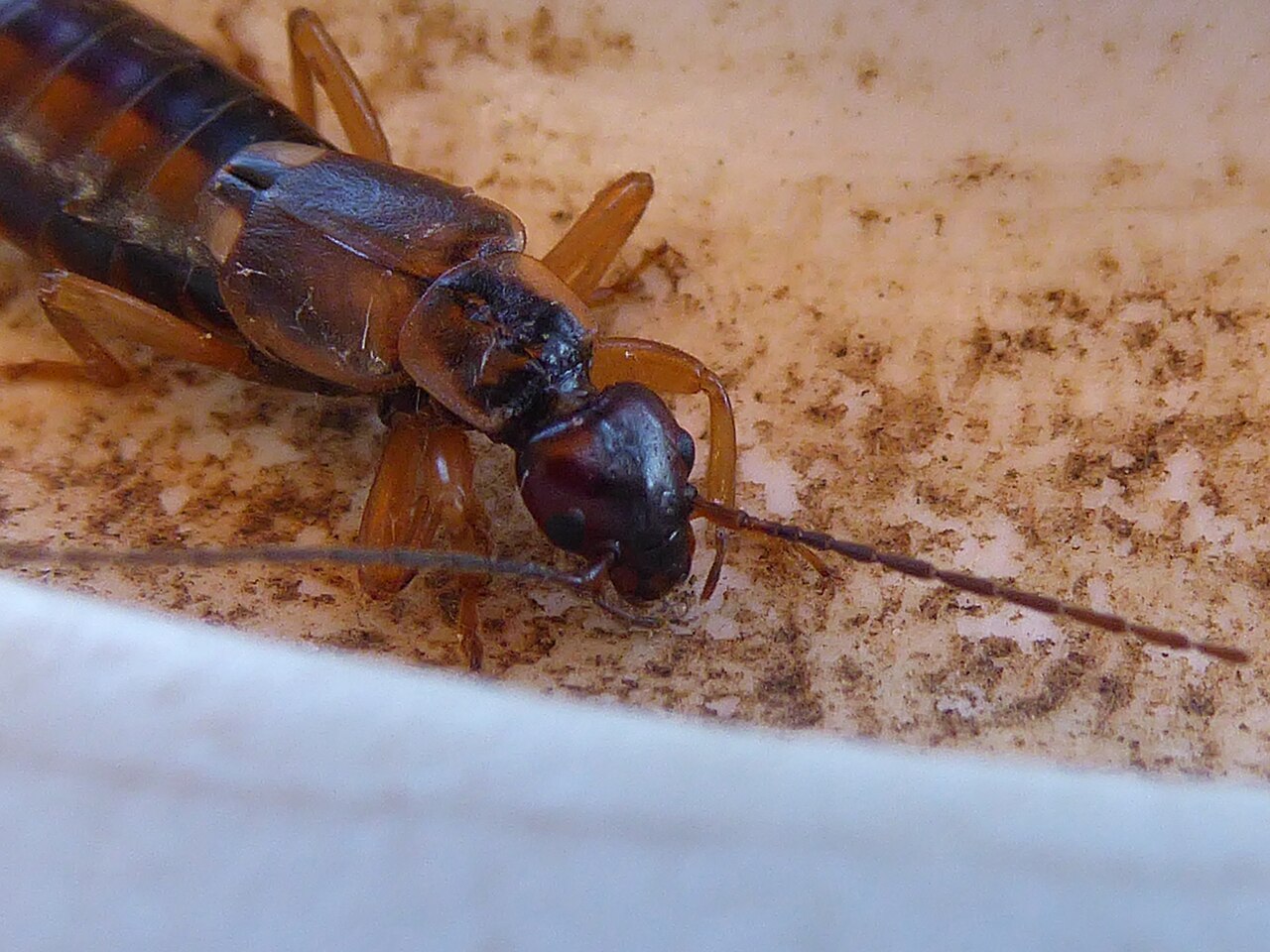
No. The belief that earwigs crawl into sleeping people’s ears to burrow into the brain is entirely false and has no basis in fact. Earwigs seek out narrow, dark, humid crevices, and an ear canal technically qualifies, so an earwig has occasionally been found in an ear, but so have cockroaches, moths, ants, and spiders. There is nothing that draws earwigs to ears specifically and nothing they could do to a brain if they got there.
The name is genuinely ancient, appearing in Old English as earwicga, meaning ear insect, and equivalent names exist in German, French, and other European languages, which suggests the belief is very old rather than a modern invention. One alternative explanation ties the name to the hindwing shape, which unfolds into a form resembling a human ear, though the ear-crawling belief is the better documented origin.
The pincers add to the fear and are similarly overstated. Earwigs can pinch if handled and it may be felt, but the forceps are not strong enough to break skin in the common species, they are not venomous, and earwigs do not bite. The pincers are used for defense against other insects, for capturing prey, for unfolding the wings, and in courtship. The earwig bite guide covers what the pinch can and cannot do.
What Does Finding Baby Earwigs Indoors Mean?
Finding nymphs rather than adults indoors indicates that eggs were laid nearby, because nymphs are poor travelers and stay close to the nest site. Adult earwigs wander in under doors and through foundation cracks constantly and mean nothing in particular; a scatter of pale wingless nymphs means the population is breeding somewhere in or immediately against the structure.
The usual locations are damp: crawl spaces, basements, under sinks, behind bathroom fixtures, in wall voids near leaks, and in potted plant soil brought indoors. Earwigs require humidity and dry out quickly in a heated house, so an indoor breeding population almost always signals a moisture problem worth finding for its own sake.
Outdoors, nymphs are normal and abundant in mulch, leaf litter, under boards and stones, in flower pots, and among dense ground cover. Numbers peak in late spring and summer as clutches hatch, and a lifted paving slab in June revealing dozens of pale nymphs clustered together is ordinary rather than an infestation. The guide to getting rid of earwigs covers the exclusion and moisture control that resolve indoor problems.
Are Earwigs Harmful?
Earwigs cause no harm to people. Unlike the carpet beetle, they do not bite, are not venomous, do not transmit disease, and do not damage structures. The pinch from a large adult is at worst mildly uncomfortable. Compared with almost anything else that turns up indoors, from cockroaches to rodents, an earwig is a non-event.
The garden picture is mixed and genuinely so. Earwigs eat aphids, mites, insect eggs, and scale insects, and in commercial fruit orchards they are recognized as valuable predators, and Washington State University extension entomologists (wsu.edu) note that in tree fruit systems they are best regarded as beneficial predators rather than pests, with some European growers deliberately encouraging them. They also eat decaying plant material and contribute to breaking down leaf litter.
Against that, earwigs chew soft plant tissue and can damage seedlings, flower petals, corn silks, and soft fruit, producing ragged irregular holes usually attributed to slugs. Damage is worst in dense plantings and in wet years, and it is largely cosmetic on established plants. Whether an earwig is a pest or a beneficial depends entirely on what you are growing, which is why the answer to whether you should kill them is generally no.
What Can Be Mistaken for an Earwig?
Rove beetles, like the black beetles people find indoors, are the most common confusion. They have a similar elongated body and short wing covers exposing much of the abdomen, and some raise the abdomen defensively in a way that suggests a stinger. The difference is the rear: rove beetles have no pincers. Some rove beetles are considerably larger than earwigs, and the devil’s coach horse is a striking black species often reported as a giant earwig.
Certain beetle larvae and silverfish also get mistaken for nymphs, particularly the pale early stages. Silverfish are flattened, silvery, and taper toward the rear with three long tail filaments rather than two pincers, and they move in a distinctive wriggling dash. Beetle larvae are usually softer and lack the flattened profile.
The pincers are the reliable test in every case. Two curved or straight forceps at the rear end, present at every life stage from hatching, identify an earwig and nothing else in a North American house. Getting this right matters mainly because the response differs: earwigs need moisture control, while carpet beetles and silverfish need different measures entirely. The carpet beetle guide covers one of the household insects whose damage is genuinely worth acting on.
How Long Do Earwigs Live and Reproduce?
The common European earwig follows an annual cycle in most of North America. Adults overwinter in the soil, usually as a mated pair in a burrow, and the female lays her first clutch in late winter or early spring. Eggs hatch after one to three weeks depending on temperature, and nymphs pass through four or five instars over about two months to reach adulthood by early summer.
A second clutch often follows in late spring, typically smaller than the first and receiving less maternal care. Adults live around a year in total, and populations peak in mid to late summer when both generations are present. Cold winters and dry summers both reduce numbers substantially, which is why earwig abundance varies dramatically from year to year in the same garden.
Earwigs are one of the older insect orders, Dermaptera, with roughly 2,000 species worldwide and around 20 in North America, most of them introduced. The order name means skin wing, referring to the leathery forewings. The hindwings are among the most intricately folded structures in nature, packing into a tenth of their unfolded area, and they have been studied by engineers working on deployable structures. Despite having them, earwigs rarely fly.
Frequently Asked Questions
What does a baby earwig look like?
A pale, wingless miniature adult about an eighth of an inch long, white to translucent at hatching and darkening through tan to brown. It has the same rear pincers as an adult from the moment it emerges.
What is a baby earwig called?
A nymph. Earwigs undergo incomplete metamorphosis, so nymphs resemble adults rather than passing through a larval stage, and they reach adult form after four or five molts over roughly two months.
Do earwigs crawl into your ears?
No. The belief is false. Earwigs seek narrow humid crevices, so one has occasionally been found in an ear, as have cockroaches and moths, but nothing draws them to ears and they cannot harm a brain.
What does finding baby earwigs indoors mean?
That eggs were laid nearby, since nymphs cannot travel far. It usually points to a damp area such as a crawl space, a leak, or potted plant soil, and indicates a moisture problem worth finding regardless of the insects.
Do earwigs lay eggs indoors?
They can, in consistently damp locations such as basements, crawl spaces, and under sinks, but they prefer outdoor soil. Most indoor earwigs are adults that wandered in and will dry out rather than breed.
Why shouldn’t you kill earwigs?
They eat aphids, mites, and insect eggs and are valued as predators in fruit orchards. They also chew soft plant tissue, so they are neither purely pest nor purely beneficial, but in most gardens they do more good than harm.
Do earwigs care for their young?
Yes, unusually so for insects. The female guards her eggs, cleans each one individually to prevent mold, and stays with the nymphs through their first molts. Untended eggs almost always succumb to fungus.