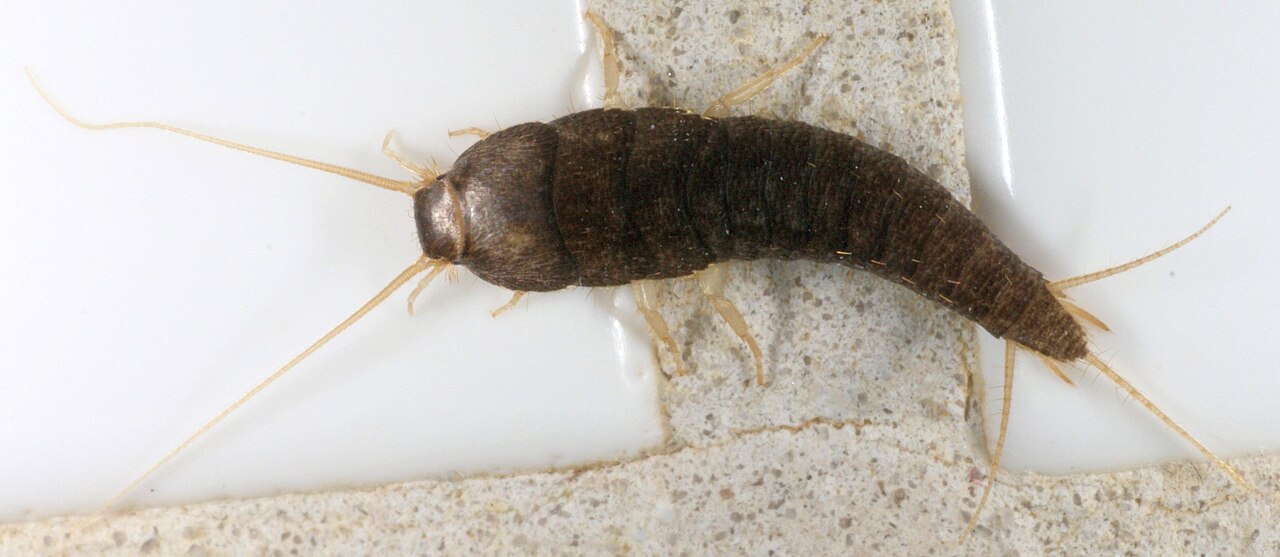
Baby Silverfish: What Nymphs Mean and How to Stop Them
A baby silverfish is a nymph, and spotting one is the single most important silverfish sighting you can make: nymphs mean breeding is happening inside your home, not just a stray adult wandering in. Newly hatched silverfish are about 2 millimeters long, whitish and almost translucent, and lack the metallic silver scales of adults, which appear only after their third or fourth molt. They have the same carrot-shaped body, two long antennae, and three tail bristles as adults, just in miniature and without the shine.
Because silverfish take 3 months to 3 years to mature and can live up to 8 years, a population that has started producing babies is settled in for the long haul unless you change the conditions that invited it. This guide covers how to identify baby silverfish, what finding them says about your home, the lookalikes people confuse them with, and the moisture-first playbook that actually clears an infestation.
| Fact | Baby Silverfish (Nymph) |
|---|---|
| Size at hatching | About 2 mm |
| Color | Whitish, translucent; silver after 3 to 4 molts |
| Eggs per female | Up to 100 or more over a lifetime |
| Hatch time | 2 weeks to 2 months, humidity dependent |
| Time to adulthood | 3 months to 3 years |
| Meaning of a sighting | Active breeding indoors |
A baby silverfish is a nymph: pale, almost white, roughly 2 mm long, and shaped like the adult but without the silver scales. Finding one means silverfish are breeding inside the building rather than wandering in, because nymphs do not travel far from where they hatched.
What Baby Silverfish Look Like
A silverfish nymph is a scaled-down adult minus the paint job. Look for the tapered, carrot-shaped body that is wide at the head and narrows to the rear, two long threadlike antennae up front, and the family signature: three long bristles fanning out from the tail end. Hatchlings run about 2 millimeters, roughly the size of a pinhead with a tail, and grow through repeated molts toward the adult length of 12 to 19 millimeters.
Color is the age giveaway. New nymphs are whitish to pale gray and slightly see-through, because the metallic scales that make adults look like animated slivers of aluminum only develop around the third or fourth molt. A pale, matte, fast-wriggling insect with the right body plan is a young nymph; a shimmering one that seems to flow across the floor is an older nymph or adult.
Movement seals the identification. Silverfish of every age move in a rapid, side-to-side wiggle, a fish-like swim across flat surfaces that gave the insect its name, and they bolt for the nearest crack the instant light hits them. They cannot climb smooth vertical surfaces well, which is why nymphs turn up trapped in sinks, bathtubs, and smooth-sided storage bins they wandered into overnight.
Why Finding a Nymph Matters More Than Finding an Adult
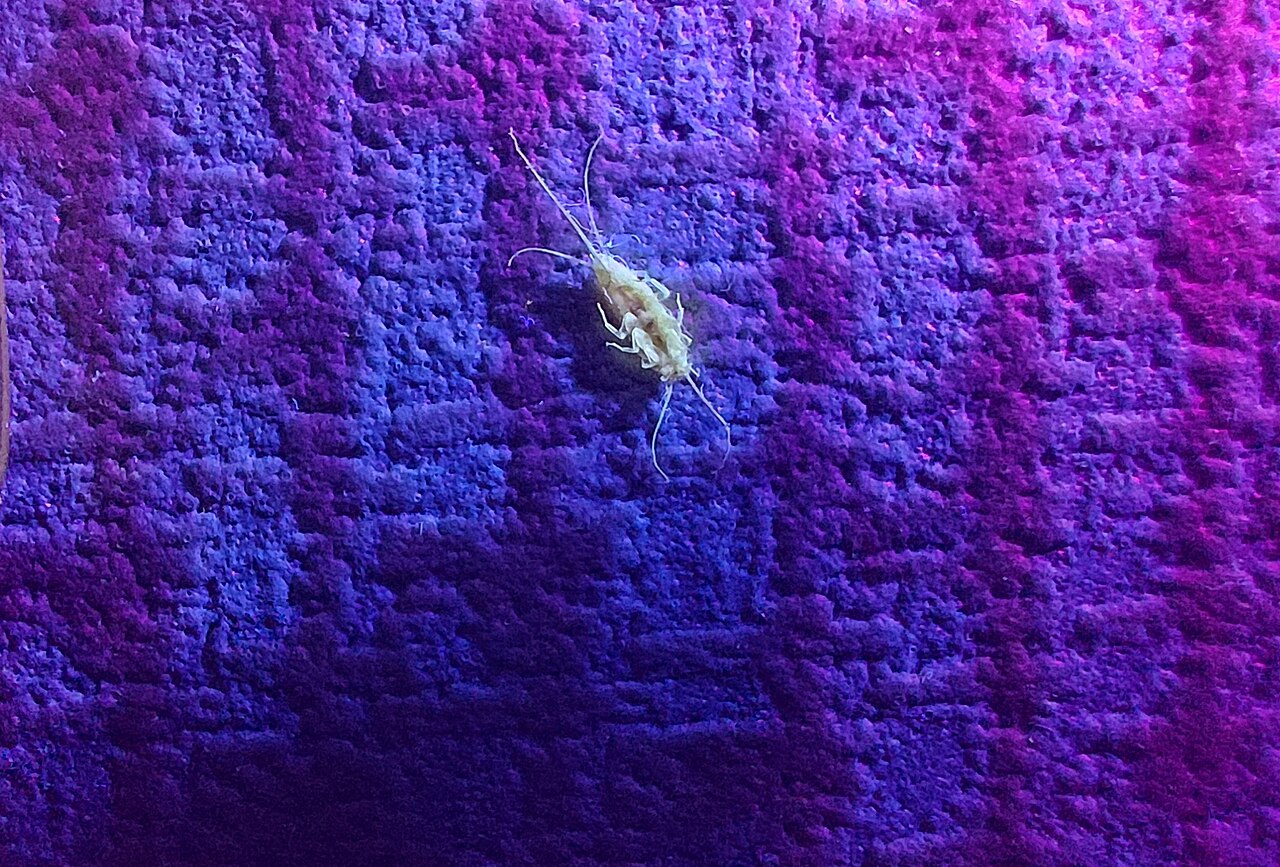
A single adult silverfish can be a hitchhiker that arrived in a cardboard box. A nymph cannot: baby silverfish hatched where you found them, or very close to it, because 2-millimeter nymphs do not travel far from the egg site. One nymph equals eggs, which equals at least one breeding female, which statistically equals more of everything hidden in the cracks nearby.
The math of the population is slow but relentless. A female lays 1 to 3 eggs per day in bursts, tucking them into cracks, crevices, and the folds of stored fabric or paper, up to 100 or more over her long life. Eggs hatch in 2 weeks to 2 months depending on warmth and humidity, and because adults live several years alongside their offspring, generations stack up in the same wall voids.
The silver lining is that nymphs are also your progress meter. Silverfish control takes weeks, and adult sightings fade slowly because adults are long-lived, but if new pale nymphs stop appearing on your sticky traps, breeding has stopped and the population is aging out. Trap monitoring beats memory: date a few sticky traps in the bathroom, laundry area, and basement and check them weekly.
Where Baby Silverfish Hide
Nymphs concentrate where humidity, darkness, and food overlap, which maps to a short list of rooms: bathrooms (under sinks, behind toilets, around tub cracks), laundry rooms, basements, kitchens (under appliances and sinks), and attics with roof moisture. Within those rooms, they live in the gaps: baseboard cracks, wall voids around plumbing, under loose flooring, and inside stored cardboard.
Their food list explains the stranger hiding spots. Silverfish eat starches and proteins: paper and the glue in book bindings, wallpaper paste, cardboard, cereal and flour, pet food, fabric sizing in cotton and linen, and even the dandruff-like debris in dust. That is why nymphs turn up inside book boxes, behind peeling wallpaper, in pantry corners, and in closets with stored natural-fiber clothing.
Seasonality is muted indoors but real. Populations expand in warm, humid months, and homes often notice a nymph surge in late summer, while heated winter air slows breeding except in perpetually damp zones like bathrooms. Any room that stays above roughly 75 percent relative humidity is a silverfish nursery waiting for tenants.
Baby Silverfish vs the Lookalikes
The most common mixup is the firebrat, a close cousin with the same body plan. Firebrat nymphs and adults are mottled gray-brown rather than uniform silver, and they choose heat: water heaters, furnace rooms, and ovens, thriving at temperatures around 90 degrees Fahrenheit that silverfish avoid. Same control playbook, different room list.
Young house centipedes trigger the same shudder but are easy to separate: centipedes carry many long legs down both sides and sprint in straight lines, while a silverfish nymph shows only six short legs under a tapered body and wriggles. Our baby centipede guide covers that lookalike in full. Carpet beetle larvae, another closet-and-baseboard resident, are the opposite build: stubby, bristly, slow tanks rather than sleek sprinters.
Two more for completeness: booklice are tinier, rounder, and pale like young nymphs but lack the three tail bristles entirely, and immature cockroaches are darker, dome-shaped, and six-legged without any tail filaments. When in doubt, the three-bristle tail is the silverfish family badge at every age; no common household lookalike wears it.
Are Baby Silverfish Dangerous?
Not to your body. Silverfish do not bite people or pets, do not sting, and are not known to transmit disease; unlike the genuinely medical household pests covered in our bed bug bites guide, a silverfish nymph on your bathroom floor is a property problem, not a health one. At most, their shed skins and scales contribute trace allergens to house dust in heavy infestations.
The damage is to things, and it is slow but real. Nymphs and adults graze on paper, book bindings, photographs, wallpaper, stored documents, cotton and linen fabric, and pantry starches, leaving irregular scraped patches, notched edges, tiny holes, and yellowish stains. Libraries and archives treat silverfish as a serious preservation pest for exactly this reason.
The pantry angle deserves one practical note: silverfish reaching flour, cereal, or pet food contaminate more than they consume, with scales and droppings, so any opened starch product with silverfish evidence goes in the trash and its shelf gets a vacuum and wipe-down. Sealed glass or heavy plastic containers end the pantry problem permanently.
The Moisture-First Control Playbook
Silverfish are humidity hostages, and dehumidification beats every spray on the market. Run a dehumidifier to pull damp rooms below 50 percent relative humidity, fix dripping pipes and sweating tanks, add or actually use bathroom exhaust fans, and ventilate crawl spaces; University of Kentucky Entomology (entomology.ca.uky.edu) puts moisture reduction at the center of silverfish control because eggs and nymphs simply fail in dry air.
Then remove the food and the housing. Store books, papers, and photos in sealed plastic bins instead of cardboard, cull old cardboard generally (it is food and shelter in one), move pantry starches into airtight containers, and vacuum baseboard cracks and closet floors to clear eggs, scales, and edible dust. Caulking baseboard gaps and around pipe penetrations removes the crevices nymphs need.
Traps and targeted treatments mop up the survivors. Sticky traps along walls in problem rooms both monitor and kill; a light dusting of diatomaceous earth or boric acid in cracks, wall voids, and under appliances kills nymphs where they hide (kept away from kids and pets); and severe, whole-house cases justify a pest professional, mainly for treating wall voids you cannot reach. Give any plan 3 to 4 weeks before judging it; the egg backlog has to hatch into the dried-out, food-poor world you built.
Preventing the Next Generation
Long-term prevention is boring on purpose: keep indoor humidity below 50 percent year round, and silverfish cannot rebuild. In practice that means dehumidifiers in basements from spring through fall, exhaust fans that run during and 20 minutes after showers, gutters and grading that keep water off the foundation, and prompt repair of any leak, because a single sweating pipe can sustain a colony.
Deny the paper economy. The classic silverfish reservoir is the stored cardboard box of papers in a damp basement or garage, an all-inclusive resort of food, shelter, and egg sites. Plastic bins with tight lids for anything paper or fabric, and a yearly purge of accumulated cardboard, removes the habitat that seeds re-infestations. Inspect incoming boxes too; silverfish and their eggs commute in used cardboard.
Finally, patrol the entry points and the fellow travelers. Seal exterior cracks around pipes and foundations, since silverfish also wander in from mulch and leaf litter, and remember that the same damp conditions invite the whole moisture-pest guild, from the potato bug outdoors to fungus gnats in overwatered houseplants, which our guide to getting rid of gnats tackles with the same dry-it-out logic. Fix the water, and the whole guild moves out together. As a bonus, resident predators like the black house spider quietly cap any survivors.
What Bug Is Mistaken for a Silverfish?
Firebrats are the closest match and are routinely misidentified as silverfish, because they are the same shape with the same three tail filaments. The difference is colour and location: a firebrat is mottled grey and brown and lives in hot places, near ovens, boilers, hot water pipes and summer attics, while a silverfish is uniform silver-grey and prefers cool damp places such as basements, bathrooms and under sinks.
Beyond firebrats, the usual confusions are booklice, which are much smaller, softer and rounder with no tail filaments and turn up in damp paper and stored food, and young earwigs, which are pale but have six legs and rear pincers. Baby house centipedes come up in bathrooms as well, but their long legs project well beyond the body on both sides, which no silverfish has.
Getting the identification right changes what you do about it, because firebrats and silverfish need opposite conditions and therefore opposite fixes: dehumidify and repair leaks for silverfish, look at heat sources and dry warm voids for firebrats. Clemson’s fact sheet on silverfish and firebrats sets out the habitat differences and the control implications.
Frequently Asked Questions
What do baby silverfish look like?
Like tiny, pale adults: a carrot-shaped body about 2 millimeters long at hatching, two long antennae, and three tail bristles, but whitish and translucent instead of silver. The metallic scales appear after the third or fourth molt.
Does seeing one baby silverfish mean an infestation?
It means breeding is happening indoors, because nymphs hatch where you find them. One nymph implies eggs and at least one long-lived breeding female nearby, so start moisture control promptly.
Are baby silverfish harmful to humans or pets?
No. Silverfish do not bite, sting, or spread disease at any age. The harm is to belongings: paper, books, photos, wallpaper, fabric, and pantry starches.
Where do baby silverfish come from?
From eggs laid in cracks, crevices, and stored paper or fabric by a female already inside your home, or from egg-carrying cardboard brought indoors. Eggs hatch in 2 weeks to 2 months depending on humidity.
How do I get rid of baby silverfish?
Dry the house below 50 percent humidity, seal cracks, swap cardboard for plastic bins, store starches airtight, vacuum baseboards, and use sticky traps plus diatomaceous earth in crevices. Expect visible results in 3 to 4 weeks.
How fast do silverfish multiply?
Slowly but steadily: a female lays 1 to 3 eggs a day and 100 or more over a lifetime that can reach 8 years, with nymphs taking months to years to mature. Populations build quietly, which is why nymph sightings matter.
What is the difference between baby silverfish and firebrats?
Firebrats share the body plan but are mottled gray-brown and love heat, clustering near water heaters and furnaces, while silverfish are uniform silver (pale as nymphs) and prefer cool, damp rooms. Control for both starts with the same moisture and food cleanup.