Black House Spider: ID, Bite Risk, and Lookalikes
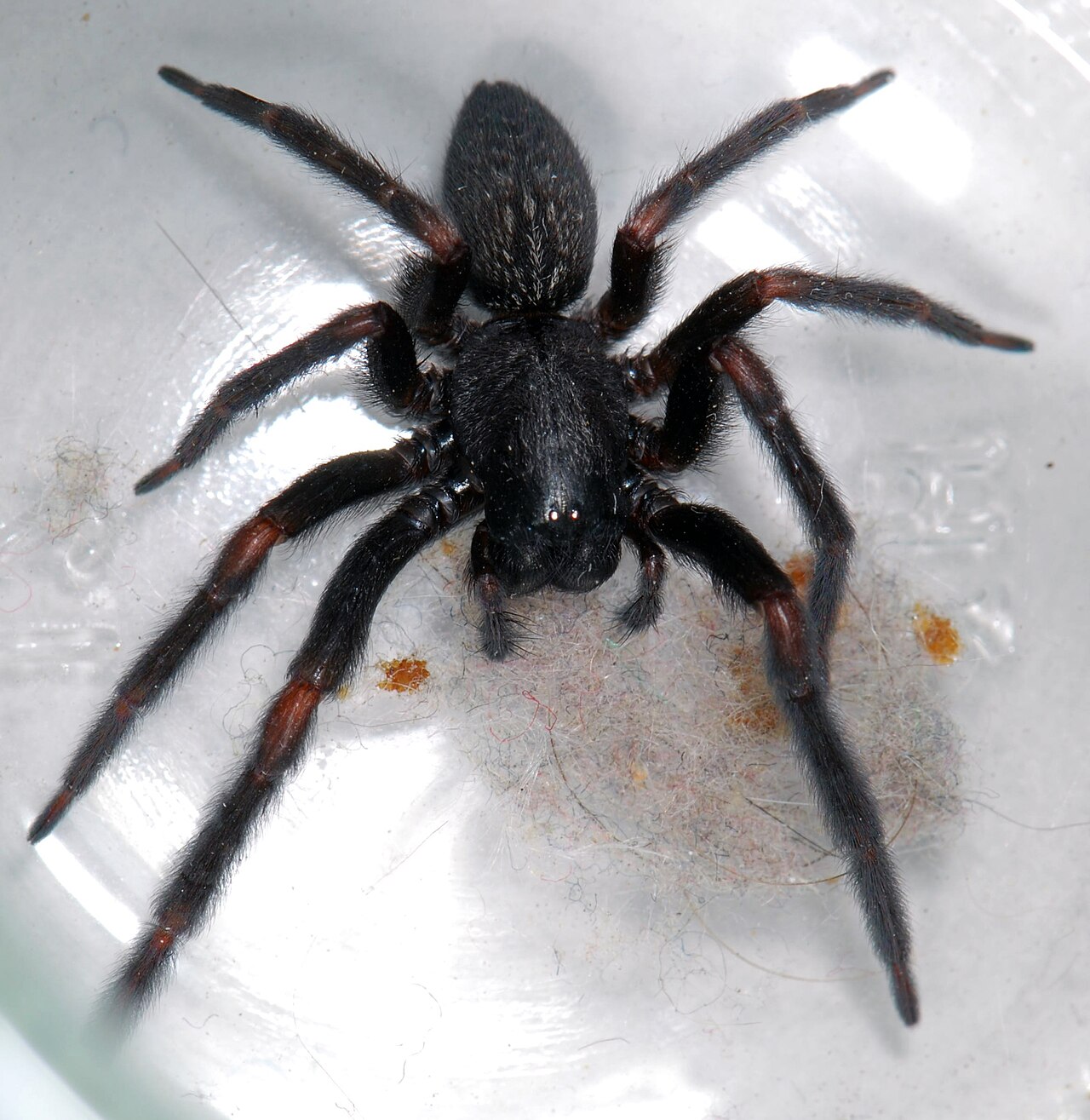
The black house spider (Badumna insignis) is a dark, robust Australian spider that builds messy funnel-shaped webs in window frames, brickwork, and outdoor furniture. It is not dangerous, no death has ever been attributed to it, and it is one of the most commonly encountered spiders around Australian homes.
Outside Australia the same name gets applied loosely to any dark spider found indoors, which covers several unrelated species with quite different risk profiles. This guide covers the genuine black house spider, its web and behavior, the bite, and then works through the dark spiders that North American readers actually find in their homes, including the one that does warrant caution.
| Quick Facts | Black House Spider |
|---|---|
| Scientific name | Badumna insignis |
| Size | Female body about 0.6 in, male 0.4 in |
| Range | Australia, introduced to New Zealand and Japan |
| Web | Messy funnel retreat with lacy sheet |
| Bite | Painful but not dangerous, no antivenom needed |
| Lifespan | Females around two years |
Identifying the Black House Spider
Females are the ones people see, with a body around 0.6 in and a robust build, dark grey to black with a velvety appearance and a dorsal pattern of pale markings that is often hard to make out against the dark ground color.
Males are smaller and more slender at around 0.4 in, with longer legs relative to the body and enlarged pedipalps at the front, the structures all mature male spiders carry. They wander in search of females and are frequently the ones found away from a web.
The legs are stout and hairy, giving the whole animal a compact powerful look that alarms people out of proportion to the risk. A close relative, the grey house spider (Badumna longinqua), is paler and shares the same habits, and the two are frequently confused with each other without any practical consequence since both are harmless.
The Web
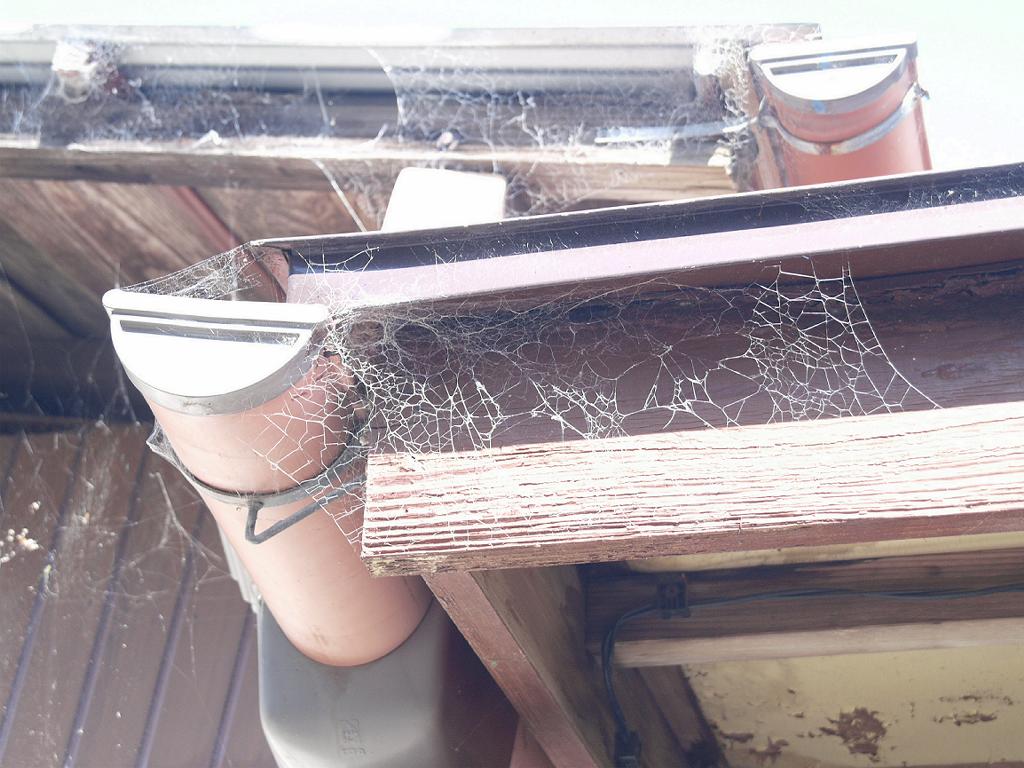
The web is more distinctive than the spider and is the fastest way to identify one. Black house spiders build a messy, lacy sheet of silk with a funnel-shaped retreat at one edge, and the spider sits in the funnel waiting for vibrations.
Placement is characteristic. Window frames, particularly the corners of external frames, brickwork crevices, gaps in weatherboard, under eaves, in outdoor furniture, and around light fittings all attract them, and the same web is maintained and extended over years rather than rebuilt.
The silk is cribellate, meaning it is combed into a woolly texture rather than coated in sticky droplets, and it entangles prey mechanically through sheer fiber structure. Old webs accumulate dust, insect remains, and debris, which is why an established web looks grubby and why people assume the spider is dirty rather than simply established. The same construction appears in our guide to the southern house spider, an unrelated American species with a strikingly similar approach.
Is the Bite Dangerous?
No. Black house spider bites are uncommon, since the spider stays in its retreat and bites only when pressed against skin, and the effects are unpleasant rather than dangerous.
Reported symptoms include immediate sharp pain, local swelling, and sometimes nausea, sweating, or dizziness, with symptoms resolving over hours to a couple of days. There is no antivenom because none is needed, and no deaths have been attributed to the species.
The confusion worth clearing up involves the funnel-web spiders, which are genuinely dangerous Australian species and which the black house spider is sometimes mistaken for. Funnel-webs are larger, glossier, and build their retreats at ground level in burrows rather than in elevated wall crevices, and any suspected funnel-web bite is a medical emergency requiring immediate hospital treatment. Location alone separates them in most cases: a web in a window frame is not a funnel-web. For a closely related question, see our guide to black and white spider.
Behavior and Diet
Black house spiders are sedentary ambush predators. A female may spend her entire adult life, around two years, in the same retreat, extending the web outward as she grows and repairing damage rather than starting over.
Prey is whatever walks or flies into the sheet, including flies, moths, mosquitoes, ants, beetles, and other spiders. Around outdoor lighting they do particularly well, since lights concentrate flying insects exactly where the webs are, which is why light fittings and lit window frames collect the largest spiders.
Males have a much shorter and riskier life. On maturing they abandon web building and wander in search of females, approaching a female’s web and signaling with careful vibrations to avoid being taken for prey. They die within weeks of maturing, which is standard across most spider families.
What North Americans Call a Black House Spider
Badumna insignis does not occur in North America, so a dark spider in a house there is something else, and several candidates are common. The most frequent by far is a cellar spider or a common house spider, both entirely harmless.
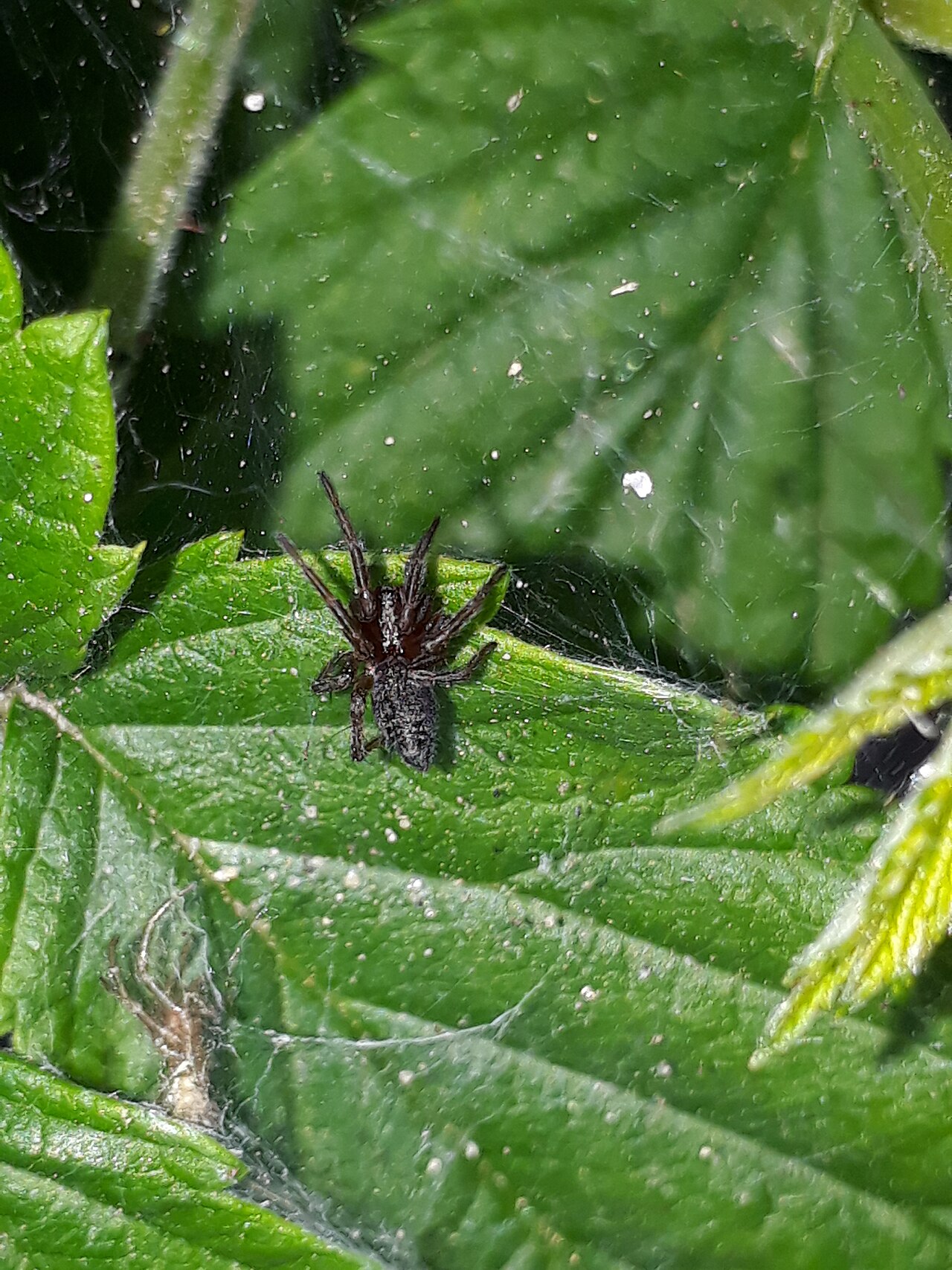
Southern house spiders are the closest functional equivalent across the southern United States, building the same kind of radiating web from a crevice in brick or stucco. The dark stocky females stay hidden while the long-legged brown males wander and get mistaken for brown recluses constantly.
Wolf spiders account for many sightings of large dark spiders running across floors. They build no web at all, hunt on the ground, and are harmless despite their size and speed, as our guides to the baby wolf spider and the grass spider describe.
The One That Warrants Caution
Black widow spiders are the genuine concern among dark spiders in North American homes, and they are readily identified. Females are glossy jet black with a globular abdomen and a red hourglass mark on the underside, and the body is around 0.5 in.
They build irregular tangle webs close to the ground in sheltered dark places, meaning under outdoor furniture, in woodpiles, in garages and sheds, under decks, and in undisturbed corners of basements. They are not aggressive and bite defensively when pressed.
The bite requires medical attention. Widow venom is neurotoxic and produces severe muscle pain and cramping that spreads from the bite site, along with sweating, nausea, and abdominal rigidity, developing over hours. Deaths are very rare with modern care, but treatment matters and antivenom exists. Brown recluse spiders are the other medically significant North American species, identified by six eyes in three pairs rather than the usual eight, as our guide comparing the brown recluse and house spider explains.
Egg Sacs and Young
Females produce white silk egg sacs and attach them inside the funnel retreat, guarding them until the spiderlings emerge. A single female may produce several sacs over her life, and the retreat of an established spider frequently holds sacs at different stages.
Spiderlings disperse shortly after emerging, sometimes by ballooning on silk threads and sometimes simply by walking. Most die quickly, and the survivors establish their own small webs nearby, which is why an infested window frame tends to accumulate several webs over successive years rather than one.
Australian museum and university reference collections field constant identification queries about these spiders, and the recurring theme is that people find the egg sacs more alarming than the adult. They are harmless, and removing them with a broom along with the web is sufficient if you would rather not host the next generation.
Should You Remove Them?
Outdoors, leaving them is usually the better choice. A house spider intercepting flies, mosquitoes, and moths around your windows and lights is doing free pest control on exactly the insects most households want fewer of, and removing the spiders does not remove the insects that attracted them.
Webs are the actual complaint in most cases, and a broom handles them. Brushing webs away from window frames and eaves periodically keeps things tidy, and the spider will usually relocate or rebuild elsewhere rather than persisting in a spot that keeps getting cleared.
Indoors, catch and release works. A container and a piece of stiff card move a spider outside in seconds, and given that the overwhelming majority of house spiders anywhere in the world are harmless, killing them accomplishes nothing that release does not. The exception is a confirmed widow or recluse in a living area, where removal is reasonable.
Keeping Spiders Out
Exclusion works better than spraying. Fit door sweeps, seal gaps around window frames, foundation cracks, and utility entries, and repair damaged screens, since these routes produce nearly all indoor spider sightings across every species.
Reduce what attracts their prey. Spiders follow insects, and outdoor lighting near doors and windows draws moths and flies that in turn draw spiders, so switching to warm amber bulbs or motion sensors reduces the whole chain. Clearing leaf litter, woodpiles, and dense vegetation directly against the walls removes both habitat and hunting ground.
Pesticides are largely ineffective against spiders and worth skipping. Spiders walk on hairy leg tips that minimize contact with treated surfaces, many indoor sightings are transient wanderers rather than residents, and broad-spectrum spraying kills the predatory insects and spiders that suppress genuine pests. Regular vacuuming of corners, window frames, and under furniture removes webs, egg sacs, and spiders together and is both cheaper and more effective, the same conclusion our guide to the jumping spider reaches for a very different hunter.
Related reading: should i kill a black widow spider.
Related reading: Black and Yellow Spider.
Frequently Asked Questions
Is the black house spider dangerous?
No. Bites are uncommon and cause sharp pain, local swelling, and sometimes nausea or dizziness resolving within hours to a couple of days. No antivenom exists because none is needed, and no deaths have been attributed to the species.
How do I identify a black house spider?
Females are dark grey to black, robust, around 0.6 in with a velvety look and faint pale dorsal markings. The web is more distinctive: a messy lacy sheet with a funnel retreat at one edge, built in window frames, brickwork, and under eaves, and maintained for years.
Is it the same as a funnel-web spider?
No, and the distinction matters in Australia. Funnel-webs are larger, glossier, and build retreats at ground level in burrows, and their bites are medical emergencies. A web in an elevated window frame is a black house spider, not a funnel-web.
Do black house spiders live in America?
No, Badumna insignis is Australian. Dark spiders in North American homes are usually cellar spiders, common house spiders, southern house spiders, or wolf spiders, all harmless. The medically significant exceptions are black widows and brown recluses.
How do I tell a black widow apart?
Glossy jet black with a globular abdomen and a red hourglass mark on the underside, about 0.5 in, in an irregular tangle web close to the ground under furniture, in woodpiles, or in garages. The bite causes spreading muscle pain and cramping and needs medical attention.
Should I kill house spiders?
Generally no. They intercept flies, mosquitoes, and moths around windows and lights, which is free pest control on the insects most households want fewer of. Brush away webs with a broom and catch and release indoor spiders with a container and card.
How do I keep spiders out of my house?
Seal gaps around windows, doors, foundations, and utility entries, fit door sweeps, and repair screens. Switch outdoor lighting to warm amber or motion sensors to reduce the insects that attract spiders, and vacuum corners and window frames regularly. Pesticides work poorly on spiders.