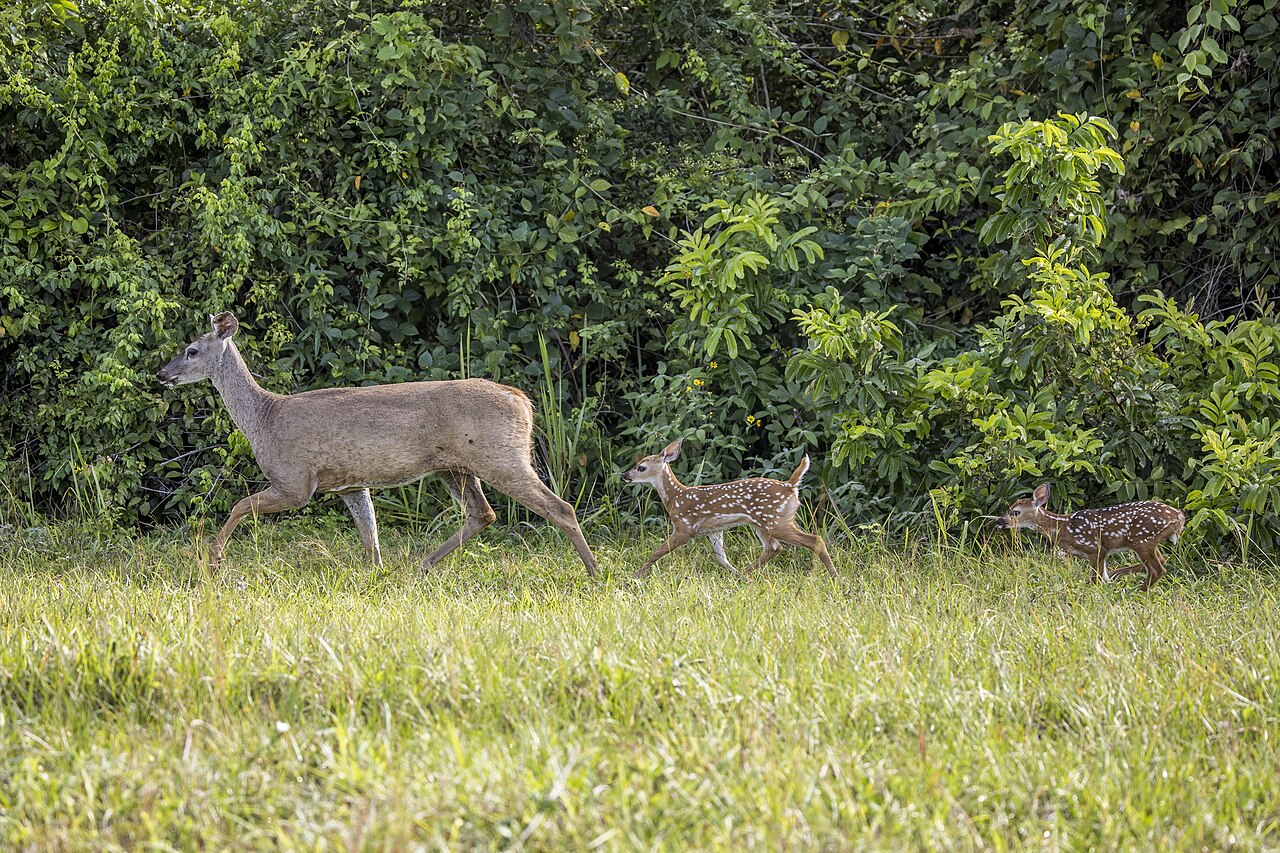
Deer Poop: Identification, Size, and What It Tells You
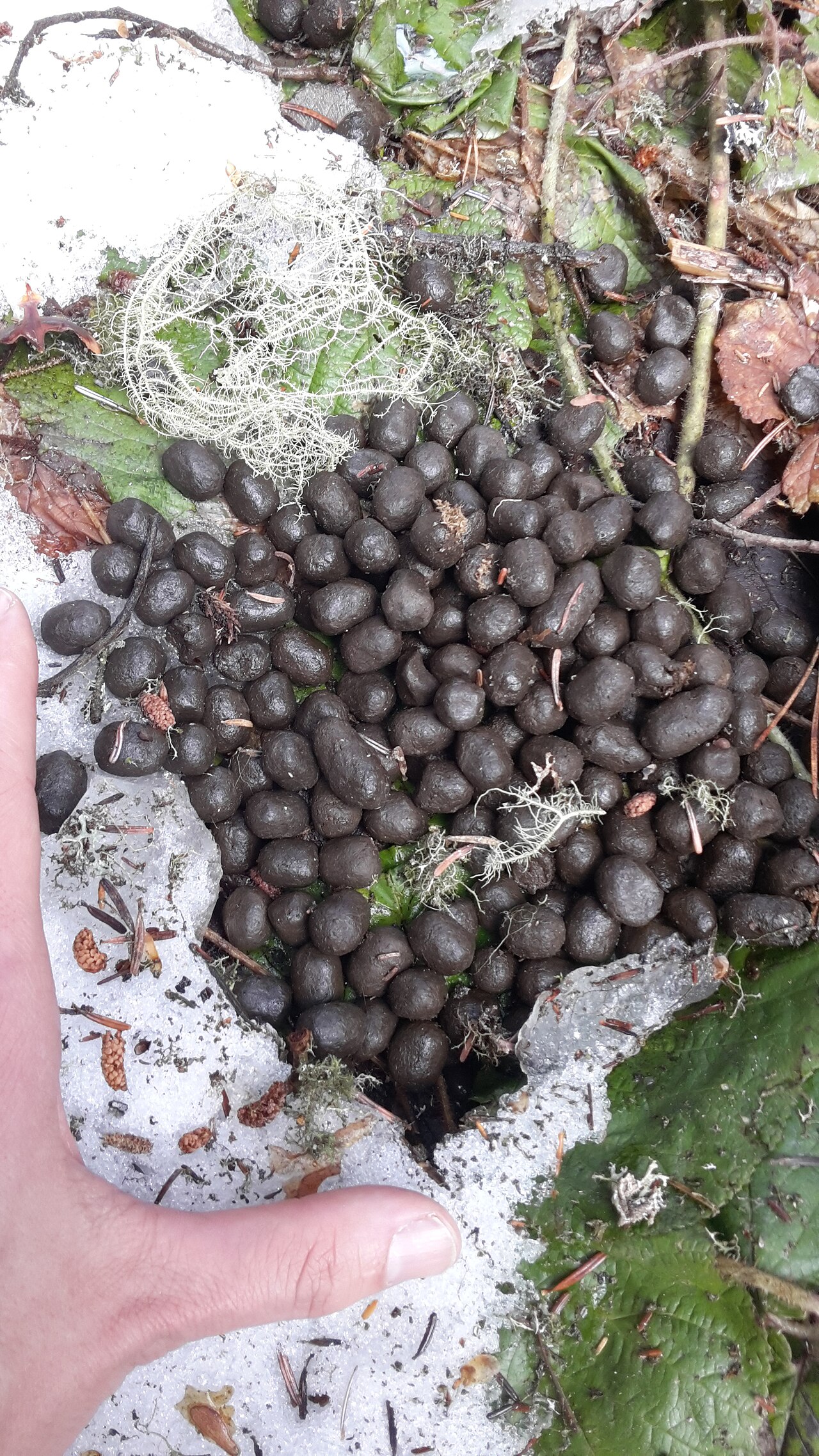
Deer poop looks like a scattered pile of dark, oval pellets, each roughly 0.5 to 0.75 in long, with one slightly pointed end and one dimpled end. A single deposit contains anywhere from 20 to 100 pellets, and an adult white-tailed deer produces around 13 groups per day, which is why the piles turn up so reliably along trails and bedding areas.
The pellet shape is not fixed. When deer switch from woody winter browse to lush spring growth, the pellets soften and clump into a single mass that looks nothing like the classic pile, and that shift confuses more people than any other aspect of deer scat. This guide covers what deer droppings look like through the seasons, how to separate them from rabbit and other pellets, what the size tells you about the animal, how to judge freshness, and whether the droppings pose any risk in a garden.
| Quick Facts | Deer Droppings |
|---|---|
| Shape | Oval pellets, one end pointed, one dimpled |
| Size | 0.5 to 0.75 in long, about 0.4 in wide |
| Color | Dark brown to black when fresh, fading to gray or tan |
| Pellets per pile | 20 to 100 |
| Frequency | About 13 groups per day per adult |
| Summer form | Soft clumped mass rather than separate pellets |
What Does Deer Poop Look Like?
The classic form is a loose pile of separate dark pellets, each shaped like an elongated oval or acorn with one tapered end and one that appears slightly indented. Fresh droppings are glossy and almost black, and they dull to brown, then gray or tan, as they dry and weather over the following days and weeks.
Pile size varies with how the animal was moving. A bedded deer leaves a tight concentrated group, while one that was walking scatters pellets in a line along the trail. Either way the total is usually somewhere between 20 and 100 pellets, and finding several piles within a small area indicates a bedding site rather than a travel route.
Location tells you as much as appearance. Deer droppings concentrate along trails, at field edges, near preferred browse, around bedding areas in thick cover, and beneath fruit trees in autumn. Anyone learning to read a yard by what animals leave behind will find the same logic in our guides to coyote droppings and possum droppings.
Why Deer Poop Changes With the Seasons
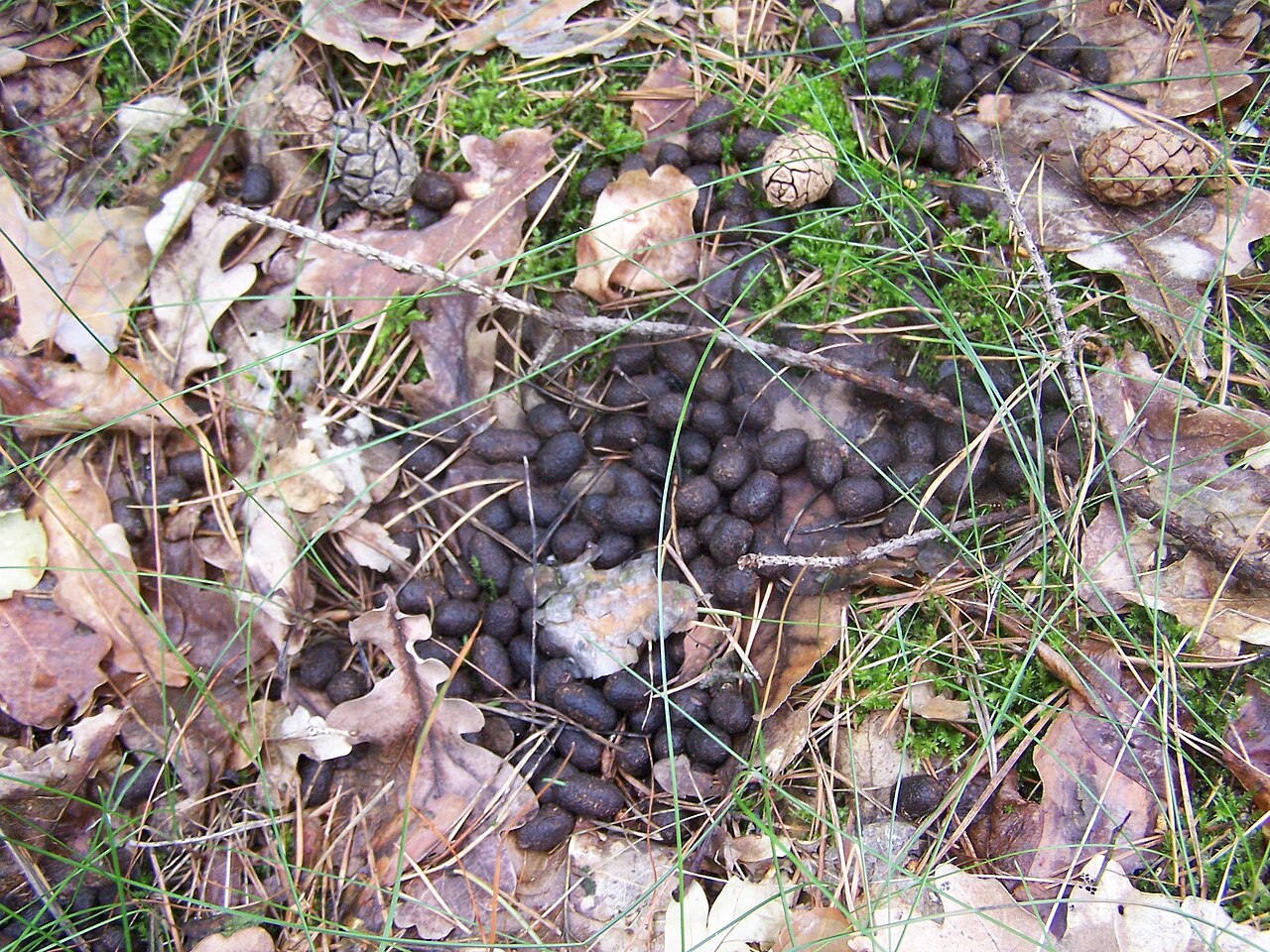
Diet controls the form completely. Through autumn and winter deer eat woody browse, twigs, buds, acorns, and dried vegetation, all of which are high in fiber and low in moisture. That produces the firm, well-separated pellets most people picture, which hold their shape for weeks and are easy to identify.
Spring and summer change everything. New grass, forbs, garden plants, and soft leaves carry far more water, and the result is droppings that clump together into a soft segmented mass or an amorphous patty rather than discrete pellets. These look much more like small cow droppings, and people regularly conclude they are looking at something other than deer.
The transition is gradual and runs both ways with the growing season. Late spring often produces intermediate forms where pellets are recognizable but fused into short chains. This seasonal variability is the main reason a single reference photo is a poor identification tool for deer scat, and why the surrounding context of tracks, browse damage, and trails matters more.
Deer Poop vs Rabbit Poop
 Deer Poop vs Rabbit Poop” class=”wp-image-5539″/>
This is the most common identification question, and three features resolve it. Shape comes first: rabbit droppings are round spheres, almost perfectly spherical, while deer pellets are elongated ovals with a pointed end. A round pellet is a rabbit, an oval one is a deer.
Size separates them next. Rabbit droppings measure roughly 0.25 to 0.4 in across, noticeably smaller than the 0.5 to 0.75 in length of deer pellets. Texture is the third clue, since rabbit droppings are dry, fibrous, and crumble easily when pressed, appearing almost like compressed sawdust, whereas fresh deer pellets are denser and moister.
Two other pellet producers turn up in the same places. Goat and sheep droppings closely resemble deer pellets and are separated mainly by context, meaning fencing and the presence of livestock. Elk and moose pellets look like oversized deer pellets, running around 0.75 to 1 in for elk and larger still for moose, and their ranges overlap with deer across the northern and western United States. Rabbits leave a great deal of sign in the same yards, as our guide to the baby rabbit covers.
What Pellet Size Tells You About the Deer
Pellet size correlates loosely with body size, so larger pellets generally indicate a larger animal. Hunters have long used this to distinguish mature bucks from does and yearlings, and there is some basis for it, since a 200 lb buck does produce larger droppings than a 90 lb yearling on the same diet.
The correlation is much weaker than folklore suggests. Diet, moisture content, and season affect pellet size enough to swamp the difference between individual animals, and a doe on lush forage can leave larger, softer droppings than a buck on dry winter browse. Nobody should judge the size of an animal from a single pile.
Where pellet counts genuinely work is in population estimation. Wildlife agencies use pellet group surveys, counting groups along fixed transects and dividing by the known daily defecation rate of about 13 groups per deer per day, to estimate density across a management area. It is a standard technique in deer management precisely because droppings persist and are easy to count.
How Fresh Is It? Reading Age From Droppings
Fresh droppings are glossy, dark, and moist, often with a visible sheen, and pellets deposited within the last few hours may still feel slightly warm in cold weather. That gloss is the most reliable freshness marker and it fades within roughly 24 hours in dry conditions.
After a day or two the surface dulls and lightens toward brown. Within a week pellets are noticeably hardened, and over several weeks they gray out, develop a chalky surface, and eventually crumble. In humid conditions white or greenish mold appears on older piles, and in dry western environments the same pile may persist for months.
Weather compresses or stretches all of it. Rain accelerates breakdown dramatically, so a pile that survived a downpour intact is recent, while freezing temperatures can preserve droppings in near-fresh condition for weeks. Anyone using scat to time their movements should factor in the last rainfall before drawing conclusions.
Is Deer Poop Dangerous?
The risk to people is low but not zero. Deer droppings can carry E. coli, including O157:H7, along with Salmonella, Cryptosporidium, and Giardia, and the CDC (cdc.gov) has documented produce outbreaks traced to deer contamination in growing fields. The transmission route is fecal to oral, meaning contaminated food or water rather than casual contact.
Practical precautions are simple. Wash garden produce thoroughly, especially low-growing crops such as lettuce, spinach, and strawberries in areas with heavy deer traffic. Wear gloves when handling soil where droppings are present, wash hands afterward, and do not compost deer droppings for use on vegetable beds unless the pile reaches sustained high temperatures.
Deer droppings themselves do not transmit chronic wasting disease to humans, and no human case has ever been documented, though the CDC recommends against consuming meat from infected animals as a precaution. The prions associated with the disease can persist in soil, which is one reason wildlife agencies discourage deer feeding stations that concentrate animals and their waste in one place. The predators that follow deer leave their own sign, as our guide to snake droppings and to what bears eat both illustrate.
Deer Poop in Your Yard: What It Tells You
Droppings in a yard mean deer are using it regularly, and the pattern tells you how. Scattered pellets along a fence line or property edge indicate a travel corridor, while concentrated piles in a sheltered corner suggest bedding, which is a much stronger signal that the animals consider your property safe.
Read the accompanying damage to confirm. Deer browse leaves ragged torn stem ends because they have no upper incisors and tear rather than cut, which distinguishes their damage from the clean angled cuts of a rabbit. Hoof prints in soft ground, flattened oval bed impressions in tall grass, and rubbed bark on young trees in autumn all add to the picture.
The management response depends on what you find. Occasional travel through a yard is usually tolerable, but bedding sign plus browse damage means the deer are resident and the pressure will increase. Fencing at 8 ft is the only fully reliable exclusion, with plant selection, motion-activated sprinklers, and rotating repellents providing partial help. Removing the attraction matters most, so pick up fallen fruit and avoid supplemental feeding.
Cleaning Up and Using Deer Droppings
For small amounts in a lawn or garden, the practical response is usually to leave them. Deer pellets break down within weeks in a moist climate and return nutrients to the soil, and they are far less problematic than dog waste in terms of both pathogen load and nitrogen burn.
If you want them gone, use gloves and a scoop, bag the material, and dispose of it in household waste rather than yard waste collection. Wash hands thoroughly afterward. Avoid using a leaf blower or dry sweeping on dried droppings, since aerosolizing the dust is the one route that turns a low-contact risk into an inhalation one.
As fertilizer, deer manure is usable but needs treatment. It carries roughly comparable nutrient value to other herbivore manures and can be composted, but only in a hot pile that reaches and holds 130 to 150 F long enough to reduce pathogens. Cold-composted or fresh deer droppings should never go on vegetable beds, particularly beds growing anything eaten raw. Young deer are frequent yard visitors too, and our guide to the baby deer covers whether a fawn found alone actually needs help.
Frequently Asked Questions
What does deer poop look like?
Dark oval pellets roughly 0.5 to 0.75 in long, with one pointed end and one dimpled end, deposited in scattered piles of 20 to 100. Fresh droppings are glossy and nearly black, fading to brown and then gray as they age. In spring and summer they clump into a soft mass instead.
How do I tell deer poop from rabbit poop?
Shape and size. Rabbit droppings are round spheres about 0.25 to 0.4 in across and crumble easily when pressed. Deer pellets are elongated ovals with a pointed end, 0.5 to 0.75 in long, and denser when fresh. Nearby tracks and browse damage confirm it.
Why is deer poop sometimes clumped instead of pellets?
Because of diet moisture. Spring and summer forage is high in water, which produces soft clumped masses rather than separate pellets. Autumn and winter woody browse is dry and fibrous, producing the firm distinct pellets most people picture. Both come from the same animal.
Can you tell how big a deer is from its droppings?
Only roughly. Larger animals do produce somewhat larger pellets, but diet, moisture, and season affect pellet size enough to overwhelm individual differences. Wildlife agencies use pellet group counts for population estimates rather than for judging the size of a particular animal.
Is deer poop dangerous to humans or dogs?
The risk is low but real. Deer droppings can carry E. coli, Salmonella, Cryptosporidium, and Giardia, transmitted through contaminated food or water rather than casual contact. Wash garden produce thoroughly, wear gloves when handling contaminated soil, and discourage dogs from eating droppings.
How fresh is deer poop?
Glossy, dark, moist pellets are within about 24 hours old. Dull brown droppings are a few days old, hardened gray ones are weeks old, and mold or crumbling indicates older still. Rain speeds breakdown considerably, while freezing weather can preserve droppings for weeks.
Can you use deer droppings as fertilizer?
Yes, but only after hot composting at 130 to 150 F long enough to reduce pathogens. Fresh or cold-composted deer droppings should never be applied to vegetable beds, especially where crops are eaten raw. On lawns and ornamental beds, small amounts can simply be left to break down.