Deer Sounds: Snorts, Grunts, Bleats, and What Each Means
Deer sounds surprise people because the deer they see are silent, yet white-tailed deer run a full vocal system: an explosive snort-blow that cracks through the woods like a burst air hose, soft social grunts between does, the plaintive bleat of fawns, the deep tending grunts and startling snort-wheeze of rutting bucks, and a distress bawl that carries half a mile. Add the non-vocal soundtrack, hoof stomps, the drumroll of a fleeing herd, antlers raking bark, and clashing during buck fights, and a deer woods is far noisier than its reputation.
Reading those sounds tells you what the deer around your property are doing and when: the blow means you have been detected, grunting in November means the rut is on, and a summer bleat means a fawn is calling its mother, usually with no rescue needed. This guide decodes every common deer sound by season and situation, separates deer noises from their nighttime soundalikes, and covers what hunters and backyard watchers can each do with the information.
| Sound | What It Means |
|---|---|
| Loud snort or blow | Alarm: you have been scented or seen |
| Soft grunts | Social contact, doe-fawn and herd talk |
| High bleat | Fawn calling its mother |
| Deep rolling grunt | Buck tending or trailing a doe (rut) |
| Snort-wheeze | Buck aggression at a rival |
| Loud bawl | Genuine distress, injury or capture |
The Blow: The Sound That Means You Lost
The deer sound people hear most is the alarm blow: one to several explosive, wheezing snorts, air forced hard through the nostrils, sharp enough to startle a hiker and often repeated as the deer bounds away with tail flagged. It is a detection announcement with two audiences: it tells every deer in earshot that danger is confirmed, and, researchers believe, tells the predator itself that ambush has failed, so the hunt is not worth pressing.
A stationary deer that blows repeatedly without fleeing has scented something it cannot locate, often a human standing still, and is trying to force movement; the foot stomp frequently paired with it serves the same probe function while also leaving alarm scent from glands between the hooves. Blow plus stomp means a deer is interrogating you.
For anyone trying to watch or hunt deer, the blow is the report card on your scent control and stillness, and for homeowners it is a free perimeter alarm: a blow from the wood line at dusk announces deer entering the yard circuit before a single hosta is touched. Deer downwind detect humans at remarkable distances, which is why the blow so often comes from an animal never seen at all.
Grunts and Bleats: The Herd’s Quiet Conversation
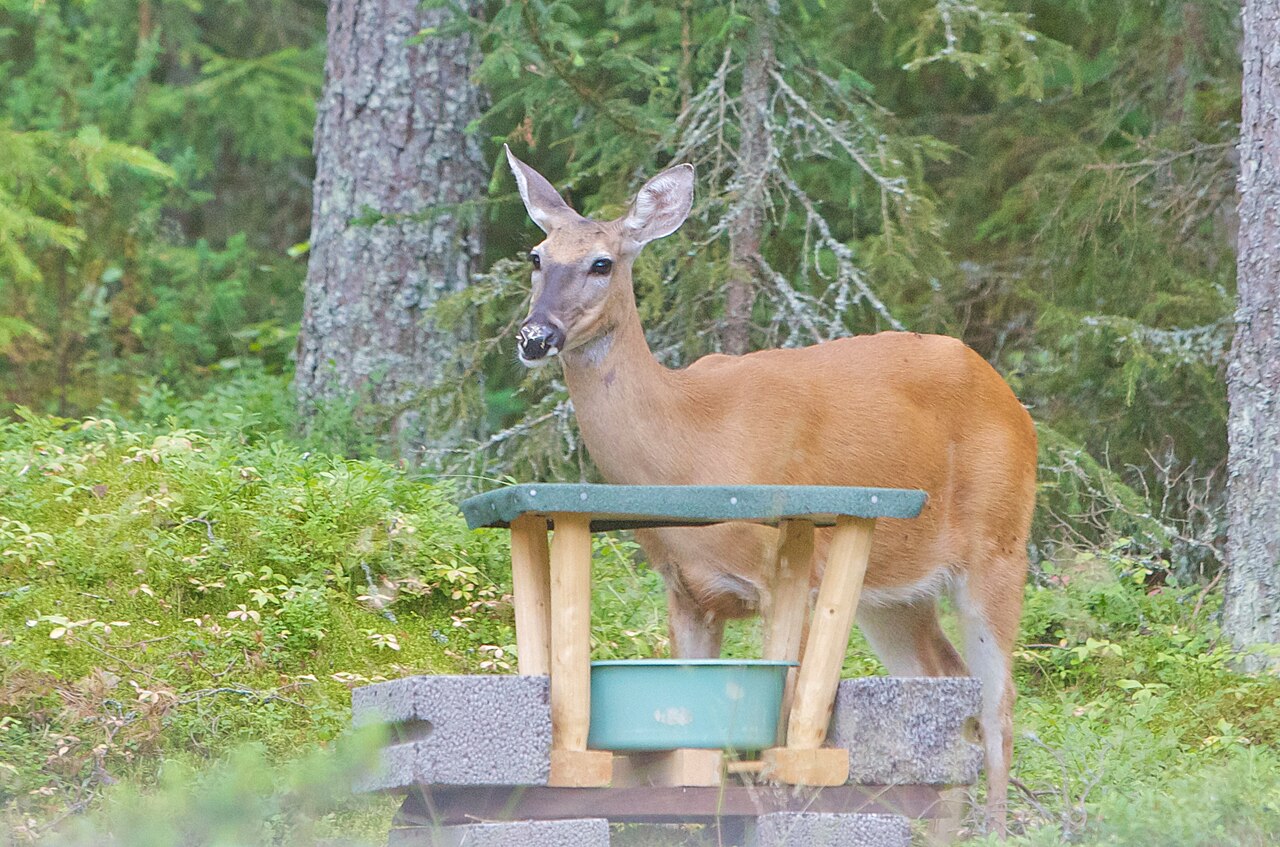
Day-to-day deer society runs on soft, low grunts, brief, pig-like contact notes does use to keep the family group assembled, to call fawns, and to signal moving out. They carry only a short distance by design, so hearing social grunting means deer are close, usually within 50 to 100 yards and relaxed, one of the most reliable “undetected” signals a quiet observer gets.
Bleats belong mostly to the young: fawns bleat in a high, lamb-like call when hungry or separated, and does answer with a grunt-bleat as they return. Adult does also bleat softly among the group, and in the rut produce the drawn-out estrus bleat that hunters imitate with can calls. A bleating fawn alone in tall grass in June is almost never orphaned, does deliberately park fawns and feed at a distance, and the wait-and-watch rule from our baby deer guide applies before anyone stages a rescue.
The genuine emergency sound is unmistakable once heard: the distress bawl, a loud, hoarse, sustained cry given by deer of any age when injured, entangled, or seized by a predator. It carries far, sometimes triggers does to charge to a fawn’s defense, and is the one deer vocalization that legitimately warrants investigating (carefully, from distance) for an animal caught in a fence.
Rut Sounds: Grunts, Wheezes, and Clashing Antlers
From late October through early December across most of the country, buck vocabulary takes over the woods. The signature is the tending grunt: a deep, rolling, rhythmic urrp-urrp a buck emits while trailing or tending a doe, sometimes strung into long contact grunting as he trails scent with his nose down. Hearing steady grunting move past your stand or yard in November means a buck on a doe, the rut’s core soundtrack.
Aggression has its own register. The snort-wheeze, a sharp exhale followed by a drawn hissing wheeze, is a buck’s direct challenge to a rival, the last diplomatic step before contact; what follows, if neither yields, is the unmistakable clatter and grind of antlers, sparring matches sound like sticks tapping, genuine fights like furniture breaking, occasionally punctuated by grunts and the crash of brush.
The rut also amplifies the non-vocal file: rubs, that rhythmic rasp of antler on sapling bark at dawn and dusk, and the pawing of scrapes under licking branches. For hunters, this month is when calls earn their keep, a grunt tube and rattling antlers work because they plug directly into this real acoustic system; for everyone else, November’s strange woodland noises now have names.
Fawn Season Sounds: What June Is Telling You
Late spring rewrites the soundscape around does. Birth itself is nearly silent, but the weeks after fill with the doe-fawn channel: soft maternal grunts summoning fawns to nurse, the mewing bleats of fawns answering, and the occasional louder bleat of a fawn that has wandered from its parked spot. These sounds cluster around edge cover, tall grass, hayfields, brushy fencerows, where does stash fawns by design.
The parked-fawn system is the crucial context: for their first weeks, fawns lie alone and motionless for hours while the doe feeds elsewhere, relying on spotted camouflage and near-scentlessness, and a bleating fawn is typically just calling ahead of a scheduled feeding. Intervention is warranted only for the genuine flags, a fawn bleating persistently for many hours, visibly injured, fly-covered, or beside a confirmed-dead doe.
One more June sound deserves decoding: the aggressive snort-stomp of a doe toward dogs and sometimes people near her hidden fawn, occasionally escalating to a charging huff. A doe repeatedly blowing and stamping at the same yard corner is posting a nursery notice, and the wise response is leashing dogs and granting that corner two weeks of privacy.
Deer Sounds vs the Nighttime Soundalikes
The deer blow is the great impostor victim of the night woods: a sudden explosive snort behind a dark tree line gets attributed to bears, hogs, and monsters, when the follow-up usually gives the truth, receding bounds in that distinctive four-beat gallop, sometimes with more blows. Bears huff lower and woofier with jaw-popping; feral hogs (where present) grunt continuously and crash rather than bound.
The rut’s stranger noises get filed under predators. A snort-wheeze reads as something feline to the uninitiated, and antler clashing at 2 am sounds like a brawl, but neither has the vocal screaming of the genuine night screamers: the repeated flat shriek covered in our fox sounds guide and the layered squalling brawls in raccoon sounds both carry sustained voice, which deer conflict audio almost entirely lacks. Deer fight percussion, no screaming, is a clean rule.
Where whitetails share range with mule deer in the West, the sound systems are near-identical, blows, grunts, bleats, with mule deer adding the distinctive pogo-stick “stotting” thump pattern in flight; the visual and range separations in mule deer vs whitetail do the species work that sound alone cannot. And any hoofed crashing paired with pellet piles from our deer poop guide closes the case on paper.
Hearing Without Ears: Stomps, Flags, and Body Talk
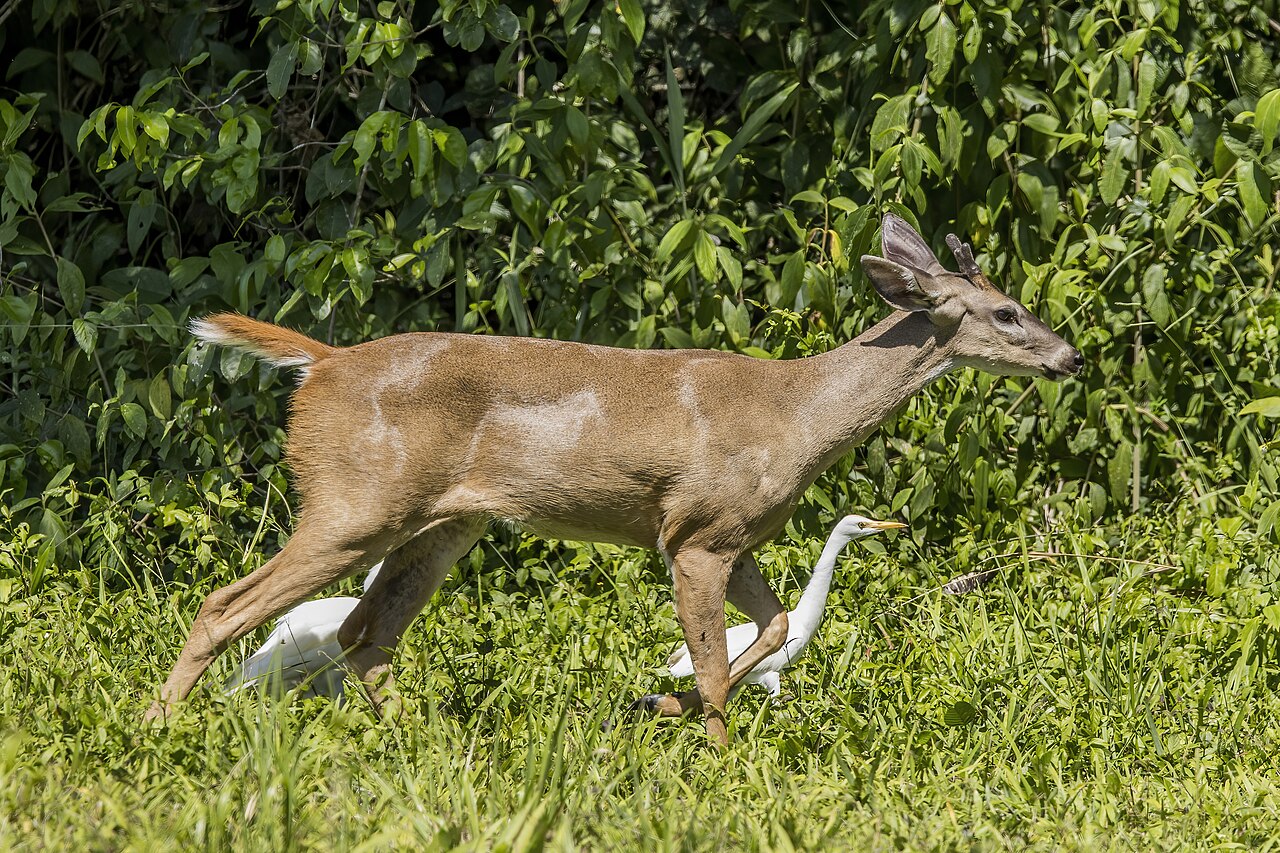
Deer communication is only partly acoustic, and reading the paired body signals doubles your comprehension. The foot stomp works as both sound and scent post, uncertain deer stamp repeatedly, printing interdigital gland scent that warns later deer a spot was suspicious, which is why a trail can go “cold” for days after one bad encounter. Stomping plus head-bobbing means a deer trying to trigger movement from a suspected threat.
The tail runs the visual channel: the raised white flag during flight is a follow-me beacon for fawns and herd mates, a half-lifted twitching tail signals rising alarm before any sound, and a flat, clamped tail on a sneaking deer means it hopes to slip away unannounced. Ears swivel independently toward sounds minutes before a deer commits to alarm, making ear posture the earliest warning a watcher can read.
Put together, the escalation ladder runs: ears lock, tail twitches, stomp, blow, flag-and-bound, and knowing the sequence lets backyard observers hold still at stage two and watch deer settle instead of blowing out. The animals broadcast their state constantly; the blow is merely the final, loudest line of a paragraph that started a minute earlier.
What Deer Sounds Mean for Your Property
A yard’s deer audio is a management report. Regular evening blows from the same wood-line say a browsing circuit touches your property (audit the hostas); November grunting says a doe group beds nearby with bucks checking them; June’s snort-stomping doe announces a fawn in your tall grass, worth a two-week mowing pause both for kindness and because striking a hidden fawn with a mower is a genuinely awful experience state agencies field calls about every summer.
For gardeners, sound is early warning that beats damage: deer working toward beds telegraph themselves with hoof-falls and social grunts on still evenings, and motion-activated deterrents (sprinklers, lights) are far more effective deployed on the approach route the sounds reveal than scattered blindly. Fencing choices follow the same map; a blow-point at the fence line marks the crossing that needs the height.
Hunters and habitat-minded landowners can go further: state wildlife agencies encourage learning deer vocalizations as core woodsmanship, and the Penn State Extension (extension.psu.edu) notes that understanding deer behavior, movement, and communication underpins effective damage management. Whether the goal is venison, photographs, or intact tulips, the deer are narrating their intentions nightly; the property owner who learns the language gets a season of free intelligence.
Frequently Asked Questions
What sound does a deer make?
The most common is the explosive alarm snort or blow; deer also grunt softly in social contact, fawns bleat, rutting bucks give deep rolling grunts and a snort-wheeze challenge, and injured deer emit a loud, carrying bawl.
Why do deer snort or blow at me?
You have been detected, usually by scent. The blow warns other deer and signals the ambush has failed; paired with foot stomps, it means the deer is trying to force you to move and confirm the threat.
What does a buck grunt sound like?
A deep, rolling, rhythmic urrp-urrp, heard mostly from late October through early December as bucks trail and tend does. Steady moving grunting in November is the sound of the rut itself.
What deer sound means distress?
A loud, hoarse, sustained bawl, given by deer of any age when injured or entangled. It is the one deer sound worth investigating from a distance, often revealing an animal caught in a fence.
Why is a fawn bleating alone in my yard?
It is calling its mother, who parks fawns alone for hours by design while feeding elsewhere. Rescue applies only to fawns crying persistently for many hours, injured, fly-covered, or beside a confirmed-dead doe.
What is the deer snort-wheeze?
A buck’s direct aggression signal, a sharp exhale followed by a drawn hissing wheeze, aimed at rivals during the rut and often the last sound before antler contact.
Do deer make sounds at night?
Yes; deer are most active at dawn, dusk, and night, so blows, grunts, and the drumming of bounding hooves after dark are normal. Screaming, however, is not deer, night screams belong to foxes, raccoons, and owls.